

A writer’s life is a build, a constant state of becoming that begins with the secret, intuitive assumption that one must take a leap of faith and begin. There is no there to get to, only an unquenchable need that compels and drives on with inexplicable fervor. For me, it began with keeping a journal. I was young and fearful of admitting my internal mechanisms and uncertain of who would care to hear. But I felt the need to document my life in the hope that the singular act of private articulation would reveal to me who I was in the grand scheme of my self-involved adolescence. This is the prompting that leads a writer to the table; the need to explain oneself to oneself. Keeping a journal discredits all thoughts of life’s arbitrariness and puts the pendulum of cause and effect into clear perspective. One can keep current while they create a framework, then look back years later and chart the incremental construction of their personal history.
But what happens when one evolves from journal keeping to writing as a way of life? Certainly it’s an insular existence that cannot be shared. It’s like taking that running monologue we all have in our head and laying it down on purpose for no other reason than it seems the thing to do. The form of the dissertation is entirely incidental; some writers aim to inform, and others seek to enlighten or entertain. To me, it’s all the same thing: a way of communicating, and for this to happen, it takes time. And isolation. And commitment to following through no matter the length of the project.
I’ve heard it said that writers don’t write because they want to; they write because they must. What’s imperative for writers is the ability to write then throw caution to the wind. All that’s required is to say what you have to say, and then get out of the way to make room for the possibility that the devil may care after all.
Tag: #writing
Magic Moments with Pat Conroy
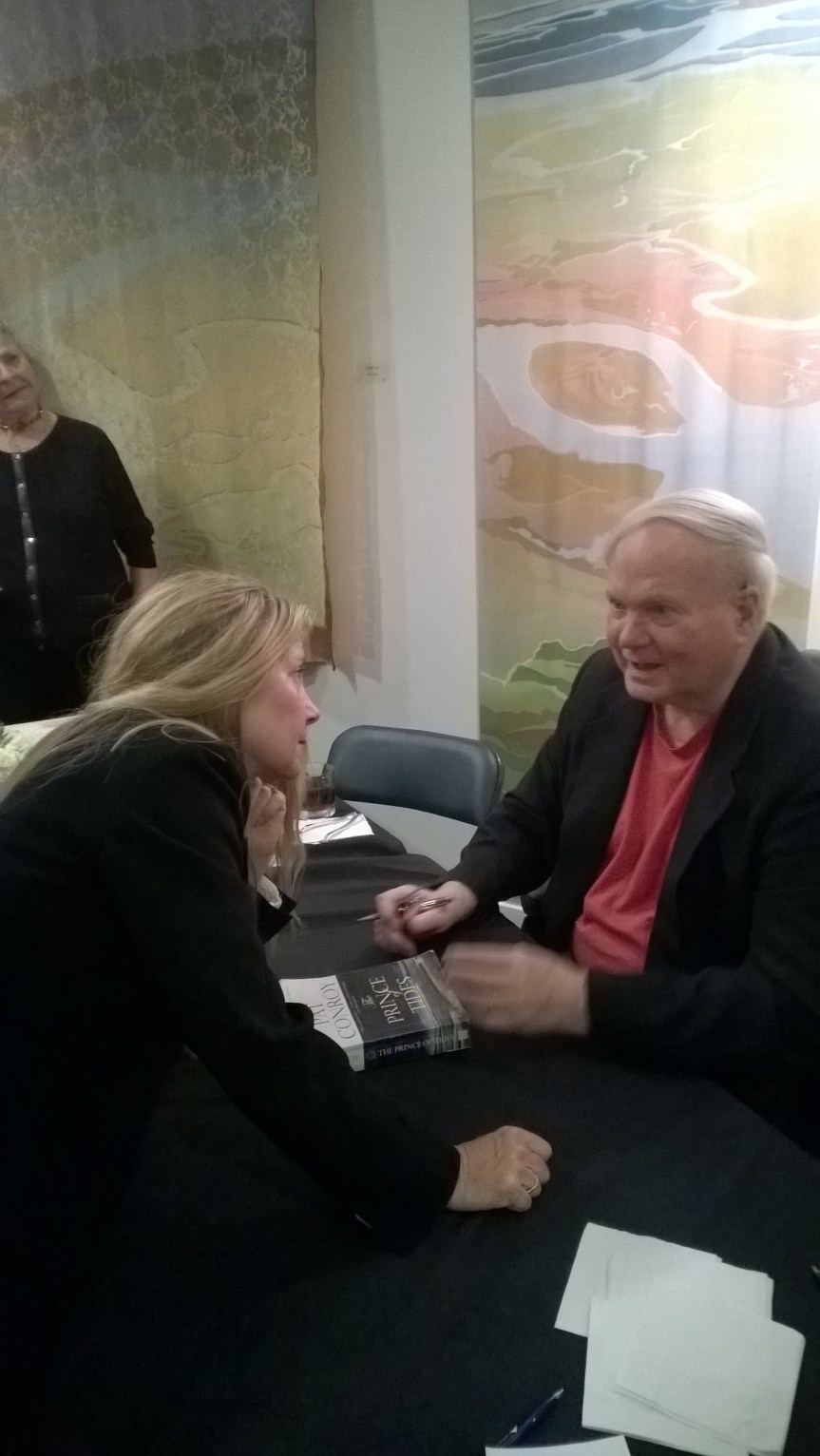
I had a few magic encounters that can only be described as “Pat moments” at the 2015 “Pat Conroy at 70” celebration” in Beaufort, South Carolina. And there I was a complete stranger to Pat, but by the end of the three day festival, you wouldn’t have thought this. Sometimes in life you just flat connect with someone through mysterious forces, and when you do, it feels something like recognition. I felt this way the first time I locked eyes with Pat Conroy, and although I was decidedly star-struck, he wasn’t having any of it.
I was late to the screening of “The Great Santini.” Most everyone was seated in the auditorium, and the film was set to begin any minute. I rushed into the scantily populated lobby of the USCB’s Center for the Arts, flustered and apologetic to the nice woman behind the table, who took my name and handed me my event tickets for the following two days. As I turned to head for the auditorium, there was Pat, wearing a red t-shirt, a big smile, and walking straight towards me. His face was aglow with child-like delight and his blue eyes beamed with the kind of enthusiasm you’d jump to upon spotting a friend. Now, mind you, I’d rushed to the conference all the way from California, and in that moment I had yet to find my bearings. I’d hoped at some point during the conference I’d be lucky enough to exchange a few words with Pat, get it off my chest how much his writing affects me, tell him that he’d singlehandedly shown me what is possible with the written word, and illustrate his impact upon me by saying if I were a musician, he’d be my Mick Jagger. I didn’t expect to walk through the door and find him there like a one man welcoming committee. In that destabilizing moment that caught me off-guard, I was so startled to see my literary hero in the flesh that my text book Southern manners flew out the window and speech completely failed me. So I did what anybody would do: I looked Pat Conroy straight in his Irish eyes and said, “I love you.” To which he threw back his head and laughed.
“I flew all the way from California to see you, “I gushed, and without skipping a beat, Pat said, “You’re crazy,” to which I replied, “I know.”
“My daughter lives in California, let me go get her,” Pat said, then he walked away and returned with his daughter, Megan. As Megan and I stood talking about California, Pat sauntered off then reappeared with his brother, Tim. I couldn’t tell you now if Tim wondered who I was or why Pat found me worthy of introduction, but all three Conroy’s stood friendly and smiling, as if they were legitimately thrilled to see me.
“Let me ask you something,” Pat said. He spoke haltingly, searchingly, as if he were thinking something through, though he gave me a look that shot straight through me as if willing the power of his steady gaze to sear something into me. “Can you remember this street address? I want you to come over to the house for a drink or something.”
“When?” I said. It was all I could think to ask.
“Sometime during all this,” he said, waving his hand. “Whenever there’s downtime,” he said, as if it’d be obvious, as if I’d know when there’d be a lull in the conference and could just mosey on over to find him lounging around.
“Oh, wait, they’re telling me it’s time to go in,” Pat said, “Let’s go.” I trailed behind Pat into the auditorium, and when the room rose to its feet in reverence at the sight of him, I ducked discretely out of the way and made for the auditorium’s back row, dumbfounded and lit by the fire of Pat’s personal attention.
Another of my “Pat moments” occurred while standing in line, holding my copy of “The Prince of Tides” in the creeping queue that snaked along in slow motion. Nobody seemed to mind that it took forever to reach Pat; we were all so animated to be in his jurisdiction, we didn’t begrudge a soul their moment in his sun. The air was charged with Pat fever. We were a chatting, laughing, fraternizing assembly linked by a warm inner knowing that we were all members of a secret society, waiting our turn for a moment in Pat Conroy’s sphere of luminosity. Eventually, the line progressed, and I got within clear sight of Pat. There were only three people ahead of me when I spied a regal, chestnut haired woman rounding the banquet table to stand beside him. She held a drink in her hand as she leaned down to say something, and I saw Pat rear back in blindsided astonishment at her appearance. His face flushed adolescent pink, there was glee in his smile and joy in his eyes, which cast around excitedly as if looking for someone to say something to, and I knew in that moment Pat Conroy was bursting with story. I looked around to see if anyone else was paying attention then leaned forward to say, “What is it, Pat?” and he spilled forth with, “You’re not going to believe this story!”
Never before have I been a more willing audience than I was as Pat launched into his story, which was a humorous take on unrequited love.
“Twenty five letters I wrote to this woman when I was in college, and not once, not once did she ever respond,” he shared, as the object of this story shook her head and protested. It was then I pulled out my camera. I ran into her much later, at the catered party the festival had on the last night of the weekend. Her name was Terry, and she felt moved to straighten me out with the facts.
“Already he could write better than anyone else, how in the world could I ever respond?” she insisted.
My Pat moments didn’t end there, nowhere near it. During what turned out to be a three-day love fest in honor of Pat Conroy, it seemed every time I turned around, he was there exuberant and smiling. We were friends now and he wanted my story; he wanted to know what I thought about the poetry panel, and he told me the panel discussions by the authors of “Story River Books” would be right up my alley. And they were, and it all was. Every moment of each day during the “Pat Conroy at 70” celebration was a gift that keeps on giving for many reasons, but mostly because of my magic moments with Pat.
I understand the USC Press and the USCB Center for the Arts will hold its first annual literary conference this October in honor of Pat Conroy, where his spirit, no doubt, will be hovering. To this I have one thing to say:
I’m looking forward.
An Irish Story, “The Goat”

The Road to Publication
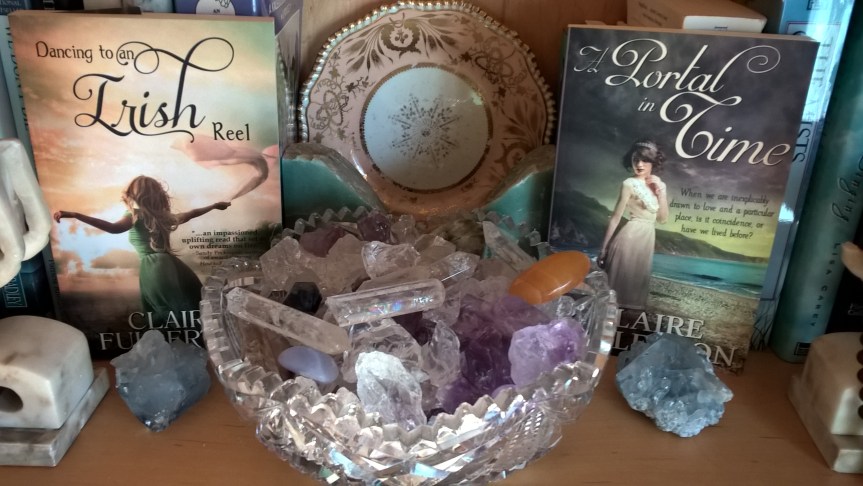
Strangely enough, I wrote my second published novel, “Dancing to an Irish Reel” years before I wrote my first published book, “A Portal in Time.” My first written novel (which I call to this day “my Irish book”) was a labor of love inspired by the year I spent living on the western coast of Ireland, and the story took up residency in my soul, begging to be shared. Its road to publication was not a predictable one, but it taught me invaluable lessons concerning unwavering belief, the power of tenacity, and the willingness to learn and grow as a writer.
I’ve heard it said writers don’t write because they want to; they write because they must. That’s how I felt about my Irish book, and although I’d never attempted a novel, I was not deterred because I had so much enthusiasm for telling this particular story. I embarked upon the writing of the book with blind faith, thinking all I had to do was tell the story of a single American female who relocates to rural Ireland, and the mere novelty of the setting in this heart-and-soul, fish-out-of-water story would pave the way to certain publication. It didn’t occur to me that my first draft would be one of many, that my book had to be painstakingly crafted, or that the endless process of fine-tuning by rewrites is where the real work would lie.
Once I’d finished the first draft of my Irish book, I sent it to three friends who know their way around literature. To say their combined comments were legion would be an understatement, yet I was encouraged because all three loved the story. I took their suggestions into consideration while I fine-tuned the book then I went over my manuscript three times more until I was satisfied it was in its best shape possible. Next I reviewed the tips in “The Writer’s Market” that pertain to writing a query letter to a literary agent. I composed an introductory letter and over a six month period, I followed submission guidelines and wrote to ten agents hoping for the next step: a request for the entire manuscript. I waited on pins and needles only to receive incremental responses succinctly saying my manuscript didn’t “fit their list.” But with each rejection, I sent out another round of query letters, and eventually found myself in a cycle of protracted waiting, which stretched out for more than a year.
While I waited, I continued to write. I revised my manuscript once again and researched other authors’ road to publication, where I realized they all had one thing in common: they’d each come to the table with a body of work to recommend them. Spurred into action, I began submitting personal essays to magazines that accepted unsolicited material, and began to rack up publications. Next, what I can only describe as an unusual chain of events brought me to the attention of my hometown’s newspaper, where I was offered my own creative weekly column, entitled, “In First Person,” which amassed a local following. At the time I was encouraged by the good things in play, but I still hadn’t found a literary agent. Then it occurred to me that two irons in the fire were better than one.
I took a reprieve from my Irish book and tried my hand at writing another book in a different genre. My aim was to enjoy the process and write the story I would like to read. The result was my paranormal mystery entitled, “A Portal in Time.” When I was satisfied with the manuscript, I researched publishers who accepted un-agented material, with an eye towards those who published similar titles. The rest, I can gratefully say, is part of my career history, for “A Portal in Time” was published by Vinspire Publishing in November of 2013.
When I mentioned my willingness to grow as a writer, it was to say that my work didn’t end with the acceptance of my novel. I went through two rounds with an editor followed by a proof reader. The process was a crash course tutorial in how to shape a book, and once “A Portal in Time” was released, I took everything I’d learned from the process and went back to my Irish book.
Eight months later, I submitted the manuscript of my Irish book to my publisher, knowing there’d be no guarantee. But fate can be kind, and at the recommendation of my publisher’s acquisitions department, I was offered a contract for “Dancing to an Irish Reel.”
It occurs to me now that my first book took an unusual course to publication, but in hindsight, many elements had to align. Summarily, it wasn’t enough to know I had a good story; I had to have enough faith in the book to wait through its many revisions. But first and foremost, I had to be willing to learn and grow as a writer.
An Author’s Long Range Plan

When an author completes their first book, there are salient questions they should ask themselves, with regard to what to do next: does my world revolve around seeking publication of this particular book, or is there a bigger picture? Do I simply want to get this book out in the world and rest on my laurels, or do I want to plot a long range career? If it is a long range career one wants, then an author has to be practical. Most of us begin as complete unknowns, so there is the imperative need for a peculiar mix of patience, perseverance and humility. The road to Rome wasn’t paved in one day, and all of that. Everything is a build.
It is a huge accomplishment to finish a novel. Huge. Once this is completed, pat yourself on the back, then honor your work by getting your manuscript in its best shape possible, whether this means finding a reputable editor, acquiring beta readers, or going over your manuscript fifteen times yourself. Next decide how you want to get your book out in the world. If you’re not interested in self-publishing, consider your book’s genre, check the market, see who is publishing your kind of book, then figure out how to approach them. Do you need an agent? Are there publishing houses that will accept your manuscript without an agent? What is the best way to go?
I say do both. Get ready to introduce yourself and your manuscript to both an agency and a publishing house by writing the best synopsis and query letter you can. Do your homework with regard to agents and agencies. The questions to ask are: who are their clients; where have they placed their authors? If you plan to go directly to a publishing house, the same questions apply.
I want to now point out the good news for first time authors: in this day and age, there are many small, independent presses that all operate like “The Little Engine that Could.” They have an ethos as a business that is applicable to a healthy mind frame for first time authors, meaning they believe in themselves and have a long range plan based on the fortitude it takes to build something of value. They need you as much as you need them.
Once a first time author places their book, the real work begins. This is where the crash course tutorial commences regarding what is expected from authors. The entire game comes into focus once you’re in the arena, much of which comes down to marketing and promotion. The idea is to work your book to the point that you find your readership. Once you’ve mastered this, you’re ready to begin again with another book, and this time you know what to do, having been put through the paces.
It is my impression that once an author aligns with a publishing house, their career will take on its own momentum, much of which is self-directed. But it helps to have a long-range vision going into it and commitment to staying the course.
The Gifts of Online Community
What’s important for an author to consider is once their novel is out in the world, the repercussive work that ensues becomes all about connections. It happens organically from the state of affairs at play in today’s publishing world, which is to say that authors are expected to be actively involved, not only in promoting their books, but in simply getting in the online traffic and more or less presenting themselves.
Readers want a face with a name, they like to discover similarities between themselves and the person behind the words, and they can find this via the social media community, where edges are often blurred. Pinterest, for example, is a great author platform on the one hand, but on the other, an author can establish boards that declare their love of dogs, their affinity with a certain region, the city or town in which they grew up, and a myriad other creative possibilities that give a follower something in which to connect with an author as a person first.
Twitter affords similar opportunities, and what is imperative to keep in mind about Twitter is that it is an ever-expanding network with endless connective possibilities that come in all manners. The ethos of Twitter goes beyond the act of following someone who follows you back; it’s all about staying engaged, promoting books by other authors, retweeting something that resonates with you out of the goodness of your heart, and basically staying in a flow that lets you present who you are as well as your interests.
I’ll venture to say it is the same with Google+, Facebook, the WordPress blogging community, Tumbler, About.me, Instagram, and a host of other platforms. All are online forums in which an author can make themselves known, and have it be about way more than just their books. The way I see it, with regard to authors, as long as they’re on these social media outlets, they may as well have fun.
I think there’s much to be said for authors coming to the social media table without an iron-clad agenda. They can let their contacts with people be about sharing, connecting, and supporting those with similar interests. Certainly social media is a great place to promote books, but at social media’s foundation is a sense of community, and this can be its own reward.
Of course, all this is not to say that authors shouldn’t come to social media without a plan; just that it doesn’t need to be a constant, self-orientated agenda. I think it’s best to consider social media and online forums as a place to connect with people who share common interests, and to stay engaged out of that sense of that commonality for its own sake.
Certainly, there are different vantage points from which to engage in social media. The good news for authors is that all of them create a ripple effect through the habit of that engagement. If your contacts regularly see your posts and like what they see, it stands without question that they’ll look into your profile, which is where they’ll get the great thrill of discovering your books!
10 Writing Commitments for 2016 (Guest Post by Author Claire Fullerton)
Thank you to Chris The Story Reading Ape!
Taken into an Irish Confidence

This Irish vignette has stayed with me throughout the years, the way poignant moments tend to do. It was only a moment, really, yet even at the time I could have told you of its impact; there was something about sitting in Pol’O’Phoil’s porch on the coast road in Inverin that made me think I’d truly arrived in Ireland, that I’d been invited into its inner sanctum and was a part of it now, even though I’d heard time and again that the look of me would have eventually done the same.
The first time I met Pol’ O’Phoil, I didn’t know he was a big deal. I’d struck up a conversation with a woman in a café on Galway’s High Street, who was in for the day from Carraroe. She sat with her bags clustered around her: the red and white stripped plastic kind with the flimsy handles that are doled out in every shop in Ireland. She’d swept them aside to make room for me on the red naugahyde community cushion against the café’s wall, and I’d scooted in gratefully as she accommodated while saying “You’re all right, there.” Her name was Kathleen O’Toole, and she wore her gray hair swept up in a bun over her round, blue eyes. Somewhere in her mid-sixties, I remember marveling at the quality of her skin: fair and translucent, the color of cat’s cream in porcelain, with high coloring that took up residency on her cheekbones and made me think of my mother.
I’d only been in Ireland a week. I’d flown out of LAX to Dublin on Bloomsday, spent four days in Rathgar at the friend of a friend’s apartment then taken the train across the island to Galway’s Eire Square because I’d been told the west would fulfill the vision I held of Ireland: rolling green fields cut through with gray stone walls on the way to the steel-gray sea. So it was here in the café on High Street that I told Kathleen O’Toole I’d be staying for a while; that I’d been offered a job at The Galway Music Center, and needed a place to live. “Where are the fields with the gray stone walls?” I’d asked her, and without hesitation, she replied, “You’ll be wanting to go to Connemara; you should take the bus to Spiddal and call into Pol’ O’Phoil.”
I stood shoulder to shoulder with Kathleen O’Toole, in front of a music venue named The Lisheen, waiting for the bus out into the countryside. When the bus appeared, it took me by surprise: it was one of those high, huge touring kinds, glossy and black and ominously official. It pitched and rolled through Salthill then turned left on the coast road, and came to a teetering stop in Furbo and Barna, before it touched down in Spiddal, where I thanked Kathleen O’Toole and disembarked. I couldn’t tell you now, exactly where Pol’ O’Phoil’s office was, but I do know it was amongst a cluster of shops along the side of the coast road. I was so new to Ireland at this point that I was swimming with disorientation over the sheer novelty of everything, but I found Pol’O’Phoil’s office because it was the only one with a glass door. He was on the phone when I walked into the worn, linoleum floored room, and I felt his wise owl eyes take my measure knowingly because everything about me screamed American outsider. He hung up the phone and listened patiently as I gave him my complete story, which he nodded through with his poker face as if he’d heard it all before. Without preamble, he reached into his desk drawer and presented me with a lone key topped with orange plastic. He laid it on the desk between us and said, “Now,” which I later learned is the Irish way of completing a transaction.
The place I rented was a one level, two bedroom holiday home in Inverin, with a kitchen and living room behind a spacious glassed-in porch. It was one of four positioned in a row on the same property beside Pol’ O’Phoil’s house; all perched on a hill overlooking the coast road, facing the boundless fields that ambled down to the sea. It was the modern architecture of the holiday homes that told me Pol’ O’Phoil was a forward thinker, for his real estate was glaringly dissimilar to the white-washed, thatched roof cottages peppered throughout the region nearby. In time, I learned his particular vision was the magnanimous sort, for he elected to do his part in bringing this particular stretch of Connemara up to state of the art standards in his capacity as local mayor, and that it was he who saw to it that the Knock Airport was constructed to fly passengers to the Aran Islands, although it was not he who laid this information bare. It seemed Pol’ O’Phoil had a certain reputation in the area, and word eventually drifted to me from the lips of locals that he was impressively well respected, even revered in the little area that was not much more than a certain stretch of the road.
And so it happened, one early evening, that I came to call round to Pol’O’Phoil’s back door to deliver my monthly rent. The kitchen door flew wide in mid-knock, and there stood Pol’O’Phoil’s wife, wearing an embroidered apron and wielding a wooden spoon.
“I was just after making dinner for himself,” she said, when suddenly a voice filtered from beyond, inviting me in. “Well then,” she said, then turned her back to lead the way to the residences’ porch, where Pol’O’Phoil sat king-like in a wicker chair.
Sometimes you find yourself in the presence of someone whose very essence makes you sit up a little taller. Pol’ O’Phoil exuded authority in his low-slung, square intensity; his steady gaze and no-nonsense manner held me fast as he offered me a chair. He conducted himself as if he’d called me to this audience; he asked me about myself in that covert manner the Irish employ when it comes to ferreting out information, which can only be described as leading the question.
“So you’re long here and doing some writing, you are,” he began, and one thing followed another in what morphed into an even, give and take exchange. Somewhere along the line he must have decided I was harmless, for the air shifted when his wife brought me a cup of tea, and he motioned for her to sit down and join us. In soft rhapsody, their story unfurled: that she was from Roscommon; that they had met as teens. They’d settled in Inverin decades before and raised their three sons, one of whom was no longer with us. I knew in that moment that this pair was no stranger to tragedy. They’d known life’s rough edges and cruel adversities, and in this particular instance, it was revealed, their deepest wound had been wrought from their youngest son’s suicide.
There are some moments, when self-revelatory confession is shared, that mere language becomes too weighty and too much. It hangs in the air with such reverberant force as to break the heart open, and as I sat in stunned silence after Pol’ O’Phoil told me about their son, it wasn’t so much that I was shocked by the fact of the suicide as I was by the fact that he had told me. It had been my impression that the Irish hold their cards close to the vest, yet here I was now in possession of this family’s intimate history. And there I sat on Pol’O’Phoil’s porch in the heart of Catholic Ireland, heavy with the realization that such an aberrant intimacy had been revealed.
I offer no moral to this story, except to say that it served as the pivotal point of the year I lived in Ireland. I knew now that behind that easy banter that often times masks the guarded countenance of the Irish people, there lays an individual story replete with life’s mercilessness. But you’d never suspect this in meeting most of them, for they are not a lot prone to laying their burden at your feet. Yet if they do, you are in-crowd, you are one of them, a part of it all, and the confidential grace they bestow will stay with you forever.
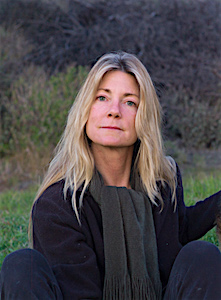
 Claire Fullerton Author