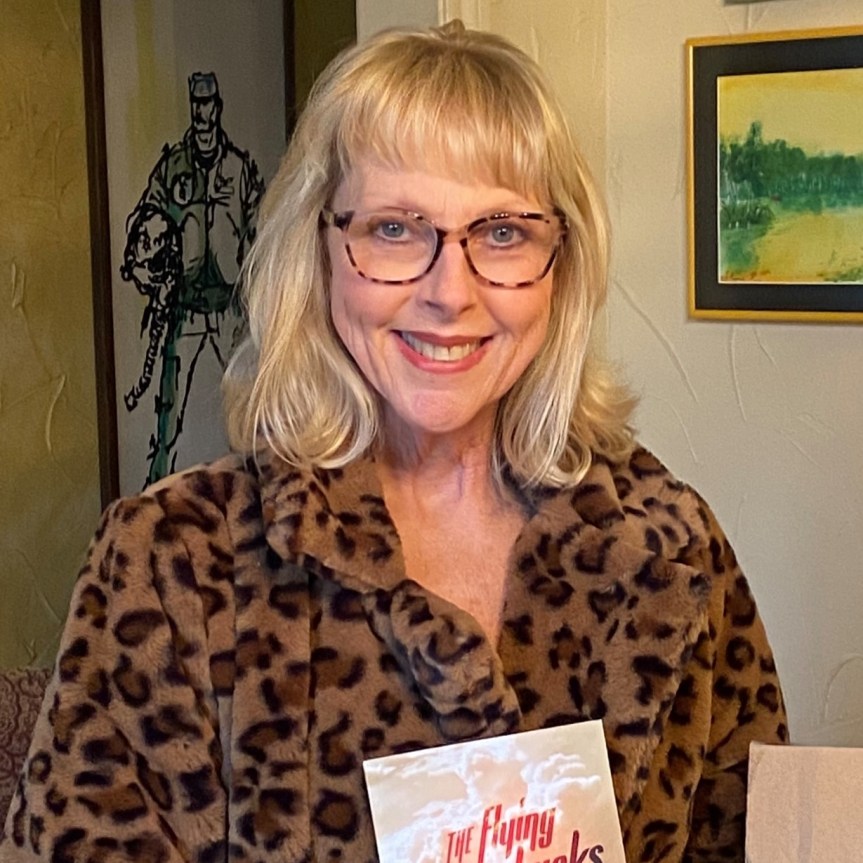
Just Released: The Flying Cutterbucks by Kathleen Rodgers.

Kathleen Rodgers’ The Flying Cutterbucks is a wonderfully unusual, romp of a realistic ride through the tension of a presidential election. Author Kathleen Rodgers takes a firm stance and keeps it real with well-drawn women characters you won’t soon forget. Memories unfold, the past haunts and ghosts are laid to rest in this intricately woven story set on the outskirts of Pardon, New Mexico to such a nuanced degree that you’ll feel as if you’re there. A celebration of strong, resilient female characters, The Flying Cutterbucks roared onto my Kindle device and kept me riveted.

Beach party

Book Description: Decades ago, Trudy, Georgia, and Aunt Star formed a code of silence to protect each other from an abusive man who terrorized their family. One act of solidarity long ago lives with them still. With the election of a president who brags about groping women without their consent, old wounds and deep secrets come alive again, forcing hard truths to be told and even harder truths to be left to the dead.

On the outskirts of Pardon, New Mexico, Trudy returns to her mother, Jewel, to navigate an old house filled with haunting mementos of her father who went missing in action over North Vietnam. As she helps her mother sift through the memories and finally lay her father to rest, Trudy will do her own soul searching to say goodbye to the dead, and find her way along with the other women in her family, and through the next election.

About the Author: Born and raised in Clovis, New Mexico, Kathleen M. Rodgers is a novelist whose stories and essays have appeared in Family Circle Magazine, Military Times, and in anthologies published by McGraw-Hill, University of Nebraska Press/Potomac Books, Health Communications, Inc., AMG Publishers, and Press 53. 

Seven Wings to Glory, Rodgers’ third novel, deals with racism and war and won an Honorable Mention for War & Military in the 2017 Foreword Indies Book of the Year Awards and was shortlisted for the 2017 Somerset Awards. Her second novel, Johnnie Come Lately, has garnered multiple awards, including the 2015 Gold Medal for literary fiction from Military Writers Society of America. 

Rodgers is also the author of the award-winning novel, The Final Salute, featured in USA Today, The Associated Press, and Military Times.

She and her husband, Tom, a retired USAF fighter pilot/commercial airline pilot, reside in a suburb of North Texas with two rescue dogs. After raising two sons, she  became a grandmother and is at  work on her fifth novel.

https://kathleenmrodgers.com/


Musing

Here on the west end of Malibu, I spend most of my days writing. I’ve been at a particular pitch for twelve years or so, and what I’ve come to realize is, if a writer stays with it consistently, they’ll realize they’ve created a lifestyle that feels like a spinning wheel whose spokes include the writing of a book, the book’s pre-release promotion,  post-release promotion, oftentimes travel to book events, and all the while, a work-in-progress that perpetuates the cycle.

I discovered long ago that balance is key to being a writer. I don’t think it’s healthy to spend too much time at my desk. I’m in the habit of stringing three or four hours in front of my computer then going outside to walk around, see if the sun is shining, put Groove Music on my headphones, and walk to the beach to watch the surfers. A little air and movement always does me good.

WP_20200522_09_51_55_Pro

But it’s amazing what can happen from the simple act of walking outside while taking a break from my desk. Last week, it was this: WP_20200524_10_12_55_Pro

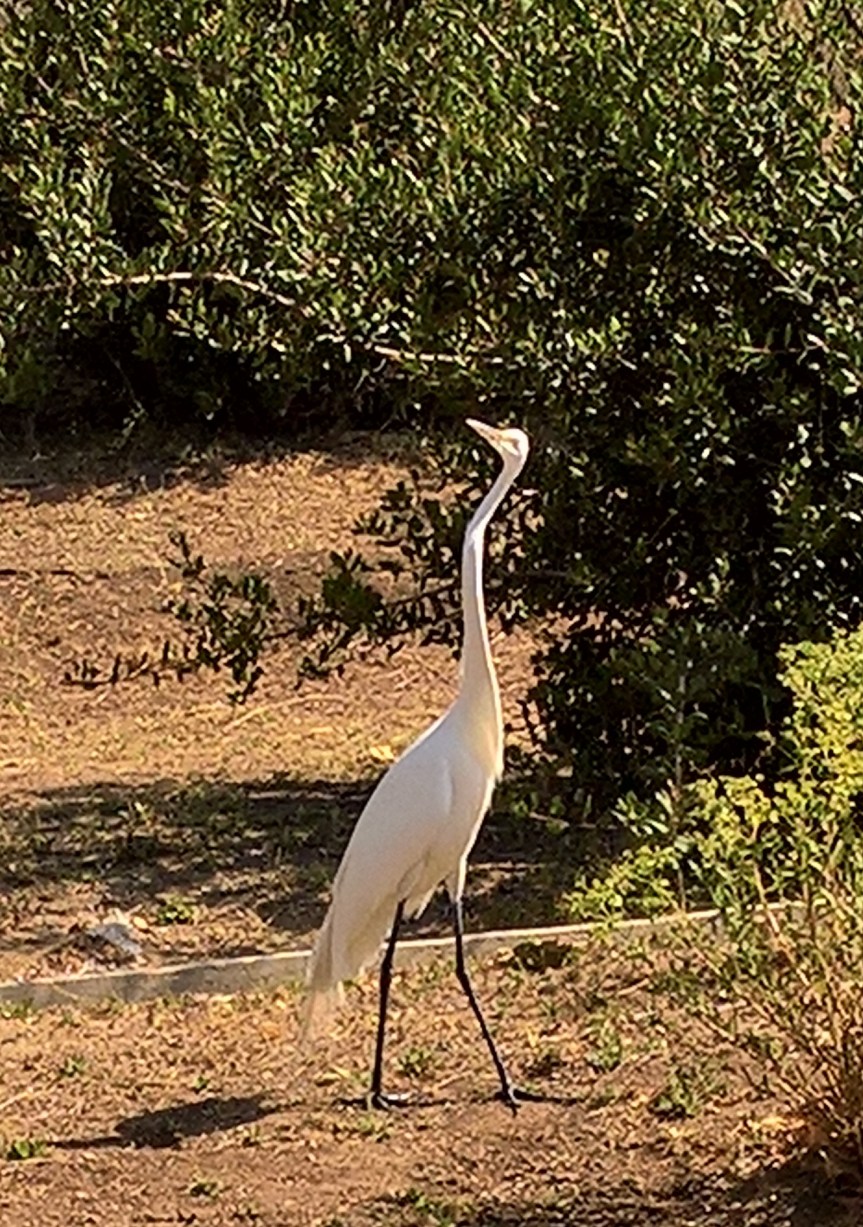
An egret walked around our backyard. It’s been seven days since this majestic bird appeared, and it shows no enthusiasm toward leaving. The Malibu terrain this time of year is hot and dry, and that means the prevalence of lizards, which, I suspect, is the egret’s draw.

WP_20200524_10_14_30_Pro

Egret Front Door

As you can see from the above photograph, the egret has made itself quite at home. Even our female, German shepherd, Ceili has grown used to it, though this isn’t always the case, especially when our other two shepherds are involved.

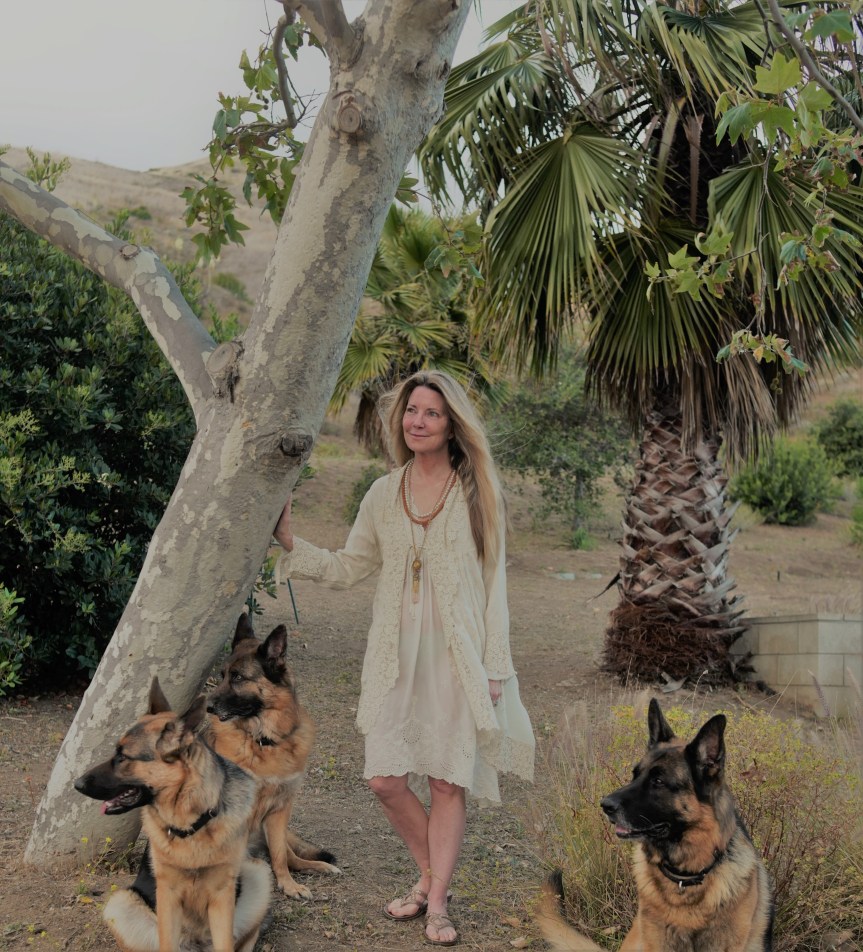
Here are Ceili, Ronin, and our 9-month-old puppy, Sorcha: three German shepherds with Irish names.

February

When it comes to seeking balance in my writing life, the environment I live in, and those that populate it give me a sense of balance.

I’m like may writers. I live on a wheel that constantly spins. It suits me, this combination of creativity, dedication, and purpose. Being a novelist is a fulltime job with no “there” to get to, only the commitment and perseverance it takes to stay on the path. As for the outcome of each book, beyond doing the very best I can do, it’s not my business. My business is to enjoy the process. I am grateful beyond measure when anything comes from one of my books, but it’s enough to enjoy the quality of my days; that I am spending time the way I like to, building something that matters to me, then walking outside to see what’s happening.


https://clairefullerton.com


Touring Como, Mississippi

I had cause to go to Como, Mississippi when I researched the area during the writing of my novel, Little Tea. A friend of mine knew I was writing a book set in Como and had the inspired idea to introduce me via e-mail to a Como local named Sledge Taylor. “Trust me on this,” she’d said. “Sledge Taylor will show you the lay of the land.”
I set a date with Sledge Taylor and flew from California to Memphis, where I stayed a few days then drove 45 miles south to Como, anticipating a full afternoon of being a tourist.

What follows is my attempt at sharing that memorable trip to Como, Mississippi, in hopes it will give you a taste of what can be found in a small gem of a town tucked away in the Deep South.
Driving from Memphis to Como, Mississippi on I-55 South, the flat Delta land is weighty. In the greening of May, both sides of the highway teem with flourishing oak, elm, hickory, and pine set among ochre forest litter so dappled and dense, it haunts with a history, its watchful eyes on the back of your neck.

WP_20170502_07_26_39_Pro


Turning off I-55 to Oak Avenue into Como, the first thing I saw was a rust-colored water tower on Sycamore Street,
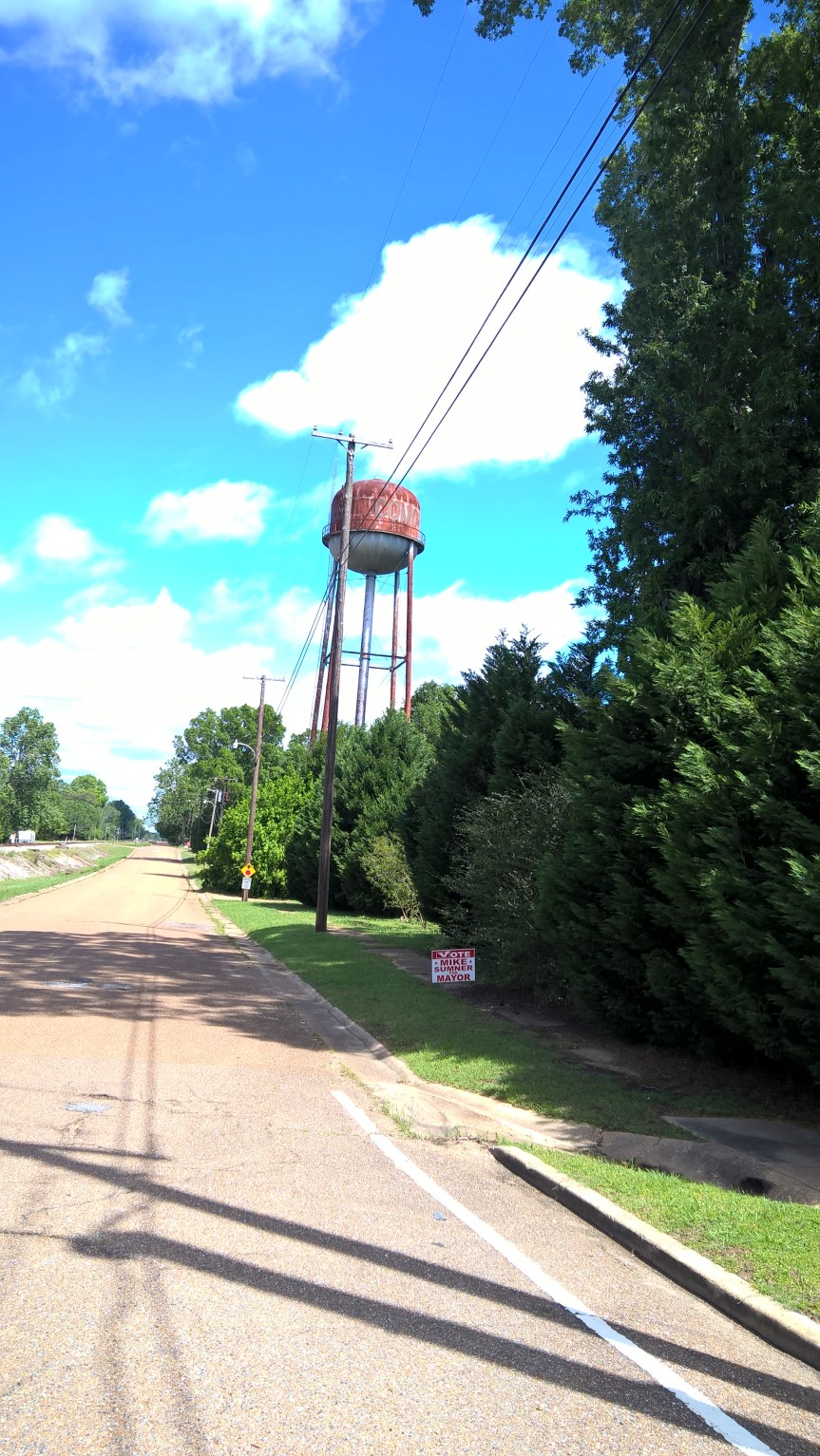
WP_20170501_11_17_09_Pro

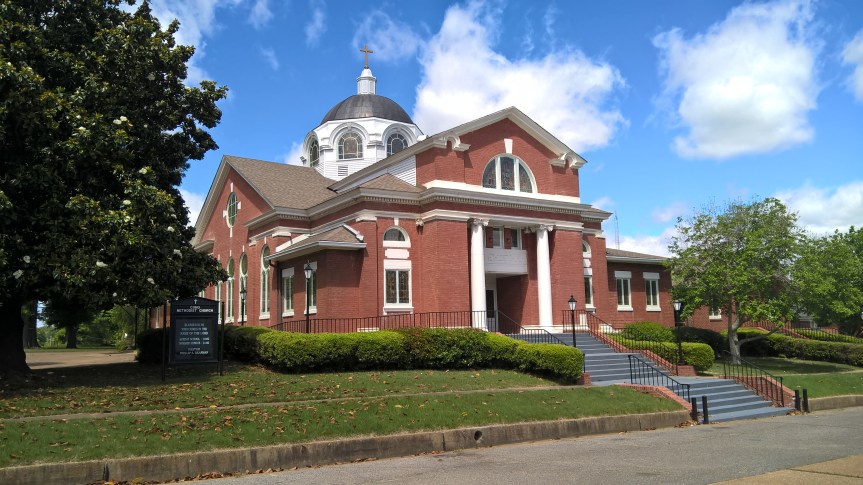
across the road from red-brick and multi-windowed Como Methodist Church, which looms on the corner of Oak and Main, its black signage announcing in white block letters, “Blessed Is He Who Comes in the Name of the Lord.”
WP_20170501_11_21_03_Pro

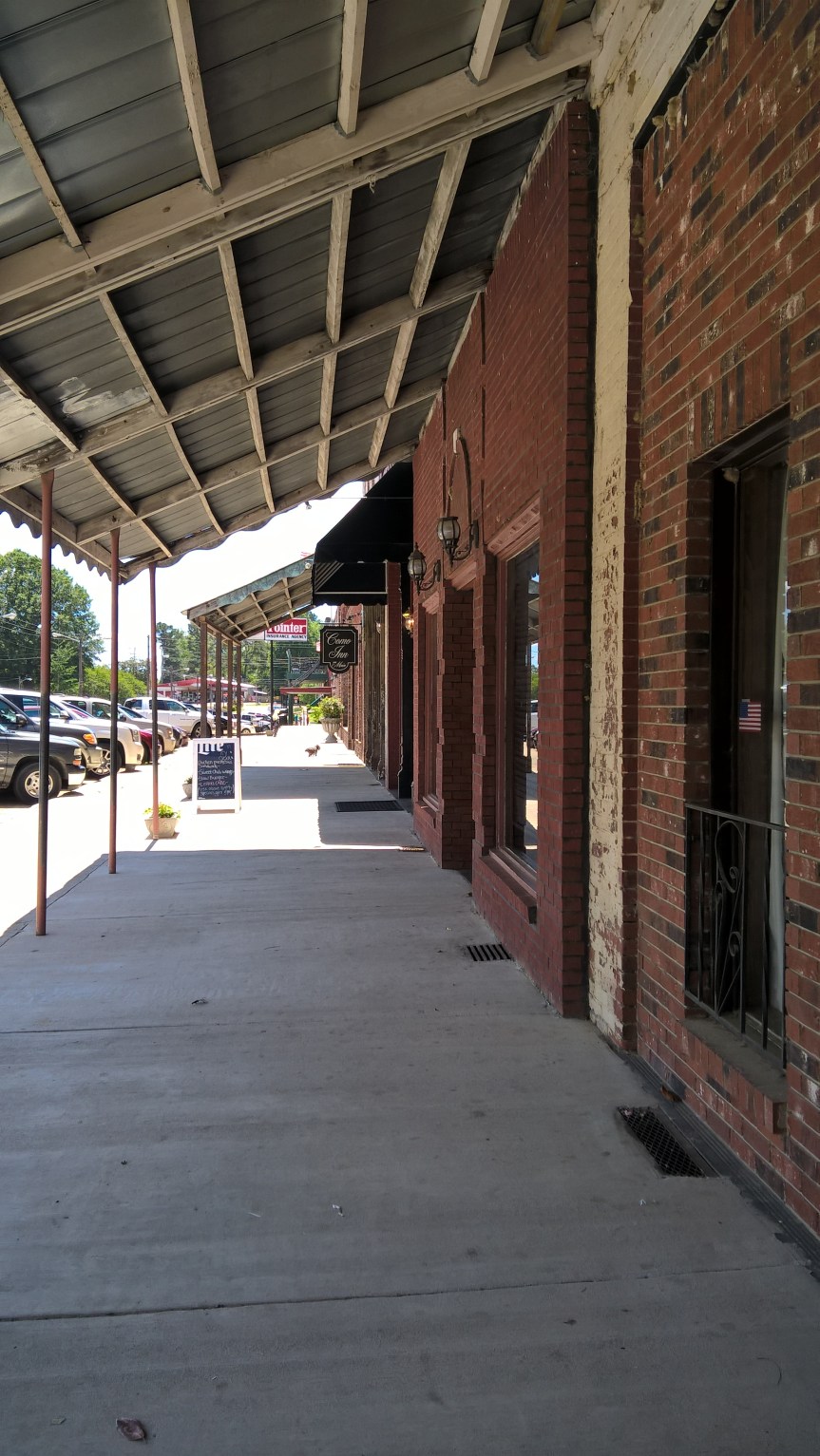
Down on Main Street, a row of one-off businesses sit like ducks in a row facing the railroad tracks.
WP_20170501_12_37_13_Pro

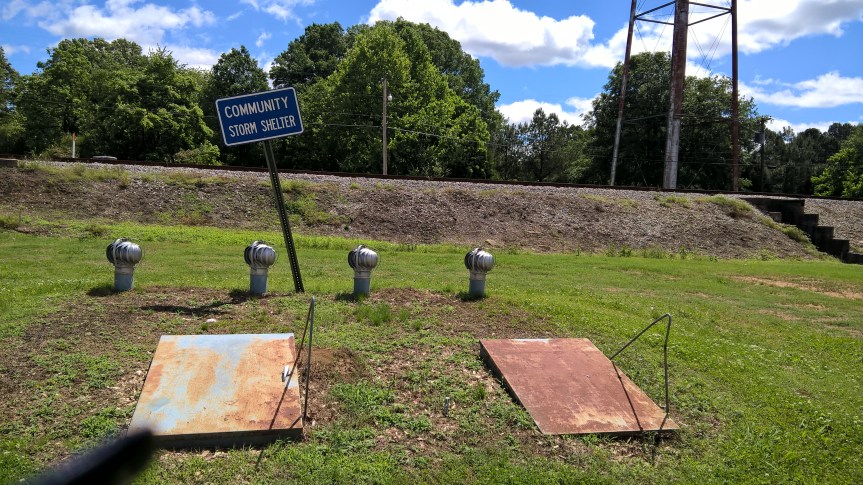
On the berm before the tracks, two community storm shelters lie side-by-side, their weathered metal doors to the underground ensconced like coffins with handrails no bigger than a coat hanger.
WP_20170501_11_23_18_Pro
I met Sledge Taylor at his office, in a brick building his family has owned since 1880. It was tucked down a hallway behind a glass door announcing “Office, W.S. Taylor, Jr. Farms,” topped with adhesive decals telling of his life: Delta Wildlife, Farm Families of Mississippi, University of Mississippi, and the National Cotton Council.

WP_20170501_12_37_09_Pro


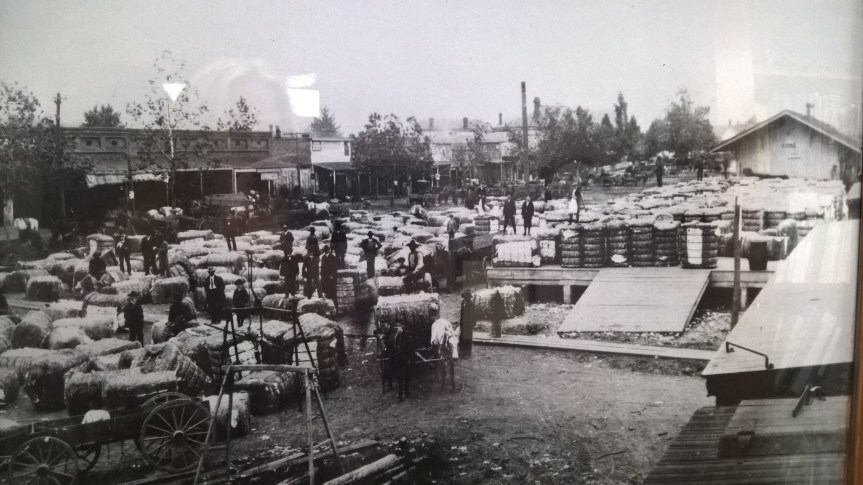
In his office, tiers upon racks upon bookshelves like a shrine to Como’s antiquity. There were plaque awards from cotton associations, faded photographs of men in bowties smiling before stacks of cotton bales,
WP_20170501_12_54_12_Pro

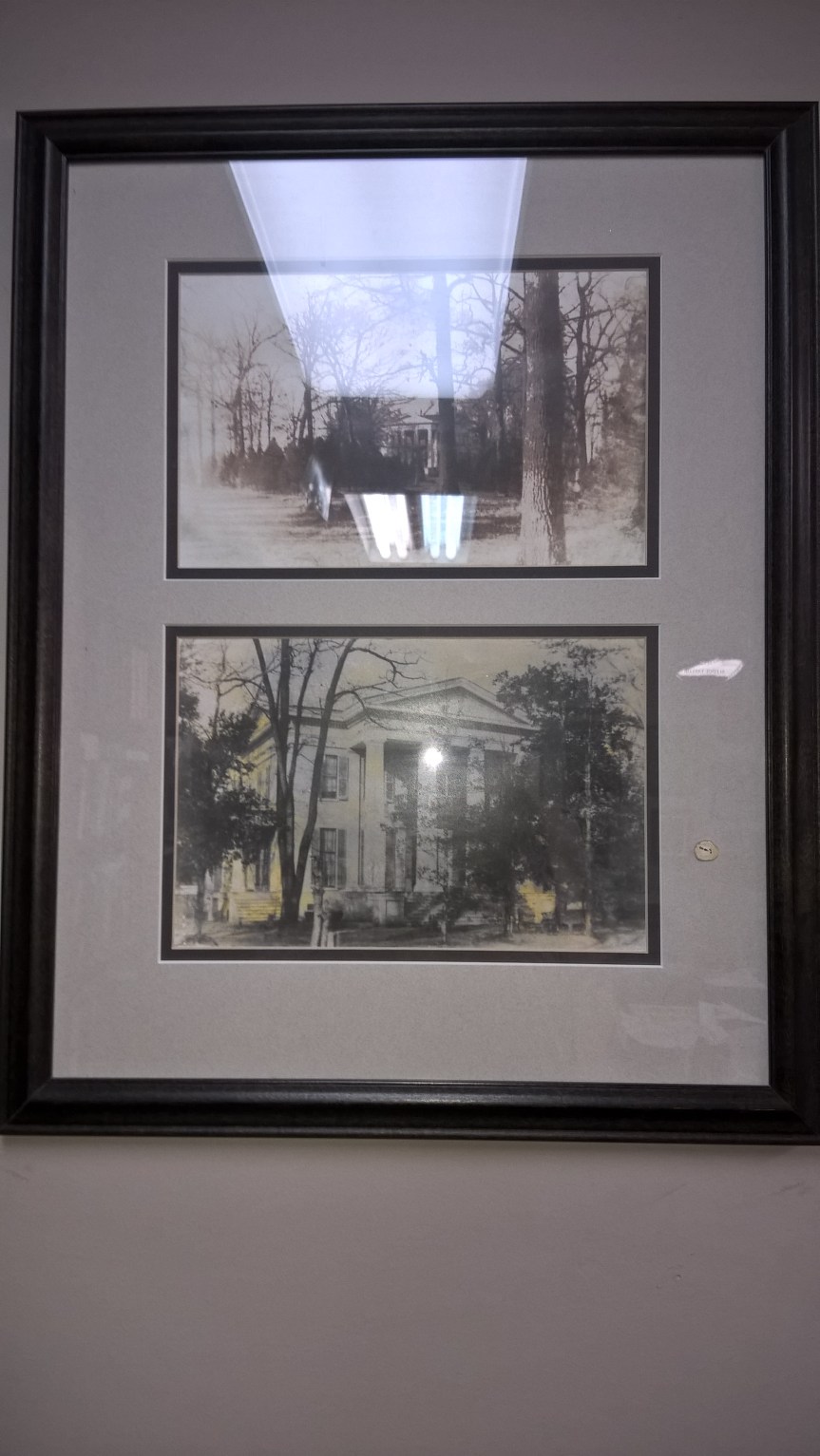
and multiple images of his family’s plantation taken at different stages of prosperity.
WP_20170501_11_37_50_Pro

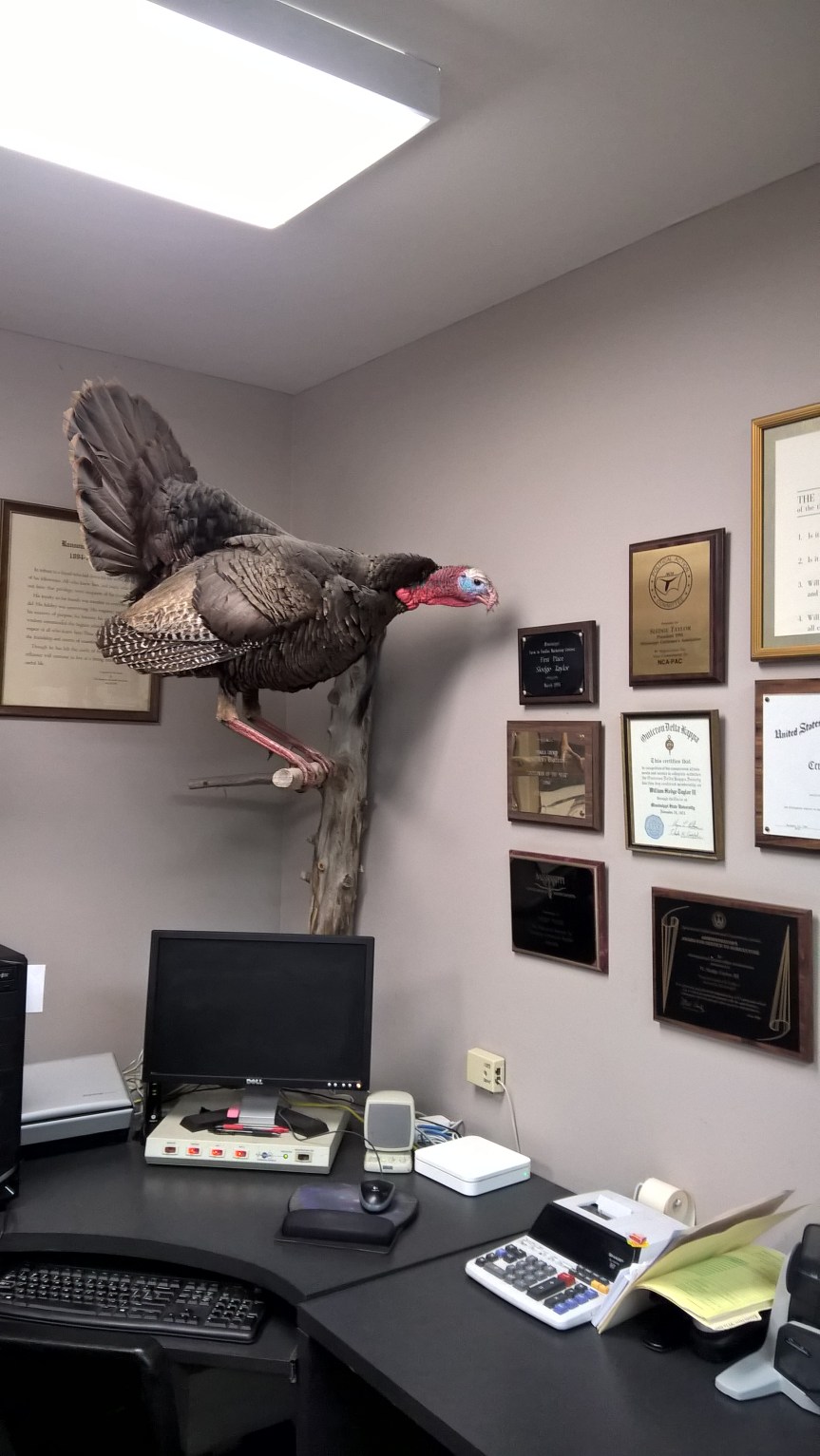
In the corner, a full-size taxidermy turkey perched in profile, its red head and tail feathers up, glowering above a computer.
WP_20170501_11_29_49_Pro

It was a thinking man’s racket of an arrangement, a ramshackle office on beaten wood floors so fascinating at every swivel, I wanted to stay and disregard why I was there.

WP_20170501_11_32_30_Pro
Sledge Taylor didn’t seem the agrarian type. Were you to pass him on the street, the last thing you’d think is there goes a farmer. A scholar or historian would be your first guess, and you wouldn’t be far off because today’s version of a Como farmer necessitates artist, historian, and scientist rolled into one. Spending time with this erudite man was an education in small-town history and what it means to be a gentleman farmer.
After a gravy-smothered plate lunch at The Windy City Grill,

WP_20170501_12_03_05_Pro

Taylor I took to the sidewalk of Main Street, where I received a tutorial in the history of every building standing shot-gun style on the historic street. Taylor currently owns the building that was once the town’s general store.


In its interior, everything was frozen in time. A mule harness dangled from a wall peg, a massive dust-covered, slatted accountant’s desk stood high with a matching wood stool, rows of curio shelving housed pitchers and planters and sets of china,

WP_20170501_12_39_56_Pro

and in one of the walls, a man named S.L. Sturdivant had thrown an ice pick at the 1968 Como Parts calendar, and it remained embedded because it made a good story and nobody thought to remove it.

WP_20170501_12_40_04_Pro
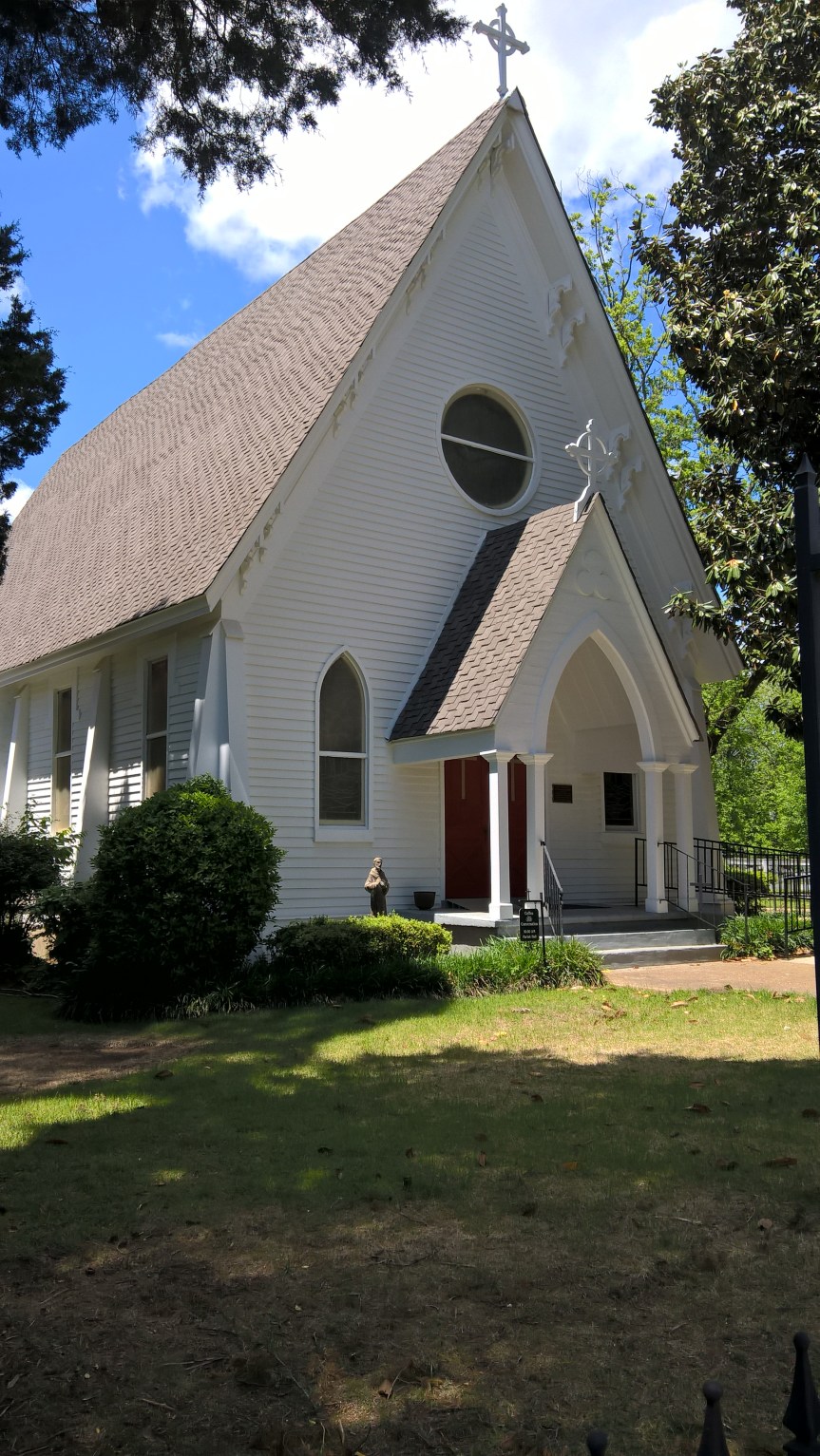
At the north end of Main, Holy Innocent’s Episcopal Church sat white wood and A framed, with two gold crosses emboldening its red, cathedral doors beneath a porte cochere beside an oak tree.

WP_20170501_12_59_16_Pro

WP_20170501_13_01_25_Pro 1


Inside, red-carpeted oak floors, pine pews, and five cathedral stain glass windows graced either side, one memorializing a Taylor named Robert, who died in 1916.

WP_20170501_13_02_16_Pro

Above the door on the way out, Jesus stood in a field beside three lambs, holding a staff in his hand and looking out from a pastoral mural.
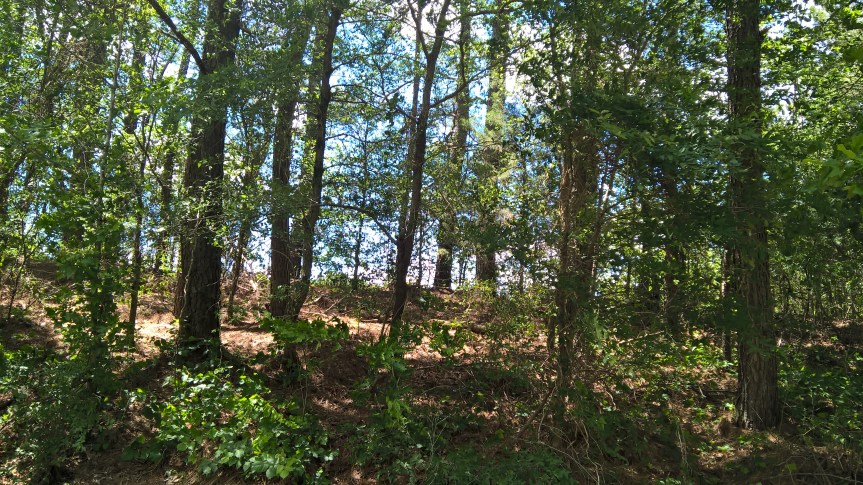
Out on the street, I photographed an elegant willow tree rustling in the breeze as we made our way to Taylor’s four-door, Ford F-150. In ten minutes, we were on the outskirts of Como proper, where a chiaroscuro of forest primeval stretched as far as the eye could see on either side of the mostly unmarked roads, winding through what seemed like borrowed time. Canopies of hickory, cherry, oak, and sweet gum covered Johnson grass, honeysuckle, Bermuda grass, crabgrass, and sage.
WP_20170501_13_31_03_Pro

As we careened through the countryside, there wasn’t a car in sight, nor was I given a heads up when my guide turned up a gravel road that rambled on two hundred acres until a house came into view.


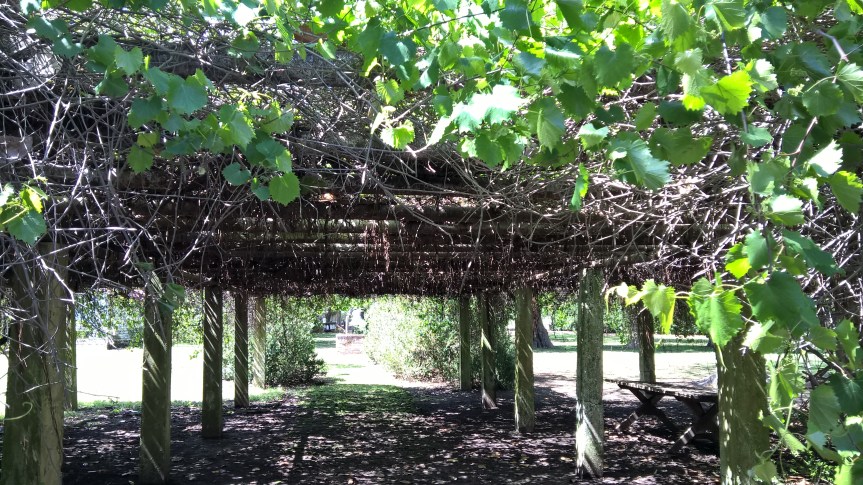
The house was massive. It rose up to a pitched red roof on a patch of groomed velvet lawn. Its four columns bracketed a seven-foot front door, but we sailed past and parked behind it. Like a ghost from the ether, a tall man approached and addressed my guide heartily as Mr. Sledge, though we were not expected. Within minutes, the ground’s caretaker of thirty- nine years invited us inside, and I was given a tour of one of Como’s grand houses. As the house is a private residence, primarily used as a weekend getaway, out of respect for its owners, I will refrain from posting interior photographs and let you use your imagination. I will share that we entered through the kitchen, whose entrance was heralded by a series of weathered brick steps beneath a heavy muscadine trellis, positioned just so, to abate the sweltering summer heat.
WP_20170501_14_50_57_Pro

I’ll describe the interior of the house for you: Every spacious room downstairs had a crown molded ceiling towering at nine feet. Beneath area rugs, the wood floors flowed through the dining and living rooms, straight to a screened porch furnished with leather club chairs beneath a whirring ceiling fan. In the catacomb of the entrance hall, two bedrooms opened at the left, adjoined by a dressing area and attendant ivory-tiled bathroom. In the center, a wooden staircase rose to a second-floor landing with a view of the grounds rambling to a cabin by a pond. Upstairs, three more bedrooms, one with a white mantled fireplace and two matelassé covered beds. All the bedrooms were resplendent with antiques. Some had four-poster beds, tall chests of drawers, and porcelain in nooks besides built-in shelving. Mounted on walls were portraits painted in oil: austere, looming family member facsimiles with eyes that followed you everywhere. It was not a glittering, ostentatious plantation house, boasting in pomposity, rather, it was a shop-worn, elegant house, pitched to a practicality that gave it a warm, sophisticated edge in a way that lived and breathed history and spoke of safe haven.
And it’s fascinating what you learn when being given a tour of a historic house in Mississippi. I learned there’s a problem in the area with ladybug infestation, that they swarm the window screens by the millions and lay eggs to the point where the light can’t get through, and that an Eastern box turtle crossing the road is as good a portent as any of coming rain.
Sledge Taylor drove me to another of Como’s magnificent houses, which had hundreds of rows of pecan trees at the front of the property.  I saw his family’s cotton gin, and fields where they’ve grown cotton and rice and soybean for as long as anyone remembers.

The sky above Como is endless in otherworldly hues I’ve never seen the likes of anywhere else. Hazy blue, yellow and cream, like sunlight filtering through gauze, and the air so soft in the first week of May, it enveloped the surroundings in a dreamscape.

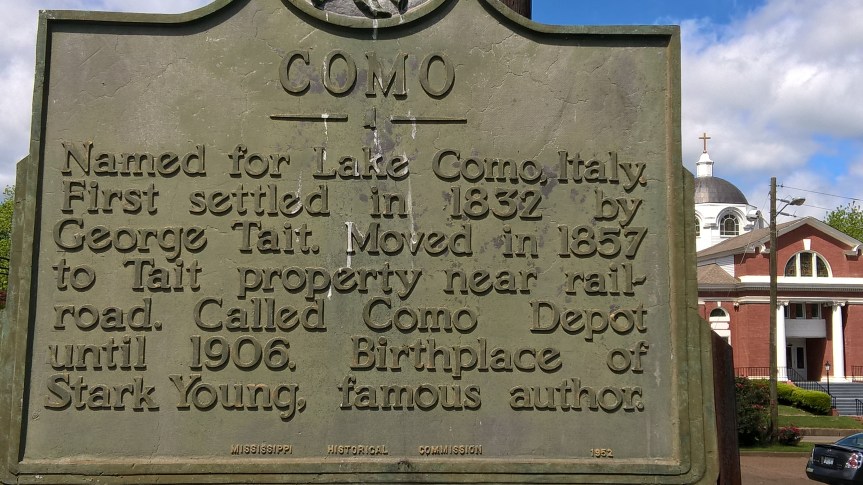
I did all I could to describe Como, Mississippi during the writing of Little Tea. Como has an inexplicable feel to it well worth writing about.  It sings of history and belonging. It’s a gem of a town in the loess country of Panola County;  population of 1,245, the likes of which spawn a man such as Sledge Taylor: a proud steward of land passed down through generations, the kind of man so proud of his Mississippi roots, he takes the time to show them off to a writer.
 

WP_20170501_11_18_17_Pro

83818413_762502274271129_5696037369426214912_n


https://www.clairefullerton.com

Gratitude to the WordPress Book Bloggers

I’d like to adequately express how much the WordPress book blogging community means to me, so suffer me while I warm up to it. I readily admit I’m the long-winded sort, even when I have an important point.

In this day and age of social media at the center of an author’s career, there is much to reconcile, and there are times I wrestle with keeping a proper perspective. On the one hand–and you’d think this to meet me in person–I  am ridiculously extroverted; I have what author, Pat Conroy, labeled the “Southern sickness” of assuming everyone I meet is my best friend, yet on the other, I am intensely private. I don’t like showcasing myself because it feels like grandstanding, and quite frankly I’m not impressed with myself to the point that I think I have anything of significance going over any other writer. We are all of us playing a long-game, making our own way in our chosen field. But sometimes it seems that one has to have an elevated sense of oneself in order to promote one’s work as an author. There’s a fine line these days, and it’s the one thing I didn’t realize going into “being” a writer. I’m probably like many people in their 50’s. We were the generation who woke up one day to discover the entire world was online and all over social media. When that realization dawned on me, it was a major hustle to catch up.

Then there is the concern of reconciling novel-writing as art and publishing a novel as a business. Once upon a time–as little as twenty years ago–authors wrote books and turned them over to their publishing house to promote. If they had an audience to justify a book tour, the publisher paid for an author to travel from book store to library to book club to meet readers in person. This is still done, but on a small, discerning scale primarily intended for authors who have wide name recognition. As for authors with a small or independent press, when it comes to a book tour, it’s all out of pocket because they’re essentially on their own.  Because book publishing options have opened up and there are now thousands upon thousands of authors in the race, the effort is geared toward keeping abreast of the tide and waving one’s hand above the noise. What’s more, in this day and age, the lion’s share of promotion falls to the author and is not only about promoting a book; authors have to promote themselves.

I’ve been torn over this for a while, now. I’ve limited myself in self-promotion by only going so far. I’ll take the opportunity here to add to Conroy’s definition of Southern sickness: friendly as we are, Southerners are an unflashy lot given to personal discretion. Too much going on about oneself is succinctly considered bad form.

I see it all on social media. People post all sorts of personal information from their family to their lifestyle to their political views. I’m not passing judgment, just making an observation, but I do know that too much online, personal information can put one in a vulnerable position and lead to an unintended consequence. It’s the downside of social media and it’s a struggle to strike a manageable balance.

So, how does an author effectively promote their book while striking a healthy balance? And whom should an author trust?

Which brings me to another consideration: There are the legions of online, profiteering book promotion businesses that have cropped up as a result of the book publishing boom. It’s staggering to me and hard to wade through the miasma to discern who is and is not reputable, while an author is hustling for literary recognition and book reviews. Authors need exposure for their releases, but who to choose within a reasonable budget?

Which brings me around to the WordPress book blogging community ( I told you I’d work my way to my point.)

I am humbled and proud to have aligned with the book bloggers here. I believe the book bloggers I’ve met on WordPress are as fine as they come. I stand in awe of Sally Cronin of Smorgasbord. Through Sally, I’ve met Olga Nunez, Michelle James, Robbie Cheadle, Teagan Geneviene, Rosie Amber,  DG Kaye, and Chris the Story Reading Ape to name but a few. I stand in awe of each bloggers’ deft handling of content, organizational skills, dedication, professionalism, and magnanimous spirit. I recognize you all as passionate people involved in the book world for all the right reasons. Your impact upon many authors’ careers is nothing short of significant.

At long last, here is my point:

I thank each of you who has featured my books on your blog for including me in your esteemed fold. Your support of my career is a force that sustains me, and I remain so very grateful.

https:www.clairefullerton.com


Where I Find Inspiration

May 1, 2020 | By Claire Fullerton
I was recently asked the following question in an interview: “As a writer, where do you go to find inspiration?” The interviewer cited the habit of Charles Dickens, who took to the streets of London every day in a five to six-mile stroll while looking for source material. I love the evocative image of this world-renowned writer cruising through London, his eyes darting as he tallied impressions, experiencing the common place of that city, taking mental notes.
Because I wanted to answer the question to the best of my ability, I visualized myself in Dickens’ place and pondered what he was really doing. I realized it wasn’t so much where he was as it was that he had his eyes open. The way I considered it, Dickens allowed himself to be influenced, and this is key for writers. The most seemingly inconsequential things can affect a writer, and by this I mean strike an emotional chord. That it typically happens in the blink of an eye doesn’t make it any less meaningful.
In the essay, Honeymoon: The Romance of Umbria, by Pat Conroy, which appears in The Pat Conroy Cookbook, Conroy writes of catching himself writing in his head instead of living in the moment as he stood inspired by an Umbrian sunset. With regard to writers, I believe this is a common habit. It’s a particular way of being in the world and at the heart of it is the desire to communicate coupled with love of language.
There might be shades of the longing to be understood, but I think it’s more a labor of love to help readers understand the world. After all, a writer’s task is to articulate, to put their impressions into words along with what they think and feel through the power of story.
I’ve heard it said that artists view the world through with a peculiar, particular lens.
They have the ability to engage with the world from the outside looking in, to be in it but not of it, stand apart in the middle of a crowd and act as witness. To many artists, this ability is a calling, be it acting, painting, dancing, or writing. In my opinion, writers are the archivists of the world, the interpreters of life who record events and impressions and are driven by the need to share their gift.
And yes, it all starts with finding inspiration, yet inspiration doesn’t so much reside without as it does within. The trick is to keep wide-eyed and aware as one goes about their days, to grab hold of inspiration’s cord once it’s struck and hang on until it resonates. Inspiration doesn’t have so much to do with location as it does the ability to access what’s within once it’s triggered. When it comes to writing, inspiration is a prompting that travels from the spirit of a writer to a blank page and results in a painstaking commitment to work built on hope and blind faith that it’s worth sharing.
In answer to that interviewer’s question of where I go to find inspiration, I tried my best to articulate my experience. I said rather than cite a locale, I can share what I do when inspired, and it has everything to do with discipline. I can be anywhere doing anything when inspiration comes from sight, sound, thought, mood or feeling. To me it’s all about listening to the voice within. The discipline starts with finding a pen

For Release news of my novel, Little Tea, the rest of this post continues here: http://booksbywomen.org/where-i-find-inspiration/

83818413_762502274271129_5696037369426214912_n

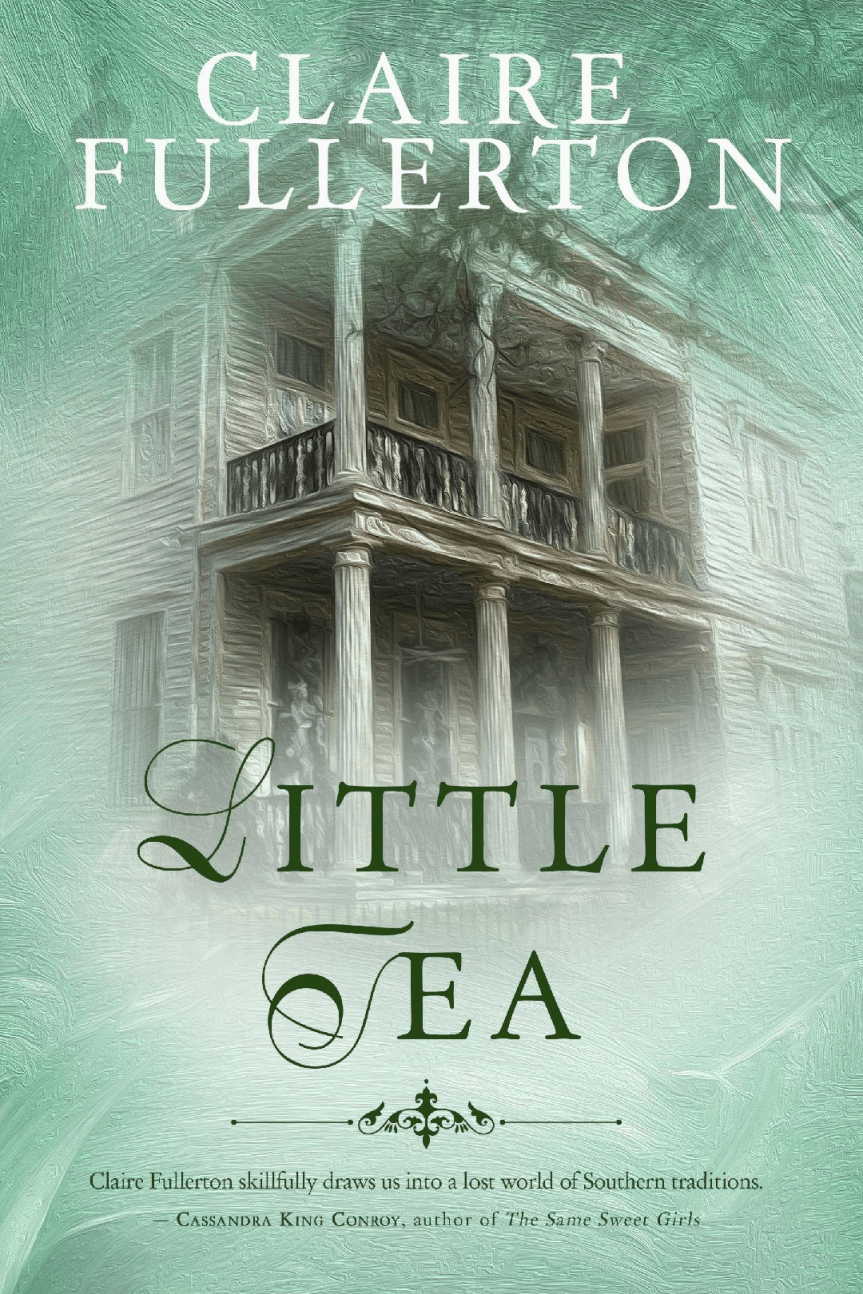
Little Tea’s Universal Link:  https://books2read.com/u/3nvz0R
Claire Fullerton hails from Memphis, TN. and now lives in Malibu, CA. with her husband and 3 German shepherds. She is the author of Mourning Dove, a coming of age, Southern family saga set in 1970’s Memphis. Mourning Dove is a five-time award winner, including the Literary Classics Words on Wings for Book of the Year, and the Ippy Award silver medal in regional fiction ( Southeast.) Claire is also the author of Dancing to an Irish Reel, a Kindle Book Review and Readers’ Favorite award winner that is set on the west coast of Ireland, where she once lived. Claire’s first novel is a paranormal mystery set in two time periods titled, A Portal in Time, set in Carmel-by-the-Sea, California. She is a contributor to the book, A Southern Season with her novella, Through an Autumn Window, set at a Memphis funeral ( because something always goes wrong at a Southern funeral.) Little Tea is Claire’s 4th novel and is set in the Deep South. It is the story of the bonds of female friendship, healing the past, and outdated racial relations. Little Tea is the August selection of the Pulpwood Queens, a Faulkner Society finalist in the William Wisdom international competition, and a finalist in the Chanticleer Review’s Somerset award. She is represented by Julie Gwinn of the Seymour Literary

Follow her on Twitter @cfullerton3
Find out more about her on her website https://www.clairefullerton.com/

As Published on:

Women Writers, Women(‘s) Books
Online Magazine
http://www.booksbywomen.org
Twitter @womenwriters
Facebook Women Writers Women(‘s) Books

Southern Family Saga, Mourning Dove

As I count the days to the release of Little Tea, lo and behold, this review of my last novel, Mourning Dove was just sent to me by the Chanticleer Reviews. Thought I’d share it here.

Chanticleer Book Reviews & Media

Camille Crossan appears to be living an idyllic life in Claire Fullerton poignant, evocative novel, MOURNING DOVE. Living in a superbly appointed mansion in “magnolia-lined and manicured” Memphis during the 1960s and 1970s, Camille’s family life shimmers with Southern charm. Beautifully penned #SouthernNovels with all the trimmings. One of our favorites. Highly recommended. #SouthernLiterature #PulpwoodQueens #CIBAs

firstplace-somerset-250x300

Review:

Camille Crossan appears to be living an idyllic life in Claire Fullerton’s poignant, evocative novel, Mourning Dove. Living in a superbly appointed mansion in “magnolia-lined and manicured” Memphis during the 1960s and 1970s, Camille’s family life shimmers with Southern charm. Her mother, Posey, usually outfitted in a Lily Pulitzer shift, Pappagallo shoes, and a signature shade of pink lipstick, is a beauty with the wryest sense of humor and steel determination.
As a young girl, Camille, known as Millie, sees how those in her mother’s social orbit are captivated by her aura, how men are easily seduced by her flirtatious charm. Society is a game played by those who know its rules, and Posey means to win. Every time. She, however, isn’t even the charismatic one in the family – that’s Finley, Millie’s older brother, who brims with intelligence, startling good looks, and messianic magnetism. A peek beneath the shiny surface of gracious Southern living, however, reveals enormous cracks in the foundation of the Crossan family. One of the first things the adult Millie tells us about her brother is that he is dead. She takes the reader back, though, to their childhood and coming of age, a tumultuous journey that both binds and separates the siblings.
During her first decade, Millie’s family was living in Minneapolis with her tender-hearted, intellectual father who succumbed to alcoholism. Loss of money and, worse, the accompanying loss of social status, motivates Posey to uproot her children and move them to her childhood home in Memphis, a palatial mansion filled with antiques and portraits of forebears. It’s a volatile time, inside and outside the house, as centuries-old Southern traditions clash with the youth counterculture.
Millie watches as her mother holds court during daily cocktail hours, a prospective second husband soon on the reel, and Finley, a gifted guitarist, plunges into the local music scene. But what role will she play? It’s difficult for her to see herself entirely separate from her brother for whom she has, “…a love devoid of envy, tied up in shared survival and my inability to see myself as anything more than the larger-than-life Finley’s little sister.” Millie will grapple with her identity and question her destiny, whether she’ll be a bride in the Southern belle mode of her mother or if she’ll be the blossom that falls far from the magnolia tree. Meanwhile, Finley’s charisma both explodes and implodes in shocking and dangerous ways as he becomes revered by a group of people with no connection to the gentrified life. Like Millie, the reader is transfixed and apprehensive about where this less-traveled road will take Finley. Although the reader knows his grim fate from the outset of the book, his storyline is so engrossing that no drama is lost.
Author, Claire Fullerton, is an enchantress with prose. The writing in this novel will cause you to stop, reread sentences, savor them, and note their architecture. Scenes sparkle as she masterfully summons moods and atmosphere. The reader can see Millie’s lovely but haunting home, and smell the rich fragrance of dogwood on a soft spring day. Fullerton has a keen ear for witty, authentic dialogue, and she deftly reveals much about personalities via conversation. It’s difficult to take leave of such a vivid, fully realized world. Fortunately for readers, Fullerton has written several books, opportunities to spend more time in her richly crafted worlds.


https://www.clairefullerton.com
 

5star-300x30083818413_762502274271129_5696037369426214912_n

Universal link for Little Tea:  https://books2read.com/u/3nvz0R


The Story Behind My Book Trailer

Years ago, I was on the airstaff of WEGR, Rock-103 in Memphis. I’d worked at four radio stations before I was hired at Rock-103 and at the time, considered that album-oriented rock station on Memphis’s infamous Beale Street the end all and be all of music radio. Because it was. To be working in music radio in the 80’s in Memphis, Tennessee, with its undisputed reputation of being the town that brought the Delta Blues to the big city, which Elvis, in his unique way, turned into rock-n-roll and inspired The Beatles and a host of others who put Rock-n-Roll on the American map was something I never forgot. Music is Memphis’s claim to fame. It permeates the air of that historic city and anchors its denizens proudly in a strong sense of place.
When one is a DJ at a radio station that reaches thousands, daily, one lives in a world within a world: a close-knit society populated by people who share the same passion, speak the same language, and hold music at the top of the hierarchy of things that really matter. In radio, the wheels turn on a schedule. There are air shifts and play lists, a Program Director, Music Director, sales staff, publicity team, engineers, and in the middle of it all is the Production Director.
At Rock-103, we called Rick Robinson the Production King. We called him that because Rick seemed to have taken up permanent residency in a small studio down the hall from the control room, where he produced radio spots and promos that went on the air. As Rick existed in the midst of a tribe of on-air talent, he was in the habit of summoning any one of us, when we least expected. He’d want to record a voice over for a commercial, a PSA, or perhaps a glib parody, depending on what he was working on in his electronic cave. Rick was the guy who was always firmly and squarely THERE in the creative commotion of Rock 103. He was a permanent fixture with a peculiar set of skills I didn’t know the half of, but I knew he spun magic on behalf of us all at Rock-103, and we relied on him.
It’s funny who you lose track of as the years transpire, yet perhaps it’s understandable for me since I no longer live in Memphis. Life moves on. People change careers, and I left music radio when I moved to Los Angeles and got involved in the record business. Simultaneously, I started concentrating on what I’d been doing since I was in my late teens: writing. Writing has been its own twisting path. So far, it includes four traditionally published novels and one novella, but the reason I’m mentioning this is to say that along writing’s twisting path, I had the good fortune to become involved with Southern Writers Magazine. Which, unbeknownst to me for the first year of my affiliation, just so happened to have its headquarters in Memphis.
It took my correspondence via multiple emails with the Creative Director of Southern Writers Magazine to discover they were headquartered in Memphis. Gary Fearon was the Creative Director’s name, and he and I had cause to collaborate on an advertisement for one of my books. Our back-and-forth correspondence ended up including the proverbial kitchen sink, after I discovered Gary was writing to me from Memphis. “I’m from Memphis,” I twittered.
“I thought you were in California,” came Gary’s reply, which turned into my telling him I was raised in Memphis, where I went to high school, and that I worked in Memphis radio.
“Which station?” came Gary’s query, and when I emailed my response, he said, “You worked at Rock-103? Me too.”
The thing about radio DJ’s is many use a stage name. When Gary Fearon was a DJ at another radio station, he used the name Rick Robinson then retained it, when he worked in production at Rock-103. To say we did chapter and verse over what a small world it is puts it mildly.
But back to my point of how life moves on: Gary Fearon left Southern Writers Magazine to focus full-time on his production demands. Robinsong Productions is the name of his company, where he produces radio and television spots for recording artists on tour and voices audiobooks ( because he’s blessed with precise diction and a tenor both authoritative and memorable.)
And here sat I, on the threshold of the release of my fourth novel, Little Tea, which is set in three places: Memphis, Heber Springs, Arkansas, and Como, Mississippi. The release date is coming up—May 1st—and in this visual world of promotional memes and scroll-stopping images, it occurred to me I needed a book trailer for Little Tea.
I looked at the pictures I took the last time I was in Como, Mississippi and thought, “Who can do a book trailer?”

One name came to mind: Gary Fearon the Production King!
Above, I’m sharing a picture of Gary Fearon. He’s in his studio at Robinsong Production, hard at work on Little Tea’s book trailer.
I love the surprising turns of life’s connections. In a strange way, it feels like an example of what comes around goes around.
I can’t wait to see Little Tea’s book trailer!  I understand Gary found an image of a redbone coonhound and will put it on a dirt road, which is suggestive of a scene in the book, Little Tea.
I’ll share the book trailer, here, once it’s finished!
In the meantime, you can read about Gary Fearon at two websites:
http://www.garyfearon.com  book trailers and such
http://www.robinsongproductions.com concert clients


Little Tea releases May 1st by Firefly Southern Fiction. It’s available now for preorder.

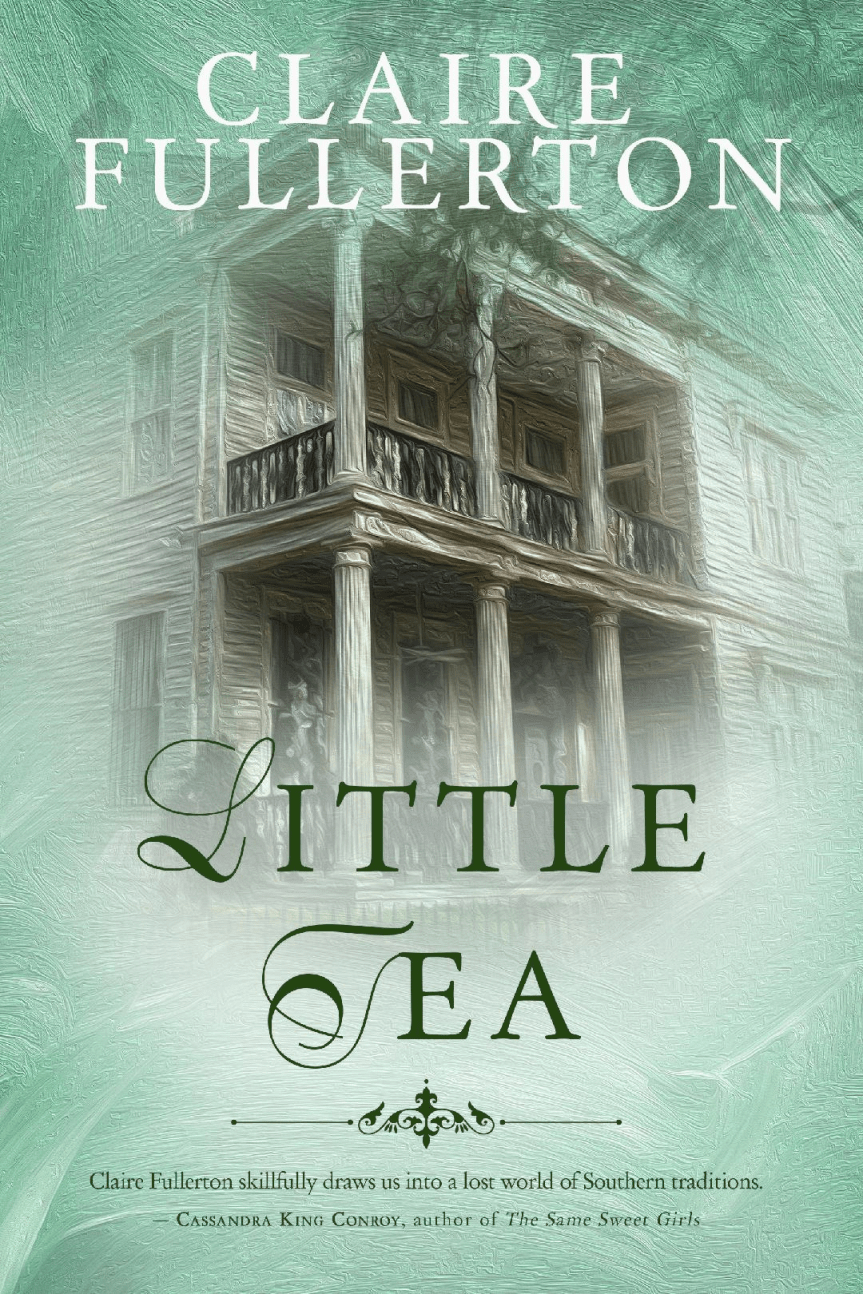
Little Tea ( named after a character whose real name is Thelonia Winfrey) is the story of those long-lasting female friendships that see you through a lifetime, wherein there’s shared history; language; and sense of humor. The narrator, Celia Wakefield spent part of her childhood at her family’s 3rd generation land in Como, Mississippi, where the cultural social mores concerning racial integration had yet to fully evolve. This premise sets the dynamic of a trajectory of events that impact her friendship with Little Tea and haunt Celia Wakefield decades later. When Celia reunites with two childhood friends at Greer’s Ferry Lake in Heber Springs, Arkansas, Celia’s past resurfaces for long-overdue resolution.

Hope

One of the gifts of living by the ocean is the view is ever-changing. I have a particular relationship with this constant inconstancy. I am grounded in a reality that fluctuates from no will of mine and it humbles me to bear witness to a majesty I know is endless.

I can literally see the curvature of the earth from my front deck in Malibu. Some days the sea looks like mirrored glass; other days the roiling whitecaps attenuate forever. This is what I can see, yet I know life teems beneath the surface in the labyrinth of an ecosystem of which I can only speculate. And yet I know it is there. Hidden from view, from knowledge, from judgment, from the temptation of assumption. All that is given to me is the moment and my perception. If I stand still and tune into my thoughts, I am aware of my consciousness. I believe if one really wants to know themselves, all they have to do is listen to the song within.

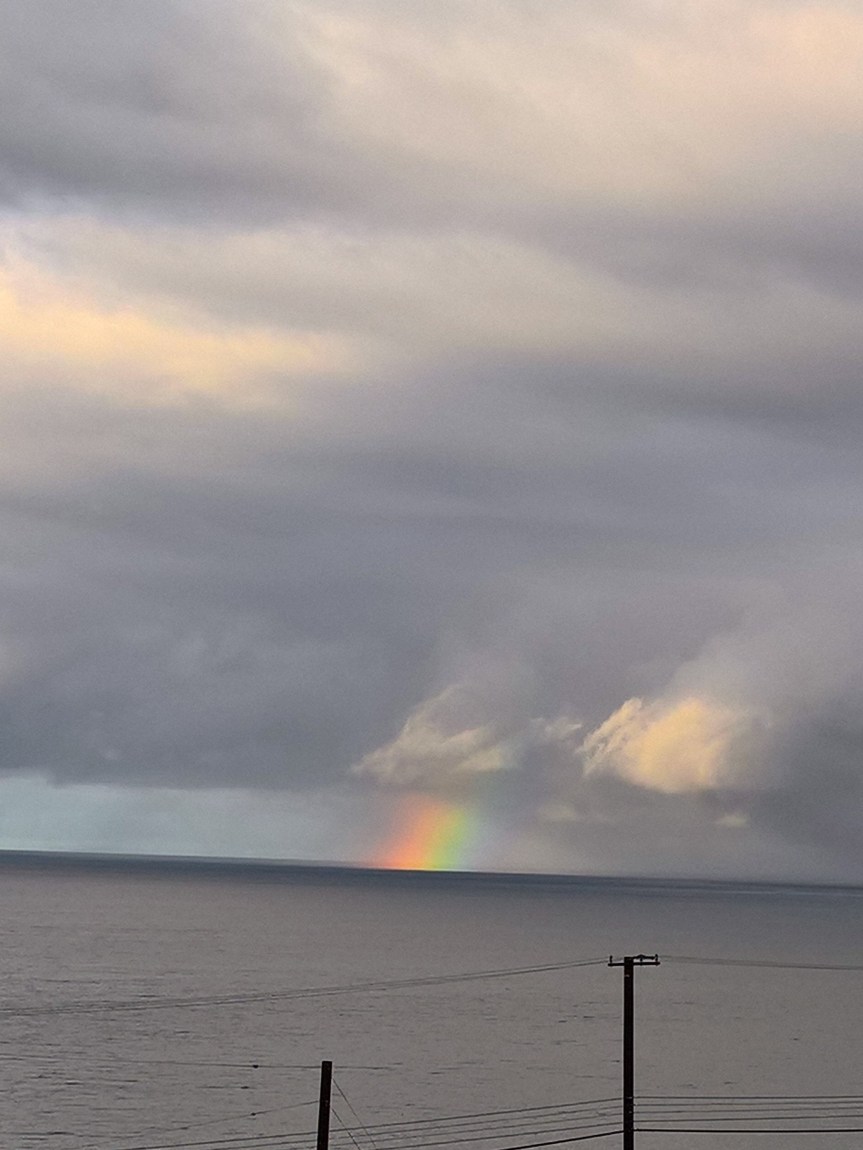
I’m saying all this because first thing this morning, I walked out and was caught unaware by the photograph you see above. It startled me in an awestruck, sobering way, yet the voice I consider the intimate “me” resounded unbiddenly in two words: “Of course.” In that moment, I was reminded of my fundamental beliefs, and they have everything to do with my relationship with the unknown. What I believe is things are rarely as they seem. In the midst of ambiguity, there is always hope.

You don’t need me to remind you these are strange times, unbalancing times, unsettling times, but what I’m thinking of is my understanding of the bigger picture. Because you have to pay attention to your perception of this world. If you do, it dictates experience both immediate and long-range. I’m neither prophet nor seer, but I trust my intuition. When I walked out this morning and saw this neon rainbow placed on the sky seemingly by the hand of God, what I knew at that moment is, always, there is great hope.


A Timely Letter from F. Scott Fitzgerald

A LETTER FROM F. SCOTT FITZGERALD, QUARANTINED IN 1920 IN THE SOUTH OF FRANCE DURING THE SPANISH INFLUENZA

Dearest Rosemary,
It was a limpid dreary day, hung as in a basket from a single dull star. I thank you for your letter. Outside, I perceive what may be a collection of fallen leaves tussling against a trash can. It rings like jazz to my ears. The streets are that empty. It seems as though the bulk of the city has retreated to their quarters, rightfully so. At this time, it seems very poignant to avoid all public spaces. Even the bars, as I told Hemingway, but to that he punched me in the stomach, to which I asked if he had washed his hands. He hadn’t. He is much the denier, that one. Why, he considers the virus to be just influenza. I’m curious of his sources.
The officials have alerted us to ensure we have a month’s worth of necessities. Zelda and I have stocked up on red wine, whiskey, rum, vermouth, absinthe, white wine, sherry, gin, and lord, if we need it, brandy. Please pray for us.
You should see the square, oh, it is terrible. I weep for the damned eventualities this future brings. The long afternoons rolling forward slowly on the ever-slick bottomless highball. Z. says it’s no excuse to drink, but I just can’t seem to steady my hand. In the distance, from my brooding perch, the shoreline is cloaked in a dull haze where I can discern an unremitting penance that has been heading this way for a long, long while. And yet, amongst the cracked cloudline of an evening’s cast, I focus on a single strain of light, calling me forth to believe in a better morrow.
Faithfully yours,
F. Scott Fitzgerald


This is parody written by American author Nick Farriella for the humor site McSweeney’s earlier this month.


https:www.clairefullerton.com
Colorado Mandala by Brian Francis Heffron: Review


22964699A gorgeous, fully realized, generously crafted story on male friendship and the deep wounds motivating main character, Michael, as told through the perspective of his intimately effected best friend and business partner, Paul.
Michael is a Vietnam war vet, with a festering secret underscoring his high-living, swaggering behavior. He is a man’s man to his core: streetwise and wary, cocksure and battle-scarred with his own code of honor. It is post-war 1970’s Manitou Springs, Colorado, and author Brain Francis Heffron captivates the reader with such panoramic descriptions of the Pike’s Peak area at such a finely-tuned altitude as to cast the environment as sacred, while the reader all but breathes the clear mountain air.
The title of this book is inspired by Sarah, the wispy and vulnerable single mother at the center of a lover’s triangle, who paints batik images on silk and twists her long flaxen hair in a bun. Michael is protective of Sarah from an unfolding hidden agenda. Paul struggles with the duality of his building feelings for Sarah and loyalty to Michael. In the expert hands of writer Heffron, each character plays off the others with such reasonable impetus, Colorado Mandala reads like a treatise in deep-seated psychological motivation.
This book is astoundingly action-packed and character-driven. It takes the reader into dark caves and sets them in the gambling center of a mountain party’s cockfight. It is seamlessly paced and weaves minute visual images with poetically descriptive narratives and uncommon use of language. I understand Mr. Heffron is a poet, and it shows. There isn’t a weak sentence in the engaging Colorado Mandala, and I held my breath at its end, during one of the best literary denouements I’ve ever read. Colorado Mandala is the very definition of a page-turner. It will make you a fan of author Brian Francis Heffron, and is the kind of book you’ll recommend to your friends.