Life’s Rich Tapestry by Sally Cronin

Life’s Rich Tapestry by Sally Cronin

We come to know a person’s mind through the words they speak; their personality through what they create, and their heart through what they write. Put this all together and you’ve been gifted a glimpse into an artist’s soul. This is how Life’s Rich Tapestry Woven in Words impressed me. Author Sally Cronin’s precious gem of a book is nothing short of fluid insight into all that it means to be human in a round-robin way as to address the entire sphere in bits and pieces that leave a lasting impression. These are musings delivered artfully, the perfect melding of heart, mind, and soul. In sharing her personal views, the author invites us to examine our own impressions of the day-today by shining light on life’s rich nuance. There is something profound in these meditative pages, something joyous and real that takes nothing for granted by sheer virtue of the fact that Sally Cronin has called them by name. In addressing the natural world, celebrating pets, seasons of the year, and random thoughts, Cronin speaks to the reader conversationally in such a manner that told me I’d revisit the pages. Her flash fiction, speculative fiction, and short stories are vignettes to savor—all told, this book is a work of art at its finest. All praise to author Sally Cronin, who has earned a constant and significant place in the blogging world by selflessly serving as the fulcrum of focus for so very many. That she has stepped forth by assembling and publishing this collection of letters has gifted us all with the awe-striking opportunity to see a writer’s career shine at its brightest.

Visit Sally Cronin on Word Press, Smorgasbord!


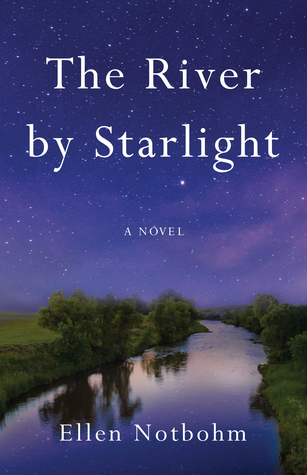
The River by Starlight by Ellen Notbohm

Every well-wrought sentence in The River by Starlight is as beautiful as the Henry David Thoreau inspired title. Author Ellen Notbohm has penned a breathlessly epic, masterful story set in early 1900’s Montana in language so lyrically elevated you’ll want to commit much of it to memory but will have to get back to it later—you’ll be too busy turning the pages.
The River by Starlight is a starkly humanistic story. It’s an historical novel intimately and engagingly written in present tense concerning the sweeping life story of dark-haired and diminutive Annie Rushton, whose young marriage is permanently marred by what might be the time’s inchoate perceptions of post-partum depression. There are repercussions to Annie’s malady that propel her to leave everything behind in her home state of Iowa and hop a train to join her bachelor brother in the wilds of homesteading Montana, where she risks starting a new life. Shouldering her heartbreak, Annie applies her headstrong, fierce independence to helping her brother prosper, so when charismatic businessman Adam Fielding, a colleague of her brother’s, enters her life, theirs is a relationship forged on mutual ambition, but as the years wear on, they become two desperate souls unwittingly tossed by the unpredictable storms of life.
Life’s choices come into play, in The River by Starlight. Though Annie and Adam begin with hope and the best intentions, there is only so much one can weather in hope’s defeat by repetitious wounds that won’t heal. Through the years, communication errors and individual judgement calls are made that usher in divergent aims, and all the while is the roiling concern of Annie’s mercurial sanity.
Resiliency, perseverance, love of one’s children, and where to appropriately place one’s pledge are threads that weave the tapestry of this thoroughly realized story, whose themes, I believe, are timeless and universal.
The River by Starlight is a book for the ages. In my mind, it stands with the classics. The novel’s voice and three-part pacing are seamlessly crafted; its tone and mood are deep and oftentimes heart wrenching, so much so that the reader can’t help but be lured by emotional investment in characters so viscerally drawn they come to life on the pages.
The River by Starlight is for those discerning readers who demand excellence in language, craft, and story. It is a plausible, finely researched, resonant book ultimately about the taming of the spirit, set in tumultuous, untamed times.


https:www.clairefullerton.com

Colorado Mandala by Brian Francis Heffron: Review


22964699A gorgeous, fully realized, generously crafted story on male friendship and the deep wounds motivating main character, Michael, as told through the perspective of his intimately effected best friend and business partner, Paul.
Michael is a Vietnam war vet, with a festering secret underscoring his high-living, swaggering behavior. He is a man’s man to his core: streetwise and wary, cocksure and battle-scarred with his own code of honor. It is post-war 1970’s Manitou Springs, Colorado, and author Brain Francis Heffron captivates the reader with such panoramic descriptions of the Pike’s Peak area at such a finely-tuned altitude as to cast the environment as sacred, while the reader all but breathes the clear mountain air.
The title of this book is inspired by Sarah, the wispy and vulnerable single mother at the center of a lover’s triangle, who paints batik images on silk and twists her long flaxen hair in a bun. Michael is protective of Sarah from an unfolding hidden agenda. Paul struggles with the duality of his building feelings for Sarah and loyalty to Michael. In the expert hands of writer Heffron, each character plays off the others with such reasonable impetus, Colorado Mandala reads like a treatise in deep-seated psychological motivation.
This book is astoundingly action-packed and character-driven. It takes the reader into dark caves and sets them in the gambling center of a mountain party’s cockfight. It is seamlessly paced and weaves minute visual images with poetically descriptive narratives and uncommon use of language. I understand Mr. Heffron is a poet, and it shows. There isn’t a weak sentence in the engaging Colorado Mandala, and I held my breath at its end, during one of the best literary denouements I’ve ever read. Colorado Mandala is the very definition of a page-turner. It will make you a fan of author Brian Francis Heffron, and is the kind of book you’ll recommend to your friends.

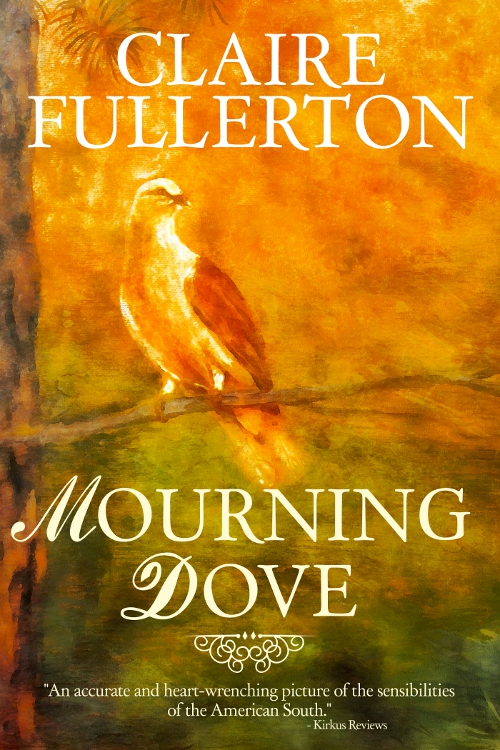
The New Southern Fugitives Review of Mourning Dove

Book review
Mourning Dove
Claire Fullerton
Forthcoming June 29, 2018
Firefly Southern Fiction, 234 pp., $9.95
Parallel universes exist all around us. One person chucks trash for another to call a treasure. Claire Fullerton’s novel Mourning Dove explores this concept with indulgent detail through a cast of characters manifesting such existences like fraternal twins. North meets South. Gritty, lower-income streets cross into rich, well-to-do avenues. The old gives way to youth in an almost forgotten silence. The harsh reality of here and now crashes unforgivingly into wistful nostalgic ideations of what might have been. Fullerton delivers a punch that impacts the reader in a vein similar to To Kill a Mockingbird—even the coming-of-age protagonists and titles align to a degree.
Told through the perspective of Millie, the younger child between she and her wunderkind brother Finley, the novel oscillates between worlds of breathless memory and the tattered edges of the present. Fullerton plops Millie into uptown Memphis, Tennessee during the 60s and 70s. It’s a world away from her native Minnesota and the divorce between Posey, her well-heeled mother, and Sean, her wayward alcoholic father. From there, Millie and Finley are lurched into maturity all too soon, with their environment ever shifting between hopeful wishes and severe thoughts grounded in a cold reality.
Like To Kill a Mockingbird, Mourning Dove examines the social mores of masculinity versus. femininity, rich versus poor, life versus death, and maturity versus youth. Unlike Lee’s classic, Fullerton uses these themes in a painfully intimate way with her central characters unapologetically tasked with navigating between these worlds. Where Scout and Jem experience these from a protected and privileged distance in To Kill a Mockingbird, Millie and Finley are more often than not left to their own devices. The siblings maneuver across both literal and figurative borders with no guidance from the adults in their lives—who admittedly seem less prepared or willing to manage these borders for themselves.
Posey, living the life typical of Southern elites, flits in and out the scene with an elegant remoteness similar to that of a wild bird, present yet untouchable. Sean’s exits and entrances come with a stronger weight until his untimely and lonely death, hermited away in his lower-income apartment. Even Gaga, Millie’s fragile grandmother, exists on her own, separate plane of reality until death. While all characters inhabit the same stage, their performances create a collage of alternate spaces, with each operating in entire separation from the others. The chilled distance between child and adult creates an unnerving atmosphere for the audience watching the protagonists grow up with little guidance.
More to the point, Millie and Finley act more as spectators in their own show. They observe from a distance, save for the here-and-there snippets of conversation with their family members. Their existence is an insular one where their presence is solely delegated by beck and call for strictly Norman Rockwell purposes of creating the perfect, Southern gatherings of “knee-high to a grasshopper” conversations with adults that Posey wishes to impress. As children, they are often the perfect picture of “seen and not heard”conversation starters over cocktails in the card room. The closest, warmest relationship in the book is between Millie and Finley alone.
But even this relationship meets an unfortunate end, and everything the now adult Millie thought was set in stone is turned upside down. Players in the dramatic tragedy switch roles faster than your favorite daytime soap opera. Fullerton beautifully sums up the lessons from this novel with a single line: “Perhaps we’ll discover great meaning as we look back and realize we handled the same history in two different ways.” The single grain of hopeful truth Mourning Dove offers at its bitter end is this: the truth is multidimensional. Even two people with twin experiences will come to forks in the road and separate into paralleled experiences.
Fullerton’s novel will transcend generations for this reason. It speaks to readers across different barriers in the same way that her novel oscillates. North to South. Baby Boomer, Gen X, Millennial. The hard-learned lessons she captures know no boundaries and have no mercies. Mourning Dove is a novel we not only read, but listen to as we would a teacher filled hard won wisdom.

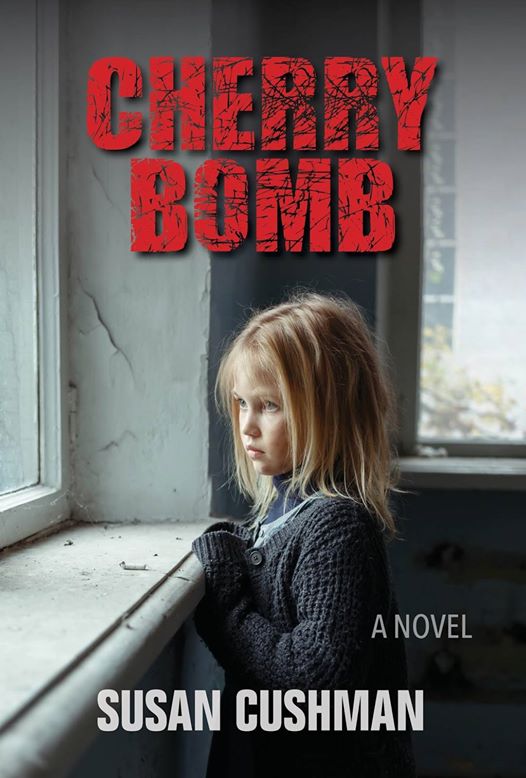
Cherry Bomb: Book Review.

In Macon, Georgia, a young orphan named Mare gives voice to her childhood trauma by spray painting graffiti on public buildings and signing each piece with the tag Cherry Bomb. Having been born to a cult, on a farm called Heaven’s Gate, twelve-year-old Mare and her mother escape the scene before tragedy hits, yet there is no haven for Mare, when her mother leaves her at an orphanage and never comes back. Placed with a foster family, things turn so badly that Mare runs away and takes refuge on the streets. This is the background of the novel Cherry Bomb; the story takes off with what Mare does next.
Armed with an artistic talent she is seemingly born with, Mare feels most alive when venting her angst by defacing public property, where her graffiti becomes the stuff of legends. A famous photographer for Rolling Stone Magazine wants to discover the culprit, and soon a local newspaper reporter and a parish priest join in the search. When Mare is caught out, it is the combined force of all three that hatches a plan to set Mare on a more productive path, and Mare is helped to acquire a scholarship to Savannah’s College of Art and Design. It is here Mare meets professor, Elaine de Kooning, an abstract expressionist painter of world-wide repute with a haunted backstory. Unbeknownst to both, they share a common denominator as the pair establish a student/mentor relationship. As Mare studies her craft, she is intuitively drawn to the painting of icons, leading her to enroll in an acclaimed weekend workshop at a North Carolina monastery, where a mysterious series of events unfolds. Past and present collide in this cloistered setting, and the uncanny threads of Mare and Elaine’s common story are woven together to reveal their startling connection.
There are strong themes of perseverance and search for identity in this modern day, plausible story. It is a story for art lovers, in that the reader is led through the minutia of the art world and comes away fascinated with the art of iconography as it evolves from an edgy youth’s street graffiti. In pitch-perfect dialogue, refreshingly au courant, this unique story has tinges of religious themes as seen through the eyes of Mare, the young sceptic. Growth, accountability, and the quest for redemption artfully culminate in a satisfying ending.
There’s a lot going on in this fast paced, gripping story, but in the hands of author Susan Cushman, never once is the story of Cherry Bomb overwrought. Cushman hooks the reader from the start with the likable, streetwise Mare, and gifts us with a story of survival, in a creative book both YA and cross-over readers will love.

Book Review: Serena by Ron Rash

2815590


It is the slightly off-kilter, dark tone of this book that mesmerizes. Set in the year 1929, in the North Carolina mountains, George Pemberton arrives on a train from Boston with his cultured new wife, Serena. It is a rough-hewn, brass tacks timber camp dedicated to clearing the region of its trees for financial gain that Serena enters and assumes control. The daughter of a timber man from Colorado, Serena knows the business better than most men, and uses her wits and wiles to manipulate affairs to her liking as she plots to expand the business. With a mysterious background to her credit, both George and the reader come to know Serena through her ruthless, self-serving dealings; nothing is beneath her pursuit of expansion: no morals, ethics, nor even the law. In short order, George Pemberton becomes a man caught in a web, yet is so enamored of his wife, he is willing to go along as events spin out of his control and lead to the ultimate betrayal. This is the fifth book I have read by the author, Ron Rash, and I find his voice unlike any other. Ron Rash is a writer gifted with the poetics of economy. His settings exist in society’s underworld, which he compliments through the use of  language so pitch perfect in regional colloquialism it gives you the characters background and explains their individual mind-set.  Ron Rash’s Serena is a villain for the ages; she is canny, single-minded, attractive, and dangerous. This bone-chilling story is both  gripping and blind-siding. It is another fine example of Ron Rash’s deft handling of the darker notes of self-preservation at any cost.

Dancing to an Irish Reel

Thank you so much to Michelle James!

macjam47's avatarBOOK CHAT

By Claire Fullerton

Dancing to an Irish ReelBook Blurb

On sabbatical from her job in the LA record business, Hailey Crossan takes a trip to Ireland for the vacation of a lifetime. What she finds is a job offer too good to turn down.

But her life in Ireland comes with one complication—Liam Hennessey. He’s a famous Irish musician whose entire life revolves around performing, so when he meets Hailey, he is so unbalanced at the prospect of love that he can’t decide whether to come closer or run away.

And so begins the push and pull of Hailey and Liam’s attraction. It is a dance enriched by colorful Irish friends who help Hailey navigate her budding romance with Liam in a landscape with more charm and character than any place Hailey ever imagined.

Publisher: Vinspire Publishing

Publication date, March 6, 2015

Page count; 236

Genre: Fiction

ISBN-10: 0990304256

ISBN-13: 978-0990304258

My Review

Dancing to an Irish…

View original post 362 more words