Book Review: Saints in Limbo by River Jordan

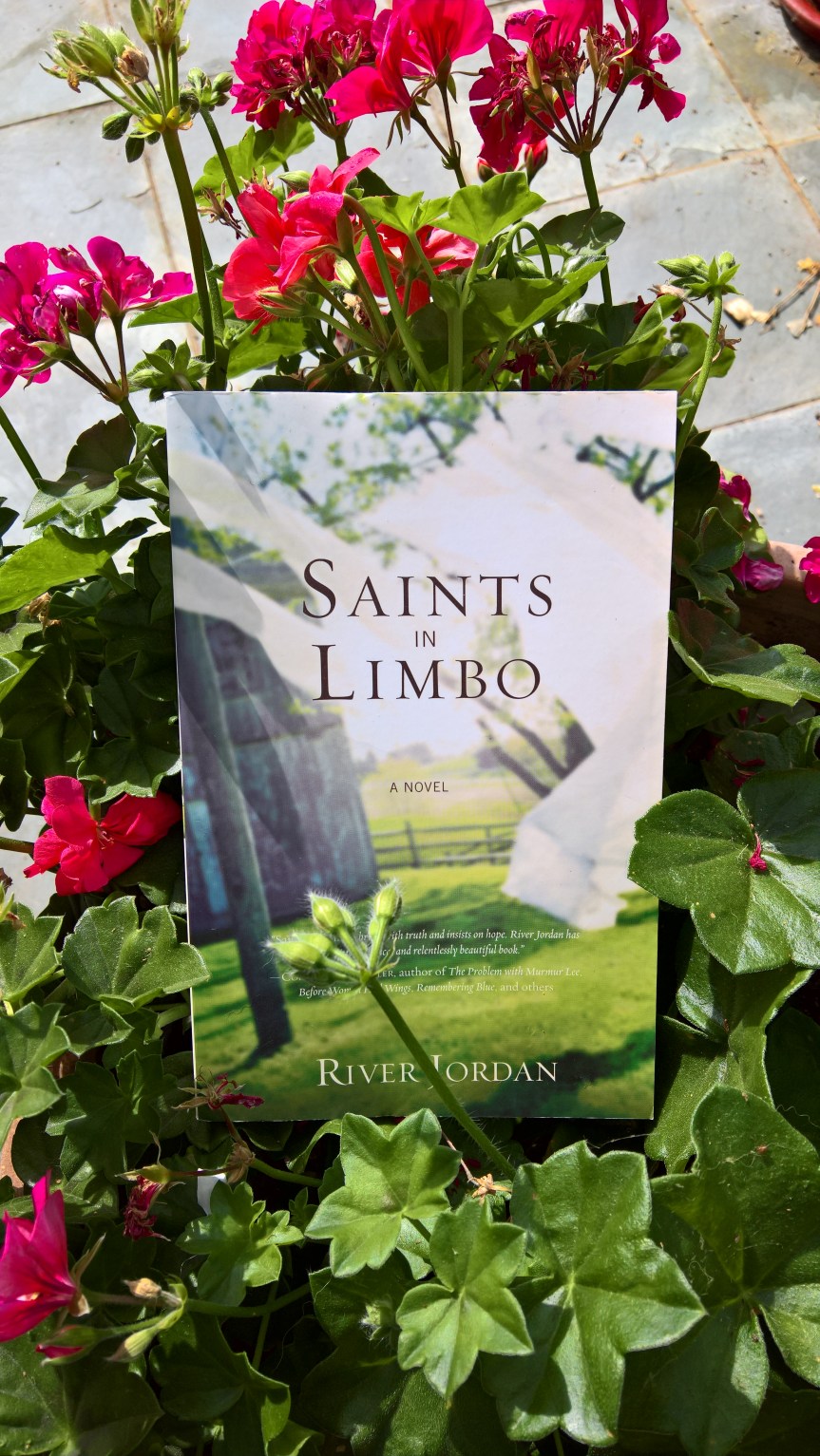
In Saints in Limbo, author River Jordan’s immediate establishment of the incredible as credible serves as the foundation of this wonderfully unique novel, which takes nostalgia and wishful thinking and makes it the undercurrent of a now plausible story involving an old woman in possession of a supernaturally empowered rock that enables her to revisit her past. Saints in Limbo transcends a neat, paranormal story by gifting the reader with a cast of characters imbued with nuanced layers: they have character defects, unrealized dreams, and unfulfilled potential even as they seek a meaningful life. An enthralling page-turner written in poetic language, I found this riveting book an insightful commentary on the power of perception and the importance of longing and connection. I recommend this book to those who love to read literary fiction tinged with an intelligent use of the uncanny. Rich in setting, character, and prose, Saints in Limbo will make every reader a fan of the author River Jordan.


Saints in Limbo Book Description:

Ever since her husband, Joe, died, Velma True’s world has been limited to what she can see while clinging to one of the multicolored threads tied to the porch railing of her rural home outside Echo, Florida.

Then one day a stranger appears at her door. Without knowing why, the agoraphobic widow welcomes him into her kitchen for coffee while she tells him stories of how life used to be, before her purposes were “all dried up.” Just before disappearing as suddenly as he came, the man presents Velma with a special gift, one that allows her to literally step back into the past through her own memories to a place where Joe still lives and the beginning is closer than the end.

While Velma is consumed with the man’s gift, her son Rudy is also being presented with a challenge to his self-centered beer drinking, skirt chasing ways, while his memories unravel like the webs that haunt him.

winds her way to Echo, determined to unravel the mysteries her dead mother left behind. As secrets old and new come to light, Velma finds herself unmoored from the fears of the past and feeling her way toward freedom.

This lyrical, Southern novel weaves mystical elements with tangible touches of God’s redemptive grace to reveal a pattern of irresistible hope

Look into River Jordan at:  http://www.riverjordanink.com/

Book Review: Memphis Movie by Corey Mesler.

I had the great pleasure of coming across this delightful, wonderfully creative novel about the making of an Indie film. Anyone passionate about film-making will love it! Corey Mesler is its author, and I take my hat off to him!  Here’s my review of a book that should be widely read!


Memphis Movie

That Memphis Movie drops the reader smack in the middle of this one-of-a-kind story by opening with an interview of indie film maker, Eric Warberg, was a stroke of genius. It set the stage, mood, and tone for this down-on-his-heels filmmaker’s background and tells the reader that the stakes are high in this modern-day story. The book comes out swinging, with dialogue so engagingly sardonic it transcends any necessity for knowledge of a film’s production. And yet, in Memphis Movie the reader receives the minutia of what goes into making a movie, and as this fabulous story unfurls, the savvy reader can’t help but think the chaos is a lot like any other line of work taking over someone’s life. Eric Warberg’s identity is at issue. He’s a washed-up fish-out-of-water dragging his tail in the pond he comes from, trying to pull himself up by his bootstraps but not convinced he can. His is the voice of reason, while one of the more cacophonous cast of characters ever assembled spins out around him, each delightfully drawn player with their own agenda. If there’s any prayer of cohesiveness in this dysfunctional crew, it’s all in Eric’s shaky hands. Sisyphus had an easier time of it, and this is what makes this character intensive story so funny. The book speaks in jargon so spot-on it lends ambience, and the characters sputter and sway in a setting only the infinitely hip know of in Memphis. They are all likable underdogs looking for a center. They are scratching around in the underbelly of an historic southern town, trying to make this thing work. Memphis Movie is a blend of satire, humor, and irony driven by sheer intelligence. Only a gifted writer can peg the nuances of human nature to the point where the reader says of each character, “I know that guy!” All praise author Corey Mesler. I’m so atwitter over Memphis Movie, I’m telling all my friends that this book about the making of an indie film is so good, it should be made into its own movie!

http://www.clairefullerton.com

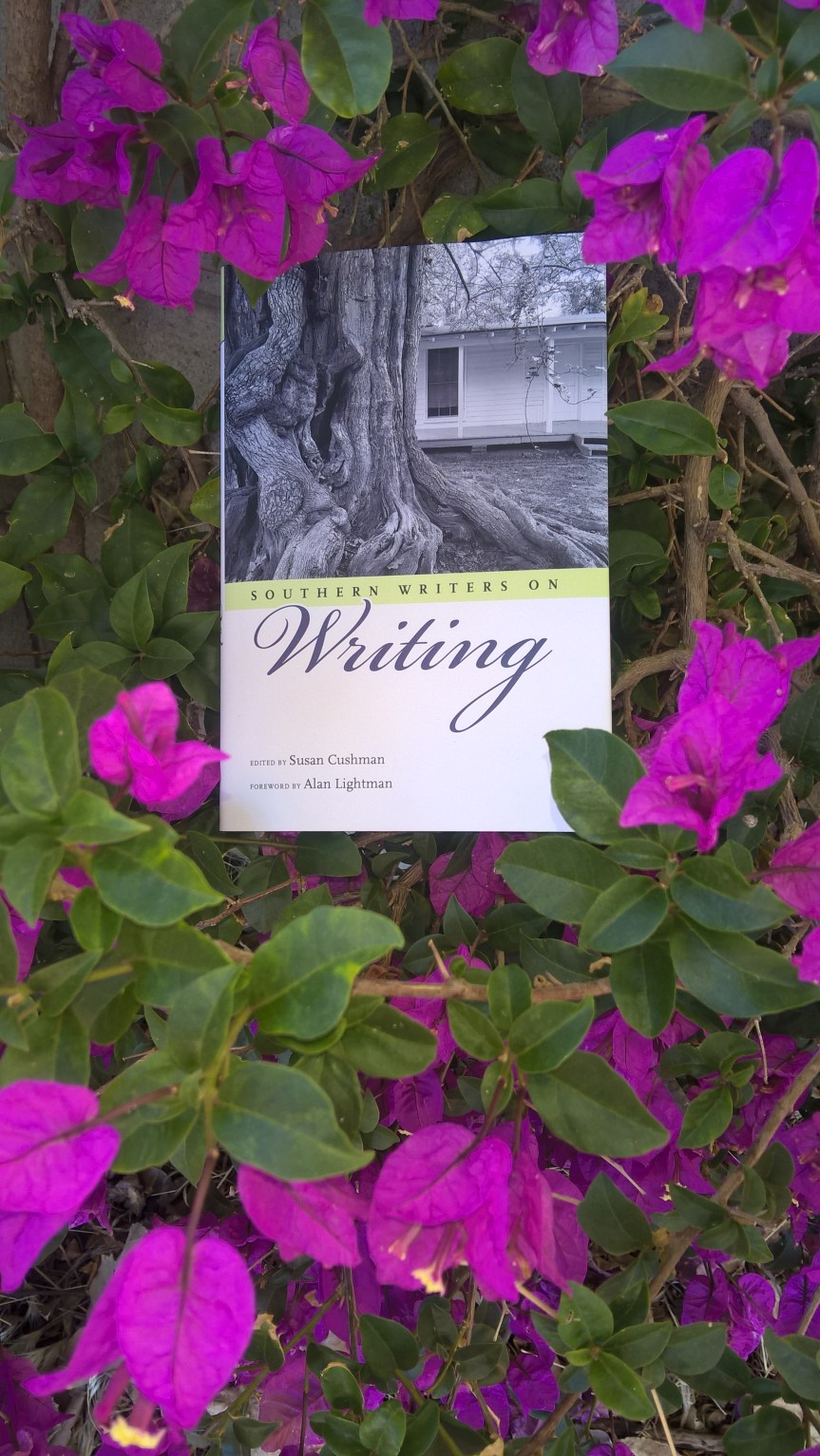
Southern Writers on Writing

The easiest way to portray how much I loved Southern Writers on Writing is to tell the truth as it happened: After reading each moving essay, I sighed and thought, “This one is my favorite.” Apart from the fact that I’m a lover of the first-person narrative, these confessional essays held me at every turn. What they all have in common is an honesty not easily revealed unless the recipient has earned complete trust. These essays are more than Southern writers pontificating on their “process.” These essays are personal—sometimes painfully so. As an assembly, they are variations of a truth that seeks to put into words the profound impact of what it means to be part and parcel of a storied land, more than the sum of its disharmonious parts. A sense of nostalgia runs through Southern Writers on Writing, and what strikes me most is its unified theme. Task a Southern writer with writing about craft, and invariably, all roads lead back home. Southern Writers on Writing is a treasure for both readers and writers. Each essay contains the intrigue of a gripping short story, and each compelling voice allures the reader’s undivided attention. Thank you, Susan Cushman, for gifting us with this book. And to each author who contributed to this gem, thank you for sharing your story.

Whiskey and Ribbons by Leesa Cross-Smith

The title Whiskey and Ribbons is derived from a toast delivered by Eamon, one of three narrators in this psychological treatment of love spun unexpectedly and repercussively awry. “Women, you are sleek and gorgeous. You hold us together, you’re the ribbons,” Eamon says, yet we hear this speech as his brother, Dalton’s, memory, for the reader learns at the start that the toast maker is dead. Eamon and Dalton have grown up together as brothers, yet the ties that bind are unusual and not honestly revealed for what they are until well into the story. Author Leesa Cross-Smith holds the reader captive in language so creative and au currant that we identify with both well-drawn characters and readily understand why Eamon’s wife, Evangeline, weighs issues of loyalty between the two charismatic young men, though one is alive and the other is dead. That Evangeline is a new mother, having given birth to Eamon’s son after his death as an officer in the line of duty is the dilemma, for who is she to turn to in her prostrate grief but a brother-in-law who equally grieves? Three vantage points are entwined to tell this one story of familial connections, in a seamlessly crafted, roiling momentum that will have you thinking they each have a justifiable point. All praise this spell-binding debut author. Leesa Cross-Smith has penned an uncommon novel in a voice you won’t easily forget.

How We Came to Be by Johnnie Bernhard

How We Came to Be is a triumph of order from chaos as told in the most accessible first-person voice I’ve had the good fortune to come across in ages. I was under narrator Karen Anders’ spell from the first because author Johnnie Bernhard came out swinging by gifting the reader with this engaging novel’s premise by the third page. Karen doesn’t look good on paper. She is a fifty-year-old, high school English teacher living in Houston; a divorced, single mother facing empty-nest syndrome, well aware of her dependency on alcohol, but nowhere near ready to quit. Why should she? Karen’s life is a mess. One would think this is a recipe for a down on its heels story, but the reader is captivated by Karen’s tell-it-as-it-is persona and—dare I say it, identifies when Karen summarizes her circumstances by confessing, “I’m hating every moment, but pretending I’m having the time of my life.” When I got to this line, I knew I was hooked.
We all have that sardonic friend who manages to smile through the egg on her face. This is Karen in a nutshell, and she keeps on keeping on, trying for the upper hand, while her adopted daughter, Tiffany’s first three months away at college become a study in bad choices, of which Karen has no say beyond putting out the fires. Karen’s dilemma is a common one and raises the question of how to be an effective single parent without chasing her daughter away.
In the meantime, back at the empty nest, Karen knows she must forge a life beyond the rat-wheel of predictable sameness centered on her Houston high school’s schedule. In an uncanny act of timing, Karen’s world is widened when she is befriended by WW11 Hungarian refugee, Leona Supak from across the street, and an unlikely alliance is formed that challenges Karen to grow. Having been single for decades and barely hanging on, it probably isn’t the best time for a man to come into Karen’s life, yet when Matt Broussard pursues the surprised Karen in an Austin bar, she thinks, maybe?
How We Came to Be is a brass-tacks, contemporary story without a moment of campy pretention. The events are cause and effect, but the story is what goes on in the likable Karen’s head. She is not so much a victim of circumstances as she is a neophyte at growing into her own. How We Came to Be is the story of a woman drowning in deep waters, who has the sense to learn how to swim.
I applaud author Johnnie Bernhard for her wizardry in crafting this perfectly paced story in a voice so unique and compelling. This is a book to read and return to. It is perfect for book clubs because there is so much in it to discuss!


http://WWW.CLAIREFULLERTON.COM