The Spirit Behind Little Tea

I’m forever pondering the magic of life-long female friendships, the kind formed in childhood, or perhaps early high school that, for whatever reason, stay. On one hand, when we’re young, we’re in a state of becoming, but on the other, our early years are the set-in-stone template of who we actually are. We grow from there. We build our lives. We add and subtract what is and is not working. We shape and adjust and mold our lives as best we see fit but, in my mind, we never fundamentally change our core essence. We can move far from home, forge brilliant careers, marry, have children, divorce, witness sorrow and tragedy, and death, and it shapes our experience, perhaps informs our wary attitude, but the vagaries of life don’t re-define us. In a matter of speaking what happens in our lives refines us.
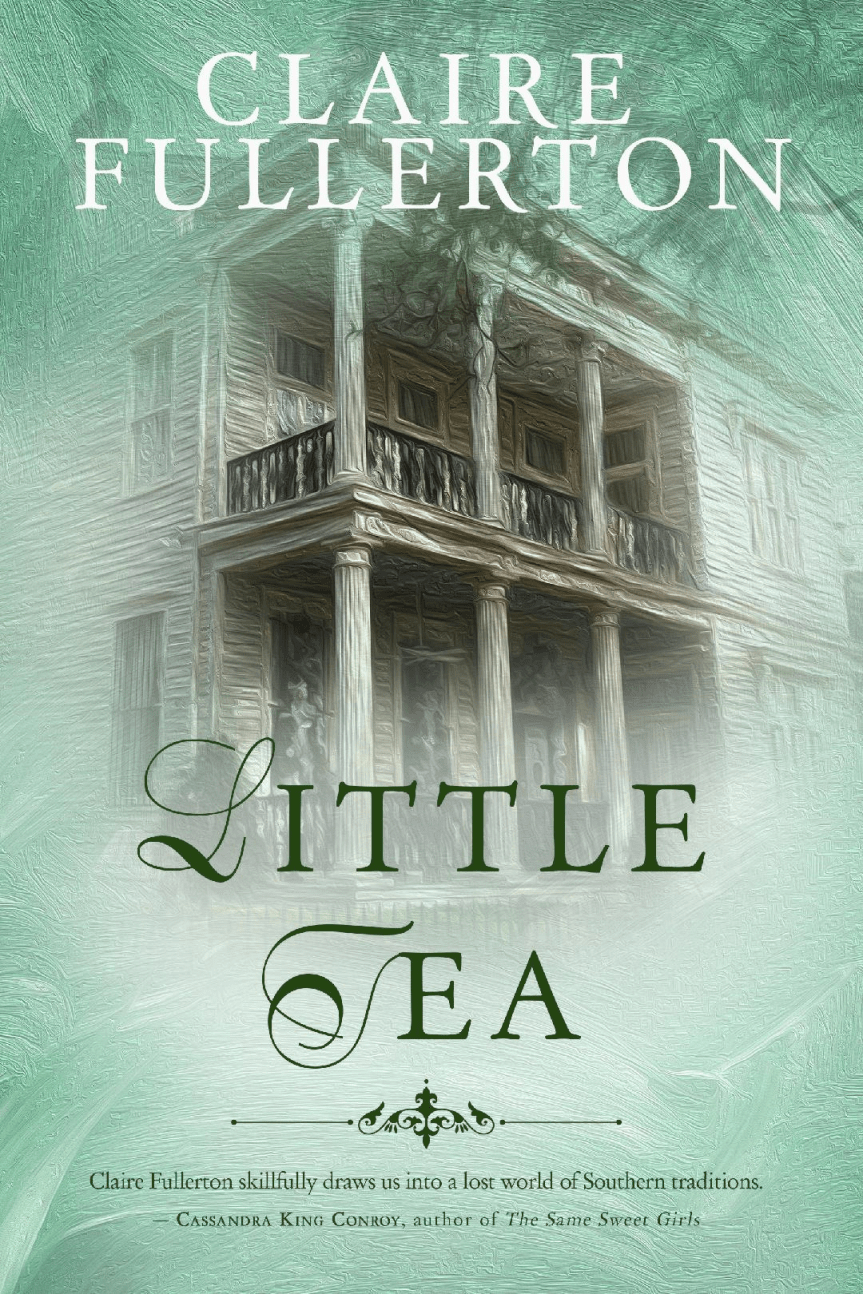
At the beginning of Little Tea, I said it this way: “There’s a side to the unions made in high school that has perpetual resonance, a side that remains in arrested development that will never let you forget who you essentially are.”
Our friends anchor us. They keep us on center page. They’re the ones who know our history, the characters in our dramas of cause and effect, and they never forget. This keeps us honest. Our friends are a touchpoint to see us through the ages.
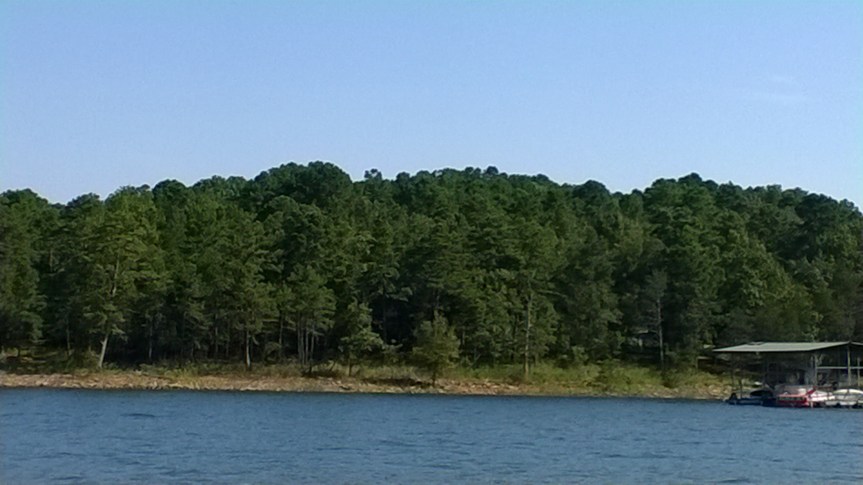
I went into the writing of Little Tea wanting to make this point through the power of story. I began with three women friends who reunite after many years at Greer’s Ferry Lake in Heber Springs, Arkansas.

WP_20150718_09_44_21_Pro

I set Little Tea in Heber Springs because of its close proximity to Memphis, where the characters, Renny, Ava, and Celia grew up. They each live in another location and had to travel to the lake, and the thing I liked about setting the story near water is the idea of fluidity and fluctuating tides. Such is life, and the element of water is alive, ever-changing, and emotional. Sometimes we sit near water and reflect, other times we dive right in it. For the three childhood friends in Little Tea, Heber Springs Lake is a neutral ground.
Little Tea is the story of three women friends who reconvene because one of them is in trouble. If you take one problem and put it in the hands of three different women, you’ll receive three different solutions, each based according to who the woman is—her background, her history, her perception of the world. Great wisdom and sage advice are borne from the heart and souls of women, and it is this I wanted to capture in the story.
I like the idea of a group of women friends as an insular, secret society. This subject was the entire impetus behind my writing Little Tea, and I hope readers relate to it in the spirit I intended, which is to say there is great value in friendship.

Let’s vow to never take it for granted.

83818413_762502274271129_5696037369426214912_n

https://www.clairefullerton.com

Gratitude to the WordPress Book Bloggers

I’d like to adequately express how much the WordPress book blogging community means to me, so suffer me while I warm up to it. I readily admit I’m the long-winded sort, even when I have an important point.

In this day and age of social media at the center of an author’s career, there is much to reconcile, and there are times I wrestle with keeping a proper perspective. On the one hand–and you’d think this to meet me in person–I  am ridiculously extroverted; I have what author, Pat Conroy, labeled the “Southern sickness” of assuming everyone I meet is my best friend, yet on the other, I am intensely private. I don’t like showcasing myself because it feels like grandstanding, and quite frankly I’m not impressed with myself to the point that I think I have anything of significance going over any other writer. We are all of us playing a long-game, making our own way in our chosen field. But sometimes it seems that one has to have an elevated sense of oneself in order to promote one’s work as an author. There’s a fine line these days, and it’s the one thing I didn’t realize going into “being” a writer. I’m probably like many people in their 50’s. We were the generation who woke up one day to discover the entire world was online and all over social media. When that realization dawned on me, it was a major hustle to catch up.

Then there is the concern of reconciling novel-writing as art and publishing a novel as a business. Once upon a time–as little as twenty years ago–authors wrote books and turned them over to their publishing house to promote. If they had an audience to justify a book tour, the publisher paid for an author to travel from book store to library to book club to meet readers in person. This is still done, but on a small, discerning scale primarily intended for authors who have wide name recognition. As for authors with a small or independent press, when it comes to a book tour, it’s all out of pocket because they’re essentially on their own.  Because book publishing options have opened up and there are now thousands upon thousands of authors in the race, the effort is geared toward keeping abreast of the tide and waving one’s hand above the noise. What’s more, in this day and age, the lion’s share of promotion falls to the author and is not only about promoting a book; authors have to promote themselves.

I’ve been torn over this for a while, now. I’ve limited myself in self-promotion by only going so far. I’ll take the opportunity here to add to Conroy’s definition of Southern sickness: friendly as we are, Southerners are an unflashy lot given to personal discretion. Too much going on about oneself is succinctly considered bad form.

I see it all on social media. People post all sorts of personal information from their family to their lifestyle to their political views. I’m not passing judgment, just making an observation, but I do know that too much online, personal information can put one in a vulnerable position and lead to an unintended consequence. It’s the downside of social media and it’s a struggle to strike a manageable balance.

So, how does an author effectively promote their book while striking a healthy balance? And whom should an author trust?

Which brings me to another consideration: There are the legions of online, profiteering book promotion businesses that have cropped up as a result of the book publishing boom. It’s staggering to me and hard to wade through the miasma to discern who is and is not reputable, while an author is hustling for literary recognition and book reviews. Authors need exposure for their releases, but who to choose within a reasonable budget?

Which brings me around to the WordPress book blogging community ( I told you I’d work my way to my point.)

I am humbled and proud to have aligned with the book bloggers here. I believe the book bloggers I’ve met on WordPress are as fine as they come. I stand in awe of Sally Cronin of Smorgasbord. Through Sally, I’ve met Olga Nunez, Michelle James, Robbie Cheadle, Teagan Geneviene, Rosie Amber,  DG Kaye, and Chris the Story Reading Ape to name but a few. I stand in awe of each bloggers’ deft handling of content, organizational skills, dedication, professionalism, and magnanimous spirit. I recognize you all as passionate people involved in the book world for all the right reasons. Your impact upon many authors’ careers is nothing short of significant.

At long last, here is my point:

I thank each of you who has featured my books on your blog for including me in your esteemed fold. Your support of my career is a force that sustains me, and I remain so very grateful.

https:www.clairefullerton.com


Where I Find Inspiration

May 1, 2020 | By Claire Fullerton
I was recently asked the following question in an interview: “As a writer, where do you go to find inspiration?” The interviewer cited the habit of Charles Dickens, who took to the streets of London every day in a five to six-mile stroll while looking for source material. I love the evocative image of this world-renowned writer cruising through London, his eyes darting as he tallied impressions, experiencing the common place of that city, taking mental notes.
Because I wanted to answer the question to the best of my ability, I visualized myself in Dickens’ place and pondered what he was really doing. I realized it wasn’t so much where he was as it was that he had his eyes open. The way I considered it, Dickens allowed himself to be influenced, and this is key for writers. The most seemingly inconsequential things can affect a writer, and by this I mean strike an emotional chord. That it typically happens in the blink of an eye doesn’t make it any less meaningful.
In the essay, Honeymoon: The Romance of Umbria, by Pat Conroy, which appears in The Pat Conroy Cookbook, Conroy writes of catching himself writing in his head instead of living in the moment as he stood inspired by an Umbrian sunset. With regard to writers, I believe this is a common habit. It’s a particular way of being in the world and at the heart of it is the desire to communicate coupled with love of language.
There might be shades of the longing to be understood, but I think it’s more a labor of love to help readers understand the world. After all, a writer’s task is to articulate, to put their impressions into words along with what they think and feel through the power of story.
I’ve heard it said that artists view the world through with a peculiar, particular lens.
They have the ability to engage with the world from the outside looking in, to be in it but not of it, stand apart in the middle of a crowd and act as witness. To many artists, this ability is a calling, be it acting, painting, dancing, or writing. In my opinion, writers are the archivists of the world, the interpreters of life who record events and impressions and are driven by the need to share their gift.
And yes, it all starts with finding inspiration, yet inspiration doesn’t so much reside without as it does within. The trick is to keep wide-eyed and aware as one goes about their days, to grab hold of inspiration’s cord once it’s struck and hang on until it resonates. Inspiration doesn’t have so much to do with location as it does the ability to access what’s within once it’s triggered. When it comes to writing, inspiration is a prompting that travels from the spirit of a writer to a blank page and results in a painstaking commitment to work built on hope and blind faith that it’s worth sharing.
In answer to that interviewer’s question of where I go to find inspiration, I tried my best to articulate my experience. I said rather than cite a locale, I can share what I do when inspired, and it has everything to do with discipline. I can be anywhere doing anything when inspiration comes from sight, sound, thought, mood or feeling. To me it’s all about listening to the voice within. The discipline starts with finding a pen

For Release news of my novel, Little Tea, the rest of this post continues here: http://booksbywomen.org/where-i-find-inspiration/

83818413_762502274271129_5696037369426214912_n

Little Tea’s Universal Link:  https://books2read.com/u/3nvz0R
Claire Fullerton hails from Memphis, TN. and now lives in Malibu, CA. with her husband and 3 German shepherds. She is the author of Mourning Dove, a coming of age, Southern family saga set in 1970’s Memphis. Mourning Dove is a five-time award winner, including the Literary Classics Words on Wings for Book of the Year, and the Ippy Award silver medal in regional fiction ( Southeast.) Claire is also the author of Dancing to an Irish Reel, a Kindle Book Review and Readers’ Favorite award winner that is set on the west coast of Ireland, where she once lived. Claire’s first novel is a paranormal mystery set in two time periods titled, A Portal in Time, set in Carmel-by-the-Sea, California. She is a contributor to the book, A Southern Season with her novella, Through an Autumn Window, set at a Memphis funeral ( because something always goes wrong at a Southern funeral.) Little Tea is Claire’s 4th novel and is set in the Deep South. It is the story of the bonds of female friendship, healing the past, and outdated racial relations. Little Tea is the August selection of the Pulpwood Queens, a Faulkner Society finalist in the William Wisdom international competition, and a finalist in the Chanticleer Review’s Somerset award. She is represented by Julie Gwinn of the Seymour Literary

Follow her on Twitter @cfullerton3
Find out more about her on her website https://www.clairefullerton.com/

As Published on:

Women Writers, Women(‘s) Books
Online Magazine
http://www.booksbywomen.org
Twitter @womenwriters
Facebook Women Writers Women(‘s) Books

Out Walking

It took me a while to evolve from a feeling of anxious, pandemic shell-shock to resume what has long been a habit of mine. I like to walk. I don’t need a destination. More often than not, I walk down my driveway in Malibu, California and the biggest decision is whether to turn right or left. I typically listen to Groove Music, where I’ve downloaded my favorite albums. It’s not so much about where I walk as it is the rhythm I strike while moving through space. There’s something centering about it, balancing, and it tends to clarify my perspective regardless of what’s on my mind. And these days, I have a lot on my mind, though most of it has to do with uncertainty.

What got me out of the walking habit during the first few weeks of the pandemic’s strange state of affairs was that it rained sporadically, the sky remained overcast, and it added to the unbalancing sense of gloom and doom similar to how I felt after the Malibu fires when life came down to the daily question of how to get my bearing. I’ve always known walking helps me get my bearings. It’s therapeutic to me, a dreaming meditation, part-and-parcel to my well-being, and the one thing I know about coping in crisis is it’s best to arrive at a schedule as close to business as usual. Since the sun’s been shining in Malibu these past few days, walking is at the center of what little I’ve managed to cobble of a schedule.

WP_20200417_11_28_33_Pro

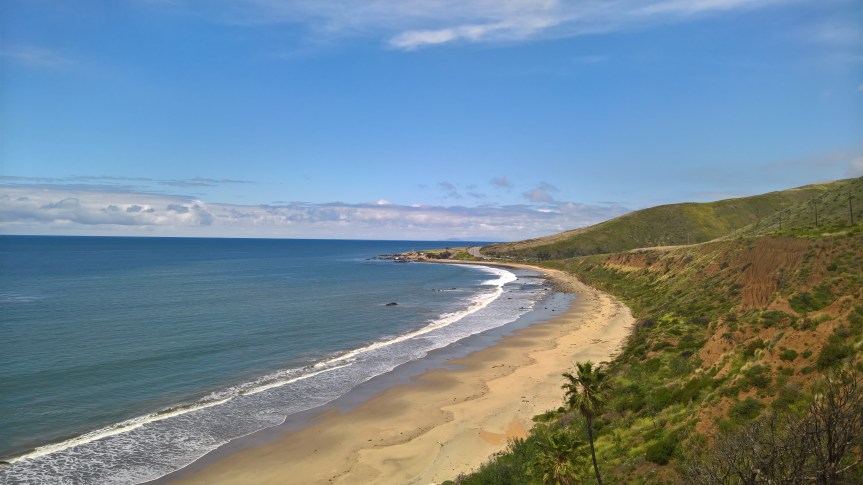
We’re currently not allowed on the beaches in Malibu, California, but on a rise of the Pacific Coast Highway, I spied this path. It goes through an indigenous, breathtaking field straight to the cliffs overlooking Nicholas Beach, which flows to the left.WP_20200419_11_23_07_Pro

Looking right, Nicholas Beach flows into Leo Carrillo State Beach and makes up western Malibu’s coastline.

WP_20200417_11_48_08_Pro

The foothills of the Santa Monica Mountains are in Western Malibu, and they run into Ventura County.

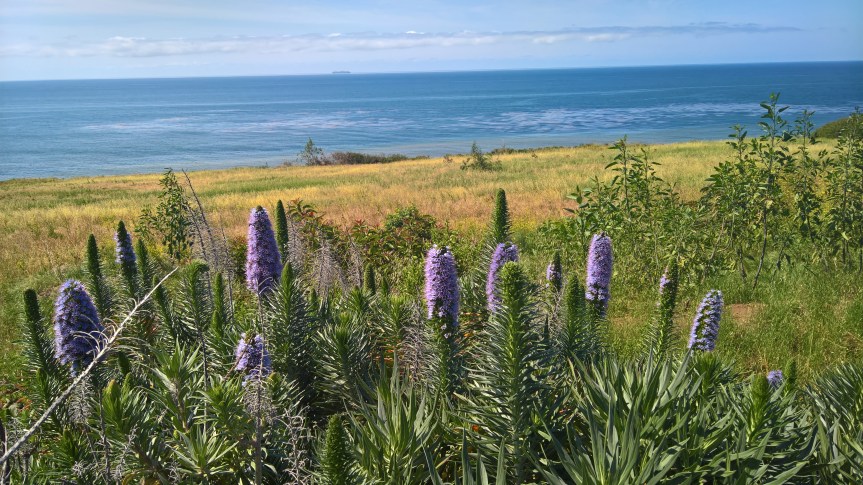
There are beautiful wildflowers everywhere, now that we’re in spring: This is Pride of Medeira, and it’s plentiful everywhere.

WP_20200419_10_55_55_Pro

Along the side of the Pacific Coast Highway is wild mustard seed and bougainvillea

WP_20200419_10_57_06_Pro

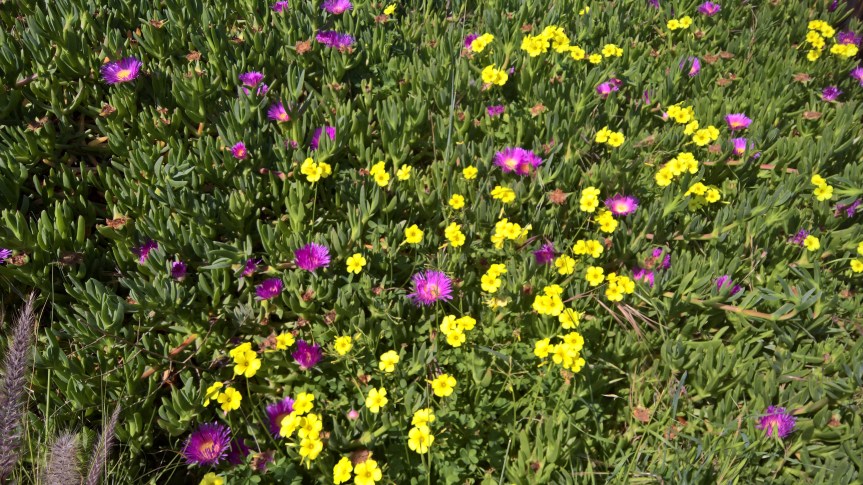
This is ice plant, and currently, it’s blooming

WP_20200419_10_46_20_Pro


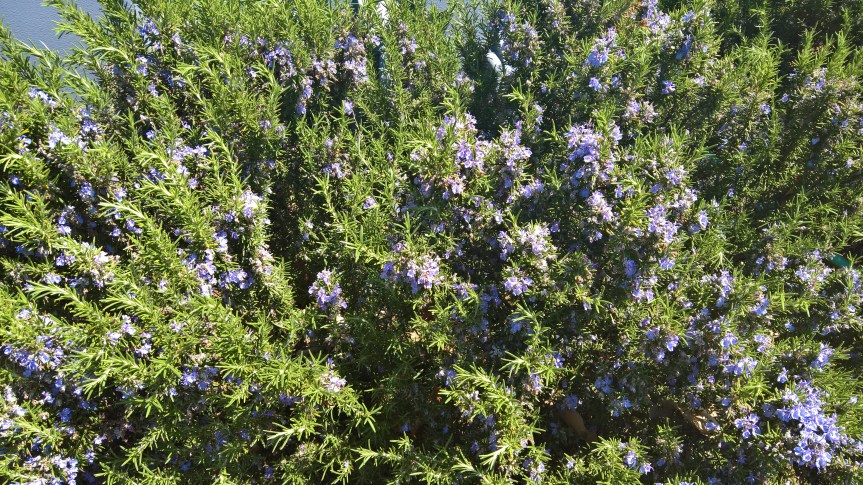
And blooming Rosemary

WP_20200419_11_26_56_Pro

It wouldn’t be a walk outside in Malibu, California, without spying something emblematic to give one a sense of place. Since we can’t go to the beaches, this brilliant man did the next best thing: parked his VW van for an ocean view and strummed on his guitar.


WP_20200419_11_18_14_Pro (2)

It took weeks of feeling uncomfortable during this pandemic before I realized what was really bothering me. It went beyond a feeling of lack of control and wrestling with the uncertainty of what I can and cannot count on in my future schedule. My book, Little Tea, releases on May 1st, and as things stand, I have no idea what will be called off in my mid-June book tour of the South. Reports say the US will aim for normalcy in stages; that individual states will move forward according to how its governer sees fit. Conditions differ in varying regions. I think it will be an unfolding. And be that as it may, even if the coast were totally clear, I’m shying from the thought of getting on a plane in June to travel down South. We’ve all been through so much. Even if things were to get back to normal, it’s probably going to take a while to feel normal. But back to what’s been bothering me, because this just dawned on me. I’ve been my own worst enemy through most of this because I haven’t been practicing acceptance, at least not in a way where I wasn’t still trying to fit my square plans into a round hole.

I took this photograph from my front yard a couple of weeks ago, and I believe it’s exemplary of a ray of hope in the midst of a storm.

WP_20200208_16_50_07_Pro

One day this pandemic will be behind us. For now, I’m working on acceptance.

And the best way I know to work on acceptance?

Go outside and start walking.


https://clairefullerton.com


The Story Behind My Book Trailer

Years ago, I was on the airstaff of WEGR, Rock-103 in Memphis. I’d worked at four radio stations before I was hired at Rock-103 and at the time, considered that album-oriented rock station on Memphis’s infamous Beale Street the end all and be all of music radio. Because it was. To be working in music radio in the 80’s in Memphis, Tennessee, with its undisputed reputation of being the town that brought the Delta Blues to the big city, which Elvis, in his unique way, turned into rock-n-roll and inspired The Beatles and a host of others who put Rock-n-Roll on the American map was something I never forgot. Music is Memphis’s claim to fame. It permeates the air of that historic city and anchors its denizens proudly in a strong sense of place.
When one is a DJ at a radio station that reaches thousands, daily, one lives in a world within a world: a close-knit society populated by people who share the same passion, speak the same language, and hold music at the top of the hierarchy of things that really matter. In radio, the wheels turn on a schedule. There are air shifts and play lists, a Program Director, Music Director, sales staff, publicity team, engineers, and in the middle of it all is the Production Director.
At Rock-103, we called Rick Robinson the Production King. We called him that because Rick seemed to have taken up permanent residency in a small studio down the hall from the control room, where he produced radio spots and promos that went on the air. As Rick existed in the midst of a tribe of on-air talent, he was in the habit of summoning any one of us, when we least expected. He’d want to record a voice over for a commercial, a PSA, or perhaps a glib parody, depending on what he was working on in his electronic cave. Rick was the guy who was always firmly and squarely THERE in the creative commotion of Rock 103. He was a permanent fixture with a peculiar set of skills I didn’t know the half of, but I knew he spun magic on behalf of us all at Rock-103, and we relied on him.
It’s funny who you lose track of as the years transpire, yet perhaps it’s understandable for me since I no longer live in Memphis. Life moves on. People change careers, and I left music radio when I moved to Los Angeles and got involved in the record business. Simultaneously, I started concentrating on what I’d been doing since I was in my late teens: writing. Writing has been its own twisting path. So far, it includes four traditionally published novels and one novella, but the reason I’m mentioning this is to say that along writing’s twisting path, I had the good fortune to become involved with Southern Writers Magazine. Which, unbeknownst to me for the first year of my affiliation, just so happened to have its headquarters in Memphis.
It took my correspondence via multiple emails with the Creative Director of Southern Writers Magazine to discover they were headquartered in Memphis. Gary Fearon was the Creative Director’s name, and he and I had cause to collaborate on an advertisement for one of my books. Our back-and-forth correspondence ended up including the proverbial kitchen sink, after I discovered Gary was writing to me from Memphis. “I’m from Memphis,” I twittered.
“I thought you were in California,” came Gary’s reply, which turned into my telling him I was raised in Memphis, where I went to high school, and that I worked in Memphis radio.
“Which station?” came Gary’s query, and when I emailed my response, he said, “You worked at Rock-103? Me too.”
The thing about radio DJ’s is many use a stage name. When Gary Fearon was a DJ at another radio station, he used the name Rick Robinson then retained it, when he worked in production at Rock-103. To say we did chapter and verse over what a small world it is puts it mildly.
But back to my point of how life moves on: Gary Fearon left Southern Writers Magazine to focus full-time on his production demands. Robinsong Productions is the name of his company, where he produces radio and television spots for recording artists on tour and voices audiobooks ( because he’s blessed with precise diction and a tenor both authoritative and memorable.)
And here sat I, on the threshold of the release of my fourth novel, Little Tea, which is set in three places: Memphis, Heber Springs, Arkansas, and Como, Mississippi. The release date is coming up—May 1st—and in this visual world of promotional memes and scroll-stopping images, it occurred to me I needed a book trailer for Little Tea.
I looked at the pictures I took the last time I was in Como, Mississippi and thought, “Who can do a book trailer?”

One name came to mind: Gary Fearon the Production King!
Above, I’m sharing a picture of Gary Fearon. He’s in his studio at Robinsong Production, hard at work on Little Tea’s book trailer.
I love the surprising turns of life’s connections. In a strange way, it feels like an example of what comes around goes around.
I can’t wait to see Little Tea’s book trailer!  I understand Gary found an image of a redbone coonhound and will put it on a dirt road, which is suggestive of a scene in the book, Little Tea.
I’ll share the book trailer, here, once it’s finished!
In the meantime, you can read about Gary Fearon at two websites:
http://www.garyfearon.com  book trailers and such
http://www.robinsongproductions.com concert clients


Little Tea releases May 1st by Firefly Southern Fiction. It’s available now for preorder.

Little Tea ( named after a character whose real name is Thelonia Winfrey) is the story of those long-lasting female friendships that see you through a lifetime, wherein there’s shared history; language; and sense of humor. The narrator, Celia Wakefield spent part of her childhood at her family’s 3rd generation land in Como, Mississippi, where the cultural social mores concerning racial integration had yet to fully evolve. This premise sets the dynamic of a trajectory of events that impact her friendship with Little Tea and haunt Celia Wakefield decades later. When Celia reunites with two childhood friends at Greer’s Ferry Lake in Heber Springs, Arkansas, Celia’s past resurfaces for long-overdue resolution.

Hope

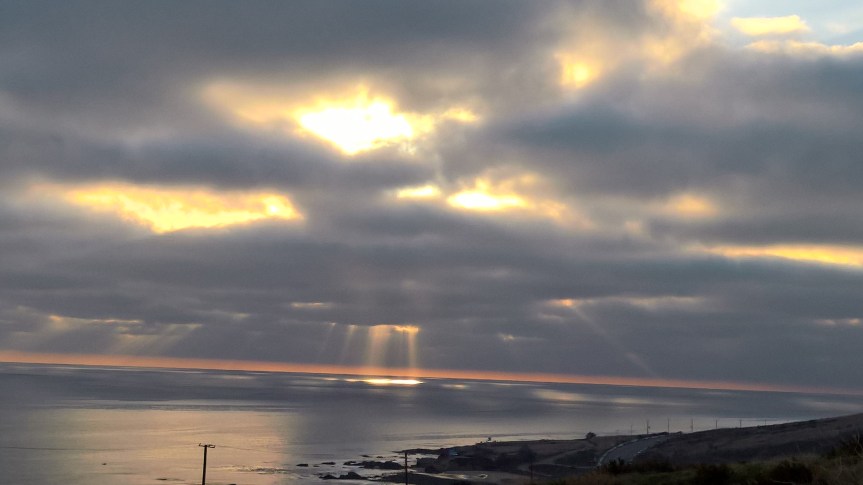
One of the gifts of living by the ocean is the view is ever-changing. I have a particular relationship with this constant inconstancy. I am grounded in a reality that fluctuates from no will of mine and it humbles me to bear witness to a majesty I know is endless.

I can literally see the curvature of the earth from my front deck in Malibu. Some days the sea looks like mirrored glass; other days the roiling whitecaps attenuate forever. This is what I can see, yet I know life teems beneath the surface in the labyrinth of an ecosystem of which I can only speculate. And yet I know it is there. Hidden from view, from knowledge, from judgment, from the temptation of assumption. All that is given to me is the moment and my perception. If I stand still and tune into my thoughts, I am aware of my consciousness. I believe if one really wants to know themselves, all they have to do is listen to the song within.

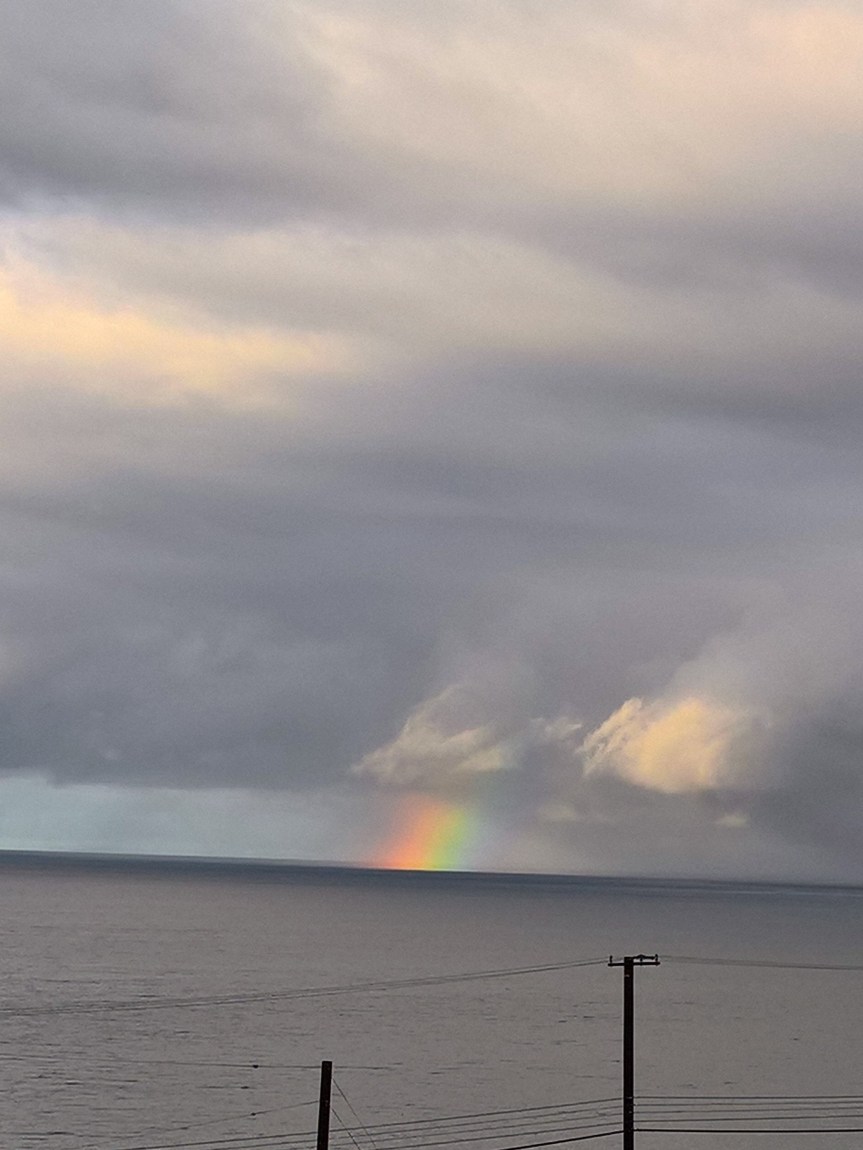
I’m saying all this because first thing this morning, I walked out and was caught unaware by the photograph you see above. It startled me in an awestruck, sobering way, yet the voice I consider the intimate “me” resounded unbiddenly in two words: “Of course.” In that moment, I was reminded of my fundamental beliefs, and they have everything to do with my relationship with the unknown. What I believe is things are rarely as they seem. In the midst of ambiguity, there is always hope.

You don’t need me to remind you these are strange times, unbalancing times, unsettling times, but what I’m thinking of is my understanding of the bigger picture. Because you have to pay attention to your perception of this world. If you do, it dictates experience both immediate and long-range. I’m neither prophet nor seer, but I trust my intuition. When I walked out this morning and saw this neon rainbow placed on the sky seemingly by the hand of God, what I knew at that moment is, always, there is great hope.


A Timely Letter from F. Scott Fitzgerald

A LETTER FROM F. SCOTT FITZGERALD, QUARANTINED IN 1920 IN THE SOUTH OF FRANCE DURING THE SPANISH INFLUENZA

Dearest Rosemary,
It was a limpid dreary day, hung as in a basket from a single dull star. I thank you for your letter. Outside, I perceive what may be a collection of fallen leaves tussling against a trash can. It rings like jazz to my ears. The streets are that empty. It seems as though the bulk of the city has retreated to their quarters, rightfully so. At this time, it seems very poignant to avoid all public spaces. Even the bars, as I told Hemingway, but to that he punched me in the stomach, to which I asked if he had washed his hands. He hadn’t. He is much the denier, that one. Why, he considers the virus to be just influenza. I’m curious of his sources.
The officials have alerted us to ensure we have a month’s worth of necessities. Zelda and I have stocked up on red wine, whiskey, rum, vermouth, absinthe, white wine, sherry, gin, and lord, if we need it, brandy. Please pray for us.
You should see the square, oh, it is terrible. I weep for the damned eventualities this future brings. The long afternoons rolling forward slowly on the ever-slick bottomless highball. Z. says it’s no excuse to drink, but I just can’t seem to steady my hand. In the distance, from my brooding perch, the shoreline is cloaked in a dull haze where I can discern an unremitting penance that has been heading this way for a long, long while. And yet, amongst the cracked cloudline of an evening’s cast, I focus on a single strain of light, calling me forth to believe in a better morrow.
Faithfully yours,
F. Scott Fitzgerald


This is parody written by American author Nick Farriella for the humor site McSweeney’s earlier this month.


https:www.clairefullerton.com

A High Honor ( photo: at right, Georgienne Bradley of Sea Save, with the author. White shepherd: Denali)

Because I’ve grasped the concept that there are no guarantees in life, I’ve relied upon positioning myself for the happy accident in the manner of showing up, doing the work, and turning it over. I believe in the unpredictable timing of the manifestation of good intentions and have been rewarded by what I view as the uncanny actualization of strange convergence. Here is a case in point of disparate variables fallen to alignment: I was blessed to grow up in Memphis, where I went to an all-girls school named Hutchison, whose hallowed halls were graced by the likes of the Jehl sisters: three charming, affable characters with smiles that don’t quit. I am closest in age to Cary Jehl, and although our lives came to spin in separate orbits, I consider Cary “one of my own.” I have followed Cary’s doings in the world with awe-struck admiration. I could knock your socks off with her accomplishments, but for the purposes of sticking to my point, I’ll keep this in the present by sharing a quote about Cary from the Cinderella to CEO website: “A long-time advocate for women, Cary speaks to audiences coast-to-coast and globally about how to successfully navigate issues of integrity, personal and professional development.”
This quote is in reference to a book Cary co-authored, From Cinderella to CEO, which was translated into ten languages and is now the backbone of a nation-wide, yearly event that honors significant “women in the work-place,” as in women who are out there making a contribution to a larger sphere. The Cinderella to CEO organization issued a national call-out for nominations of women worth shouting about under the guidelines of nine, well-defined categories. As I read the category descriptions, two women sprang to mind: Kathy Murphy of The Pulpwood Queens, who, in the name of art for art’s sake, unselfishly created a labor of love for countless authors by serving as the rallying point of The Pulpwood Queens Bookclub, which currently has 785 book club chapters, and holds a yearly, three-day author/reader lovefest in Jefferson, Texas that I call the Mardi Gras of the book world. That’s just for starters on what Kathy Murphy does, for her labors go into literacy advocation and, in her spare time, she makes heartwarming moves such as putting bookshelves in churches. The other woman who came to mind is Georgienne Bradley, who is the mastermind behind a foundation called Sea Save, which is dedicated to campaigns that help educate and advocate for ocean conservation. Georgienne is a scientist. Let’s just say she travels the world to speak before thousands, calling attention to saving the ocean and everything that swims in it. Her magnanimous impact is unending.
It occurs to me I’ve been used as a cosmic facilitator. I met Cary Jehl Broussard in 1970’s Memphis; Kathy Murphy three years ago through a couple of authors who can’t sing her praises loud enough; and Georgienne Bradley in Malibu through a mutual friend. All three women inspire me, and here’s where the idea of strange convergence comes in: Little ole me nominated Kathy Murphy and Georgienne Bradley in two different categories for Cary’s creation: the Cinderella to CEO Awards, which will be held at the JW Marriott Essex House on August 8th in New York City. Both Kathy Murphy and Georgienne Bradley are finalists in their categories, both women will attend the NYC ceremony, and the way I see this, everyone wins!

Cinderella to CEO website: http://cinderellaceo.com/

Sea Save Website: https://seasave.org/

Pulpwood Queens Website : https://www.thepulpwoodqueens.com/about/


In a Garden

 
It’s blowing with gusty winds that sail through the grass and sway through the trees incessantly. It’s a force to reckon with and each step outside is to secure something better removed than at the mercy of this wind. Looking at the sea, I see she dons a new personality. I thought I knew all her vagaries, yet in this wind she is moody, she is upset, she is rocking in multicolored facets under a kaleidoscope of light and I do not recognize her. She wears a white hat as she crests and flows in an intermittent roar then draws back unto herself with the rat-a-tat-tat of firecrackers. She is matching the rhythm of the wind, doing her part to join in companionably saying we are all one—I am all one with you and if this is the way of heaven and earth then I will play in the symphony.

The sea will not exhaust her histrionics. She has a point, lest anyone misunderstand. She rises and swirls to remind us that she has existed since the beginning and we are all here on borrowed time.

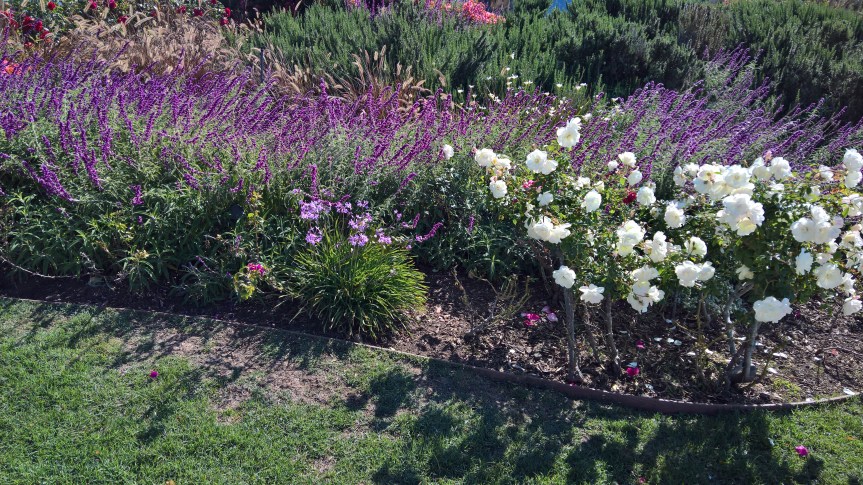
A garden lies hillside in the early morning springtime. She boasts rosemary, white roses, and sage. She looks at the wind, appreciative that it moves in synchronicity with the ocean. She remains still, save for the kinetic undercurrent that promises nubile growth. She is steady, confident, proud, knowing she’s a magnet of attraction. She basks in the attention of bees and white butterflies, thinking sometime, long ago, someone told her that all white butterflies are really divine angels. She knows she is equal to her task.

In a garden, worlds collide born of fellowship. One should consider history, and the camaraderie of all living things, for one cannot be one without the other.
And isn’t this just like us?

Confessions of a Christian Mystic by River Jordan

Bold, daring, and yes, confessional, River Jordan’s collection of personal essays warns you going into it that you’re in for something unique. After all, what is the art of writing, if not a venue to compare notes on this business of life? Only a master can make this plain through the power of fifty delightful stories. This is a writer who asks the big questions for us; who owns a steady faith base yet thinks outside the box. Confessions of a Christian Mystic is devout and dauntless. It is sonorous, beautiful, soul-deep, and fearless. And it is sardonically funny in its skirt-lifted vulnerability. The chapter titled, “Sometimes Good Girls Get Naked” is a case in point. With a deft hold on sentiment without being overly sentimental, I won’t cheapen this important book by suggesting it’s a page-turner—it is better. Confessions of a Christian Mystic is something to savor. You’ll want to pause and ponder at the end of each chapter.
I applaud every essay in this gorgeous gift of a book. River Jordan has woven vignettes of her personal narrative at such an engaging, introspective pitch that I defy every reader not to see themselves in its pages.