There is no There to Get to

I tend to be a stream of consciousness writer, in that I write whatever it is I’m thinking. I don’t labor as long as I’m putting ideas on paper, and there’s a quiet ease that ensues from not looking over my own shoulder. This is how I began writing in the first place. I began by keeping a journal I knew nobody would ever see. No one suggested I keep a journal; I simply felt compelled at a young age from the resounding depth of that interior chamber that tells a person who they are. In truth, I have a running inner monologue that deciphers the world, and it is this I call upon when writing. There has never been a time when I didn’t write. I’ve used it as a way of interpreting the world for as long as I remember. What began as a desire to understand myself evolved into a daily habit, then one bright day, I turned through my journals and discovered, not only had I been documenting my life, I had a particular way of experiencing its vagaries. Once I realized this, my writing came into focus. I thought maybe I could forge a career. I sought to articulate at such a pitch that there would be no misunderstanding. I began paying scrutinous attention to word usage, craft, and flow, reasoning that the more clarity I brought to language, the better the chance for a reader’s understanding. Here’s what happened as I stayed the course: I fell in love with the act of writing. I learned it is a deepening process predicated upon development, with no there to get to, only the experience of the personal path.

There was a time when I was confused by this. I thought calling myself a writer meant I had to achieve a sanctioned plateau that gave me permission to continue writing. I was wrong about this, and have only recently figured out why. The world didn’t have to tell me I am a writer before I became one. I didn’t recognize I became one the day I followed the call by putting pen to paper in my journal. No number of published books or lack thereof will alter this salient truth; not for me or anyone else. Being a writer begins with giving yourself permission to be one. However you choose to experience it is ultimately in your own hands.

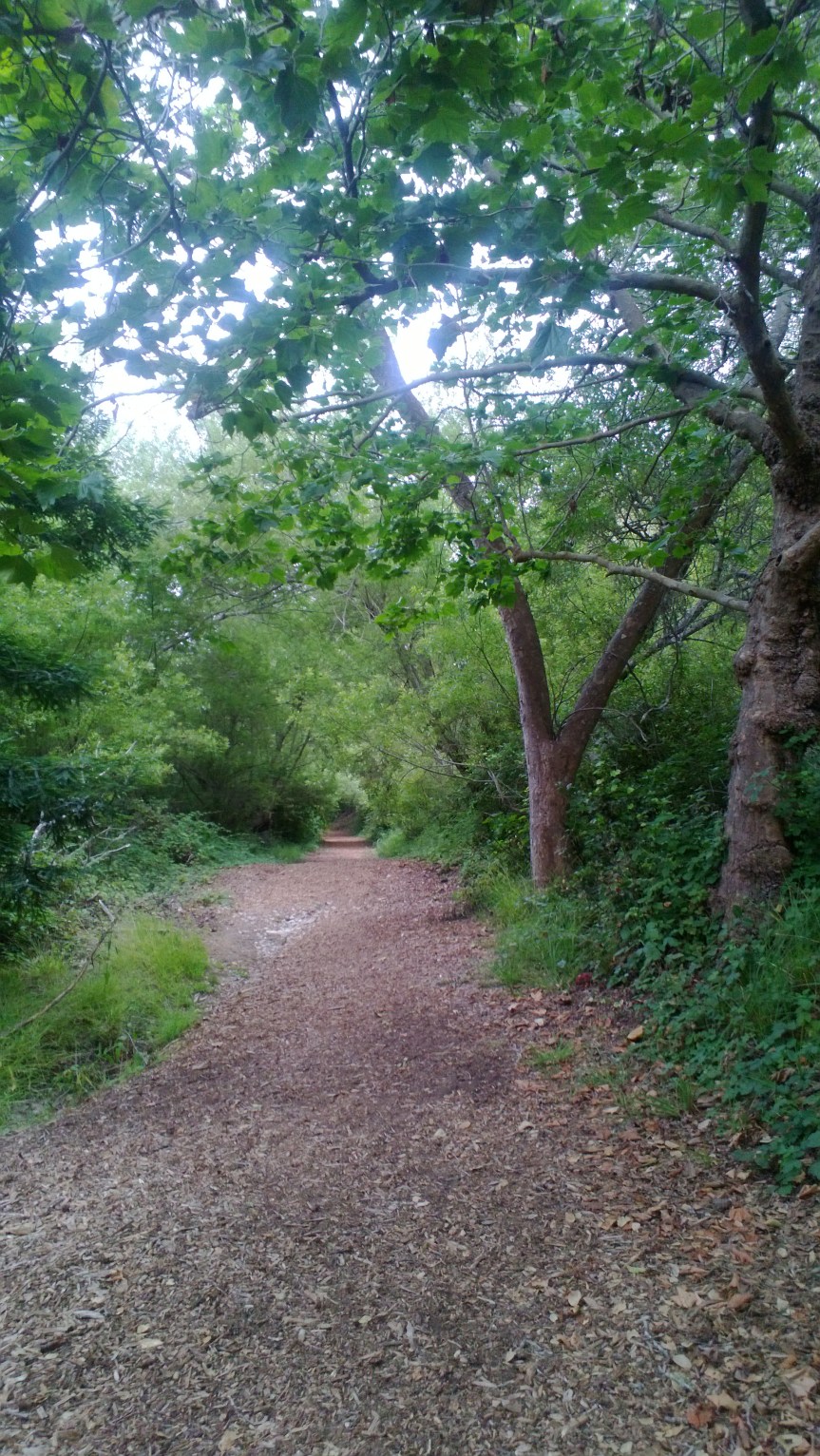
I believe all writers care about writing for the same reason, which has something to do with the desire to compare notes in this business of living. Whether we’re published, or by whom is not the point, the point is all writers are on the same path, propelled by an inexplicable urge to communicate, however or wherever it is they tell their story. It is enough, to me, for its own sake. The real merits of writing lie intrinsically in its pursuit. For a writer, there is no there to get to, there is only the fulfilling, soul-driven act.
Art for Art’s Sake?

Lately, I’ve been given cause to seriously consider my writing career and to ask myself why I’m truly engaged in the pursuit. Though I am an optimist by nature, it does occur to me that as a universal rule, one can only work with a situation successfully as long as it works with them.  When it comes to most things in life, there is an art to meeting things half-way, to staying in the middle, to watching the dynamic of cause and effect in one’s life, to not over-extending oneself, nor taking things personally. It’s helpful for a writer to keep this in mind when it comes to the experience of rejection. This is not to say that it’s a bad thing to be goal oriented, only that there is folly in putting a time frame on the long range goal. Many writers want to see measurable progress according to their time-table, but this is where we’re best shown that we are not in control. I think the adage of showing up, doing the work, and being unattached to outcome is the aim, but how to seriously achieve this stance of nonattachment; this acceptance of our lack of control? Artists tend to be emotionally involved in their creations. We want to see the fruits of our labors manifest, elsewise, what’s it all for? But I’m going to take this to a soul level and say the soul only wants to create; it wants the experience of creation as its reality, and if one considers art from this premise, then it is enough to create. So the fundamental question for any artist to ask themselves is do you want the glory of the experience, or do you want to reap a reward? The world will tell you success looks a certain way at a particular end and therein lies your validation, but what attitude are we to assume until that fateful day? What price happiness, and how are we to manage within an arena whose premise is to contribute then relinquish control? The thing is, we have no control, and  assuming we do sets us up for all kinds of false premises, wherein frustration, self-doubt, victimization, and all the rest are given license. As a writer, I think art for art’s sake is the answer because we can’t control our reception. We may or may not gain riches and recognition, but if we engage the artistic flow as a way of being in the world and are in the right relationship with its unpredictability,  then I think we can say we’re living a successful life.  It’s not necessary to be the choreographer of the show, it’s only necessary that we are wise enough to dance.

Author’s note: This post is in response to Jason Howell’s  question of the week on his blog, Howlarium, of which I am an avid fan:

Q: How often are you able to create a desired result for yourself by sheer force of will, or by arranging circumstances? Do you ever feel as though the reason you aren’t far enough along is that you haven’t pushed yourself hard enough, even though you’ve worked very hard? In your writing life or otherwise—is control really all it’s cracked up to be? 

Check into Howlarium @ http://www.howlarium.com/