The Spirit Behind Little Tea

I’m forever pondering the magic of life-long female friendships, the kind formed in childhood, or perhaps early high school that, for whatever reason, stay. On one hand, when we’re young, we’re in a state of becoming, but on the other, our early years are the set-in-stone template of who we actually are. We grow from there. We build our lives. We add and subtract what is and is not working. We shape and adjust and mold our lives as best we see fit but, in my mind, we never fundamentally change our core essence. We can move far from home, forge brilliant careers, marry, have children, divorce, witness sorrow and tragedy, and death, and it shapes our experience, perhaps informs our wary attitude, but the vagaries of life don’t re-define us. In a matter of speaking what happens in our lives refines us.
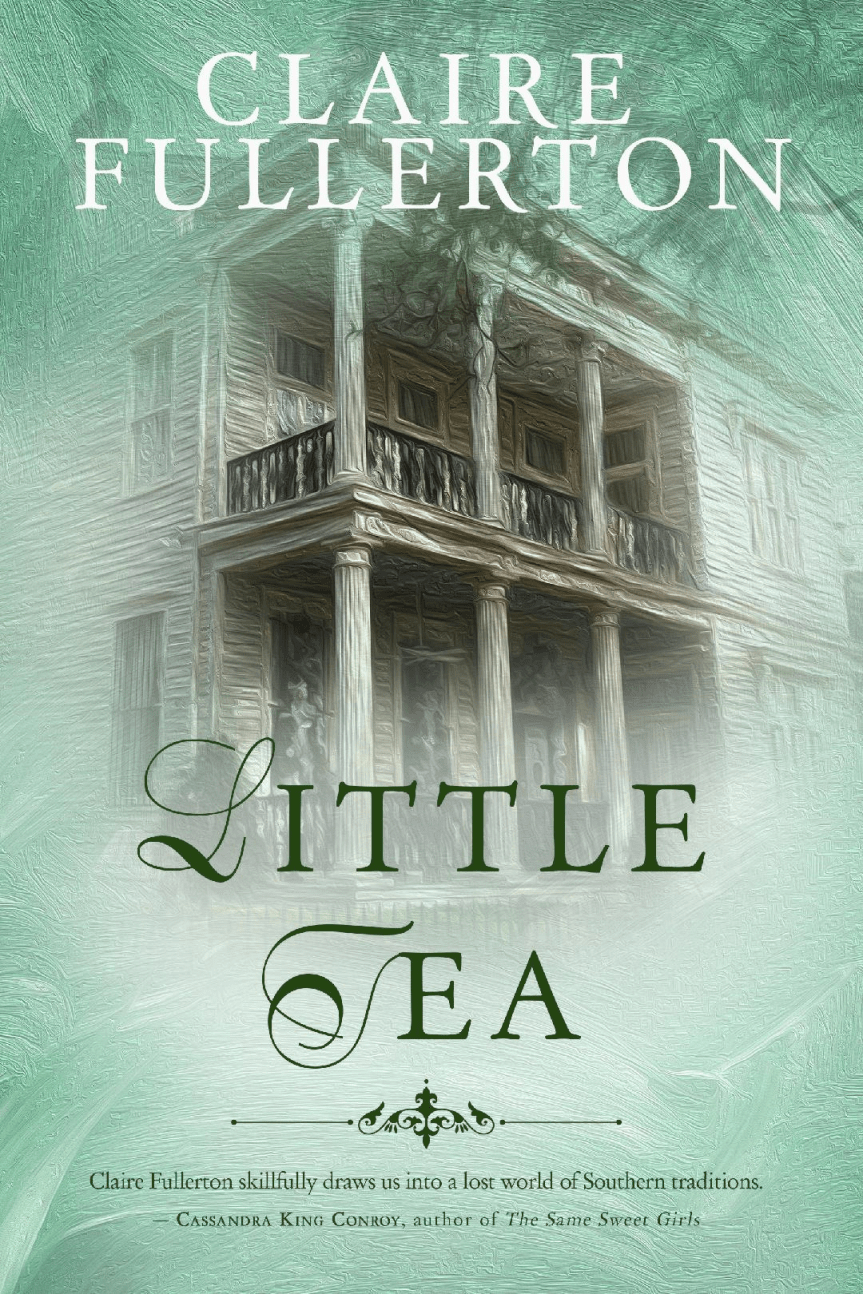
At the beginning of Little Tea, I said it this way: “There’s a side to the unions made in high school that has perpetual resonance, a side that remains in arrested development that will never let you forget who you essentially are.”
Our friends anchor us. They keep us on center page. They’re the ones who know our history, the characters in our dramas of cause and effect, and they never forget. This keeps us honest. Our friends are a touchpoint to see us through the ages.
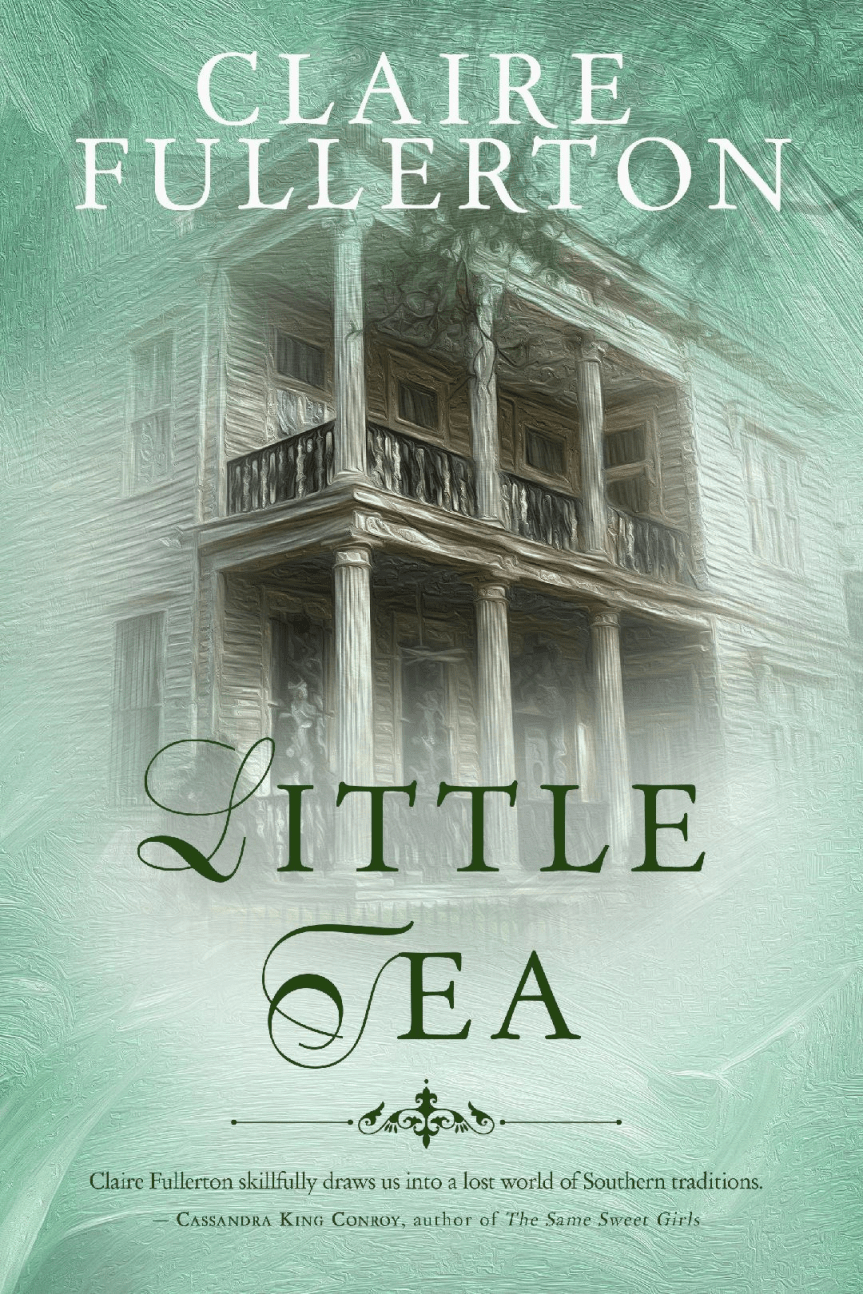
I went into the writing of Little Tea wanting to make this point through the power of story. I began with three women friends who reunite after many years at Greer’s Ferry Lake in Heber Springs, Arkansas.

WP_20150718_09_44_21_Pro

I set Little Tea in Heber Springs because of its close proximity to Memphis, where the characters, Renny, Ava, and Celia grew up. They each live in another location and had to travel to the lake, and the thing I liked about setting the story near water is the idea of fluidity and fluctuating tides. Such is life, and the element of water is alive, ever-changing, and emotional. Sometimes we sit near water and reflect, other times we dive right in it. For the three childhood friends in Little Tea, Heber Springs Lake is a neutral ground.
Little Tea is the story of three women friends who reconvene because one of them is in trouble. If you take one problem and put it in the hands of three different women, you’ll receive three different solutions, each based according to who the woman is—her background, her history, her perception of the world. Great wisdom and sage advice are borne from the heart and souls of women, and it is this I wanted to capture in the story.
I like the idea of a group of women friends as an insular, secret society. This subject was the entire impetus behind my writing Little Tea, and I hope readers relate to it in the spirit I intended, which is to say there is great value in friendship.

Let’s vow to never take it for granted.

83818413_762502274271129_5696037369426214912_n

https://www.clairefullerton.com

Gratitude to the WordPress Book Bloggers

I’d like to adequately express how much the WordPress book blogging community means to me, so suffer me while I warm up to it. I readily admit I’m the long-winded sort, even when I have an important point.

In this day and age of social media at the center of an author’s career, there is much to reconcile, and there are times I wrestle with keeping a proper perspective. On the one hand–and you’d think this to meet me in person–I  am ridiculously extroverted; I have what author, Pat Conroy, labeled the “Southern sickness” of assuming everyone I meet is my best friend, yet on the other, I am intensely private. I don’t like showcasing myself because it feels like grandstanding, and quite frankly I’m not impressed with myself to the point that I think I have anything of significance going over any other writer. We are all of us playing a long-game, making our own way in our chosen field. But sometimes it seems that one has to have an elevated sense of oneself in order to promote one’s work as an author. There’s a fine line these days, and it’s the one thing I didn’t realize going into “being” a writer. I’m probably like many people in their 50’s. We were the generation who woke up one day to discover the entire world was online and all over social media. When that realization dawned on me, it was a major hustle to catch up.

Then there is the concern of reconciling novel-writing as art and publishing a novel as a business. Once upon a time–as little as twenty years ago–authors wrote books and turned them over to their publishing house to promote. If they had an audience to justify a book tour, the publisher paid for an author to travel from book store to library to book club to meet readers in person. This is still done, but on a small, discerning scale primarily intended for authors who have wide name recognition. As for authors with a small or independent press, when it comes to a book tour, it’s all out of pocket because they’re essentially on their own.  Because book publishing options have opened up and there are now thousands upon thousands of authors in the race, the effort is geared toward keeping abreast of the tide and waving one’s hand above the noise. What’s more, in this day and age, the lion’s share of promotion falls to the author and is not only about promoting a book; authors have to promote themselves.

I’ve been torn over this for a while, now. I’ve limited myself in self-promotion by only going so far. I’ll take the opportunity here to add to Conroy’s definition of Southern sickness: friendly as we are, Southerners are an unflashy lot given to personal discretion. Too much going on about oneself is succinctly considered bad form.

I see it all on social media. People post all sorts of personal information from their family to their lifestyle to their political views. I’m not passing judgment, just making an observation, but I do know that too much online, personal information can put one in a vulnerable position and lead to an unintended consequence. It’s the downside of social media and it’s a struggle to strike a manageable balance.

So, how does an author effectively promote their book while striking a healthy balance? And whom should an author trust?

Which brings me to another consideration: There are the legions of online, profiteering book promotion businesses that have cropped up as a result of the book publishing boom. It’s staggering to me and hard to wade through the miasma to discern who is and is not reputable, while an author is hustling for literary recognition and book reviews. Authors need exposure for their releases, but who to choose within a reasonable budget?

Which brings me around to the WordPress book blogging community ( I told you I’d work my way to my point.)

I am humbled and proud to have aligned with the book bloggers here. I believe the book bloggers I’ve met on WordPress are as fine as they come. I stand in awe of Sally Cronin of Smorgasbord. Through Sally, I’ve met Olga Nunez, Michelle James, Robbie Cheadle, Teagan Geneviene, Rosie Amber,  DG Kaye, and Chris the Story Reading Ape to name but a few. I stand in awe of each bloggers’ deft handling of content, organizational skills, dedication, professionalism, and magnanimous spirit. I recognize you all as passionate people involved in the book world for all the right reasons. Your impact upon many authors’ careers is nothing short of significant.

At long last, here is my point:

I thank each of you who has featured my books on your blog for including me in your esteemed fold. Your support of my career is a force that sustains me, and I remain so very grateful.

https:www.clairefullerton.com


Where I Find Inspiration

May 1, 2020 | By Claire Fullerton
I was recently asked the following question in an interview: “As a writer, where do you go to find inspiration?” The interviewer cited the habit of Charles Dickens, who took to the streets of London every day in a five to six-mile stroll while looking for source material. I love the evocative image of this world-renowned writer cruising through London, his eyes darting as he tallied impressions, experiencing the common place of that city, taking mental notes.
Because I wanted to answer the question to the best of my ability, I visualized myself in Dickens’ place and pondered what he was really doing. I realized it wasn’t so much where he was as it was that he had his eyes open. The way I considered it, Dickens allowed himself to be influenced, and this is key for writers. The most seemingly inconsequential things can affect a writer, and by this I mean strike an emotional chord. That it typically happens in the blink of an eye doesn’t make it any less meaningful.
In the essay, Honeymoon: The Romance of Umbria, by Pat Conroy, which appears in The Pat Conroy Cookbook, Conroy writes of catching himself writing in his head instead of living in the moment as he stood inspired by an Umbrian sunset. With regard to writers, I believe this is a common habit. It’s a particular way of being in the world and at the heart of it is the desire to communicate coupled with love of language.
There might be shades of the longing to be understood, but I think it’s more a labor of love to help readers understand the world. After all, a writer’s task is to articulate, to put their impressions into words along with what they think and feel through the power of story.
I’ve heard it said that artists view the world through with a peculiar, particular lens.
They have the ability to engage with the world from the outside looking in, to be in it but not of it, stand apart in the middle of a crowd and act as witness. To many artists, this ability is a calling, be it acting, painting, dancing, or writing. In my opinion, writers are the archivists of the world, the interpreters of life who record events and impressions and are driven by the need to share their gift.
And yes, it all starts with finding inspiration, yet inspiration doesn’t so much reside without as it does within. The trick is to keep wide-eyed and aware as one goes about their days, to grab hold of inspiration’s cord once it’s struck and hang on until it resonates. Inspiration doesn’t have so much to do with location as it does the ability to access what’s within once it’s triggered. When it comes to writing, inspiration is a prompting that travels from the spirit of a writer to a blank page and results in a painstaking commitment to work built on hope and blind faith that it’s worth sharing.
In answer to that interviewer’s question of where I go to find inspiration, I tried my best to articulate my experience. I said rather than cite a locale, I can share what I do when inspired, and it has everything to do with discipline. I can be anywhere doing anything when inspiration comes from sight, sound, thought, mood or feeling. To me it’s all about listening to the voice within. The discipline starts with finding a pen

For Release news of my novel, Little Tea, the rest of this post continues here: http://booksbywomen.org/where-i-find-inspiration/

83818413_762502274271129_5696037369426214912_n

Little Tea’s Universal Link:  https://books2read.com/u/3nvz0R
Claire Fullerton hails from Memphis, TN. and now lives in Malibu, CA. with her husband and 3 German shepherds. She is the author of Mourning Dove, a coming of age, Southern family saga set in 1970’s Memphis. Mourning Dove is a five-time award winner, including the Literary Classics Words on Wings for Book of the Year, and the Ippy Award silver medal in regional fiction ( Southeast.) Claire is also the author of Dancing to an Irish Reel, a Kindle Book Review and Readers’ Favorite award winner that is set on the west coast of Ireland, where she once lived. Claire’s first novel is a paranormal mystery set in two time periods titled, A Portal in Time, set in Carmel-by-the-Sea, California. She is a contributor to the book, A Southern Season with her novella, Through an Autumn Window, set at a Memphis funeral ( because something always goes wrong at a Southern funeral.) Little Tea is Claire’s 4th novel and is set in the Deep South. It is the story of the bonds of female friendship, healing the past, and outdated racial relations. Little Tea is the August selection of the Pulpwood Queens, a Faulkner Society finalist in the William Wisdom international competition, and a finalist in the Chanticleer Review’s Somerset award. She is represented by Julie Gwinn of the Seymour Literary

Follow her on Twitter @cfullerton3
Find out more about her on her website https://www.clairefullerton.com/

As Published on:

Women Writers, Women(‘s) Books
Online Magazine
http://www.booksbywomen.org
Twitter @womenwriters
Facebook Women Writers Women(‘s) Books

The Boatman and Other Stories by Billy O’Callaghan


It’s daunting to think that no matter how I review this exceptional collection of short stories by Billy O’Callaghan, I will never adequately express my full sentiments, for how to articulate that O’Callaghan is simply the best writer I’ve come across in ages? His short stories are a treatise on the human experience, the impressionable psyche, the vulnerable human heart. He crafts his stories with the fluidity of a wave that builds slowly, crests, then turns in on itself after enveloping sight and sight unseen. To read The Boatman and Other Stories is to read a master at his craft. You’ll be swept away by the rich detail and nuance of commonplace in the hands of this powerful storyteller. I cannot recommend this collection hardily enough. Read it, treasure it, then do as I did and put it in pride of place on your bookshelf.

https://amzn.to/3f1IiaZ

Billy O'Callagahn

Billy O’Callaghan was born in Cork in 1974, and is the author of three short story collections: In Exile (2008, Mercier Press), In Too Deep (2009, Mercier Press), and The Things We Lose, The Things We Leave Behind (2013, New Island Books, winner of a 2013 Bord Gáis Energy Irish Book Award and selected as Cork’s One City, One Book for 2017), as well as the bestselling novel The Dead House (2017, Brandon/O’Brien Press and 2018, Arcade/Skyhorse (USA)).
His latest novel, My Coney Island Baby, was published by Jonathan Cape (and Harper in the U.S.) in January 2019 to much acclaim. Read more about it on the Books page.
Billy’s latest short story collection, The Boatman and Other Stories was released in January 2020 and released in the U.S. on April 28.
Billy is the winner of a Bord Gáis Energy Irish Book Award for the short story, and twice a recipient of the Arts Council of Ireland’s Bursary Award for Literature. Among numerous other honors, his story, The Boatman, was a finalist for the 2016 Costa Short Story Award, and more than a hundred of his stories have appeared or are forthcoming in literary journals and magazines around the world, including Absinthe: New European Writing, Agni, the Bellevue Literary Review, the Chattahoochee Review, Confrontation, The Fiddlehead, Hayden’s Ferry Review, the Kenyon Review, the Kyoto Journal, the London Magazine, the Los Angeles Review, Narrative, Ploughshares, Salamander, and the Saturday Evening Post.


https://amzn.to/3f1IiaZ

https://amzn.to/3f1IiaZ

I read O’Callaghans short story, A Death in the Family, which is included in The Boatman and Other Stories when the prestigious Ploughshares published it as a Kindle solo, here https://amzn.to/2xnqma2

A Death in the Family

I reviewed A Death in the Family by writing:

It is such a gift that Ploughshares avails this short story here on Amazon. I cannot recommend this story enough, for I consider Billy O’Callaghan the most important literary figure to arrive on the scene in ages. O’Callaghan can take any simple premise and infuse it with deep-seated, soul-stirring insight, and A Death in the Family is just such an example. His use of language is so personal that it shows us our own humanity, in this evocative, finely wrought story. Read this story and be lulled by O’Callaghan’s laser-sharp gift of Irish nuance, character, and place. And when you’ve finished, do yourself a favor and read his debut novel, The Dead House.

Here is my favorite quote on O’Callaghan’s writing:

“I know of no writer on either side of the Atlantic who is better at exploring the human spirit under assault than Billy O’Callaghan.”—Robert Olen Butler

You can read about this world-class author, here:

https://billyocallaghan.ie/en/biography/


Southern Family Saga, Mourning Dove

As I count the days to the release of Little Tea, lo and behold, this review of my last novel, Mourning Dove was just sent to me by the Chanticleer Reviews. Thought I’d share it here.

Chanticleer Book Reviews & Media

Camille Crossan appears to be living an idyllic life in Claire Fullerton poignant, evocative novel, MOURNING DOVE. Living in a superbly appointed mansion in “magnolia-lined and manicured” Memphis during the 1960s and 1970s, Camille’s family life shimmers with Southern charm. Beautifully penned #SouthernNovels with all the trimmings. One of our favorites. Highly recommended. #SouthernLiterature #PulpwoodQueens #CIBAs

firstplace-somerset-250x300

Review:

Camille Crossan appears to be living an idyllic life in Claire Fullerton’s poignant, evocative novel, Mourning Dove. Living in a superbly appointed mansion in “magnolia-lined and manicured” Memphis during the 1960s and 1970s, Camille’s family life shimmers with Southern charm. Her mother, Posey, usually outfitted in a Lily Pulitzer shift, Pappagallo shoes, and a signature shade of pink lipstick, is a beauty with the wryest sense of humor and steel determination.
As a young girl, Camille, known as Millie, sees how those in her mother’s social orbit are captivated by her aura, how men are easily seduced by her flirtatious charm. Society is a game played by those who know its rules, and Posey means to win. Every time. She, however, isn’t even the charismatic one in the family – that’s Finley, Millie’s older brother, who brims with intelligence, startling good looks, and messianic magnetism. A peek beneath the shiny surface of gracious Southern living, however, reveals enormous cracks in the foundation of the Crossan family. One of the first things the adult Millie tells us about her brother is that he is dead. She takes the reader back, though, to their childhood and coming of age, a tumultuous journey that both binds and separates the siblings.
During her first decade, Millie’s family was living in Minneapolis with her tender-hearted, intellectual father who succumbed to alcoholism. Loss of money and, worse, the accompanying loss of social status, motivates Posey to uproot her children and move them to her childhood home in Memphis, a palatial mansion filled with antiques and portraits of forebears. It’s a volatile time, inside and outside the house, as centuries-old Southern traditions clash with the youth counterculture.
Millie watches as her mother holds court during daily cocktail hours, a prospective second husband soon on the reel, and Finley, a gifted guitarist, plunges into the local music scene. But what role will she play? It’s difficult for her to see herself entirely separate from her brother for whom she has, “…a love devoid of envy, tied up in shared survival and my inability to see myself as anything more than the larger-than-life Finley’s little sister.” Millie will grapple with her identity and question her destiny, whether she’ll be a bride in the Southern belle mode of her mother or if she’ll be the blossom that falls far from the magnolia tree. Meanwhile, Finley’s charisma both explodes and implodes in shocking and dangerous ways as he becomes revered by a group of people with no connection to the gentrified life. Like Millie, the reader is transfixed and apprehensive about where this less-traveled road will take Finley. Although the reader knows his grim fate from the outset of the book, his storyline is so engrossing that no drama is lost.
Author, Claire Fullerton, is an enchantress with prose. The writing in this novel will cause you to stop, reread sentences, savor them, and note their architecture. Scenes sparkle as she masterfully summons moods and atmosphere. The reader can see Millie’s lovely but haunting home, and smell the rich fragrance of dogwood on a soft spring day. Fullerton has a keen ear for witty, authentic dialogue, and she deftly reveals much about personalities via conversation. It’s difficult to take leave of such a vivid, fully realized world. Fortunately for readers, Fullerton has written several books, opportunities to spend more time in her richly crafted worlds.


https://www.clairefullerton.com


5star-300x30083818413_762502274271129_5696037369426214912_n

Universal link for Little Tea:  https://books2read.com/u/3nvz0R


Outbound Train by Renea Winchester

Congratulations to Renea Winchester! Today is release-day of her wonderful novel, Outbound Train, a novel with such visceral, Southern nuance and depth; the characters seem to embody the rural South.

In 1976, memories from a night near the railroad tracks, sixteen years earlier, haunt Barbara Parker. She wrestles with past demons every night, then wakes to the train’s five-thirty whistle. Exhausted and dreading the day, she keeps her hands busy working in Bryson City’s textile plant, known as the “blue jean plant,” all the while worrying about her teenage daughter, Carole Anne. The whistle of the train, the hum of those machines, and the struggle to survive drives Barbara. When an unexpected layoff creates a financial emergency, the desperate pressure of poverty is overwhelming.
Unbeknownst to Barbara, Carole Anne sneaks out at night to walk the tracks so she can work at Hubert’s Bar. She’s hoarding money with plans to drive her mother’s rusty, unused Oldsmobile out of Bryson City, and never return. She only needs one opportunity … if she can just find it.
When Carole Anne goes missing, Barbara finds herself at a crossroad—she must put aside old memories and past hurts to rely on a classmate for help finding her daughter. But this is the same man she blames for the incident years ago. Is she strong enough—or desperate enough—to do anything to keep her daughter safe?
In Outbound Train, the Parker women struggle to make frayed ends meet in a town where they never quite do … at least, not without expert weaving and a bit of brute force.
I read the ARC of Outbound Train and recommend this gorgeously written, starkly real Southern set story that will play on your heartstrings all the way through. Author Renea Winchester writes with a clear-sighted, compassionate eye about women in hard times. They are the blue-collar, Parker women, one haunted by her past; the other, her daughter, who plans to escape the poverty of Bryson City, North Carolina at any cost. With twists and turns and secrets that come full-circle, Outbound Train is an engaging story, Southern to its core in setting and character, and captivating to its last page.

Here is my favorite photograph of Renea with her goat!

Image may contain: 1 person, smiling, eating, child, outdoor and food

I asked Renea Winchester the following questions about Outbound Train.

Q: Are any characters based on or named after friends? If so, have you told them?

Full disclosure, the character Doretta is a combination of Loretta Hannon, the funniest woman in the South, and my sister, Doretta McCammon. Both of these ladies are unpredictable, fearless, and funny as all get out. There’s a reason we live so far apart because together we have entirely too much fun. Secretly Carole Anne wants to be like Doretta. She covets Doretta’s life, her house, and the freedom Doretta has. However, Doretta wishes she were more like Carole Anne. I haven’t told my friends that I based my character on them, until now.
Q: Did you write outside? Do you have a soundtrack?
What an excellent question. I have carried this novel with me, in written form, for years. Jotting down notes, scenes, and sometimes a single saying in notebooks, receipts and napkins whenever a character whispers in my ear. I do not have a soundtrack. Music is a big part of my life, but I find it distracting when writing.

Q: How did you capture the ideas as they came to you?
I write everything by hand because, for me, the first draft comes easier through the tip of a pen. While writing Outbound Train, I voiced to my dear friend, Terry Kay, the troubles I had with a particularly elusive character. The scene simply would not flow no matter how hard I tried to manipulate the story. Terry, in his wisdom, said, “Now dear, you cannot chase characters down the hall. You cannot force them to do your bidding. You are not in control. They are in control. You have two jobs. Observe your characters and write what you observe. Pondering his words, I realized he was correct. The next day I put his advice into action and finished the scene.

Q. You wrote about secrets. Can you tell us a little about the cause and effects of secrets in the story?
Both Barbara and Carole Anne have secrets. Barbara won’t reveal the name of Carole Anne’s father, so young Carole Anne – who is hungry for a positive male role model-picks her own; except the person she picks is a man her mother blames for a traumatic event from her childhood. Carole Anne has had her fill of poverty. She wishes to escape, by any means necessary, even when it means taking a job that breaks the law. A job that ultimately leads to her kidnapping.
I think we all have secrets. Whether we are hiding a past trauma, or hunger for something more in life, I believe the secrets we carry motivates us to change.

Q: Was the North Carolina setting important to the story?
During the first draft, I set Outbound Train in a fictionalized town, but it felt disingenuous. I knew readers couldn’t connect with the characters without experiencing what we call a “sense of place.” Honestly, the story lacked heart. I simply could not convey the emotion necessary to touch readers unless I set the story in my hometown. I needed readers to walk the rails with Carole Anne, and hear the hum of sewing machines inside the textile mill. I needed to show them this part of Bryson City because the setting made me who I am today. In order to honor the women who raised me, the setting needed to be real. The same is happening with The Mountains Remember, my work in progress. The story occurs on Indian Creek, in the community where my people once lived before being displaced to form the National Park.

Here’s what others say about Outbound Train:
“Renea Winchester’s storytelling is as real and authentically Southern as the clear water music of an Appalachian creek and the song of Cicadas on a front porch summer evening.” ~ Lisa Wingate,
#1 New York Times Bestselling author of Before We Were Yours and Before and After.

“I fell in love with the smart, strong, funny characters in this community of make-do women, and I predict you will, too.” ~ Pamela Duncan, Author of Plant Life

“With pitch-perfect dialogue and believable characters, Winchester has crafted a story that will make readers stand up and cheer.” ~Michael Morris, Man in the Blue Moon, A Place Called Wiregrass

Renea was born and raised in Bryson City, North Carolina. She began her writing career in Georgia where she penned several non-fiction works including Farming, Friends & Fried Bologna Sandwiches which was nominated for the prestigious SIBA award, earned Renea a nomination for Georgia Author of the Year, and received the endorsement from The Pulpwood Queens, the largest book club in the country. After winning the Wilma Dykeman Award for Essay and the Appalachian Writer’s Award, Renea focused on transitioning to fiction. Renea has served on the Atlanta Writers Board, Georgia Writers Association, and judges multiple literary awards. In April 2020, Firefly Southern Fiction released Outbound Train. Set in her hometown of Bryson City, North Carolina, in 1976, Outbound Train is a triumphant story of perseverance and hope despite the harshness of poverty. Renea is passionate about literacy, Appalachian Heritage, preserving rare seeds, cultivating endangered plants and meeting new friends. Outbound Train is her debut Novel. Contact Renea through her Facebook Page https://www.facebook.com/Renea-Winchester-Author-162590877104288/

Image may contain: 2 people, including Renea Winchester, people sitting, tree and outdoor

~Outbound Train releases today. It’s available at your favorite book store as well as book sellers online.
You can find Renea Winchester of WordPress ~ https://reneawinchester.wordpress.com/

Little Tea: Excerpt

“Hey, Little Tea,” Hayward called as she and I sat crossed-legged on the north side of the verandah. “I bet I can beat you to the mailbox and back.” It was a Saturday afternoon in early June, and we’d spread the church section of the Como Panolian beneath us and positioned ourselves beneath one of the pair of box windows gracing either side of the front door. The front door was fully open, but its screen was latched to keep the bugs from funneling into the entrance hall. They’d be borne from the current of the verandah ceiling fans that stirred a humidity so pervasive and wilting, there was no escaping until the weather cooled in early November. The glass pitcher of sweet tea Elvita gave us sat opaque and sweating, reducing crescents of ice to weak bobbing smiles around a flaccid slice of lemon.

Little Tea stood to her full height at Hayward’s challenge, her hand on her hip, her oval eyes narrowed. “Go on with yourself,” she said to Hayward, which was Little Tea’s standard way of dismissal.

“I bet I can,” Hayward pressed, standing alongside Rufus, his two-year-old Redbone coonhound who shadowed him everywhere.

Little Tea took a mighty step forward. “And you best get that dog outta here ’fore he upends this here paint. Miss Shirley gone be pitching a fit you get paint on her verandah.”

“Then come race me,” Hayward persisted. “Rufus will follow me down the driveway. You just don’t want to race because I beat you the last time.”

“You beat me because you a cheat,” Little Tea snapped.

“She’s right, Hayward,” I said. “You took off first, I saw you.”

“It’s not my fault she’s slow on the trigger,” Hayward responded. “Little Tea hesitated, I just took the advantage.”

“I’ll be taking advantage now,” she stated, walking down the four brick steps to where Hayward and Rufus stood.

At ten years old, Little Tea was taller than me and almost as tall as Hayward. She had long, wire-thin limbs whose elegance belied their dependable strength, and a way of walking from an exaggerated lift of her knees that never disturbed her steady carriage. She was regal at every well-defined angle, with shoulders spanning twice the width of her tapered waist and a swan neck that pronounced her determined jaw.

Smiling, Hayward bounced on the balls of his feet, every inch of his lithe body coiled and ready to spring. There was no refusing Hayward’s smile, and he knew it. It was a thousand-watt pirate smile whose influence could create a domino effect through a crowd. I’d seen Hayward’s smile buckle the most resistant of moods; there was no turning away from its white-toothed, winsome source. When my brother smiled, he issued an invitation to the world to get the joke.
Typically, the whole world would.

“Celia, run fetch us a stick,” Little Tea directed, her feet scratching on the gravel driveway as she marched to the dusty quarter-mile stretch from our house to the mailbox on Old Panola road. I sprang from the verandah to the grass on the other side of the driveway and broke a long, sturdy twig from an oak branch. “Set it right here,” Little Tea pointed, and I placed it horizontally before her. But Rufus rushed upon the stick and brought it straight to Hayward, who rubbed his russet head and praised, “Good boy.”

“Even that dog of yours a cheat,” Little Tea said, but she, too, rubbed his head then replaced the stick on the ground. “Now come stand behind here. Celia’s going to give us a fair shake. We’ll run when she says run.” Her hands went to her hips. “Now what you gonna give me when I win?”
“The reward of pride and satisfaction,” Hayward said, and just then the screen door on the verandah flew wide and my brother John came sauntering out.

“On go,” I called from my position on the side of the driveway, where I hawkishly monitored the stick to catch a foot creeping forward. Looking from Hayward to Little Tea to make sure I had their attention, I used a steady cadence announcing, “Ready … set … go.”

Off the pair flew, dust scattering, arms flailing; off in airborne flight, side by side, until Little Tea broke loose and left Hayward paces behind. I could see their progression until the bend in the driveway obstructed my vision but had little doubt about what was happening. Little Tea was an anomaly in Como, Mississippi. She was the undisputed champion in our age group of the region’s track and field competition and was considered by everyone an athlete to watch, which is why Hayward continuously challenged her to practice. Presently, I saw the two walking toward me. Hayward had his arm around Little Tea’s shoulder, and I could see her head poised, listening as he chattered with vivid animation.

“You should have seen it,” Hayward breathlessly said when they reached me. “She beat me easily by three seconds—I looked at my watch.”

“Three seconds? That doesn’t seem like much,” I said.

“Listen Celia, a second is as good as a mile when you’re talking time. I’m two years older and a boy, so believe me, Little Tea’s already got the makings of a star athlete.” He grinned. “But we already knew this.”

John called from the verandah, “Celia, Mother’s looking for you.” I turned to see John walking to the front steps in his pressed khaki pants and leather loafers, his hand near his forehead shading his eyes.

“Where is she?” I returned.

“Inside, obviously. Last I saw her, she was in your room.”

For some odd reason, whenever my brother John had anything to say to me, he said it with condescension. His was a sneering, disapproving tone for no justification I could discern, beyond our six-year age difference. He was as hard on Hayward as he was on me, but Hayward never took John’s snide remarks personally, nor did he invest in what he called his holier-than-thou demeanor.

It didn’t take much to figure it out. From a young age, Hayward and I both knew he and John were two different kinds of men. Hayward once said to me, “John’s just a mama’s boy, which is why he calls Mom ‘Mother’ as if we’re living in Victorian England instead of Como, Mississippi. Don’t let him bother you. He has his own reality, that’s all.”

I skipped up the verandah’s steps and put my hand on the flimsy screen door.

“You should take that pitcher inside before you forget it,” John dictated, “and y’all need to pick up that paint.”

“I’ll get it in a minute,” I said, just to spite him as I stepped into the entrance hall. I couldn’t help it, it was my natural reflex in our ongoing contest of wills.

The light was always dim in the entrance hall, irrespective of the time of day. The carved crown molding on its high ceiling matched the dark walnut wood of the floor and door casings, which glowed in polished rosettes above the opening to the formal dining room on the right and the ample living room on the left, with the green-tiled solarium behind it. The entrance hall had a central catacomb feel and was always the coolest area of the house. In its cavernous elegance, footsteps were amplified on the maple floors during the months of June through September, then fell to a muted padding when Mom had Thelonious haul the crimson-and-navy runner from the attic and place it beneath the foyer’s round, centered table. At the end of the hall, behind the stairs, was my father’s den and attendant screened porch, but rarely did I visit the interior. My father was a private man, reclusive and solitary by nature, and whether he was in the library or not, the door was always shut. I had to skirt the gladiola arrangement on the entrance hall table. The floral design reached wide with flourishing arms toward the French credenzas against both sides of the walls. My reflection flashed in the ormolu mirror as I ran toward the stairs to find my mother. My hair crowned me with the color of night’s crescendo, dashing so dark it almost looked purple. I am 100 percent Wakefield in all that distinguishes the lineage, from the dark eyes and hair to the contrasting fair skin. There has never been a Wakefield to escape the familial nose; it is severe in impression, unambiguous in projection, straight as a line, and slightly flared. John and I are mirror images of each other, the yin and yang of the Wakefield, English bloodline. But Hayward was born golden, just like our mother, who comes from the Scottish Montgomerys, whose birthplace is Ayrshire. John and I possess an unfortunate atavistic Wakefield trait, though on me the black shadow is a ready silence, but on him it plays out as something sinister. John and I are individual variations of our father’s dark countenance, which is to say in our own way we are loners. People slightly removed. But Hayward got lucky, in possessing our mother’s shining essence. I could always see an internal light in their green eyes that set off their amber-colored hair.

I put my hand on the thick banister and climbed the stairs to the first landing, where my parents’ bedroom and living quarters unfurled like wings. The bay window overlooking the garden had its draperies drawn against the searing, silver sun. Walking into the sitting room at the right, I called for my mother, thinking she may be in the adjoining master bedroom. “I’m upstairs,” her voice descended. “Celia, come up. I want to see you.”

I mounted the stairs to the third-floor landing and found my mother perched lightly on the sofa in the alcove that served as a central area for the other four bedrooms. Behind her, sunlight filtered through the organza window treatments, highlighting the red in her hair. Her slender hands held a three-ringed binder of fabric swatches, the swatch on top a cool, blue toile. She patted the seat beside her and I settled softly. My mother was cultivated, circumspect, and radiated a porcelain femininity. Always, in my mother’s presence, I gentled myself to her calm self-possession. In my heart of hearts, it was my hope that the apple didn’t fall far from the proverbial tree.

“Tell me,” she said, “what do you think of this fabric for your draperies? We could paint the walls a light robin’s egg and put white on the molding. I think it’d be divine.” She looked around the room as if seeing it for the first time. “It’s time we got rid of the wallpaper in there. You’re growing up.” She laid her ivory hand on my cheek. “You’ll want this eventually. I think now’s a good time.”

I knew enough of my mother’s ways to know she was engaged in preamble. She was practiced at the art of delivery by discreet maneuver, and I suspected her impulse to transform my room had hidden meaning. “Why is now a good time?”

My mother looked in my eyes and spoke softly. “Celia, I’m telling you before I tell Hayward because I don’t want this to come from him. Your father’s going to be taking a job in Memphis, so we’ll be moving.”

“We’re moving to Memphis?” I gasped.

“Yes, honey. You’ll be starting school at Immaculate Conception in September,” she answered. “You know the school; its attendant to the big cathedral on Central Avenue.”

“But that’s a Catholic school, Mom. I thought we were Episcopalian.”

“We are, honey, but it’s highly rated academically. Your father and I think being exposed to a different religion will broaden your mind and give you beautiful advantages. We can come back here any weekend we want, and you’ll have a brand-new room when we do. You’ll have the best of both worlds, you’ll see. You’ll make new friends in Memphis, and Little Tea will still be here. It won’t be a drastic change at all. Try to think of it as an addition. There now, sweetie, don’t make that face. It isn’t the end of the world.”

But it was for me; Memphis intimidated me. Memphis was the big city compared to Como, and I found it cacophonous and unpredictable in its patchwork design. There was a disjointed, disharmonious feel to the city, what with its delineated racial relations. Parts of town were autocratic in their mainstay of Caucasian imperiousness and there were dilapidated, unlucky parts of town considered dangerous, which a white person never chanced. This much I’d learned on my visits to my grandparents’ house near the lake in Central Gardens. Blacks and whites never comingled in Memphis, even though they did coexist. But there was an impenetrable wall that separated the races, and I’d been raised in a footloose environment where it didn’t matter so much.

I took my teary eyes and sinking stomach to my bedroom so my mother wouldn’t see me cry. Through the window over the driveway, I watched as Hayward and Little Tea threw a stick for Rufus. I hadn’t the heart to run tell them our lives were about to end.


My 1, 2020 release: Firefly Southern Fiction

Preorder ebook and print: https://amzn.to/39BlPOT

https://www.clairefullerton.com

Blackwood by Michael Farris Smith #Book Review.

Author Michael Farris Smith is one of those rare writers who uses language as setting. He opens his fifth novel, Blackwood, in the year 1975 with “The “foulrunning Cadillac arrived chugging into the town limits of Red Bluff, the car having struggled out of the Delta flatlands and into the Mississippi hill country, the ups and downs of the landscape pushing the roughriding vehicle beyond what was left of its capabilities.” Off the bat, the reader knows the stage is set for bad luck and hard times for the drifters come to town. Farris Smith doesn’t snow us with a glimmer of hope, he hands us the premise as a matter of fact. Then the story deepens. Blackwood is a story of loners and outsiders thrown together seemingly by chance. They’d like to connect but lack the fundamental knowledge of how, as each manages their individual vortex trying not to drown in their common sphere.

Red Bluff, Mississippi is lackluster to the point where the town gives away abandoned, downtown storefronts to anyone willing to maintain one. Colburn, haunted by his past, calls himself an industrial sculptor. He returns to the seat of his loveless childhood in his flatbed, looking for scrap metal and such to fashion into art in one of Main Street’s cast-offs. He is looking for something. He wants to confront the demons of his past, and in his search, reunites with a will-o-the-wisp bar owner named Celia, in an attraction so conflicted, it exhumes his childhood pain.

Myer wears his pantlegs tucked in his boots and walks with a limp. He is Red Bluff’s weary law enforcement who gives too little too late to the town’s drifters, who take to the kudzu tangled woods on the edge of town where something sinister lurks.

Rich in tenor, setting, metaphor, and dark imagery, Blackwood is an intricately woven, gritty story of disconnected lives unwittingly affecting each other in repercussive ways, written is language so bleakly mood-setting, reading its pages becomes a state of mind.

Many a luminous author has called Oxford, Mississippi’s Michael Farris Smith one of the best writers of his generation. And he is. And Blackwood proves it.


Blackwood Releases March 3rd at all book outlets


https:www.clairefullerton.com

Sisters of the Undertow by Johnnie Bernhard

Sisters of the Undertow is the third book by Johnnie Bernhard I’ve read, and I loved every line of it for the same reason I’ve loved Bernhard’s other books ( A Good Girl, and How We Came to Be): she’s a master of deep motivational subtext.

In Sisters of the Undertow, author Johnnie Bernhard takes the complicated underpinnings of sibling rivalry, gives it breath, and sets it to wings through the power of a seemingly ordinary story. What makes it extraordinary is that narrator Kimberly Ann has emotional baggage against her younger sister and knows it. She is cynical, jaded, and resentful to such an edge that the story is fueled by her bone marrow.

Kathy Renee is oblivious to her elder sister’s resentment. She was born to this world prematurely and shoulders the burden of life-long special needs. And yet she is disarmingly cheery, resilient, and God-fearing, giving Kimberly Ann one more reason to rail against their relationship—on top of her put-upon, self-appointed victimhood, she is simultaneously riddled with guilt.

Narrator Kimberly Ann explains it as this: “We were born sixteen months apart, of the same mother and father, yet our lives would become as different as two planets orbiting around the sun, never to fully understand each other, despite our years of circling.”

It’s one’s attitude that seals the deal of how one’s life will be experienced, and author Johnnie Bernhard depicts this principle by giving us sisters from middle-class, Houston, Texas with differing realities, in a deeply introspective story that builds in three, well-crafted parts. It takes a gifted author with the use of a subtle hand to suggest we create our own reality. We may see parts of ourselves in both sisters. We may deny it, rail against it, or see it as a vehicle to self-examination that just might encourage change.

I read Sisters of the Undertow twice, which should tell you something. There’s so much to glean from the intelligent story, told in one of the more refreshingly real, first-person voices I’ve ever read. I read it twice because—dare I say it—this fathoms-deep tour de force of riveting upmarket fiction has the double blessing of a page-turning story and the repercussion of an undertow that won’t quit.


https://www.clairefullerton.com

A Girl Like You: Book 1 Henrietta and Inspector Howard Mystery Series by Michelle Cox

It is 1935 Chicago, after the big crash, and desperate times lead to desperate measures. Young, beautiful, and seductively innocent Henrietta Von Harmon fends for her fatherless siblings and withdrawn, bitter mother by taking her good intentions to support her family, only to be led to disreputable places with unforeseen double-dealings. With verve and resourcefulness, Henrietta soon becomes involved in shady doings on the wrong side of town, and when she meets the enigmatic Inspector Clive Howard, wheels are unwittingly set in motion for navigating a Chicago crime syndicate.
A Girl Like You, (Book 1 in the Henrietta and Inspector Howard Mystery Series by Michelle Cox) is one of those rare gems so chock-full of charm and personality; so captivating and delightful in its vivid narration that readers feel intimately tied to the characters and invested in the action-packed story. A Girl Like You has it all: mystery, intrigue, conflict, unpredictability, unique setting, believable motivations from fabulous characters, secrets, hidden agendas, and the lure of budding romance.
Author Michelle Cox begins her wildly popular mystery series in A Girl Like You with such page-turning, off-kilter charm, you won’t be able to resist reading the whole series. The memorable Henrietta and Inspector Howard are likable, fully realized characters from disparate backgrounds who balance each other with perfect pitch in the midst of an edge-of-your-seat joyride.


Home

https://www.clairefullerton.com