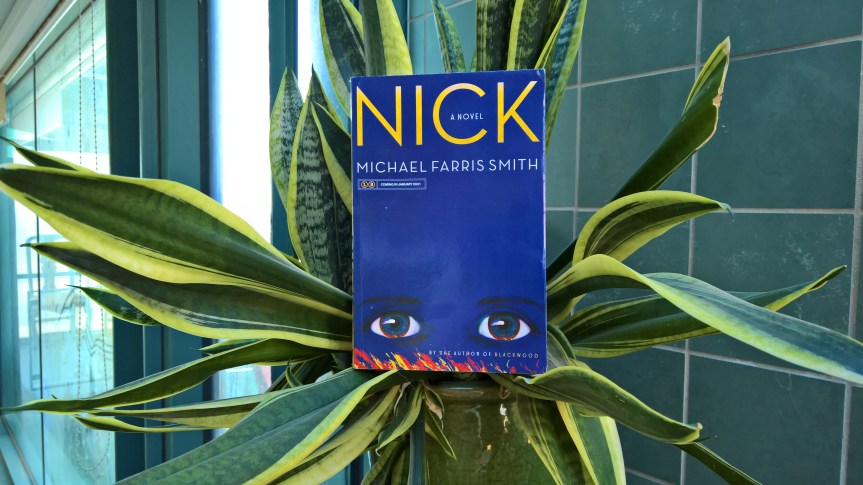
Happy Release day to author Michael Farris Smith! I enjoyed Nick immensely!
“The story of Nick is the story of one lost soul on automatic pilot written in four compelling parts that dovetail to weave a psychic template of a WWI survivor. Its impact is profound, its resonance subterranean.”
It will take hours to wipe the awestruck look off your face after reading the last line of the anxiously anticipated Nick by Michael Farris Smith, a writer with a wildly enthusiastic fan base that fancies itself insiders to Farris Smith’s gritty esotericism. You’re cool if you follow this Oxford, Mississippi author. You are in-crowd if you’re hip to this writer who seemed to inherit the tool kit of the great Southern writers before him. Referred to as MFS by those who take his work personally because his stories do the talking for a certain strata of a particular region, in some ways Farris Smith’s clear, direct, and economic voice is an acquired taste even as his career prospers. But the publication of Nick will change all that, and wider readership will understand the attraction of this fearless writer who transcends literary limits and boundaries and plays by his own rules.
Michael Farris Smith is the author of Blackwood, The Fighter, Desperation Road, Rivers, and The Hands of Strangers. His novels have appeared on Best of the Year lists with Esquire, Southern Living, Book Riot, and numerous others, and have been named Indie Next List, Barnes & Noble Discover, and Amazon Best of the Month selections. He has been a finalist for the Southern Book Prize, the Gold Dagger Award in the UK, and the Grand Prix des Lectrices in France. He lives in Oxford, Mississippi, with his wife and daughters.
When I sat down to give it a revision last year, the thing that really struck me and surprised me about it was how timely the novel felt. … I mean, it’s a country that was coming off World War I. It was a country in a great state of transition — which is what we are fully immersed in right now, the greedy and the rich getting richer. … [There are] characters in the novel who are coming off the war, who are very disillusioned with their own country. And it’s a country coming off a pandemic. I mean, I was just blown away like how strangely timely the novel feels now compared to, you know, 100 years ago. And if this novel would have been published in 2015, that would have all been lost. But here we are now.
Today is release day for the greatly anticipated The Chanel Sisters by Judithe Little!
“A lovely, gorgeously set, romantic story sure to charm lovers of historical fiction with its joie de vivre and savoir faire.”
I had the pleasure of reviewing this gorgeous novel for the New York Journal of Books:
“In Judithe Little’s beguiling The Chanel Sisters, the road to personal fulfillment starts with a dream. Sisters Gabrielle, Julia-Berthe, and Antoinette have much to overcome. They are left to fend for themselves pre-pubescence, when their mother dies and their father, known widely as a rootless “seducteur,” deposits them at an Aubazine, France, orphanage with false promises but never looks back.”
THE CHANEL SISTERS: Picked by Good Morning America and Zibby Owens as “One of 13 books to cozy up to over the holidays.”
Author Judithe Little
Judithe is the author of two novels, The Chanel Sisters, released December 29, 2020, and Wickwythe Hall, award-winning historical fiction set during World War II.
She grew up in Virginia and earned a Bachelor of Arts in Foreign Affairs from the University of Virginia. After studying at the Institute of European Studies and the Institut Catholique in Paris, France, and interning at the U.S. Department of State, she earned a law degree from the University of Virginia School of Law where she was on the Editorial Board of the Journal of International Law and a Dillard Fellow. She lives in Houston, Texas, with her husband and three children, where she is working on her third novel. When she’s not writing or practicing law, Judithe enjoys riding horses, reading, scouring the fields during Round Top Antiques Week, and volunteering.
High praise for The Chanel Sisters:
“Admirable…Consistently fascinating. Little’s story of two indomitable women offers an eye-opening account of the unsung Antoinette and her pivotal role in her famed sister’s success. Fashion aficionados in particular will appreciate this take on the life of a legend.”
A former teacher and journalist, Johnnie Bernhard’s passion is reading and writing. Her work(s) have appeared in national and international publications, including: University of Michigan Graduate Studies Publications, Southern Literary Review, Houston Style Magazine, The Mississippi Press, the international Word Among Us, and the Cowbird-NPR production on small town America. Her entry, “The Last Mayberry,” received over 7,500 views, nationally and internationally.
Her first novel, A Good Girl, is a 2017 finalist in the national Kindle Book Awards, a Pen/Bingham nominee, and shortlisted for the 2015 Wisdom-Faulkner international Writing Competition. It was chosen for panel discussion at both the 2017 Louisiana and Mississippi Book Festivals.
In 2018, A Good Girl was nominated by the Institute of Mississippi Arts and Letters for Fiction of the Year and accepted into the Texas Center for the Book permanent collection.
Her second novel, How We Came to Be, was released in 2018. It is a finalist in the 2017 Wisdom-Faulkner international Writing Competition. Chosen for panel discussion by the 2018 Louisiana Book Festival and the Mississippi Book Festival, it has received stellar reviews, including being named a “Must Read” by Southern Writers Magazine and listed as a 2018 Summer Reading List choice by Deep South Magazine. It was awarded the Summerall Book Prize by Lamar University in 2019.
Johnnie’s third novel, Sister of the Undertow was named a book of the month by the international book club, The Pulpwood Queens. It was a featured novel for panel discussion at the 2020 AWP and chosen as Best of the University Presses, 100 Books by Literary Hub and the Association of University Presses.
Johnnie was selected to be a speaker for the TEDWomen 2020: Fearless series.
Johnnie’s Third Novel, Sisters of the Undertow is making waves in the literary world,
Sisters Kim and Kathy Hodges are born sixteen months apart in a middle-class existence parented by Linda and David Hodges of Houston, Texas. The happy couple welcomes their “lucky daughter” Kim, who is physically and mentally advanced. Following several miscarriages, Linda delivers “unlucky” Kathy at twenty-nine weeks, ensuring a life of cognitive and physical disabilities. Kathy enters public school as a special education student, while Kim is recognized as gifted.
Both sisters face life and death decisions as Houston is caught in the rip current of Hurricane Harvey. Kim learns the capricious nature of luck, while Kathy continues to make her own luck, surviving Hurricane Harvey, as she has survived all undertows with the ethereal courage of the resolute.
Sisters of the Undertow examines the connotations of lucky and unlucky, the complexities of sibling rivalry, and the hand fate delivers without reason.
Fans of audiobooks! Johnnie Bernhard’s latest novel is out today for your listening pleasure. Narrated by Emmy Award winning book narrator, Theresa Bakken, Sisters of the Undertow will appeal to those who love stories about sisters, families, and the human struggle to fit in. Theresa’s voice is smooth and carries you right into the story. Come download your copy. A 2020 Pulpwood Queens Book Club selection and published by Texas Review Press.
SISTERS OF THE UNDERTOW has been chosen for the Texas Center for the Book Collection, State Library Austin.
Below: Ginger Smith, Johnnie Bernhard, Yours Truly, Kim Moon at The 2020 Pulpwood Queens Girlfriend Weekend in Jefferson, Texas.
Johnnie’s 2nd, world-class novel: How We Came to Be
Here’s my book review of How We Came to Be:
How We Came to Be is a triumph of order from chaos as told in the most accessible first-person voice I’ve had the good fortune to come across in ages. I was under narrator Karen Anders’ spell from the first because author Johnnie Bernhard came out swinging by gifting the reader with this engaging novel’s premise by the third page. Karen doesn’t look good on paper. She is a fifty-year-old, high school English teacher living in Houston; a divorced, single mother facing empty-nest syndrome, well aware of her dependency on alcohol, but nowhere near ready to quit. Why should she? Karen’s life is a mess. One would think this is a recipe for a down on its heels story, but the reader is captivated by Karen’s tell-it-as-it-is persona and—dare I say it, identifies when Karen summarizes her circumstances by confessing, “I’m hating every moment, but pretending I’m having the time of my life.” When I got to this line, I knew I was hooked. We all have that sardonic friend who manages to smile through the egg on her face. This is Karen in a nutshell, and she keeps on keeping on, trying for the upper hand, while her adopted daughter, Tiffany’s first three months away at college become a study in bad choices, of which Karen has no say beyond putting out the fires. Karen’s dilemma is a common one and raises the question of how to be an effective single parent without chasing her daughter away. In the meantime, back at the empty nest, Karen knows she must forge a life beyond the rat-wheel of predictable sameness centered on her Houston high school’s schedule. In an uncanny act of timing, Karen’s world is widened when she is befriended by WW11 Hungarian refugee, Leona Supak from across the street, and an unlikely alliance is formed that challenges Karen to grow. Having been single for decades and barely hanging on, it probably isn’t the best time for a man to come into Karen’s life, yet when Matt Broussard pursues the surprised Karen in an Austin bar, she thinks, maybe? How We Came to Be is a brass-tacks, contemporary story without a moment of campy pretention. The events are cause and effect, but the story is what goes on in the likable Karen’s head. She is not so much a victim of circumstances as she is a neophyte at growing into her own. How We Came to Be is the story of a woman drowning in deep waters, who has the sense to learn how to swim. I applaud author Johnnie Bernhard for her wizardry in crafting this perfectly paced story in a voice so unique and compelling. This is a book to read and return to. It is perfect for book clubs because there is so much in it to discuss!
And Johnnie’s first novel, A Good Girl:
I have found Johnnie Bernhard’s book to touch a powerful chord in my heart. Masterfully written with deep insightinto the journey of family and forgiveness, I’m a better person for having read this book. – Cynthia Garrett , The London Sessions & The Mini Sessions (airing regularly on TBN Network), Author ofThe Prodigal Daughter
One of 2017’s best will surely be A Good Girl by Johnnie Bernhard, who as much as any writer since Flannery O’Connor and Walker Percy, offers a breathtaking tour of the human heart in conflict with itself ,desperately searching for grace and redemption in the face of unremitting loss. Bernhard’s sentences are filled with the stuff of what blues and country music singers refer to as “soul” and “high lonesome.” -Jim Fraiser, The Sun Herald, March 12, 2017
A Good Girl is a raw, real, and relatable gift to the soul onevery level. Ms. Bernhard’s writing is so descriptive, reading this book istruly a visceral experience. One cannot help but reflect on their own family legacy and life journey. Prepare to be riveted by this heartbreaking, yet healing story about family, self-discovery and learning how to love. -Eva Steortz, SVP, Brand Development, Twentieth Century Fox
Book Description of A Good Girl:
A Bible’s family tree and an embroidered handkerchief hold the key to understanding the past as six generation Texan, Gracey Reiter prepares to say goodbye to her dying father, the last surviving member of the Walsh-Mueller family. The present holds the answer, and the last opportunity for Gracey to understand her father’s anger, her mother’s guilt, and her siblings’ version of the truth.
The Walsh-Mueller family begins in Texas when Patricia Walsh leaves the famine of nineteenth century Ireland, losing her parents and siblings along the way. She finds a home, love, and security with Emil Mueller in a German settlement near Indianola on the Texas Gulf Coast. They begin their lives on a small cotton farm, raising six sons. From the coastal plains of Texas, five generations survive hurricanes, wars, The Great Depression, and life, itself.
An all-encompassing novel that penetrates the core being of all who read it, A Good Girl pulls back the skin to reveal the raw actualities of life, love, and relationships. It is the ageless story of family.
One of the highlights of 2020 for many writers was watching this!
“a heart-warming story full of charm and optimism; a wonderous journey that transcends the celebration of Christmas with breathtaking illustrations throughout.”
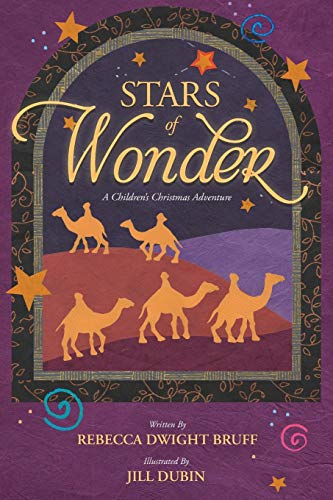
Stars of Wonder: A Children’s Christmas Adventure is delightfully representative of life’s sacred journey as seen through the eager hearts of four royal siblings who live in a land far, far away.
Respectful of their loving parents, princes Jonah, Nathan, and Jacob lie on a blanket beside their parents and sister Phoebe, gazing at the heavens and whispering because “the soft winds and the calls of the owls and the sound of the waves created such beautiful music.” When a bright new star is spotted, the family is intrigued, and when Phoebe overhears her father remark, “I think—no, I believe that this fine bright star is leading the way to a new King, the greatest king the world has ever known,” the royal children conspire to set out on a brave adventure to meet the new king. Enlisting their friend Sumar, who knows about the care and maintenance of camels, the royal siblings set out from their village on a three-day journey but make the tactical error of not telling their parents because they don’t want them to worry.
It is a journey fraught with teachable moments. While resting overnight in the desert, the party is ambushed by three mountain lions and “The princess and Sumar and the three princely brothers all jumped to their feet, filled with both fear and courage, because it is true that fear and courage often happen together.” The lurking mountain lion illustration interjected at this moment is both fearsome and beautiful, with jewel tones encased in rich texture that make the predator something worth petting.
While Jasmine the camel heals from a lion’s scratch, it is decided the three princes will journey on to the palace they spy on the hill to ask about the distance to the new king, while Phoebe and Sumar stay with the camel. When old and wrinkly Nana Anna appears to Phoebe and Sumar, she reveals that she, too, is on a journey to see the new king because “No matter a person’s age, or size, or personality, or where they were from, or what language they spoke, or food they liked, the bright star in the sky was important to everyone.” When Phoebe admires the bracelet on Nana Anna, the wise woman gifts it to her and describes the symbolic meaning of each colorful bead, all of which serve to remind that “life is grand and love is real and beauty is everywhere.”
Separated from Sumar and their sister, the three princes spend the night at the palace of grumpy and cranky King Herod, whom, they suspect, is not trustworthy, though he is hospitable. In describing the king, Prince Nathan says he is nefarious, and the conversation that ensues regarding the word leads to the merits of a good vocabulary. The brothers’ journey on until they come to their final destination, where “The man with the gentle eyes spoke very quietly. This is Mary, and I am Joseph, and this little one we call Jesus.” Mary, upon hearing of nefarious King Herod, counsels, “you definitely do not have to do what a nefarious person tells you to do. If you get that untrustworthy feeling about someone, you must trust your own feelings. They are called instincts.”
After visiting with Mary and Joseph and Jesus, the princes return to the place where they left Phoebe and Sumar to discover their parents, Sumar’s father, and Nana Anna are assembled. As the siblings recount their adventure, Phoebe quotes Nana Anna in saying, “Life is grand, and love is real, and beauty is everywhere!”
“I saw that in our journey together,” said Prince Jonah.
“I saw it in our care for each other,” said Prince Nathan
“I see it now in our parents love and our friendship,” said Sumar.
“I see it everywhere I look!” said Phoebe.
Stars of Wonder: A Children’s Christmas Adventure teaches poignant lessons. Good decisions, perfect love, insecurity, challenging moments, care for animals, and disagreements are brought to the fore, and in perfectly placed prompts, the reader is asked what they’d do. It is a heart-warming story full of charm and optimism; a wonderous journey that transcends the celebration of Christmas with breathtaking illustrations throughout.
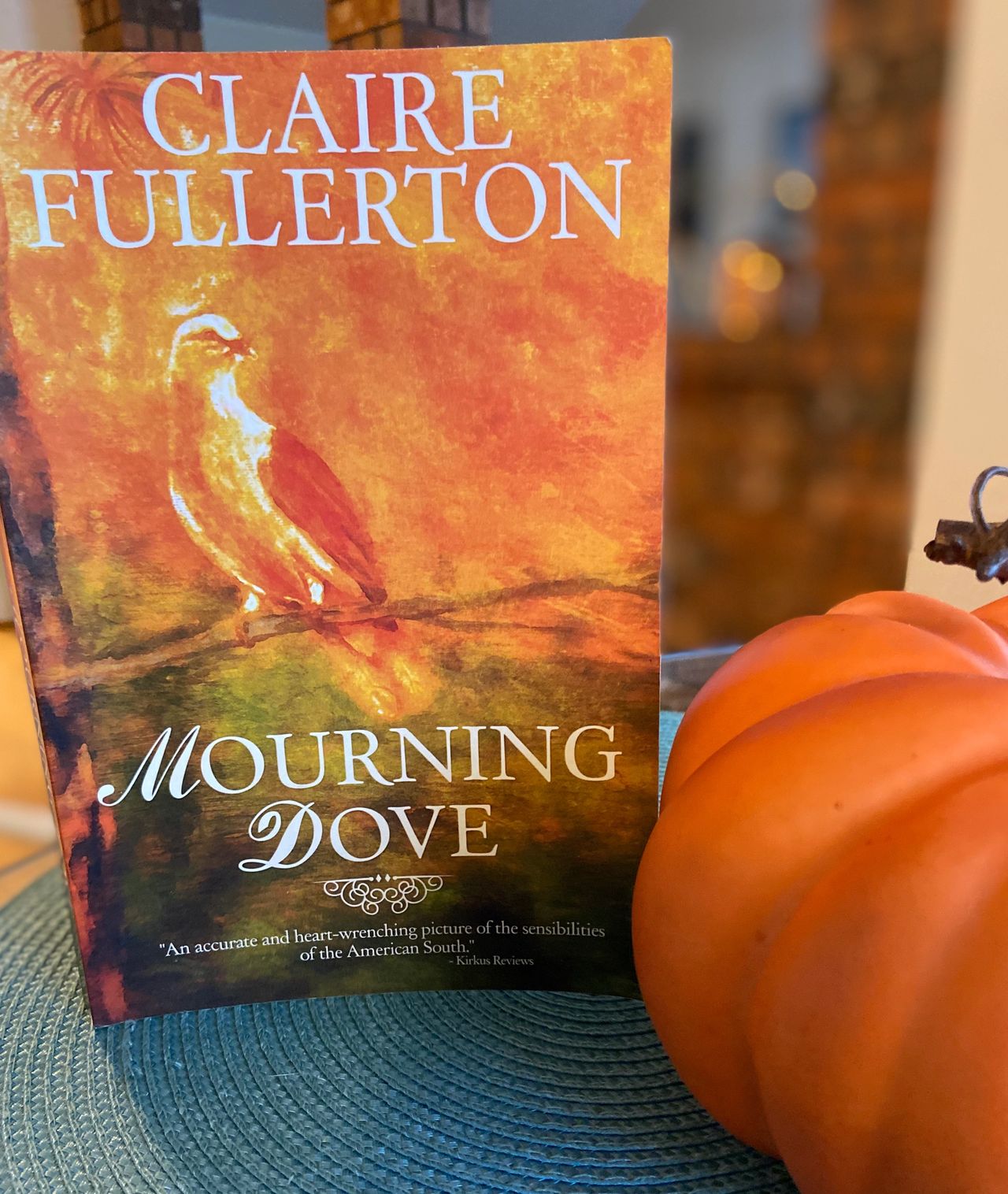
Claire Fullerton’s most recent novels are Little Tea and multiple award winner, Mourning Dove. Honors include the Independent Book Publishers Book Award Silver Medal for Regional Fiction, the Reader’s Favorite for Southern Fiction Bronze Medal and various other literary awards.
I can’t say I didn’t see it coming. Now that my book, ‘’Dancing to Irish Reel” is out, I’m being asked the inevitable question, “How much of the story is true?” Everyone who knows me personally knows I picked up and moved to the west coast of Ireland without much of a plan, and that I stayed for a year. Add that to the fact that the book is written in the first person, that the narrator’s interior monologues in the story are unabashedly confessional to the point of unnecessary risk. I’ve been told the book reads like a memoir, and for that, I can only say I’m glad because this was my intention. I can see why readers might think the entire story is true.
But writers make a choice in how to lay out a story, and in my case, I wrote the book based on the kind of books I like to read. I’m a one-trick pony kind of a reader. I want an intimate narrator’s voice with which I can connect. I want to know exactly whom I’m listening to, so that I can align with a premise that makes the story’s swinging pendulum of cause and effect plausible. The way I see it, there are always bread crumbs along the path to the chaotic predicaments people find themselves in, and although many are blind to their own contributions, when I read a book, I want to be the one who divines how the character got there.
What fascinates me about people are their backstories. Oh, people will tell you their highlights, but they rarely reveal their churning cauldron of attendant emotions; they rarely confess to carrying acquired fears. We all want to appear bigger than our own confusion, and the key word here is “appear,” because when it comes to faces, most people like to save theirs. This is the point I wanted to make in the story, but I also wanted “Dancing to an Irish Reel,” to be about discovery, so I started with a narrator who is a fish out of water: a twenty-five year old American ensconced in a specific culture she uncovers like the dance of seven veils. In the midst of this there enters an Irish traditional musician named Liam Hennessey. He is from the region, of the region, and therefore it can only be said he is because of the region in a way that is emblematic. From a writer’s point of view, the supposition offers the gift of built-in conflict, most poignantly being the clash of the male-female dynamic set upon the stage of differing cultures trying to find a bridge. And I can think of no better culture clash than America and Ireland. I say this because I happen to know to the Irish, we Americans are a bit brazen, that we have the annoying habit of being direct. But the Irish are a discreet lot, culled from a set of delicate social manners that seem to dance around everything, leaving an American such as me with much guesswork.
No matter how they shake it, writers write about what they know, even if it has to be extracted from varying quadrants that have no good reason for being congealed. “Dancing to an Irish Reel” is a good example of this: it came to me as a strategy for commenting on the complexities of human beings inherent longing to connect—the way we do and say things that are at variance with how we really feel, in the interest of appearances, and how this quandary sometimes dictates how we handle opportunities in life. In my opinion, there is no better playing field on which to illustrate this point than the arena of new found attraction. I’m convinced the ambiguity of new love is a universal experience, and since the universe is a big wide place, and since ‘”Dancing to an Irish Reel” has something to say about hope and fear and the uncertainty of attraction, it occurred to me that I might as well make my point set upon the verdant fields of Ireland because everything about the land fascinated me when I lived there, and I wanted to take any reader that would have me to the region I experienced as cacophonous and proud: that mysterious, constant, quirky, soul-infused island that lays in the middle of the Atlantic, covered in a blanket of green, misty velvet.
Excerpt from “Dancing to an Irish Reel”
The distance between Inverin and Clifden is approximately sixty kilometers. It’s a visually inspiring hour-long ride through undulating midlands with grass as soft as velvet, gray stone walls that split the landscape, and bubbling intermittent streams as you glide along a two-lane road that cuts through a terrain devoid of street markers, stop signs, or any other indication the area has been previously trodden. There is little suggestion of civilization anywhere in sight and it is a quiet, unobstructed journey through the heart of Connemara with nothing in store, save for the destination of Clifden.
Driving into Clifden, one is abruptly thrust into the center of a thriving village that hosts an annual, three-day music festival wherein every pub door is invitingly open with signs outside announcing which Irish traditional musicians will be playing within the standing-room-only venues. A rudimentary chalkboard sat on the sidewalk outside of Mannion’s Pub with “Welcome Liam Hennessey” sprawled across in large, eye-catching cursive.
I followed Liam into the middle of a waiting crowd, which parted ceremoniously as he made his way to the old man seated against the wall across from the bar. Wind-tossed and toothless, the man sat on a battered wooden chair, tuning a fiddle and nodding his greeting while Liam opened his accordion case and settled in beside him. When a flute player joined them, the crowd fell into an anticipatory hush, ready for the music to begin. I stationed myself in front of the bar, minding my own business, but that soon became short-lived.
“Are you here with Liam?” asked a middle-aged man who was standing too close to me.
“Yes.” I took a step back.
“She’s here with Liam,” the man announced, turning to the man beside him.
“Ah,” the second man gasped, “she is, so!”
“Where did you get that blond hair on your head?” The first man eyed me.
“I brought it with me from America,” I said.
“She’s from America!” The man turned to the other man, his eyes opened wide.
“America indeed!” The second man drew in his breath.
“All I want in the world is for me brother to come in and see me standing here talking to you,” said the first man. “I wouldn’t care if a pooka came for me after that. Will you have a pint? Get her a pint, Tom,” he directed.
“Tom, make that a half-pint,” I said, trying not to laugh. I looked over at an obviously amused Liam, who smiled and winked as if to say he knew what was happening.
I looked toward the door and noticed an unusually small woman walking in with what appeared to be members of her family due to their similarity in stature. I’d met her in Galway before: she was a musician named Deanna Rader who played guitar and sang anything from Irish traditional music to her own compositions. I’d heard her sing in her low, husky voice a few times before, and because she was a friend of Declan’s, I’d exchanged pleasantries with her a few times as well. From the looks of things, she was in Mannion’s with her father and two sisters. She came smiling to my side instantly.
“Well then, you’ve made your way out here now, have you?” She looked up at me.
“I came here with Liam,” I said, grateful to know someone in the crowd.
“I knew you must have. So, it’s the two of you now, is it?”
“Well, I don’t know if I’d put it that way,” I said, diverting the implication. I couldn’t recall if I’d seen Deanna while I was out with Liam, or if she asked this because she’d heard people talking.
“You’re a long way from home yourself,” I said. “Is this festival a big deal?”
“Oh God, yes. People look forward every year. Luckily my parents live in Letterfrack, just up the road. I’ve been spending the last couple of nights with them. We’ve all come ’round tonight for the craic.”
“Well, it’s nice to know someone here,” I said.
“My sister came out to sing tonight. Would you mind asking Liam if she could give us a song?”
“Sure,” I said. “I’ll ask him when they take a break.”
“They probably won’t do that, so you’d be waiting for ages,” Deanna said. “You’ll just have to lean over and ask, like.”
“When?” I asked.
“How about now?” she said.
“Right now?”
“If it wouldn’t be too much trouble,” she smiled sweetly.
I looked over at the musicians, who were in full swing. There was no way I was going to butt in, even though Deanna kept standing there looking up at me expectantly. Just then, a man at the bar stepped forward enthusiastically. He leaned into the musicians circle, grabbed Liam by the arm, and shouted loudly, “The young lady here wants to give us a song.” With that, the music came to a screeching halt, and a whirlwind of preparation commenced. Liam leaned over and whispered to the two musicians beside him, instruments were set down, a microphone was raised, a path spontaneously cleared, and into the arena stepped Deanna’s sister. It was like the infamous scene of Marilyn Monroe singing “Happy Birthday” to President Kennedy.
There was a hush in the room as all eyes riveted upon the girl. She stood all of five foot two, but within that minuscule framework there was a lot going on: thick, raven hair fell in loose waves across her forehead and down her back. Large green oval eyes slanted and squinted catlike beneath thick, dark lashes. Turn by turn, her eyes focused and held one man in the room after another. She stood with her right hand on her hip and her voluptuous weight shifted to the left. With great histrionics, she crooned out a song in the Irish language I’d never heard before.
When she finally stopped, she sashayed over to Liam, totally aware everybody was watching. With grand theatrics, she threw both her arms around his neck and kissed him square on the mouth, nearly knocking him over with her forward advance. All hands in the room clapped loudly, wolf whistles erupted, and a few eyes turned my way.
“I imagine you’d have something to say about this passionate display,” said Deanna’s father, who had materialized beside me.
“Not really,” I said. “Do you?”
“You have to watch that one is all. She’ll be the death of me one day, he said, cocking his head toward her.
“I hope not,” I said.
“No harm done then?”
“No harm at all,” I said.
Dancing to an Irish Reel is available where books are sold!
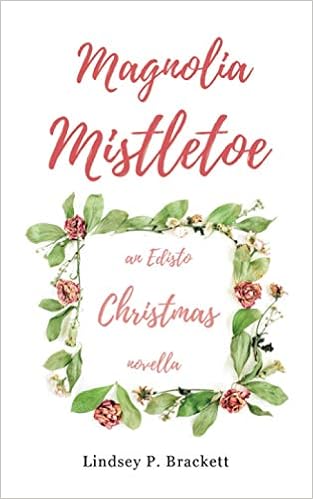
Congratulations to Lindsey Brackett on the release of her novella, Magnolia Mistletoe!
Hannah Calhoun knows what she wants for Christmas. But before she can become a full-fledged partner in her mother’s wedding planning business, she has to prove she can handle her own shortcomings.
Benjamin Townsend is an entrepreneur always looking out for the next big thing—and if hosting weddings on Edisto is it, he’s all in. Even if that does mean spending a lot of time with Hannah, whose world is way more full of happily ever after than his.
Once the magnolia and mistletoe are hung, will an Edisto Christmas be exactly the magic these two need?
AUTHOR: LINDSEY P. BRACKETT
When I’m not wrangling four kids, I sit on my back porch in the mountains and write southern fiction that’s short and long. I believe in Jesus, library fines, supper at the table, Edisto Island, and strong coffee. Pretty much in that order.
Lindsey P. Brackett writes southern fiction infused with her rural Georgia upbringing and Lowcountry roots. Her debut novel, Still Waters, inspired by family summers at Edisto Beach, released in 2017. Called “a brilliant debut” with “exquisite writing,” Still Waters was named an INSPY finalist and the 2018 Selah Book of the Year. Her second novel, The Bridge Between, releases July 31, 2019.
A member of ACFW and RWA, Lindsey mentors writers, and is a speaker on the lifelong value of reading and writing for conferences, schools, and libraries. Her syndicated column “Just Write Life” appears in several North Georgia newspapers.
Download her FREE novella, Magnolia Mistletoe, with newsletter signup at lindseypbrackett.com or on Instagram and Facebook: @lindseypbrackett.
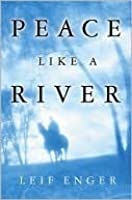
Brilliant, evocative, and written in a clear-sighted adolescent’s voice that verges on stream of consciousness and flows magically with the surrealism of this astounding story. Narrator Reuben Land tells this remarkable story of a motherless family’s journey through the winter flatlands of North Dakota, on the trail of his elder brother, Davy, who’s convicted of a crime done in defense of the family.
Reuben’s engaging, first person voice is a metaphor for the malady he was born with: his damaged lungs are commiserate with the breathless tone that lures the reader into siding whole heartedly with the brother he idolizes, while his precocious younger sister, Swede, pens a western based on an outlaw’s hero’s journey, and incrementally interprets the family’s quest to save Davy, who broke out of jail and is on the run.
Father Jeremiah Land has a humble essence that hints at sainthood. An intelligent and pious widower, he works a job beneath his station and is prone to covert, timely gestures that verge on the miraculous, each convenient, pivotal episode manifesting in such a way as to seem like coincidence. “The fact is, the miracles that sometimes flowed from my father’s fingertips had few witnesses but me,” Davy says, and throughout this multi-layered, faith in motion story, there are plenty. When Jeremiah is asked by a concerned friend how the family plans to track Davy, he answers: “I have the substance of things hoped for. I have the anticipation of things unseen.”
On the road to North Dakota, the family is trailed by Martin Andreeson, a federal employee tasked to find the escaped Davy, who suspects the family knows more than they let on. He birddogs the family like a shadow, yet changes from nemesis to friend as the story leads fatefully into the arms of Roxanna, who lives right outside the town where Davy was last seen. When Davy appears to Reuben, he asks Reuben to keep the secret of where he’s living and with whom, for what turns out to be good reason. Family dynamics tinged with the spiritual and questions of right versus wrong as seen through the eyes of young Reuben are at the heart of this unique story. The writing is so compelling, you’ll be riveted throughout a book you’ll never forget. 5 stars and high praise to author Leif Enger. Peace Like a River has made me Enger’s fan.
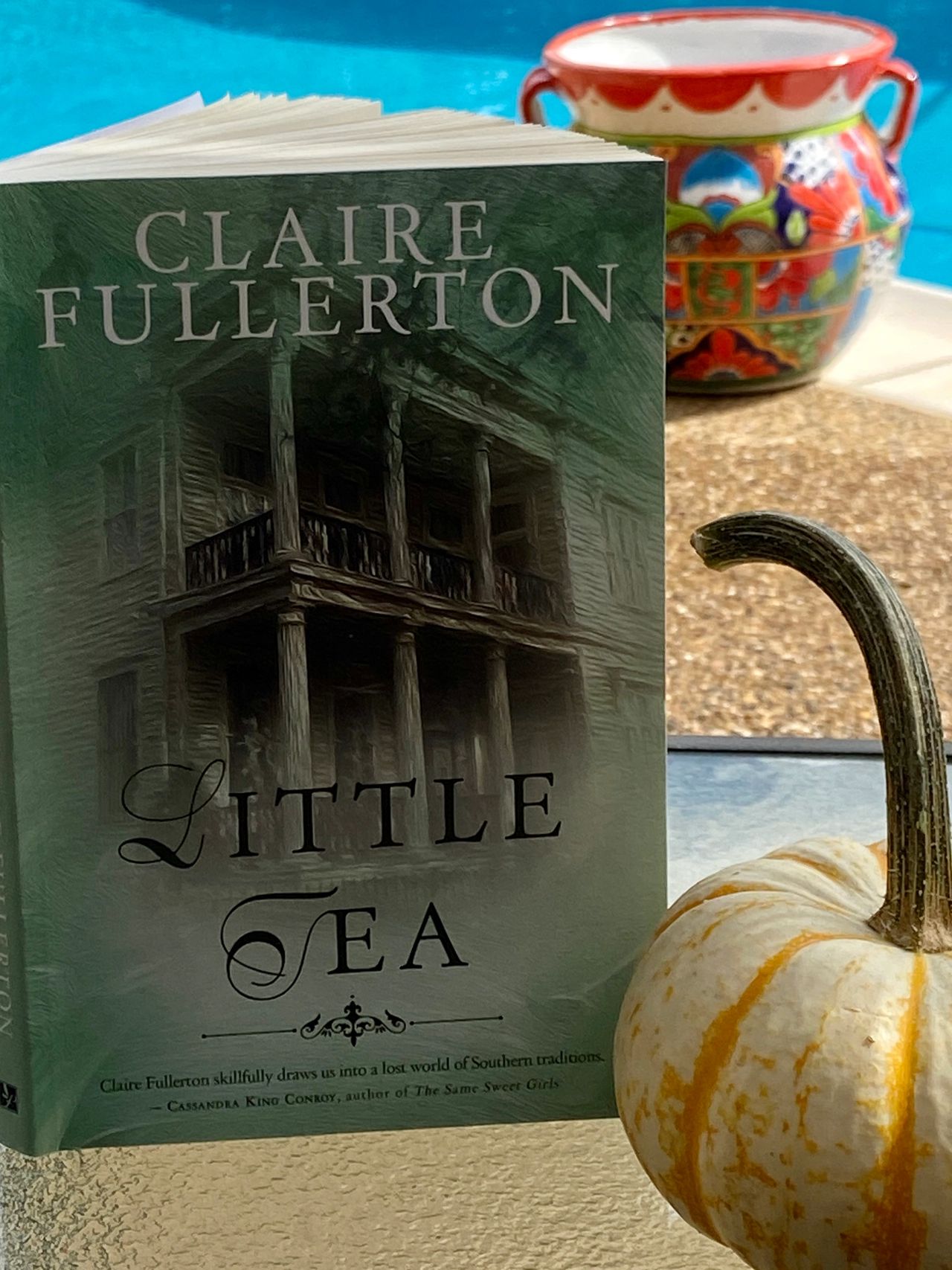
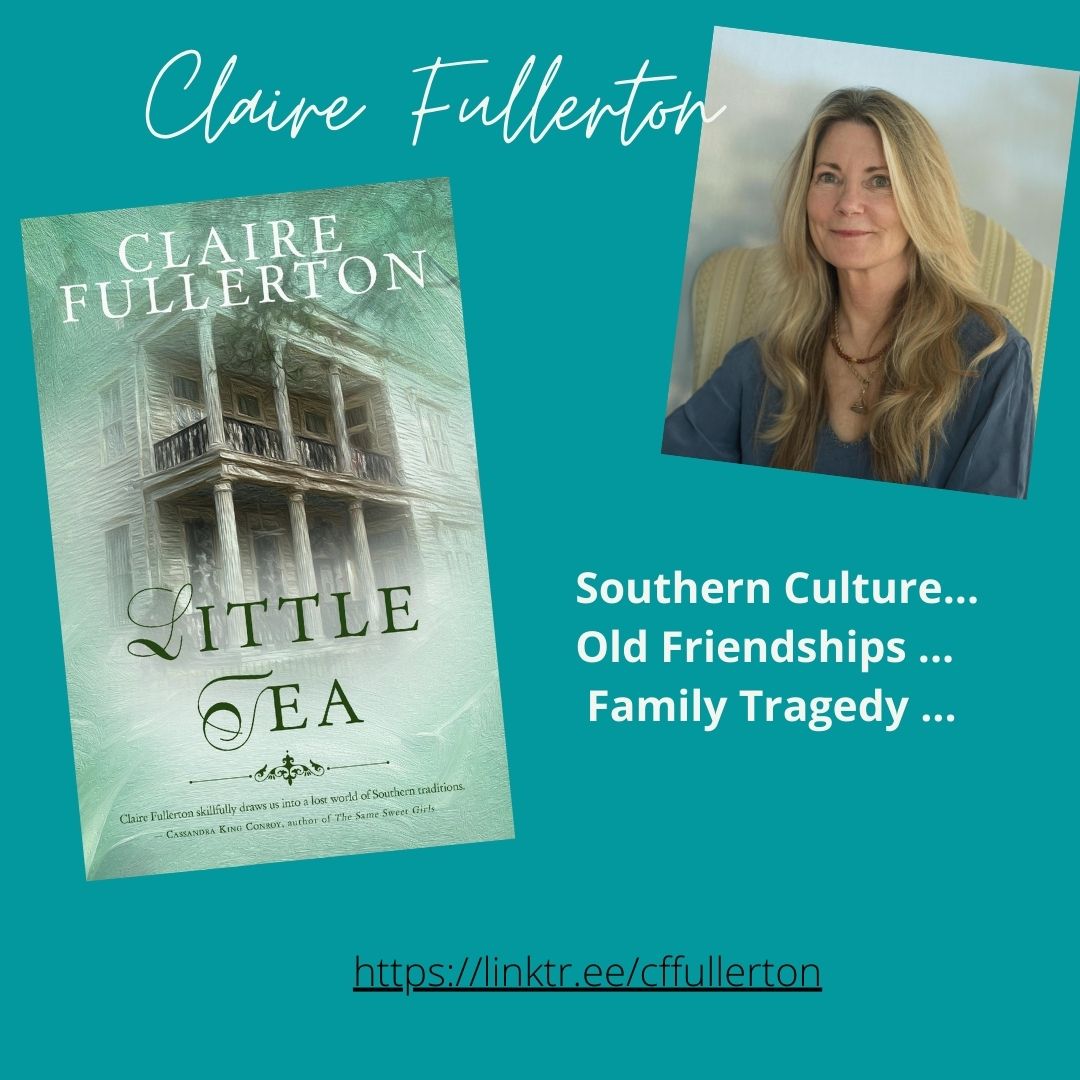
Claire Fullerton tackles southern culture & race in LITTLE TEA
September 4, 2020|Authors, Book Reviews, Novelists, Novels, Readers, Women’s contemporary fiction
2020 Gold Medal Winner in Southern Fiction in the International Reader’s Favorite Book Awards. Southern culture, old friendship, family tragedy, and healing the racial divide.
“Claire Fullerton once again delivers an emotional, lyrical tale and proves she’s a writer to watch.”
–Julie Cantrell, New York Times and USA TODAY bestselling author of Perennials
“Claire Fullerton has an enviably light touch, a lilting style that carries shades of Pat Conroy and tinges of Anne Tyler while managing to be wonderfully of itself. Little Tea is a triumph .”
— Multiple award- winning Irish author, Billy O’Callaghan.
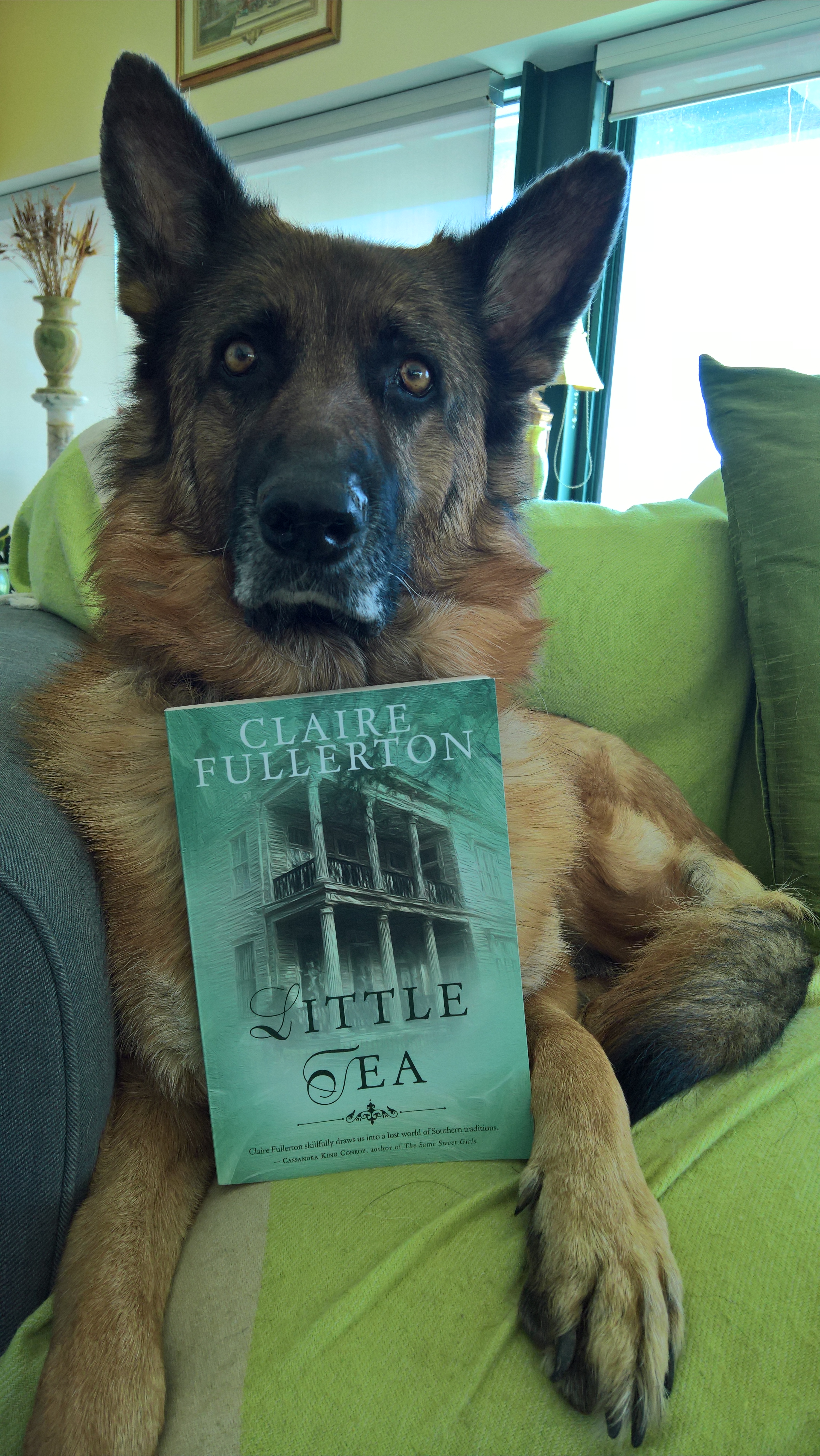
Hayward’s loyal dog, Rufus
Description:
One phone call from Renny to come home and “see about” the capricious Ava and Celia Wakefield decides to overlook her distressful past in the name of friendship.
For three reflective days at Renny’s lake house in Heber Springs, Arkansas, the three childhood friends reunite and examine life, love, marriage, and the ties that bind, even though Celia’s personal story has yet to be healed. When the past arrives at the lake house door in the form of her old boyfriend, Celia must revisit the life she’d tried to outrun.
As her idyllic coming of age alongside her best friend, Little Tea, on her family’s ancestral grounds in bucolic Como, Mississippi unfolds, Celia realizes there is no better place to accept her own story than in this circle of friends who have remained beside her throughout the years. Theirs is a friendship that can talk any life sorrow into a comic tragedy, and now that the racial divide in the Deep South has evolved, Celia wonders if friendship can triumph over history.
Publisher: Firefly Southern Fiction
May 1, 2020
ISBN-13 : 978-1645262596
My thoughts on Claire’s new book:
Stunned, and with emotions charging through me, I looked up from reading the final lines of Claire Fullerton’s fourth novel as my heart and mind absorbed everything that happened in this narrative that alternates between the 1980s and present. In an ending I didn’t see coming, I blinked back tears as I pondered over how the author brought the story full circle.
For this reader, the imagery flowed over me like a healing. All the joys and sorrows of the story melded together into one satisfying grand finale.
At the heart of the novel is narrator Celia Wakefield who spent her childhood and youth navigating back and forth between her family’s Southern Colonial house in an affluent Central Gardens neighborhood in Memphis, TN and the family’s sprawling Wakefield Plantation in Como, MS. Until the age of ten, Celia only knew life in the bucolic surroundings of the large working farm where she lived with her father, a gentleman cotton farmer, her beautiful mother, and two older brothers, John, who carried an air of superiority, and Hayward, gifted and a kindhearted golden boy. Celia’s best friend is a black girl nicknamed Little Tea. Little Tea lives with her father and mother, Thelonious and Elvita Winfrey, in a small cottage on the plantation grounds. Thelonious overseas the crops and Elvita keeps things running smoothly at the big house. In some ways, Little Tea and her parents feel like an extension of the Wakefield family. A white family and a black family working in harmony to keep the farm running.
The story opens with a grownup Celia living in Malibu, CA. One phone call finds her on a flight back to Memphis where she eventually meets up with her best friends from Memphis days, Ava and Renny. While there are several storylines going between past and present, I found myself drawn to those scenes from the past, especially when they involved Celia and her immediate family along with Little Tea and her mom and dad. With a deft hand, the author has created complex characters I was totally invested in.
Multiple award-winning author Claire Fullerton
My favorite characters were Hayward, Little Tea, and Celia. And because I’m a dog lover, I fell in love with Hayward’s loyal pup, Rufus. At times I found Celia’s brother, John, unlikeable, not to mention the heavy-handed patriarch and matriarch, Celia’s wealthy grandparents who occasionally dropped by the family farm to check on things and see about their “investment.”
While much of the story revolves around Celia spending a weekend with Ava and Renny at Renny’s lake house in Heber Springs, AR, these present-day scenes are important as these two friends are key to bringing Celia back to the south to face her past. Two of my favorite lines from the novel occur in these sections. From page fifty-one: “I’d forgotten that after you manage to outrun something, there are those in your life who can call you back at the drop of a hat.” And, “There are some parts of your history your friends won’t let you outrun.”
Pat Conroy’s widow, Cassandra King Conroy, a noted novelist in her own right, says this about the novel: “Claire Fullerton skillfully draws us into a lost world of Southern traditions and norms where past tragedies cast long, dark shadows on present-day lives, and no one ever truly escapes.”
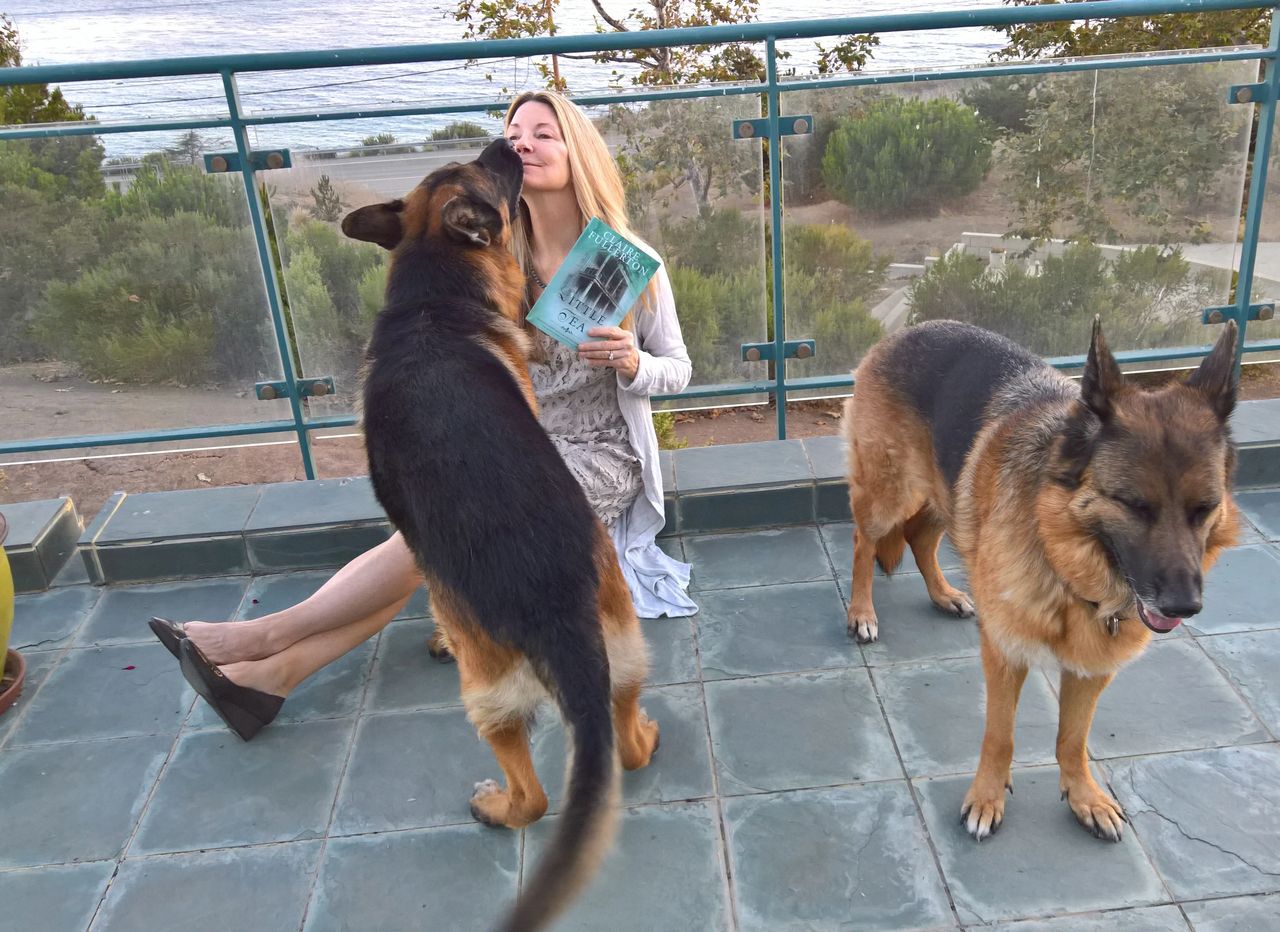
L-R the author’s pups: Sorcha, Ceili, and Ronin
The tragedy that unfolds in the novel got me to thinking. Anytime there’s trouble that breaks out at a gathering, there’s always that one instigator, that one person who sets off a chain of events and gets away with it. In this case, it’s a loss so tragic it emotionally cripples several families as they cope or don’t cope with the aftermath. The story also deals with the struggle of going along with family expectations and social norms or what can happen if you buck the system. The author tackles these tough subjects with courage and aplomb. Claire Fullerton is at her best when writing about family dynamics and southern culture.
The story explores interracial friendships and relationships at a time when society in general didn’t welcome such mingling. Even today there are those who want to separate the races. This is a timely story about race, family, friendship, betrayal, loss, and redemption.
An important book not to be missed!
Pour your favorite beverage and settle in with Little Tea. You won’t be disappointed! I hope you love the ending as much as I did.
Little Tea is a 2020 Pulpwood Queens Book Club read.
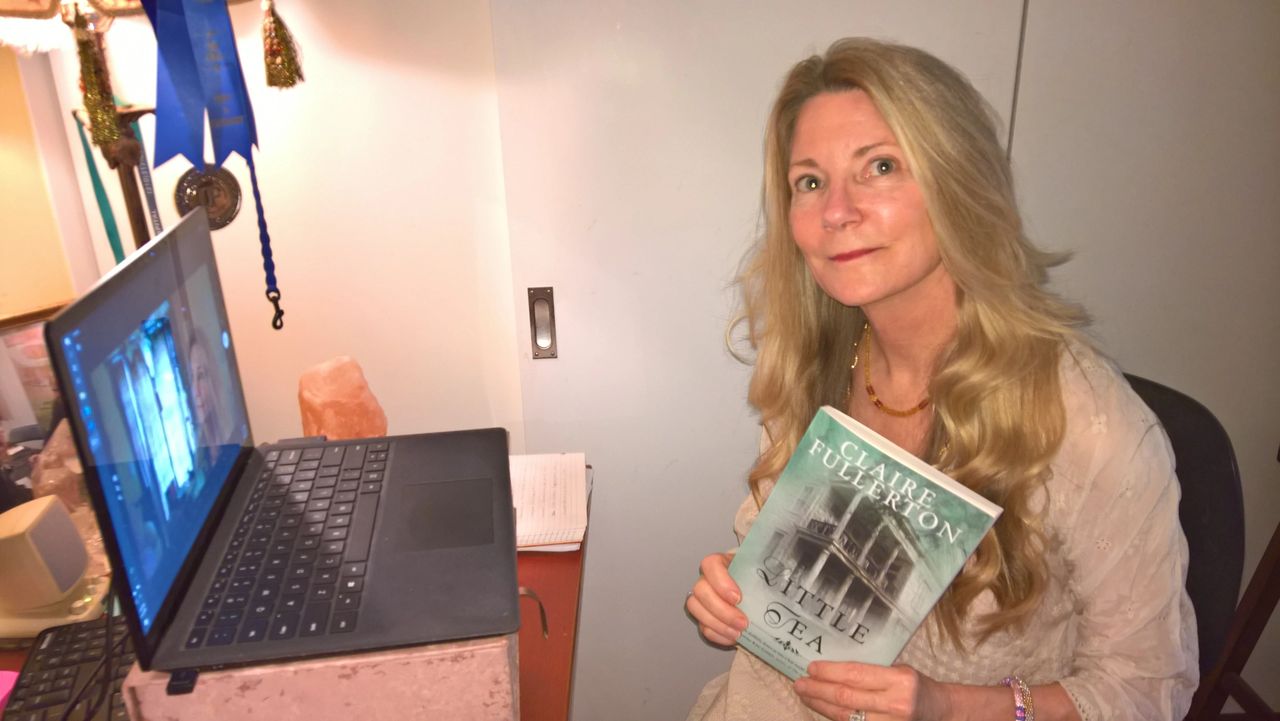
Author Claire Fullerton at her oceanfront home with her pups in Malibu, CA.
Claire Fullerton hails from Memphis, TN. and now lives in Malibu, CA. with her husband and 3 German shepherds. She is the author ofLittle Tea, a Somerset Award Finalist and Faulkner Society finalist. Mourning Dove, Claire’s Southern family saga set in 1970’s Memphis, is a a 9 time award winner, including the Ippy silver medal for regional fiction and the Literary Classic’s Words on Wings for Book of the Year. Claire is the author of Dancing to an Irish Reel, a Kindle Book Review and Readers’ Favorite award winner set on the west coast of Ireland, where she once lived. Claire’s first novel is a paranormal mystery set-in two-time periods titled, A Portal in Time, set in Carmel-by-the-Sea, California. She is a contributor to the book, A Southern Season with her novella, Through an Autumn Window, set at a Memphis funeral. Little Tea and Mourning Dove are book of the month selections of the Pulpwood Queens Book Club, of which there are 800 chapters. Claire is represented by Julie Gwinn of the Seymour Literary Agency.
If you love Claire’s writing, do yourself a favor and read her third novel, Mourning Dove. It’s garnered at least nine awards to date.
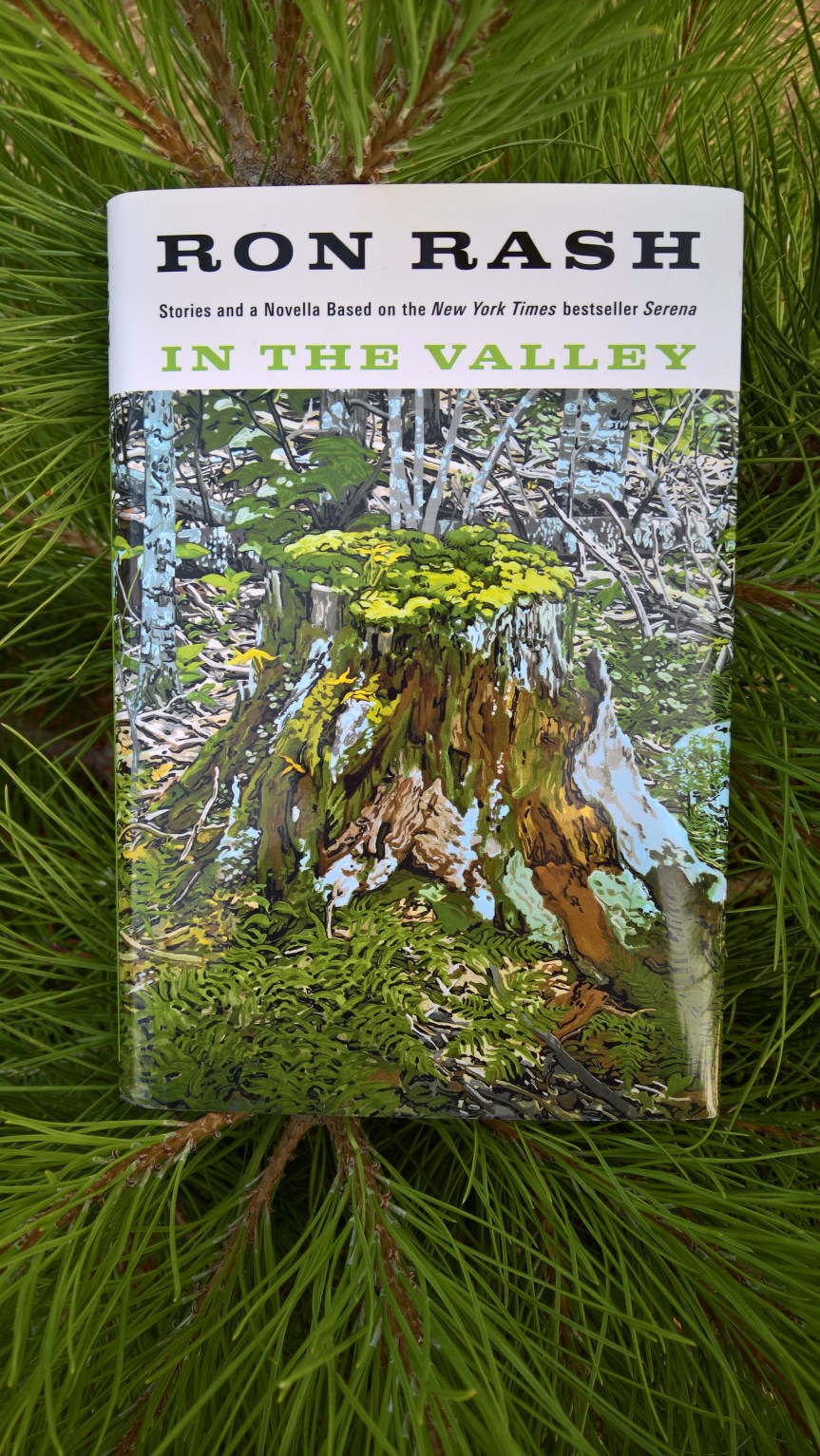
I, along with legions of others, have waited for months for In the Valley to release. Everything you’d hope for from Ron Rash is within this collection of short stories– his trademark, laser-sharp realism, poetic prose, and fully realized Appalachian vignettes of life wrapped in tight construction. All short stories are hymns to the art of world-building, rich in visceral setting and written with vernacular that sets the mood and tone. Simply put, Ron Rash is a league of his own, and this highly anticipated, critically acclaimed book is on par with all others in his stellar body of work.
If you’ve never read anything by Ron Rash, his collections of short stories are a great place to start, as is his poetry, which is starkly real yet emotional to the point of being visually panoramic. Two of his novels have been made into movies: The World Made Straight, and Serena. Serena seems to be his most widely read book. It’s title character is one of the more diabolical, female characters ever written! In his new release, Rash continued the story of Serena by including a novella among the short stories.
Here are a few book blurbs for In the Valley. I’ve included more to whet your whistle for a taste of the American writer referred to as the Appalachian Shakespeare.
“Mesmerizing…He’s one of the best living American writers.”–Janet Maslin, New York Times Book Review
From bestselling and award-winning writer Ron Rash (“One of the great American authors at work today.”–The New York Times) comes a collection of ten searing stories and the return of the villainess who propelled Serena to national acclaim, in a long-awaited novella.
Ron Rash has long been a revered presence in the landscape of American letters. A virtuosic novelist, poet, and story writer, he evokes the beauty and brutality of the land, the relentless tension between past and present, and the unquenchable human desire to be a little bit better than circumstances would seem to allow (to paraphrase Faulkner).
In these ten stories, Rash spins a haunting allegory of the times we live in–rampant capitalism, the severing of ties to the natural world in the relentless hunt for profit, the destruction of body and soul with pills meant to mute our pain–and yet within this world he illuminates acts of extraordinary decency and heroism. Two of the stories have already been singled out for accolades: “Baptism” was chosen by Roxane Gay for inclusion in The Best American Short Stories 2018, and “Neighbors” was selected by Jonathan Lethem for The Best American Mystery Stories 2019. And in revisiting Serena Pemberton, Rash updates his bestselling parable of greed run amok as his deliciously vindictive heroine returns to the North Carolina wilderness she left scarred and desecrated to make one final effort to kill the child that threatens all she has accomplished.
I’ve had the pleasure of crossing paths with Ron Rash in person a few times, over the years. You’ll never meet a more humble guy! It was my complete honor to introduce him to the audience at the Pat Conroy Literary Festival in 2017, in Beaufort, South Carolina, when he was the festival’s key note speaker.
More written about this world-renowned writer:
“A gorgeous, brutal writer” (Richard Price) working at the height of his powers, Ron Rash has created another mesmerizing look at the imperfect world around us.
Rash’s poems and stories have appeared in more than 100 magazines and journals. Serena received enthusiastic reviews across and beyond the United States and was a 2009 PEN/Faulkner Award Finalist.
In addition to being a bestselling novelist, Rash has achieved international acclaim as a short story author,[3] winning the Frank O’Connor Award in 2010 for Burning Bright.[4] Recent work such as The Outlaws (Oxford American, Summer, 2013) focused on ordinary lives in southern Appalachia. Scholars have praised his ability to find the universal within the particulars of place, citing his writing’s “universal appeal, lyrical grace, and narrative efficiency.” [5] Jim Coby examined Rash’s use of mystery thriller tropes in One Foot in Eden.[6]
Ron Rash holds the John and Dorothy Parris Professorship in Appalachian Cultural Studies at Western Carolina University, where he teaches poetry and fiction-writing in the Department of English.
To familiarize you with his body of work before the release of In the Valley, here is a list that excludes his poetry, which I highly recommend!
I have a newly released novel titled, Little Tea, but that’s not my focus here. My focus is on sharing an incredible experience I had on Facebook because it’s a case in point of what can transpire through the magnanimous efforts of one fellow author during these unusual times.
Those of us who released a book during the pandemic were blindsided as to how to proceed with promotion. In my case, I had a book tour of the South scheduled to promote Little Tea, only to discover each event was canceled. The good news is most of my events were rescheduled virtually, though in many ways, I swam in smaller waters. I stayed tethered to my desk bereft of the gift of personal contact and although I’m not taking the merit out of it, in most ways I preached to a Zoom choir. But an uncanny domino effect ensued that came through the power of connections, and although it’s not a complete surprise, I have Facebook to thank for a great time promoting Little Tea.
My good fortune began with the moderator of a Facebook book group who interviews authors via StreamYard on a nightly basis. I was a guest on her live show and was grateful beyond measure to answer questions about Little Tea. In thanking my hostess profusely, I said, “If there’s anything I can do for you, it would be my great pleasure.”
The first step along the chain of events came when the aforementioned moderator asked me to talk to a debut author she admires, who had questions about the publishing business. I issued the caveat that I’m no expert, but I’ve been in the business long enough to have an opinion. I’ll say here that my policy as an author has always been to pay it forward. Authors work in a common arena, and few of us would get very far were it not for the opportunity to compare notes. And so, I got on the phone with a complete stranger and talked about navigating the book world and am happy to report that by the time we hung up, I’d made a new friend. An hour later, my new friend messaged me via Facebook messaging and invited me to come to her Facebook group page to do an “author takeover.” I said yes before I fully understood the set-up, so, I’ll explain it now that I understand. This debut author had the foresight to create a private book launch group on Facebook. She issued a call-out six months before her book release and created a Facebook “street team” by offering incentives that simply boiled down to the joy of being involved. This street team was gifted with insider information about her debut novel. She gave her private group book swag, played games, and shared pictures pertaining to her life and her book that the general public wasn’t privy to, so by the time her book was released, roughly a thousand readers were ready to shout from the rooftops because suffice it to say, they felt personally tied to the book’s launch.
My invitation to come to her private Facebook group and do an all-day take over essentially sounded like this: “I know of a thousand people who’ve never heard of you, so come on over, I’ll introduce you, and you can post as much about your book as you want to.”
You better believe I came ready! I prepared with photographs of Little Tea’s setting in the Deep South (Como, Mississippi; Greer’s Ferry Lake in Heber Springs, Arkansas; and my home town, Memphis) two book trailers, a dozen memes, Little Tea reviews, and, knowing that a picture tells a thousand words about an author’s life, photographs of ocean waves taken where I now live in Malibu, California and endless un-staged photographs of my three photogenic dogs. It was my dogs that got the ball rolling. It’s astounding how many people have “a German shepherd story.” The sharing of dog stories led to an enthusiastic kind of bonding. Soon enough, there was a vibrant thread in the private group of dog pictures that dovetailed to include the posting of pet cats.
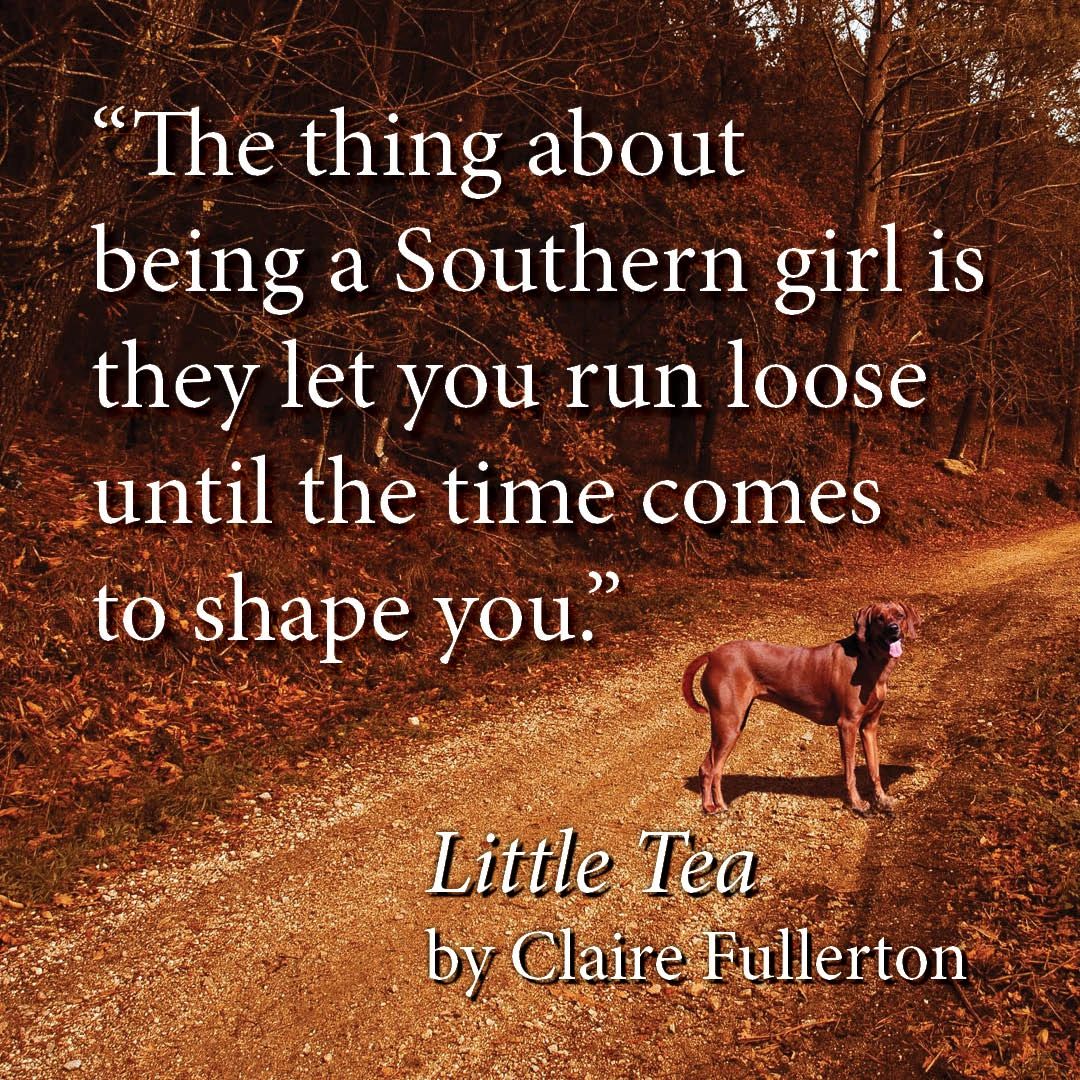
Little Tea’s premise is built on the power of female friendships—the anchoring, long-lasting kind that see a woman through a lifetime. These friendships tend to have their own language, often times there’s a shared sense of humor spawned from shared history, and what comes from shared history is an arsenal of stories. In Little Tea’s case, much of the bi-racial relationship story is due to the setting, which is to say the story wouldn’t have happened as it did were it not set in the South with its attendant social mores set amidst the roiling cauldron of the cultural racial divide. There’s a line from Little Tea, when narrator Celia Wakefield describes her Southern upbringing by saying, “The thing about being a Southern girl is they let you run loose until the time comes to shape you.” I posted a meme with this quote during my author take over and it led to a riotous discussion about the South and the power of female friendships, which is part and parcel to the story of Little Tea—Little Tea being the nickname of the main character, who is Celia Wakefield’s childhood best friend.
I have to say I’ve always known that readers are discerning people. They’re interested in learning about a book, but they’re equally interested in learning about the author. The beauty of my all-day, author take-over was that it afforded the latitude of an unfolding. One subject led to another with regard to Little Tea, but what warmed my heart the most was the participants who shared their own stories in what became a delightful, even exchange. I came away from the event knowing I’d represented Little Tea and introduced myself as accurately as I could, but the real gift to me came from getting to know those who love reading as much as I do. I went into the author take-over hoping to reach readers, but as I learned about them, it turned into the thrill of finding common ground.
I’m still marveling at the fun I had in the midst of a fortuitous opportunity. It’s not every author who invites another to take over their page and meet their followers. When you’re lucky enough to meet the kind of author who realizes we’re all in this together, it serves as an exemplary reminder of the impact of paying it forward.
Claire Fullerton hails from Memphis, TN. and now lives in Malibu, CA. with her husband and 3 German shepherds. She is the author of 7- time award winner, Mourning Dove, a coming of age, Southern family saga set in 1970’s Memphis. Claire is the author of Dancing to an Irish Reel, a 2-time award winner set on the west coast of Ireland, where she once lived. Claire’s first novel is a paranormal mystery set in two, time periods titled, A Portal in Time, set in Carmel-by-the-Sea, California. She is a contributor to the book, A Southern Season, with her novella, Through an Autumn Window, set at a Memphis funeral ( because something always goes wrong at a Southern funeral.) Little Tea is Claire’s 4th novel. Little Tea is a Faulkner Society William Wisdom Competition finalist, a finalist for the Chanticleer Review’s Somerset Awards, and the August selection of the Pulpwood Queens Book Club. She is represented by Julie Gwinn of the Seymour Literary Agency.



















 Claire Fullerton Author