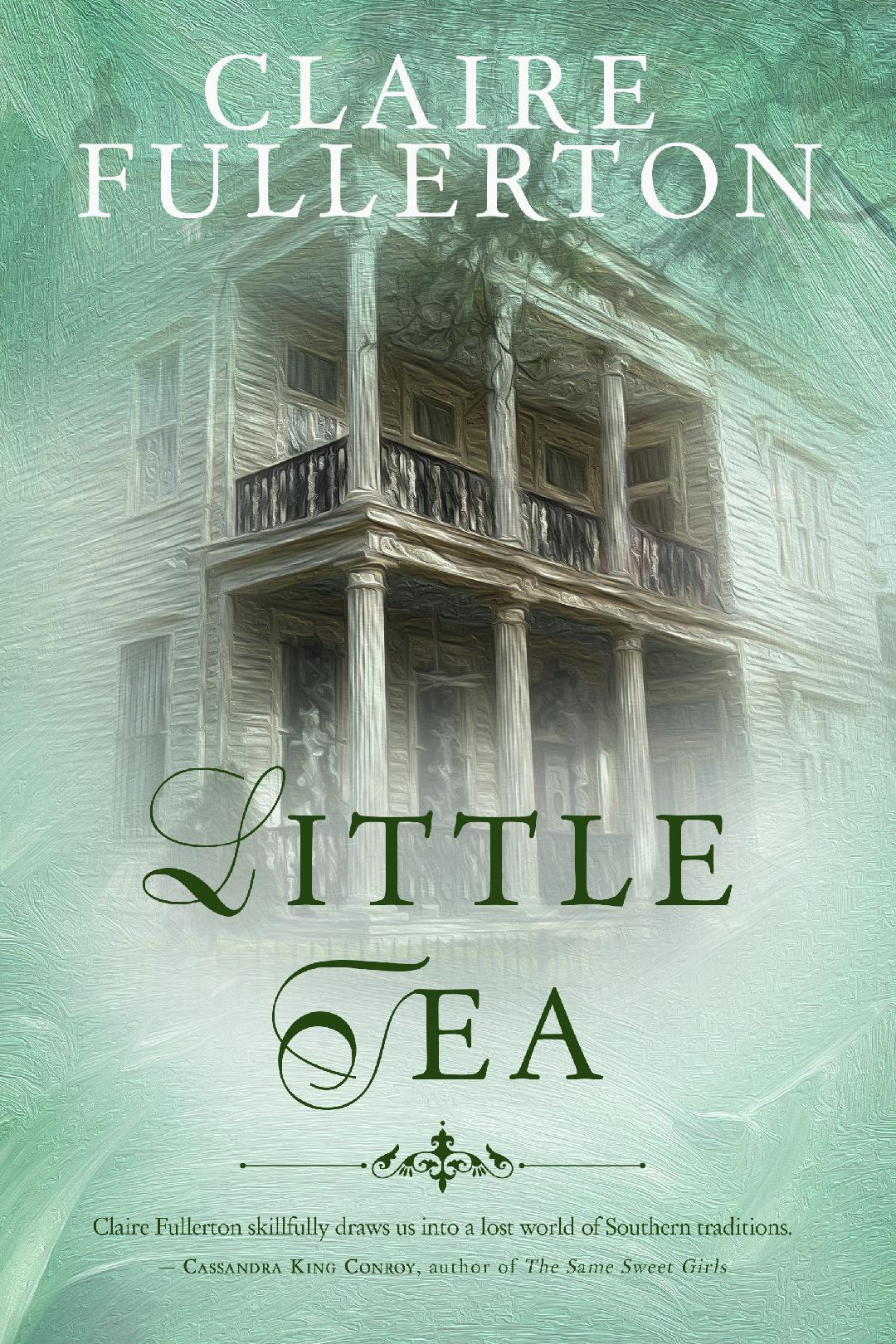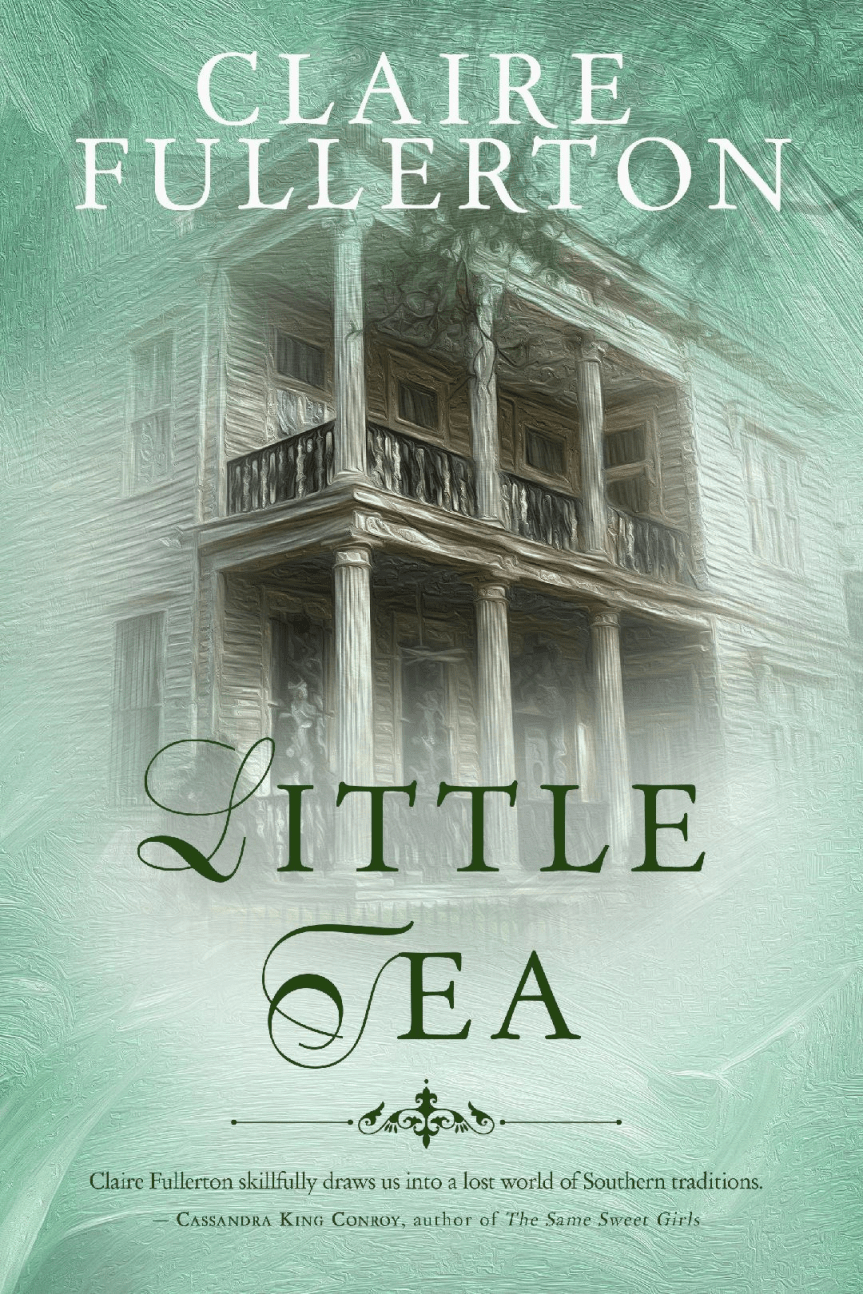
Little Tea: Excerpt

“Hey, Little Tea,” Hayward called as she and I sat crossed-legged on the north side of the verandah. “I bet I can beat you to the mailbox and back.” It was a Saturday afternoon in early June, and we’d spread the church section of the Como Panolian beneath us and positioned ourselves beneath one of the pair of box windows gracing either side of the front door. The front door was fully open, but its screen was latched to keep the bugs from funneling into the entrance hall. They’d be borne from the current of the verandah ceiling fans that stirred a humidity so pervasive and wilting, there was no escaping until the weather cooled in early November. The glass pitcher of sweet tea Elvita gave us sat opaque and sweating, reducing crescents of ice to weak bobbing smiles around a flaccid slice of lemon.

Little Tea stood to her full height at Hayward’s challenge, her hand on her hip, her oval eyes narrowed. “Go on with yourself,” she said to Hayward, which was Little Tea’s standard way of dismissal.

“I bet I can,” Hayward pressed, standing alongside Rufus, his two-year-old Redbone coonhound who shadowed him everywhere.

Little Tea took a mighty step forward. “And you best get that dog outta here ’fore he upends this here paint. Miss Shirley gone be pitching a fit you get paint on her verandah.”

“Then come race me,” Hayward persisted. “Rufus will follow me down the driveway. You just don’t want to race because I beat you the last time.”

“You beat me because you a cheat,” Little Tea snapped.

“She’s right, Hayward,” I said. “You took off first, I saw you.”

“It’s not my fault she’s slow on the trigger,” Hayward responded. “Little Tea hesitated, I just took the advantage.”

“I’ll be taking advantage now,” she stated, walking down the four brick steps to where Hayward and Rufus stood.

At ten years old, Little Tea was taller than me and almost as tall as Hayward. She had long, wire-thin limbs whose elegance belied their dependable strength, and a way of walking from an exaggerated lift of her knees that never disturbed her steady carriage. She was regal at every well-defined angle, with shoulders spanning twice the width of her tapered waist and a swan neck that pronounced her determined jaw.

Smiling, Hayward bounced on the balls of his feet, every inch of his lithe body coiled and ready to spring. There was no refusing Hayward’s smile, and he knew it. It was a thousand-watt pirate smile whose influence could create a domino effect through a crowd. I’d seen Hayward’s smile buckle the most resistant of moods; there was no turning away from its white-toothed, winsome source. When my brother smiled, he issued an invitation to the world to get the joke.
Typically, the whole world would.

“Celia, run fetch us a stick,” Little Tea directed, her feet scratching on the gravel driveway as she marched to the dusty quarter-mile stretch from our house to the mailbox on Old Panola road. I sprang from the verandah to the grass on the other side of the driveway and broke a long, sturdy twig from an oak branch. “Set it right here,” Little Tea pointed, and I placed it horizontally before her. But Rufus rushed upon the stick and brought it straight to Hayward, who rubbed his russet head and praised, “Good boy.”

“Even that dog of yours a cheat,” Little Tea said, but she, too, rubbed his head then replaced the stick on the ground. “Now come stand behind here. Celia’s going to give us a fair shake. We’ll run when she says run.” Her hands went to her hips. “Now what you gonna give me when I win?”
“The reward of pride and satisfaction,” Hayward said, and just then the screen door on the verandah flew wide and my brother John came sauntering out.

“On go,” I called from my position on the side of the driveway, where I hawkishly monitored the stick to catch a foot creeping forward. Looking from Hayward to Little Tea to make sure I had their attention, I used a steady cadence announcing, “Ready … set … go.”

Off the pair flew, dust scattering, arms flailing; off in airborne flight, side by side, until Little Tea broke loose and left Hayward paces behind. I could see their progression until the bend in the driveway obstructed my vision but had little doubt about what was happening. Little Tea was an anomaly in Como, Mississippi. She was the undisputed champion in our age group of the region’s track and field competition and was considered by everyone an athlete to watch, which is why Hayward continuously challenged her to practice. Presently, I saw the two walking toward me. Hayward had his arm around Little Tea’s shoulder, and I could see her head poised, listening as he chattered with vivid animation.

“You should have seen it,” Hayward breathlessly said when they reached me. “She beat me easily by three seconds—I looked at my watch.”

“Three seconds? That doesn’t seem like much,” I said.

“Listen Celia, a second is as good as a mile when you’re talking time. I’m two years older and a boy, so believe me, Little Tea’s already got the makings of a star athlete.” He grinned. “But we already knew this.”

John called from the verandah, “Celia, Mother’s looking for you.” I turned to see John walking to the front steps in his pressed khaki pants and leather loafers, his hand near his forehead shading his eyes.

“Where is she?” I returned.

“Inside, obviously. Last I saw her, she was in your room.”

For some odd reason, whenever my brother John had anything to say to me, he said it with condescension. His was a sneering, disapproving tone for no justification I could discern, beyond our six-year age difference. He was as hard on Hayward as he was on me, but Hayward never took John’s snide remarks personally, nor did he invest in what he called his holier-than-thou demeanor.

It didn’t take much to figure it out. From a young age, Hayward and I both knew he and John were two different kinds of men. Hayward once said to me, “John’s just a mama’s boy, which is why he calls Mom ‘Mother’ as if we’re living in Victorian England instead of Como, Mississippi. Don’t let him bother you. He has his own reality, that’s all.”

I skipped up the verandah’s steps and put my hand on the flimsy screen door.

“You should take that pitcher inside before you forget it,” John dictated, “and y’all need to pick up that paint.”

“I’ll get it in a minute,” I said, just to spite him as I stepped into the entrance hall. I couldn’t help it, it was my natural reflex in our ongoing contest of wills.

The light was always dim in the entrance hall, irrespective of the time of day. The carved crown molding on its high ceiling matched the dark walnut wood of the floor and door casings, which glowed in polished rosettes above the opening to the formal dining room on the right and the ample living room on the left, with the green-tiled solarium behind it. The entrance hall had a central catacomb feel and was always the coolest area of the house. In its cavernous elegance, footsteps were amplified on the maple floors during the months of June through September, then fell to a muted padding when Mom had Thelonious haul the crimson-and-navy runner from the attic and place it beneath the foyer’s round, centered table. At the end of the hall, behind the stairs, was my father’s den and attendant screened porch, but rarely did I visit the interior. My father was a private man, reclusive and solitary by nature, and whether he was in the library or not, the door was always shut. I had to skirt the gladiola arrangement on the entrance hall table. The floral design reached wide with flourishing arms toward the French credenzas against both sides of the walls. My reflection flashed in the ormolu mirror as I ran toward the stairs to find my mother. My hair crowned me with the color of night’s crescendo, dashing so dark it almost looked purple. I am 100 percent Wakefield in all that distinguishes the lineage, from the dark eyes and hair to the contrasting fair skin. There has never been a Wakefield to escape the familial nose; it is severe in impression, unambiguous in projection, straight as a line, and slightly flared. John and I are mirror images of each other, the yin and yang of the Wakefield, English bloodline. But Hayward was born golden, just like our mother, who comes from the Scottish Montgomerys, whose birthplace is Ayrshire. John and I possess an unfortunate atavistic Wakefield trait, though on me the black shadow is a ready silence, but on him it plays out as something sinister. John and I are individual variations of our father’s dark countenance, which is to say in our own way we are loners. People slightly removed. But Hayward got lucky, in possessing our mother’s shining essence. I could always see an internal light in their green eyes that set off their amber-colored hair.

I put my hand on the thick banister and climbed the stairs to the first landing, where my parents’ bedroom and living quarters unfurled like wings. The bay window overlooking the garden had its draperies drawn against the searing, silver sun. Walking into the sitting room at the right, I called for my mother, thinking she may be in the adjoining master bedroom. “I’m upstairs,” her voice descended. “Celia, come up. I want to see you.”

I mounted the stairs to the third-floor landing and found my mother perched lightly on the sofa in the alcove that served as a central area for the other four bedrooms. Behind her, sunlight filtered through the organza window treatments, highlighting the red in her hair. Her slender hands held a three-ringed binder of fabric swatches, the swatch on top a cool, blue toile. She patted the seat beside her and I settled softly. My mother was cultivated, circumspect, and radiated a porcelain femininity. Always, in my mother’s presence, I gentled myself to her calm self-possession. In my heart of hearts, it was my hope that the apple didn’t fall far from the proverbial tree.

“Tell me,” she said, “what do you think of this fabric for your draperies? We could paint the walls a light robin’s egg and put white on the molding. I think it’d be divine.” She looked around the room as if seeing it for the first time. “It’s time we got rid of the wallpaper in there. You’re growing up.” She laid her ivory hand on my cheek. “You’ll want this eventually. I think now’s a good time.”

I knew enough of my mother’s ways to know she was engaged in preamble. She was practiced at the art of delivery by discreet maneuver, and I suspected her impulse to transform my room had hidden meaning. “Why is now a good time?”

My mother looked in my eyes and spoke softly. “Celia, I’m telling you before I tell Hayward because I don’t want this to come from him. Your father’s going to be taking a job in Memphis, so we’ll be moving.”

“We’re moving to Memphis?” I gasped.

“Yes, honey. You’ll be starting school at Immaculate Conception in September,” she answered. “You know the school; its attendant to the big cathedral on Central Avenue.”

“But that’s a Catholic school, Mom. I thought we were Episcopalian.”

“We are, honey, but it’s highly rated academically. Your father and I think being exposed to a different religion will broaden your mind and give you beautiful advantages. We can come back here any weekend we want, and you’ll have a brand-new room when we do. You’ll have the best of both worlds, you’ll see. You’ll make new friends in Memphis, and Little Tea will still be here. It won’t be a drastic change at all. Try to think of it as an addition. There now, sweetie, don’t make that face. It isn’t the end of the world.”

But it was for me; Memphis intimidated me. Memphis was the big city compared to Como, and I found it cacophonous and unpredictable in its patchwork design. There was a disjointed, disharmonious feel to the city, what with its delineated racial relations. Parts of town were autocratic in their mainstay of Caucasian imperiousness and there were dilapidated, unlucky parts of town considered dangerous, which a white person never chanced. This much I’d learned on my visits to my grandparents’ house near the lake in Central Gardens. Blacks and whites never comingled in Memphis, even though they did coexist. But there was an impenetrable wall that separated the races, and I’d been raised in a footloose environment where it didn’t matter so much.

I took my teary eyes and sinking stomach to my bedroom so my mother wouldn’t see me cry. Through the window over the driveway, I watched as Hayward and Little Tea threw a stick for Rufus. I hadn’t the heart to run tell them our lives were about to end.


My 1, 2020 release: Firefly Southern Fiction

Preorder ebook and print: https://amzn.to/39BlPOT

https://www.clairefullerton.com

Blackwood by Michael Farris Smith #Book Review.

Author Michael Farris Smith is one of those rare writers who uses language as setting. He opens his fifth novel, Blackwood, in the year 1975 with “The “foulrunning Cadillac arrived chugging into the town limits of Red Bluff, the car having struggled out of the Delta flatlands and into the Mississippi hill country, the ups and downs of the landscape pushing the roughriding vehicle beyond what was left of its capabilities.” Off the bat, the reader knows the stage is set for bad luck and hard times for the drifters come to town. Farris Smith doesn’t snow us with a glimmer of hope, he hands us the premise as a matter of fact. Then the story deepens. Blackwood is a story of loners and outsiders thrown together seemingly by chance. They’d like to connect but lack the fundamental knowledge of how, as each manages their individual vortex trying not to drown in their common sphere.

Red Bluff, Mississippi is lackluster to the point where the town gives away abandoned, downtown storefronts to anyone willing to maintain one. Colburn, haunted by his past, calls himself an industrial sculptor. He returns to the seat of his loveless childhood in his flatbed, looking for scrap metal and such to fashion into art in one of Main Street’s cast-offs. He is looking for something. He wants to confront the demons of his past, and in his search, reunites with a will-o-the-wisp bar owner named Celia, in an attraction so conflicted, it exhumes his childhood pain.

Myer wears his pantlegs tucked in his boots and walks with a limp. He is Red Bluff’s weary law enforcement who gives too little too late to the town’s drifters, who take to the kudzu tangled woods on the edge of town where something sinister lurks.

Rich in tenor, setting, metaphor, and dark imagery, Blackwood is an intricately woven, gritty story of disconnected lives unwittingly affecting each other in repercussive ways, written is language so bleakly mood-setting, reading its pages becomes a state of mind.

Many a luminous author has called Oxford, Mississippi’s Michael Farris Smith one of the best writers of his generation. And he is. And Blackwood proves it.


Blackwood Releases March 3rd at all book outlets


https:www.clairefullerton.com

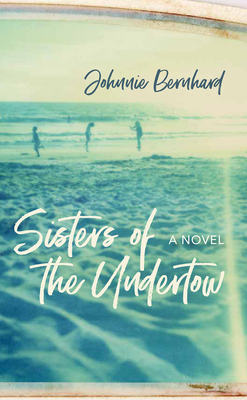
Sisters of the Undertow by Johnnie Bernhard

Sisters of the Undertow is the third book by Johnnie Bernhard I’ve read, and I loved every line of it for the same reason I’ve loved Bernhard’s other books ( A Good Girl, and How We Came to Be): she’s a master of deep motivational subtext.

In Sisters of the Undertow, author Johnnie Bernhard takes the complicated underpinnings of sibling rivalry, gives it breath, and sets it to wings through the power of a seemingly ordinary story. What makes it extraordinary is that narrator Kimberly Ann has emotional baggage against her younger sister and knows it. She is cynical, jaded, and resentful to such an edge that the story is fueled by her bone marrow.

Kathy Renee is oblivious to her elder sister’s resentment. She was born to this world prematurely and shoulders the burden of life-long special needs. And yet she is disarmingly cheery, resilient, and God-fearing, giving Kimberly Ann one more reason to rail against their relationship—on top of her put-upon, self-appointed victimhood, she is simultaneously riddled with guilt.

Narrator Kimberly Ann explains it as this: “We were born sixteen months apart, of the same mother and father, yet our lives would become as different as two planets orbiting around the sun, never to fully understand each other, despite our years of circling.”

It’s one’s attitude that seals the deal of how one’s life will be experienced, and author Johnnie Bernhard depicts this principle by giving us sisters from middle-class, Houston, Texas with differing realities, in a deeply introspective story that builds in three, well-crafted parts. It takes a gifted author with the use of a subtle hand to suggest we create our own reality. We may see parts of ourselves in both sisters. We may deny it, rail against it, or see it as a vehicle to self-examination that just might encourage change.

I read Sisters of the Undertow twice, which should tell you something. There’s so much to glean from the intelligent story, told in one of the more refreshingly real, first-person voices I’ve ever read. I read it twice because—dare I say it—this fathoms-deep tour de force of riveting upmarket fiction has the double blessing of a page-turning story and the repercussion of an undertow that won’t quit.


https://www.clairefullerton.com

A Girl Like You: Book 1 Henrietta and Inspector Howard Mystery Series by Michelle Cox

It is 1935 Chicago, after the big crash, and desperate times lead to desperate measures. Young, beautiful, and seductively innocent Henrietta Von Harmon fends for her fatherless siblings and withdrawn, bitter mother by taking her good intentions to support her family, only to be led to disreputable places with unforeseen double-dealings. With verve and resourcefulness, Henrietta soon becomes involved in shady doings on the wrong side of town, and when she meets the enigmatic Inspector Clive Howard, wheels are unwittingly set in motion for navigating a Chicago crime syndicate.
A Girl Like You, (Book 1 in the Henrietta and Inspector Howard Mystery Series by Michelle Cox) is one of those rare gems so chock-full of charm and personality; so captivating and delightful in its vivid narration that readers feel intimately tied to the characters and invested in the action-packed story. A Girl Like You has it all: mystery, intrigue, conflict, unpredictability, unique setting, believable motivations from fabulous characters, secrets, hidden agendas, and the lure of budding romance.
Author Michelle Cox begins her wildly popular mystery series in A Girl Like You with such page-turning, off-kilter charm, you won’t be able to resist reading the whole series. The memorable Henrietta and Inspector Howard are likable, fully realized characters from disparate backgrounds who balance each other with perfect pitch in the midst of an edge-of-your-seat joyride.


Home

https://www.clairefullerton.com


The 2020 Pulpwood Queens Girlfriend Weekend.

Friday, February 7, 2020

The Pulpwood Queens Girlfriend Weekend

By Claire Fullerton   @cfullerton3

There’s a come-down phase after an author attends a book conference—an adjustment period that has something to do with going back to the real world through the logistics of travel. My last trip back from a book related weekend involved a mini-van ride from Jefferson, Texas to Shreveport, Louisiana; a flight to Dallas; another flight to Los Angeles; and a one-hour car ride to the loving arms of my husband and three German Shepherds. Under usual circumstances, somewhere along the journey back home, I manage to switch channels, but for days after the The Pulpwood Queens Girlfriend Weekend in mid-January, the energy lingered like a good kind of hang-over.

If you’re going to get out of your daily routine and travel half-way across the country, then let it be for a three-day combined book and love fest. It’s the only way to describe the Pulpwood Queens Girlfriend Weekend, which takes place annually in Jefferson, Texas, the weekend before Martin Luther King, Jr. Day. It’s unlike any other assembly generated by the book world; different than other conferences because there are no agent pitches; no tutorials on book marketing; no instructional workshops, nor panels geared toward the how-to of writing. What makes Girlfriend Weekend unique is that it’s predicated on the 765 international book club chapters under the banner of The Pulpwood Queens and Timber Guys, who show up in Jefferson, Texas en masse, dressed in leopard-print costumes—the more outrageous, the better. They settle in for three days to listen to authors talk about whatever comes to mind, be it their books, their writing process, or how they find inspiration. That the last evening of Girlfriend Weekend is a closing-night party billed as the Big Hair Ball ( the higher the hair, the closer to God) charges the entire weekend with electrical anticipation.

There’s a visceral magic that comes from spirits colliding in a room full of people who share the same passion. It’s like a country with its own language, a secret society whose membership is granted by the simple fact that you’re there. This year’s Girl Friend Weekend was the very definition of the book community in action: authors congregating within the scrum of each other with the unified intent of fraternizing with readers, and readers in attendance because those who write books light their fire.

Have you ever stood back and watched the dynamic of a crowd when everyone in it is thrilled to be there? Dress three-hundred literary lovers up in leopard-print, balance a tiara on their heads, show them the way across the railroad tracks at the tail-end of Jefferson, Texas, and believe me, anything can and does happen. What stood out for me the most during 2020’s Girlfriend weekend was the scene between the scenes of the scheduled panel discussions. It was clear to me that authors and readers alike were there for the right reasons, which is to say they were there for the love of books. Nobody there was selling anything; working an angle; on the take; stacking their mailing-list, staging a hustle; or there “to network.” The 2020 Pulpwood Queens Girlfriend Weekend was basically a celebration of the book club’s 20-year anniversary, where authors came from all over to give from their literary hearts, so that readers received every ounce of gratitude they have for them. The atmosphere was joyous. The mood was infectious. The well-written story was honored as a high art, and the release of the 58, first-person essays in the book, The Pulpwood Queens Celebrate 20 Years, was featured to prove it.

There are photographs with this piece as it appears in Southern Writers Magazine February 7 edition of Suite T online because every picture tells a story about the Pulpwood Queens Girlfriend Weekend. Let’s just say had the convention center in Jefferson, Texas been outfitted with chandeliers, you would have seen tiara-topped women swinging from them.

Full confession here, because now it strikes me as funny: I remember packing my carry-on for Texas, thinking any interruption of my work in progress was a hassle. I obsessed over securing the four corners of my desk, so it’d be just as I left it when I returned. Don’t get me wrong.

Although I looked forward to going to Girlfriend Weekend, a part of me felt like I had to press pause on my life. Now I’m realizing that was the good news, because pressing pause on my life is precisely what happened. Summarily, I left my writer’s cave and went to the Pulpwood Queens Girlfriend Weekend and found myself rejuvenated in a jury of my peers.

TWEETABLE

The Pulpwood Queens Girlfriend Weekend Claire Fullerton (click to tweet)

________________________________________________________________

Claire Fullerton is from Memphis, TN., and now lives in Malibu, CA. Her latest book, Little Tea is in pre release on Amazon. She is the author of Mourning Dove, a Southern family saga set in the genteel side of Memphis. Mourning Dove is the 2018 Literary Classics Words on Wings award winner for Book of the Year. It is the 2018 bronze medal winner for Southern Fiction by Readers’ Favorite, a finalist in the 2018 Independent Authors Network Book of the Year, and was listed in the International Faulkner Society’s 2018 William Wisdom competition in the novel category. Claire is the author of Kindle Book Review’s 2016 award for Cultural Fiction, Dancing to an Irish Reel, and paranormal mystery, A Portal in Time. She contributed to the book, A Southern Season: Four Stories from a Front Porch Swing, with her novella, Through an Autumn Window. Her work has appeared in Southern Writers Magazine, and was listed in 2017 and 2018 in their Top Ten Short Stories of the Year. Claire’s work has appeared in The Dead Mule School of Southern Literature; Celtic Life International; The Wild Geese, and The Glorious Table. The manuscript for her next novel, Little Tea, is a finalist in the 2018 Faulkner Society’s William Wisdom competition.  She is represented by Julie

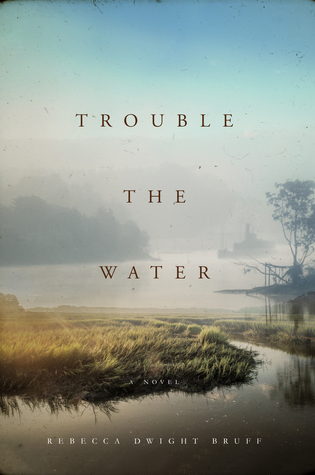
Trouble the Water by Rebecca Dwight Bruff.

Trouble the Water is warmhearted, even-tempered, biographical fiction told with such delicacy that the reader drifts from its true-to-life scaffolding. In this captivating novel, Author Rebecca Dwight Bruff fearlessly takes on an era in American history a lesser writer wouldn’t touch, and she does so with admirable confidence while reaching the heart of what is essentially a human-interest story.
Trouble the Water is a soulful story populated with racially divided, interdependent characters in the midst of the South’s changing times. It is pre-Civil War in Beaufort, South Carolina, a hotbed of beneath-the-surface discontent set against the facade of waterfront civility. It is the historically significant, Robert Small’s, first-person story: he was born into slavery when there was nothing to be done about it, not yet. In an equanimous voice that makes us care from the onset, the story carries the reader through vividly drawn Low Country settings that are part and parcel to the flow of the chronicle. With a steady hand, Rebecca Dwight Bruff presents a ringside seat through the personal stages of Robert Small’s hard-won achievements. He is Horatio Alger guided by spirit on a hero’s journey, a dauntless man with a mission whose triumphant act becomes a turning point in the Civil War and impacts the ages.
I recommend Trouble the Water to those who love well-rooted historical fiction, biographical fiction, and a beautifully told story with a satisfying sense of redemption. All praise for author Rebecca Dwight Bruff. I understand she moved from Texas to South Carolina to research and write this gorgeous novel. In this humble reader’s opinion, the move was worth it.

https://www.clairefullerton.com

Smorgasbord Cafe and Bookstore – New Book on the Shelves #Pre-Order and my advance review for Little Tea by Claire Fullerton

via Smorgasbord Cafe and Bookstore – New Book on the Shelves #Pre-Order and my advance review for Little Tea by Claire Fullerton

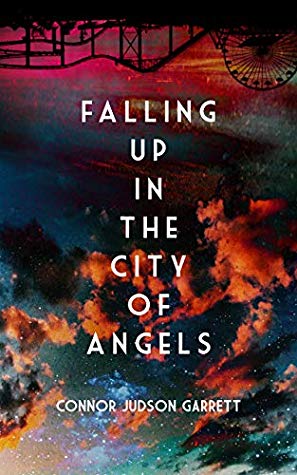
Falling up in the City of Angels by Connor Judson Garrett Book Review

Connor Garrett’s Falling Up in The City of Angels sings like a manifesto of youth seen through the eyes of one who misses nothing. It’s a travelogue through the spinning vortex of LA, written from the edge of innocence by an author whose voice is so personal, you want to reach out and hold his hand.

Fresh from college graduation, in a time when the sky is the limit, narrator Tony leaves his Georgia home with little to recommend him than his dream of being a writer. Thinking magic can happen with little in his pocket in a town where anything goes, blind optimism leads Tony from one eye-opening episode to the next as he hits all the highpoints in the City of Angels. The reader visits the Venice Canals, meets posers, and actors, and spiritual seekers; commiserates with Tony through the laws of romantic attraction, pauses at his insights on the back end.

Like a fledgling meeting chance in an odyssey of discovery, Tony’s beginner’s luck navigates west LA without a filter. He is young, resourceful, adventurous, and optimistic. He is resilient, insightful, surefooted, and not a quitter.

Falling up in the City of Angels is a fresh take on an age-old experience. It reads like a roadmap of a young man’s coming into being while avoiding the campy pitfalls of a fish-out-of-water story. With language both accessible and profoundly sophisticated, author Connor Garrett depicts the blossoming of youth in all its first-impression, awestruck wonder.

https://clairefullerton.com

Life’s Rich Tapestry by Sally Cronin

Life’s Rich Tapestry by Sally Cronin

We come to know a person’s mind through the words they speak; their personality through what they create, and their heart through what they write. Put this all together and you’ve been gifted a glimpse into an artist’s soul. This is how Life’s Rich Tapestry Woven in Words impressed me. Author Sally Cronin’s precious gem of a book is nothing short of fluid insight into all that it means to be human in a round-robin way as to address the entire sphere in bits and pieces that leave a lasting impression. These are musings delivered artfully, the perfect melding of heart, mind, and soul. In sharing her personal views, the author invites us to examine our own impressions of the day-today by shining light on life’s rich nuance. There is something profound in these meditative pages, something joyous and real that takes nothing for granted by sheer virtue of the fact that Sally Cronin has called them by name. In addressing the natural world, celebrating pets, seasons of the year, and random thoughts, Cronin speaks to the reader conversationally in such a manner that told me I’d revisit the pages. Her flash fiction, speculative fiction, and short stories are vignettes to savor—all told, this book is a work of art at its finest. All praise to author Sally Cronin, who has earned a constant and significant place in the blogging world by selflessly serving as the fulcrum of focus for so very many. That she has stepped forth by assembling and publishing this collection of letters has gifted us all with the awe-striking opportunity to see a writer’s career shine at its brightest.

Visit Sally Cronin on Word Press, Smorgasbord!


Find Your Faery Name & a Thistledown Contest #FreeBook

Teagan Genevieve wins the gold star for unlimited imagination and endless creativity!


via Find Your Faery Name & a Thistledown Contest #FreeBook