My favorite Podcast is Charlotte Readers Podcast, hosted by Landis Wade, an author himself and “a recovering trial lawyer” who encourages authors to read and talk about their award-winning, published, and emerging works. This is the show where host, Landis Wade, visits with local, regional, national and international authors who read and discuss their work. The Charlotte Readers Podcast mission is to help authors give voice to their written words for listeners who love good books.
Host Landis Wade of The Charlotte Readers Podcast
The podcast’s community blog is populated with readerly and writerly content offered by talented writers. It contains nuggets of wisdom for readers and writers.
This week, I contribute to their Community Voices Blog with a short post about how I became a writer, and the link to the blog post, titled, There Is no There to Get to, is here:
Charlotte Readers Podcast wants to hear YOUR voice! Charlotte Readers Podcast is so grateful for the love writers are showing our blog, Community Voices, where we invite writers to submit their readerly and writerly voices to be featured on our website. The submission guidelines are simple, but must be followed for consideration. Read our latest posts, learn more about what we’re looking for, and submit your writing for consideration on our website: https://linktr.ee/CharlotteReadersPodcast
Here’s the Link to The Charlotte Readers Podcast Website:
Tina invited her friend Erica to attend a popular Tchaikovsky’s Spectacular concert on a summer evening with her parents. During the intermission, her dad left the seat to buy some snacks. Tina and Erica followed him wanting to use the restroom. The shoving crowd pushed them away, and they lost sight of him. It would be impossible to fight through the 18,000 people to find him or go back to Tina’s mom. This story tells about what happened to Tina and Erica after they got lost. Children can adapt to the learning from different situations they may observe or encounter. Adults could have discussions with the children about the situations to help them develop problem-solving skills.
My review of this delightful children’s book:
Third grader, Tina Tyler, looks forward to summer. It is the last day of classes, and she has had such a great school year that she hopes the next year will pair her with her teacher, Mrs. Jackson, who stands outside smiling and waving goodbye to her students and reminds Tina that the fourth grade will be a new adventure, a prospect that Tina readily embraces.
Tina is the exuberant sort, and when her mother takes her home to officially begin summer break, the two sit down at the kitchen table and prepare a ten-point list of best case scenario summer activities, and thus the merits of planning are demonstrated to the reader. Tina is excited by the prospects of swimming and asks her mother if she can host a sleepover party for her friends, which her mother encourages because it is important to be appreciative of one’s friends.
In a delightful surprise for Tina, Mrs. Tyler tells her daughter there will be an outdoor concert at the Hollywood Bowl where an orchestra will play Tina’s favorite music: Tchaikovsky’s Sleeping Beauty and Swan Lake. Tina, wanting to include her best friend, asks if she may invite Erica, and when her mother says yes, Tina jumps for joy and claps her hands.
There is much to look forward to at the concert, and Tina’s parents take her and Erica on a two hour train ride to the outdoor event, which will include a picnic and culminate in a fireworks display more resplendent than any Tina has seen prior.
But one has to be prepared for the unexpected, and when in dire circumstances, a child does well to remember the wise counsel of their parents, so when Tina and Erica discover they are lost in a crowd of thousands of people, Erica despairs, until Tina says, “We should stay here. I remember Mom told me a long time ago that if I could not see her, stay where I am, and she would come to find me.”
Miriam Hurdle’s Tina Lost in a Crowd is a joyous, vibrantly illustrated parable designed to depict the safety and security that comes from listening to and trusting one’s parents. In seamless companionship with the gorgeous artwork of Victoria Skakandi, it demonstrates that having a plan to resort to when in the grips of uncertainty will lead to a certain solution where all will be well.
Meet author Miriam Hurdle:
Biography
Miriam Hurdle is a member of the Society of Children’s Book Writers and Illustrators (SCBWI). She published four children’s books at twenty-six years old. Her poetry collection received the Solo “Medalist Winner” for the New Apple Summer eBook Award and achieved bestseller status on Amazon.
Miriam writes poetry, short stories, memoir, and children’s books. She earned a Doctor of Education from the University of La Verne in California. After two years of rehabilitation counseling, fifteen years of public-school teaching and ten years in school district administration, she retired and enjoys life with her husband in southern California, and the visits to her daughter, son-in-law, and granddaughters in Oregon. When not writing, she engages in blogging, gardening, photography, and traveling.
Writer, Carla the Reader, writes this in her book review of Tina Lost in the Crowd:
“I read this book to my two oldest grandchildren (5 and 7) and we had some wonderful discussions. We read it straight through the first time, but on the second reading, boy did they open up. We talked about school ending and things they like to do in the summer. Fireworks are a favorite summer activity during the first weekend in July and as a family we go and watch them as well as have a BBQ. Swimming is another wonderful activity and then we talked about outdoor concerts. After all that, I brought them around to discussing what to do if they get lost. The oldest had a lot of ideas involving finding someone in a uniform, finding a mommy or daddy with kids to ask for help and find someone with a ph0ne to call their parents. We discussed what Tina and Erica did and decided that would also work well if mommy and daddy knew what direction they were heading. Even if they chose other options when they get lost, it opened up some great learning moments.”
Congratulations to author Miriam Hurdle on the April 15, 2021 release of this wonderful children’s book, which is available on Amazon!
This Essay Appears in the May Issue of The Dead Mule School of Southern Literature: https://deadmule.com/
There’s a saying you hear bantered about the South: “The past is never,” the reference pertaining to the South’s storied history. I’ll add an amendment and take it a step further by including what’s implied: A Southerner never forgets.
We Southerners have deep roots and oral traditions that make us gifted story tellers. We’re big on family connections and boast pride of lineage, which we wear as a badge of honor. It’s touching, really. Our most salient characteristic is familial identification. I’ve always said this about Southerners: we definitely know who we are. We know our place in the world because we belong to something—people mostly, and a region so layered it lives and breathes its own character. Though some now see the historical narrative as shameful, many Southerners keep their aperture insularly focused. Which isn’t to say Southerners aren’t historically and globally conscious; as a generalization, we’re passionately attuned to the larger sphere. But lives are built in day-to-day increments the world over, and there’s nothing wrong with a world view that starts at home and hearth.
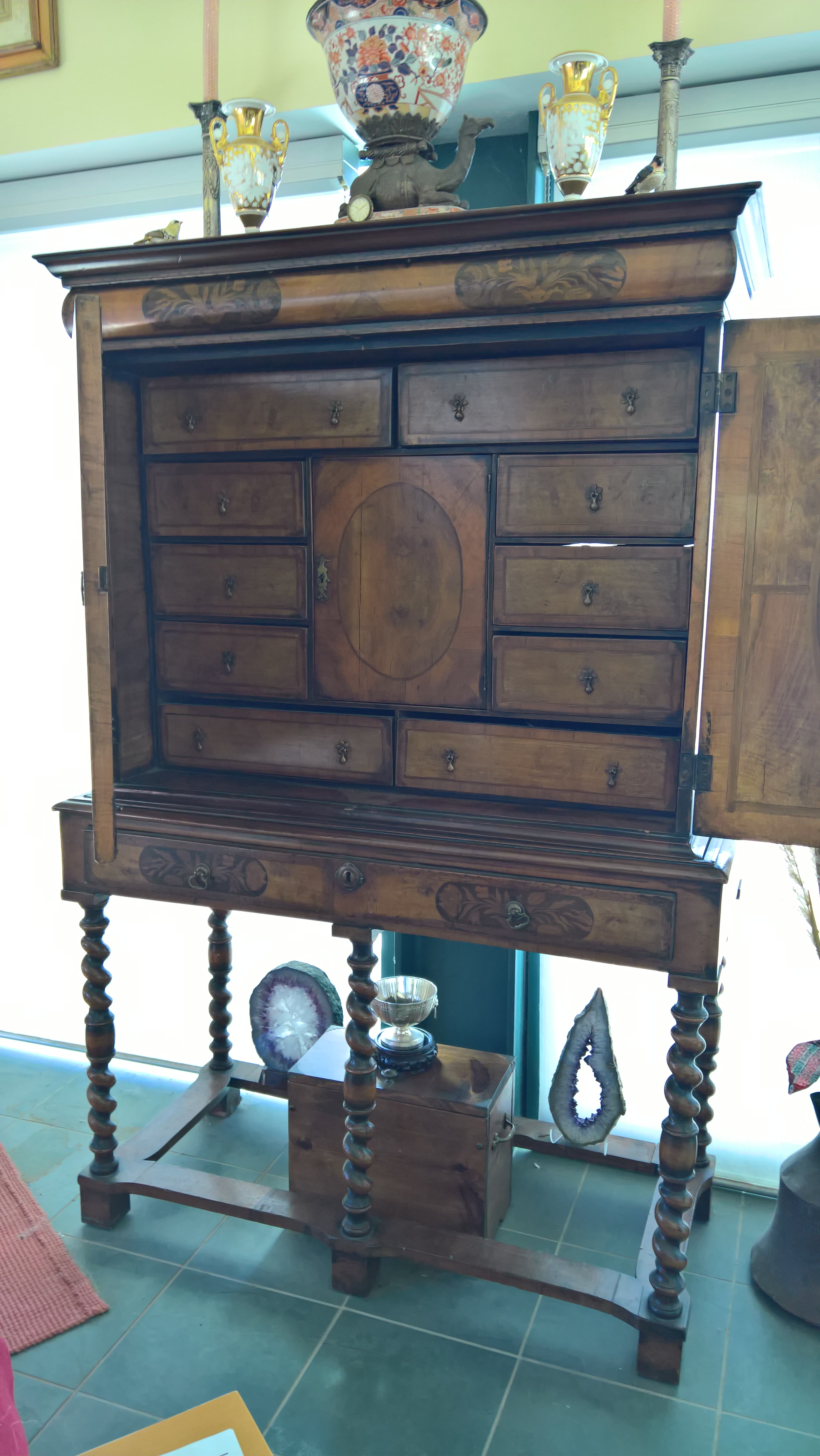
I’m thinking about all this because my mother’s antique cabinet recently arrived from my childhood home in Memphis. I now live in Southern California and inherited it, and having it shipped to me seemed the thing to do. My mother loved antiques; she was a collector. I grew up surrounded by antiques as a state of affairs, appreciative enough though the passion was hers; I was but an observer. The cabinet is monstrous by anyone’s standards, more decorative than functional. My mother anchored her world with art and made no apology for favoring beauty before practicality. Though I wasn’t looking for an oversized piece of furniture, my decision to have the cabinet shipped to me had something to do with loyalty. The thought of letting it go seemed like flying in the face of my mother, and I couldn’t bring myself to do that. I wouldn’t have thought so ten years ago, but things are different now that she’s gone.
The cabinet loomed in the house in which I grew up, as my mother had before me. Stationed beneath an arch in the breezeway between the parlor and card room, it stood sentry over everything happening in that French Provincial house. If inanimate objects retain memory then this cabinet holds plenty. It saw it all through three generations and never passed judgement. Through trial and tribulation, death, and divorce, that cabinet maintained its dignity and kept its mouth shut. The hand-built art piece meant something to my mother. With its delicate inlay, carved spindle legs, and series of brass handled drawers, she kept it in pride of place. As the last member of my family standing, it felt incumbent upon me to honor its history. Now that it’s in my California living room, there’s great satisfaction in thinking I’m keeping its lineage alive. I won’t deny that any self-respecting architect who walked in my house would wrinkle their purist nose. The glass walls of my modern house demand the streamlined effect of Meis van der Rohe furniture: minimalism, in a less is more kind of fashion, with respect to the ocean view. But I’m a transplanted Southerner living in Malibu, California, and Southerners don’t do minimalism. We cover surfaces with sit-outs, and to us, there’s no bigger crime than a vacant wall. Which brings me to a rhetorical question: Were a Southerner to allow a sparse interior, how in the world would they tell their stories? Most Southerners could keep you all day telling stories about everything in their house. I happen to be an animated case in point. I think having the cabinet pulled at the last minute from a Memphis estate sale, crated and shipped 2,000 miles, only to sit weeks in my driveway because of the Covid pandemic makes a great story. It’d still be sitting outside had my husband not opened the crate to discover the cabinet was in three portable pieces. Upon this discovery, I was so excited, I employed sheer force of will, to help finagle it up a flight of concrete stairs and into the house.
It’s a strange feeling, seeing the cabinet in my living room. For some nostalgic reason, it has yet to feel like it’s mine, but perhaps I’ll grow into it. I think I feel this way because the cabinet was integral to not only the era in which I came of age, but it represents a way of life that is lost to me now—a way of life enjoyed by someone no longer here, a true Southern belle to whom art came before practicality. In my memory, it represents the beautiful woman before me—her taste and priority; her attention to detail in beautifying her surroundings. For some odd reason, I’ve looked at that cabinet in my living room sticking out like a sore thumb and thought surely there’ll come a day when I feel like I own it. But then again, maybe not. Perhaps I’ll always think of it as my mother’s. It really might remain a talisman, representative of where I came from.
I once defined adulthood as moving away to carve out my individuality. When I was young, I planned to leave the South, plant myself among the bright lights of Los Angeles where the rootless have cobbled a shifting society in a climate where anything goes. At one time, that seemed to me the ideal, my own brand of independence. But maturity has brought me full circle, and it humbles me to think I’ve learned something. My mother’s cabinet belongs in my living room no matter what. It will live there until it’s my time to pass it along. It may never compliment anything in my beach-side house, but I’m fine with that. It will remain where it is, lest I forget my roots.
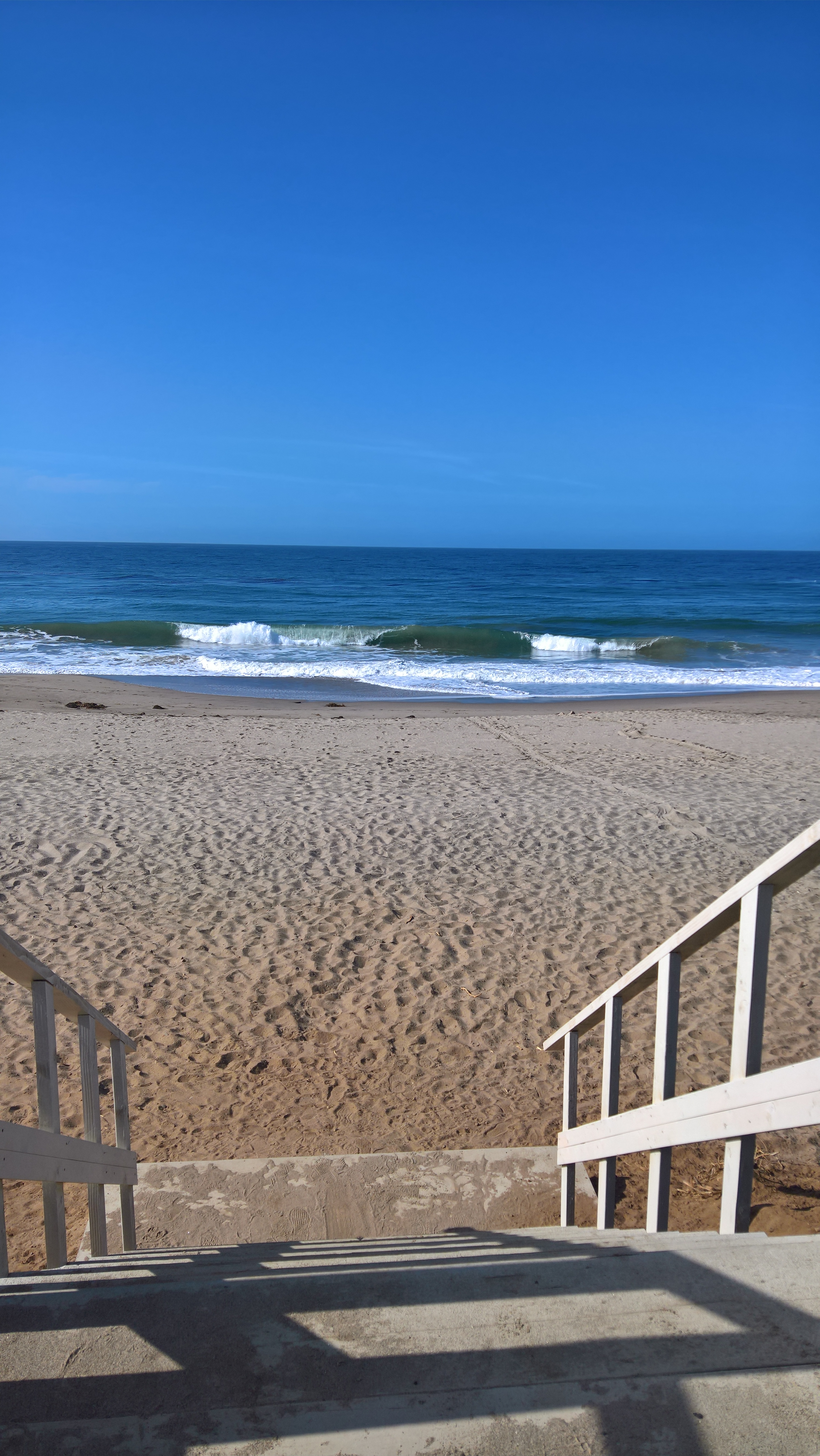
I recently discovered a new set of stairs to the beach. It’s been two years and 8 months since the Malibu fires swept through the area, and these new stairs are part of the reconstruction of an area I can walk to from my house, known as Leo Carrillo State Beach.
Straight on from the stairs is this view. I am as familiar with this area as I am with the back of my hand, and am forever amazed at the constant yet ever-evolving tide that changes the beach landscape from one day to the next.
Walking left are these massive boulders. According to the strength of the tide, there is always drama happening, and I wait for the waves to crash against the boulders as if I were waiting for fireworks to light up the sky. At certain angles, the waves collide with these timeless boulders. They erupt in a misty-white plume that paints the blue sky, and I think of time and tide and it’s ceaselessness, and the fact that the ocean’s anchoring constancy is something I can always count on.
A closer view
And closer still. At this spot, I take my shoes off and wade knee-deep in the water until my heartbeat aligns with the tide’s rhythm.
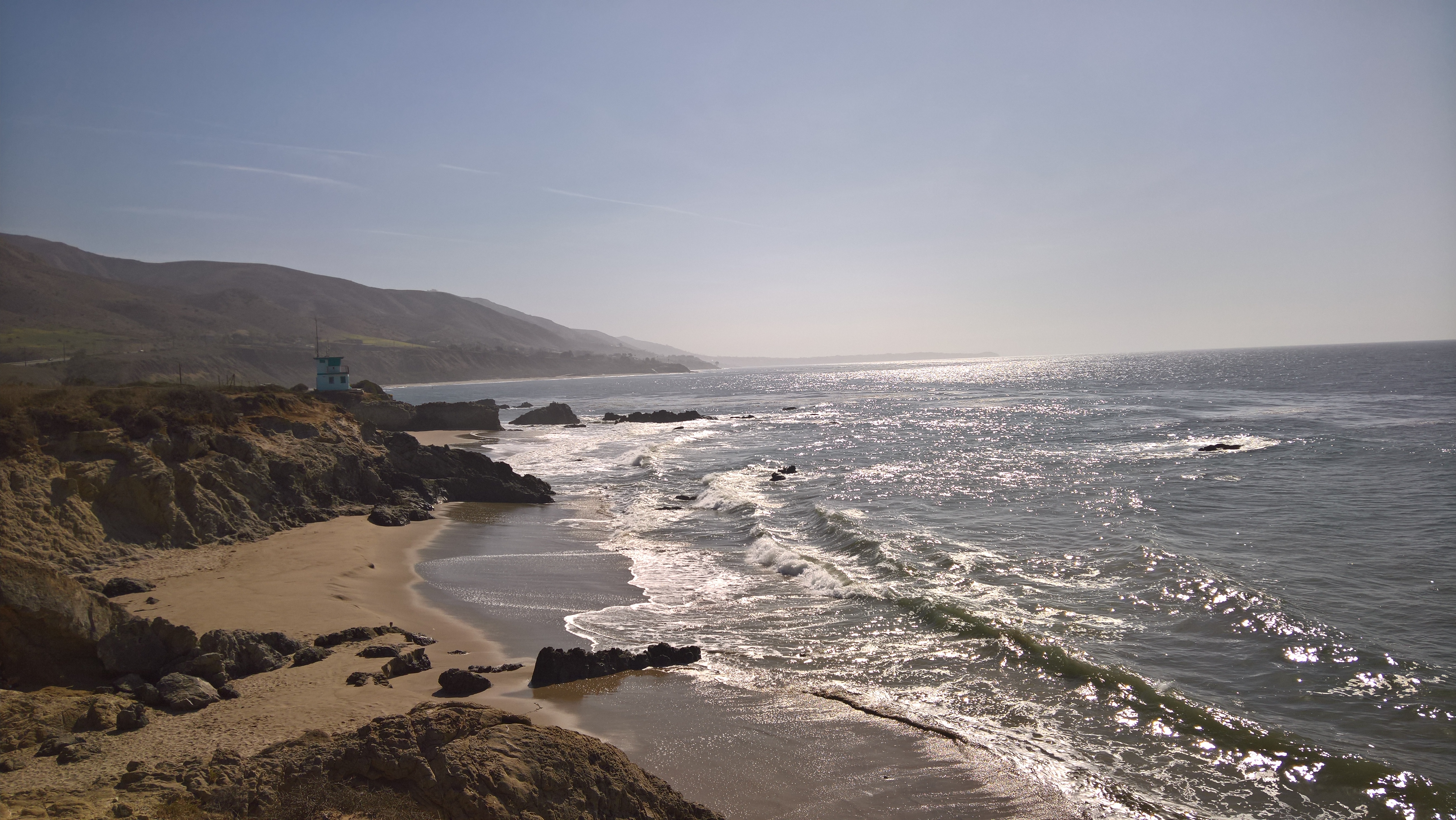
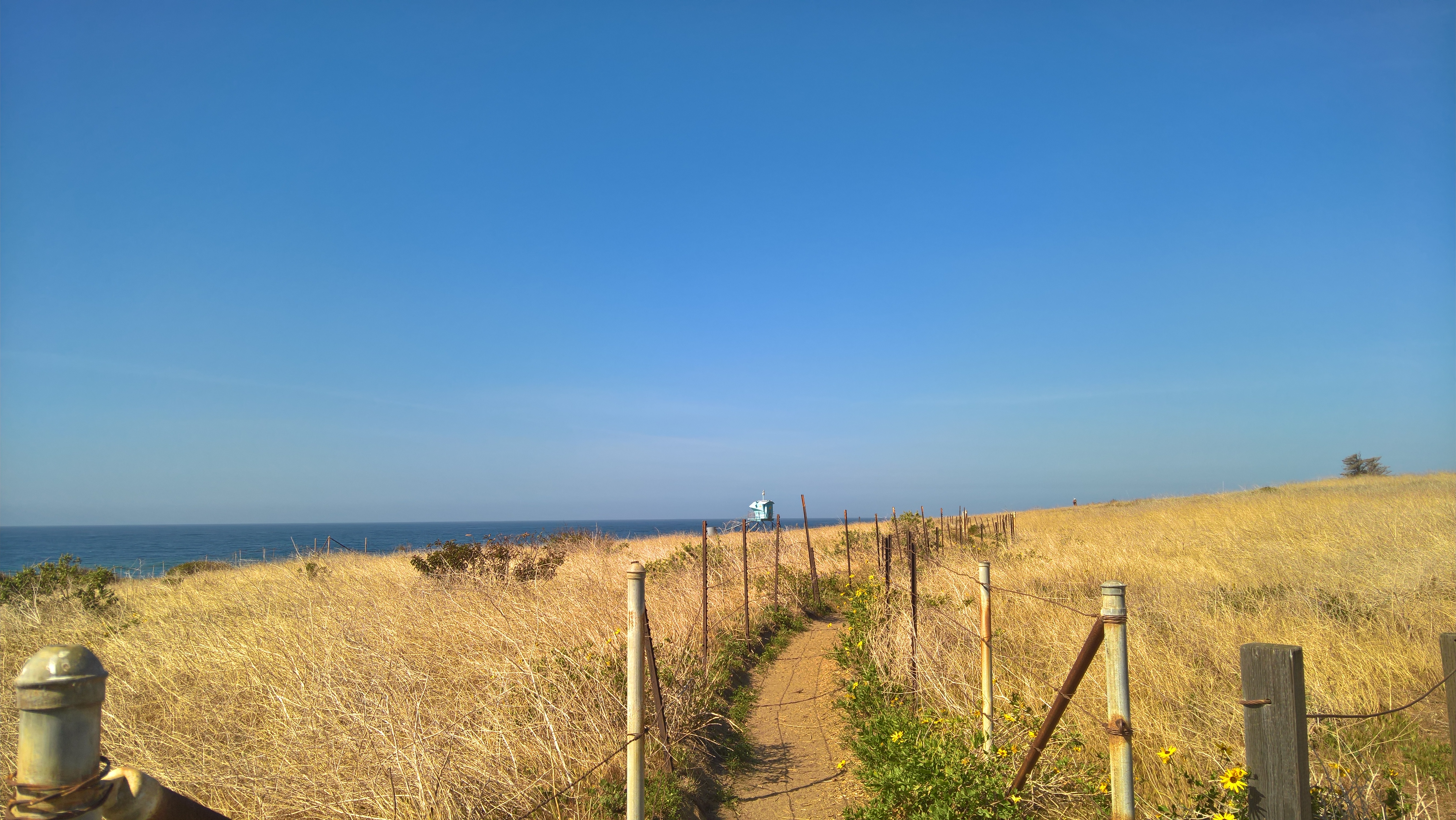
I use this South end incline to get to the cliffs above for an elevated view of the Pacific Ocean. From the cliffs, you can literally see the curvature of the earth. There have been days when the wind is at such a fevered pitch, it’s hard to keep my footing, but on other days, when the air is still, I stand and look out to forever. This is the view from the cliffs. There are two trails to take from the spot where I’m standing to the lifeguard station you see at the end. One trail hugs the edge, while the other meanders in serpentine fashion through the indigenous landscape, which changes month-upon-month. My favorite time is spring, when the yellow mustard seed and coreopsis is plentiful. All around, a vibrant yellow lifts my mood. A closer view. It is high tide in this photograph, which creates a series of coves.
This photograph was taken from the top of the stairs not far from the lifeguard station to a cove on the south side of Leo Carrillo State Beach. The cove is a perfect arc, and during low tide, you can walk along the coastline to the stretch of beach on the other side of the lifeguard stand.
A view of the cove from the sand.
A cove view from the life guard stand above. The yellow flowers you see here are coreopsis, which look like bouquets of daisies.
This is the serpentine trail that cuts through the landscape on the cliffs of Leo Carrillo.
The view at the end of the path that looks South: because my camera lens faced into the sun, this photograph darkened
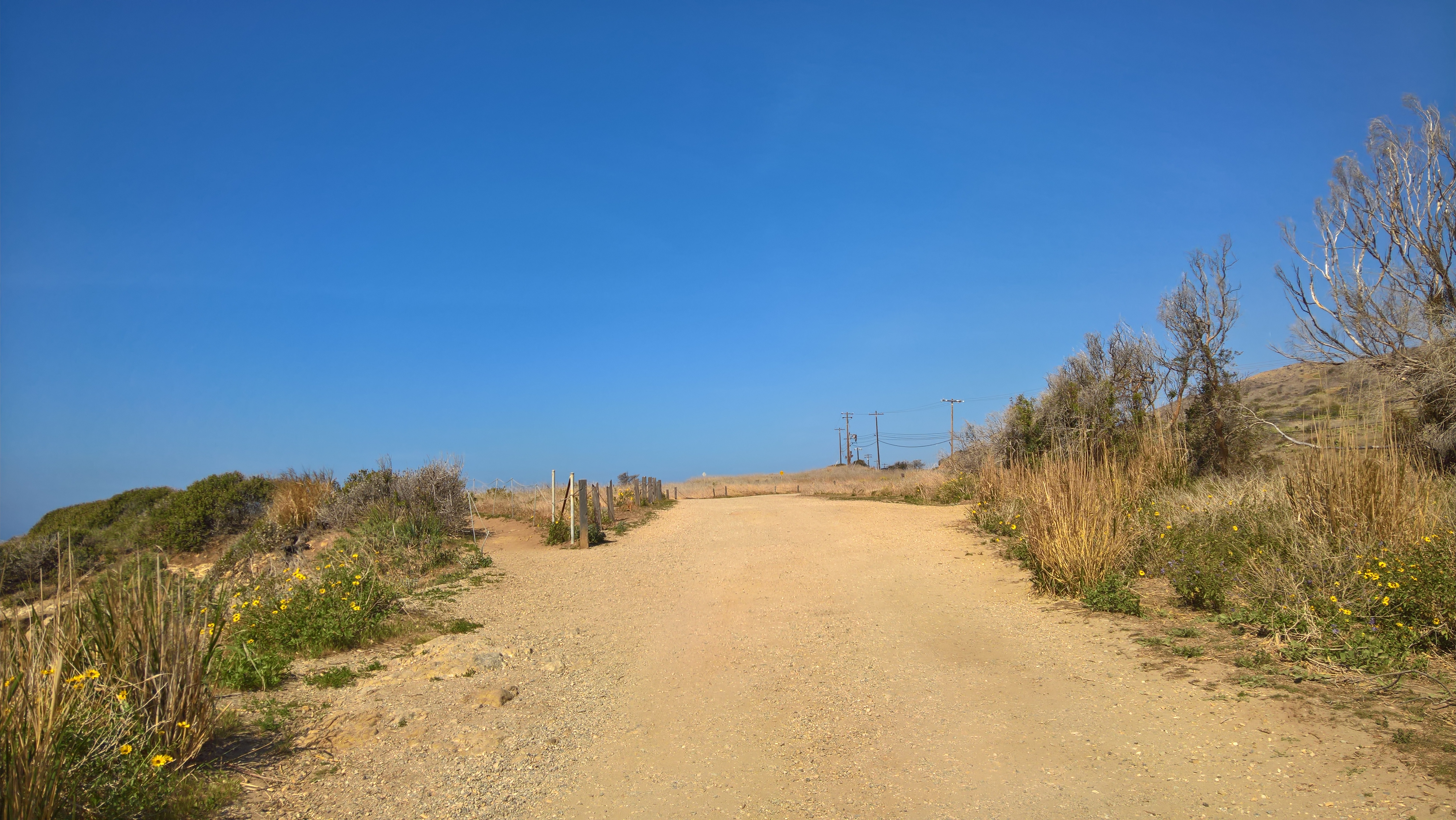
This is another path that leads from the lifeguard stand to the asphalt that leads to Leo Carrillo State Beach’s campgrounds, which is tucked in a heavily wooded canyon, and which you can’t see from the side of the Pacific Coast Highway.
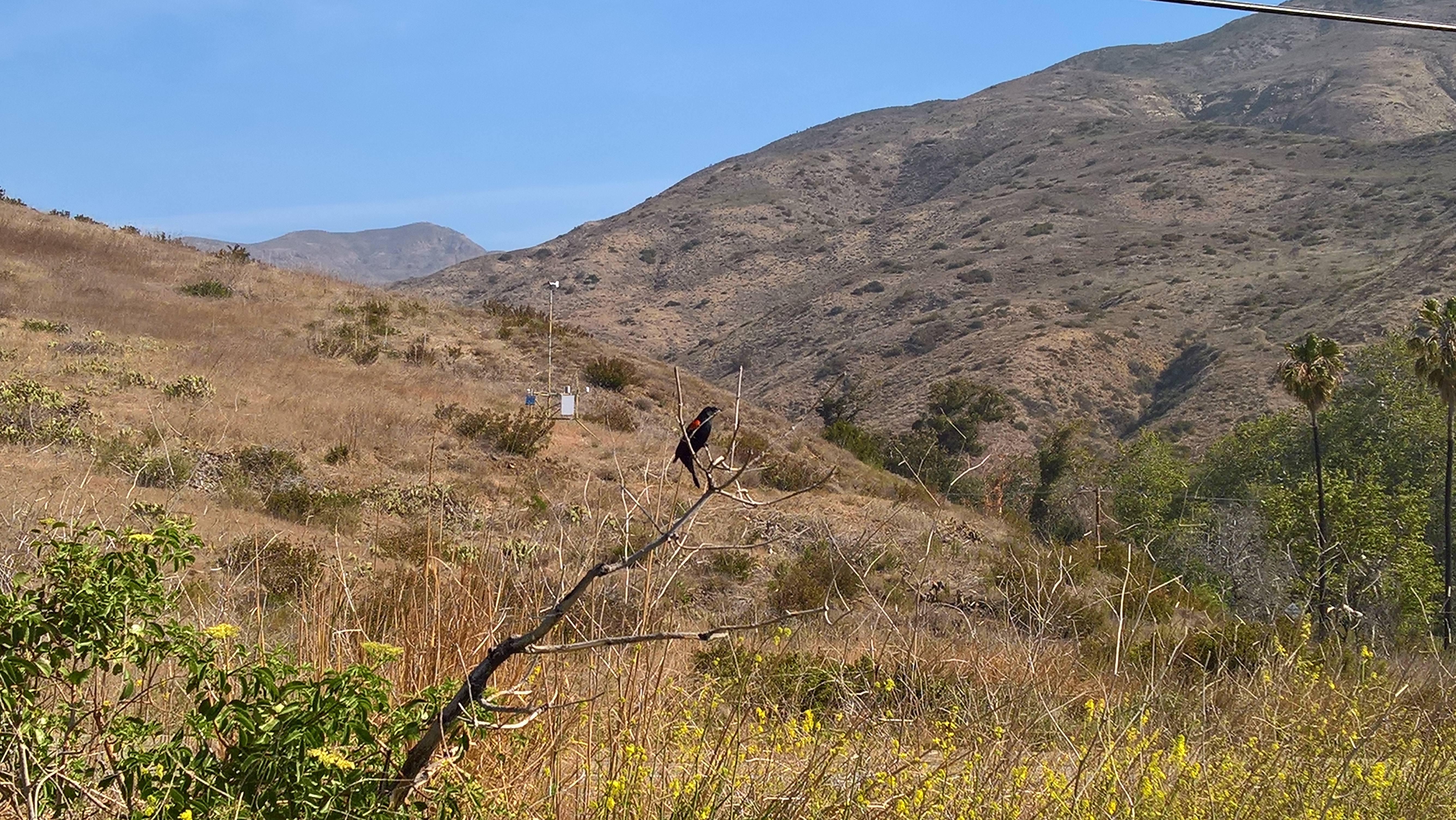
This is the view of the Santa Monica Mountain foothills on the other side of the Pacific Coast Highway– across from Leo Carrillo State Beach. I wanted you to have an understanding of that which can be seen as you drive through Malibu along the Pacific Coast Highway. These photographs were taken in Western Malibu, and it is a quiet, rural area I feel as if I have all to myself, save for the height of summer when people come to the beach. This area is not as popular among tourists as other parts of Malibu ( such as the infamous Zuma Beach) because it is far out, almost at the Ventura County line. As part of the California coastline, the area is specific, peculiar in nature, and part and parcel to the place I call home.
And here is a video taken of the tide at Leo Carrillo State Beach in Malibu!
Welcome to my neck of the woods! It’s springtime, and the weather is in the low 70’s. This is the south end of Leo Carrillo State Beach in Malibu, California, which is also known as North Beach in Western Malibu, almost at the Ventura County line.
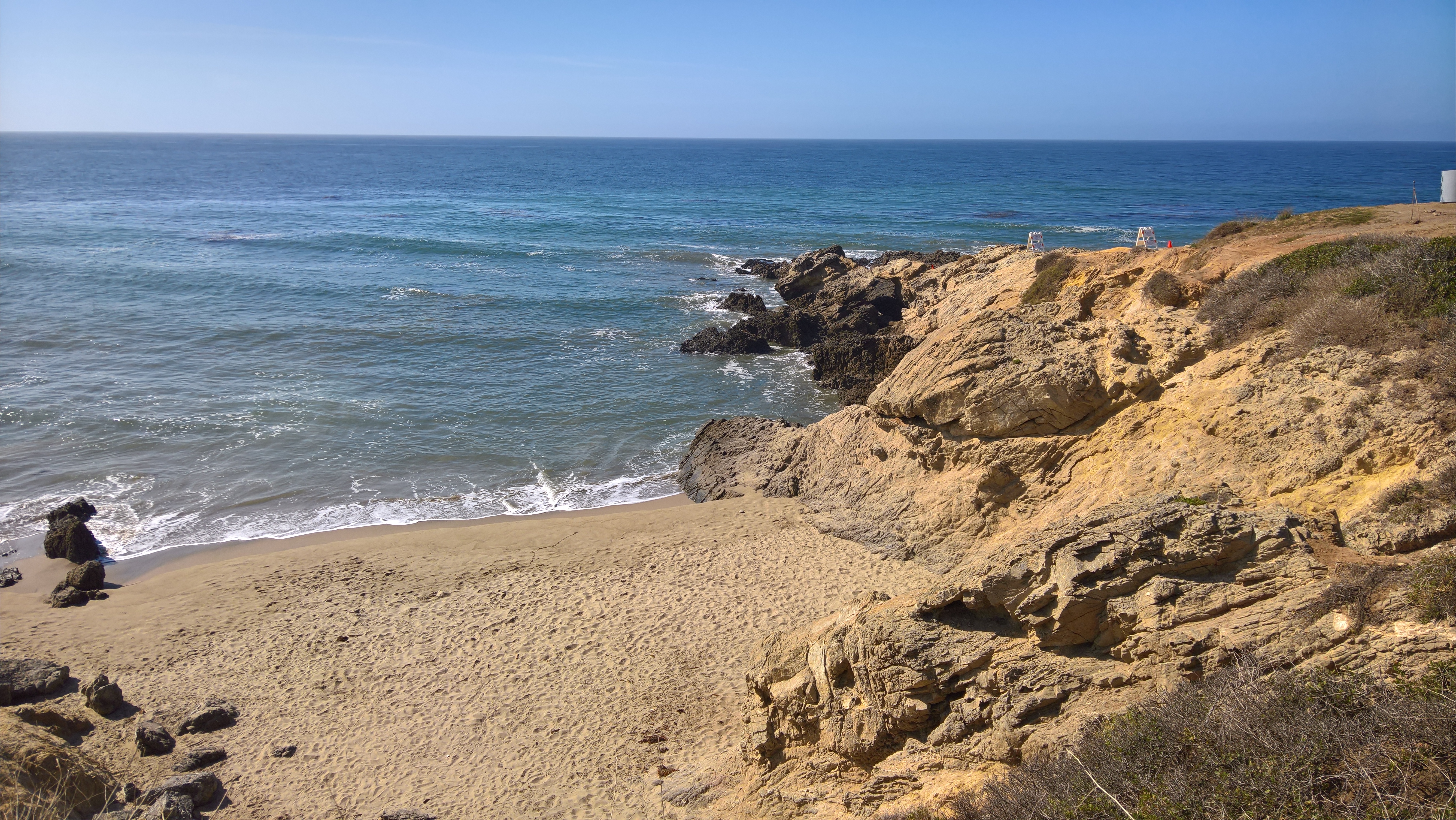
It was low tide when I took these photographs, and what I photographed here is typically under water.
Photograph taken from a cove!
The stairs from the cliffside walk to the cove
The Jetty. Photograph taken from the cliffs above.
Beach Boulders
Inbound!
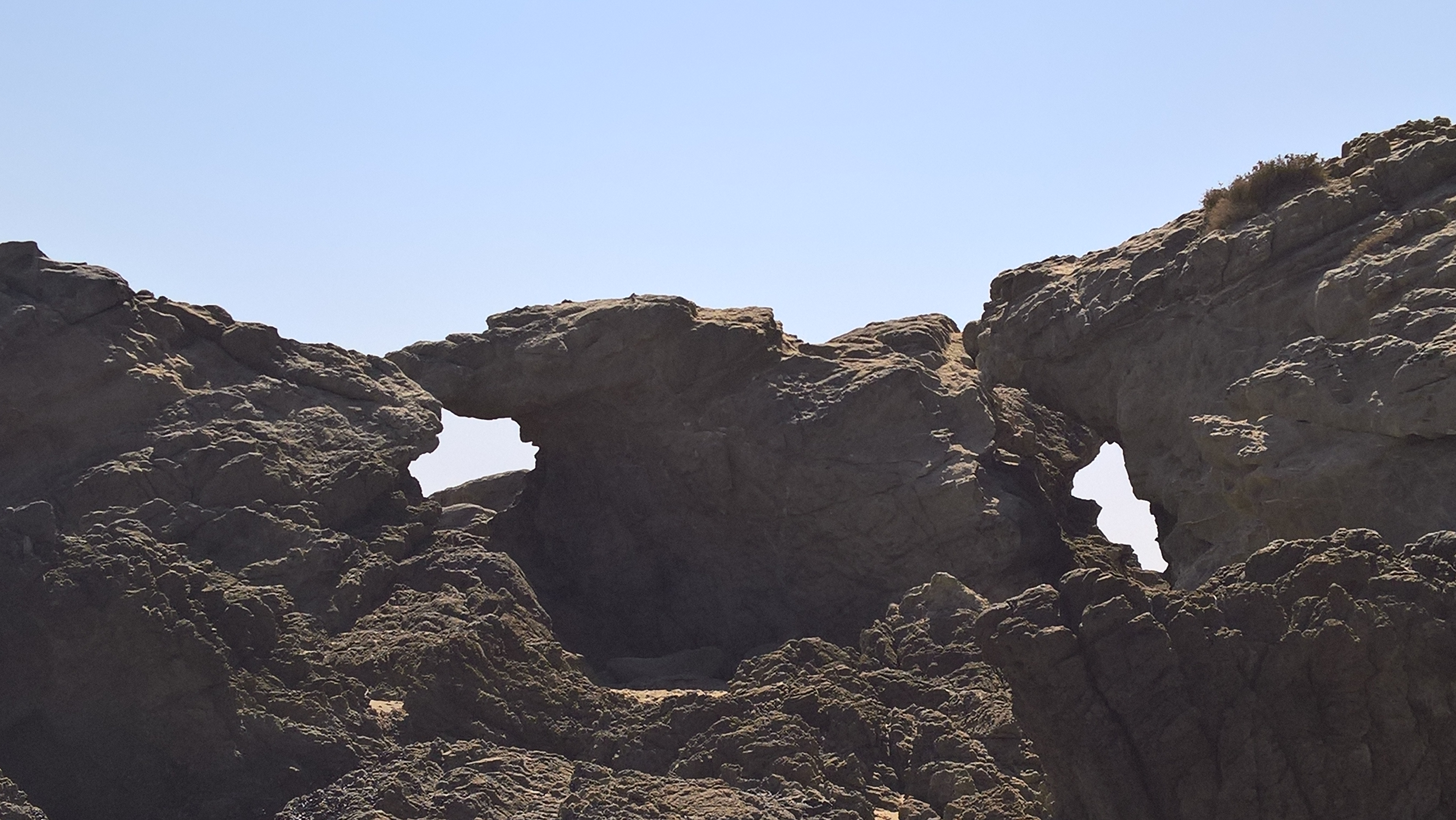
Photograph taken from the beach, with the camera aimed high to the top of this boulder formation!
This same formation as in the photograph above.
If you walk across this field, you’ll find the view below, which scans Nicholas Beach and flows into Leo Carrillo State Beach, where all the preceding photographs were taken.
Since you made it all the way to the end of this post, here is a video I shot from the cove at Leo Carrillo!
There are many more ocean wave videos on my YouTube channel, which I update regularly at :
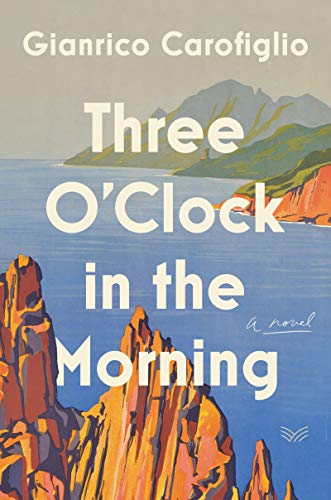
A fascinating novel, expertly written with an extraordinary premise, and a narrator you’d follow anywhere!
“Gianrico Carofiglio’s Three O’Clock in the Morning is profound in its simple delivery.”
A compelling, compact story whose focus transpires in forty-eight hours, Gianrico Carofiglio’s Three O’ Clock in the Morning explores a father and son relationship as the pair explore the coastal town of Marseilles. Seventeen-year-old Antonio is the only son of divorced, Italian parents. In high school and living with his mother, his rapport with his 51-year-old father is distant and strained until fate inexplicably intervenes in a manner that throws father and son together.
Award-winning, best-selling novelist Gianrico Carofiglio was born in Bari in 1961 and worked for many years as a prosecutor specializing in organized crime. He was appointed advisor of the anti-Mafia committee in the Italian parliament in 2007 and served as a senator from 2008 to 2013. Carofiglio is best known for the Guido Guerrieri crime series: Involuntary Witness, A Walk in the Dark, Reasonable Doubts, Temporary Perfections and now, A Fine Line, all published by Bitter Lemon Press. His other novels include The Silence of the Wave. Carofiglio’s books have sold more than four million copies in Italy and have been translated into twenty-four languages worldwide.
Since 2002 Gianrico Carofiglio has been writing crime novels, at first in his spare time, starring a recurring main character, a widely-read, jazz-loving philosophical prosecutor who thinks deeply about good and evil (he has retired this character now). In total he has sold more than 4m copies. He had wanted to write since he was a child, but didn’t until he was in his 40s: “I was so scared of trying I thought I had better really try and understand this problem.” It took nine months to write Involuntary Witness; he had already lived the material. “And then I had my answer, it sold over a million copies all over the world.”
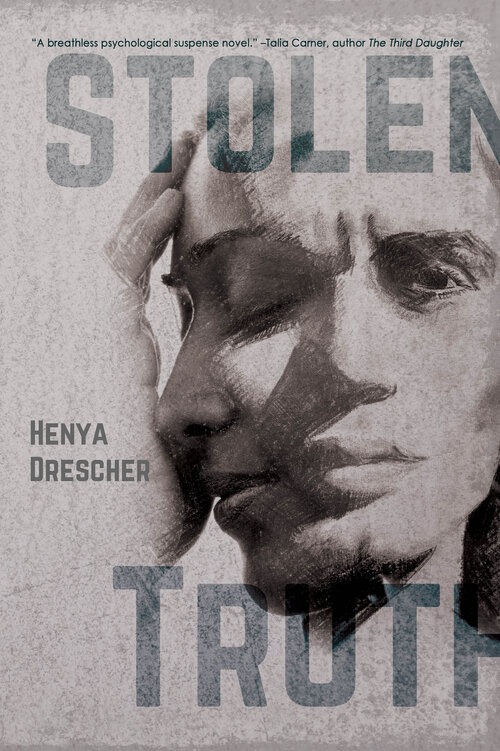
Congratulations to Henya Drescher on the release of Stolen Truth!
An edge of your seat, twisting, turning, unpredictable story that will have you turning its pages as you try to discern what REALLY happened! A sure pleasure for thriller readers!
Book Description:
Bree Michaelson wakes up one day feeling drugged and confused, to find her boyfriend, Todd Armstrong, and her infant son, Noah, missing. But why does no one believe her? Lacking witnesses to her pregnancy, a birth certificate to prove a child was born, or a marriage license to prove her invisible husband ever existed, Bree will find it impossible to get the help she so desperately needs to find her baby.
Nevertheless, despite suspicious friends, family, and authorities, Bree sets out to find Todd and Noah. Only when her sister commits her to a hospital psych ward that Bree begins to doubt her own story. In the past, she suffered from a false pregnancy. Is this an imagined recurrence? She must fight to find the truth of what has happened to her—or admit that is all in her own mind.
About the Author:
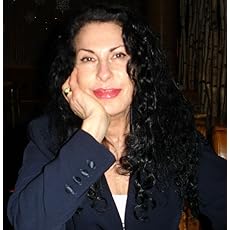
Henya Drescher is often found reading a book, and that book will most likely be a psychological thriller, which she writes. Writing novels was always her wish, and now, with STOLEN TRUTH, it has become a reality. When not absorbed in writing her third novel and spending too much time on the computer, Henya’s passions include lifting weights, spinning, and cultivating her large garden. She and her husband live in New York City.
From author, Walter Cummins:
“Henya Drescher possesses a gift for creating the best kind of mystery, going far beyond the simple question of who did it to ask what was done and why and who can be trusted and believed. The novel captures the fraught frustrations of Bree, who may or may not have been the mother of a kidnapped newborn, as she plunges into her quest, facing many internal and external uncertainties. Bree bears the history of being a troubled woman, yet she is passionately determined. The complexities of her character drive the story through accumulating dead ends and detours. Her desperation pulsates through the pages of Stolen Truth as both she and the reader crave answers.”
From the Author:
I write suspense thrillers in which my heroines respond fearlessly to testing circumstances, satisfying a universal appeal by allowing readers a peek into their challenged lives
I would describe my psychological thrillers as tense with the twists and turns that keep the adrenaline flowing and activate a part of the brain that are typically not stimulated. My heroes are individuals who make difficult choices and sacrifice and others’ good. Like the characters, we struggle to figure out what is going on. And with a final shocking twist, the tension gives away exhilaration.
It is hard enough to pen a thriller that grabs you from the start and compels you to get on the journey with the protagonist. It is much harder when she is an “unreliable narrator,” one whose perceptions you doubt—just as do all the people she’s trying to convince that she’s been married, pregnant, and had a baby who has disappeared along with his father. Yet, in her sure, lyrical prose, Henya Drescher does a magnificent job of building a compelling, suspenseful story that unfurls in the wooded settings of the Berkshires (NY). The more you are swept into the story, the more you question who and what to believe. Has Bree been a victim of a manipulative man who isolated her from her family and her environment only so she can produce a child for him, or is Bree, a young, bright woman with a disturbing past of psychological delusions is just imagining this convoluted plot? In the tradition of “Gone Girl” and “The Girl on The Train,” STOLEN TRUTH will keep the readers’ attention in a can’t-put-it down, unforgettable story, that culminates with a brilliant, totally believable ending.
This was a fast read with a few surprises to keep it interesting. The character Bree wakes from a drug induced nap to discover her family missing and the house freshly scrubbed and painted. She tries to get help but not everyone believes her wild story.
Did it really happen? Was she imagining that she ever had a husband and a child? Where was the woman hired to help with childcare?
Bree must piece it all together with few clues to go on.
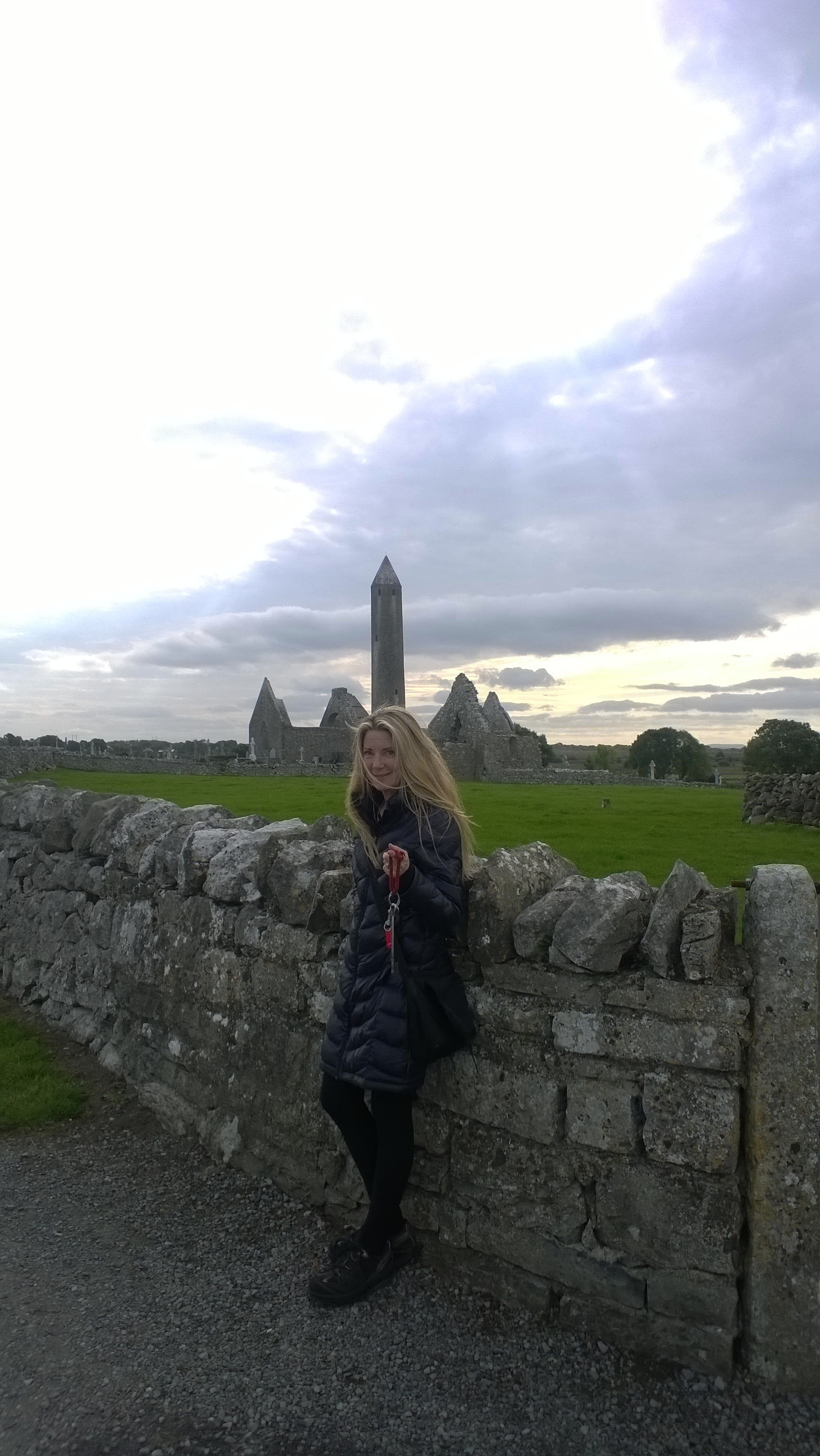
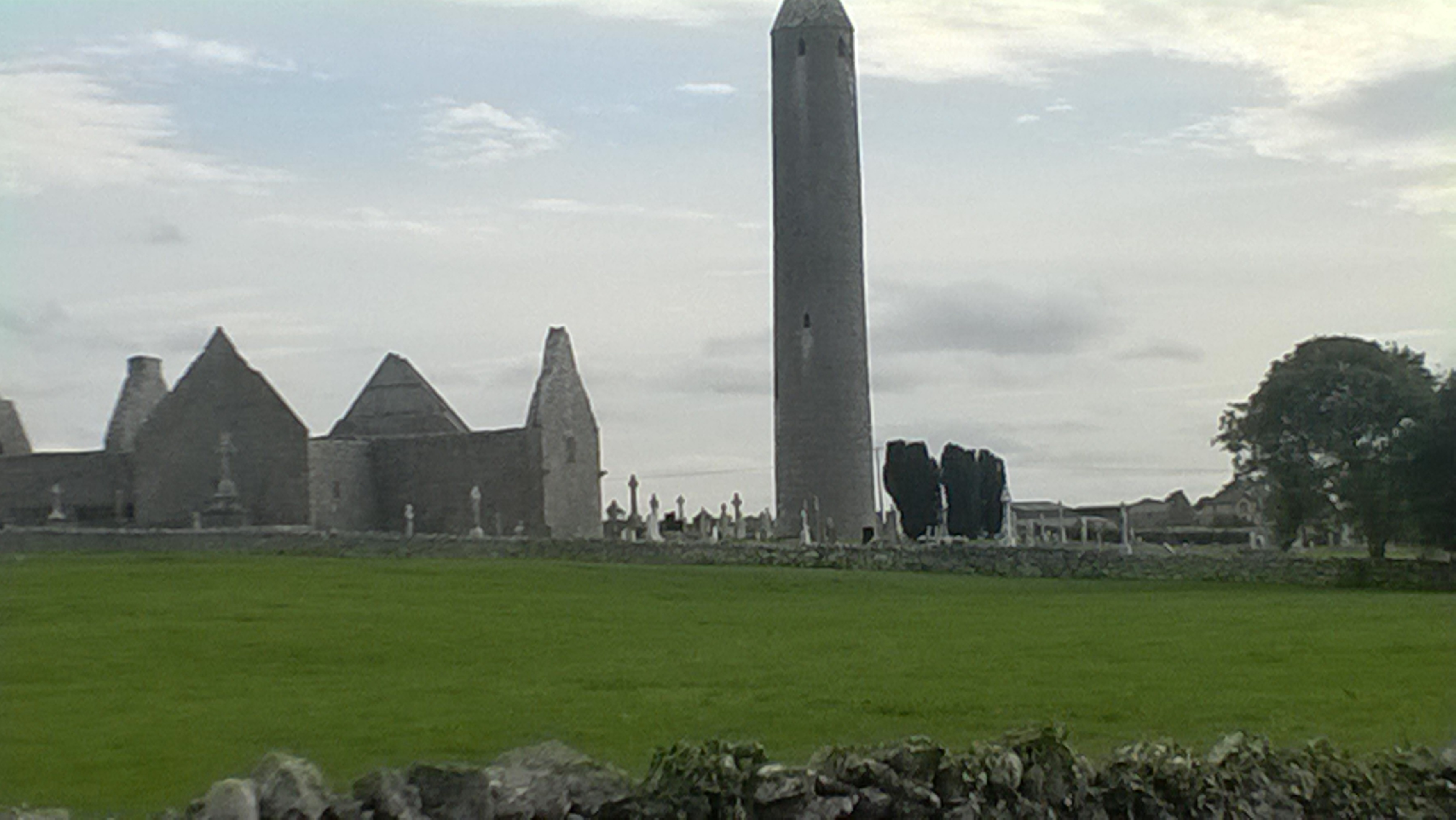
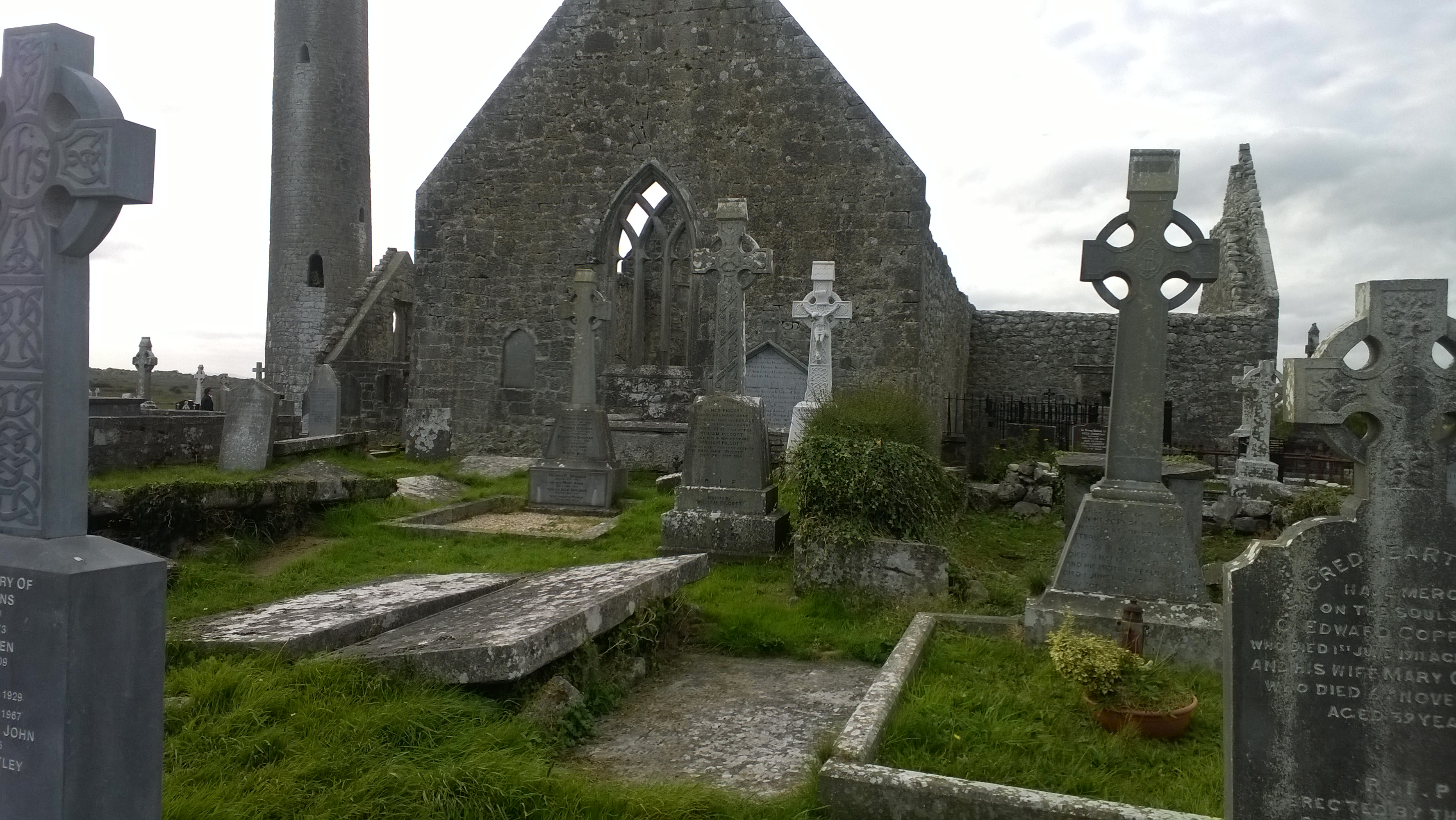
You’ll see in this photographs that I’m standing against a gray stone wall on a windswept day in the middle of an Irish field, with what are obviously the ruins of a monastery behind me.
Observant people might ask why the monastery is behind me, and I am holding a set of keys in my hand as if it were the bigger focal point. Here’s the story.
We kind of knew where we were heading, my friend Tama and I, and by this I mean we had a loose plan with regard to how we were going to spend the afternoon in Gort, Ireland. We’d been freewheeling across the countryside in a rented car the size of a match box, with its steering wheel on the right side, while we drove on the left of the two-lane road as if trying to best a test for dyslexia. Tama is a devout Catholic, who has a thing about historic churches, which is why we couldn’t have adhered to a plan had we had one. “Stop,” Tama would shout every time we spied one of the dim, ominous structures off in the distance. We’d scratch the gravel driveway and wander inside, our solitary footsteps crossing the marble floor in a tread- ye- lightly and humble yourself echo off the cavernous vaulted ceiling. We did this so many times that after yet another sweep inside a church, I’d take to wandering the halcyon graveyards to read the Irish tombstone inscriptions, while Tama would light a red votive candle and fall to her pious knees.
I thought I was alone in the yard when a voice came sailing from behind me. “Have you found your way to Kilmacduagh monastery?” it queried. I turned to find a young woman taking in my outlander attire of three quarter down jacket and rubber soled shoes. “It’s just up the road there,” she continued, pointing. “Just knock on the door of the middle house across the road and ask Lily for the keys.”
I was standing behind Tama when she knocked on the front door of a low slung house on a sparsely populated lane. Across the lane, placid fields of damp clover shimmered in the afternoon mist as far as the eye could see. On one verdant field, a series of interspersed ruins jutted in damp metal-gray; some without roofs, some with wrought-iron gates, and one in particular beside an impressively tall stone spire, which had two windows cut in vertical slashes above a narrow door raised high from the ground.
Immediately the front door opened, and a pair of blue water eyes gave us the once over with an inquisitive, “Yes?””Are you Lily? We’re here for the keys,” Tama said.”The keys, is it? Just a moment there,” the woman said, and after closing the door, she opened it seconds later and handed us a set of long metal keys. “Just slip them through the door slot when you’re through,” she said, closing the door with a quick nod.I can’t say there was any indication of which key went to what, among the cluster of gates and doors throughout the 7th century monastery called Kilmacduagh, but we figured it out. I was so tickled over the keys that I couldn’t get over it. “Is this weird?” I said to Tama. “We could be anybody. It’s not that there’s anything anybody could steal, but that’s not the point.” I could wax rhapsody over the hours we spent unlocking gates and pushing through doors in the eerie, hallowed grounds, but that’s not my point either. My point is that’s Ireland for you: a stranger offering directions without being asked, Lily handing over the keys like an afterthought, and Tama and I trolling the grounds of sacred space when nobody else was around. But suddenly a German couple appeared as we were on our way back up the lane. They looked at us wide eyed and queried, “What is this place?”
“It’s a 7th century monastery,” I said, “here, take the keys and slip them through Lily’s door when you’re through.”
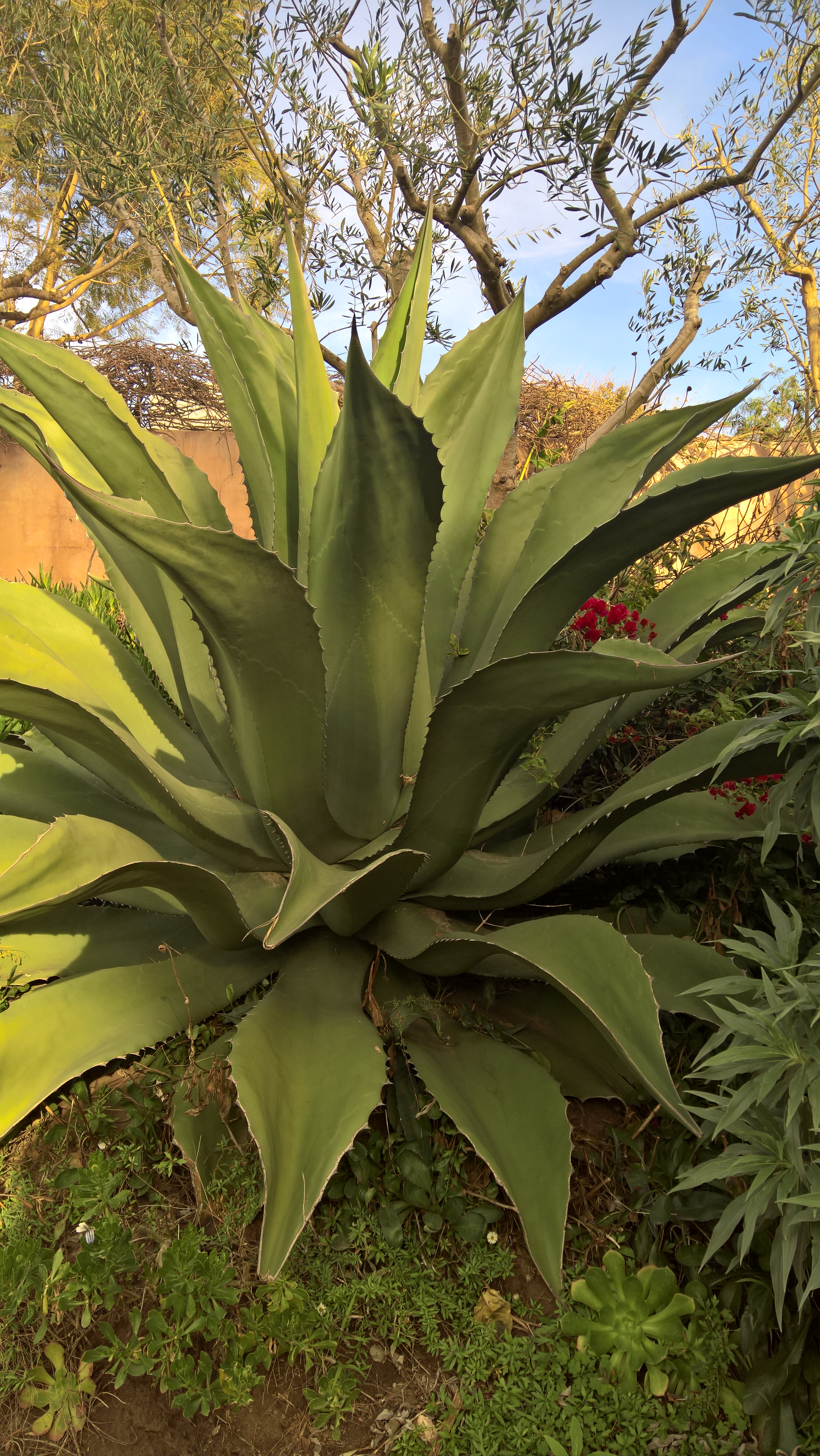
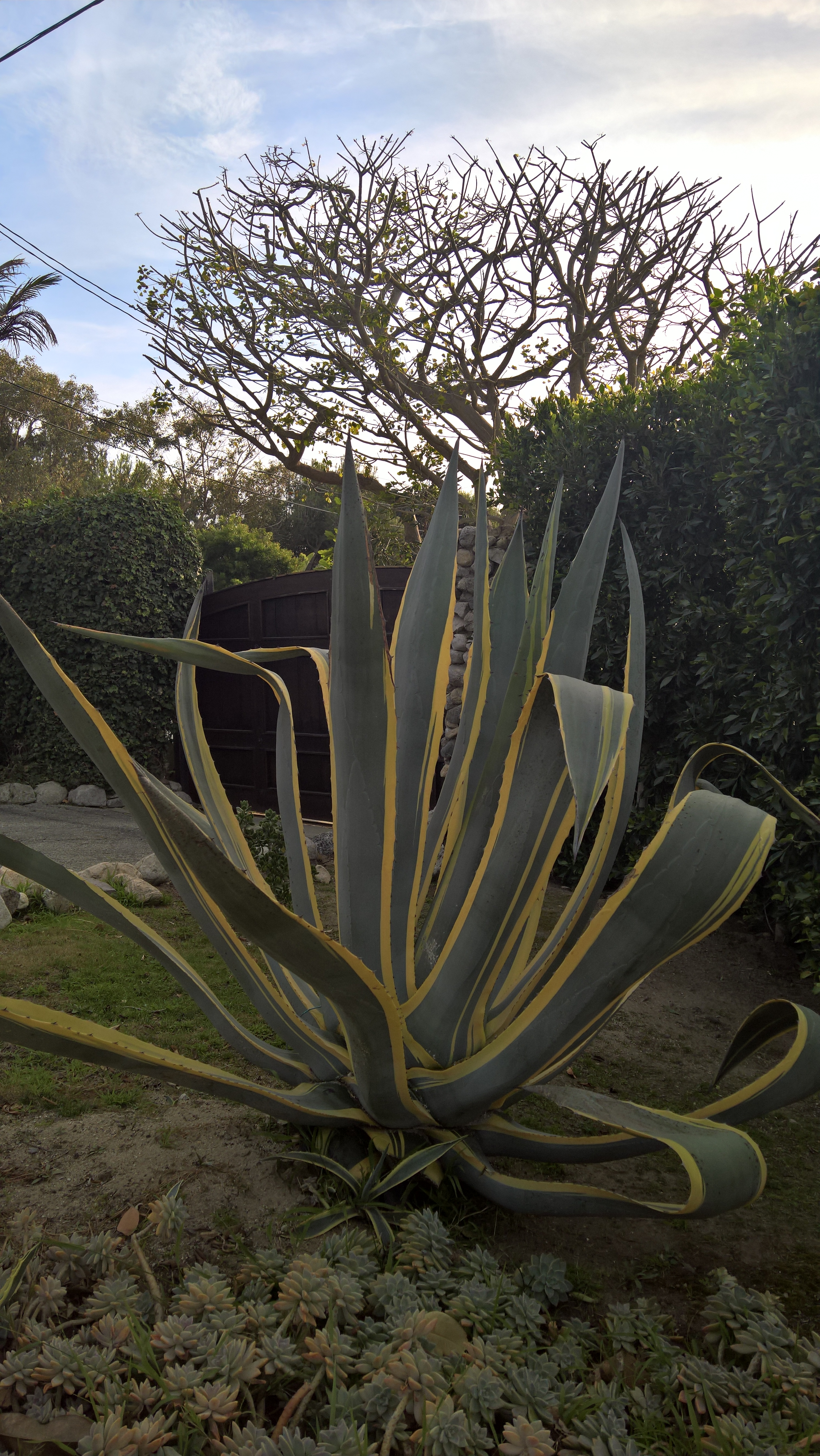
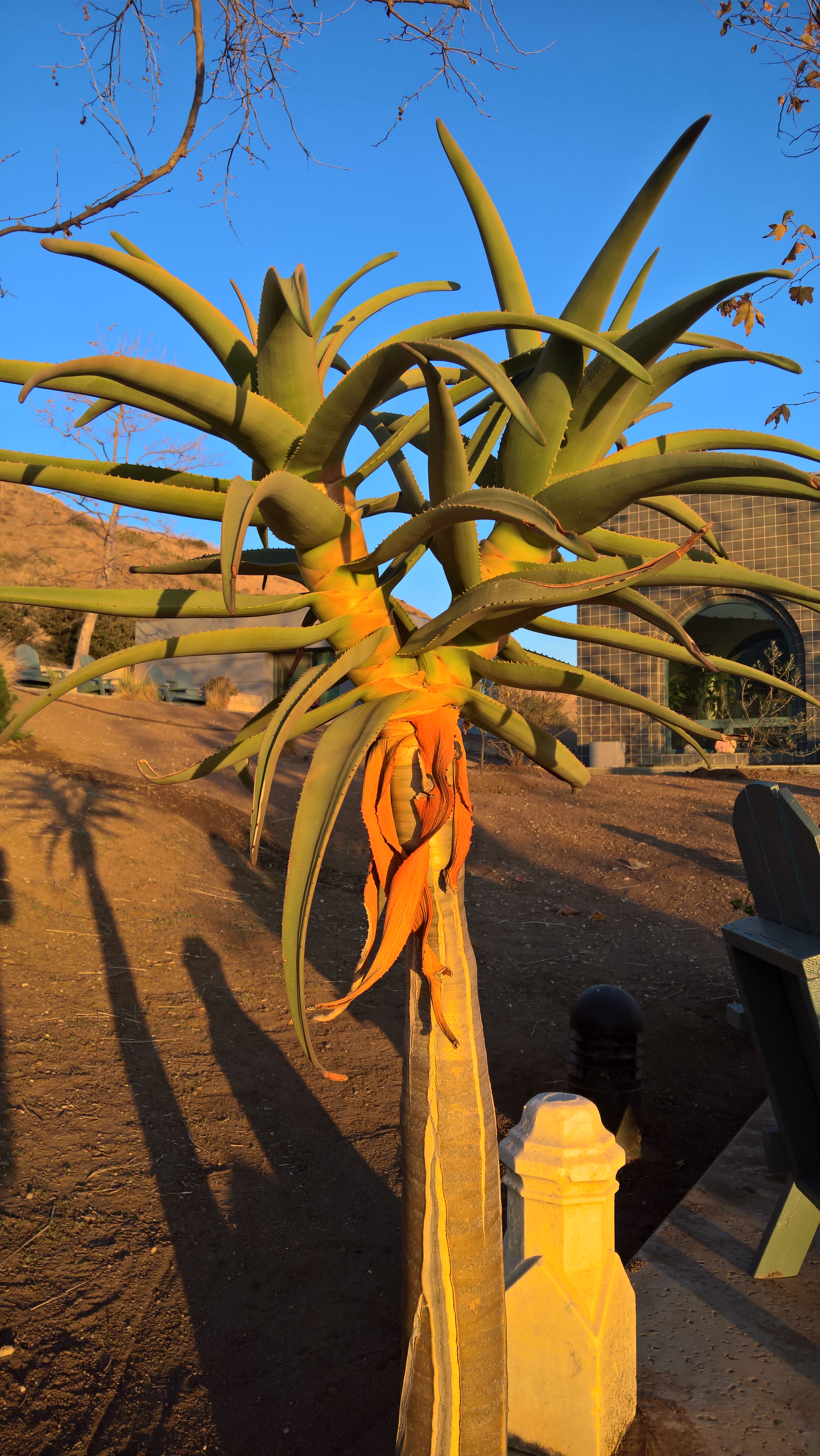
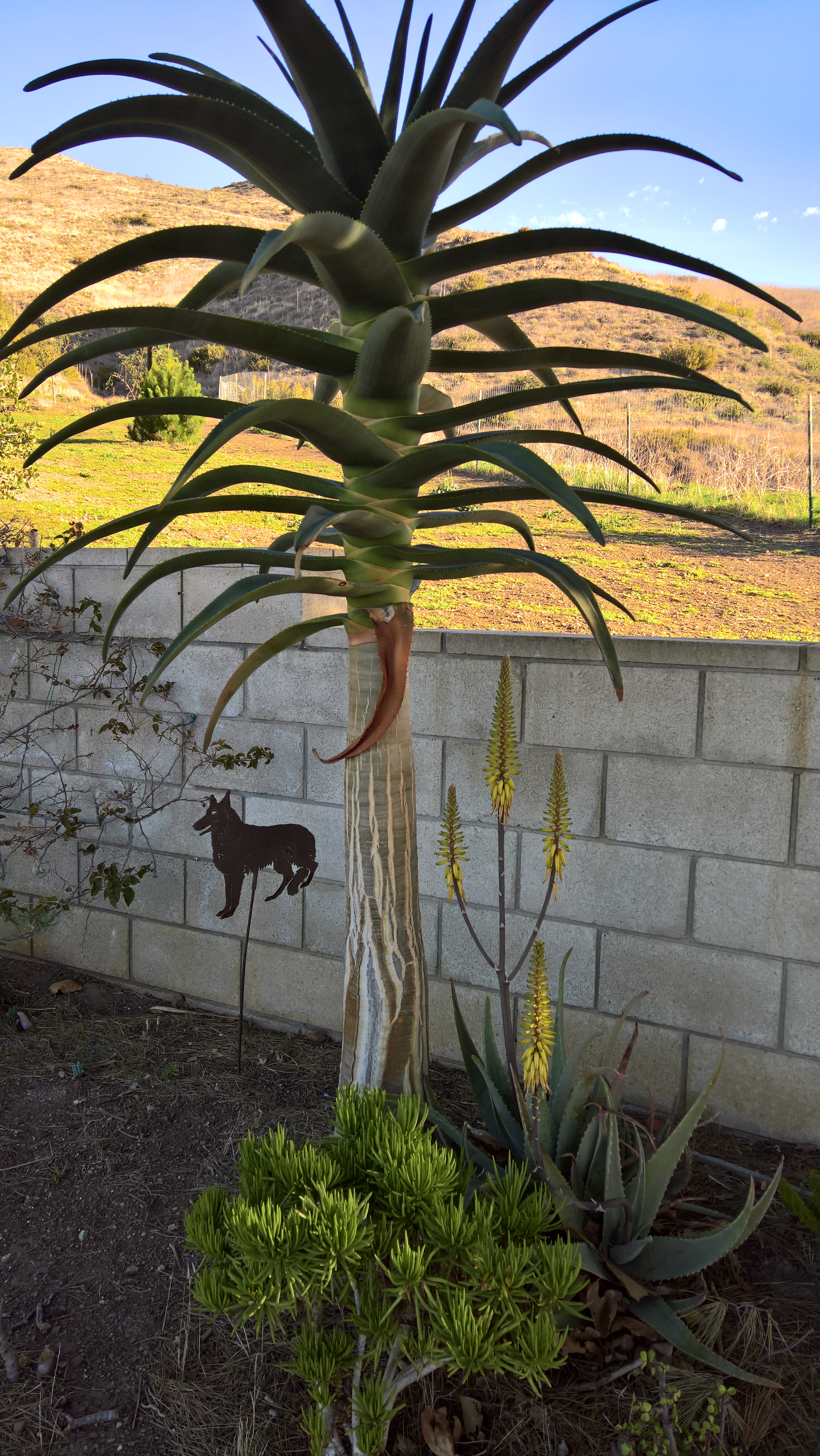
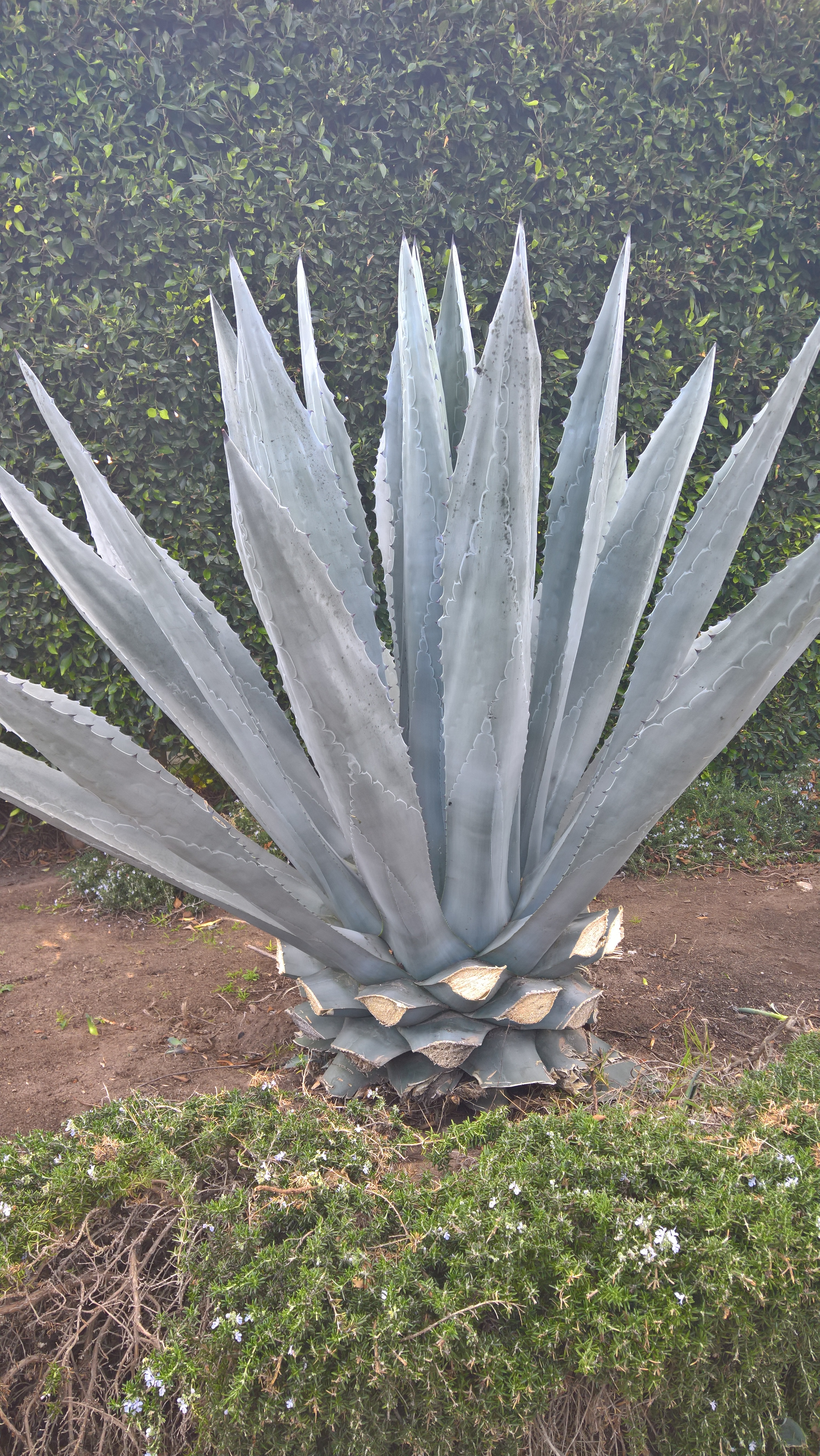
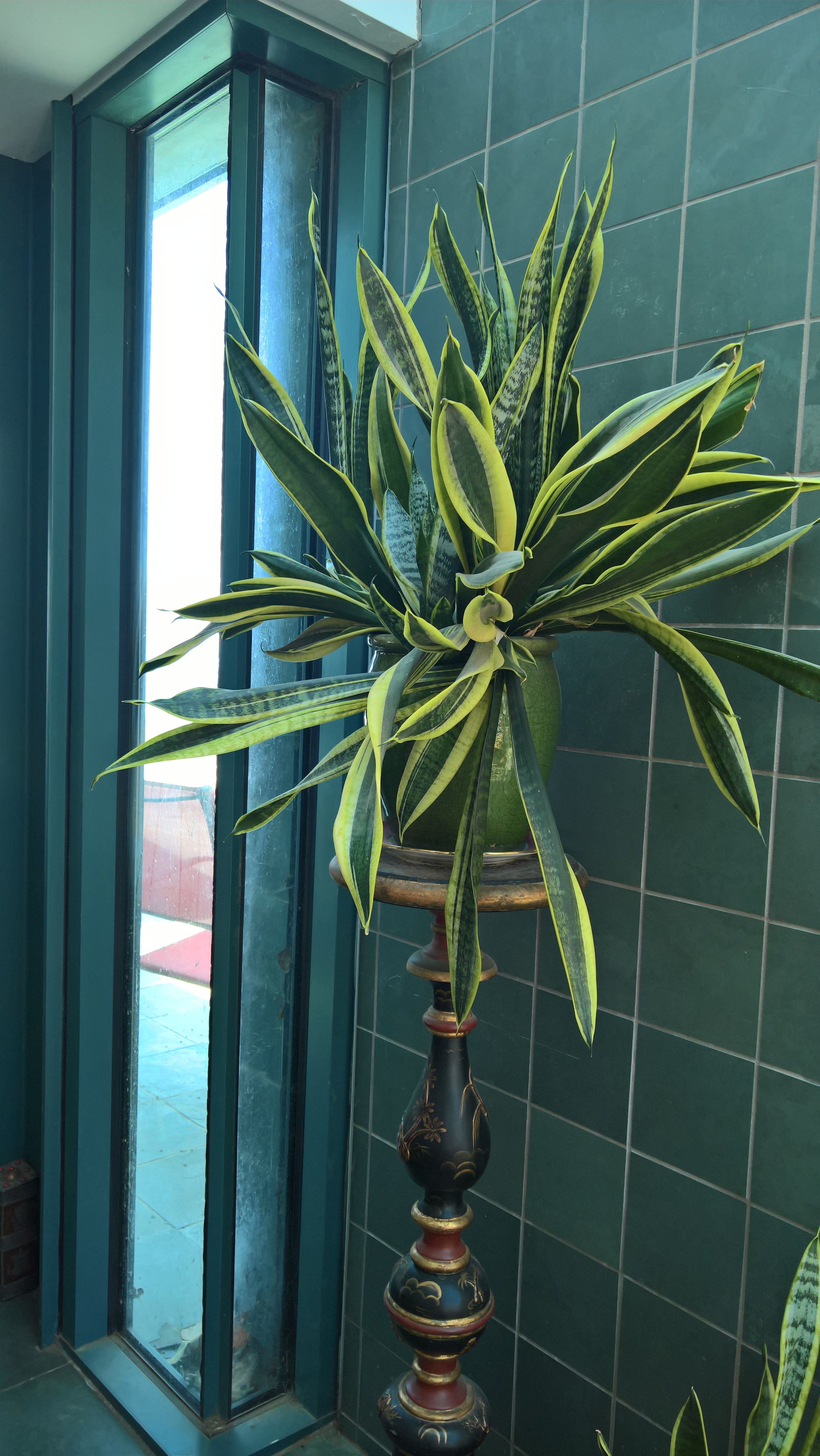
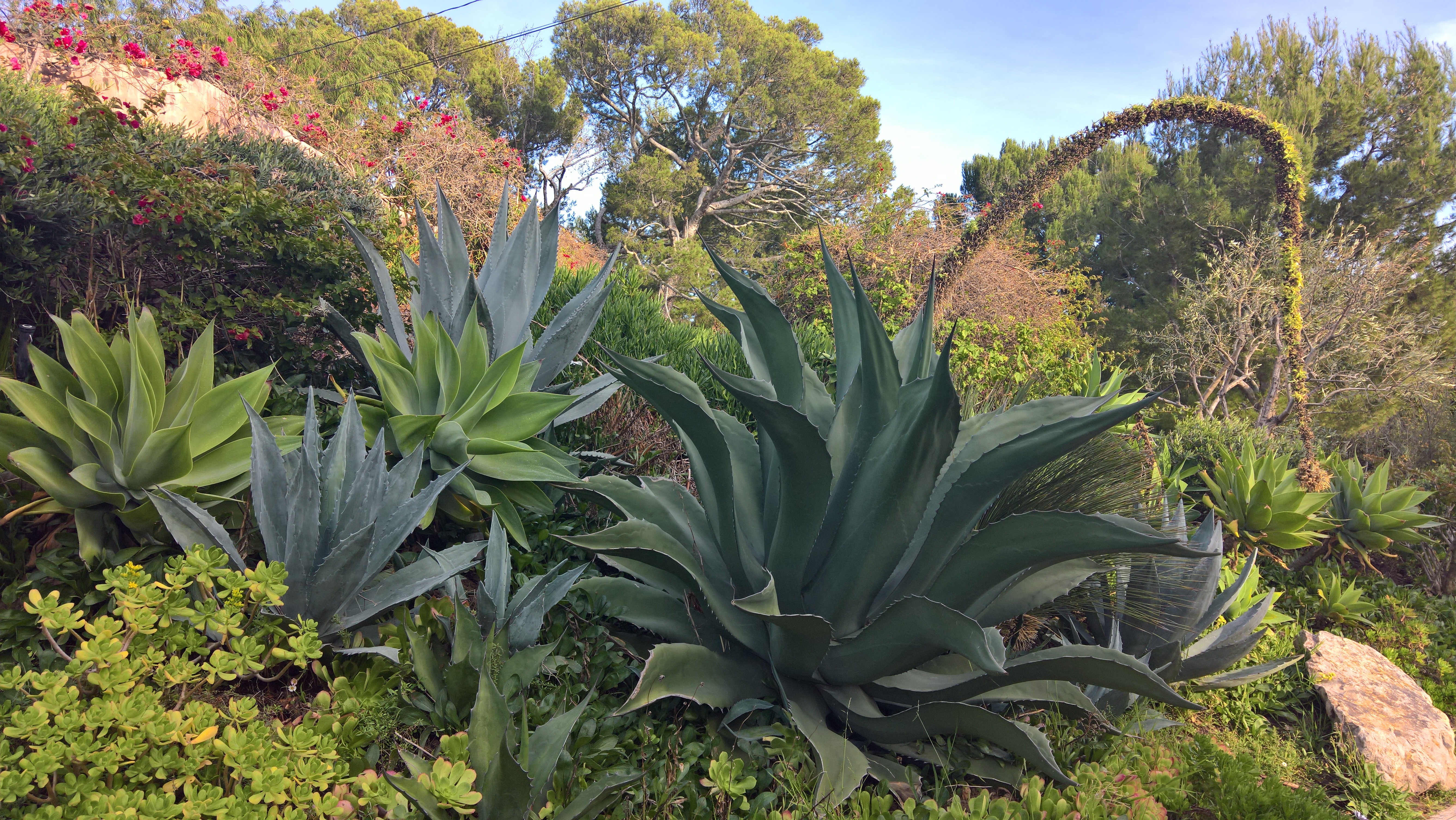
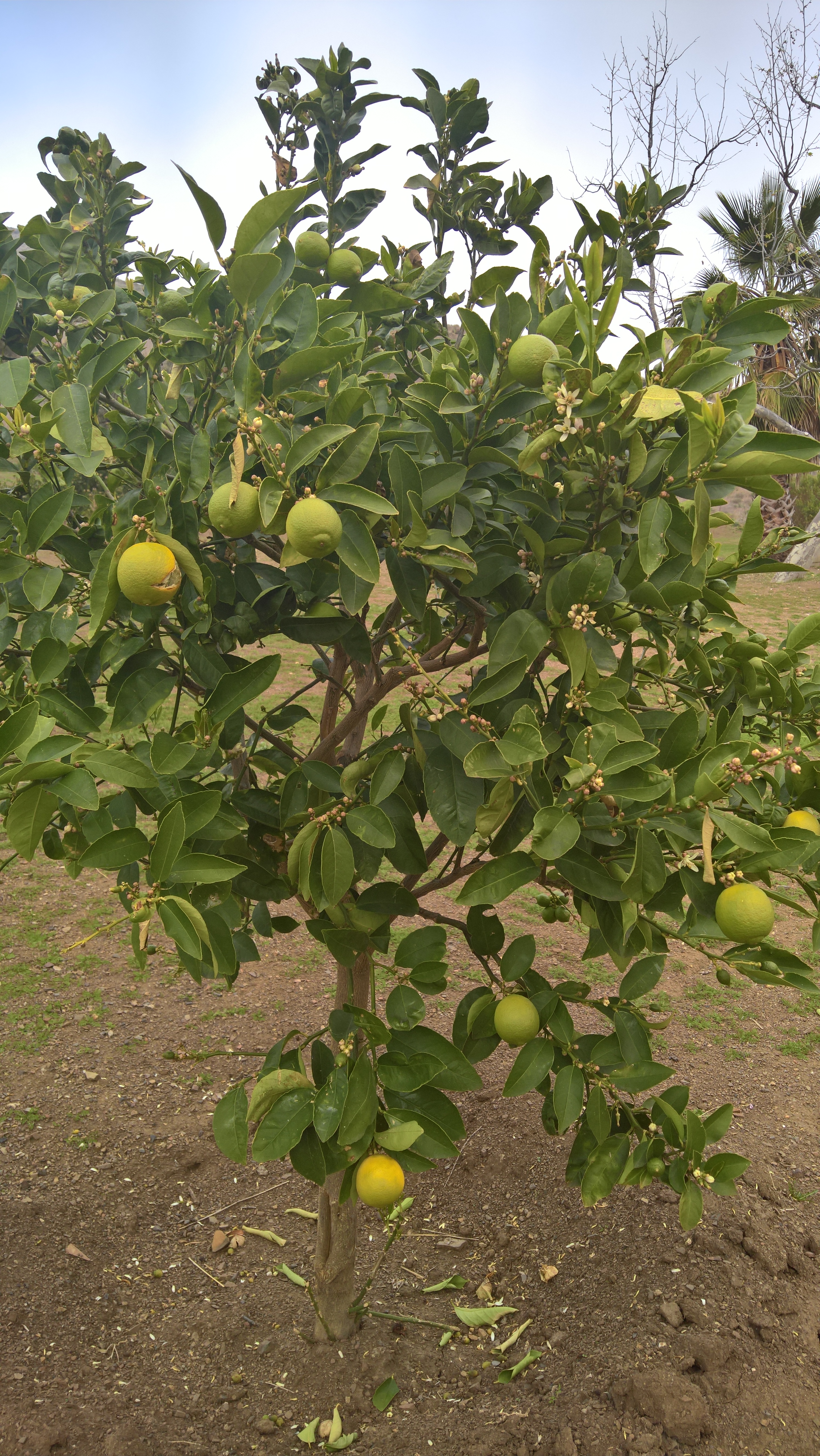
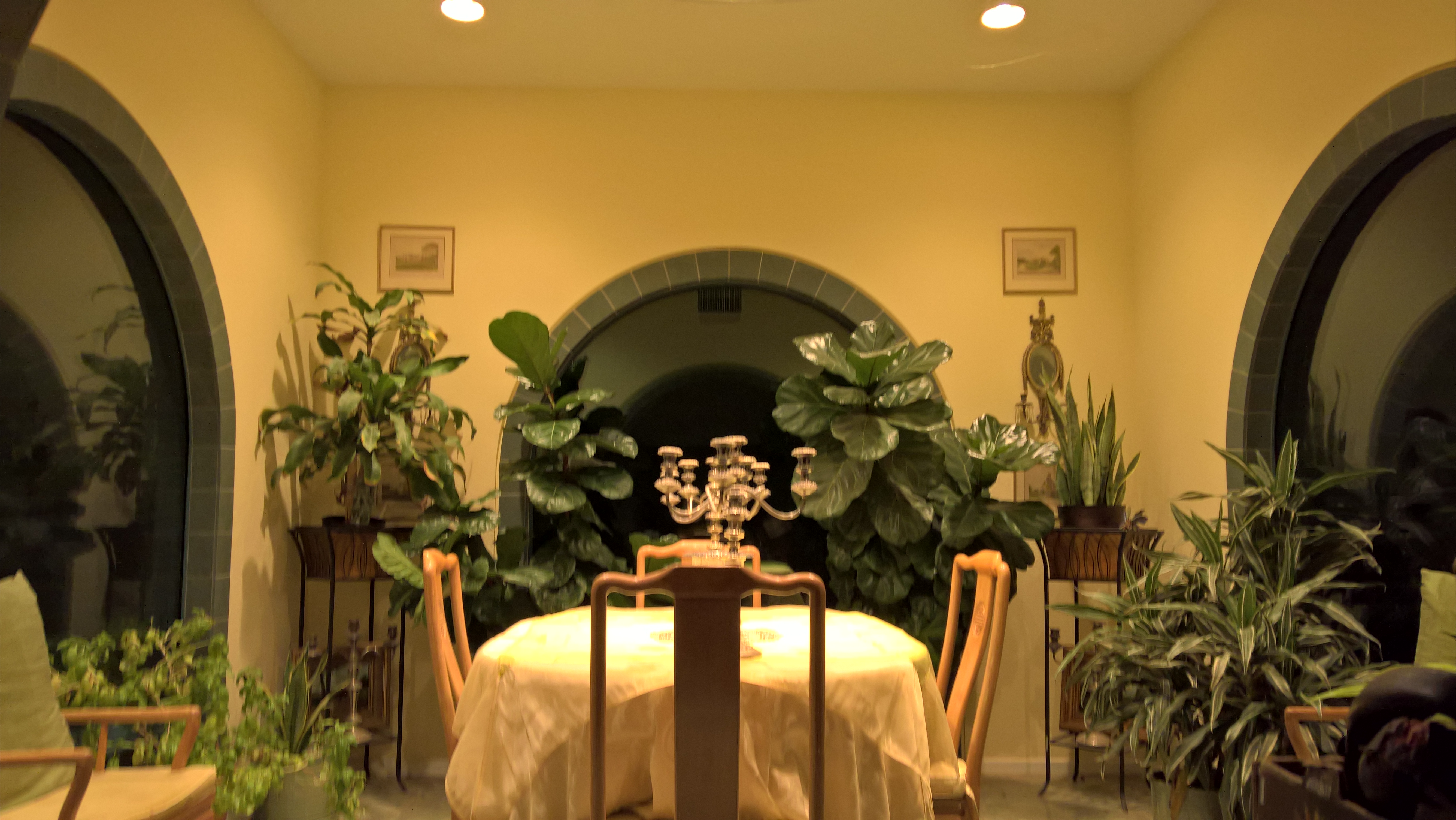
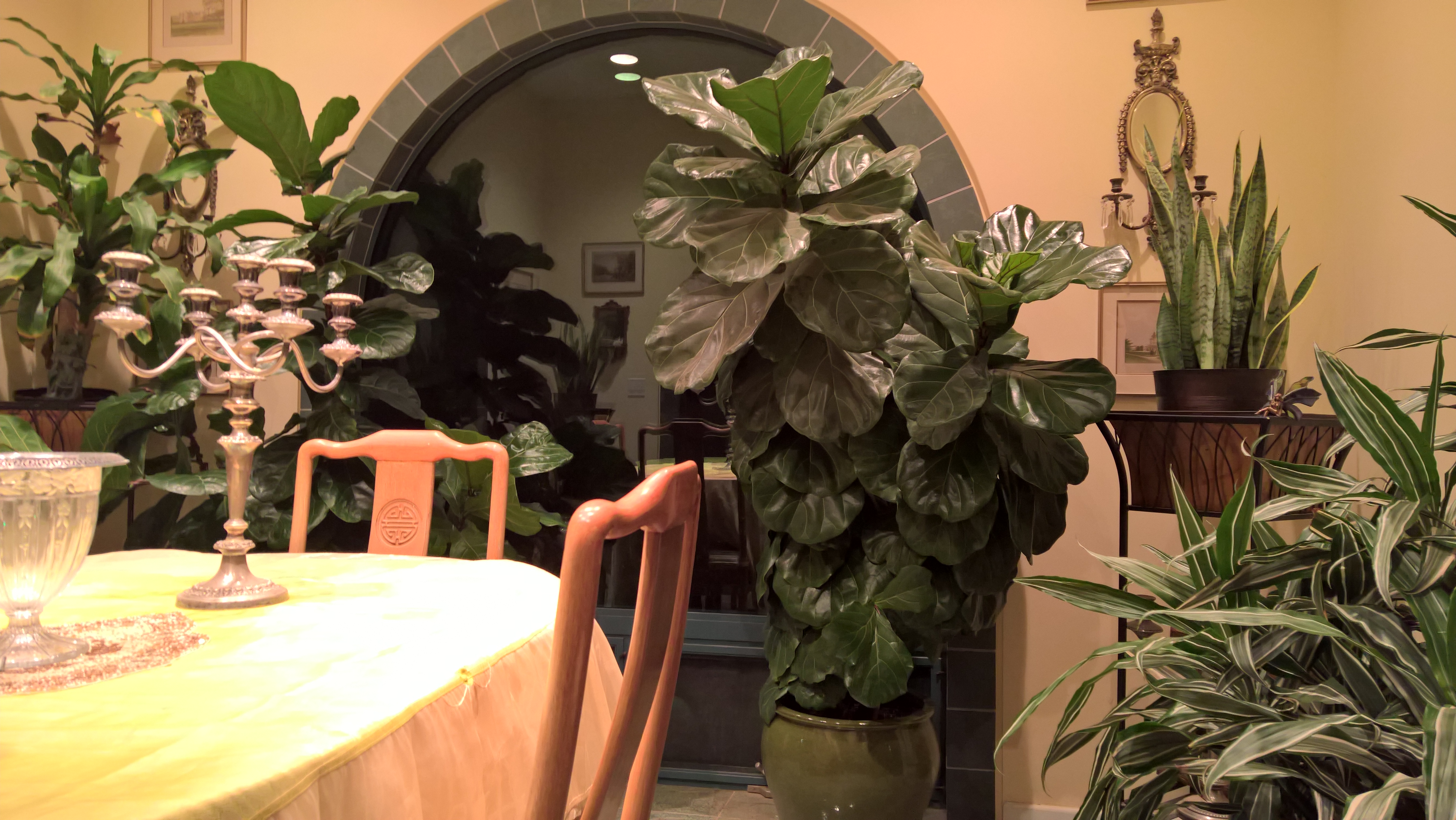
I have a deep appreciation for plants, both indoors and out. When plants grow in Southern California, they flourish year round, and often reach monstrous proportion. As an ice storm inconveniences the American Southeast, I’m counting the many blessings of living in sunny, Southern California. Many of the photographs included in this post were taken in a Malibu, residential neighborhood called Point Dume, while other photographs were taken in my yard, and some inside my house.
Aloe VeraMurphyi AgaveDouble Aloe Vera plantAgava AttenuataAloe Vera
Aloe Vera
Mother in Law’s TongueSucculents on the side of the road, Point Dume, Malibu, California From a lemon grove in Somis, CaliforniaThis 2 year old lime tree is in my yard!The current state of plant affairs in my dining rom!Close up of one of two potted fig trees. They are now 3 years old. In early January of this year, our three German shepherds got in on planting our live Christmas tree! Each year, we buy a live pine tree for Christmas and add it to our yard. Currently, there are 20 Christmas trees in our yard and 40 other pine trees, which makes a grand total of 60. A long view of a lemon grove in Somis, California, 30 minutes away from Malibu.
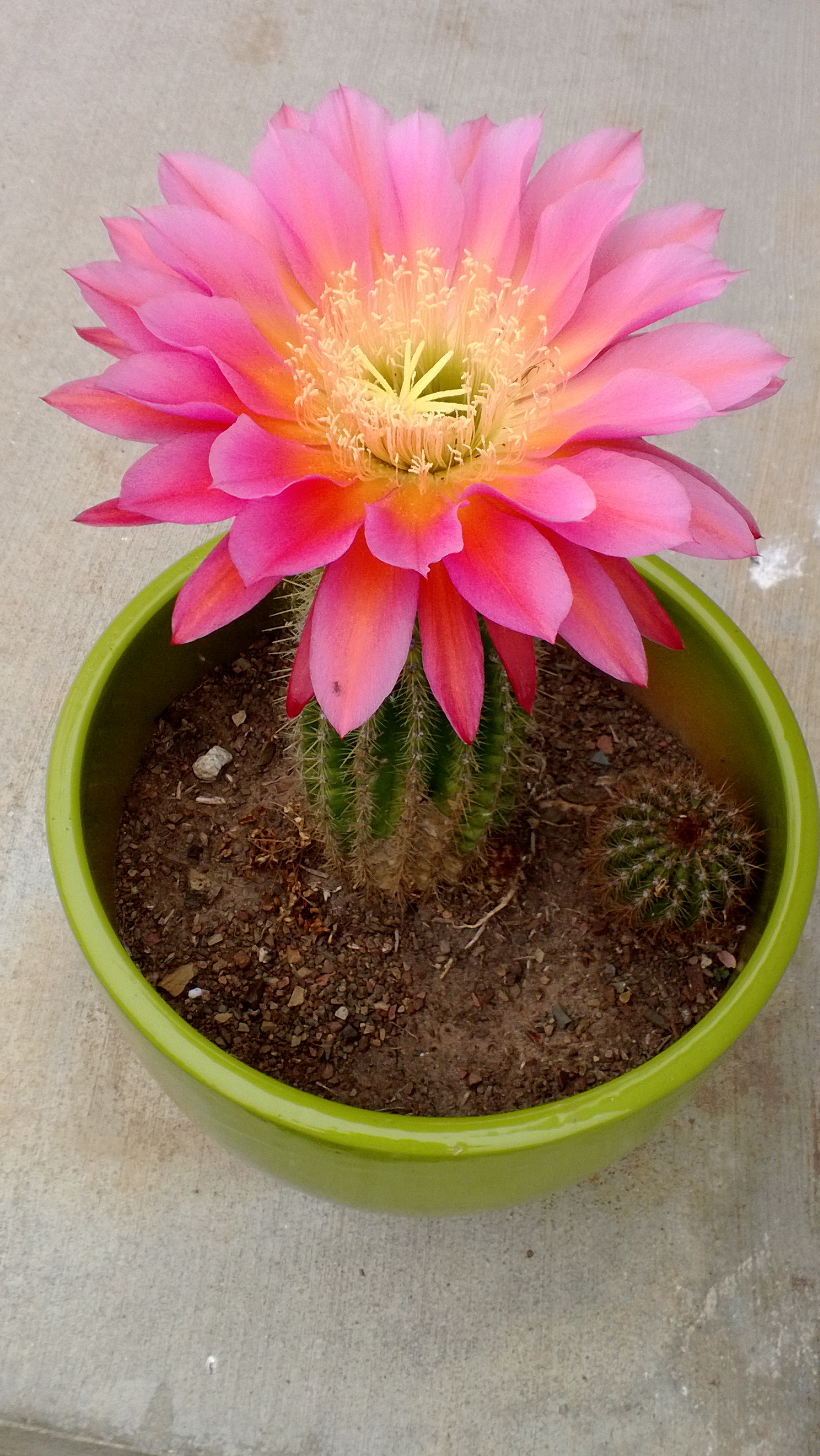
Potted blooming cactus
Bougainvillea on the side of the road: Point Dume, Malibu, California
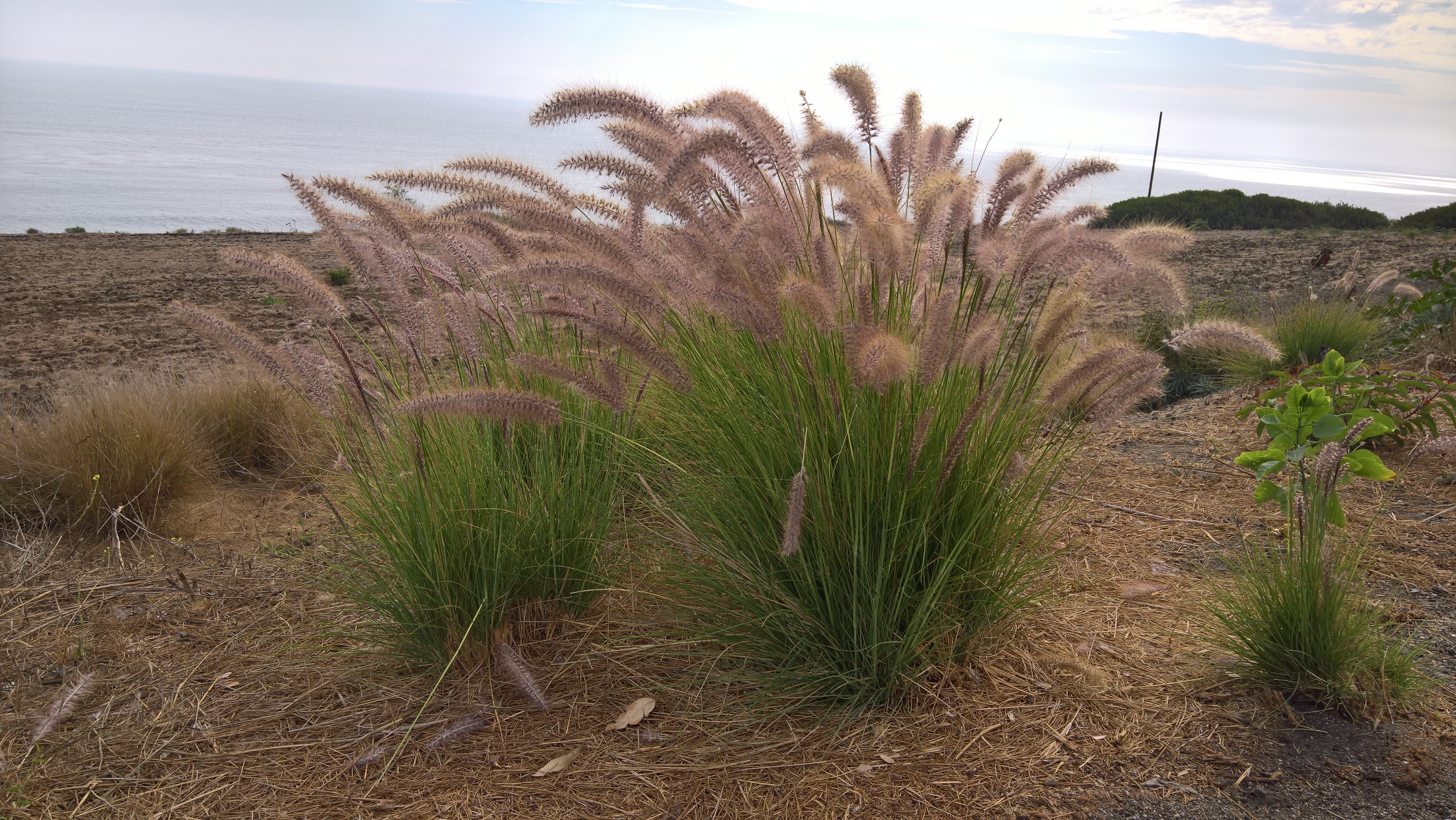
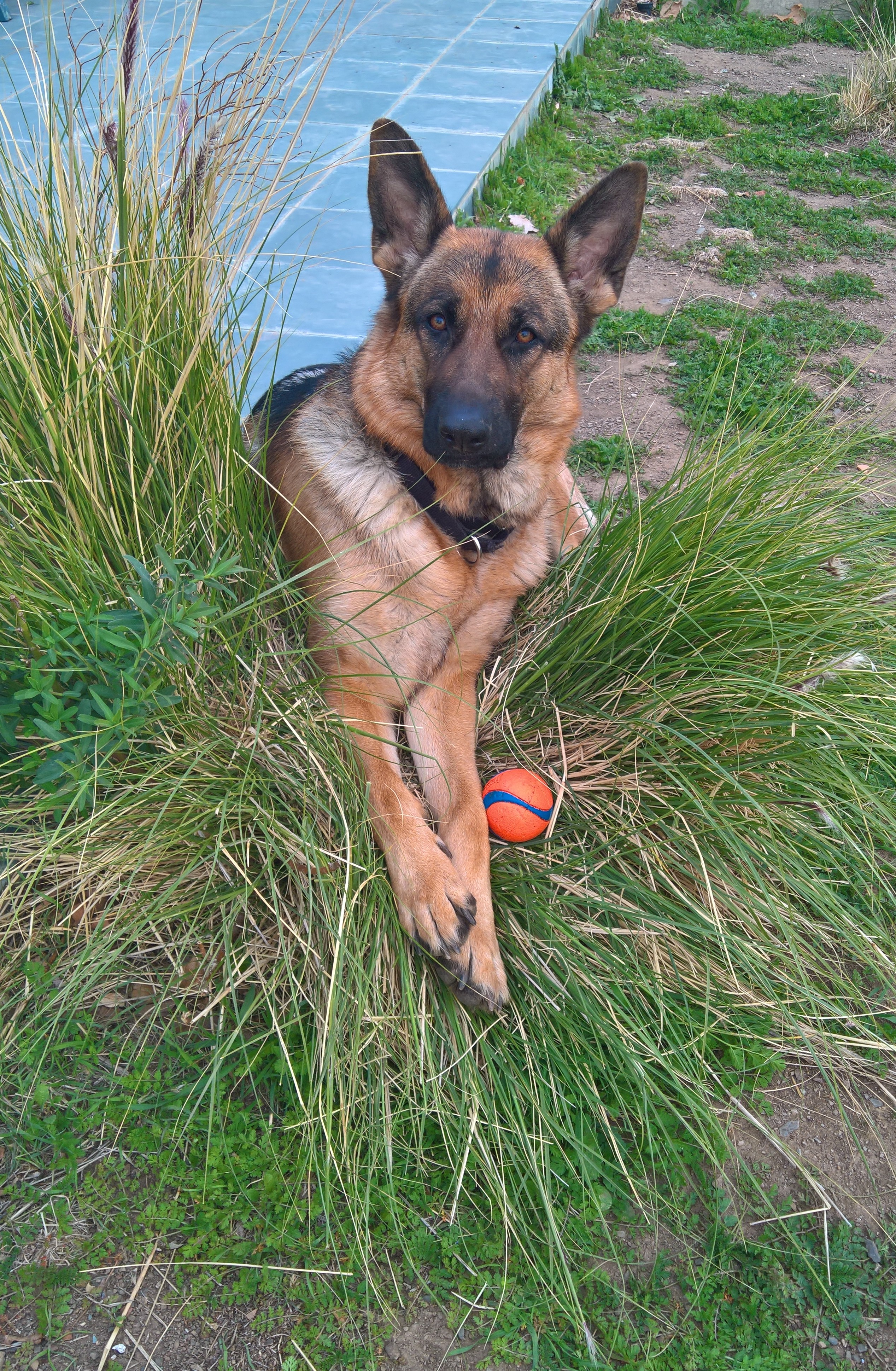
Fountain GrassFor good measure, this is our shepherd, Sorcha, in the Fountain Grass.
All hail The Pulpwood Queens, the largest book club in the world! The International Pulpwood Queens and Timber Guys Book Club is more than its 800 book club chapters, it’s a literary culture populated by avid readers and enthusiastic authors who fraternize under the Pulpwood Queens literary umbrella to share the love of books!
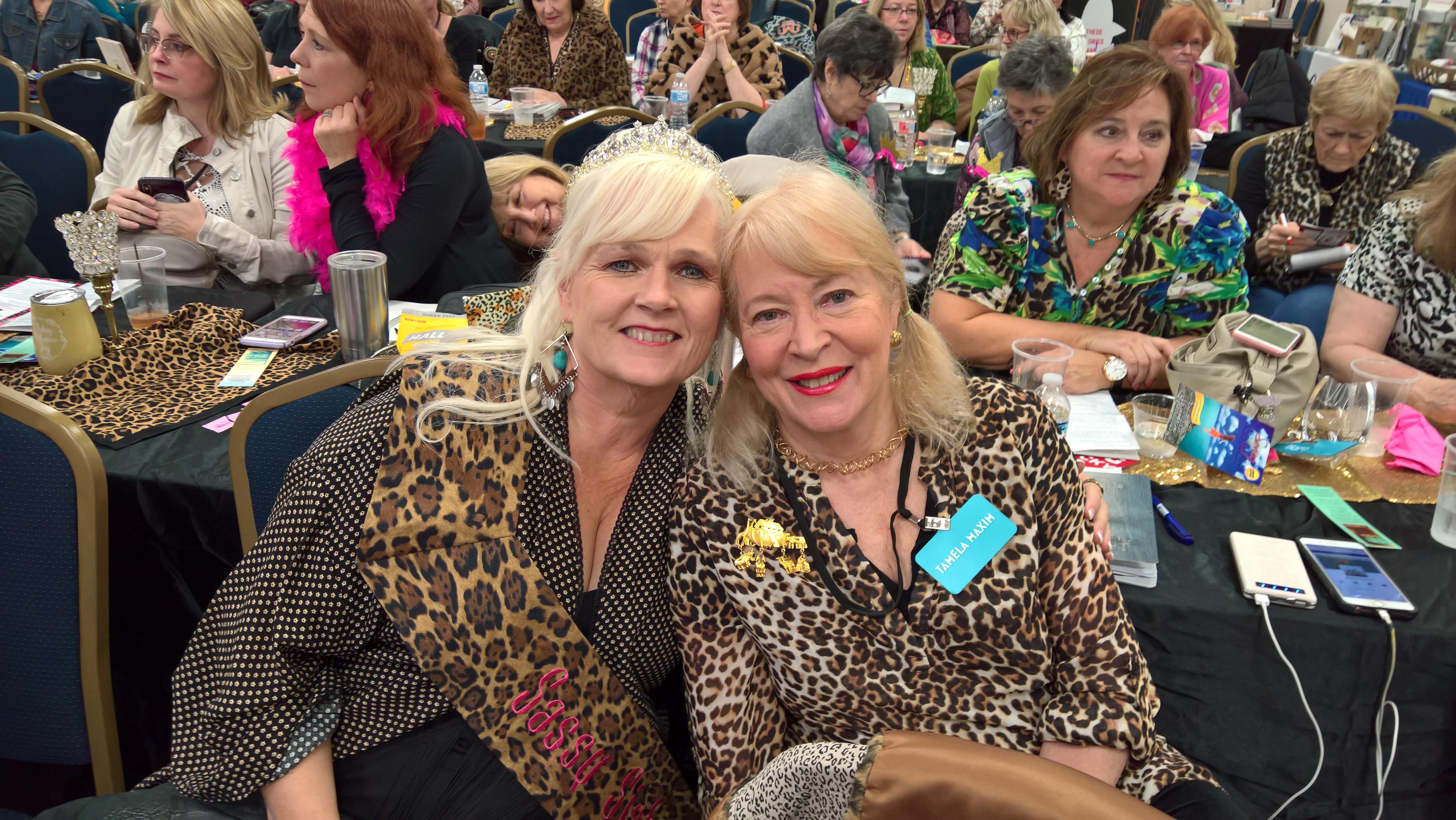
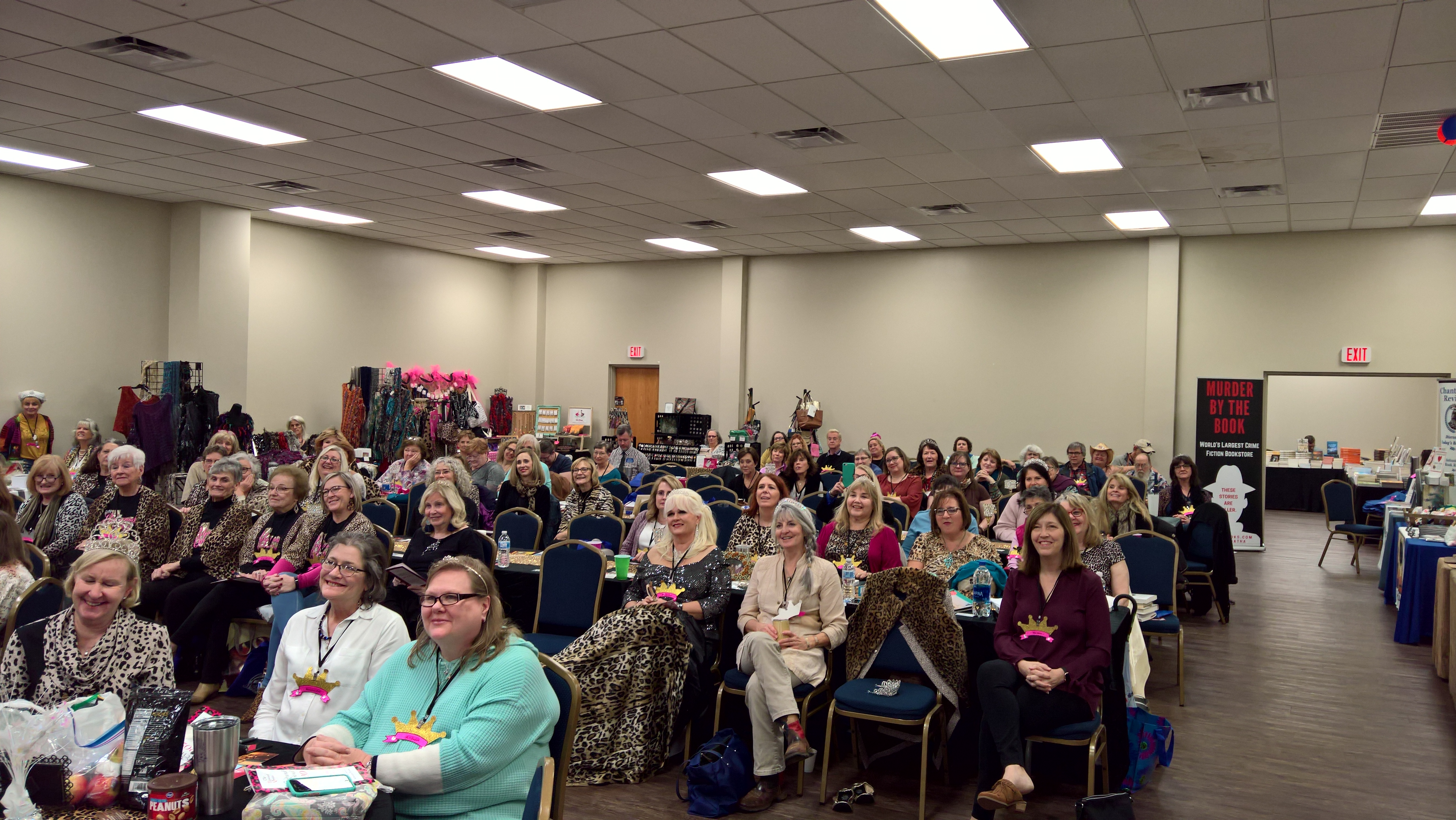
In existence for more than twenty years, The Pulpwood Queens hold an annual, book club conference experienced more like a party. Featured authors and attendees dress up in the Pulpwood Queens’ signature leopard print and tiaras for three days, in what becomes the ultimate meet and greet between authors and readers. Featured authors are panel guests in the most unique forum imaginable. Nothing staid and stuffy about the proceedings, rather, the panels are conducted as a celebration, where authors share more than the synopsis of the books they’ve written– they tell their background story: where they’re from, their writing process, and what inspired them to embark upon the craft of writing in the first place.
Since a picture tells a thousand words, here are some photographs from the Pulpwood Queens previous, annual event billed as Girlfriend Weekend:
This past Pulpwood Queens Girlfriend Weekend was different. What made the January 14-17th’s Girlfriend Weekend unique was that it was a Zoomathon fueled by the power of its good intention! Hundreds of us fretted over a possible Girlfriend Weekend cancellation due to Covid restrictions, but Kathy L. Murphy, the Pulpwood Queen herself, the visionary mastermind and rallying point of the largest book club in the world fit the needs to the moment and conducted the entire weekend on line! It was billed as The Pulpwood Queen and Timber Guy’s Reading Nation Slumber Party, and its aim was all about connections. Authors met readers, readers watched authors introduce themselves and their books, panel discussions were followed by keynote speakers, a popular audiobook narrator with a gorgeous British accent read excerpts from featured books and there was great audience participation! You can see a little about it here:
Here are highlights from the Pulpwood Queens January 14-17 Zoomathon:
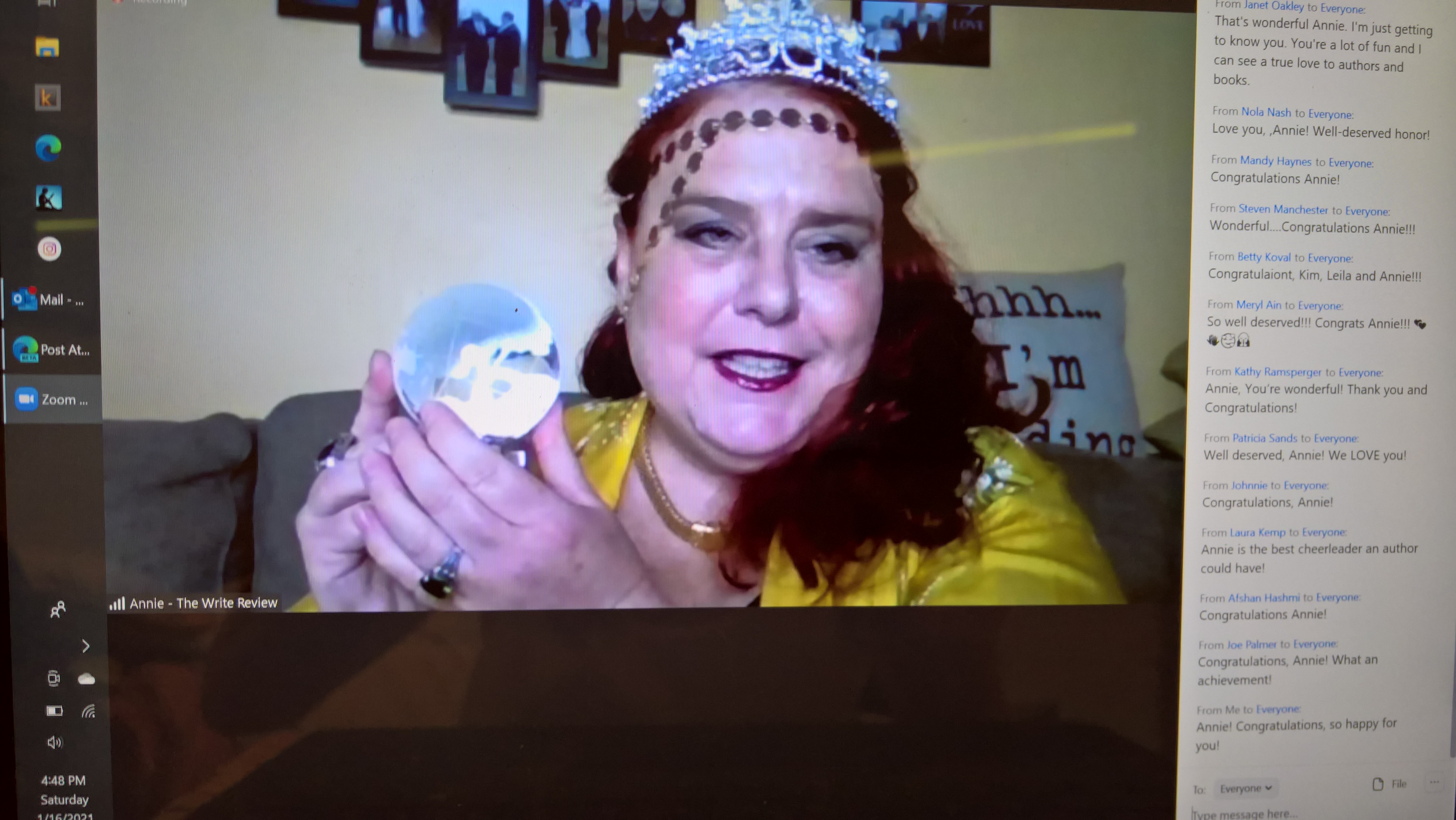
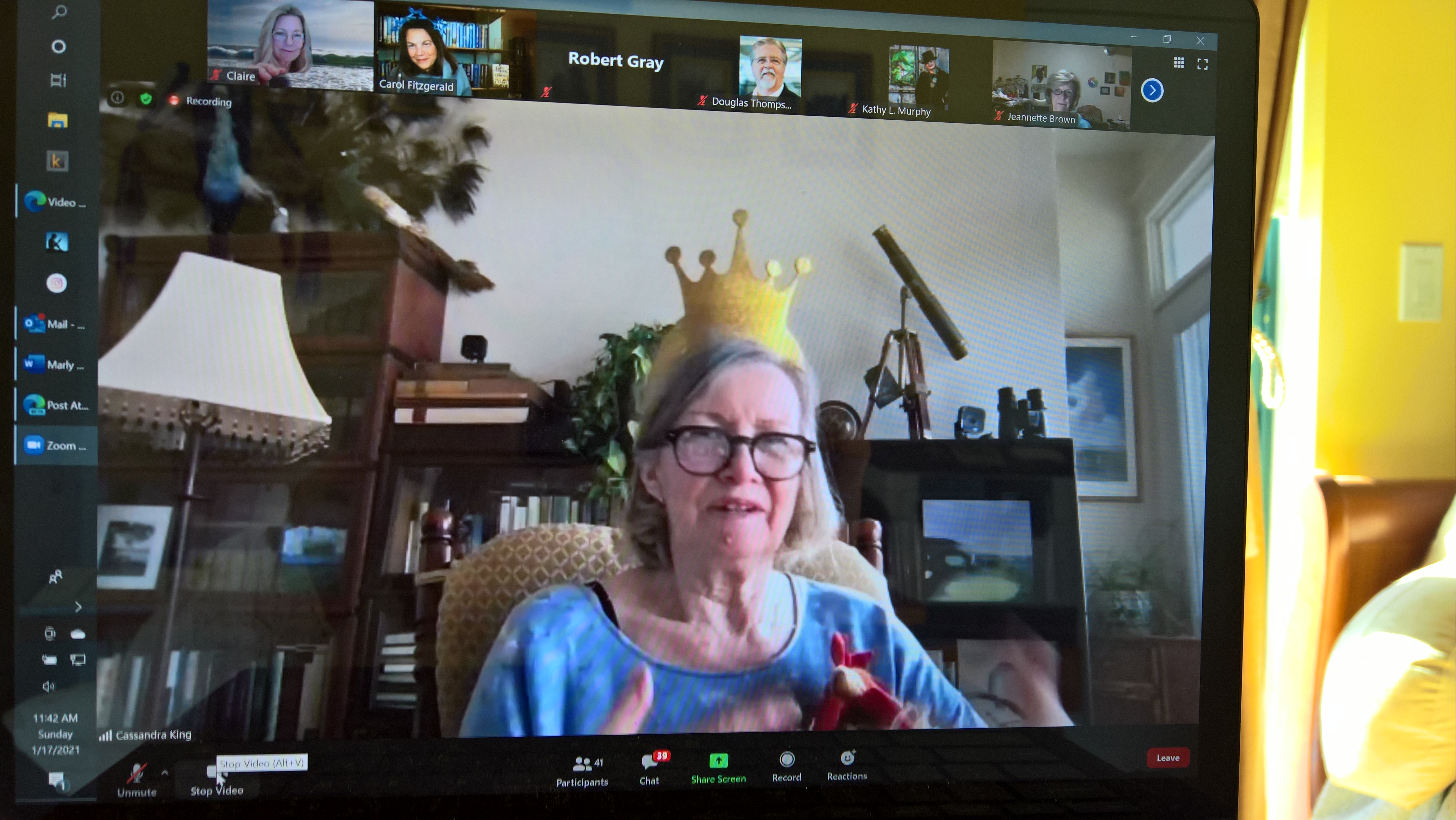
Kathy L. Murphy holding courtOxford, Mississippi author, Michael Farris Smith enchanting us all by talking about his latest release, Nick: the prequel to the Great Gatsby that is currently all the rage!Annie McDonnell of the Facebook Live Interview program, The Write Review, accepting the Doug Marlette Lifetime Achievement Award for Promoting Literary. Cassandra King Conroy, a multiple award-winning author and literary force who gave a talk about her memoir, Tell Me a Story: My Life with Pat Conroy Keynote Speaker Julie Cantrell of the books, Into the Free, Perennials, and Crescendo: The True Story of a Musical Genius who Forever Changed a Southern Town.
Actor, Author, and Audiobook narrator, Chris Humphries reading a book excerpt during The Write Review’s Panel: Hearing Voices and Matchgame!
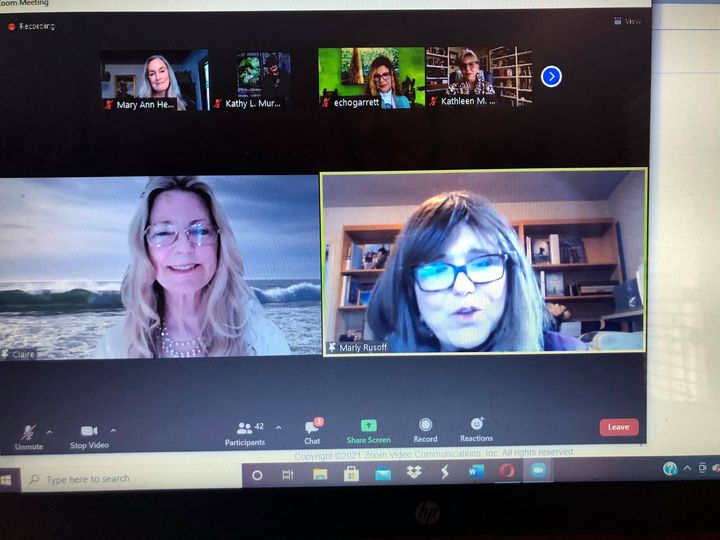
I had the immense pleasure of being a part of the Pulpwood Queens’s Virtual Weekend by interviewing illustrious literary agent, Marly Rusoff, who shed light on the mysteries of the publishing world, past, present and future. Marly was fascinating, and we all were honored by her presence!
All told, the 2021 Pulpwood Queens Book Club Zoomathon was a rollicking success and an enthralling series of firsts, in that it essentially set the standard of excellence for online, book-related events!







































 Claire Fullerton Author