

The title Whiskey and Ribbons is derived from a toast delivered by Eamon, one of three narrators in this psychological treatment of love spun unexpectedly and repercussively awry. “Women, you are sleek and gorgeous. You hold us together, you’re the ribbons,” Eamon says, yet we hear this speech as his brother, Dalton’s, memory, for the reader learns at the start that the toast maker is dead. Eamon and Dalton have grown up together as brothers, yet the ties that bind are unusual and not honestly revealed for what they are until well into the story. Author Leesa Cross-Smith holds the reader captive in language so creative and au currant that we identify with both well-drawn characters and readily understand why Eamon’s wife, Evangeline, weighs issues of loyalty between the two charismatic young men, though one is alive and the other is dead. That Evangeline is a new mother, having given birth to Eamon’s son after his death as an officer in the line of duty is the dilemma, for who is she to turn to in her prostrate grief but a brother-in-law who equally grieves? Three vantage points are entwined to tell this one story of familial connections, in a seamlessly crafted, roiling momentum that will have you thinking they each have a justifiable point. All praise this spell-binding debut author. Leesa Cross-Smith has penned an uncommon novel in a voice you won’t easily forget.
Category: Uncategorized
How We Came to Be by Johnnie Bernhard

How We Came to Be is a triumph of order from chaos as told in the most accessible first-person voice I’ve had the good fortune to come across in ages. I was under narrator Karen Anders’ spell from the first because author Johnnie Bernhard came out swinging by gifting the reader with this engaging novel’s premise by the third page. Karen doesn’t look good on paper. She is a fifty-year-old, high school English teacher living in Houston; a divorced, single mother facing empty-nest syndrome, well aware of her dependency on alcohol, but nowhere near ready to quit. Why should she? Karen’s life is a mess. One would think this is a recipe for a down on its heels story, but the reader is captivated by Karen’s tell-it-as-it-is persona and—dare I say it, identifies when Karen summarizes her circumstances by confessing, “I’m hating every moment, but pretending I’m having the time of my life.” When I got to this line, I knew I was hooked.
We all have that sardonic friend who manages to smile through the egg on her face. This is Karen in a nutshell, and she keeps on keeping on, trying for the upper hand, while her adopted daughter, Tiffany’s first three months away at college become a study in bad choices, of which Karen has no say beyond putting out the fires. Karen’s dilemma is a common one and raises the question of how to be an effective single parent without chasing her daughter away.
In the meantime, back at the empty nest, Karen knows she must forge a life beyond the rat-wheel of predictable sameness centered on her Houston high school’s schedule. In an uncanny act of timing, Karen’s world is widened when she is befriended by WW11 Hungarian refugee, Leona Supak from across the street, and an unlikely alliance is formed that challenges Karen to grow. Having been single for decades and barely hanging on, it probably isn’t the best time for a man to come into Karen’s life, yet when Matt Broussard pursues the surprised Karen in an Austin bar, she thinks, maybe?
How We Came to Be is a brass-tacks, contemporary story without a moment of campy pretention. The events are cause and effect, but the story is what goes on in the likable Karen’s head. She is not so much a victim of circumstances as she is a neophyte at growing into her own. How We Came to Be is the story of a woman drowning in deep waters, who has the sense to learn how to swim.
I applaud author Johnnie Bernhard for her wizardry in crafting this perfectly paced story in a voice so unique and compelling. This is a book to read and return to. It is perfect for book clubs because there is so much in it to discuss!
Mourning Dove
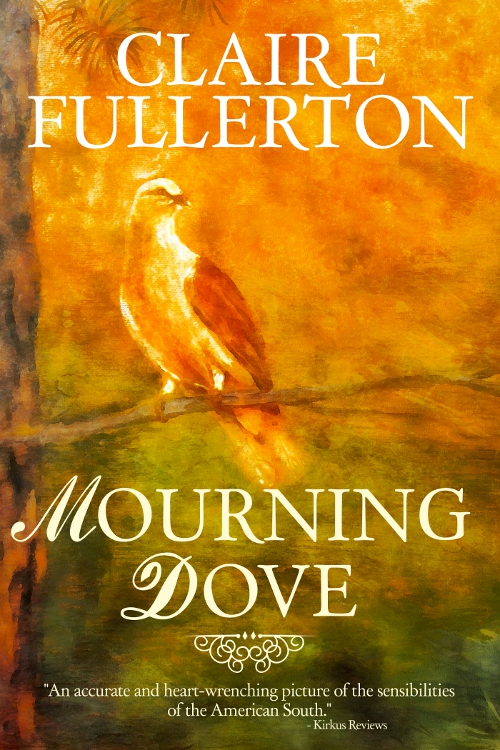
It’s been a long process to this announcement: My Southern family saga, Mourning Dove, which is set in Memphis, is now available for pre-order on Amazon, with the scheduled release date of June 29, 2018 for the print, ebook, and audiobook, which I had a blast narrating. My publisher, Firefly Southern Fiction, did the unusual and let me narrate Mourning Dove because I kept saying the book needed a Memphis accent. I have that in spades, and the good news is I have a nine year radio career behind me, so wearing headphones in a recording studio felt like putting on my favorite hat.
It’s been a year and two months from the day I signed the contract with Firefly Southern Fiction. I believe I’ve told this story before, but it verges on the miraculous on how I came to align with the imprint of Lighthouse Publishing of the Carolina’s, dedicated to Southern fiction. I did everything wrong. I missed the fine print and submitted without an agent. The acquisitions editor, Eva Marie Everson, is the compassionate sort. She thought she’d write to tell me to come back with an agent, but first she wanted to get a handle on to whom she was writing. The story, as Eva tells it, is that she read a few lines then couldn’t quit reading. Ten AM on a Saturday morning, and this Southern belle called me all atwitter. The upshot is that she called the inimitable Julie Gwinn of the Seymour Literary Agency, read her the first three pages over the phone, and we’ve been a team ever since. I couldn’t be more grateful.
Mourning Dove sings the praises of the bond between siblings growing up in a Southern culture they came to as outsiders. It started as a poem and turned into a short story awarded the runner-up position in the San Francisco Writers Conference’s 2013 contest. At the time I told myself that if anything ever came of the story, I’d buckle down and turn it into a novel.
Here is Mourning Dove’s book description:
The heart has a home when it has an ally– If Millie Crossan doesn’t know anything else, she knows this one truth simply because her brother Finley grew up beside her. Charismatic Finley, eighteen months her senior, becomes Millie’s guide when their mother Posey leaves their father and moves her children from Minnesota to Memphis shortly after Millie’s tenth birthday.
Memphis is a world foreign to Millie and Finley. This is the 1970s Memphis, the genteel world of their mother’s upbringing and vastly different from anything they’ve ever known. Here they are the outsiders. Here, they only have each other. And here, as the years fold over themselves, they mature in a manicured Southern culture where they learn firsthand that much of what glitters isn’t gold. Nuance, tradition, and Southern eccentrics flavor Millie and Finley’s world as they find their way to belonging.
But what hidden variables take their shared history to leave both brother and sister at such disparate ends?
Here is a very brief excerpt to give you a sense of its tone:
My mother’s friends had known each other from birth and coexisted like threads in a fabric. They started families together, sent their children to the same schools they attended, and set up their Cloisonné lives in congruent patterns of neat inclusivity. They threw dinner parties in stately homes, on tables set with inherited Francis I, polished to a shine by the help. In my mother’s Memphis, the conversation stayed pleasant and light over lingering cocktails, until dinner was served by a staff that dropped their own lives in deference to their employers. At an age where many women have seen their crescendo, my mother had only started to come into her beauty. She had the kind of looks that waited in arrested development during her youth, then pounced like a cat around the time she turned forty. With the passage of time followed by motherhood, her long limbs, flat chest, and slightly recessive chin filled out to capacity. Her face displayed sharp cheekbones that balanced her chin to a perfect heart-shape, and earned her a self-confidence she wore with sparkling alacrity. But a woman in possession of unique beauty and charm was in a precarious predicament in 1970s Memphis. There was always the dilemma of where to seat her at a dinner party, and without an escort to take the edge off of feminine rivalry, she was easily held in contempt.
No, that position was not for her, and my mother—as a master of networking—knew exactly what to do. She acclimated herself to the women in town, joined the Garden Club and the Junior League, lunched at the Memphis Country Club, played bridge, and hosted sip-n-sees. It wasn’t long before the dates started rolling in, though she should have issued a red-flag warning that read: Ladies, hide your husbands. Posey’s back in town.
Here are Mourning Dove’s back cover blurbs:
“Like sitting in a parlor and catching up on the trials and tragedies of the reader’s own extended Southern family.”
– Kirkus Review
“A wise and brilliantly evocative Southern tale enhanced by Claire Fullerton’s inimitable wit. Indulge in this eloquent exploration of colorful and complex family dynamics.”
Gary Fearon
Creative Director of Southern Writers Magazine
“Set against the backdrop of a complicated 1970s South – one both forward-looking and still in love with the past – and seen through the eyes of a Minnesota girl struggling to flourish in Memphis society, ‘Mourning Dove’ is the story of two unforgettable siblings with a bond so strong even death can’t break it. Claire Fullerton has given us a wise, relatable narrator in Millie. Like a trusted friend, she guides us through the confounding tale of her dazzling brother Finley, their beguiling mother Posey, and a town where shiny surfaces often belie reality. Like those surfaces, Fullerton’s prose sparkles even as she leads us into dark places, posing profound questions without any easy answers.”
Margaret Evans
Editor, Lowcountry Weekly
Former Assistant Editor of Pat Conroy
“Claire Fullerton knows how to get a voice going. I’m talking distinctive, authoritative, original as all get out. Narrator Millie Crossan will grab you by your high-ball-holding hand and set you down in privileged Memphis with her family and not let you go. Get ready for the Crossan layers to be peeled back and universal struggles exposed.”
Bren McClain
Author of One Good Mama Bone
“Every sentence tells a complete story in and of itself. A rare accomplishment by any writer! What an excellent novel — put it on your Must Read List for 2018! Millie tells the story of her brother Finley, life in the South and the anguish and joy of growing up in an eclectic and ever-changing household with rare poetic prose. Such a wonderful book.”
Valerie MacEwan, The Dead Mule School of Southern Literature
“In Mourning Dove, Claire Fullerton deftly weaves the story of a Memphis family into a fine fabric laden with delicious intricacy and heart. A true Southern storyteller.”
–Laura Lane McNeal, Bestselling author of DOLLBABY
With a June 29 release, Mourning Dove is available for Pre-Order in Print and on Kindle:
Southern Literary Review : Review of Dancing to an Irish Reel.
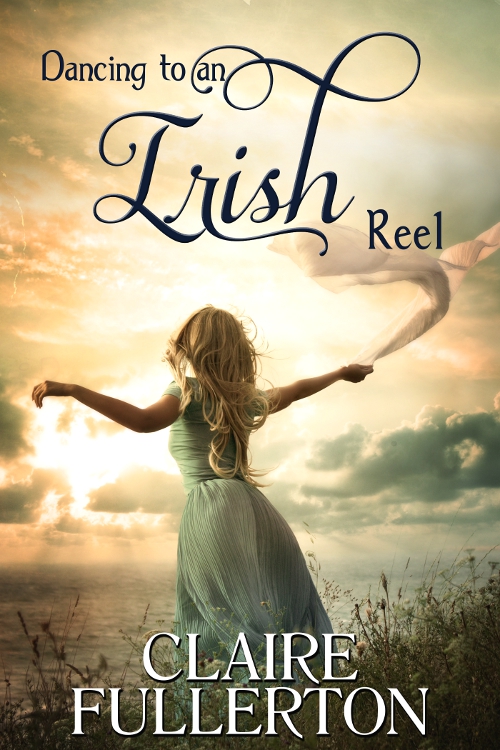
Reviewed by Johnnie Bernhard
Hans Christian Anderson wrote, “To travel is to live.” His words suggest the underlying theme of Dancing to an Irish Reel by Claire Fullerton. Living, instead of existing, is exactly what protagonist Hailey Crossan does on the west coast of Ireland. Leaving the “soullessness of Los Angeles” and her job in the record industry for Ireland, she discovers a culture and its people far removed from the American lifestyle managed by time and money.
Life in Ireland brings an ethereal dimension to Hailey’s self-discovery, as she dances to reels and waltzes in the unpredictability of a new job and relationship with an Irish musician.
Dancing to an Irish Reel is not a novel of the romance genre. The characters and situations they encounter are more reflective of upmarket fiction. The author has poignantly made a statement on cultural differences, language, and life choices in this novel. There is no formulaic pattern to the plot, particularly the last chapter.
In an interview, author Claire Fullerton explains:
The road to enduring love is never linear. We hit many road blocks and speed bumps on the way to what’s ours, but we always have such hope along the way. I call Dancing to an Irish Reel an anti-romance, in that it is true to how love often goes, before we find the one that stays. It’s the push and pull of relationships that intrigues me.
Hailey is not the typical female protagonist. Like the Irish weather, she is fierce. As a single American female living in Inverin, a village in rural Ireland, she relies on public transportation and yes, the kindness of strangers. Her solitary walks in a graveyard or along the sea create interest among the people of Inverin. She is not a typical tourist. The stares and sidelong glances she receives from them are met with confidence and charm. She wins the respect and friendship of those strangers and the heart of Liam Hennessey.
There are many scenes of fortuity within this novel. Hailey finds a job supporting musicians in the Galway Music Centre, propelling her into a world of characters and situations unlike those found in the village. Those moments are also found in the unfolding relationship with Liam, particularly when Hailey discovers how the Irish love.
The sense of place within the novel is authentic. Fullerton knows what she is writing about. It is best illustrated in the commanding first-person narration. There are no trite descriptions of the setting and the people of Ireland. Readers familiar with the west coast of Ireland will readily recognize it. Fullerton’s sincere admiration for Irish musicians and poets is captured in Hailey’s voice.
Dancing to an Irish Reel is a comfortable, satisfying read. It is a poignant reminder of the differences between living in the moment or being managed by time and the making of money. It is what Hailey Crossan discovers on a trip to Ireland. It is what Claire Fullerton invites us to learn.
Delta Rainbow: The Irrepressible Betty Bobo Pearson by Sally Thomason and Jean Fisher.
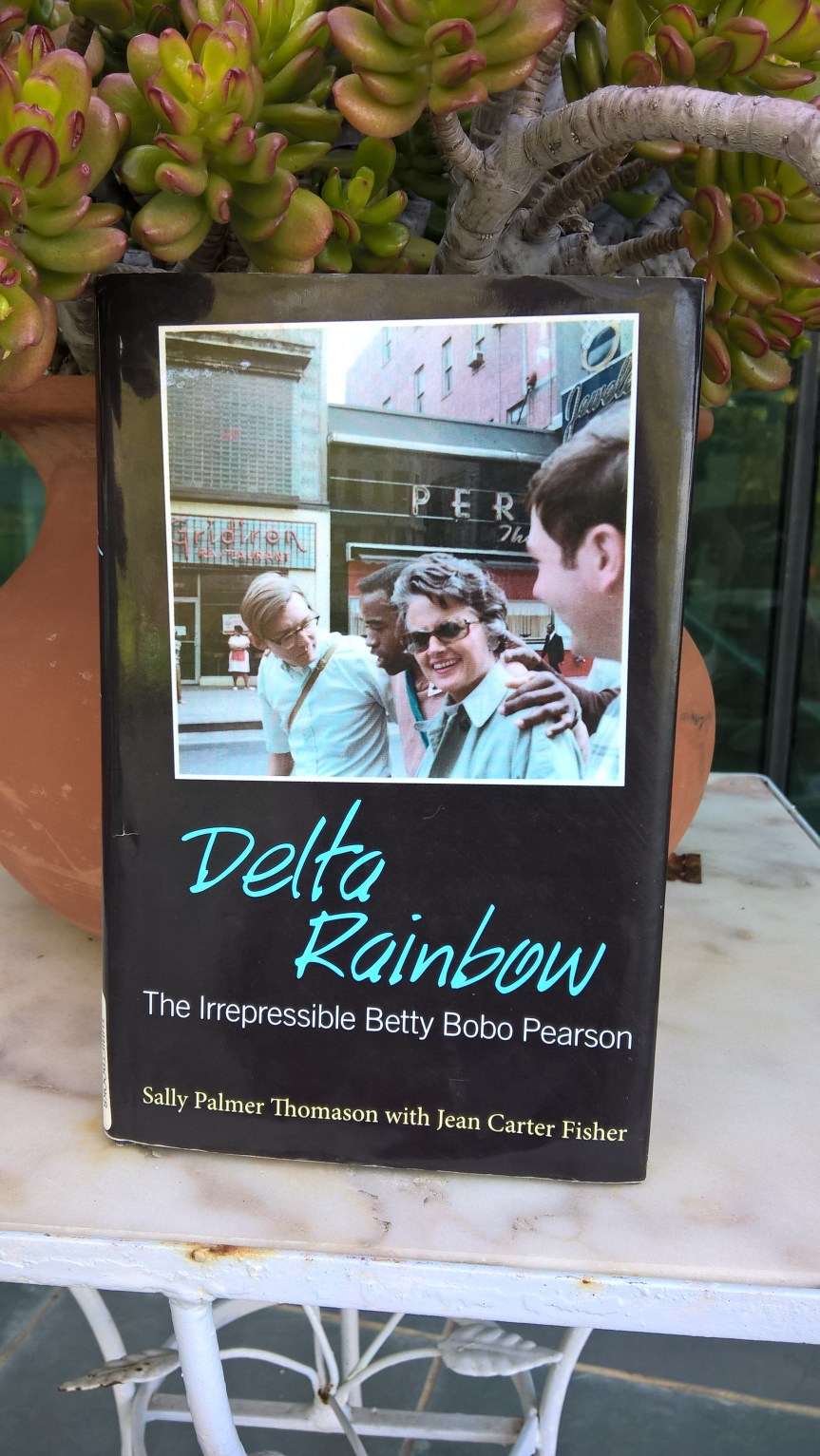
Every once in a while, you come across a hidden gem, published by a small university press. I have done just this in discovering Delta Rainbow. Delta Rainbow, accurately subtitled, “The Irrepressible Betty Bobo Pearson,” is a compelling biography with all the allure of a well-crafted novel, in that its subject does indeed come across as absolutely irrepressible. The book opens with a speeding train and holds the reader captive through the life and times of Erie Elizabeth Bobo then doesn’t lessen its grip until the repercussive significance of that train comes back to haunt.
It is the year 1955, in Sumner, Mississippi, and thirty-something Betty Bobo Pearson attends the sham of the trial of one Emmett Till, a fourteen-year-old black boy from Chicago, who was found murdered in Mississippi by two white locals. In a trial telling of the times, justice is not served, and it sets the life’s work of Betty Pearson on course. But first, we learn Betty’s backstory. That she is born to privilege in a regionally prominent family sets the stage for what is to come, for, in time, Betty’s civic outlook and magnanimous heart is at variance with the tightly held racial divide, and this biography becomes an issue of personal conscious as Betty follows the beat of her own drum, and in so doing, bucks the system. On the very cusp of the civil rights movement, preceding Rosa Parks’ infamous stand, Betty is one step ahead of civil unrest. Much to her Southern family’s chagrin, she grows into a champion of integration—she is spirited, ambitious, and dogged in her egalitarian beliefs; she is a genteel warrior in a cotton print dress.
Collaborators Sally Palmer Thomason and Jean Carter Fisher have done, in this engrossing book, what Southerners do best: they have told a great story. Delta Rainbow is crafted with beautiful, historic balance. It lends a sensitive eye to detail as it lures the reader through Southern social mores with a strong sense of time and place. We feel the Delta’s humidity, marvel at Betty Pearson’s parties, covet her gardens, and wish we had half of her gumption in standing up for what she believes is right. Never one to sit on the sidelines while others dictate the law, Betty
Pearson is a woman of action, a member of every forward-thinking committee designed for racial equality, and if she wasn’t invited to join, she spearheaded the task force.
All hail the University of Mississippi Press for seeing fit to publish this important biography. Delta Rainbow: The Irrepressible Betty Bobo Pearson is as educational as it is inspiring, and I bow to Sally Palmer Thomason and Jean Carter Fisher of Memphis for taking what is clearly a wealth of research and information and adroitly handling it at such a pitch as to make it so thoroughly engaging.
My Exaggerated Life: Pat Conroy, as Told to Katherine Clark.

Oh, the gift of this delightful book. The thing about Pat Conroy is those who get him really get him and can never get enough. It has been repeatedly written that readers feel as if they know him. That he wrote in the first person was part of what spawned the relationship between Conroy and his readers, the rest of it is that he had an uncanny way of unabashedly calling things by name and spoke for us. And any Conroy devotee knew he was healing his shattered history by veiling it in fiction. We knew it and didn’t care because not only was he charming, he was a master storyteller. Conroy wrote from the center of his sardonic personality. Once he had you, he dove down to universal truth and brought you to your knees. This business of life is not for the meek, he suggested, but there is rhyme to it, poetry, in fact, and in his fiction, he figured out how to survive it.
My Exaggerated Life gives us the man behind the curtain. On its cover is Conroy wearing his infamous flight jacket and Citadel ring, which his fans will recognize as symbols of his personal narrative. Conroy was that kind of writer. His books were mind-altering drugs and his readers were addicts who had to have more. Katherine Clark has given us more in what seems to me a labor of love. That she spent two hundred hours listening to Conroy spill out his life over the telephone to assemble this book makes me jealous, but I’ll overlook that in favor of the resounding result.
What struck me most in reading My Exaggerated Life was the realization that there was no separating the man from his craft. It’s Conroy’s voice that does it. In these pages speaks a storyteller of the highest order telling an incredibly entertaining story, it just so happens to be culled from a series of events in his life. You can intuit the haphazard way he stumbled from cause to effect as his writing career took shape. Reading Conroy’s books always made me feel they were born without effort, so to discover in this riveting book just where the struggle had been hit me as staggering—not because parts were painful to read, but because he framed it in such a human way that readers will think, you too?
At the end of My Exaggerated Life, Katherine Clark shares the speech Pat Conroy delivered spontaneously before a crowd of adoring fans in Beaufort, South Carolina at his 70th birthday celebration. In it, Conroy claims “What I wanted to be as a writer, I wanted to be a complete brave man that I am not in my real life.” He did just this in My Exaggerated Life. In an act of bravery, Pat Conroy told his story, and author Katherine Clark captured it in a book that is one for the archives.
An American Marriage: Book Review

Stark, vivid, real, and gritty, these are the words that spring to mind upon reflecting on An American Marriage. Author Tayari Jones takes the premise of an unjust, nightmarish turn of fate and unfurls a novel length treatise on a budding marriage systematically derailed, when a year and a half into marriage, Roy is incarcerated for a crime he didn’t commit. It is a modern marriage, and newlyweds Roy Jr. and Celestial have promising careers on the rise. Roy is a young business executive, who aspires to setting his artisan wife up in business as the maker of novelty dolls in her own Atlanta shop. The couple is in the exhilarating throes of reconciling their fiercely independent natures with their unified plans for the future. They are ambitious, deeply in love, and navigating their marital positions, when an insignificant tiff arises while on vacation, and their life is irrevocably changed outside their hotel room from their mutually declared, fifteen-minute time-out.
Whether it is the bad luck of being in the wrong place at the wrong time, or the suspicions levied on Roy as a black man in the South, justice is not immediately served when Roy is falsely accused of a crime. As time ekes by during Roy’s twelve-year sentence, Celestial gets her career off the ground, while Roy remains stuck behind bars. Issues of commitment and fidelity under duress evolve, as Celestial finds comfort in the arms of her and Roy’s mutual friend, Andre, then reasonable expectations are called to the fore when a love triangle unwittingly grows. When Roy is released five years into his sentence, the three main characters in An American Marriage take stock of their current standing. They are individuals with differing vantage points within the confines of a tribal whole.
With laser sharp insight into human nature, Tayari Jones gifts the reader with three plausible, first person narratives in this intertwined story of cause and effect set upon the fertile ground of modern day black culture. Her language is paradoxically direct and textured as she probes the innerworkings of characters wrestling with issues of appropriate placement, under the weight of delineating sacrificial right from self-serving wrong.
An American Marriage is a gripping story, disquieting in its tenable premise and gripping with tense urgency on every page during its search for apportioned equilibrium. It is a powerfully written, brilliantly crafted novel for the discerning reader, and a thought provoking treasure for book club discussions.
On an Irish Bus/ Dancing to an Irish Reel Kindle Giveaway!

He would have stood out anywhere, and standing in front of the entrance to a boutique hotel in Spiddal, wielding a black walking cane with an ivory handle two paces before made him glaringly incongruous to everything I’d come to know about the western coast of Ireland. He wore a three piece suit on his gentle frame: black, with gray stripes the width of angel’s hair, with a fitted vest, tailored trousers, complementary cravat, and a black Fedora angled just so.
I looked out from my window seat on the bus from Carraroe to Galway. It was one of those old kinds that looked as if it once had a life as an elementary school bus, now put out to pasture. With aluminum rails on the seats before, the bus would take off noisily, gravel scattering beneath its wheels before I had a chance to sit down. The bus driver greeted me in awkward English. It took a few rounds of greeting me in Irish before he finally realized I am an American, and his guttural salutation now came out sounding like something a little to the left of “Hiya.”
The bus rolled to its customary stop on the coast road that runs through the heart of Spiddal. There is no sign there; the stop is force of habit because years of driving this rolling route through Connemara told the driver where travelers would be standing, shielded from the vagaries of Irish weather.
Heads turned as the dapper, elderly man mounted the bus. He steadied his gait with his cane and favored his right foot up the three steps then halted beside the bus driver to beam his greeting. Out of the corner of my eye, trying not to stare, I saw the man tip his hat repeatedly to the right and left as he made his way down the aisle to the vacant seat beside me.
“Nice day,” he said to me as he took off his hat and placed it on his lap. “Going into town, is it? Where you go every day?”
“Yes,” I said caught by surprise and thinking nothing gets by anybody around here.
“Kearney’s the name, Seamus Kearney,” he offered himself. “You’re an American, yah?” he asked in that way the Irish have of answering their own question.
“Yes,” I answered.
“From the South, is it?” he continued.
“That’s a good ear you have. Yes, I’m from Memphis, Tennessee, but I spent the last five years living in Los Angeles,” I clarified.
“God helps us all,” he said with a wink. “And what is your name, then?” he prodded.
“Claire Fullerton.” I shook his offered hand.
“And your middle name then? Have you Irish connections?”
“Yes, I have Irish connections on both sides. My middle name is Ford,” I said.
“Ford,” he considered, wrinkling his brow. “That’s an odd middle name for a girl.”
“Yes, perhaps,” I said. “But I’m not an odd girl; I promise.”
“Now the Fords, they’re from around these parts. They’re old as the hills and Irish as the soil. Many are up the road in that old graveyard by The Centra,” Seamus Kearney said. “So they called you here, they did,” he said in more of a statement than a question.
“No, actually it was a whim that brought me here. I never knew any of my Ford relatives. Most of them died before I was born.”
Seamus drew in his breath in that audible sigh the Irish do, when they’re getting ready to say something poignant. It is a sound with a world of understanding contained: one part camaraderie, the other commiseration. “So, they called you here, they did,” he reiterated patiently. His white eyebrows raised encouragingly, as if leading a child along the road to good reason.
“Yes, definitely,” I complied.
“Ah then, there it is, so. We in Connemara don’t see the need in being parted by a little thing like death,” he said.
I couldn’t wait a second longer; I couldn’t help but ask, “Do you always dress like this?”
“Like what?” he asked genuinely unaware, which made me wonder if I’d put my foot in my mouth.
“You look so nice; I was only thinking that,” I said, the heat rising to my face.
“Pride of person’s not an unpardonable sin,” he said. “Now let me ask you what it is you do in town.”
The next thing I knew, I was explaining everything I did at my job in Galway, while Seamus gave me his rapt attention, with a pleased look on his face. Had I still been living in Los Angeles, a conversation like this one would have never taken place. One simply did not divulge personal information to a stranger in Los Angeles without thinking it would come back to haunt. But this was Connemara, and the Irish have a way of exchanging pleasantries in a manner that is somewhere between an exploration of and commentary on this business of living. It is an art so subtle you have to narrow your eyes or you’ll miss it; it comes creeping softly wearing white cotton socks and sensible shoes.
The bus rolled to a stop at the Spanish Arch, down by the quays in Galway. I stood up to disembark. “Nice to meet you, Mr. Kearney,” I said.
“Call me Seamus, please,” he returned. “I live just by the church there in Spiddal. I’d love for you to call out any time for a cup of tea,” he said, with his blue eyes smiling.
“Thank you so much, I will,” I returned, and as I got off the bus to head over the River Corrib’s bridge, I turned to wave to Seamus Kearney, and knew without question I would.
Enter to Win Dancing to an Irish Reel on Kindle ! Amazon: https://giveaway.amazon.com/p/04bacbd72e9b9b35
Cherry Bomb: Book Review.

In Macon, Georgia, a young orphan named Mare gives voice to her childhood trauma by spray painting graffiti on public buildings and signing each piece with the tag Cherry Bomb. Having been born to a cult, on a farm called Heaven’s Gate, twelve-year-old Mare and her mother escape the scene before tragedy hits, yet there is no haven for Mare, when her mother leaves her at an orphanage and never comes back. Placed with a foster family, things turn so badly that Mare runs away and takes refuge on the streets. This is the background of the novel Cherry Bomb; the story takes off with what Mare does next.
Armed with an artistic talent she is seemingly born with, Mare feels most alive when venting her angst by defacing public property, where her graffiti becomes the stuff of legends. A famous photographer for Rolling Stone Magazine wants to discover the culprit, and soon a local newspaper reporter and a parish priest join in the search. When Mare is caught out, it is the combined force of all three that hatches a plan to set Mare on a more productive path, and Mare is helped to acquire a scholarship to Savannah’s College of Art and Design. It is here Mare meets professor, Elaine de Kooning, an abstract expressionist painter of world-wide repute with a haunted backstory. Unbeknownst to both, they share a common denominator as the pair establish a student/mentor relationship. As Mare studies her craft, she is intuitively drawn to the painting of icons, leading her to enroll in an acclaimed weekend workshop at a North Carolina monastery, where a mysterious series of events unfolds. Past and present collide in this cloistered setting, and the uncanny threads of Mare and Elaine’s common story are woven together to reveal their startling connection.
There are strong themes of perseverance and search for identity in this modern day, plausible story. It is a story for art lovers, in that the reader is led through the minutia of the art world and comes away fascinated with the art of iconography as it evolves from an edgy youth’s street graffiti. In pitch-perfect dialogue, refreshingly au courant, this unique story has tinges of religious themes as seen through the eyes of Mare, the young sceptic. Growth, accountability, and the quest for redemption artfully culminate in a satisfying ending.
There’s a lot going on in this fast paced, gripping story, but in the hands of author Susan Cushman, never once is the story of Cherry Bomb overwrought. Cushman hooks the reader from the start with the likable, streetwise Mare, and gifts us with a story of survival, in a creative book both YA and cross-over readers will love.
A Good Girl by Johnnie Bernhard

I loved everything about this luring story, which unfolds from a present tense haunted by the resonance of a deep-rooted family saga. A Good Girl, by Johnnie Bernhard, opens on the highway from Mississippi to Texas, as fifty-year-old Gracey Reiter returns to her childhood hometown to stand vigil at her dying father’s bedside. Memories flood unbidden, while Gracey, a middle child, takes responsibility for her father, Henry Mueller’s, exit from this earth. On the surface, Henry Mueller was a hard man who unwittingly left many scars. Beneath the surface, a road twists through all the reasons why.
It is Gracey’s aim to do the right thing, even if it is from a sense of perfunctory obligation. Fighting a nagging resentment, she goes through the motions of tending to her father, while her older brother nurses his childhood wounds, and her younger sister seems to have gotten off scot-free. Birth order matters—it spawns separate experiences, yet Gracey achieves an aerial view as she reflects upon a generational line tethered with the common thread of hard knocks, desperate circumstances, and the will to survive for one’s children.
Only a profoundly sensitive, deep thinking writer could compose a novel with such breathtaking, well-crafted acumen. More than a pleasing story, A Good Girl makes a humanistic point that isn’t cheapened with a convenient moral. It’s a big subject, this business of the sins of the father. Author Johnnie Bernhard handles it deftly, and touches on the redemptive powers of unselfishness, when one puts aside their self-oriented feelings to seek a compassionate, wider understanding of cause and effect in a family dynamic reaching three generations back to Galway, Ireland.
I was invested in each character throughout this story. Those in the past were equally as vibrant as those present tense, and the way in which Bernhard wove this epic saga to come home to an uncanny full circle was heart-warming and emotionally satisfying, when Gracey’s daughter, Theresa, marries a man from Ireland.
A Good Girl is a story of personal growth on the inner plane; a story of faith and hope and the ties that bind. It is universal in theme, in that it is the kind of story that compels one to pause and reflect upon their own familial history. All praise to author, Johnnie Bernhard. I loved this novel and look forward to her next release.
 Claire Fullerton Author