JASON KINGRY INTERVIEWS CLAIRE FULLERTON, AUTHOR OF “LITTLE TEA”
SEPTEMBER 15, 2020 BY JASON KINGRYLEAVE A COMMENT
JK: Thank you for doing this interview about your new novel, Little Tea. I’ve read that you’ve lived in Minnesota, Memphis, Ireland, and now in California. What were these transitions like, and how have they affected your writing?
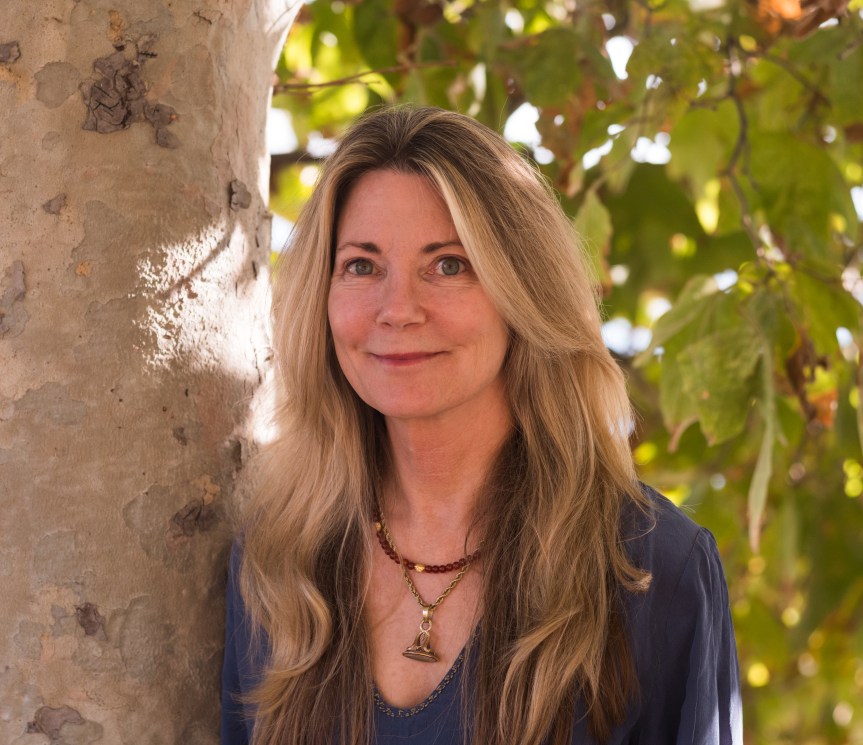
Claire Fullerton
CF: The transitions ushered in forward momentum, in that living in different locations expanded my understanding of the world. The insights were cumulative as opposed to immediate and mostly having to do with an ephemeral sense of things pertaining to a combination of the environment and its people. I suppose the idea of cultures is best perceived from the outside looking in, so to speak. Being in it but not of it gave me an objective view that continues to affect my writing.
JK: What would you call “home” about each of these places?
CF: The idea of home is tied to the way I feel centered in an environment and has everything to do with harmonizing with a frame of reference. Nature affects everything about a location and I’m a great walker. I think the best way to get the feel of a place is on foot. I believe people create their idea of home through their relationship to the environment and their loved ones in it. My idea of home has to do with long-term investment and an anchored compatibility that operates on many levels.
JK: Did being an “avid journal-keeper” help you to become an avid novelist?
Click here to purchase
CF: Definitely. Keeping a journal for as many decades as I have woke me up to the fact that I’ve been a writer by nature all along. Writing has been part and parcel to my way of being in the world. I interpret the world by writing, and the practice has spawned an intimacy that translates to the nuts and bolts of how I write novels.
JK: I’ve always lived in the South. I’ve always been a large, bearded man, and I’ve always had to excuse the fact that I’m a “cat person.” I see in your bio that you live with one black cat. Are you superstitious? Do you consider the cat yours or your husband’s, or does the cat belong to you both? Are you a cat person as well? Tell me more about the cat.
CF: I live with one black cat named Le Chat and three German shepherds! La Chatte is definitely my cat because she chose me as her center of gravity. She is a medium-length haired, solid black, yellow-eyed bundle of communicative joy who gets pushy when it’s time for me to brush her, which is every evening before I go to bed. It is a two-brush ritual: one for her body and one for her kitten face, which she presents side after side with such rapturous, princess preening that I laugh every time. La Chatte has the run of the house yet chooses to camp out on the daybed in my office. Our shepherds never tire of investigating La Chatte, but by all appearances, the shepherds bore her. And I wouldn’t say I’m particularly superstitious as much as I’m aware of the mysterious unknowable that walks hand-in-hand with my ever-changing assumptions of reality. As for cats, I’ve always thought if you’re going to be a cat, then there’s something perfect about being a black one.
JK: You thank a lot of southerners at the opening to Little Tea. Do you have an affinity for Southern culture, especially as it pertains to the outdoors?
CF: I appreciate Southern culture and am forever trying to define it, which is ridiculous because it’s made up of nuance. I recently had a conversation with a Hollywood actress who prepared to play a Southerner by studying my Southern accent. I was patient with the process until it occurred to me to cut to the chase. “What you have to understand,” I said, “is that it’s not about mimicry; being Southern is an attitude, so let’s start there.” So, an emphatic yes, I have an affinity for Southern culture, and as it pertains to the outdoors in Little Tea, I wanted to capture Southern boys in the prime of their swaggering youth who know how to hunt and fish in the Delta. There’s an art to this, a science, a way of awe-struck communing in the region with a type of reverence seen not so much as sport as the exhilarating pursuit of challenge. I’ve always respected this about Southern men who hunt. They have an admirable relationship with the great outdoors.
JK: Having written your entire life, more or less, did you ever think that you would have such a following as you do?
CF: From my perspective, writing is a search for similarities. In my own way, I am comparing notes on this business of life with my readers. I’m aware that my novels are open for interpretation, but therein is my humble gift to the reader. Readers are intelligent creatures and it is my great honor to earn their attention. There’s no way to accurately gage the number in whatever following I have, but suffice it to say, I am grateful for each.
JK: It seems that you started your writing career with poetry. Was there a natural progression into writing novels?
CF: I wrote poetry and kept a daily journal up to and through the time I lived on the west coast of Ireland. I lived in Connemara, which is delightfully rural, and when I returned to the United States, I revisited my journal and realized I had a unique story. It was the year 2000, and although I’d never attempted even a short-story, I burned with passion to depict Ireland as I found it. It seemed to me many Americans had a romanticized impression of Ireland, and it was important to me to share that I found the people of that storied island magnificently salt-of-the earth and wary, suspicious of outsiders but able to mask this by appearing to be the friendliest lot on earth. I wanted to tell about it, and in so doing, I realized that writing poetry was my foundation. I can’t say it was a progression because to this day, I keep both balls in play.
JK: You’re involved with so many publications—I don’t think people view authors in general as particularly “busy.” Would you like to correct that notion?
CF: I love this question. I’ll begin my answer by saying I consider everything having to do with being an author a labor of love. That’s the good news. I do it because I love to and am fond of saying with writing, there is no there to get to; only the process in and of itself. That said, once one is in the game, so to speak, the arena expands. I liken my writing life to being a many spoke wheel wherein the spokes aid and abet the hub, daily. If I’m not in the process of writing a novel, I’m promoting one that’s out, and let me say now, the best part of it all is answering questions such as the ones you’ve asked here because I actually stop and think it all through. Thank you for the joy of this interview and let me debunk the myth: I’m thrilled to report I’m busy!
JK: There’s something very specific about the canon of Southern literature that is wholesome, haunted, antiquated and compelling. Do you have a theory of what that might be?
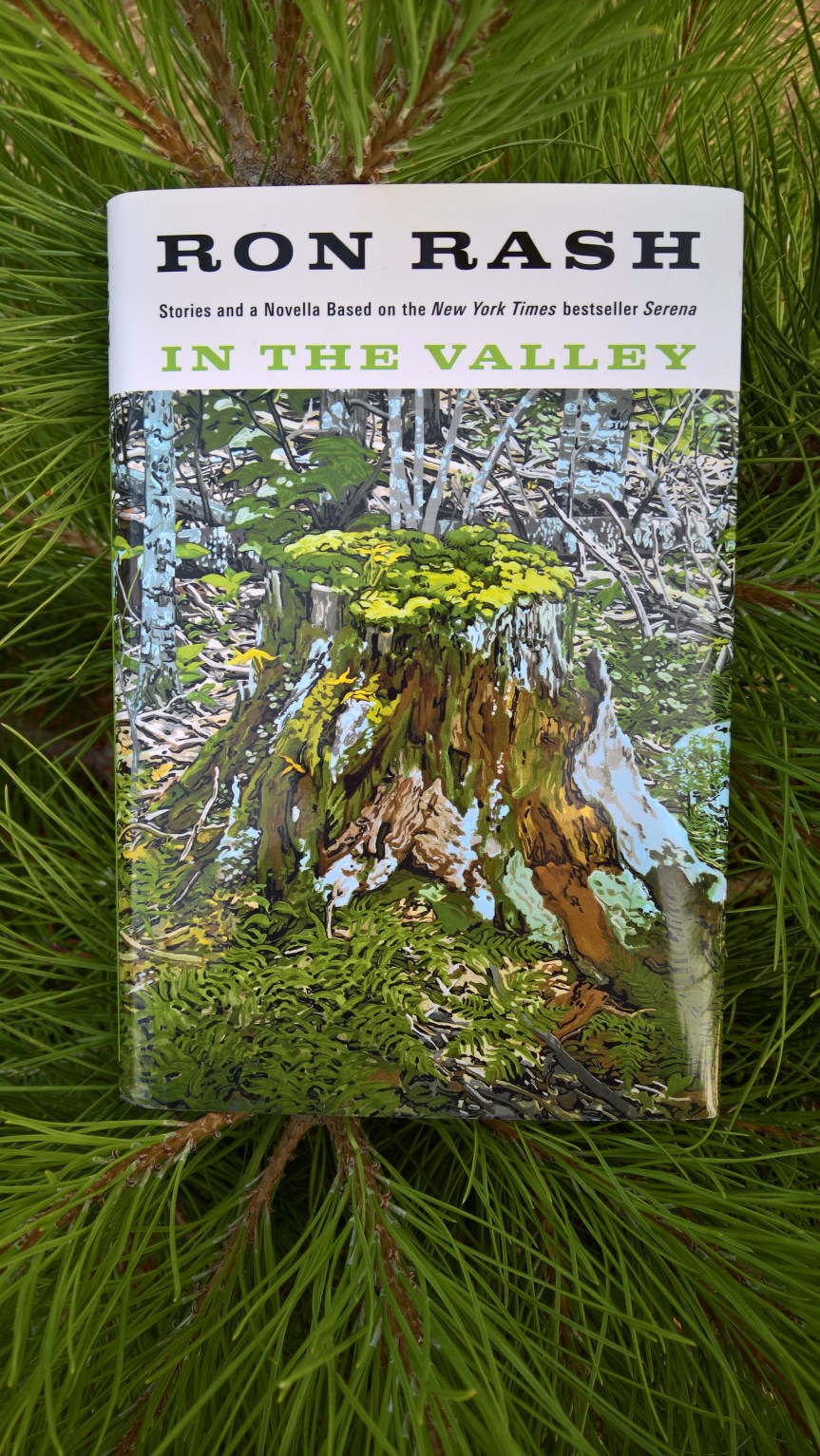
CF: It’d be so satisfying to say something brilliant here, but let’s leave that to Michael Farris Smith and Ron Rash. I love both Southern authors so much I can’t even speak. My answer can be found somewhere between Southern heritage and the South’s sultry climate. It’s that and what I love most about Southerners: they definitely know who they are. Southerners wear their identity like a badge of honor, and rightfully so.
JK: You draw exquisitely on your tendency to “see the world from the outside in.” At what point did you recognize this as an ability?
CF: This circles us back to your first poignant question. It was moving at age ten from Minnesota to Memphis—disparate cultures, I think, that gave me my first taste of being an outsider. It was an indelible experience, profound to the point that I think it impacted my character. I will tell you that considering yourself an outsider isn’t a bad thing at all. To me, it’s a vantage point from which to celebrate, a perch from an aerial view to intuit all that’s unique in people, places, and things. This, in a nutshell, is why I write!
JK: Thank you very much for this interview!
CF: Fabulous questions! Thank you.









 Claire Fullerton Author