In Mandy Haynes’s collection of Southern tinged short stories, Sharp as a Serpent’s Tooth, characters are as different as Jayhawks and Starlings, they grin like possums, and, if in need while in someone’s bad graces, are told they can go get what they want “their own dang self.” Throughout the assembly of Haynes’s five, compelling stories, her character-intensive narrative is urgent and breathless, so regionally pitch-perfect as to feel indiscreet:
“Now don’t roll your eyes at me,” the narrator of short story, Junebug Fischer says. “You know dang good and well Rita’s daughter did not get pregnant on her honeymoon. And you know same as me that she shouldn’t have married that no count Tucker, pregnant or not.”
Sharp as a Serpent’s Tooth is laser-sharp, finely wrought fiction in each stand alone story. In “Eva,” the abused daughter of a con-artist preacher is depicted with such Southern Gothic surrealism as to make her seem other-worldly. In “Plans for Sweet Lorraine,” a fearlessly headstrong mother is led by gut-intuition to rescue her innocent daughter from the clutches of a smooth-talking charlatan posing as a man of God.
In each story, the narrator’s voice is chock full of gumption– the sure-footed kind grown and fostered in the hollows of the rural South. They are all unique, memorable narrators. In “The Day I threw the Rock,” the young, red-haired narrator prefers to go barefoot in overalls, in whose pocket she keeps a garden snake as she unfurls the high-drama of events that lead to her throwing the eponymous rock. In “Cussing Snakes and Candy Cigarettes,” a young girl defies common, local opinion of her dead mother’s twin sister, in an eye-opening summer that impacts her coming of age.
Author Mandy Haynes approaches her craft with an uncanny grasp on pace in perfect measure. Her authentic voice is beyond comparison. Her high-stakes stories are layered with utter unpredictability. I cannot recommend this Southern to the core collection of short stories emphatically enough. Each of the five stories in Sharp as a Serpent’s Tooth is the perfect combination of riveting story and character as place.
Mandy Haynes has spent hours on barstools, at backstage venues, and riding in vans listening to some of the best songwriters and storytellers in Nashville, Tennessee. She now lives in Fernandina Beach, Florida with her three dogs, one turtle, and a grateful liver. Her first collection, Walking the Wrong Way Home was a finalist for the Tartt Fiction Award, and selected as a bonus pick for The Pulpwood Queens’ 2020 Reading List.
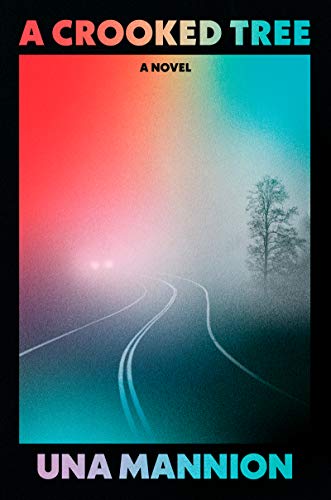
A Crooked Tree: Una Mannion, Release Date: January 5, 2021, Publisher/Imprint: Harper, Reviewed by: Claire Fullerton
A Crooked Tree is a sonorous ode to youth with all its innocence, angst, disillusionment, and unfiltered honesty. Author Una Mannion tells a coming-of-age story in its full expression as told by clear-eyed, 15-year-old Libby Gallagher, the third of five siblings born to a family most would call dysfunctional, yet with Mannion’s deft handling, we experience the family as normal; we accept as plausible the frame of reference in this heart-tugging cause and effect story.
It is the early 1980s. The five Gallagher siblings, whose ages span a decade, jostle, and spar with each other in the back seat, while their distracted mother is behind the wheel, on the eve of summer vacation. It is coming dusk as they drive home to bucolic Pennsylvania’s Valley Forge Mountain, and divorced mother, Faye, has had enough. Twelve-year-old Ellen tests Faye’s last nerve by giving her lip, and in a stunning fit of pique, Faye stops the car and demands that Ellen get out. Libby recounts what becomes the pivotal, repercussive scene, “We were still five or six miles from home. I hadn’t said anything to make my mother stop. We careened down the road, went through the covered bridge, past farmland, and fences. Beside us, the shadows of dogwoods blurred in the dark as my mother kept driving.”
Una Mannion’s debut novel A Crooked Tree will be published by Faber and Faber in the UK and Ireland and by Harper Collins in the US in 2021. It will also be published in Germany with Steidl publishing house and in Italy by Astoria.
Una has won numerous prizes for her short fiction and poetry including The Hennessy New Irish Writing Poetry Award, The Cúirt International Short Fiction Award, Doolin short story prize, Ambit fiction award, Allingham short fiction prize among others.
Her work has been published in numerous journals such as Crannóg, The Lonely Crowd, Bare Fiction, Ambit and her stories have been included in recent collections: Galway Stories: 2020 edited by Lisa Frank and Alan McMonagle (April 2020) and The Art of the Glimpse: 100 Irish Short Stories edited by Sinéad Gleeson, (autumn 2020).
Along with writers Louise Kennedy and Eoin McNamee, Una edits The Cormorant, a broadsheet of poetry and prose. She curates The Word, a monthly author series hosted by Sligo Central Library and the BA Writing + Literature at IT Sligo.
Una is represented by Peter Straus at Rogers, Coleridge & White
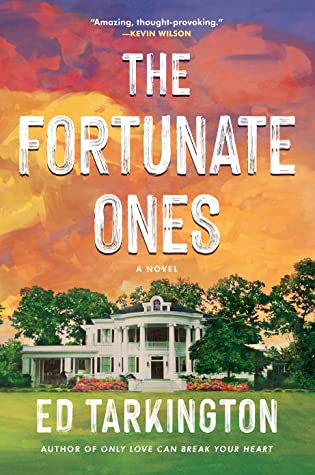
“The Fortunate Ones is a fathoms-deep exploration of love, loyalty, and the ties that bind, written masterfully from all angles. It’s a laser-sharp look at the underbelly of power and privilege’s repercussions as told through the power of story.”
A gorgeous, deep probing treatise on the myriad manifestations of love, envy, privilege, and longing, The Fortunate Ones by Ed Tarkington begins by holding a mirror to coming of age concerns in light of two young men from disparate backgrounds who overlap in a setting where all that glitters isn’t gold.
Ed Tarkington’s debut novel Only Love Can Break Your Heart was an ABA Indies Introduce selection, an Indie Next pick, a Book of the Month Club Main Selection, and a Southern Independent Booksellers Association bestseller. A regular contributor to Chapter16.org, his articles, essays, and stories have appeared in a variety of publications including the Nashville Scene, Memphis Commercial Appeal, Knoxville News-Sentinel, and Lit Hub. He lives in Nashville, Tennessee.
Praise for The Fortunate Ones
“Ed Tarkington’s wonderful second novel, The Fortunate Ones, feels like a fresh and remarkably sure-footed take on The Great Gatsby, examining the complex costs of attempting to transcend or exchange your given class for a more gilded one…As a novelist, he is the real deal. I can’t wait to see this story reach a wide audience, and to see what he does next. ”
— Paula McLain, author of The Paris Wife and Love and Ruin
“To the great literature of anointment, of the young person plucked from obscurity and given a place at the glittering table, we can now add Ed Tarkington’s lovely novel of a young man mystified by his good fortune until the reasons behind it are revealed and the cost is extracted. A beautiful read.“
— Ann Packer, author of The Dive from Clausen’s Pier
“Ed Tarkington perfectly captures the heady, conflicted emotions that come with proximity to privilege — both the irresistible longing and the heartbreaking disillusionment. I’m recommending The Fortunate Ones to every book club I know.”
— Mary Laura Philpott, author of I Miss You When I Blink
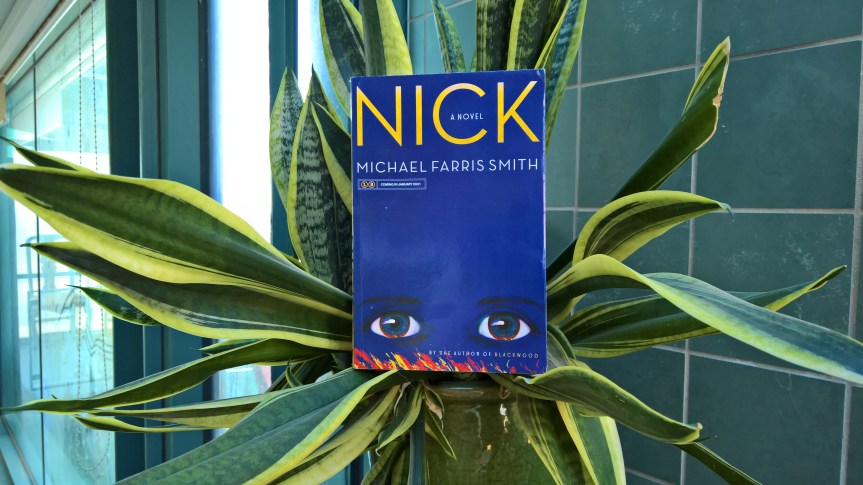
Happy Release day to author Michael Farris Smith! I enjoyed Nick immensely!
“The story of Nick is the story of one lost soul on automatic pilot written in four compelling parts that dovetail to weave a psychic template of a WWI survivor. Its impact is profound, its resonance subterranean.”
It will take hours to wipe the awestruck look off your face after reading the last line of the anxiously anticipated Nick by Michael Farris Smith, a writer with a wildly enthusiastic fan base that fancies itself insiders to Farris Smith’s gritty esotericism. You’re cool if you follow this Oxford, Mississippi author. You are in-crowd if you’re hip to this writer who seemed to inherit the tool kit of the great Southern writers before him. Referred to as MFS by those who take his work personally because his stories do the talking for a certain strata of a particular region, in some ways Farris Smith’s clear, direct, and economic voice is an acquired taste even as his career prospers. But the publication of Nick will change all that, and wider readership will understand the attraction of this fearless writer who transcends literary limits and boundaries and plays by his own rules.
Michael Farris Smith is the author of Blackwood, The Fighter, Desperation Road, Rivers, and The Hands of Strangers. His novels have appeared on Best of the Year lists with Esquire, Southern Living, Book Riot, and numerous others, and have been named Indie Next List, Barnes & Noble Discover, and Amazon Best of the Month selections. He has been a finalist for the Southern Book Prize, the Gold Dagger Award in the UK, and the Grand Prix des Lectrices in France. He lives in Oxford, Mississippi, with his wife and daughters.
When I sat down to give it a revision last year, the thing that really struck me and surprised me about it was how timely the novel felt. … I mean, it’s a country that was coming off World War I. It was a country in a great state of transition — which is what we are fully immersed in right now, the greedy and the rich getting richer. … [There are] characters in the novel who are coming off the war, who are very disillusioned with their own country. And it’s a country coming off a pandemic. I mean, I was just blown away like how strangely timely the novel feels now compared to, you know, 100 years ago. And if this novel would have been published in 2015, that would have all been lost. But here we are now.
It has been my great honor and joy to align with author and book-blogger, Sally Cronin, who lives in County Wexford, Ireland and spearheads the wildly popular WordPress blog, Smorgasbord. If you’re unfamiliar with Smorgasbord, don’t miss out. Look into it here!
Blog magazine for lovers of health, food, books, music, humour and life in general
Recently, Sally released an E-Book that I want to tell you about:
Book Description: Life is Like a Bowl of Cherries: Sometimes Bitter, Sometimes Sweet is a collection of short stories with scattered poetry, reflecting the complexities of life, love and loss.
The stories in the collection dip into the lives of men and women who are faced with an ‘event’ that is challenging and in some cases life changing.
Even something as straightforward as grocery shopping online can be frustrating, and a DNA test produces surprise results, the past reaches out to embrace the present, and a gardening assistant is an unlikely grief counsellor. Romance is not always for the faint-hearted and you are never too old for love. Random acts of kindness have far reaching consequences and some people discover they are on a lucky streak. There are those watching over us who wish us well, and those in our lives who wish us harm.
I enjoyed this e-book immensely and left this review on Goodreads, Amazon, and Book Bub!
Author Sally Cronin wields heartwarming magic in this delightful collection of short stories, each written with a keen eye focused on the nuances of human nature. Life is Like a Bowl of Cherries: Sometimes Bitter, Sometimes Sweet is a series of lovely vignettes written with a clean hand as Cronin builds her common man, everyday stories. It’s the little things in life that matter, and Cronin depicts such topics as random acts of kindness, unforeseen good fortune, falling into and out of love, and the magic of animals in such an optimistic way that the reader is morally encouraged and given great hope. Each story lulls the reader with neat, simplistic beauty even as it takes an unexpected turn. In Cronin’s The Scratch Card, Elsie Thompson wins twenty pounds on a scratch card, which she puts to use in such a way that events are set in motion and change a young man’s life. In Friday Night, a young woman is taken for granted by her clueless boyfriend, until a stranger whispers a line that puts her life on another course, and in the satisfying The Gaffer, a duplicitous wife-abuser gets creative comeuppance. Interspersed throughout this e-book are poems and photographs that poignantly highlight the collective spirit of the book. The characters persevere, help each other, and come to their senses in a manner suggestive of hard-won insight, and written with all the impact of a parable. A pleasurable, enchanting read with a heart of gold, Sally Cronin’s latest release is nothing short of a charming assembly of uplifting stories.
Behold: the delightful Sally Cronin!
Here’s a little something about Sally you’ll want to know! She writes:
“I have been a storyteller most of my life (my mother called them fibs!). Poetry, song lyrics and short stories were left behind when work and life intruded, but that all changed in 1996.
My first book Size Matters was a health and weight loss book based on my own experiences of losing 70kilo. I have written another twelve books since then on health and also fiction including three collections of short stories. My latest collection is Life’s Rich Tapestry : Woven in Words.. verse, micro fiction and short stories.
I am an indie author and proud to be one. My greatest pleasure comes from those readers who enjoy my take on health, characters and twisted endings… and of course come back for more.
As a writer I know how important it is to have help in marketing books.. as important as my own promotion is, I believe it is important to support others. I offer a number of FREE promotional opportunities on my blog and linked to my social media. If you are an author who would like to be promoted to a new audience of dedicated readers, please contact me via my blog. All it will cost you is a few minutes of your time. Look forward to hearing from you.”
I read and enjoyed Sally Cronin’s book, Tales from the Irish Garden!
Book Description: The queen of Magia and her court have fled their sun filled Spanish homeland and the palace beneath the magnolia tree.
Arriving on the backs of geese and swans, they seek sanctuary in the magic garden of The Storyteller who welcomes them to the Emerald Island, a place where rain is almost a daily feature.
Grateful for their safe haven and the generosity of their host, the queen and her courtiers embrace their new surroundings with delight. As the seasons change throughout the year, they come into contact with many of the human and animal inhabitants of the garden and the surrounding forest, all of whom have a story to tell.
This is a magical fairy story infused with fantasy and romance, as well as opportunities for mischief in the company of goblins, witches and Lerpersians.
My Review of Tales from an Irish Garden:
I was attracted to this book because of its title. Show me a title concerning Ireland, and you’ve got my attention! I had seen good reviews of this book and, as are legions of others, have been a devoted fan of author Sally Cronin’s blog Smorgasbord on WordPress for years. And so it was that I bought Tales From the Irish Garden, not fully knowing what to expect. To say I was roped in from the onset puts it mildly! I was immediately bowled over by the minute details in this highly creative story, one part fantasy, one part fairy story and all parts sheer, delightful suspension of belief. Only, and here’s the kicker, as I read this engaging story, lured along by its romantic, magical undercurrents, I began to intuit the deeply human parables! Sally Cronin is a writer gifted with insight, humor, whimsy, and unparalleled story pacing abilities. Tales From the Irish Garden invites the reader to enter a plausible, magical realm so real as to make the reader want to stay there
I also read and enjoyed Life’s Rich Tapestry:
Book Description: Life’s Rich Tapestry is a collection of verse, microfiction and short stories that explore many aspects of our human nature and the wonders of the natural world. Reflections on our earliest beginnings and what is yet to come, with characters as diverse as a French speaking elephant and a cyborg warrior.
Finding the right number of syllables for a Haiku, Tanka, Etheree or Cinquain focuses the mind; as does 99 word microfiction, bringing a different level of intensity to storytelling. You will find stories about the past, the present and the future told in 17 syllables to 2,000 words, all celebrating life.
This book is also recognition of the value to a writer, of being part of a generous and inspiring blogging community, where writing challenges encourage us to explore new styles and genres.
My Review of Life’s Rich Tapestry!
We come to know a person’s mind through the words they speak; their personality through what they create, and their heart through what they write. Put this all together and you’ve been gifted a glimpse into an artist’s soul. This is how Life’s Rich Tapestry Woven in Words impressed me. Author Sally Cronin’s precious gem of a book is nothing short of fluid insight into all that it means to be human in a round-robin way as to address the entire sphere in bits and pieces that leave a lasting impression. These are musings delivered artfully, the perfect melding of heart, mind, and soul. In sharing her personal views, the author invites us to examine our own impressions of the day-today by shining light on life’s rich nuance. There is something profound in these meditative pages, something joyous and real that takes nothing for granted by sheer virtue of the fact that Sally Cronin has called them by name. In addressing the natural world, celebrating pets, seasons of the year, and random thoughts, Cronin speaks to the reader conversationally in such a manner that told me I’d revisit the pages. Her flash fiction, speculative fiction, and short stories are vignettes to savor—all told, this book is a work of art at its finest. All praise to author Sally Cronin, who has earned a constant and significant place in the blogging world by selflessly serving as the fulcrum of focus for so very many. That she has stepped forth by assembling and publishing this collection of letters has gifted us all with the awe-striking opportunity to see a writer’s career shine at its brightest.
Many of us who follow Sally on Smorgasbord are familiar with the storied life of her collie, Sam, of whom Sally wrote ANOTHER book!
I’m sharing the effervescent D.G.Kaye’s review here of Sam: A Shaggy Dog Story! D.G. Kaye rated it it was amazing This book, a memoir from Sam, the Lassie-like Collie, will warm anyone’s heart. Cronin tells the story through Sam’s voice in this delightful read. If you’re not already a dog lover, you will be after reading Sam’s story.
If you want to know how a dog views his life, Sam shares his adventures as a dog, how he learned manners, how he learned to speak a few human words, and even he even shares his opinions on going to the vet.
Sam is truly a heart-warming read for everyone.Love this photograph!
Another of Sally Cronin’s 10 published books!
Whatever the name there is always a story behind it. In What’s in a Name? – Volume One, twenty men and women face danger, love, loss, romance, fear, revenge and rebirth as they move through their lives.
Book Reviewer Darlene Foster writes: An awesome collection of short stories based on the names of the main characters. We don’t normally choose our own names, but they tend to define us. Names like Jana, Zoe, Hector, Hannah, Emma, Lily, Isobel, Fionnuala and many more, each have a story to tell. Some happy, some sad, some bittersweet, and some heartbreaking. F. Scott Fitzgerald said, “Find your key emotion, this may be all you need know to find your short story.” Ms. Cronin has certainly found the key emotion in each story in this enjoyable book.
Sally has a grand total of 10 published books, which you can learn about on Goodreads:
When we publish a book, we want it to be read. Obviously. But what else do we want?
At the most concrete level, we want our book to be bought, liked, recommended, and reviewed. We want to see it on lists; we want lots of reviews (and stars) on Goodreads and Amazon. But we want something else, too—that connection with specific human beings who’ve been touched and changed by what we wrote.
When I published Queen of the Owls, I wanted all of those things, and I got many of them. The book earned awards, made it onto several “best of” lists. And yet, the most important outcomes are ones I never could have foreseen. They’re what I’m calling “unexpected, long-tail gifts”—responses from readers, often months later, that let me know how much my story meant to them.
My experience isn’t unique. When I reached out to other authors I knew, I found that all of them had a story (or two) about an encounter with a reader that left them humbled, honored, even moved to tears. Pondering what they told me, I’ve identified several themes that I’d like to share with you, along with some of their stories, as this year-to-end-all-years draws to a close. My hope is that these examples will help to remind us how much our writing really does matter and why it’s so deeply needed—especially now.
Finding the strength to go on
Therese Walsh tells how her novel, The Moon Sisters, found its way to a woman whose son had taken his own life. Though hesitant to read the book since she knew it was framed around a death in the family, the woman did read it and then reached out to let Therese know that it helped her to see a path forward for herself. She wrote: “What my heart appreciated the most was that the search eventually morphs into what the quest must be when answers remain elusive: Where do we go from here?” For Therese, “the book was written exactly for a person who needed hope after loss. That it found her, and that it resonated for her and hopefully brought some measure of comfort—helped her to find hope, despite the absurdity and sometimes even the brutality of life— well, gratified isn’t the right word for what I felt. It’s so much bigger than that.”
I’d venture to say that Therese is talking about the feeling of purpose, and of awe. There’s a sense of being of service—of playing a role in something that was meant to be—as someone picks up our book at just the moment when it’s needed most. As Caroline Leavitt, author of With You or Without You, said to me: “I got this astonishing email from a stranger who told me that she’d been going through a really hard time. She was stuck in a bad marriage and thought her life was over, but she read my book and told me, ‘I swear there was magic in that novel of yours’ because she suddenly felt that there might still be possibilities for her.”
Several authors told of equally extraordinary moments, when a reader shared how knowing that someone else—even if it was “just” a character in her book—had not only survived, but found a path forward, helped them find a freedom and a hope that had seemed unattainable. Kathryn Craft, author of The Far Side of Happy, told me: “The most touching comments I received were from people who had survived family suicides that no one ever spoke about, or had attempted suicide themselves. One young woman admitted to attempting suicide more than once—and then, after my event, she posted about our interaction on her Facebook page, amazed that I had held up the signing line to come around the table and hug her, and how this simple act had meant the world to her.”
Validating their own experience
When a reader bonds with one of our characters—feels that the character is not only credible and alive, but is someone just like me—it can bring a powerful sense of not being alone, not being the only one who’s gone through something painful and difficult. Randy Susan Meyers shared her experience after publishing her debut novel, The Murderer’s Daughters. “So many people wrote that they’d never told anyone about the domestic violence in their family, the murder of their mother, sister, daughter. Wherever I went, once people heard about my novel and the story behind it, family stories that broke my heart rushed at me. I learned that the only thing required of me was listening, bearing witness, and always giving the message that they were not alone, and the shame was not theirs to bear.”
So too, Barbara Claypole White, who writes about mental illness in families, told me: “I’ve received incredible messages from readers that often start, ‘I’ve never told anyone this before, but …’ Sometimes they see family members in my characters, or they’re in a dark place themselves and find connection and hope.”
This sense of validation can also help someone take an important step. Barbara related the story of an email she received shortly after The Promise Between Us was published. “A reader stumbled on a copy of the book. Through my heroine’s journey, the reader realized that she wasn’t crazy; she was suffering from postpartum OCD. My novel led her to a therapist. That’s a pretty amazing feeling, to see that fiction can and really does make a difference.”
Similarly, Randy Susan Meyers tells of an encounter when she was a keynote speaker at an event. “Afterward, a couple asked to talk to me as I signed books. They told the story of how they lost their daughter when her husband killed her, a story they had never shared before. They wanted to know how they could help to prevent other deaths.”
This sense of validation can also come from “finding one’s tribe” in the story world—reading a novel set in a place, culture, or social environment that rings familiar and true. Author Claire Fullerton set her book Mourning Dove “on the genteel side” of Memphis in the 1970’s. As Claire told me: “I wanted to depict a particular milieu and the price one pays for living in a culture where bad things are not discussed. Because I laid bare that side of Memphis, I couldn’t help wondering about the book’s Memphis reception.” Would it feel authentic?
Her concern abated when she received an email from someone she’d known decades earlier, asking if she had time to speak with him about the book. Claire wrote to me: “We had what turned into an hour-long conversation about the Memphis we knew in our coming of age. He said that my depiction of the social and economic strata we were raised in was as accurately described as anything he’d ever read and thanked me profusely for putting it into words.”
Bringing a new understanding and appreciation
Certainly, there are books that open us to cultures and eras we know nothing about, enriching us by showing other ways of living. At their best, these books do two things at the same time: they show us something new and different, while also helping us to see and feel that these “different” people are very much like us in their struggles and joys. Ellen Notbohm’s The River by Starlight, for example, shines a light of understanding and social justice on how the human experience in another era—the American West of a century ago— both differs from and mirrors our own. Ellen told me that at nearly every reading she’s done, someone has approached her with tears in their eyes, thanking her “for telling my mother’s story, my grandmother’s story—finally.” Through Ellen’s novel, they understood, at last, what the women who came before them had gone through.
Debra Thomas also relates how this “new understanding and appreciation” can be deeply personal. The most moving response she received to her novel Luz was from a young Latina woman who saw herself and her mother in the characters of Luz and Alma. As Debra writes: “Reading Luz prompted a discussion with her mother about her crossing, and for the first time, my reader learned intimate details of her mother’s difficult journey from El Salvador, along the length of Mexico, and then through a desert crossing at the border—including being lost in the desert for ten days. She came away with a renewed respect for her mother and an appreciation for the struggle she endured so she could provide her daughter—herself—with a better life. “
Literally, saving a life
I end with my own story, which is what prompted me to reach out to these authors.
In my debut novel, Queen of the Owls, the “bookworm” protagonist reveals, sees, and comes to claim her body through studying—and re-enacting—the nude photos that Stieglitz took of artist Georgia O’Keeffe.
I’ve received many messages from people who found the book to be deeply liberating, but an email from a woman I’ll call Cynthia was by far the most important. Cynthia won a copy of Queen of the Owls in a Facebook giveaway. Weeks later, she sent me an email.
“My connection to your novel is so surprising and totally unexpected … I’m uncomfortable looking at nude photos of women and reading descriptions of them. Nevertheless, I did quickly look up the photos of Georgia O’Keeffe that you mentioned in the book. The bigger deal is the book prompted me to do a breast examination of myself, which I know I’m supposed to do monthly, but don’t usually do. I found a small bluish-purple discoloration and a slight indentation. I called and had the physician’s assistant check me last week. She said it was not my imagination and scheduled me for a mammogram. They will also do a biopsy, if necessary. I am extremely grateful that I won a copy of your book and it prompted me to do this.”
Indeed, the doctors found a lump, and Cynthia was able to receive early treatment, including chemotherapy. She wrote again, later, to tell me she would never have had this early detection, and subsequent life-saving treatment, if she hadn’t read my book and been open to what it offered her.
Her story brought me to tears, reminding me that what we do through our writing has far more important consequences than how many stars, awards, reviews, or sales our books might collect. There are profound purposes we serve, as authors.
Cynthia’s is one story that I learned about. There may be other stories that I’ll never hear.
Our work as writers really matters. It might even save someone’s life.
What about you? If you’re an author, was there an unexpected gift you received from a reader? If you’re a reader, was there an unexpected gift you received from a book?
I can’t say I didn’t see it coming. Now that my book, ‘’Dancing to Irish Reel” is out, I’m being asked the inevitable question, “How much of the story is true?” Everyone who knows me personally knows I picked up and moved to the west coast of Ireland without much of a plan, and that I stayed for a year. Add that to the fact that the book is written in the first person, that the narrator’s interior monologues in the story are unabashedly confessional to the point of unnecessary risk. I’ve been told the book reads like a memoir, and for that, I can only say I’m glad because this was my intention. I can see why readers might think the entire story is true.
But writers make a choice in how to lay out a story, and in my case, I wrote the book based on the kind of books I like to read. I’m a one-trick pony kind of a reader. I want an intimate narrator’s voice with which I can connect. I want to know exactly whom I’m listening to, so that I can align with a premise that makes the story’s swinging pendulum of cause and effect plausible. The way I see it, there are always bread crumbs along the path to the chaotic predicaments people find themselves in, and although many are blind to their own contributions, when I read a book, I want to be the one who divines how the character got there.
What fascinates me about people are their backstories. Oh, people will tell you their highlights, but they rarely reveal their churning cauldron of attendant emotions; they rarely confess to carrying acquired fears. We all want to appear bigger than our own confusion, and the key word here is “appear,” because when it comes to faces, most people like to save theirs. This is the point I wanted to make in the story, but I also wanted “Dancing to an Irish Reel,” to be about discovery, so I started with a narrator who is a fish out of water: a twenty-five year old American ensconced in a specific culture she uncovers like the dance of seven veils. In the midst of this there enters an Irish traditional musician named Liam Hennessey. He is from the region, of the region, and therefore it can only be said he is because of the region in a way that is emblematic. From a writer’s point of view, the supposition offers the gift of built-in conflict, most poignantly being the clash of the male-female dynamic set upon the stage of differing cultures trying to find a bridge. And I can think of no better culture clash than America and Ireland. I say this because I happen to know to the Irish, we Americans are a bit brazen, that we have the annoying habit of being direct. But the Irish are a discreet lot, culled from a set of delicate social manners that seem to dance around everything, leaving an American such as me with much guesswork.
No matter how they shake it, writers write about what they know, even if it has to be extracted from varying quadrants that have no good reason for being congealed. “Dancing to an Irish Reel” is a good example of this: it came to me as a strategy for commenting on the complexities of human beings inherent longing to connect—the way we do and say things that are at variance with how we really feel, in the interest of appearances, and how this quandary sometimes dictates how we handle opportunities in life. In my opinion, there is no better playing field on which to illustrate this point than the arena of new found attraction. I’m convinced the ambiguity of new love is a universal experience, and since the universe is a big wide place, and since ‘”Dancing to an Irish Reel” has something to say about hope and fear and the uncertainty of attraction, it occurred to me that I might as well make my point set upon the verdant fields of Ireland because everything about the land fascinated me when I lived there, and I wanted to take any reader that would have me to the region I experienced as cacophonous and proud: that mysterious, constant, quirky, soul-infused island that lays in the middle of the Atlantic, covered in a blanket of green, misty velvet.
Excerpt from “Dancing to an Irish Reel”
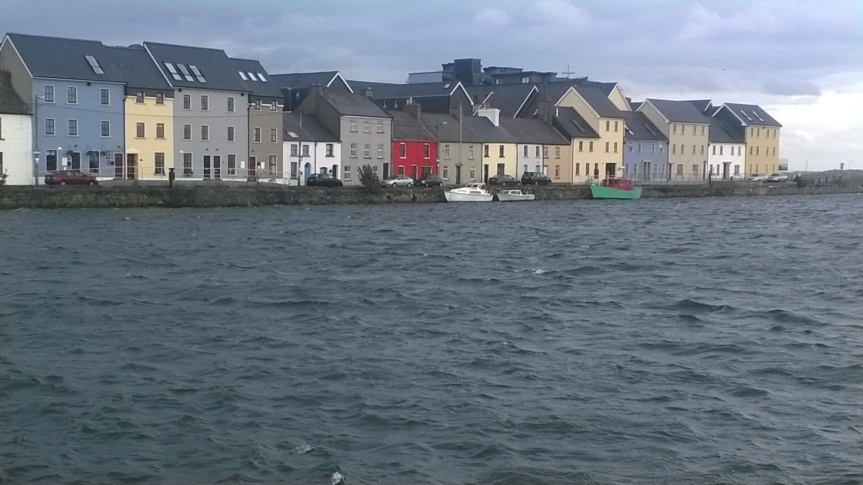
The distance between Inverin and Clifden is approximately sixty kilometers. It’s a visually inspiring hour-long ride through undulating midlands with grass as soft as velvet, gray stone walls that split the landscape, and bubbling intermittent streams as you glide along a two-lane road that cuts through a terrain devoid of street markers, stop signs, or any other indication the area has been previously trodden. There is little suggestion of civilization anywhere in sight and it is a quiet, unobstructed journey through the heart of Connemara with nothing in store, save for the destination of Clifden.
Driving into Clifden, one is abruptly thrust into the center of a thriving village that hosts an annual, three-day music festival wherein every pub door is invitingly open with signs outside announcing which Irish traditional musicians will be playing within the standing-room-only venues. A rudimentary chalkboard sat on the sidewalk outside of Mannion’s Pub with “Welcome Liam Hennessey” sprawled across in large, eye-catching cursive.
I followed Liam into the middle of a waiting crowd, which parted ceremoniously as he made his way to the old man seated against the wall across from the bar. Wind-tossed and toothless, the man sat on a battered wooden chair, tuning a fiddle and nodding his greeting while Liam opened his accordion case and settled in beside him. When a flute player joined them, the crowd fell into an anticipatory hush, ready for the music to begin. I stationed myself in front of the bar, minding my own business, but that soon became short-lived.
“Are you here with Liam?” asked a middle-aged man who was standing too close to me.
“Yes.” I took a step back.
“She’s here with Liam,” the man announced, turning to the man beside him.
“Ah,” the second man gasped, “she is, so!”
“Where did you get that blond hair on your head?” The first man eyed me.
“I brought it with me from America,” I said.
“She’s from America!” The man turned to the other man, his eyes opened wide.
“America indeed!” The second man drew in his breath.
“All I want in the world is for me brother to come in and see me standing here talking to you,” said the first man. “I wouldn’t care if a pooka came for me after that. Will you have a pint? Get her a pint, Tom,” he directed.
“Tom, make that a half-pint,” I said, trying not to laugh. I looked over at an obviously amused Liam, who smiled and winked as if to say he knew what was happening.
I looked toward the door and noticed an unusually small woman walking in with what appeared to be members of her family due to their similarity in stature. I’d met her in Galway before: she was a musician named Deanna Rader who played guitar and sang anything from Irish traditional music to her own compositions. I’d heard her sing in her low, husky voice a few times before, and because she was a friend of Declan’s, I’d exchanged pleasantries with her a few times as well. From the looks of things, she was in Mannion’s with her father and two sisters. She came smiling to my side instantly.
“Well then, you’ve made your way out here now, have you?” She looked up at me.
“I came here with Liam,” I said, grateful to know someone in the crowd.
“I knew you must have. So, it’s the two of you now, is it?”
“Well, I don’t know if I’d put it that way,” I said, diverting the implication. I couldn’t recall if I’d seen Deanna while I was out with Liam, or if she asked this because she’d heard people talking.
“You’re a long way from home yourself,” I said. “Is this festival a big deal?”
“Oh God, yes. People look forward every year. Luckily my parents live in Letterfrack, just up the road. I’ve been spending the last couple of nights with them. We’ve all come ’round tonight for the craic.”
“Well, it’s nice to know someone here,” I said.
“My sister came out to sing tonight. Would you mind asking Liam if she could give us a song?”
“Sure,” I said. “I’ll ask him when they take a break.”
“They probably won’t do that, so you’d be waiting for ages,” Deanna said. “You’ll just have to lean over and ask, like.”
“When?” I asked.
“How about now?” she said.
“Right now?”
“If it wouldn’t be too much trouble,” she smiled sweetly.
I looked over at the musicians, who were in full swing. There was no way I was going to butt in, even though Deanna kept standing there looking up at me expectantly. Just then, a man at the bar stepped forward enthusiastically. He leaned into the musicians circle, grabbed Liam by the arm, and shouted loudly, “The young lady here wants to give us a song.” With that, the music came to a screeching halt, and a whirlwind of preparation commenced. Liam leaned over and whispered to the two musicians beside him, instruments were set down, a microphone was raised, a path spontaneously cleared, and into the arena stepped Deanna’s sister. It was like the infamous scene of Marilyn Monroe singing “Happy Birthday” to President Kennedy.
There was a hush in the room as all eyes riveted upon the girl. She stood all of five foot two, but within that minuscule framework there was a lot going on: thick, raven hair fell in loose waves across her forehead and down her back. Large green oval eyes slanted and squinted catlike beneath thick, dark lashes. Turn by turn, her eyes focused and held one man in the room after another. She stood with her right hand on her hip and her voluptuous weight shifted to the left. With great histrionics, she crooned out a song in the Irish language I’d never heard before.
When she finally stopped, she sashayed over to Liam, totally aware everybody was watching. With grand theatrics, she threw both her arms around his neck and kissed him square on the mouth, nearly knocking him over with her forward advance. All hands in the room clapped loudly, wolf whistles erupted, and a few eyes turned my way.
“I imagine you’d have something to say about this passionate display,” said Deanna’s father, who had materialized beside me.
“Not really,” I said. “Do you?”
“You have to watch that one is all. She’ll be the death of me one day, he said, cocking his head toward her.
“I hope not,” I said.
“No harm done then?”
“No harm at all,” I said.
Dancing to an Irish Reel is available where books are sold!
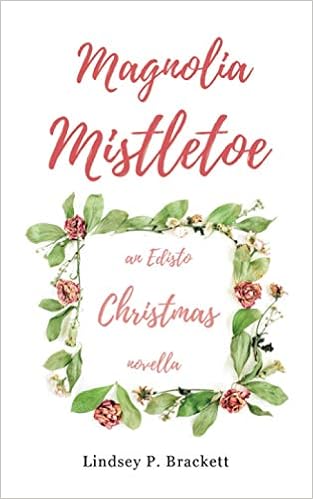
Congratulations to Lindsey Brackett on the release of her novella, Magnolia Mistletoe!
Hannah Calhoun knows what she wants for Christmas. But before she can become a full-fledged partner in her mother’s wedding planning business, she has to prove she can handle her own shortcomings.
Benjamin Townsend is an entrepreneur always looking out for the next big thing—and if hosting weddings on Edisto is it, he’s all in. Even if that does mean spending a lot of time with Hannah, whose world is way more full of happily ever after than his.
Once the magnolia and mistletoe are hung, will an Edisto Christmas be exactly the magic these two need?
AUTHOR: LINDSEY P. BRACKETT
When I’m not wrangling four kids, I sit on my back porch in the mountains and write southern fiction that’s short and long. I believe in Jesus, library fines, supper at the table, Edisto Island, and strong coffee. Pretty much in that order.
Lindsey P. Brackett writes southern fiction infused with her rural Georgia upbringing and Lowcountry roots. Her debut novel, Still Waters, inspired by family summers at Edisto Beach, released in 2017. Called “a brilliant debut” with “exquisite writing,” Still Waters was named an INSPY finalist and the 2018 Selah Book of the Year. Her second novel, The Bridge Between, releases July 31, 2019.
A member of ACFW and RWA, Lindsey mentors writers, and is a speaker on the lifelong value of reading and writing for conferences, schools, and libraries. Her syndicated column “Just Write Life” appears in several North Georgia newspapers.
Download her FREE novella, Magnolia Mistletoe, with newsletter signup at lindseypbrackett.com or on Instagram and Facebook: @lindseypbrackett.
“entertaining, inspirational, and visceral; a moving narrative of typically missed breadcrumbs on the way to meaningful connections. A delightful, wandering story with profound, insightful resonance . . .”
What’s in a name? In this gem of a book, The Ancient Way: Discoveries on the Path of Celtic Christianity, author River Jordan beautifully illustrates that the answer makes all the difference in the world. A trip to Scotland becomes a journey, a journey becomes a pilgrimage, and a pilgrimage is defined by the power of intention.
In first-person, nonfiction narrative readers will think familiar for its intimate, accommodating style, River Jordan combines everything that makes both memoir and travelogue captivating. Her story begins with a nudge. “Sometimes I need to listen to the small voice that is the songline of my soul. To hear the whisper of, ‘This way, follow me.’ For some, it is the voice of God, for others their sixth sense. For me it is both; I see them as one and the same.”
Following the lure of coincidence, a series of prompts leads to the west coast of Scotland. The ringing lilt of the name Iona spawns research, and as her will to travel grows, Jordan weighs the difficult way against a busy writer’s schedule and challenging circumstances. “A way would have to reveal itself where there was no way at all,” she concludes. In the end, Jordan employs practicality to get her from her Nashville home to Scotland. “Flexibility and a certain no-frills, down-to-earth sensibility can come in handy on the road. And making a pilgrimage to Iona was going to require a certain cowgirl can-do attitude.”
For all the reasons we’re attracted to a hero’s journey, we follow Jordan as she sets her sights on exploration and personal transformation against uncanny odds that verge on comical. Because it is the frugal, off-season month of November, the weather is frigid, ferry schedules are unreliable, and tourist establishments are closed. Aided by a travelling companion she calls her “anam cara,” she’s encumbered by too heavy a backpack and accommodated by strangers she meets through an online travelers’ global community called Couchsurfing. And yet she persists with an eyeful of wonder, a heart full of gratitude, and a string of prayer beads in her pocket to remind us that all is in the attitude. A lesser wanderer would have conceded defeat in the nearest pub.
Without being heavy-handed, this book speaks to the spiritual seeker, denominational or otherwise. The odyssey aligns spirit with intellect, certainty with curiosity, this world with the next, and all that has come before. Jordan writes, “There are dreams and there are destinies, and sometimes they cross over to become one and the same thing. If so, journeying on pilgrimage to Iona was as much God’s plan as it was mine, which meant we were in this thing together.”
Artfully layering her journey’s steps and missteps with Celtic Christianity’s history, Jordan gifts the reader with perfectly placed fact to heighten her story. “Not all from the history volumes of Celtic Christianity was first kiss, first love, first light. The history of Celtic Christianity is filled with violence, Viking raids, murdered monks, and destroyed monasteries.”
Of the ancient Celts conversion to the Irish monk, Columba’s, novel idea of Christianity, she depicts a melding: “All that was best of their Celtic nature wasn’t lost in translation: they brought it to the table. Reading those histories, I think those monks of Columba’s took a good look at what the Celts had pulled out of their spiritual backpacks and said, ‘Hey, this is good. I think we can use this.’”
A narrative nonfiction book for travelers in search of The Divine, The Ancient Way: Discoveries on the Path of Celtic Christianity takes you from the hills of Tennessee to the hallowed ground of Scotland’s Iona Abbey, on a wing and a prayer, with help from the kindness of strangers. It’s entertaining, inspirational, and visceral; a moving narrative of typically missed breadcrumbs on the way to meaningful connections. A delightful, wandering story with profound, insightful resonance you’ll want to share with your friends, The Ancient Way: Discoveries on the Path of Celtic Christianity encourages you to keep an eye on the sacred along the road to self-discovery.
Claire Fullerton is a staff reviewer at New York Journal of Books.
I had the immense pleasure of reviewing this book for the New York Journal of Books!
Never Turn Back by Christopher Swann!
“A contemporary novel that tips its hat to multiple genres, Never Turn Back is intriguing, high-stakes fiction.”
A wonderfully unusual, utterly unpredictable twist of a puzzle with an edge, Never Turn Back warns you with its title that you’re in for something, and hints at the problem with a line on page two, when the narrator says, “The twin memories of my parents are like a pair of blades scissoring my heart.”












 Claire Fullerton Author