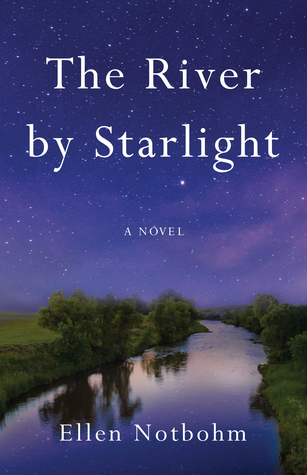
The River by Starlight by Ellen Notbohm

Every well-wrought sentence in The River by Starlight is as beautiful as the Henry David Thoreau inspired title. Author Ellen Notbohm has penned a breathlessly epic, masterful story set in early 1900’s Montana in language so lyrically elevated you’ll want to commit much of it to memory but will have to get back to it later—you’ll be too busy turning the pages.
The River by Starlight is a starkly humanistic story. It’s an historical novel intimately and engagingly written in present tense concerning the sweeping life story of dark-haired and diminutive Annie Rushton, whose young marriage is permanently marred by what might be the time’s inchoate perceptions of post-partum depression. There are repercussions to Annie’s malady that propel her to leave everything behind in her home state of Iowa and hop a train to join her bachelor brother in the wilds of homesteading Montana, where she risks starting a new life. Shouldering her heartbreak, Annie applies her headstrong, fierce independence to helping her brother prosper, so when charismatic businessman Adam Fielding, a colleague of her brother’s, enters her life, theirs is a relationship forged on mutual ambition, but as the years wear on, they become two desperate souls unwittingly tossed by the unpredictable storms of life.
Life’s choices come into play, in The River by Starlight. Though Annie and Adam begin with hope and the best intentions, there is only so much one can weather in hope’s defeat by repetitious wounds that won’t heal. Through the years, communication errors and individual judgement calls are made that usher in divergent aims, and all the while is the roiling concern of Annie’s mercurial sanity.
Resiliency, perseverance, love of one’s children, and where to appropriately place one’s pledge are threads that weave the tapestry of this thoroughly realized story, whose themes, I believe, are timeless and universal.
The River by Starlight is a book for the ages. In my mind, it stands with the classics. The novel’s voice and three-part pacing are seamlessly crafted; its tone and mood are deep and oftentimes heart wrenching, so much so that the reader can’t help but be lured by emotional investment in characters so viscerally drawn they come to life on the pages.
The River by Starlight is for those discerning readers who demand excellence in language, craft, and story. It is a plausible, finely researched, resonant book ultimately about the taming of the spirit, set in tumultuous, untamed times.


https:www.clairefullerton.com

Colorado Mandala by Brian Francis Heffron: Review


22964699A gorgeous, fully realized, generously crafted story on male friendship and the deep wounds motivating main character, Michael, as told through the perspective of his intimately effected best friend and business partner, Paul.
Michael is a Vietnam war vet, with a festering secret underscoring his high-living, swaggering behavior. He is a man’s man to his core: streetwise and wary, cocksure and battle-scarred with his own code of honor. It is post-war 1970’s Manitou Springs, Colorado, and author Brain Francis Heffron captivates the reader with such panoramic descriptions of the Pike’s Peak area at such a finely-tuned altitude as to cast the environment as sacred, while the reader all but breathes the clear mountain air.
The title of this book is inspired by Sarah, the wispy and vulnerable single mother at the center of a lover’s triangle, who paints batik images on silk and twists her long flaxen hair in a bun. Michael is protective of Sarah from an unfolding hidden agenda. Paul struggles with the duality of his building feelings for Sarah and loyalty to Michael. In the expert hands of writer Heffron, each character plays off the others with such reasonable impetus, Colorado Mandala reads like a treatise in deep-seated psychological motivation.
This book is astoundingly action-packed and character-driven. It takes the reader into dark caves and sets them in the gambling center of a mountain party’s cockfight. It is seamlessly paced and weaves minute visual images with poetically descriptive narratives and uncommon use of language. I understand Mr. Heffron is a poet, and it shows. There isn’t a weak sentence in the engaging Colorado Mandala, and I held my breath at its end, during one of the best literary denouements I’ve ever read. Colorado Mandala is the very definition of a page-turner. It will make you a fan of author Brian Francis Heffron, and is the kind of book you’ll recommend to your friends.

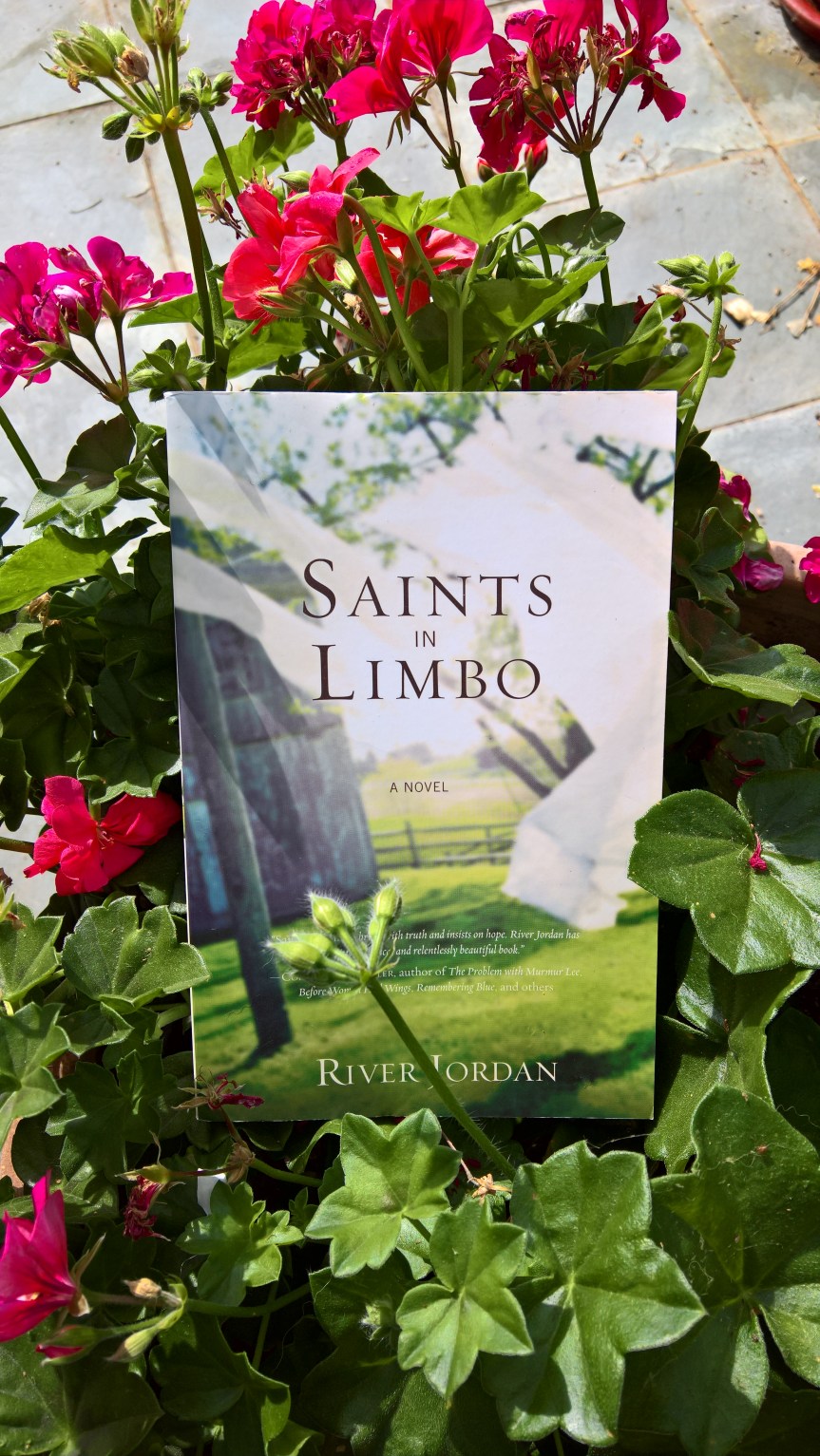
Book Review: Saints in Limbo by River Jordan

In Saints in Limbo, author River Jordan’s immediate establishment of the incredible as credible serves as the foundation of this wonderfully unique novel, which takes nostalgia and wishful thinking and makes it the undercurrent of a now plausible story involving an old woman in possession of a supernaturally empowered rock that enables her to revisit her past. Saints in Limbo transcends a neat, paranormal story by gifting the reader with a cast of characters imbued with nuanced layers: they have character defects, unrealized dreams, and unfulfilled potential even as they seek a meaningful life. An enthralling page-turner written in poetic language, I found this riveting book an insightful commentary on the power of perception and the importance of longing and connection. I recommend this book to those who love to read literary fiction tinged with an intelligent use of the uncanny. Rich in setting, character, and prose, Saints in Limbo will make every reader a fan of the author River Jordan.


Saints in Limbo Book Description:

Ever since her husband, Joe, died, Velma True’s world has been limited to what she can see while clinging to one of the multicolored threads tied to the porch railing of her rural home outside Echo, Florida.

Then one day a stranger appears at her door. Without knowing why, the agoraphobic widow welcomes him into her kitchen for coffee while she tells him stories of how life used to be, before her purposes were “all dried up.” Just before disappearing as suddenly as he came, the man presents Velma with a special gift, one that allows her to literally step back into the past through her own memories to a place where Joe still lives and the beginning is closer than the end.

While Velma is consumed with the man’s gift, her son Rudy is also being presented with a challenge to his self-centered beer drinking, skirt chasing ways, while his memories unravel like the webs that haunt him.

winds her way to Echo, determined to unravel the mysteries her dead mother left behind. As secrets old and new come to light, Velma finds herself unmoored from the fears of the past and feeling her way toward freedom.

This lyrical, Southern novel weaves mystical elements with tangible touches of God’s redemptive grace to reveal a pattern of irresistible hope

Look into River Jordan at:  http://www.riverjordanink.com/

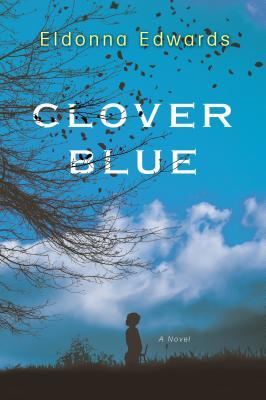
Book Review: Clover Blue by Eldonna Edwards

A perfectly paced, thoroughly realized, refreshingly unique story that takes the concept of world-building to expert proportions. Author Eldonna Edwards sets her standout novel in a 1970s, Northern Califonia commune’s bucolic setting and regals the reader with an unusual story from the perspective of the eponymous narrator, Clover Blue, who has a personal history, unlike all others. In a coming of age story, Edwards layers her art with the subtle fine-tuning of what it also means to come into awareness. The Saffron Freedom Community’s earthy setting is tangible, it’s free-spirited, well-intentioned residents so finely drawn as to elicit the reader’s acceptance of a lifestyle so beautifully and minutely depicted, one can’t help but become emotionally invested. At the heart of this story is the adolescent Clover Blue’s search for identity within the confines of his deep-rooted sense of place. Once the reader is hooked by Clover Blue’s story, a mystery creeps in to suggest all is not as it seems, in this idyllic world apart from the world, spearheaded by a mesmeric leader whose past is so covert, it’s no wonder his counsel is centered on nonjudgement and living in the present. Clover Blue is a story that rolls, unfurls, and deepens in seemingly simple complexity. It is a resonating, engaging story true to the spirit of its times and satisfying in its unpredictable end.


https://www.clairefullerton.com

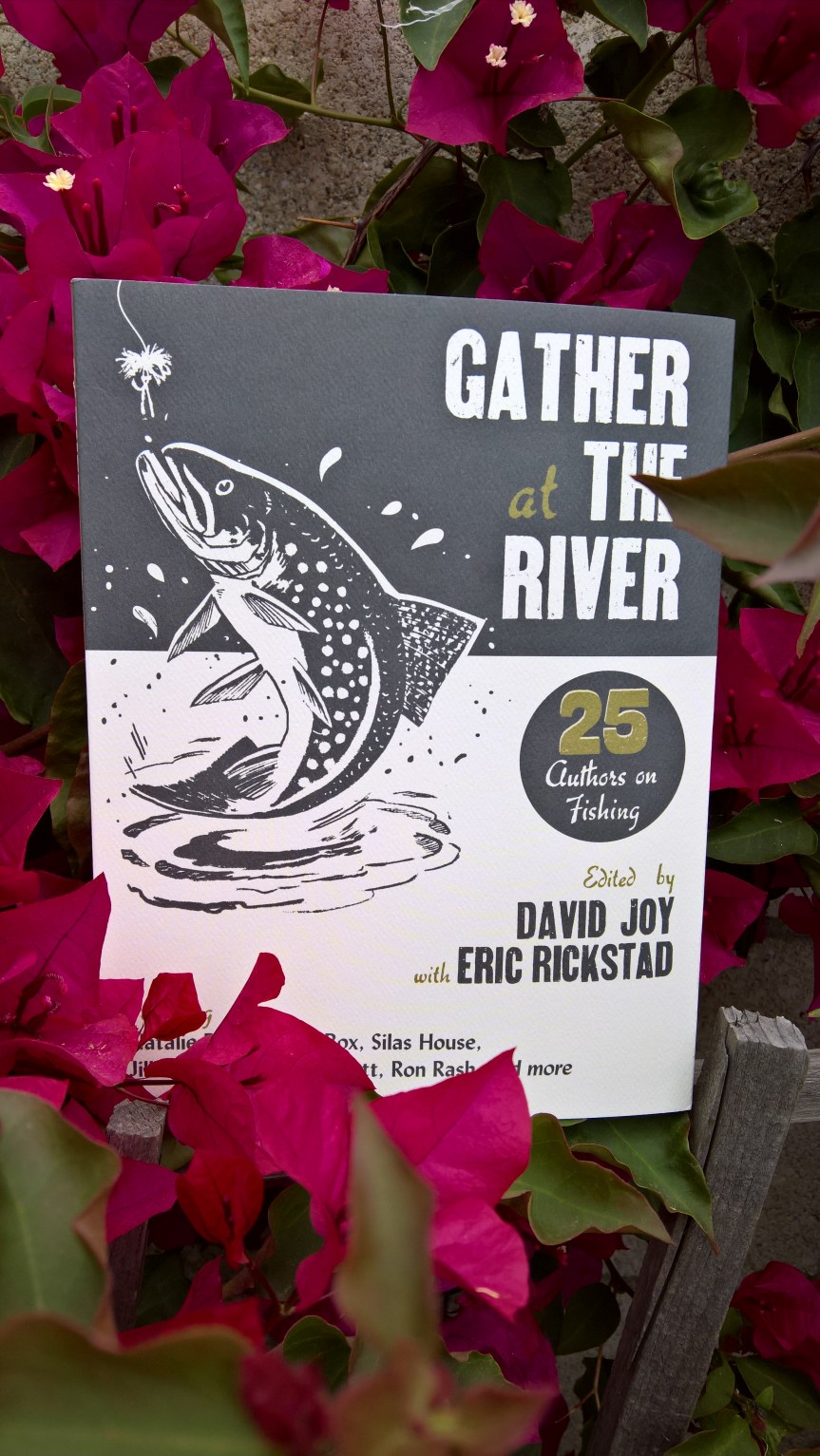
Gather at the River: 25 Authors on Fishing ( Edited by David Joy with Erick Rickstad)

At the heart of every well-beloved novel is that one riveting scene that verges on transcendence and stays in the reader’s memory as the very soul of the book. Gather at the River is a collection of those resonant moments, one right after another, and there’s not a weak story in the assembly. I use the word story, instead of essay, on purpose. These are first person accounts rife with insider’s knowledge in the hands of those that know nuance and how to describe it down to the last rock in the river. These writers know what from the woods as they recount their individual fishing stories and gift the reader with their own version of universal nostalgia. They work the depths of the seemingly simple themes of family connections, childhood innocence, and pivotal moments all within a bucolic setting that expands the visceral margins of character as place. You can see, hear, and feel the mood of every setting, and though fishing is the common premise, the central experience in each is so much more. There’s such art in the craft of a briefly told story. The sure sign of success is when the reader, in this case, yours truly, is so moved by the reading experience that they wish for more.

Confessions of a Christian Mystic by River Jordan

Bold, daring, and yes, confessional, River Jordan’s collection of personal essays warns you going into it that you’re in for something unique. After all, what is the art of writing, if not a venue to compare notes on this business of life? Only a master can make this plain through the power of fifty delightful stories. This is a writer who asks the big questions for us; who owns a steady faith base yet thinks outside the box. Confessions of a Christian Mystic is devout and dauntless. It is sonorous, beautiful, soul-deep, and fearless. And it is sardonically funny in its skirt-lifted vulnerability. The chapter titled, “Sometimes Good Girls Get Naked” is a case in point. With a deft hold on sentiment without being overly sentimental, I won’t cheapen this important book by suggesting it’s a page-turner—it is better. Confessions of a Christian Mystic is something to savor. You’ll want to pause and ponder at the end of each chapter.
I applaud every essay in this gorgeous gift of a book. River Jordan has woven vignettes of her personal narrative at such an engaging, introspective pitch that I defy every reader not to see themselves in its pages.

The Fighter by Michael Farris Smith

35604673


The most salient aspect of this compelling story is author Michael Farris Smith’s economic, straight-forward writing. The Fighter is a tight, gritty story written in pitch-perfect Delta colloquialisms that hand the reader an attitude as a working frame of reference. From the get-go, the reader knows the main character, Jack Boucher, was dealt a raw deal. Unceremoniously abandoned by his parents while still in diapers, any reader with a beating heart is immediately invested in Jack’s unfortunate origins. When he is fostered by a single mother with her own cross to bear, the reader is lured page-by-turning-page, in the underbelly of a Deep South setting, hoping to see Jack take what little stability he has and scratch his way to better circumstances. That Jack Boucher grows up to be a fighter is a construct that operates in multiple layers, within a life built much by his own design. A through line of conscionable humanness staggers Jack onward, and there is much in this hubris suggested story to which the reader can relate. For all the reasons I love the author Ron Rash, I applaud Michael Farris Smith for deftly weaving a handful of character intensive threads into a deceivingly simple story. The Fighter is a book that packs a punch of resonance. Though its impact is immediate, its aftermath grows.

https://www.clairefullerton.com

Book Review: Bead by Bead: The Ancient Way of Praying Made New

I came across this book through my fellow author, Susan Cushman’s, blog, who has a wonderful thing going as an author, editor, and champion of great books: http://susancushman.com/about/.  Susan’s engaging Facebook presence called my attention to author Suzanne Smith Henley’s book, which concerns a labor-of-love she engages in making stunning prayer beads. An impressive amount of acclimating research into ancient, religious practices went into this book, then the author brings it all home to modern day with inspiration and sheer delight! I am marveling at the connections that can be made through social media! Below is my review of Bead-by-Bead. If you’re interested in exploring the centering intent of prayer, this book is for you!


I am savoring this beautiful book, and turning to it nightly as a touchstone at my day’s end. Written in accessible language so compelling and engaging, Suzanne Smith Henley’s voice is like listening to a friend so rife with personality, I want to hear everything she has to say! There is a wealth of information regarding historical use of prayer practice with the use of beads. I am learning much about various religious practices, and the common thread of a physical ornament to ground one into prayer is something I find reverent in its intent and focus. This is a book for everybody: the devout, the spiritual, the artistic, the seeker. It is a manual of fine balance mixed with humor and intelligence, and its specific aim is something I find admirable as it unites. I recommend this book as a call to worship, no matter one’s proclivity or denomination. It is thought-provoking in its invitation to deepen one’s relationship with prayer, and I am so pleased to have found this book!


Book Review: Memphis Movie by Corey Mesler.

I had the great pleasure of coming across this delightful, wonderfully creative novel about the making of an Indie film. Anyone passionate about film-making will love it! Corey Mesler is its author, and I take my hat off to him!  Here’s my review of a book that should be widely read!


Memphis Movie

That Memphis Movie drops the reader smack in the middle of this one-of-a-kind story by opening with an interview of indie film maker, Eric Warberg, was a stroke of genius. It set the stage, mood, and tone for this down-on-his-heels filmmaker’s background and tells the reader that the stakes are high in this modern-day story. The book comes out swinging, with dialogue so engagingly sardonic it transcends any necessity for knowledge of a film’s production. And yet, in Memphis Movie the reader receives the minutia of what goes into making a movie, and as this fabulous story unfurls, the savvy reader can’t help but think the chaos is a lot like any other line of work taking over someone’s life. Eric Warberg’s identity is at issue. He’s a washed-up fish-out-of-water dragging his tail in the pond he comes from, trying to pull himself up by his bootstraps but not convinced he can. His is the voice of reason, while one of the more cacophonous cast of characters ever assembled spins out around him, each delightfully drawn player with their own agenda. If there’s any prayer of cohesiveness in this dysfunctional crew, it’s all in Eric’s shaky hands. Sisyphus had an easier time of it, and this is what makes this character intensive story so funny. The book speaks in jargon so spot-on it lends ambience, and the characters sputter and sway in a setting only the infinitely hip know of in Memphis. They are all likable underdogs looking for a center. They are scratching around in the underbelly of an historic southern town, trying to make this thing work. Memphis Movie is a blend of satire, humor, and irony driven by sheer intelligence. Only a gifted writer can peg the nuances of human nature to the point where the reader says of each character, “I know that guy!” All praise author Corey Mesler. I’m so atwitter over Memphis Movie, I’m telling all my friends that this book about the making of an indie film is so good, it should be made into its own movie!

http://www.clairefullerton.com

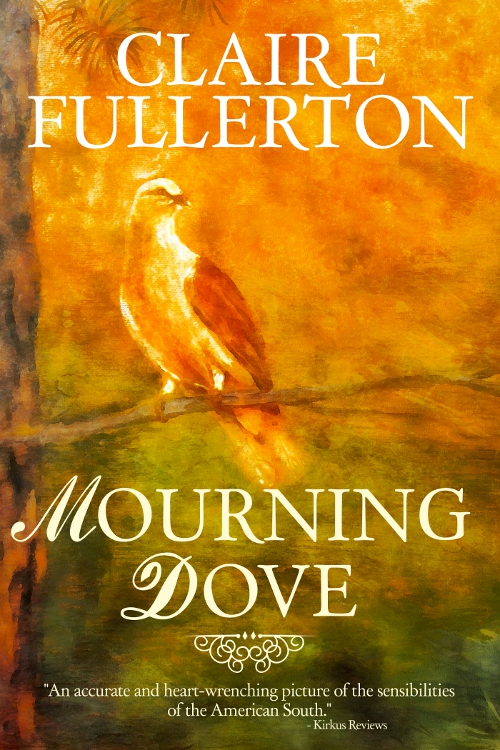
The New Southern Fugitives Review of Mourning Dove

Book review
Mourning Dove
Claire Fullerton
Forthcoming June 29, 2018
Firefly Southern Fiction, 234 pp., $9.95
Parallel universes exist all around us. One person chucks trash for another to call a treasure. Claire Fullerton’s novel Mourning Dove explores this concept with indulgent detail through a cast of characters manifesting such existences like fraternal twins. North meets South. Gritty, lower-income streets cross into rich, well-to-do avenues. The old gives way to youth in an almost forgotten silence. The harsh reality of here and now crashes unforgivingly into wistful nostalgic ideations of what might have been. Fullerton delivers a punch that impacts the reader in a vein similar to To Kill a Mockingbird—even the coming-of-age protagonists and titles align to a degree.
Told through the perspective of Millie, the younger child between she and her wunderkind brother Finley, the novel oscillates between worlds of breathless memory and the tattered edges of the present. Fullerton plops Millie into uptown Memphis, Tennessee during the 60s and 70s. It’s a world away from her native Minnesota and the divorce between Posey, her well-heeled mother, and Sean, her wayward alcoholic father. From there, Millie and Finley are lurched into maturity all too soon, with their environment ever shifting between hopeful wishes and severe thoughts grounded in a cold reality.
Like To Kill a Mockingbird, Mourning Dove examines the social mores of masculinity versus. femininity, rich versus poor, life versus death, and maturity versus youth. Unlike Lee’s classic, Fullerton uses these themes in a painfully intimate way with her central characters unapologetically tasked with navigating between these worlds. Where Scout and Jem experience these from a protected and privileged distance in To Kill a Mockingbird, Millie and Finley are more often than not left to their own devices. The siblings maneuver across both literal and figurative borders with no guidance from the adults in their lives—who admittedly seem less prepared or willing to manage these borders for themselves.
Posey, living the life typical of Southern elites, flits in and out the scene with an elegant remoteness similar to that of a wild bird, present yet untouchable. Sean’s exits and entrances come with a stronger weight until his untimely and lonely death, hermited away in his lower-income apartment. Even Gaga, Millie’s fragile grandmother, exists on her own, separate plane of reality until death. While all characters inhabit the same stage, their performances create a collage of alternate spaces, with each operating in entire separation from the others. The chilled distance between child and adult creates an unnerving atmosphere for the audience watching the protagonists grow up with little guidance.
More to the point, Millie and Finley act more as spectators in their own show. They observe from a distance, save for the here-and-there snippets of conversation with their family members. Their existence is an insular one where their presence is solely delegated by beck and call for strictly Norman Rockwell purposes of creating the perfect, Southern gatherings of “knee-high to a grasshopper” conversations with adults that Posey wishes to impress. As children, they are often the perfect picture of “seen and not heard”conversation starters over cocktails in the card room. The closest, warmest relationship in the book is between Millie and Finley alone.
But even this relationship meets an unfortunate end, and everything the now adult Millie thought was set in stone is turned upside down. Players in the dramatic tragedy switch roles faster than your favorite daytime soap opera. Fullerton beautifully sums up the lessons from this novel with a single line: “Perhaps we’ll discover great meaning as we look back and realize we handled the same history in two different ways.” The single grain of hopeful truth Mourning Dove offers at its bitter end is this: the truth is multidimensional. Even two people with twin experiences will come to forks in the road and separate into paralleled experiences.
Fullerton’s novel will transcend generations for this reason. It speaks to readers across different barriers in the same way that her novel oscillates. North to South. Baby Boomer, Gen X, Millennial. The hard-learned lessons she captures know no boundaries and have no mercies. Mourning Dove is a novel we not only read, but listen to as we would a teacher filled hard won wisdom.