Outbound Train by Renea Winchester

Congratulations to Renea Winchester! Today is release-day of her wonderful novel, Outbound Train, a novel with such visceral, Southern nuance and depth; the characters seem to embody the rural South.

In 1976, memories from a night near the railroad tracks, sixteen years earlier, haunt Barbara Parker. She wrestles with past demons every night, then wakes to the train’s five-thirty whistle. Exhausted and dreading the day, she keeps her hands busy working in Bryson City’s textile plant, known as the “blue jean plant,” all the while worrying about her teenage daughter, Carole Anne. The whistle of the train, the hum of those machines, and the struggle to survive drives Barbara. When an unexpected layoff creates a financial emergency, the desperate pressure of poverty is overwhelming.
Unbeknownst to Barbara, Carole Anne sneaks out at night to walk the tracks so she can work at Hubert’s Bar. She’s hoarding money with plans to drive her mother’s rusty, unused Oldsmobile out of Bryson City, and never return. She only needs one opportunity … if she can just find it.
When Carole Anne goes missing, Barbara finds herself at a crossroad—she must put aside old memories and past hurts to rely on a classmate for help finding her daughter. But this is the same man she blames for the incident years ago. Is she strong enough—or desperate enough—to do anything to keep her daughter safe?
In Outbound Train, the Parker women struggle to make frayed ends meet in a town where they never quite do … at least, not without expert weaving and a bit of brute force.
I read the ARC of Outbound Train and recommend this gorgeously written, starkly real Southern set story that will play on your heartstrings all the way through. Author Renea Winchester writes with a clear-sighted, compassionate eye about women in hard times. They are the blue-collar, Parker women, one haunted by her past; the other, her daughter, who plans to escape the poverty of Bryson City, North Carolina at any cost. With twists and turns and secrets that come full-circle, Outbound Train is an engaging story, Southern to its core in setting and character, and captivating to its last page.

Here is my favorite photograph of Renea with her goat!

Image may contain: 1 person, smiling, eating, child, outdoor and food

I asked Renea Winchester the following questions about Outbound Train.

Q: Are any characters based on or named after friends? If so, have you told them?

Full disclosure, the character Doretta is a combination of Loretta Hannon, the funniest woman in the South, and my sister, Doretta McCammon. Both of these ladies are unpredictable, fearless, and funny as all get out. There’s a reason we live so far apart because together we have entirely too much fun. Secretly Carole Anne wants to be like Doretta. She covets Doretta’s life, her house, and the freedom Doretta has. However, Doretta wishes she were more like Carole Anne. I haven’t told my friends that I based my character on them, until now.
Q: Did you write outside? Do you have a soundtrack?
What an excellent question. I have carried this novel with me, in written form, for years. Jotting down notes, scenes, and sometimes a single saying in notebooks, receipts and napkins whenever a character whispers in my ear. I do not have a soundtrack. Music is a big part of my life, but I find it distracting when writing.

Q: How did you capture the ideas as they came to you?
I write everything by hand because, for me, the first draft comes easier through the tip of a pen. While writing Outbound Train, I voiced to my dear friend, Terry Kay, the troubles I had with a particularly elusive character. The scene simply would not flow no matter how hard I tried to manipulate the story. Terry, in his wisdom, said, “Now dear, you cannot chase characters down the hall. You cannot force them to do your bidding. You are not in control. They are in control. You have two jobs. Observe your characters and write what you observe. Pondering his words, I realized he was correct. The next day I put his advice into action and finished the scene.

Q. You wrote about secrets. Can you tell us a little about the cause and effects of secrets in the story?
Both Barbara and Carole Anne have secrets. Barbara won’t reveal the name of Carole Anne’s father, so young Carole Anne – who is hungry for a positive male role model-picks her own; except the person she picks is a man her mother blames for a traumatic event from her childhood. Carole Anne has had her fill of poverty. She wishes to escape, by any means necessary, even when it means taking a job that breaks the law. A job that ultimately leads to her kidnapping.
I think we all have secrets. Whether we are hiding a past trauma, or hunger for something more in life, I believe the secrets we carry motivates us to change.

Q: Was the North Carolina setting important to the story?
During the first draft, I set Outbound Train in a fictionalized town, but it felt disingenuous. I knew readers couldn’t connect with the characters without experiencing what we call a “sense of place.” Honestly, the story lacked heart. I simply could not convey the emotion necessary to touch readers unless I set the story in my hometown. I needed readers to walk the rails with Carole Anne, and hear the hum of sewing machines inside the textile mill. I needed to show them this part of Bryson City because the setting made me who I am today. In order to honor the women who raised me, the setting needed to be real. The same is happening with The Mountains Remember, my work in progress. The story occurs on Indian Creek, in the community where my people once lived before being displaced to form the National Park.

Here’s what others say about Outbound Train:
“Renea Winchester’s storytelling is as real and authentically Southern as the clear water music of an Appalachian creek and the song of Cicadas on a front porch summer evening.” ~ Lisa Wingate,
#1 New York Times Bestselling author of Before We Were Yours and Before and After.

“I fell in love with the smart, strong, funny characters in this community of make-do women, and I predict you will, too.” ~ Pamela Duncan, Author of Plant Life

“With pitch-perfect dialogue and believable characters, Winchester has crafted a story that will make readers stand up and cheer.” ~Michael Morris, Man in the Blue Moon, A Place Called Wiregrass

Renea was born and raised in Bryson City, North Carolina. She began her writing career in Georgia where she penned several non-fiction works including Farming, Friends & Fried Bologna Sandwiches which was nominated for the prestigious SIBA award, earned Renea a nomination for Georgia Author of the Year, and received the endorsement from The Pulpwood Queens, the largest book club in the country. After winning the Wilma Dykeman Award for Essay and the Appalachian Writer’s Award, Renea focused on transitioning to fiction. Renea has served on the Atlanta Writers Board, Georgia Writers Association, and judges multiple literary awards. In April 2020, Firefly Southern Fiction released Outbound Train. Set in her hometown of Bryson City, North Carolina, in 1976, Outbound Train is a triumphant story of perseverance and hope despite the harshness of poverty. Renea is passionate about literacy, Appalachian Heritage, preserving rare seeds, cultivating endangered plants and meeting new friends. Outbound Train is her debut Novel. Contact Renea through her Facebook Page https://www.facebook.com/Renea-Winchester-Author-162590877104288/

Image may contain: 2 people, including Renea Winchester, people sitting, tree and outdoor

~Outbound Train releases today. It’s available at your favorite book store as well as book sellers online.
You can find Renea Winchester of WordPress ~ https://reneawinchester.wordpress.com/

Life’s Rich Tapestry by Sally Cronin

Life’s Rich Tapestry by Sally Cronin

We come to know a person’s mind through the words they speak; their personality through what they create, and their heart through what they write. Put this all together and you’ve been gifted a glimpse into an artist’s soul. This is how Life’s Rich Tapestry Woven in Words impressed me. Author Sally Cronin’s precious gem of a book is nothing short of fluid insight into all that it means to be human in a round-robin way as to address the entire sphere in bits and pieces that leave a lasting impression. These are musings delivered artfully, the perfect melding of heart, mind, and soul. In sharing her personal views, the author invites us to examine our own impressions of the day-today by shining light on life’s rich nuance. There is something profound in these meditative pages, something joyous and real that takes nothing for granted by sheer virtue of the fact that Sally Cronin has called them by name. In addressing the natural world, celebrating pets, seasons of the year, and random thoughts, Cronin speaks to the reader conversationally in such a manner that told me I’d revisit the pages. Her flash fiction, speculative fiction, and short stories are vignettes to savor—all told, this book is a work of art at its finest. All praise to author Sally Cronin, who has earned a constant and significant place in the blogging world by selflessly serving as the fulcrum of focus for so very many. That she has stepped forth by assembling and publishing this collection of letters has gifted us all with the awe-striking opportunity to see a writer’s career shine at its brightest.

Visit Sally Cronin on Word Press, Smorgasbord!


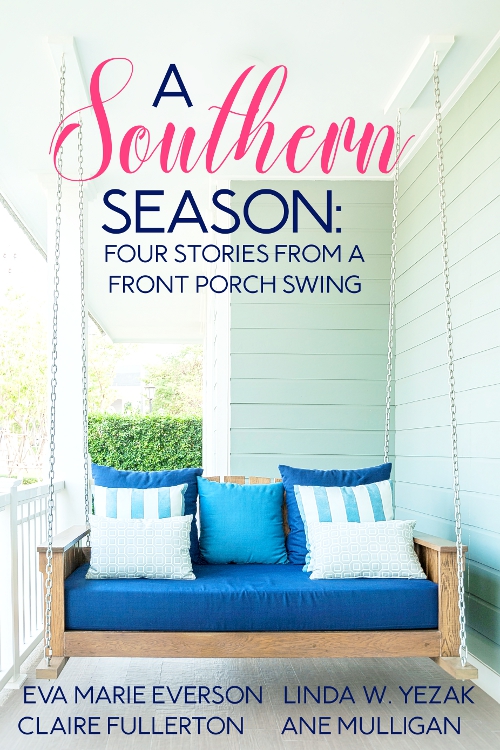
A Southern Season

A year ago, I was asked by Eva Marie Everson, the acquisitions editor for Firefly Southern Fiction (an imprint of Lighthouse Publishing of the Carolinas, which published my 3rd novel, Mourning Dove) to contribute a novella to a book she had in mind that would consist of four novellas, each set in the South and penned by a writer who hails from the region. Eva’s idea was to capture the 4 seasons as they played out on a Southern stage through the art of setting and story. At the time she asked me to contribute, Eva and I had just finished three exhillerating rounds of edits for Mourning Dove. I knew there would be a long wait ahead before Mourning Dove’s release, and although I’d never written a novella, I figured I might as well try my hand.  It was that, and what self-respecting writer would say no to an editor with whom they’d just had a wonderful experience, who gave the added incentive of A Southern Season’s assigned publication date!

Upon learning the scant guidelines of 20,000 words set in the South during the season of my choosing, I knew right away I’d write a story set in a Memphis fall.  Fall has always been my favorite time of year, for all her eerily suggestive, mood-enhancing promises. As for my hometown of Memphis: I’ll never tire of wrangling her peculiar nuances and charms, which, I’m convinced, are spawned from her proud cultural heritage.

In the days preceding the drafting of my story, I tried on many Memphis hats. There’s much to choose from in that historic, musical mecca on the Mighty Mississippi; it’s seen more than its share of changing times yet still boasts of its past. And the way I see it, a good story always comes down to the characters. How they greet the common place in the every day is where I find the heart of the story. In the Memphis in which I grew up, the particular milieu I come from was rife with story-tellers. As I pondered the subject of my novella, luck had it that one of them called me on the phone.

In the interest of discretion and not wanting to blow my source for all of its future gems, I’ll keep it cryptic by sharing I have the great largess of maintaining a friendship with a certain octogenarian who hails from the genteel side of the Delta and keep it there. Let’s just say it’s not what you say in life, it’s how you say it, and if you asked this particular Southerner for directions to downtown Memphis, they’d take that straight shoot down Poplar and purr it to spun-gold. And I couldn’t tell you now how it was we got on the subject of funerals, but when we did this refined, effusive character unwittingly coined a classic line. ” I know one thing about a Southern funeral,” this nameless person sighed, “you can bet your last dollar that something will go wrong.”

I knew right then that I had my story. I framed my novella within the rites of a three-day, Memphis funeral and titled it Through an Autumn Window. In it, I explored the unspoken complications and attendant guilt and nostalgia of a mother-daughter relationship, and paired it with the festering of unhealed sibling rivalry. I Set this mixed bag of a premise in a Southern culture where everyone tip-toed around iron-clad social mores then I let the games begin!

I am one of four authors who contributed to the book, A Southern Season, and I’m thrilled to announce the book was released on November 1st by Firefly Southern Fiction. There are four different voices depicting the South in this collection of novellas. I believe you’ll find each inspirational !


Launching A Book Is Like A Wheel

It seems to me the release of a novel is like a wheel with its own life span. Though the elements that get a book out in the world happen in linear fashion, it feels as if they happen at once. This is what readers might not know as they read a book. There is a lot that goes into a book release. Within the time frame of getting my third novel, Mourning Dove, signed until its publication, it seemed every move I made was urgent, even though I knew, when I signed the contract, that Mourning Dove’s release was a year and a half away.
It all begins with a book’s contract negotiation. Promotion starts immediately, once the writer signs the contract. There is the business of sharing the news that a contract has been signed on social media to garner interest that the book is coming, that it will be winding its way from draft to print. And it is a winding way. What made Mourning Dove different for me is that when I signed the publishing contract, I had a literary agent. Because this wasn’t the case with my first two books, I didn’t know what to expect.
From the onset, my agent got to work. We talked about Mourning Dove’s genre, my brand as an author, whether to hire a publicist, which book festivals to submit to, which contests to enter, my presence on social media—all of this was planned once my editor sent me my publishers’ schedule. Because what a writer is doing pre-release is securing a foundation. A writer must know where they’re going and when. One has to create a launch pad well in advance of a book’s release that matches their publisher’s schedule. After the book has been edited, which in Mourning Dove’s case hinged on my editor’s schedule, and took three rounds, during six weeks, a writer waits for the advance review copy. There are magazines, contests, and online journals to submit to, each with their own schedule. A writer has to create their own schedule to keep track of what’s happening and when.
Once I had the advance review copy of Mourning Dove, I sent it to four well-known authors and two prestigious book magazines, in pursuit of book blurbs to appear on the finished book. Next came the selection of Mourning Dove’s book cover, which began with my written vision and went to my publisher’s art department and ended with the final version.
Once I had Mourning Dove’s book cover, I got to work in preparation for marketing. I had business cards printed with my website and contacts, post cards and bookmarks made with Mourning Dove’s cover and description. I created a glossy “one-sheet” with the book’s cover, its ISBN, Mourning Dove’s release date, my author bio, three book blurbs, and sent it to endless independent book stores, telling them that Mourning Dove was available for pre-order, and that it would be distributed through Ingrams. I joined the Southern Independent Booksellers Alliance in tandem with my publisher, since Mourning Dove is set in the South, and my brand is that I am a Southern writer, being, as it is, that I grew up in Memphis.
As Mourning Dove’s launch date drew near, I reached out to more magazines and book bloggers, then scheduled a book launch event. I sent invitations to the launch, and word to my local newspaper requesting they send a photographer out for coverage. Once Mourning Dove was out in the world, I continued to distribute my one sheet, and still do, as time allows. I remain engaged in social media daily about Mourning Dove, and as I do, I support other authors.
Mourning Dove was released one month ago today, and I continue to promote it daily. I will be travelling to book events starting next month, with an eye toward doing as much in person as possible. I am reaching out to book clubs and speakers’ organizations. I believe eye-to-eye contact with readers makes a difference, and it is my sincere honor and privilege to speak with any I meet. My travel schedule has already taken me into 2019, and I have Mourning Dove submitted to 2019 book festivals, from whom I am waiting to hear. There are book award contests I’ve entered that announce awards for books published in 2018, in the year 2019.
In the meantime, I have another release coming on November 1st of this year. Currently the wheel is turning for this. It is a novella; one of four novellas in a book titled A Southern Season—each novella set in the South, and promotion began six months ago.
When you hear writers say that writing is a full-time job, it’s because it is. Each release has its own life-span, which begins with a sense of urgency and continues as long as the author is willing to work it. But the good news is if an author has a backlist, all effort put into each release aids and abets the life of the backlist. In my mind, each release is an independent wheel that helps drive a writer’s career forward.

http://clairefullerton.com