Outbound Train by Renea Winchester

Congratulations to Renea Winchester! Today is release-day of her wonderful novel, Outbound Train, a novel with such visceral, Southern nuance and depth; the characters seem to embody the rural South.

In 1976, memories from a night near the railroad tracks, sixteen years earlier, haunt Barbara Parker. She wrestles with past demons every night, then wakes to the train’s five-thirty whistle. Exhausted and dreading the day, she keeps her hands busy working in Bryson City’s textile plant, known as the “blue jean plant,” all the while worrying about her teenage daughter, Carole Anne. The whistle of the train, the hum of those machines, and the struggle to survive drives Barbara. When an unexpected layoff creates a financial emergency, the desperate pressure of poverty is overwhelming.
Unbeknownst to Barbara, Carole Anne sneaks out at night to walk the tracks so she can work at Hubert’s Bar. She’s hoarding money with plans to drive her mother’s rusty, unused Oldsmobile out of Bryson City, and never return. She only needs one opportunity … if she can just find it.
When Carole Anne goes missing, Barbara finds herself at a crossroad—she must put aside old memories and past hurts to rely on a classmate for help finding her daughter. But this is the same man she blames for the incident years ago. Is she strong enough—or desperate enough—to do anything to keep her daughter safe?
In Outbound Train, the Parker women struggle to make frayed ends meet in a town where they never quite do … at least, not without expert weaving and a bit of brute force.
I read the ARC of Outbound Train and recommend this gorgeously written, starkly real Southern set story that will play on your heartstrings all the way through. Author Renea Winchester writes with a clear-sighted, compassionate eye about women in hard times. They are the blue-collar, Parker women, one haunted by her past; the other, her daughter, who plans to escape the poverty of Bryson City, North Carolina at any cost. With twists and turns and secrets that come full-circle, Outbound Train is an engaging story, Southern to its core in setting and character, and captivating to its last page.

Here is my favorite photograph of Renea with her goat!

Image may contain: 1 person, smiling, eating, child, outdoor and food

I asked Renea Winchester the following questions about Outbound Train.

Q: Are any characters based on or named after friends? If so, have you told them?

Full disclosure, the character Doretta is a combination of Loretta Hannon, the funniest woman in the South, and my sister, Doretta McCammon. Both of these ladies are unpredictable, fearless, and funny as all get out. There’s a reason we live so far apart because together we have entirely too much fun. Secretly Carole Anne wants to be like Doretta. She covets Doretta’s life, her house, and the freedom Doretta has. However, Doretta wishes she were more like Carole Anne. I haven’t told my friends that I based my character on them, until now.
Q: Did you write outside? Do you have a soundtrack?
What an excellent question. I have carried this novel with me, in written form, for years. Jotting down notes, scenes, and sometimes a single saying in notebooks, receipts and napkins whenever a character whispers in my ear. I do not have a soundtrack. Music is a big part of my life, but I find it distracting when writing.

Q: How did you capture the ideas as they came to you?
I write everything by hand because, for me, the first draft comes easier through the tip of a pen. While writing Outbound Train, I voiced to my dear friend, Terry Kay, the troubles I had with a particularly elusive character. The scene simply would not flow no matter how hard I tried to manipulate the story. Terry, in his wisdom, said, “Now dear, you cannot chase characters down the hall. You cannot force them to do your bidding. You are not in control. They are in control. You have two jobs. Observe your characters and write what you observe. Pondering his words, I realized he was correct. The next day I put his advice into action and finished the scene.

Q. You wrote about secrets. Can you tell us a little about the cause and effects of secrets in the story?
Both Barbara and Carole Anne have secrets. Barbara won’t reveal the name of Carole Anne’s father, so young Carole Anne – who is hungry for a positive male role model-picks her own; except the person she picks is a man her mother blames for a traumatic event from her childhood. Carole Anne has had her fill of poverty. She wishes to escape, by any means necessary, even when it means taking a job that breaks the law. A job that ultimately leads to her kidnapping.
I think we all have secrets. Whether we are hiding a past trauma, or hunger for something more in life, I believe the secrets we carry motivates us to change.

Q: Was the North Carolina setting important to the story?
During the first draft, I set Outbound Train in a fictionalized town, but it felt disingenuous. I knew readers couldn’t connect with the characters without experiencing what we call a “sense of place.” Honestly, the story lacked heart. I simply could not convey the emotion necessary to touch readers unless I set the story in my hometown. I needed readers to walk the rails with Carole Anne, and hear the hum of sewing machines inside the textile mill. I needed to show them this part of Bryson City because the setting made me who I am today. In order to honor the women who raised me, the setting needed to be real. The same is happening with The Mountains Remember, my work in progress. The story occurs on Indian Creek, in the community where my people once lived before being displaced to form the National Park.

Here’s what others say about Outbound Train:
“Renea Winchester’s storytelling is as real and authentically Southern as the clear water music of an Appalachian creek and the song of Cicadas on a front porch summer evening.” ~ Lisa Wingate,
#1 New York Times Bestselling author of Before We Were Yours and Before and After.

“I fell in love with the smart, strong, funny characters in this community of make-do women, and I predict you will, too.” ~ Pamela Duncan, Author of Plant Life

“With pitch-perfect dialogue and believable characters, Winchester has crafted a story that will make readers stand up and cheer.” ~Michael Morris, Man in the Blue Moon, A Place Called Wiregrass

Renea was born and raised in Bryson City, North Carolina. She began her writing career in Georgia where she penned several non-fiction works including Farming, Friends & Fried Bologna Sandwiches which was nominated for the prestigious SIBA award, earned Renea a nomination for Georgia Author of the Year, and received the endorsement from The Pulpwood Queens, the largest book club in the country. After winning the Wilma Dykeman Award for Essay and the Appalachian Writer’s Award, Renea focused on transitioning to fiction. Renea has served on the Atlanta Writers Board, Georgia Writers Association, and judges multiple literary awards. In April 2020, Firefly Southern Fiction released Outbound Train. Set in her hometown of Bryson City, North Carolina, in 1976, Outbound Train is a triumphant story of perseverance and hope despite the harshness of poverty. Renea is passionate about literacy, Appalachian Heritage, preserving rare seeds, cultivating endangered plants and meeting new friends. Outbound Train is her debut Novel. Contact Renea through her Facebook Page https://www.facebook.com/Renea-Winchester-Author-162590877104288/

Image may contain: 2 people, including Renea Winchester, people sitting, tree and outdoor

~Outbound Train releases today. It’s available at your favorite book store as well as book sellers online.
You can find Renea Winchester of WordPress ~ https://reneawinchester.wordpress.com/

In Praise of Independent Book Stores

There’s nothing like times of disconnection to get you thinking about connections.

With worldwide activity essentially on pause, you’d think it’d be optimistic to take advantage of downtime. Typically, in the middle of the day, I’m at my desk working on something. Right now, I could be investing in my own long game, using time productively, filling in this unscheduled time with my self-appointed curriculum geared toward my May book release, or something along those lines.

Instead, I’m sitting outside holding Taylor Brown’s new book, Pride of Eden and thinking about connections. It’s 2:00 in the afternoon in Malibu, California. 75 degrees and the sun is shining through cirrus clouds with the ocean breeze just enough to make sitting outside pleasurable.

I can’t recall the last time I sat outside reading a book in the middle of the day. There’s a shade of guilt involved, but rather than calling it playing hooky, I’ll call it a guilty pleasure. I’ve never met Taylor Brown. I haven’t read the four books he wrote before Pride of Eden came out five days ago, but I got on board because of connections—the first being that this author posted a video of himself on Instagram, standing before pink, flowering shrubbery wearing a black mustache and beard, his baseball cap shading his black-framed glasses, his blue jean vest unbuttoned over his black t-shirt. When I pressed play, his Southern accent sprang like music to my ears, for I’ve been long in the wilds of California, and whenever I hear my own tongue, it sings like a siren call. I next did what any Southern author would do, upon realizing they’re egregiously unfamiliar with one of their own: I went straight to Taylor Brown’s website, unsurprised to learn we have people in common, authors Michael Farris Smith and Patti Callahan Henry to name just two.

The beginning of Pride of Eden’s book description reads: “Retired racehorse jockey and Vietnam veteran Anse Caulfield rescues exotic big cats, elephants, and other creatures for Little Eden, a wildlife sanctuary near the abandoned ruins of a failed development on the Georgia coast. But when Anse’s prized lion escapes, he becomes obsessed with replacing her—even if the means of rescue aren’t exactly legal.” Here’s what grabbed me about the back cover of Pride of Eden: Author Ron Rash writes: “Pride of Eden is a beautifully written, visionary novel of scarred souls seeking redemption not only for themselves but, in their limited way, for us all. Taylor Brown is clearly one of the best American writers of his generation.”

Let’s just say when Ron Rash speaks, I listen.

But back to connections during this disconnected downtime, and here’s where I show my true colors as a transplanted Memphian living in Southern California ( which natives call SoCal, but I digress.) Because the most salient characteristic of all Southerners is loyalty, I picked up the phone and called Novel Book Store in Memphis and ordered Taylor Brown’s book to be shipped to me “out here.” Believe me, if I’m going to buy a book, hometown girl is going to give hometown the business. But then I started thinking about Memphis’s other independent bookstore, Burke’s Books, and that fine figure of an erudite man, Corey Mesler, who not only owns Burke’s Book Store but recently had his novel, Camel’s Bastard Son, published by Cabal Books, which I’m itching to read. Two beats after calling Novel Book Store, I called Burke’s Book Store and ordered Camel’s Bastard Son, with the latest from John Grisham for good measure. Now, I’m thinking the good thing about Southern loyalty is that it’s not divided.

In this time of disconnection, I think it’s only reasonable to honor one’s connections, and the connections I’m thinking of now are those I have with independent bookstores. At the moment, they may not be immediately accessible, but I want to do my part in helping them thrive. Because the first thing I’m going to do once the worst is behind us is head to Memphis. And the second thing I’m going to do is visit both of Memphis’s independent book stores.

https://www.burkesbooks.com/

https://www.novelmemphis.com/

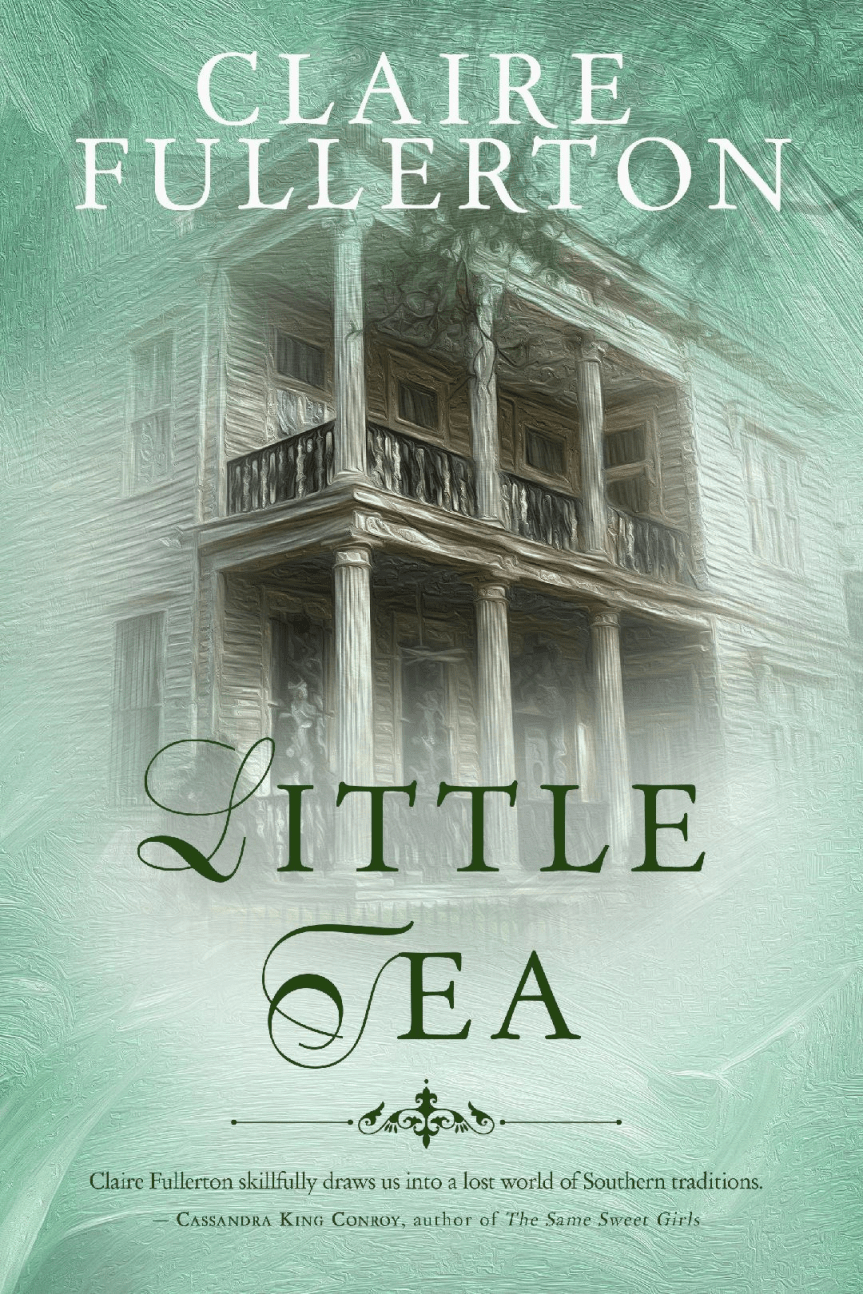
Little Tea: Excerpt

“Hey, Little Tea,” Hayward called as she and I sat crossed-legged on the north side of the verandah. “I bet I can beat you to the mailbox and back.” It was a Saturday afternoon in early June, and we’d spread the church section of the Como Panolian beneath us and positioned ourselves beneath one of the pair of box windows gracing either side of the front door. The front door was fully open, but its screen was latched to keep the bugs from funneling into the entrance hall. They’d be borne from the current of the verandah ceiling fans that stirred a humidity so pervasive and wilting, there was no escaping until the weather cooled in early November. The glass pitcher of sweet tea Elvita gave us sat opaque and sweating, reducing crescents of ice to weak bobbing smiles around a flaccid slice of lemon.

Little Tea stood to her full height at Hayward’s challenge, her hand on her hip, her oval eyes narrowed. “Go on with yourself,” she said to Hayward, which was Little Tea’s standard way of dismissal.

“I bet I can,” Hayward pressed, standing alongside Rufus, his two-year-old Redbone coonhound who shadowed him everywhere.

Little Tea took a mighty step forward. “And you best get that dog outta here ’fore he upends this here paint. Miss Shirley gone be pitching a fit you get paint on her verandah.”

“Then come race me,” Hayward persisted. “Rufus will follow me down the driveway. You just don’t want to race because I beat you the last time.”

“You beat me because you a cheat,” Little Tea snapped.

“She’s right, Hayward,” I said. “You took off first, I saw you.”

“It’s not my fault she’s slow on the trigger,” Hayward responded. “Little Tea hesitated, I just took the advantage.”

“I’ll be taking advantage now,” she stated, walking down the four brick steps to where Hayward and Rufus stood.

At ten years old, Little Tea was taller than me and almost as tall as Hayward. She had long, wire-thin limbs whose elegance belied their dependable strength, and a way of walking from an exaggerated lift of her knees that never disturbed her steady carriage. She was regal at every well-defined angle, with shoulders spanning twice the width of her tapered waist and a swan neck that pronounced her determined jaw.

Smiling, Hayward bounced on the balls of his feet, every inch of his lithe body coiled and ready to spring. There was no refusing Hayward’s smile, and he knew it. It was a thousand-watt pirate smile whose influence could create a domino effect through a crowd. I’d seen Hayward’s smile buckle the most resistant of moods; there was no turning away from its white-toothed, winsome source. When my brother smiled, he issued an invitation to the world to get the joke.
Typically, the whole world would.

“Celia, run fetch us a stick,” Little Tea directed, her feet scratching on the gravel driveway as she marched to the dusty quarter-mile stretch from our house to the mailbox on Old Panola road. I sprang from the verandah to the grass on the other side of the driveway and broke a long, sturdy twig from an oak branch. “Set it right here,” Little Tea pointed, and I placed it horizontally before her. But Rufus rushed upon the stick and brought it straight to Hayward, who rubbed his russet head and praised, “Good boy.”

“Even that dog of yours a cheat,” Little Tea said, but she, too, rubbed his head then replaced the stick on the ground. “Now come stand behind here. Celia’s going to give us a fair shake. We’ll run when she says run.” Her hands went to her hips. “Now what you gonna give me when I win?”
“The reward of pride and satisfaction,” Hayward said, and just then the screen door on the verandah flew wide and my brother John came sauntering out.

“On go,” I called from my position on the side of the driveway, where I hawkishly monitored the stick to catch a foot creeping forward. Looking from Hayward to Little Tea to make sure I had their attention, I used a steady cadence announcing, “Ready … set … go.”

Off the pair flew, dust scattering, arms flailing; off in airborne flight, side by side, until Little Tea broke loose and left Hayward paces behind. I could see their progression until the bend in the driveway obstructed my vision but had little doubt about what was happening. Little Tea was an anomaly in Como, Mississippi. She was the undisputed champion in our age group of the region’s track and field competition and was considered by everyone an athlete to watch, which is why Hayward continuously challenged her to practice. Presently, I saw the two walking toward me. Hayward had his arm around Little Tea’s shoulder, and I could see her head poised, listening as he chattered with vivid animation.

“You should have seen it,” Hayward breathlessly said when they reached me. “She beat me easily by three seconds—I looked at my watch.”

“Three seconds? That doesn’t seem like much,” I said.

“Listen Celia, a second is as good as a mile when you’re talking time. I’m two years older and a boy, so believe me, Little Tea’s already got the makings of a star athlete.” He grinned. “But we already knew this.”

John called from the verandah, “Celia, Mother’s looking for you.” I turned to see John walking to the front steps in his pressed khaki pants and leather loafers, his hand near his forehead shading his eyes.

“Where is she?” I returned.

“Inside, obviously. Last I saw her, she was in your room.”

For some odd reason, whenever my brother John had anything to say to me, he said it with condescension. His was a sneering, disapproving tone for no justification I could discern, beyond our six-year age difference. He was as hard on Hayward as he was on me, but Hayward never took John’s snide remarks personally, nor did he invest in what he called his holier-than-thou demeanor.

It didn’t take much to figure it out. From a young age, Hayward and I both knew he and John were two different kinds of men. Hayward once said to me, “John’s just a mama’s boy, which is why he calls Mom ‘Mother’ as if we’re living in Victorian England instead of Como, Mississippi. Don’t let him bother you. He has his own reality, that’s all.”

I skipped up the verandah’s steps and put my hand on the flimsy screen door.

“You should take that pitcher inside before you forget it,” John dictated, “and y’all need to pick up that paint.”

“I’ll get it in a minute,” I said, just to spite him as I stepped into the entrance hall. I couldn’t help it, it was my natural reflex in our ongoing contest of wills.

The light was always dim in the entrance hall, irrespective of the time of day. The carved crown molding on its high ceiling matched the dark walnut wood of the floor and door casings, which glowed in polished rosettes above the opening to the formal dining room on the right and the ample living room on the left, with the green-tiled solarium behind it. The entrance hall had a central catacomb feel and was always the coolest area of the house. In its cavernous elegance, footsteps were amplified on the maple floors during the months of June through September, then fell to a muted padding when Mom had Thelonious haul the crimson-and-navy runner from the attic and place it beneath the foyer’s round, centered table. At the end of the hall, behind the stairs, was my father’s den and attendant screened porch, but rarely did I visit the interior. My father was a private man, reclusive and solitary by nature, and whether he was in the library or not, the door was always shut. I had to skirt the gladiola arrangement on the entrance hall table. The floral design reached wide with flourishing arms toward the French credenzas against both sides of the walls. My reflection flashed in the ormolu mirror as I ran toward the stairs to find my mother. My hair crowned me with the color of night’s crescendo, dashing so dark it almost looked purple. I am 100 percent Wakefield in all that distinguishes the lineage, from the dark eyes and hair to the contrasting fair skin. There has never been a Wakefield to escape the familial nose; it is severe in impression, unambiguous in projection, straight as a line, and slightly flared. John and I are mirror images of each other, the yin and yang of the Wakefield, English bloodline. But Hayward was born golden, just like our mother, who comes from the Scottish Montgomerys, whose birthplace is Ayrshire. John and I possess an unfortunate atavistic Wakefield trait, though on me the black shadow is a ready silence, but on him it plays out as something sinister. John and I are individual variations of our father’s dark countenance, which is to say in our own way we are loners. People slightly removed. But Hayward got lucky, in possessing our mother’s shining essence. I could always see an internal light in their green eyes that set off their amber-colored hair.

I put my hand on the thick banister and climbed the stairs to the first landing, where my parents’ bedroom and living quarters unfurled like wings. The bay window overlooking the garden had its draperies drawn against the searing, silver sun. Walking into the sitting room at the right, I called for my mother, thinking she may be in the adjoining master bedroom. “I’m upstairs,” her voice descended. “Celia, come up. I want to see you.”

I mounted the stairs to the third-floor landing and found my mother perched lightly on the sofa in the alcove that served as a central area for the other four bedrooms. Behind her, sunlight filtered through the organza window treatments, highlighting the red in her hair. Her slender hands held a three-ringed binder of fabric swatches, the swatch on top a cool, blue toile. She patted the seat beside her and I settled softly. My mother was cultivated, circumspect, and radiated a porcelain femininity. Always, in my mother’s presence, I gentled myself to her calm self-possession. In my heart of hearts, it was my hope that the apple didn’t fall far from the proverbial tree.

“Tell me,” she said, “what do you think of this fabric for your draperies? We could paint the walls a light robin’s egg and put white on the molding. I think it’d be divine.” She looked around the room as if seeing it for the first time. “It’s time we got rid of the wallpaper in there. You’re growing up.” She laid her ivory hand on my cheek. “You’ll want this eventually. I think now’s a good time.”

I knew enough of my mother’s ways to know she was engaged in preamble. She was practiced at the art of delivery by discreet maneuver, and I suspected her impulse to transform my room had hidden meaning. “Why is now a good time?”

My mother looked in my eyes and spoke softly. “Celia, I’m telling you before I tell Hayward because I don’t want this to come from him. Your father’s going to be taking a job in Memphis, so we’ll be moving.”

“We’re moving to Memphis?” I gasped.

“Yes, honey. You’ll be starting school at Immaculate Conception in September,” she answered. “You know the school; its attendant to the big cathedral on Central Avenue.”

“But that’s a Catholic school, Mom. I thought we were Episcopalian.”

“We are, honey, but it’s highly rated academically. Your father and I think being exposed to a different religion will broaden your mind and give you beautiful advantages. We can come back here any weekend we want, and you’ll have a brand-new room when we do. You’ll have the best of both worlds, you’ll see. You’ll make new friends in Memphis, and Little Tea will still be here. It won’t be a drastic change at all. Try to think of it as an addition. There now, sweetie, don’t make that face. It isn’t the end of the world.”

But it was for me; Memphis intimidated me. Memphis was the big city compared to Como, and I found it cacophonous and unpredictable in its patchwork design. There was a disjointed, disharmonious feel to the city, what with its delineated racial relations. Parts of town were autocratic in their mainstay of Caucasian imperiousness and there were dilapidated, unlucky parts of town considered dangerous, which a white person never chanced. This much I’d learned on my visits to my grandparents’ house near the lake in Central Gardens. Blacks and whites never comingled in Memphis, even though they did coexist. But there was an impenetrable wall that separated the races, and I’d been raised in a footloose environment where it didn’t matter so much.

I took my teary eyes and sinking stomach to my bedroom so my mother wouldn’t see me cry. Through the window over the driveway, I watched as Hayward and Little Tea threw a stick for Rufus. I hadn’t the heart to run tell them our lives were about to end.


My 1, 2020 release: Firefly Southern Fiction

Preorder ebook and print: https://amzn.to/39BlPOT

https://www.clairefullerton.com

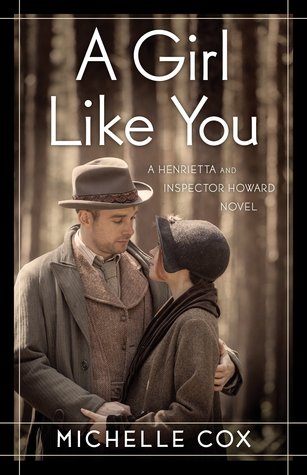
A Girl Like You: Book 1 Henrietta and Inspector Howard Mystery Series by Michelle Cox

It is 1935 Chicago, after the big crash, and desperate times lead to desperate measures. Young, beautiful, and seductively innocent Henrietta Von Harmon fends for her fatherless siblings and withdrawn, bitter mother by taking her good intentions to support her family, only to be led to disreputable places with unforeseen double-dealings. With verve and resourcefulness, Henrietta soon becomes involved in shady doings on the wrong side of town, and when she meets the enigmatic Inspector Clive Howard, wheels are unwittingly set in motion for navigating a Chicago crime syndicate.
A Girl Like You, (Book 1 in the Henrietta and Inspector Howard Mystery Series by Michelle Cox) is one of those rare gems so chock-full of charm and personality; so captivating and delightful in its vivid narration that readers feel intimately tied to the characters and invested in the action-packed story. A Girl Like You has it all: mystery, intrigue, conflict, unpredictability, unique setting, believable motivations from fabulous characters, secrets, hidden agendas, and the lure of budding romance.
Author Michelle Cox begins her wildly popular mystery series in A Girl Like You with such page-turning, off-kilter charm, you won’t be able to resist reading the whole series. The memorable Henrietta and Inspector Howard are likable, fully realized characters from disparate backgrounds who balance each other with perfect pitch in the midst of an edge-of-your-seat joyride.


Home

https://www.clairefullerton.com


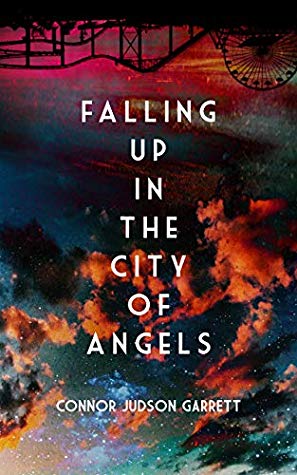
Falling up in the City of Angels by Connor Judson Garrett Book Review

Connor Garrett’s Falling Up in The City of Angels sings like a manifesto of youth seen through the eyes of one who misses nothing. It’s a travelogue through the spinning vortex of LA, written from the edge of innocence by an author whose voice is so personal, you want to reach out and hold his hand.

Fresh from college graduation, in a time when the sky is the limit, narrator Tony leaves his Georgia home with little to recommend him than his dream of being a writer. Thinking magic can happen with little in his pocket in a town where anything goes, blind optimism leads Tony from one eye-opening episode to the next as he hits all the highpoints in the City of Angels. The reader visits the Venice Canals, meets posers, and actors, and spiritual seekers; commiserates with Tony through the laws of romantic attraction, pauses at his insights on the back end.

Like a fledgling meeting chance in an odyssey of discovery, Tony’s beginner’s luck navigates west LA without a filter. He is young, resourceful, adventurous, and optimistic. He is resilient, insightful, surefooted, and not a quitter.

Falling up in the City of Angels is a fresh take on an age-old experience. It reads like a roadmap of a young man’s coming into being while avoiding the campy pitfalls of a fish-out-of-water story. With language both accessible and profoundly sophisticated, author Connor Garrett depicts the blossoming of youth in all its first-impression, awestruck wonder.

https://clairefullerton.com

Life’s Rich Tapestry by Sally Cronin

Life’s Rich Tapestry by Sally Cronin

We come to know a person’s mind through the words they speak; their personality through what they create, and their heart through what they write. Put this all together and you’ve been gifted a glimpse into an artist’s soul. This is how Life’s Rich Tapestry Woven in Words impressed me. Author Sally Cronin’s precious gem of a book is nothing short of fluid insight into all that it means to be human in a round-robin way as to address the entire sphere in bits and pieces that leave a lasting impression. These are musings delivered artfully, the perfect melding of heart, mind, and soul. In sharing her personal views, the author invites us to examine our own impressions of the day-today by shining light on life’s rich nuance. There is something profound in these meditative pages, something joyous and real that takes nothing for granted by sheer virtue of the fact that Sally Cronin has called them by name. In addressing the natural world, celebrating pets, seasons of the year, and random thoughts, Cronin speaks to the reader conversationally in such a manner that told me I’d revisit the pages. Her flash fiction, speculative fiction, and short stories are vignettes to savor—all told, this book is a work of art at its finest. All praise to author Sally Cronin, who has earned a constant and significant place in the blogging world by selflessly serving as the fulcrum of focus for so very many. That she has stepped forth by assembling and publishing this collection of letters has gifted us all with the awe-striking opportunity to see a writer’s career shine at its brightest.

Visit Sally Cronin on Word Press, Smorgasbord!


Second Wind by Alison Henderson: Book 1 in the Cypress Coast Book Series.

48729075. sx318

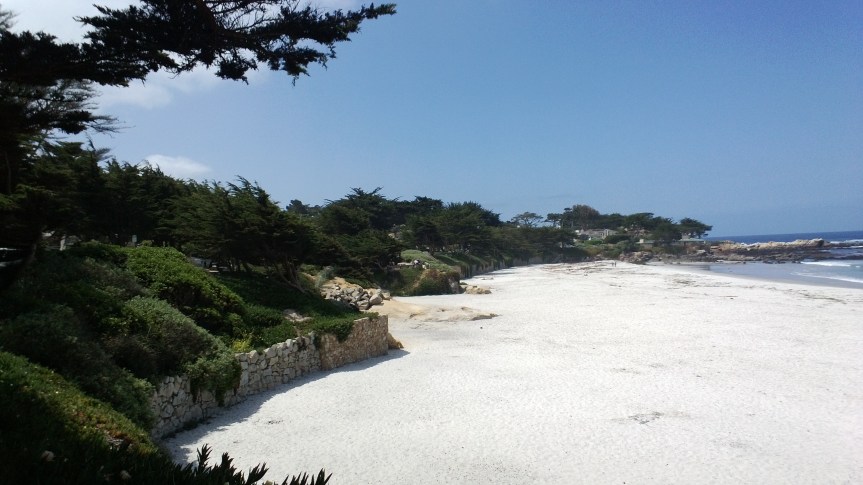
I loved every page of this exceptional book. It is action-packed, wonderfully paced, and full of gripping suspense. The story opens with 32-year-old Laurel on the run from her abusive fiance.  In a definitive move, she packs her cat in her car and hits the road from Seattle to the sanctuary of Big Sur, California, where her mother owns and operates a cliffside, vegetarian restaurant, and her two sisters live close by. But home is not an immediate sanctuary, for the truth of her fiance’s hidden life follows her to the coast and unfurls in threatening unforeseen episodes that keep the reader on the edge of their seat. Cleverly written with spot-on dialogue, the breathtaking setting of Big Sur, California and the town of Carmel-by-the-Sea as described by Henderson is much of what’s to love in this delightful story. The Monterey Peninsula is the perfect setting for the life the artistic Laurel hopes to create, but when she is met by one obstacle after another, she is unwittingly helped by a rugged FBI agent named Jake. This story is wonderfully told. I believe it will greatly appeal to all readers because it is so very engaging. It is the kind of book you’ll look forward to returning to until its climactic end. You’ll love the characters, and will feel as if you’re spending time in the expertly drawn Big Sur, California. Five Stars! I look forward to reading the next book in the Cypress Coast Book series!     

Malibu Burning: Nonfiction book review

47975600. sy475
I’m sharing my book review here of the wildly popular book, Malibu Burning: the real-life Story Behind LA’s Most Devastating Wildfire. This book is making waves in my seaside, hometown.
I live in Malibu, and this time last year, my husband and I, our two German shepherds and our 15-year-old black cat evacuated in haste, when the Woolsey Fire, which started in Thousand Oaks, California, traveled through the Santa Monica Mountains behind our house and reached the ridge of our property. In frantic urgency, we turned left on the Pacific Coast Highway and headed north, away from Malibu’s town center. It was here we discovered that the 320 acres of the state park near our home were violently up in flames. We were evacuated for 24 days, the first four of which we had no information as to whether our house was standing. It was total chaos in Malibu. The small coastal town was overwhelmed and ill-prepared for a wildfire of such swift, epic proportions. In some ways, it was every man for himself. In others, it was the ultimate exercise of a heroic feat as neighbor helped neighbor.
Once they allowed Malibu’s anxious and traumatized citizens back to their homes to assess the fallout, locals assembled at relief centers, sharing their stories. Among them, writer Robert Kerbeck, who took it upon himself to do a bit of investigative reporting as to how the fire started, then set about the business of collecting the first-person stories of many who refused evacuation orders and remained in the thick of the heinous drama in an effort at protecting their neighborhood.
The stories in Malibu Burning are staggering. Malibu local, Robert Kerbeck, has done a magnificent job in writing this book and getting it published in such a short span of time. Many in Malibu were so independently blindsided, there was little way of telling what went on behind our backs. We now have a larger story.
Book Review:


When tragedy engulfs a community, the media report the overarching highlights, typically from an aerial view. In Malibu Burning, author Robert Kerbeck portrays the hidden story—the nuanced blow-by-blow minutia told with such investigative reporting skills as to lend immediate urgency with a sense of present tense. It can’t be easy to shake oneself off and get organized, after surviving what can only be called the surreal worst, which is what Kerbeck basically did in writing this riveting book. Malibu Burning is a boots-on-the-ground story; an impassioned order from chaos, cohesive treatise told with a clear-eyed, objective voice. Weaving facts with vivid personal accounts in this cause and effect human interest story, this is a book so well-wrought as to hold one’s attention with all the characteristics of a gripping novel. It takes a deft hand to avoid judgment or accusation in a painstakingly researched nonfiction book. Robert Kerbeck’s Malibu Burning is a book with a resonating heartbeat. It sobers by threading the true stories of Malibu’s citizens who navigated the devastating Woolsey wildfire and simultaneously warms the heart by depicting the power of spirit.

Malibu Burning by Robert Kerbeck is available at independent book stores and all online book outlets.


https://www.clairefullerton.com


Never Sit If You Can Dance: Book Review

Who among us hasn’t said, “I could write a book about my mother!” We often say such things in jest, though the quip’s foundation is actually complimentary. We study our mothers throughout most of our lives trying to piece together the enigmatic variables that result in their particular formula. For many, it takes a lifetime, yet author Jo Giese has done just this in her delightful book, Never Sit If You Can Dance, which, as you might suspect, is a line she learned from her mother.
It is baby-boomer times, simpler times that began in innocence only to explode into the roar of changing times, and author Jo Giese is raised by a stay-at-home mom named Babe. She plans to rise above her mother’s station and believes she has actually done so until later years give her the time to pause and reflect.
It is the little things in this collection of first-person stories that weave nostalgia so touchingly and seamlessly. It is the commonplace, the every day, the mortar of life that matters, and author Jo Giese tells us why in a series of chapter heading, numbered lessons as demonstrated by her mother—“Don’t be Drab;” “Never Show Up Empty-Handed;” “Go While You Can;” and “The Happiness of Giving and Receiving Flowers” are cases in point.
A wonderfully written, quick paced gem of a book, Never Sit If You Can Dance strikes the middle ground between heartwarming and entertaining. It is an important book in that it gifts the reader with the opportunity to ponder their own mother. In the hands of any book club, there is much fodder to discuss.

An enjoyable book trailer is here: https://youtu.be/LzNj97Rs-pE


https://www.clairefullerton.com

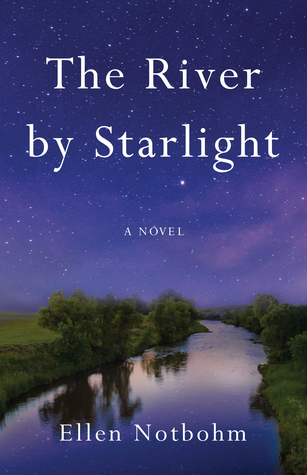
The River by Starlight by Ellen Notbohm

Every well-wrought sentence in The River by Starlight is as beautiful as the Henry David Thoreau inspired title. Author Ellen Notbohm has penned a breathlessly epic, masterful story set in early 1900’s Montana in language so lyrically elevated you’ll want to commit much of it to memory but will have to get back to it later—you’ll be too busy turning the pages.
The River by Starlight is a starkly humanistic story. It’s an historical novel intimately and engagingly written in present tense concerning the sweeping life story of dark-haired and diminutive Annie Rushton, whose young marriage is permanently marred by what might be the time’s inchoate perceptions of post-partum depression. There are repercussions to Annie’s malady that propel her to leave everything behind in her home state of Iowa and hop a train to join her bachelor brother in the wilds of homesteading Montana, where she risks starting a new life. Shouldering her heartbreak, Annie applies her headstrong, fierce independence to helping her brother prosper, so when charismatic businessman Adam Fielding, a colleague of her brother’s, enters her life, theirs is a relationship forged on mutual ambition, but as the years wear on, they become two desperate souls unwittingly tossed by the unpredictable storms of life.
Life’s choices come into play, in The River by Starlight. Though Annie and Adam begin with hope and the best intentions, there is only so much one can weather in hope’s defeat by repetitious wounds that won’t heal. Through the years, communication errors and individual judgement calls are made that usher in divergent aims, and all the while is the roiling concern of Annie’s mercurial sanity.
Resiliency, perseverance, love of one’s children, and where to appropriately place one’s pledge are threads that weave the tapestry of this thoroughly realized story, whose themes, I believe, are timeless and universal.
The River by Starlight is a book for the ages. In my mind, it stands with the classics. The novel’s voice and three-part pacing are seamlessly crafted; its tone and mood are deep and oftentimes heart wrenching, so much so that the reader can’t help but be lured by emotional investment in characters so viscerally drawn they come to life on the pages.
The River by Starlight is for those discerning readers who demand excellence in language, craft, and story. It is a plausible, finely researched, resonant book ultimately about the taming of the spirit, set in tumultuous, untamed times.


https:www.clairefullerton.com