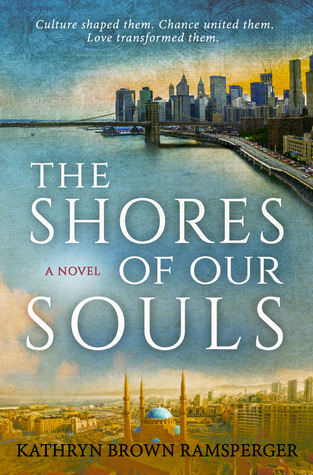
Interview with Author Kathy Ramsperger: The Shores of our Souls

Some say your novel The Shores Of Our Souls is a romance. Do you consider it such? What genre did you intend it to fall under when you wrote it?

I believe my novel falls on a literary fiction shelf, or an upmarket women’s fiction shelf. I wrote it to open a conversation, so it’s great for book clubs. It’s cross-genre for sure, if you’re trying to label it. It’s about war, love, and international intrigue. It’s a bildungsroman for the female character, and parts of it are historical fiction.

Image result for kathryn ramsperger.com

What do reviewers miss about your novel?

My novel is a love story, not a romance in the strict sense of the genre. It’s about why and how we love. It differs from many other love stories in that it’s told from two points of view. It was a risk on my part, but I did it to give my readers a better understanding of Arab culture, religion, experience, and values. That’s what drives any relationship – perspective and values.

It also doesn’t fall into a traditional romance trope of “Happily Ever After.” Instead, it shows what two people, damaged and alone, can do to heal and catalyze each other if they share love, even if it’s short-lived. I don’t like tied-up-with-a-bow finales, although readers who want one may like my sequel better. My sequel A Thousand Flying Things opens a decade later, and my  my protagonists Dianna and Qasim have had time and space to heal inside, come into their own, before they reunite again. We’ll see if their love survives the separation. (Hint: There are some surprises that even Dianna doesn’t know about in their decade of separation.)

Call it what you will, love conquers all, especially division. It can also lead to mutual understanding. The connection and empathy it evokes can resolve conflict. Every conflict we face teaches us about each other and the world we live in, but only if we feel enough compassion for others to walk in their shoes. Rarely, love leads to a lifetime partnership. Often, it teaches us who we are.

If there was one thing you’d like to tell your readers about Shores, what would it be?

If people read only the first few scenes, they won’t understand that these two characters have been broken. They want to love, but societal wounds have rendered them incapable of it until they heal. Damaged people don’t make the best decisions. If readers stay with the story, they will watch both characters heal, and heal each other. And as they heal themselves, they widen their hearts.  
 

If they read on, they’ll discover the potential of love to heal and transform. Yet before that point, they’ll also see how secrets lead to distrust, cause love to recede and characters (and real relationships) to backtrack. Miscommunication leads to misunderstanding, but the love endures. And it’s the love that keeps both characters moving on their Life Paths. 

Image result for kathryn ramsperger
Kathy Ramsperger


What themes and questions did you want to explore in your series?

  • Love conquers all.
  • How to love during conflict, be it a marital separation or a world war. (A lot of my coaching practice is about resolving conflict.)

  • How parental love, familial love, friendship love differ from romantic love.

And the questions I pose:

  • Do we choose who we love, or does love choose us?
  • Can we love all those who injure us? Can we forgive?
  • How does fleeting love change us? Catalyze us?

Can unconditional love awaken us to who we really are and thus empower us?


How did you write from a male POV so vividly?


I wrote Qasim’s POV as backstory first, to better understand him. Then my beta readers fell in love with him. 
Winner: Multi-cultural Fiction


I realize it’s controversial to write in a POV different from one’s own these days. Yet I think it’s what writers do, put themselves in a situation or a point of view to better understand it, and to show others how to understand. I was trained as a child and as a writing student to put myself in another’s shoes. I may make mistakes, but I tried to portray every character authentically, and especially Qasim, as a full, complex character, who has successes and makes mistakes. Just like we all do, if we are alive. 

Yet I didn’t find his voice in a vacuum. I’ve lived and worked in Africa and traveled through the Middle East. And most importantly, I had a relationship with a Middle Eastern man long ago, although the true story, the true human I loved, is nothing like Qasim and his story. Yet that person created a launching place for voice and story. 

Image result for kathryn ramsperger

Do you consider Dianna a strong protagonist, a strong female role model?

Absolutely, although she’s young, naive and head-strong in the first novel. She’s left home and family to go seek a career in order to send money home. She hasn’t rented a brownstone with a bunch of friends and partied every night. She’s on her own. She’s striding forth in a male-dominated world and work force, and she holds her own. She holds her own when Qasim patronizes her. And I believe she evolves into a self-empowered hero, someone who paved the way for the women who came after her.

She, like Qasim, is a woman of her time. Women were just coming into their own. The employment rate for women rose from 38 percent in 1960, to 43 percent in 1970, to 52 percent in 1980, and finally reached 60 percent by 2000. Yet these stats don’t say where the women worked, or their entry annual salaries (mine was $10,600 before taxes), or the challenges they met in the workplace, or how much they earned to a man’s dollar.  In 1980, women had a career map, maybe even a role model, but they faced a lot of hurdles. I asked for a raise after two years on the job, and my boss told me that the raise had to go to the man because “his wife had just had a baby.” 

I’ve heard readers ask about an audible edition of both your novels? Are those forthcoming?

A strong maybe. Stay tuned. 

Your book is full of visual and sensory imagery. Is that how you usually write a scene?

I start with a memory, an interesting person from my life or from history, and a question I want to figure out myself. Then I close my eyes and a story plays out in front of my eyes like a movie. I used to think that most people wrote that way. 

And how do you write? Do you ever use an outline?

I write most scenes with incredible speed. Most of my language and voice comes from that very first draft, even if it does have a bad plot.


Then I outline. 


Then I make sure I’ve written and approve of my beginning, middle, and end, that both the narrative and character arcs are solid.


Then I revise to the middle, then to the end.


And then revise until someone tells me I have to stop. 

How much research did you do for your novels? How much comes from your life experience? 

I’m including an informal bibliography in my next novel, because I’ve received this question a lot. I was a researcher for five years for National Geographic, so deep research is part of me. Also, I have a personality like a scientist’s, in that I’m incredibly curious and want to get the heart of things, to as near “truth” as I can. Shores is well-researched. I can provide a bibilography to anyone who requests it. Just sign up for my newsletter at https://shoresofoursouls.com, and I’ll send you a complete bibliography.

Yet I didn’t find the The Shores Of Our Souls story in a library. I was a humanitarian worker for nearly two decades, with a work focus in the Middle East, Africa, and Eastern Europe. I spent this time meeting and interviewing immigrants, displaced people, people in war, both civilian and military. I was an international humanitarian law instructor for the Red Cross (ie, Geneva Conventions). I witnessed these people’s life stories and I shared them with the world. I’ve spent time in Beirut, the last time in 2006, six weeks before the last war, with bombing raids already happening up the coast.

So that’s why you chose to write about Lebanon?

Not entirely. My initial protagonist hailed from Alexandria, Egypt. Every country in the world has its unique sensibilities, though. Egypt is completely different than Lebanon. Qasim fit in Lebanon, not Egypt. By the way, the man I dated was not Lebanese. But Qasim just had to be.

Do you have a favorite line in Shores?

The lines most readers love just came to me one day. “We often lose ourselves in love. Rarely do we find ourselves there. Never do we see it coming.” They open the novel.

But my favorite lines are at the book’s end. They’re an homage to E.M. Forster’s A Passage To India. The last lines of all my novels in this series will be a tribute to him. He was one of the first to write about the divide between East and West. I also added a falling feather in the scene because my BFF Laura Schmidt, an amazing writer with an amazing life, passed when I was writing the first draft of this novel. She sends me blue feathers as signs that she’s still with me, and she whispers inspiration in my ear on a regular basis. 

Who are your favorite authors? Your favorite children’s authors?

My all-time favorite book is John Steinbeck’s East of Eden.

My all-time favorite books on writing are by Eudora Welty: One Writer’s Beginnings and The Eye of the Story

I’m an avid reader of fairy tales and myths from all over the world, and my very first book was The Three Little Horses, by Piet Worm, given to me by a neighbor when I was 2 years old. I knew I’d found the man I would marry when he introduced himself as a modern-day Druid, and told me he loved Tolkien. 

I also loved C.S. Lewis’ The Narnia Chronicles, and E. L. Konigsberg’s The Crazy Mixed-Up Files of Mrs. Basil E. Frankweiler changed my life – made me want to write about the world, cultures, history, and how my world related to it all. And it made me start running away from home, much to my mother’s chagrin. 

My favorite contemporary authors are Isabelle Allende, Alice Hoffman, and Barbara Kingsolver. 

But I almost always fall in love with any book that gets me past the second chapter with its voice and craft. Once I’m immersed in story, it’s tough for me to come out again.        

What’s next for author Kathryn Brown Ramsperger?


The sequel to Shores, called A Thousand Flying Things, will be published next year. I’m working on the book cover right now. Then I hope to publish a memoir about adoption, teen suicide, and the mother-daughter bond. I have many books that are still works in progress, including a weird funny memoir on death.

I also host a Facebook Live called Story Hour most every Thursday @ 4 pm EDT on my Facebook Author page, with replays available on You Tube.  I also am an intuitive coach at Ground One LLC, and a book coach with my own process. Most of my writing clients are memoirists. My method is called Step Into Your Story! (TM) 

I love speaking anywhere, online or off, about story, the writing craft, global citizenship and peace.

Author Bio: Kathryn Ramsperger’s literary voice is rooted in the Southern tradition of storytelling and is informed by her South Carolina lineage. She began her career writing for The Roanoke Times and The Gazette newspapers and later managed publications for the Red Cross and Red Crescent in Geneva, Switzerland. She has contributed articles to National Geographic and Kiplinger magazines.

Writing from a global perspective, her themes are universal yet intensely personal and authentic.

A graduate of Hollins University (Roanoke, Va.), Kathryn studied under several esteemed writers including—Pulitzer Prize-winning novelist Eudora Welty; her mentor Richard Henry Wilde Dillard and Pulitzer Prize-winning poet Henry Taylor. She holds a graduate degree from George Washington University.

Winner of the Hollins University Fiction Award, Kathryn is also a finalist in novel, novel-in-progress, short story, and poetry categories in the Faulkner-Wisdom literary competition.  The Shores of Our Souls won the 2017 Foreword Indies award for multicultural fiction and also won an America’s Best Book Award.

Kathryn is a mezzo-soprano, has dined with artists ranging from author Marita Golden to musician and writer Kinky Friedman, and has traveled to every continent except Antarctica and Australia. She’s worked in Europe, Africa, and the Middle East. She currently lives in Maryland with her husband and two children.

Kathy Ramsperger social media links.

Kathryn Brown Ramsperger Author Website

Ramsperger Communications Website

Ground One Coaching Website

Connect on Social Media:

Kathy’s Author Facebook Page

Ground One Coaching on Facebook

Kathy on Twitter

Kathy on LinkedIn

Kathy on Pinterest

Kathy on YouTube

Image result for kathryn ramsperger

Paying it Forward

I have a newly released novel titled, Little Tea, but that’s not my focus here.  My focus is on sharing an incredible experience I had on Facebook because it’s a case in point of what can transpire through the magnanimous efforts of one fellow author during these unusual times.

Those of us who released a book during the pandemic were blindsided as to how to proceed with promotion. In my case, I had a book tour of the South scheduled to promote Little Tea, only to discover each event was canceled. The good news is most of my events were rescheduled virtually, though in many ways, I swam in smaller waters. I stayed tethered to my desk bereft of the gift of personal contact and although I’m not taking the merit out of it, in most ways I preached to a Zoom choir. But an uncanny domino effect ensued that came through the power of connections, and although it’s not a complete surprise, I have Facebook to thank for a great time promoting Little Tea.

My good fortune began with the moderator of a Facebook book group who interviews authors via StreamYard on a nightly basis. I was a guest on her live show and was grateful beyond measure to answer questions about Little Tea. In thanking my hostess profusely, I said, “If there’s anything I can do for you, it would be my great pleasure.”

The first step along the chain of events came when the aforementioned moderator asked me to talk to a debut author she admires, who had questions about the publishing business. I issued the caveat that I’m no expert, but I’ve been in the business long enough to have an opinion. I’ll say here that my policy as an author has always been to pay it forward. Authors work in a common arena, and few of us would get very far were it not for the opportunity to compare notes. And so, I got on the phone with a complete stranger and talked about navigating the book world and am happy to report that by the time we hung up, I’d made a new friend. An hour later, my new friend messaged me via Facebook messaging and invited me to come to her Facebook group page to do an “author takeover.” I said yes before I fully understood the set-up, so, I’ll explain it now that I understand. This debut author had the foresight to create a private book launch group on Facebook. She issued a call-out six months before her book release and created a Facebook “street team” by offering incentives that simply boiled down to the joy of being involved. This street team was gifted with insider information about her debut novel. She gave her private group book swag, played games, and shared pictures pertaining to her life and her book that the general public wasn’t privy to, so by the time her book was released, roughly a thousand readers were ready to shout from the rooftops because suffice it to say, they felt personally tied to the book’s launch.

My invitation to come to her private Facebook group and do an all-day take over essentially sounded like this: “I know of a thousand people who’ve never heard of you, so come on over, I’ll introduce you, and you can post as much about your book as you want to.”

You better believe I came ready! I prepared with photographs of Little Tea’s setting in the Deep South (Como, Mississippi; Greer’s Ferry Lake in Heber Springs, Arkansas; and my home town, Memphis) two book trailers, a dozen memes, Little Tea reviews, and, knowing that a picture tells a thousand words about an author’s life, photographs of ocean waves taken where I now live in Malibu, California and endless un-staged photographs of my three photogenic dogs. It was my dogs that got the ball rolling. It’s astounding how many people have “a German shepherd story.” The sharing of dog stories led to an enthusiastic kind of bonding. Soon enough, there was a vibrant thread in the private group of dog pictures that dovetailed to include the posting of pet cats.

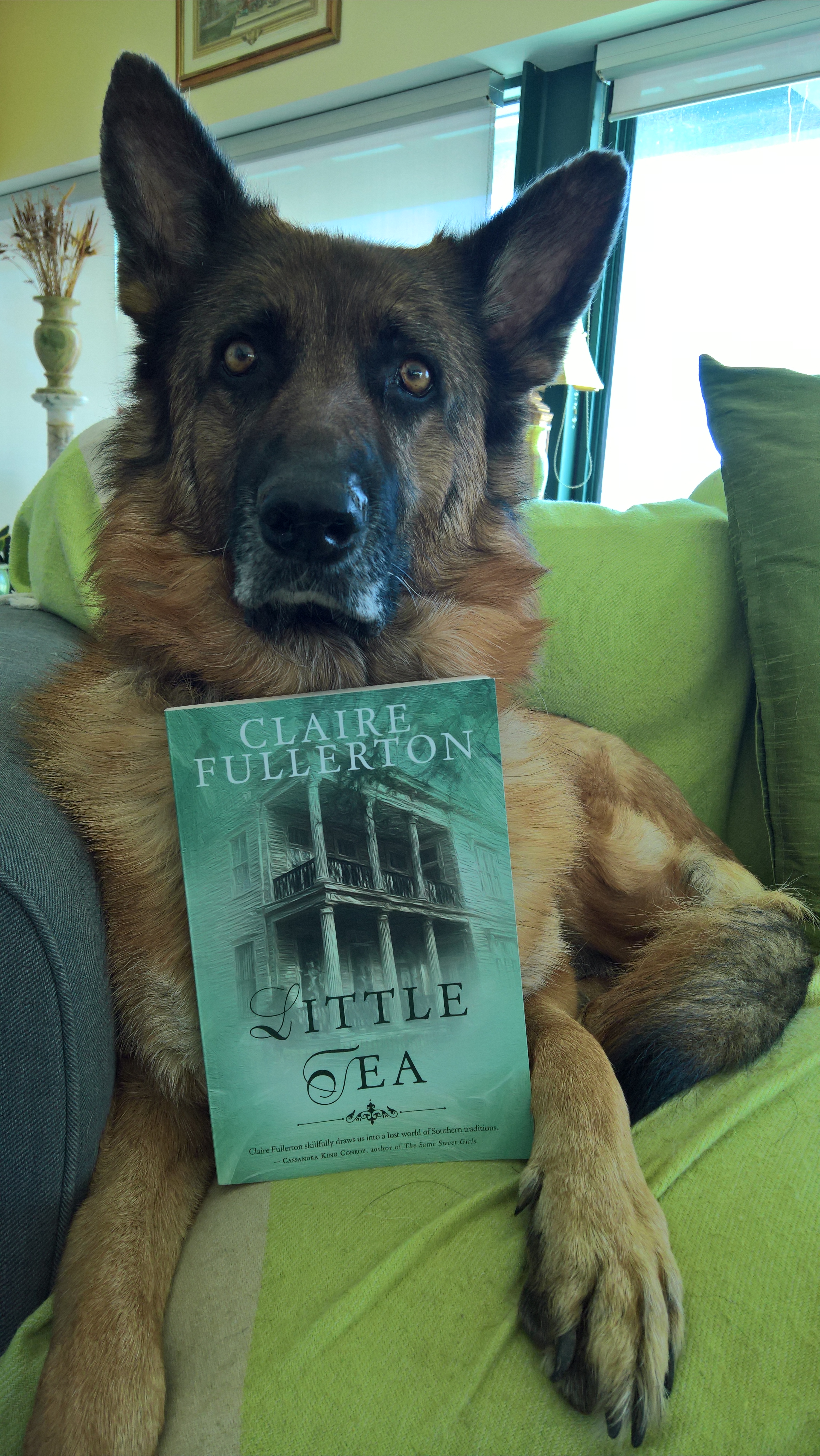
Ceili Little Tea

Little Tea’s premise is built on the power of female friendships—the anchoring, long-lasting kind that see a woman through a lifetime. These friendships tend to have their own language, often times there’s a shared sense of humor spawned from shared history, and what comes from shared history is an arsenal of stories. In Little Tea’s case, much of the bi-racial relationship story is due to the setting, which is to say the story wouldn’t have happened as it did were it not set in the South with its attendant social mores set amidst the roiling cauldron of the cultural racial divide. There’s a line from Little Tea, when narrator Celia Wakefield describes her Southern upbringing by saying, “The thing about being a Southern girl is they let you run loose until the time comes to shape you.” I posted a meme with this quote during my author take over and it led to a riotous discussion about the South and the power of female friendships, which is part and parcel to the story of Little Tea—Little Tea being the nickname of the main character, who is Celia Wakefield’s childhood best friend.

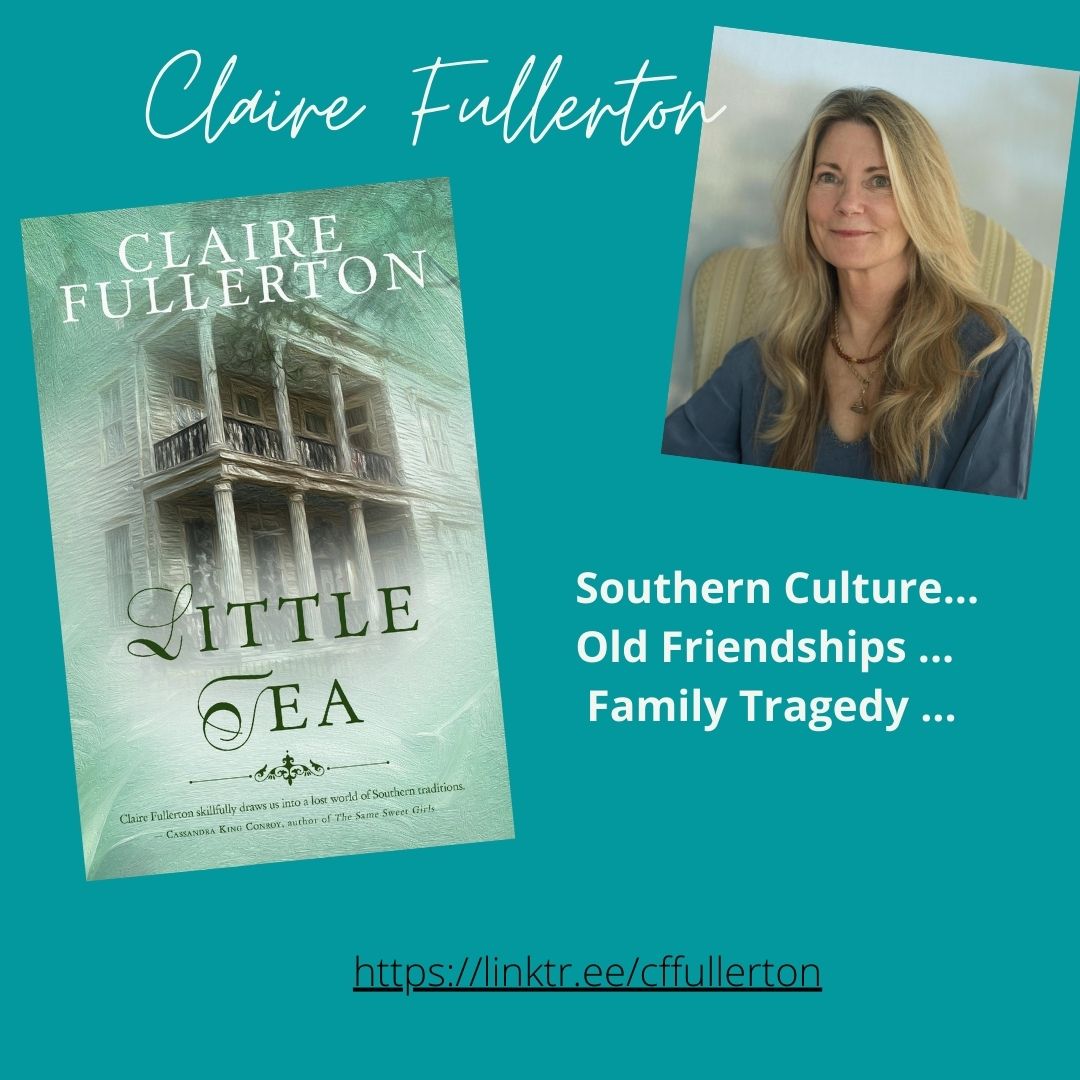
Little Tea without preorder

I have to say I’ve always known that readers are discerning people. They’re interested in learning about a book, but they’re equally interested in learning about the author. The beauty of my all-day, author take-over was that it afforded the latitude of an unfolding. One subject led to another with regard to Little Tea, but what warmed my heart the most was the participants who shared their own stories in what became a delightful, even exchange. I came away from the event knowing I’d represented Little Tea and introduced myself as accurately as I could, but the real gift to me came from getting to know those who love reading as much as I do. I went into the author take-over hoping to reach readers, but as I learned about them, it turned into the thrill of finding common ground.

I’m still marveling at the fun I had in the midst of a fortuitous opportunity. It’s not every author who invites another to take over their page and meet their followers. When you’re lucky enough to meet the kind of author who realizes we’re all in this together, it serves as an exemplary reminder of the impact of paying it forward.


Claire Fullerton hails from Memphis, TN. and now lives in Malibu, CA. with her husband and 3 German shepherds. She is the author of 7- time award winner, Mourning Dove, a coming of age, Southern family saga set in 1970’s Memphis. Claire is the author of Dancing to an Irish Reel, a 2-time award winner set on the west coast of Ireland, where she once lived. Claire’s first novel is a paranormal mystery set in two, time periods titled, A Portal in Time, set in Carmel-by-the-Sea, California. She is a contributor to the book, A Southern Season, with her novella, Through an Autumn Window, set at a Memphis funeral ( because something always goes wrong at a Southern funeral.) Little Tea is Claire’s 4th novel. Little Tea is a Faulkner Society William Wisdom Competition finalist, a finalist for the Chanticleer Review’s Somerset Awards, and the August selection of the Pulpwood Queens Book Club. She is represented by Julie Gwinn of the Seymour Literary Agency.

https: //www.clairefullerton.com and/or https://linktr.ee/cffullerton

From SWM

Book Review: Evening in the Yellow Wood by Laura Kemp.

I just finished the delightful book, Evening in the Yellow Wood by Laura Kemp  (TouchPoint Press.) It’s an action-packed, fast-paced story about an immediately likable, twenty-something year old woman on a quest to find her missing father, who disappeared without explanation, which leaves narrator, Justine Cook, and her mother jumping to worst-case conclusions. But a chance occurrence changes all that!

Here is the book’s description:

Abandoned by an eccentric father on the eve of her twelfth birthday, Justine Cook has lived with her fair share of unanswered questions. Now, ten years later she leaves her life in southern Michigan and heads north to the mysterious town of Lantern Creek after seeing his picture in a local newspaper. Once there, she discovers her father had been leading a double life and meets the autistic brother she never knew—a young man who is mute but able to read her mind.

When a local girl who looks like Justine is mysteriously murdered, she joins forces with sheriff’s deputy Dylan Locke to capture the killer. But the more they dig for clues to the past, the closer they come to discovering a secret someone will kill to protect. Justine begins to show signs of supernatural power and eventually must stop an immortal enemy that has hunted her family for generations.

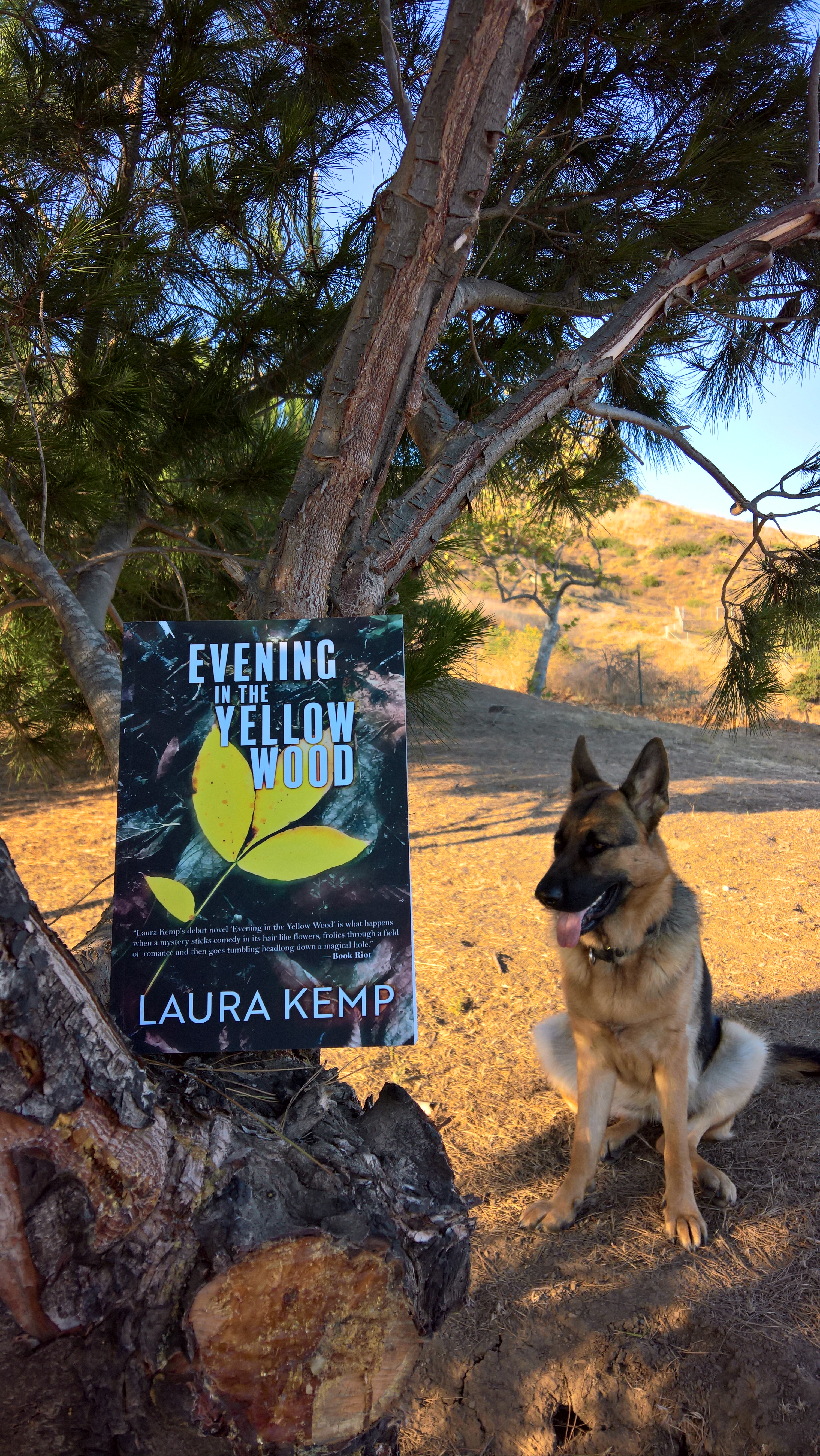
WP_20200720_18_54_24_Pro

( My 11 month old, GSD named Sorcha is always in the picture!)


When I finished Evening in the Yellow Wood, I wrote and posted this book review on Amazon, Goodreads, Facebook, Twitter, and Book Bub. I love to support my fellow authors!

All I knew going into author Laura Kemp’s highly praised Evening in the Yellow Wood is that I loved the title. It’s phonetically pleasing, lyrical, and balanced. Give me a title that sings on a haunting book cover and you have my attention. Hand me a dilemma that yearns on the second page and I’m thoroughly roped in.
In an au currant voice so accessible you think you know the narrator, Evening in the Yellow Wood exemplifies the term “page turner.” It’s an off-kilter, rollicking ride on a hero’s journey; an edge-of-your-seat through-line chock-full of forward momentum in a cauldron of delectable genres that has something for every discerning reader.
Recent college graduate Justine Cook doesn’t know her genetic history. She’s on course of a promising journalism career when one glance at the local newspaper derails her plans. Through the glass window of a hardware store in another town stares her lost father’s photograph. The mystery begins with Justine’s caution to the wind move, and the game begins.
More than a mystery, Evening in the Yellow Wood is commercial fiction walking the high wire of romance strung up by the paranormal. Its personality shimmers, its pacing is breathtaking. It’s the rare writer who makes the unusual plausible, and Laura Kemp does so by anchoring her charming novel in the small-town Midwest. In the name of covert operation, Narrator Justine Cook takes a bartending job and drives “the heap.” She shares an apartment with a delightfully disreputable local and falls in love with a cop– who, it unfolds, is uncannily part and parcel to the whirlwind story, as Justine adheres to the task of finding her father.
Immortality, mind reading, totems, and visions fuel the fire of this spellbinding book. Evening in the Yellow Wood by Laura Kemp is absolutely unforgettable.

Here is Laura Kemp’s bio as it appears online:


About the Author

Laura is a teacher who loves to write about her home state of Michigan. She has a B.A. in Creative Writing from Western Michigan University where she studied under Stuart Dybek, and has had her short fiction and poetry published in Chicken Soup for the Soul, Word Riot, Tonopalah Review, SaLit and SLAB: Sound and Literary Art Book. “The Pursuit of Happiness,” – a short story she wrote while at WMU, was chosen as a finalist in the Trial Balloon Fiction Contest. When not writing, Laura enjoys musical theatre, hiking, swimming, reading and performing with her Celtic band- Si Bhaeg Si Mohr. She also enjoys spending time with her husband and children as well as her dog, two hamsters, two gerbils, ten chickens, two horses and eight (and counting) cats. Laura loves to connect with readers on her blog: laurakempbooks.com/blog (Sea Legs on Land), as well as on Facebook, Twitter (@LKempWrites) and Instagram. (lkempwrites)
And here is the wonderful Laura!


Laura Kemp’s website is here: https://laurakempbooks.com/

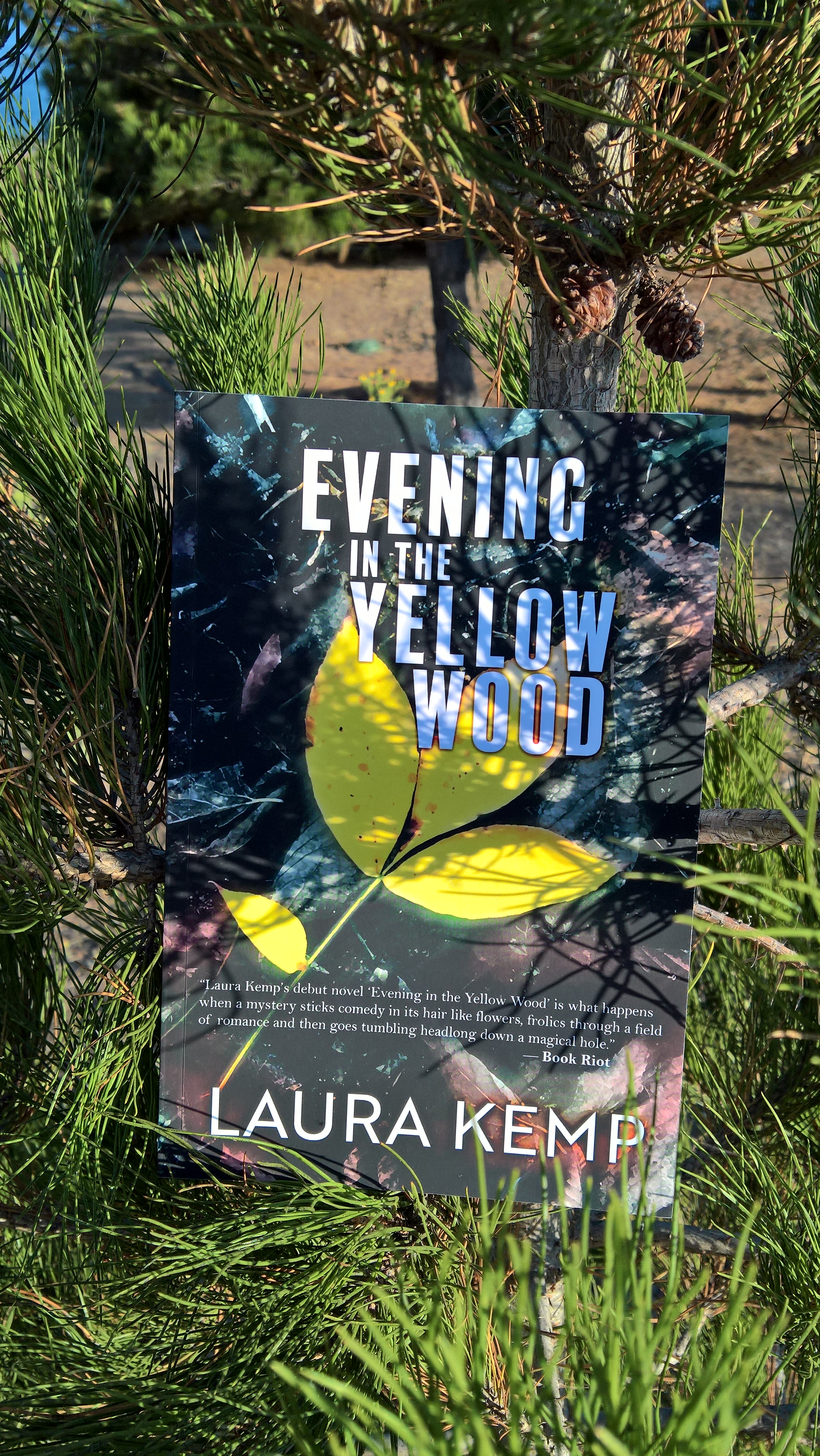
WP_20200720_18_50_16_Pro


https:www.clairefullerton.com


Mourning Dove


I want to share my latest news with you about my third traditionally published novel,  Mourning Dove, whose release date was June 29, 2018.  I am happy to share the news that just yesterday, Mourning Dove won its 7th book award. Above is a Mourning Dove video to show you sliding images of those 7 awards.

I went into the writing of Mourning Dove wanting to write about two subjects: the social mores of the Deep South as exemplified in the setting of the old guard, as its known, and the dynamic between siblings. What fascinates me the most about siblings is the idea that they come from the same history, are cut from the same cloth, yet often turn out differently. The question of why this is led me through the writing of Mourning Dove, and although I have never said this publically ( and probably never will) I wrote down three themes to guide me through the book, otherwise written without an outline. The themes were this: the search for home, the search for identity, and, very loosely, the search for God, as in finding some semblance of understanding as to who’s really in charge, along with the question of what it is that shapes a person; whether it’s nature or nurture?

And with regard to the South with all its traditions, history, and rife population of characters peacock proud to call themselves “Southern,” I thought it best to show the South through the eyes of two siblings named Millie and Finley Crossan, who were born in the North, and come to the South as outsiders during the formative stage of adolescence so they could view their environment without a filter while trying to fit into  the culture.

The sibling dynamic is a significant one to those of us lucky enough to be born to it. We learn who we are in relation to those closest to us, and when it comes to siblings, I believe there is a certain type of mirror imaging at play that helps to define us. I’ll say this about siblings: they never let you forget where you came from.

Mourning Dove’s book description says this:

“An accurate and heart-wrenching picture of the sensibilities of the American South.” Kirkus Book Reviews

The heart has a home when it has an ally.
If Millie Crossan doesn’t know anything else, she knows this one truth simply because her brother Finley grew up beside her. Charismatic Finley, eighteen months her senior, becomes Millie’s guide when their mother Posey leaves their father and moves her children from Minnesota to Memphis shortly after Millie’s tenth birthday.

Memphis is a world foreign to Millie and Finley. This is the 1970s Memphis, the genteel world of their mother’s upbringing and vastly different from anything they’ve ever known. Here they are the outsiders. Here, they only have each other. And here, as the years fold over themselves, they mature in a manicured Southern culture where they learn firsthand that much of what glitters isn’t gold. Nuance, tradition, and Southern eccentrics flavor Millie and Finley’s world as they find their way to belonging.

But what hidden variables take their shared history to leave both brother and sister at such disparate ends?

Here is one poignant reader review of Mourning Dove:

“Style and substance are the two necessary ingredients any book must have. This book exemplifies both. I was charmed and delighted by the author’s descriptive abilities. Her use of language, metaphors, turns of phrase kept me turning each page. She can make a table sound interesting.


I made this book trailer to give the reader an idea of the setting of Mourning Dove.

I hope you enjoy watching the Deep South as I know it!


https://www.clairefullerton.com


Southern Heat and the Making of a Book Trailer

While I researched my novel, Little Tea, I visited three locations in the Deep South: Greer’s Ferry Lake in Heber Springs, Arkansas; Memphis, Tennesse, where I grew up; and Como, Mississippi, which is 45 miles south of Memphis. It was the month of July, in the high heat of summer, and if you’ve ever been to the Deep South in the month of July, you know the gauze-like, humidity is part and parcel to the experience.

I embraced it all from the second my plane from Southern California landed. Through the automatic, sliding glass doors, the humidity hit me with the life force of a raging inferno and followed me all the way to my friend’s waiting car.

In the Deep South, much thought goes into escaping the heat. People live in air-conditioned wind tunnels that drown out all sound and wear cotton sweaters inside, which seems, to me, utterly ironic, but there you have it.

There’s a specific character to the Deep South in the summertime that has much to do with the climate, a weighted sultriness that eases on the skin and slows everything down to the point that most things seem nice and easy. Nobody complains about the heat because it’s a regional given. Southerners live in harmony with the heat, build their houses with verandahs, put ceiling fans above, screens before their front doors, and rocking chairs out front because channeling the slightest of breeze is a cultural pastime.

It’d been a long time since I’d been to the South in the dead of summer, but I wanted to photograph Little Tea’s setting in the region’s full, resplendent nuance. I wanted the setting of the Little Tea to depict the South as character, and for that, I needed the trees in their fullness, the flowers in bloom, the sun’s glaring halo over Greer’s Ferry Lake, and the dirt roads fully shaded yet dry as a bone.

Photographing the setting of Little Tea, I knew, would anchor me to the South as I wrote the story, back home at my desk in California, but what I had in mind all along was a series of moving images with which I could gift the reader. After all, a picture tells a thousand words when it comes to a lasting impression. Included, here, is the book trailer of Little Tea I created. My hope is it will give Little Tea’s readers a good sense of place.


https://www.clairefullerton.com

Gratitude to the WordPress Book Bloggers

I’d like to adequately express how much the WordPress book blogging community means to me, so suffer me while I warm up to it. I readily admit I’m the long-winded sort, even when I have an important point.

In this day and age of social media at the center of an author’s career, there is much to reconcile, and there are times I wrestle with keeping a proper perspective. On the one hand–and you’d think this to meet me in person–I  am ridiculously extroverted; I have what author, Pat Conroy, labeled the “Southern sickness” of assuming everyone I meet is my best friend, yet on the other, I am intensely private. I don’t like showcasing myself because it feels like grandstanding, and quite frankly I’m not impressed with myself to the point that I think I have anything of significance going over any other writer. We are all of us playing a long-game, making our own way in our chosen field. But sometimes it seems that one has to have an elevated sense of oneself in order to promote one’s work as an author. There’s a fine line these days, and it’s the one thing I didn’t realize going into “being” a writer. I’m probably like many people in their 50’s. We were the generation who woke up one day to discover the entire world was online and all over social media. When that realization dawned on me, it was a major hustle to catch up.

Then there is the concern of reconciling novel-writing as art and publishing a novel as a business. Once upon a time–as little as twenty years ago–authors wrote books and turned them over to their publishing house to promote. If they had an audience to justify a book tour, the publisher paid for an author to travel from book store to library to book club to meet readers in person. This is still done, but on a small, discerning scale primarily intended for authors who have wide name recognition. As for authors with a small or independent press, when it comes to a book tour, it’s all out of pocket because they’re essentially on their own.  Because book publishing options have opened up and there are now thousands upon thousands of authors in the race, the effort is geared toward keeping abreast of the tide and waving one’s hand above the noise. What’s more, in this day and age, the lion’s share of promotion falls to the author and is not only about promoting a book; authors have to promote themselves.

I’ve been torn over this for a while, now. I’ve limited myself in self-promotion by only going so far. I’ll take the opportunity here to add to Conroy’s definition of Southern sickness: friendly as we are, Southerners are an unflashy lot given to personal discretion. Too much going on about oneself is succinctly considered bad form.

I see it all on social media. People post all sorts of personal information from their family to their lifestyle to their political views. I’m not passing judgment, just making an observation, but I do know that too much online, personal information can put one in a vulnerable position and lead to an unintended consequence. It’s the downside of social media and it’s a struggle to strike a manageable balance.

So, how does an author effectively promote their book while striking a healthy balance? And whom should an author trust?

Which brings me to another consideration: There are the legions of online, profiteering book promotion businesses that have cropped up as a result of the book publishing boom. It’s staggering to me and hard to wade through the miasma to discern who is and is not reputable, while an author is hustling for literary recognition and book reviews. Authors need exposure for their releases, but who to choose within a reasonable budget?

Which brings me around to the WordPress book blogging community ( I told you I’d work my way to my point.)

I am humbled and proud to have aligned with the book bloggers here. I believe the book bloggers I’ve met on WordPress are as fine as they come. I stand in awe of Sally Cronin of Smorgasbord. Through Sally, I’ve met Olga Nunez, Michelle James, Robbie Cheadle, Teagan Geneviene, Rosie Amber,  DG Kaye, and Chris the Story Reading Ape to name but a few. I stand in awe of each bloggers’ deft handling of content, organizational skills, dedication, professionalism, and magnanimous spirit. I recognize you all as passionate people involved in the book world for all the right reasons. Your impact upon many authors’ careers is nothing short of significant.

At long last, here is my point:

I thank each of you who has featured my books on your blog for including me in your esteemed fold. Your support of my career is a force that sustains me, and I remain so very grateful.

https:www.clairefullerton.com