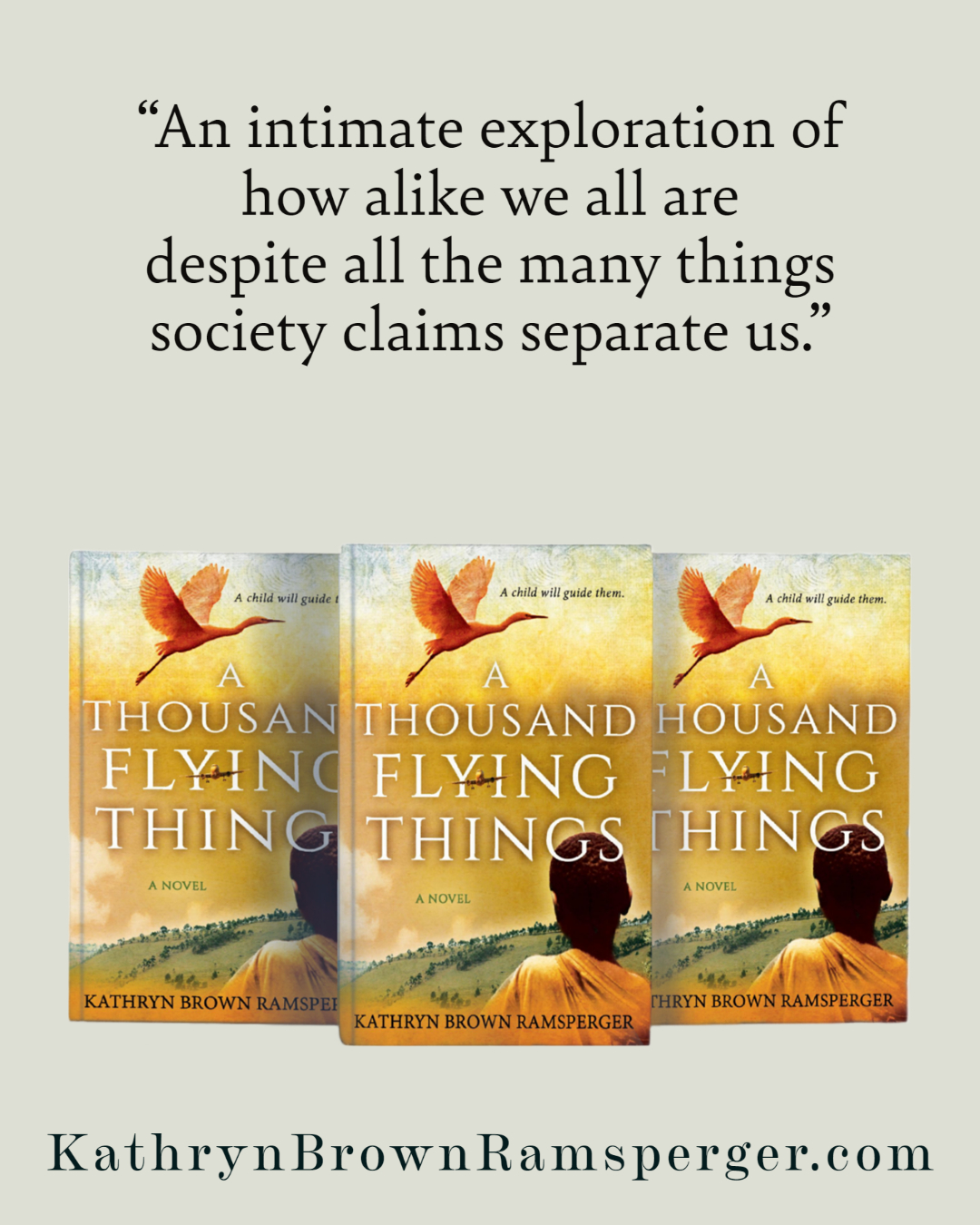
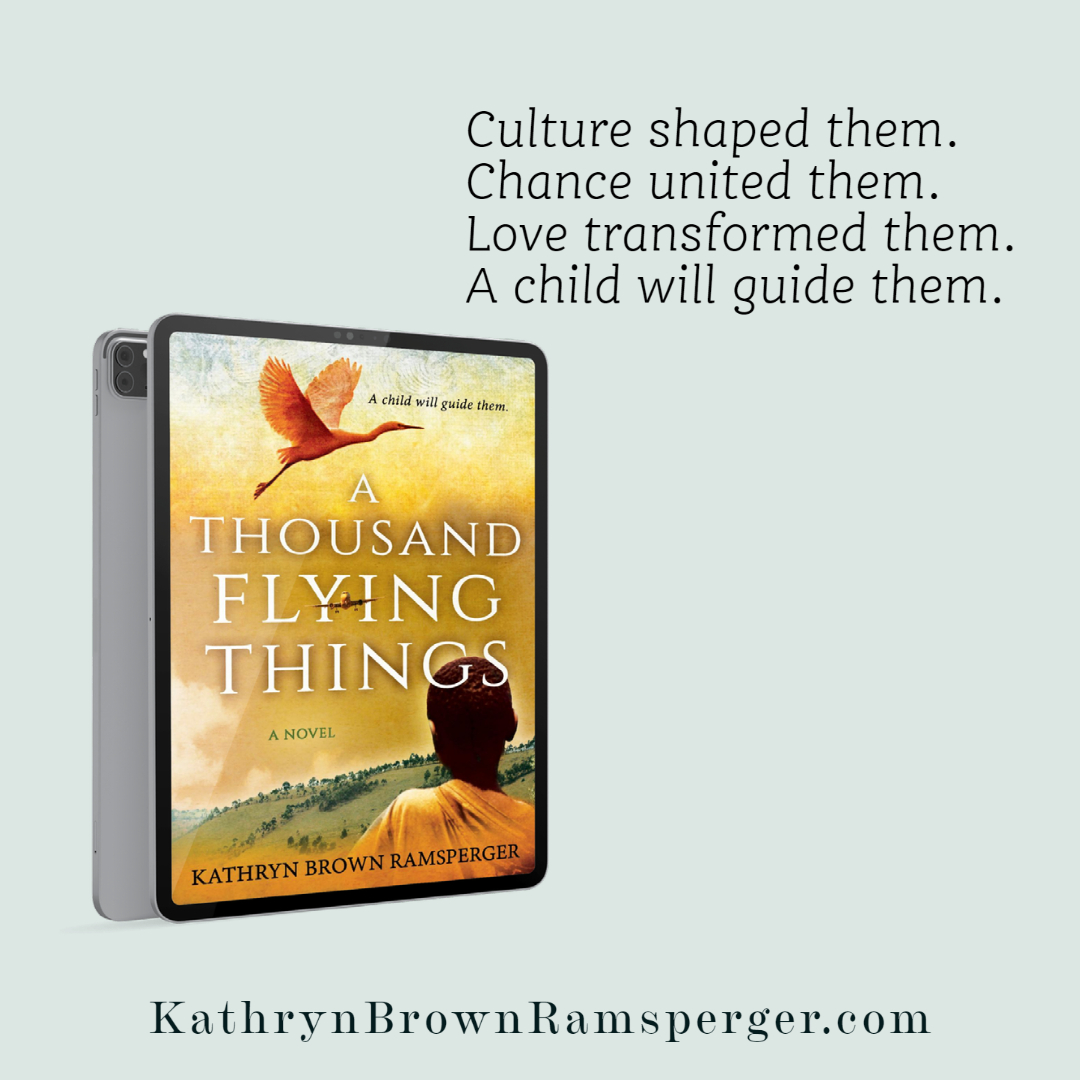
A love lost. A soul restored. A decade of secrets and separation.
It takes a child to lead them home.
American Dianna Calloway is committed to educating children in the thick of war-ravaged 1990s Southern Sudan. Hampered by disease, a corrupt government and a warlord who is harboring a mysterious young boy, Dianna’s passionate calling to help others in a dangerous country is only complicated by the chance meeting of a long-lost love. Faced with the choice to pursue integrity and justice or reconnect with the man she still holds dear, Dianna must make the most difficult decision of her life.
Dianna and Qasim can’t be more different. He’s a worldly Lebanese Muslim with a political family in his 40s, and she’s a 30-something white Christian American. They’ve been challenged by geography, culture, trust, career, and the passing of time. Now there’s a young boy who’s stolen Dianna’s heart. She’ll do anything to get him a visa out of S. Sudan. But when her mother becomes ill, she leaves Africa physically, but her heart stays in there as if it can protect the man who loves her and the boy who needs her. What choice does she have now?
Yet nothing is as it seems, and it may be that no one needs love more than Dianna.
Sweeping across continents and cultures, this captivating novel showcases Ramsperger’s work as a humanitarian journalist and will draw readers in with a gripping storyline, gritty details, and profound sensitivity. The novel is both timeless and timely, as war and climate change attack Sudan and S. Sudan once again. A Faulkner Wisdom Literary finalist and a Pulpwood Queen’s featured pick for 2023, A Thousand Flying Things is a riveting, poignant read that will work to heal global misunderstandings and encourage conversations about perspectives and assumptions around race, country, and culture while also showing readers that love, not war, conquers all.
“A sweeping story crossing continents and cultures, A Thousand Flying Things chronicles the long-range aspirations of an American woman teaching children in the thick of war-ravaged southern Sudan. As she searches for the balance between her career’s passionate calling and her personal fulfillment, issues of integrity, loyalty, and a love arrested are examined in an enthralling story written with uncanny insight and unparalleled prose. A knowledgeable, resonating novel memorable for its gripping storyline and profound sensitivity, this novel is a riveting, poignant read.”
Claire Fullerton
“Beautifully written, a joy to read and highly entertaining in the most wonderful way possible. Kathryn Brown Ramsperger, quite simply, has written a great novel.” —Cindy Williams, Actress best known as the co-star of “Laverne and Shirley” & Author of Shirley, I Jest!
“Smart fiction, which speaks in a lyrical voice of love, wisdom, and social justice, containing the same rich themes as its prequel The Shores of Our Souls. Readers will relish the reunion of lovers, Dianna and Qasim, on an international stage fraught with war, hunger, and immigrants. It’s a world of instability with one constant—unconditional love. A Thousand Flying Things is an important read, resonating with the difficult choices we are forced to make in today’s fragile world.” —Johnnie Bernhard, Author of Hannah and Ariela, American University Press Association’s 100 Best Books
A veteran humanitarian journalist, coach, and communications expert, Kathryn Brown Ramsperger is the author of three novels, Moments On The Edge, The Shores Of Our Souls, and A Thousand Flying Things. She is the winner of the Hollins University Fiction Prize, a Foreword Indies Award for multicultural fiction, two Hermes Creative awards, and several awards from the International Association of Business Communicators.
Her journalism and humanitarian careers have influenced her writing, and her work has appeared in many notable publications, including Nat Geo, Kiplinger, and The MacGuffin and Thought Catalog. Her second novel, The Shores Of Our Souls, was a Washington, DC Public Library’s featured book.
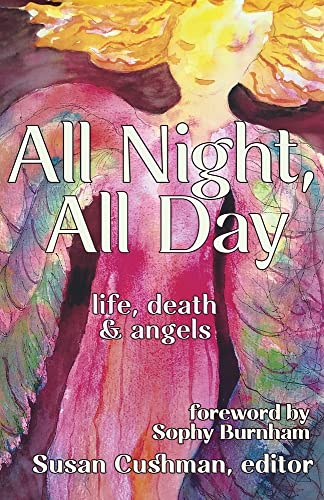
Author and editor Susan Cushman of Memphis Tennesse had a wonderful idea, and made a call out to some of her literary friends to ask if they would contribute to an anthology on the subject of life, death and angels. Susan wanted to read our stories, and assemble them in the book whose cover you see above. The anthology was just released by Madville Publishing, and it’s available where all books are sold.
It was my pleasure to contribute an essay to the anthology, All Night, All Day. My essay is titled, The Power of Three, and in it I tell the story of meeting the author, Anne Patchett, who, along with two of her friends, arranged for the first art exhibit of their friend, Sooki Raphael’s work. The art show was at Santa Monica, California’s Bergamot Station, and its staging was an act of love by Ann Patchett and her two friends, for at the time, Sooki Raphael was battling the pancreatic cancer to which she would ultimately succumb. Sooki Raphael’s art show was extraordinary, but what impressed me most about going to Bergamot Station that day was being in witness of the supportive power of female friendship.
The anthology is an inspirational collection of personal essays, stories, and poems by outstanding women authors who write about the appearance of the divine in their lives. Some of these angels come to save a life or change a flat tire. Some appear to warn people, tell them what to do, suggest more vegetables and maybe better shoes. They appear as a tap of intuition, a whisper, a whoosh of warmth, a rainbow, or an act of kindness. They are the stranger ministering to you in the hospital, the sound of voices singing in the attic, the sudden light at the window, the man by the side of the road. They are nurses and sometimes they are you. In this stunning anthology which explores so many heartwarming brushes with celestial beings, all these angels are messengers come to assure us we are not alone, and we are loved.-Margaret McMullan, author of Where the Angels Lived
… an anthology to be savored. This collection includes powerful first-hand accounts, interwoven with short fiction and poetry, beautifully exploring the themes of life, death, and angels. Jewels include Cassandra King Conroy’s unforgettable tale. It takes courage to write the raw truth of last moments, as Renea Winchester did in her touching story of her mother’s death titled “Waiting for Her Angel.” I loved Mandy Haynes’ heartwarming story, “Rose’s Angel” (plus, she’s a lovely person!). “The End” by Lisa Gornick is an intimate, touching tale. I shed tears over Susan Cushman’s “Hitting the Wall.” Within this collection are remembrances and memorials, which pay homage to a loved one or to a mystical experience. At the end, Claire Fullerton’s beautiful, final words offer the hope of peace. Crafting an anthology is an art. Susan Cushman has done a big topic justice-the sum of the parts is greater for having been compiled together. Savor this book…for its wisdom, humor, and truth.-Carol Van Den Hende, author of Orchid Blooming and Goodbye, Orchid
Stories that evoke a sense of peace, reassurance, and safety, as well as strength and encouragement through reported angelic activities. These stories tell of unexpected humanity and love in the lives of those who needed affirmation of spirituality in the human world. The presence of angels is recounted through brilliant and descriptive imagery and intriguing yet identifiable characterization.-Francine Rodriguez, author of A Woman’s Story
Life, death, and angel stories are usually only shared with those whom we trust and only during the quiet hours of our souls. Susan Cushman is the finder and sharer of these stories…. She has collected a wide spectrum of authors and encouraged them to contribute their personal stories and poems, thereby giving us a glimpse into their souls and the unspoken truths of our universal beliefs.-Donna Keel Armer, author of Solo in Salento: A Memoir
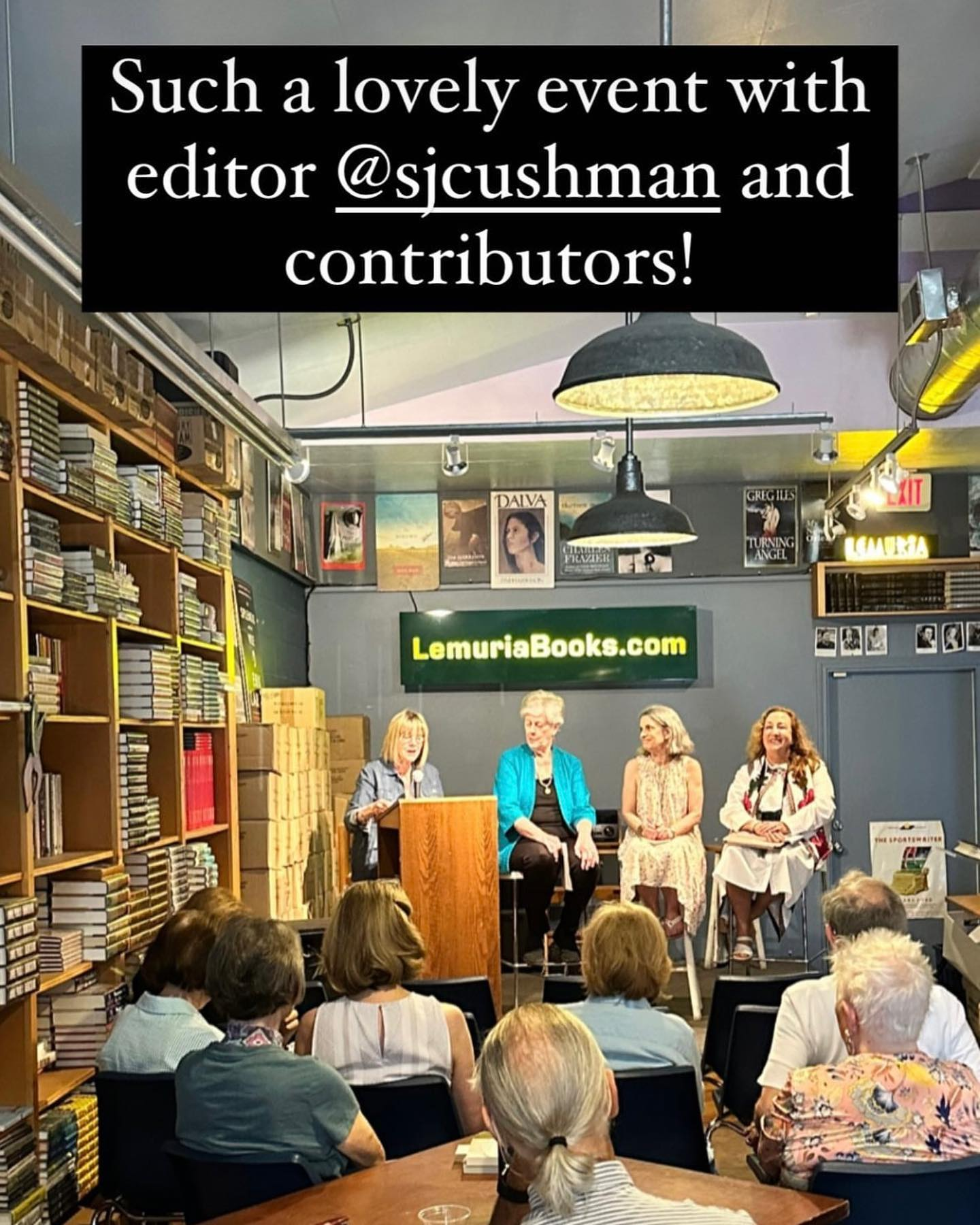
Here is a recent photograph of the tireless Susan Cushman at Lemuria Books in Jackson, Mississippi as she moderates a panel of contributors to All Night and All Day before a full house of readers!
All Night and All Day is a heartwarming collection of first person essays written by a collective of authors who have wonderful stories to tell. It’s general tone is sensitive and optimistic, deep-probing and thoughtful, and I know you’ll enjoy reading each and every essay as much as I have!
Launch Pad is a fully realized, three book series published by Red Penguin Books presented in a wonderfully organized manner, and it was my great privilege to contribute a piece on How to Be a Good Literary Citizen to Book Three, which yesterday released, and whose book cover is above.
Your book is written, and published, and headed for the NY Times Best Seller List! Ah, if only that were true. Regardless of the path that got you here, even award-winning bestsellers have to embrace a marketing plan that helps their book soar.
LAUNCH PAD: The Countdown to Marketing Your Book.
From Dan Blank’s marketing mindset guidance to practical tips on leveraging social media, book clubs, reviews, and so much more, this book, the third in a series of three on writing, publishing, and marketing your book, LAUNCH PAD will help you get it done! Each focused chapter engages you in a process that will raise your marketing IQ, build your skill set, and set you on a path for a successful book launch and marketing plan. Replete with countdown tips, ways to connect directly to the authors, and bonus downloadable planning sheets, LAUNCH PAD delivers a marketing book that speaks right to you.
A bit about the Launch Pad series:
“LAUNCH PAD: The Countdown to Marketing Your Book is a friendly and accessible collection of essays from industry experts that will help any writer put their best marketing foot forward. You can flip to a specific chapter to find answers to your burning questions or read it cover to cover for an in-depth overview of useful marketing tips and tricks.”
― James River Writers
I cannot recommend this series highly enough, for in this day and age, an author must be painstakingly prepared to launch their book. With total conviction, I will tell you that the Launch Pad series will help to create a remarkably streamlined and efficient marketing foundation. The series is available where all books are sold!
I take my hat off to the organizers of the Launch Pad series. Mary Helen Sheriff and Grace Sammon are two of the hardest working authors I’ve had the pleasure to come across in my years as a working author. Both writers have penned delightful fiction, and both have devoted their days to helping other authors in their careers.
Grace Sammon is an award-winning podcaster, and one of the best author interviewers out there! You can join Grace Sammon at the LAUNCH PAD for her new, fast-paced, radio show and podcast that celebrates new book releases and the authors that created them. Grace is the founder of Author Talk Network, the author of four books, including her latest novel The Eves, and the host of The Storytellers radio show and podcast.
Mary Helen Sheriff is the author of the award-winning southern women’s fiction, Boop and Eve’s Road Trip. She serves as an Author Marketing Coach, host of the podcast Growing Up Bookish, and the CEO of Bookish Road Trip. She has 14 years of teaching experience in elementary school, middle school, college, and professionals. Currently, she is editing a collaborative anthology entitled Launch Pad: Countdown to Marketing Your Book, which will launch in 2023. She earned an MFA in Children’s Literature from Hollins University.
Welcome to the LAUNCH PAD. Now, let’s see you and your book soar!
Available in print and digital where books are sold!
“The Paper Man is a haunting story gorgeously crafted with subtle themes of identity, nationalism, dislocation, lost love, and the price of fame.”
Billy O’Callaghan’s The Paper Man slowly unveils a love story affected by pivotal world events. It weaves a compelling story in two time frames brought together from one man’s search for identity that spans two countries and leaves an impact on multiple generations. The story enthralls on many levels. It’s a deeply human one that takes its inspiration from the life of a celebrated historical figure who suffered the ramifications of the Holocaust.
It is 1980s Cork, Ireland, and 41-year-old Jack Shine’s life is now changed. In the dark, just before sleep, he whispers to his wife as much as to himself, “You think you know yourself. You fill yourself up with what you can, you grab what’s going and hold on. And then something like this happens, and suddenly you’re empty all over again.”
The emptiness Jack refers to concerns the death of his mother when he was age ten. What he knows of himself is that he is well-loved by the relatives who raised him, and that his mother, Rebekah, “had arrived here from Vienna, as vibrant and cosmopolitan a city as any in Europe . . . she’d originally been country born and bred and had kept her preference for silences and slower ways.” Jack understands that his young, Jewish mother had fled Vienna on the cusp of WWII to be out of harm’s way and found safe haven in Cork, with the family of her father’s brother. But because of his age when she died, Jack knows little of Rebekah’s backstory, including the identity of his father. His relatives are equally unaware of the details that led to Jack’s birth, having asked no questions when Rebekah arrived in Cork pregnant and unable to speak the language.
Local stevedore Jack lives down the street with his wife and daughter from the house in which he was raised. Now that his original family home is on the market, he clears out its contents and finds “a twine-bound grey cardboard shoebox . . . bearded in dust and probably decades hidden,” in which a series of faded newspaper clippings, love letters, and photographs are neatly preserved. The letters are written in German and addressed to his mother. “The one-sided nature of the letters, especially when considered in total, only raises further questions and deepens the sense of mystery.” What Jack recalls of his mother is that “she is timid, silent to a fault, and easily cowed, the kind to hold herself to smallness in any room.” Although he fears what the shoebox might reveal, something within him must know. Because his nearby father-in-law speaks fluent German, Jack dares to solicit his involvement. And so begins Jack’s search for identity—his father’s, and by extension, his own.
It is the dawn of WWII in 1938 Vienna, and the whole of the region puts their sense of pending doom aside in favor of the last-gasping breath of patriotism, as the Austrian and German soccer teams face off, on the last day the Austrian flag flies in front of 60,000 exuberant fans. The symbolic significance of the match cannot be overstated, when onto the playing field strolls Matthias Sindelar, the Austrian team player everyone has come to see.
Matthias Sindelar is larger than life. Regaled as the finest living soccer player, his moniker, the Paper Man, is aptly given. “When he runs, even at thirty-five, it is like watching a great dancer, that same godly elegance of power, grace, and musicality . . . he glides and slaloms among them . . . every touch, pass and dribble becomes a small glory in and of itself, an exhibition in the purest sense.” An object of Austrian pride, “The press loved him because in everything he did he was pure story. Mozart with a football.”
With all eyes upon him at the last match before the war, Sindelar is unable to resist the opportunity to publicly snub his opponents, and consequently draws the long gaze of the Gestapo when he performs a mocking gesture before a riveted crowd that feels like “a colosseum moment.”
Sindelar, reputably a ladies’ man, has his heart captured by young and innocent Rebekah from the village of Kaumberg. “The mismatch was instantly apparent: at the time of their initial encounter she had only just turned nineteen and was every bit the country innocent . . . The thirteen-year age difference felt like a hurdle impossible to overcome.” As their relationship evolves into something profound, so does tension over Germany’s occupation of Austria, setting the stage for the pair to become star-crossed lovers.
O’Callaghan’s sense of place in The Paper Man’s two time frames is cinematic. The historical accuracy of streets, buildings, and cafés in 1938 Vienna is vivid, and the humble neighborhoods of working-class, 1980s Cork are alive all the way to the waterfront docks.
The author’s knowledge of soccer’s breakneck speed dynamic is displayed with breathtaking minutiae, striking a fine balance between those cheering from the stands and those playing on the field. O’Callaghan’s use of language is the life force of the story. His long sentences are sonorous and poetic; no detail is left unattended in his masterfully fluid prose.
The Paper Man is a haunting story gorgeously crafted with subtle themes of identity, nationalism, dislocation, lost love, and the price of fame. The story informs and intrigues the most discerning reader of literary and historical fiction, and will linger long after its final page.
Claire Fullerton’s most recent novels are Little Tea and multiple award winner, Mourning Dove. Honors include the Independent Book Publishers Book Award Silver Medal for Regional Fiction, the Reader’s Favorite for Southern Fiction Bronze Medal and various other literary awards.
Billy O’Callaghan was born in Cork in 1974, and is the author of four short story collections: In Exile (2008, Mercier Press), In Too Deep (2009, Mercier Press), The Things We Lose, The Things We Leave Behind (2013, New Island Books, winner of a 2013 Bord Gáis Energy Irish Book Award and selected as Cork’s One City, One Book for 2017), and The Boatman (2020, Jonathan Cape and Harper (U.S.A.)), as well as the novels The Dead House (2017, Brandon/O’Brien Press and 2018, Arcade/Skyhorse (USA)), My Coney Island Baby, (2019, Jonathan Cape and Harper (U.S.A.)) and Life Sentences (2021, Jonathan Cape and Godine (U.S.A.)).
Billy is the winner of a Bord Gáis Energy Irish Book Award for the short story, and twice a recipient of the Arts Council of Ireland’s Bursary Award for Literature. Among numerous other honours, his story, The Boatman, was a finalist for the 2016 Costa Short Story Award, and more than a hundred of his stories have appeared or are forthcoming in literary journals and magazines around the world, including: Absinthe: New European Writing, Agni, the Bellevue Literary Review, the Chattahoochee Review, Confrontation, the Fiddlehead, Hayden’s Ferry Review, the Kenyon Review, the Kyoto Journal, the London Magazine, the Los Angeles Review, Narrative, Ploughshares, Salamander, and the Saturday Evening Post.
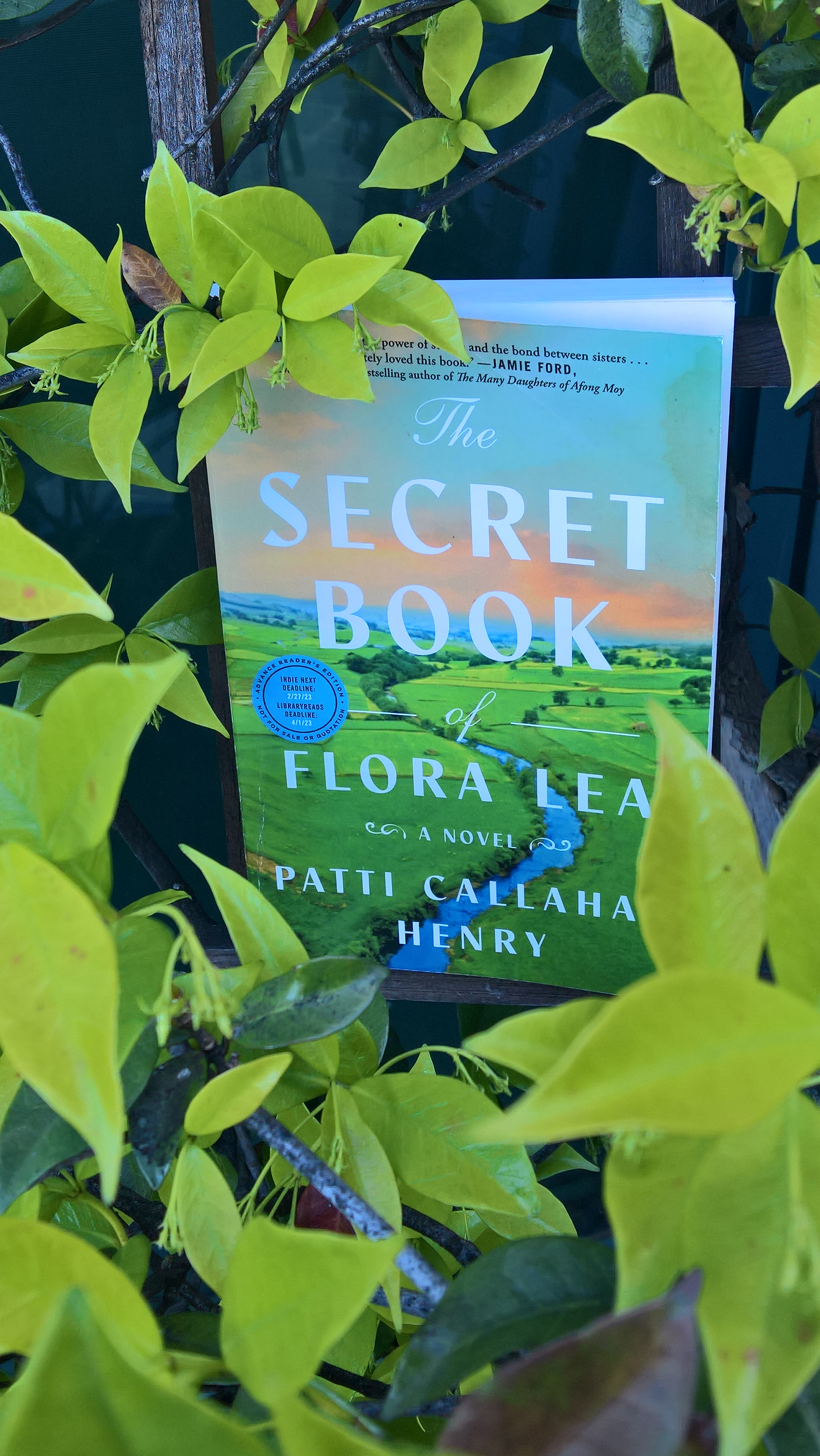
The world building elements in Patti Callahan Henry’s The Secret Book of Flora Lea are as varied and finely wrought as brush strokes on canvas. In the enchanting story’s two timeframes, the reader is taken into a quaint hamlet outside Oxford; pastoral fields beside the river Thames; a stone cottage with flourishing gardens; the fairy tale setting of Whisperwood; an antiquated bookstore in London’s town center; and, at the heart of the unfolding mystery, a secret between sisters evacuated from WWII London that haunts Hazel Linden well into 1960.
Excited to be taking an upwardly mobile position at Sotheby’s, on her last day of employment at Hogan’s Rare Book Shoppe in Bloomsbury, 25-year-old Hazel receives a shocking delivery from America of a recently published book titled, Whisperwood that dredges up the central wound of her past. The associated guilt Hazel harbors is never far from mind. “The dread. The panic. The jealousy of other people having small children at their side . . . Some days, she’d turn to that loss and acknowledge it, and sometimes, for blessed hours, she would forget, but then the shadow would fall long and fast onto her soul and she’d remember this: She lost her sister.”
Examining the book in hand, Hazel’s thoughts turn to 1940s London and “Operation Pied Piper, “a nursery rhyme name for a horror of an idea” that swept 14-year-old Hazel and her five-year-old sister, Flora, to the countryside during an uncelebrated part of England’s history that saw the children of WWII’s London relocated from harm’s way. “Now in the backroom of the small Rare Book Shoppe, the past overcame her. She’d been searching for her sister for twenty years now, ever since she’d disappeared when she was six years old from the hamlet of Binsey, and now Hazel had a clue, something to grasp on to and she was not letting go.”
Hazel’s devotion to discovering the truth behind the disappearance of her sister drives the story, and at its center is a 1940s fairy tale Hazel made up, intending to distract young Flora from the war-torn reality around them. The story grows in magical increments and begins each time, “Not very long ago and not very far away, there was and still is an invisible place right here with us. And if you are born knowing, you will find your way through the woodlands to the simmering doors that lead to the land made just and exactly for you.” The details of the imagined kingdom Hazel named Whisperwood were kept secret between the displaced sisters. When the book with that title falls into Hazel’s hands, so begins an expertly crafted suspenseful mystery.
The two timeframes in The Secret Book of Flora Lea create high stakes motivation as Hazel endeavors to discover what happened to Flora, while securing her own future. By 1960, Hazel has made a neat life for herself, despite her family’s unhealed backstory. Engaged to a young man from a prominent family and on course as a purveyor of rare books, when the past comes to haunt, questions of life’s priorities come to the fore, tipping the scale to the importance of family.
The supporting characters oscillate with fluid strategy throughout the story, as Hazel Linden, against all odds, refuses to accept the final judgement on her sister’s disappearance. Callahan Henry keeps the reader in character invested suspense. When all characters are brought into surprising alignment, Hazel asks herself, “Is this where hope met despair? Where the past rushed to the present? Where joy replaced the agony of the lost?”
Patti Callahan Henry delivers, yet again, an historically layered, dreamy tale that keeps the anglophile fires burning, on the heels of her acclaimed 2021 release, Once Upon a Wardrobe. Her descriptive detail is cinematic. Fourteen-year-old Hazel Linden, newly re-homed at the Aberdeen’s countryside cottage, gazes out the kitchen window in the hamlet of Binsey: “What a place this was, Hazel thought. All the wide green space to run; the rippling of the sky that touched the horizon of trees unobstructed by a cathedral or tall building. It was as if by taking a simple train ride the world had unfolded, presenting itself in long stretches of rolling hills and heather fields.”
A charming story that weaves fairy tale, mystery, and historical importance with a good dose of romance, The Secret Book of Flora Lea will appeal to all ages, as the author unfurls a fantastic story about “an invisible place right here with us.”
As my review appears in the New York Journal of Books
In The Lioness of Boston, author Emily Franklin makes a fascinating case for following the beat of one’s own drum. The thoroughly researched historical fiction account of Isabella Stewart Gardner deftly depicts a woman coming into her own within the confines of high-society Boston as perched on the cusp then seen all the way through the Gilded Age.
The four-part story begins in 1861 and sweeps through changing times and multiple continents to 1924, beginning in the first-person voice of a young bride from New York, who struggles to find acceptance in the inhospitable milieu of her blue-blooded husband’s family, only to triumph in the end by leaving her culturally advantageous, lasting mark upon the city that once shunned her.
It is 1861, and 20-year-old Isabella Stewart Gardner is too naïve to realize she is unacceptably unconventional. Newly married to Jack Gardner—the brother of her childhood schoolmate—she dons the blinders of optimism, now that she’s joined Jack’s prominent Boston family. She speaks to the heart of every woman who knows she is totally unique while being widely perceived as sorely different. Isabella contemplates her predicament and says, “Marriage seemed to bring with it an end not only of girlhood but of being in the world as a person with potential. I wanted to hold fast to that possibility—that there was more for me still.”
Isabella’s sister-in-law Harriet advises, “Everyone is watching to see if you will settle in to Boston life. . . . Jack’s standing allows entry, but time and time again you prove that you will not live up to expectations.” When Harriet takes Isabella to the ladies sewing circle, which doubles as one of society’s litmus tests, the outspoken Isabella is a failure. In the New York Times, Isabella reads of Boston’s sewing circle, “Not to be admitted to these mysterious coteries is a species of social ostracism of which the severity is perhaps fully appreciated by the native-born Bostonian.”
Although Isabella is made aware that she wears the wrong shoes, shares her thoughts without a filter, and fraternizes with the wrong people, she is disarmingly likable and persists in cultivating her own interests. When she forms friendships with men in influential positions having to do with literature, the zoological society, and natural sciences, she becomes involved with areas
beyond the customary purview of women and grows to be an object of community fascination to the point where she is frequently written about in the local paper.
When Isabella’s standing as a young wife and mother promises to recommend her, fate has the last word, and when a heartbreaking and life-defining event occurs, the resilient Isabella proves she is constitutionally incapable of being fully deterred.
As time moves on, and in the wake of multiple deaths of friends and family members close to the Gardners, Jack takes Isabella to London to dislodge her grief and revive her spirits. While abroad, Isabella aligns with an artistic community of creative misfits who eventually make good. She befriends such artists as Manet, Cezanne, Renoir, and Whistler, who gather around Isabella as she develops a keen interest in art, which comes to include multicultural antiques, objects d’art, and all that pertains to visual refinement.
In Boston, Isabella fraternizes with Oscar Wilde, Edith Wharton, poet Julia Ward Howe, and novelist Francis Marion Crawford, with whom she begins a clandestine relationship. Through the years, as Jack and Isabella travel back and forth from Boston to Europe, Isabella’s relationships with her iconic circle of friends makes for fascinating correspondence, which Franklin shares throughout the story in a series of interspersed letters that cleverly enlighten the reader to the personal interests of the correspondents, while bringing into focus a woman’s place amid the nuances of the times.
The crowning glory of this multilayered story is the author’s brilliant use of language, which is pitch and tone perfect in animating Isabella Gardner and all other characters, giving us great understanding of the time’s voice and concerns, in multiple settings. The story revolves around well-heeled people and all that makes up their opulent world. The vivid details given to art, literary achievement, and master paintings are seamlessly part of the story.
Isabella Stewart Gardner is driven by the desire to fulfill her own potential. She’s a woman on a personal mission against the judgmental eyes of society. In her written correspondence to Charles Eliot Norton, a professor at Harvard University, Isabella writes of her long-range vision, “Art is not so much the memory of the truth. It’s the memory of what we wish those moments were. . . . I think I should like to collect those moments. I mean to explain somehow the connection I feel between art and memory. A museum of the mind.” Later, she shares the mission statement for the museum she ultimately builds, “I would give the world—or Boston at least—a place, and by doing so it would be as though I were giving the world my own body, my own mind. Here, I would say. Take me.”
The Lioness of Boston is a captivating story of a significant woman in Boston’s history who left that city a cultural legacy to last the ages. This beautiful novel will appeal to those who love masterful historical fiction, literary fiction, and stories of triumphant women who leave an indelible mark.
ABOUT
Emily Franklin is the author of more than twenty novels and a poetry collection, Tell Me How You Got Here. Her award-winning work has appeared in the New York Times, Boston Globe, Guernica, JAMA, and numerous literary magazines as well as long-listed for the London Sunday Times Short Story Award, featured and read aloud on NPR and named notable by the Association of Jewish Libraries.
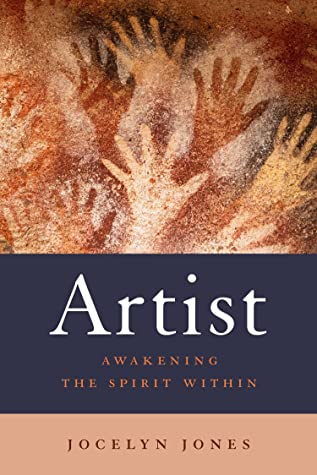
In Artist: Awakening to the Spirit Within, revered acting coach to the stars Jocelyn Jones combines her personal story, the techniques she’s used for legions of students in her thirty years as an acting teacher, and her tried and true spiritual insights. In her book’s introduction, Jones says, “This book is a humble attempt to wake up the artist in everyone—to connect you to your own source of inspiration and the solutions that live in the ether waiting for you to tune in and listen.”
Artist is a combined memoir and tutorial on the mechanics of acting that lay bare the line between art and artist while making a strong case in suggesting that the well of inspiration an actor draws from is the same source for creating an abundant life. The author shares, “Using the same techniques I give actors, I believe anyone can discover and connect to their own depth of joy… It is the structure you create in life that lays the groundwork for an exciting existence.” Continuing with the idea of structure, Jones says, “The more confident you are in the structural choices you make for your life, the more freedom you’ll feel living in the moment. The more freedom you feel living moment to moment, the more joy you invite into your life.”
The daughter of Tony-award winning, character actor, Henry Jones, Jocelyn Jones grew up in the midst of theatrical royalty and intuited that “Acting is about creating a life where there once was none. It’s about manifesting,” and “We are what we believe. We need to wake up and take responsibility for our thinking.” Equating skills for three-dimensional acting with life-skills, Jones suggests that “thoughts and feelings (inner life) color how the actor does the behavior; after they connect to all that, the words come.”
A bi-coastal youth, due to her parents’ divorce, Jones divided her time between New York City and a beachside community in Los Angeles. Preferring to live as a student of life, as opposed to pursuing scholastic achievement, Jones found divine inspiration in nature, learned to trust synchronicities in affirming her life’s path, and realized that the core of an artist is not so much talent as an acute sensitivity.
The author has much to say on the idea of being present in one’s own life and suggests that time speeds by because most are not actually in it, and that to slow down time, there is merit in being “in the moment” to fully experience “what is.” The author places emphasis on appreciating life’s day to day variables. “Oddly, it is the mundane details of life that bring the truth to both acting and living… When you fall in love with the mundane details of moment-to-moment living, you fall in love with the miracle that is life.”
Interspersed throughout the book are exercises the author uses to teach actors that are equally important techniques to use in life: Meditation, objective observation, and communing with nature to name but a few, and each exercise is designed to help us make decisions about what we want in life, while focusing a keen eye on what we choose to do. Jones recommends asking questions. She recommends finding fulfillment in discovery, and says, “Art is the expression of that which you have personally discovered…It’s the joy of discovery that permeates the expression.”
Artist: Awakening to the Spirit Within is an insightful, accessibly written book that hits all the high notes of art and creativity with an aim toward helping us lead an inspired life. For the actor and the layman, it’s an uplifting, life-affirming book sure to inspire all readers to create and discover the art in their own lives.
For the last 15 years Ms. Jones has served as a confidential “Creative Consultant” on some of Hollywood’s highest-grossing pictures. Known as a secret weapon to industry insiders, she has advised clients on everything from acting, to which projects to choose; to doctoring scripts; to developing their future projects. Her consulting work has been considered an invaluable asset by some of Hollywood’s biggest stars.
An in-demand Acting Coach for over 25 years, Jocelyn has shepherded hundreds of actors from novice to starring careers at The Jocelyn Jones Acting Studio, where she works with a handpicked group of actors, directors and writers.
She began her teaching career at The Beverly Hills Playhouse, where she taught for Milton Katselas for over 17 years. She has her own studio (The Jocelyn Jones Acting Studio) in West Los Angeles.
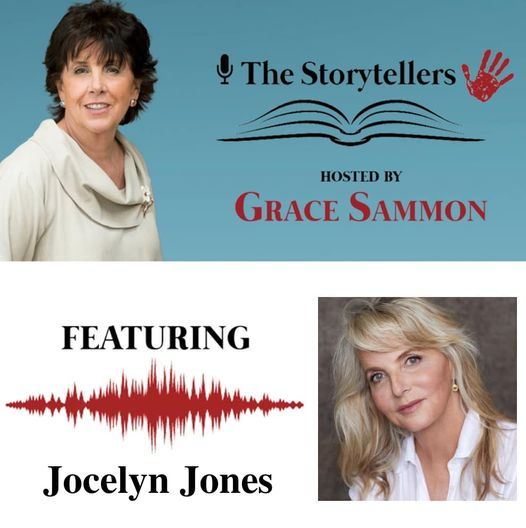
Hear Jocelyn Jones Interviewed by the inimitable Grace Sammon of Storytellers Podcast here:
THE STORYTELLERS! Jocelyn Jones remarkable woman, storyteller, acting coach of the stars, author of ARTIST!
“‘Annie’s Song’ is an open-hearted memoir about a life spent loving the most vulnerable among us. These are stories full of joy and life that keep loved ones close, even after they’ve passed from this world. This poetic writing of untiring advocacy, compassionate witness, and deep love is a gift to the enormous community of writers-yes, those who have felt seen and uplifted by Annie McDonnell over the years, but also those who might be hearing her voice saying ‘you matter’ for the first time. This book is our chance to see how a life of empathy is born.” -Diane Zinna, author of “The All-Night Sun”
My Interview with Author Annie McDonnell:
I’d like to congratulate Annie McDonnell on Annie’s Song: Dandelions, Dreams and Dogs appearing pre-release at #2 Amazon Hot New Releases in Biographies/Memoirs for People with Disabilities and #21 Amazon Hot New Releases in Poetry/Grief, Death and Loss.
Q: In the book description of Annie’s Song: Dandelions, Dreams , and Dogs, it reads: “Annie’s experiential memoir, for which she’s provided QR codes linking to her favorite songs throughout, allows the reader to get a hint of what it’s like living suspended between this earthly existence and the afterlife.”
Can you tell us what it is that makes your memoir experimental?
A: The experiential element of this book is a vital part of my approach. I’d like the reader to have an experience when reading “Annie’s Song.” At the beginning of the book, I invite the reader to experience the book and give them ideas to engage each of the five senses. The first is the visual, and there are design elements throughout the book meant to make you slow down and absorb the essays and poems. I believe if you close your eyes, you might recall part of your own story or maybe that of a friend of yours. These stories can help you gain more empathy and compassion. The next sense will be touch, which will activate when you’re holding the book or Kindle in your hands. The next is scent, which is the most difficult one for me to offer, but a powerful one because certain scents have been proven to be a important trigger for memory. I typically offer it in all of my swag bags. Light a scented candle or some incense. I suggest choosing a scent that you absolutely adore. The next one is taste. Jennifer, who you’ll learn about, gave me a sticker that said, “She loved me more than chocolate itself, so whenever I’m reading a good book, I like to indulge in a piece of chocolate. Lastly, I invite you to enjoy your sense of hearing. I have included QR codes to add music to each essay and poem. Each song is tied to a particular person, event or time in my life, and the music fits what the memory means to me.
Q: How have you developed your career as a writer?
A: Honestly, I’ve wanted to write since third grade. But since I didn’t know how to become an author, I became a book reviewer. I absolutely love being a book reviewer. I had to learn how to be creative and interesting when I wrote the reviews. And then a few years ago, everything was just birthed from love among friends and teachers like Diane Zinna, Jennifer and Gordon, and Lauri Schoenfeld, Lisa C, Kerry Anne King and more. I started reading my essays and poems to some of my closest friends, and I was hooked. After my grief writing class, I’d call Echo Garrett of Lucid House Publishing and read my essays and poetry to her. She told me she would be honored to publish my book. She truly believed that they were wonderful. And my husband said, ”Annie, Echo believes in your work so much, you should let her publish a book she’d be the perfect person.” It’s been an amazing feat to get this book right. I had a lot of requests and then Lucid House editors and the designer had a lot of wonderful ideas.
Q: What gave you the idea to write this book?
A: The whole premise of this book came from my grappling with trying to understand how the various traumas that I have carried through the years may have contributed to my illnesses. Sometimes I do believe I carry them because of survivor’s guilt. Other times I believe what doctors at Mayo Clinic say. They told me that when I broke my neck in a car accident in1989 that spinal fluid got into my bloodstream, which caused an infection, and that’s why I had all these illnesses. I later found that the root of most of my diseases are the genes that I was born with. However, both the accident and other traumas that I carry could certainly contribute to me not healing properly or not going into remission like some people do. My health just always seems to be declining. I’ve been bullied online by plenty of people claiming I’m not sick. Over the years, I have had some doctors misdiagnose me or doubt that I was that sick. At one point, I started doubting myself and thought maybe I was going nuts and there wasn’t really anything wrong with me. But I did not stop fighting for myself, because I knew what I was feeling was real.
My hope for “Annie’s Song” would be that readers will either see themselves or somebody they know in my story. I want my words to wrap around their heart and foster empathy, compassion, and kindness. The world needs a lot more love and understanding. Often, your struggles stem from traumas that others don’t know we have had. I have been told that I let myself be a pincushion. I have also been told that I should be over my traumas. We have to stop blaming someone who is suffering for being sick or having a hard time with a traumatic event. For those of us with invisible wounds and illnesses, such statements only add to our pain.
Q: The idea of providing QR codes to your favorite songs is unique! Can you tell us three songs that are included in your book?
A: The idea to provide the QR codes was because we couldn’t name the artist, the group, or the song but legally we can use QR codes that connect to the performer’s personal YouTube videos. To understand a moment in time, you need to know the music of that era. Music brings it to life, and music is a healer. When I was caring for my stepmother when she had breast cancer, I would put on music and dance with her to get her to the bathroom. She would laugh, and say, “You make dying fun.“ That was one of the best compliments I’ve ever received in my life, and taking care of her was one of my highest honors. A few of the songs included are: “Easy on Me” – Adele, “World Before You” – Lauren Duski, and “Ain’t No Sunshine “ – Bill Withers
Q: What inspired your book’s title?
A: I’m inspired by writing and songs that have a series of beats—where you feel like you can actually hear the heartbeat of the writer or the musician. Writers and musicians have so much in common. We are all storytellers. It was too perfect to name it “Annie’s Song: Dandelions, Dreams and Dogs.” If you listen to the lyrics of John Denver’s song that’s what my book is about: “You fill up my senses,” “Come Let Me love you,” and “Let me die in your arms.” His song perfectly sums up my life.
I’d also like to believe that my book has a beautiful heartbeat, a lot of love between the covers. My hope is that this book will be remembered, the kind of book that you read again and again, just as “Annie’s Song” is still beloved all these decades later.
Q: Can you tell us about your work with dogs?
When we lost our dog Simon, who is on the cover of the book, I had to find a place to put all of his love. His presence was still in the house. I could feel it, so I started what I called #OperationSimon. I started volunteering for One Love Dog Rescue. I started off as a foster. I failed on two of them and wound up adopting them myself. One got adopted. Everything I did, I called #OperationSimon. It made me feel like he was still here. The statement “who rescued who?” is not lost on me. Then I started doing pick-ups in Queens and at JFK airport and then I went to New Jersey. I just had so much fun picking up the dogs as a FREEDOM RIDER. Not many volunteers want to do that job, but I’m in love with picking up these dogs and loving on them. When I got them in my car, I cleaned them up. I would sing to them. I would take them out of their crates. I tried to get them as comfortable as I could before we made the trek out from JFK, Newark or Queens to the eastern end of Long Island. I have some great stories about these pick-ups, and one day I hope to tell them.
I worked every fundraiser for many years. Now, I help with fundraisers when I can. I also love sending thank you cards to donors and adopters. I also help to press releases in all the local papers for events that we’re having, and I hope to God one day I get to be a freedom rider again. That’s the best thing I ever did.
Q: What is the targeted audience for your memoir?
People who have illnesses or are disabled and those who have experienced trauma, grief or loss in the course of their lives. I believe that this book is good for everybody for the simple fact that it promotes compassion and empathy for others and for those of us, who tend to be hardest of all on ourselves.
Q: Where is your book available?
It’s available in print and eBook from independent bookstores, Bookshop.org, all major online retailers, libraries, and has global distribution in major markets around the world. An audiobook will be released at a later date.
You will laugh, cry, and be moved. In this shimmering debut, a cross-genre blend of memoir, auto-fiction, magical realism, and poetry. Annie pours out her dreams, her loves, and her hopes along with grief, medical misdiagnoses, and innumerable losses. Her determination to live a life of love, joy, and meaning despite her great suffering shines throughout her essays and poems.
Meet Annie McDonnell:
A lifelong reader and advocate for writers and books, Annie McDonnell is an Alum of High Point University, Class of 1991.
In 2006, Annie won a contest with Elle and became a book reviewer for the magazine. When Elle stopped running book reviews in print, Annie moved to blogging and The Write Review community was born.
Annie is the author of her debut “Annie’s Song: Dandelions, Dreams & Dogs,” released on 3/14/2023. Writing book reviews, blurbs, articles and beta reading for almost two decades. Annie hosts interviews authors and runs workshops. She enjoys consulting with authors and planning online events. While having fun as a co-admin to the World of the Write Review Book Club, she also runs The Write Review page and blog.
In December 2020, Annie was the recipient of the Doug Marlette Award for a lifetime achievement in book promotion.
Annie lives in Mastic, NY, with her husband, three beautiful dogs and five adorable cats. She also volunteers at One Love Dog Rescue as much as possible. Annie supports both Adult & Children’s Literacy through book drives and Operation Paperback.
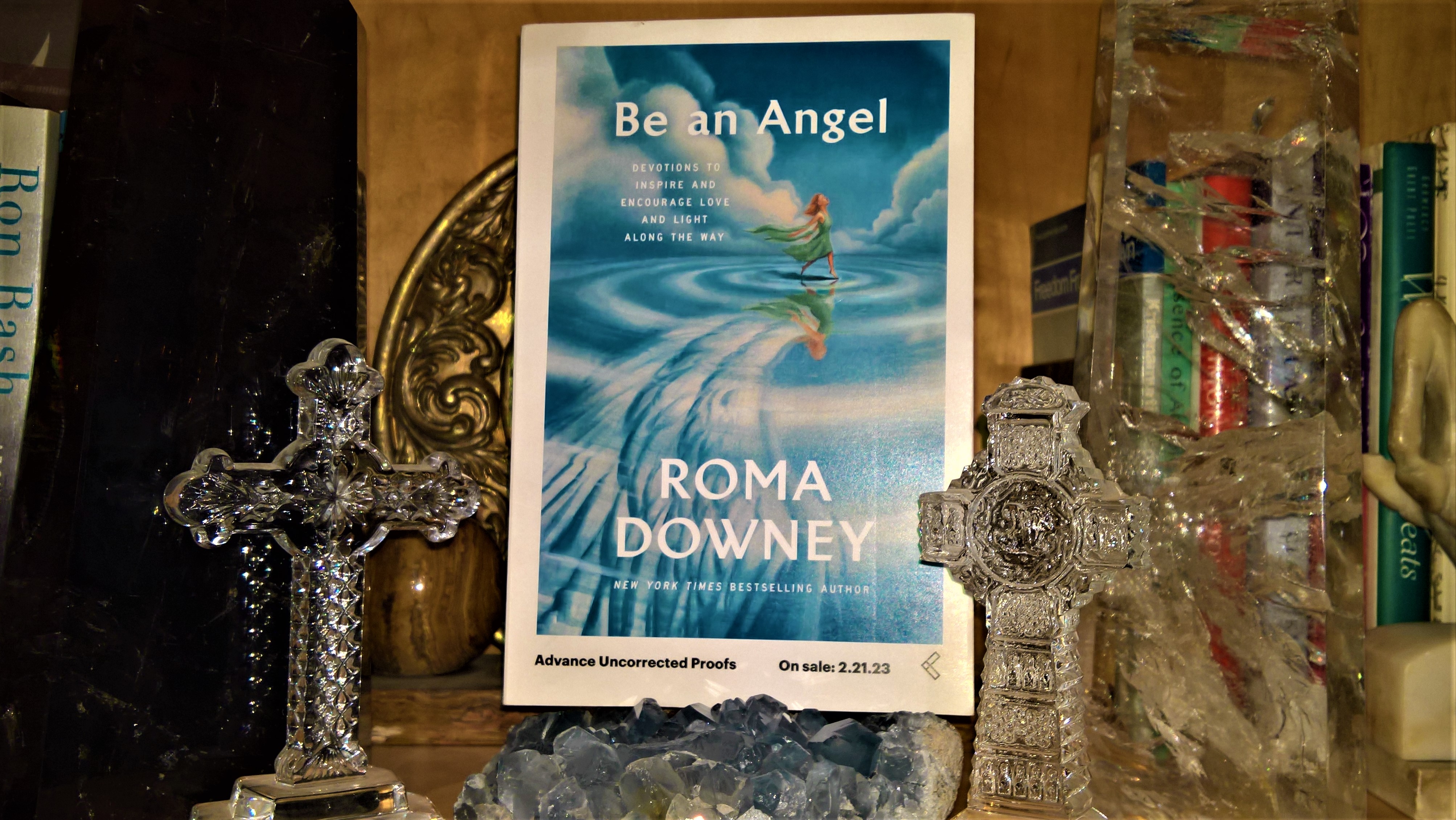
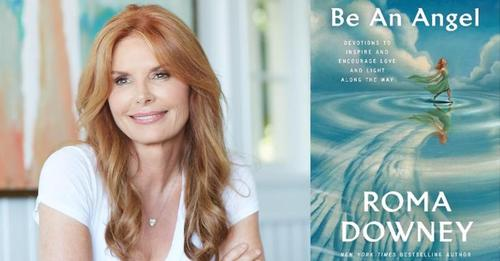
A beautiful, timeless, and timely collection of inspirational passages to use as a daily touchstone, Roma Downey’s Be an Angel: Devotions to Inspire and Encourage Love and Light Along the Way makes good on its title. It’s lovely in its optimism, succinct in its knowledge, efficient in its compact arrangement, and wonderfully structured for the reader’s convenience.
That actress, producer, and author, Roma Downey is a household name due to her starring role as an angel in the nine-year run of the fantasy/drama television show, Touched by an Angel, which justifies her hand in writing this book; it is her humility to which we’re attracted. In the book’s introduction, the author states her impetus in writing the book: “Over the years, because of my role on TV, people often mistook me for an actual angel.” Realizing the responsibility of her high-profile position, she explains how she rose to the challenge: “Della taught me that if we’re going to be used by God, we need to let go of our expectations and get out of the way.”
The 52 chapters of Be an Angel encourage the book’s use as a daily devotional to ponder in an incremental manner that, once coalesced, will impress as an overall way of being in the world, “bringing light into darkness.”
The chapters are neat and accessible, each beginning with a recognizable, inspirational quote followed compatibly by a short example of Downey’s personal experience to illustrate her point. Her manner is intimate and confessional. Her concerns are universal. Her tales range from anecdotes to transparent first-person narratives. Her settings range from home and hearth to her presence on social media.: “I recently posted this verse to my social media story one morning just after dawn . . . with the rest of the world, I had been watching a terrible international conflict evolve thousands of miles away.”
There are interesting stories in this well-arranged book, and the reader is given a look behind the curtain of a person leading a fascinating life. Downey shares her acquaintances and accomplishments with awe-struck wonder. She roams out into the world to India and returns to us with a message: “In India I encountered a profound oneness with humanity. We all love and lose. We have families and dreams . . . I
learned that we can understand one another’s pain if we open ourselves to it.”
Covering such subjects as hope, faith, gratitude, forgiveness, and grace, Downey suggests with a light hand that the beginning of enduring change might all start with you: “I started looking at what irks me considering what I’d want changed then doing for someone else what I’d want done.” Downey arrives at a conclusion: “We can’t change everything, but we can work toward peace when we change ourselves . . . if we don’t tend to what’s inside, we simply don’t have the bandwidth to be the change on a grander scale.”
Though anchored in Christian doctrine, Be an Angel transcends principle to embrace a larger concept of God. “It’s so essential in our frenetic world to step aside and be with God in stillness.” The author finds God in nature, “Often, I use the shift between activities to experience His presence in nature . . . I return to being not merely doing one more thing.”
The arrangement of this book is user friendly. Be an Angel is both an owner’s manual and a guide. Beneath each of the 14 general categories, there are three companion stories illustrating Downey’s subject in exemplary form. At the end of each essay is a prompt for the reader’s consideration written as a reflection, and the reader is invited to put what they’ve read into practice.
For dreamers and students, thinkers and searchers, Roma Downey’s Be an Angel is a collection of spellbinding essays that reads like a devotional. Its tone is enlightening and encouraging. It’s a beautiful book you’ll want to keep at your bedside and give to your family and friends.
Claire Fullerton is a staff reviewer at New York Journal of Books.
Roma Burnett OBE is an actress from Derry, Northern Ireland. For nine seasons she played Monica the angel in the CBS television series Touched by an Angel. She produced the mini-series The Bible for the History Channel and also appeared in it as Mary, mother of Jesus. She has performed on stage with the Abbey Theatre, The National Theatre of Ireland, and has appeared both on and off Broadway. She played the leading role of Jacqueline Kennedy Onassis in the Emmy award-winning miniseries A Woman Named Jackie for NBC.
We know from the start LeBlanc is wounded, that his limping spirit is tantamount to the spare, prison-like furnishings of the low-ceilinged duplex he’s rented on the shanty side of town for the past 20 years, that his economic speech has little to do with still waters running deep, that it’s born of a wariness from what he’s hiding.
It is the economic downturn of 1987 in Coral County, Texas, where thirty-something Harlan LeBlanc works alongside the small crew of Carter Hills High School’s Grounds and Maintenance Department, and partakes of a cursory friendship with a troubled, young co-worker named Gene Thomas. A man of habit gripping to a rote, daily schedule, LeBlanc tends the high school’s football field with each step carefully taken, in a manner telling of his mind frame. “LeBlanc reveled in such undertakings—the opportunity to create boundaries, to ensure the proper area for the rules to be applied. There was an element of control, an upholding of justice, that brought peace
to his mind.”
It is 1965 in the bayou of Assumption Parrish, Louisiana, and 13-year-old Michael Fischer’s hardscrabble world grows harder when his regionally shunned, depraved criminal father is released from prison. “A boy should be happy when his father returns, but Michael was not happy. He had memories of Munday—memories distorted by time and hearsay—and though there existed still a longing for the comfort and protection of a father, dread guided the boy.” Used to being the man of the house for his morbidly obese mother and younger sister, Michael is in fear when his hard-drinking father is home, and only breathes easy when he habitually disappears.
After home circumstances take an unspeakable, dark turn at the hands of his father, Michael flees to the woods, where he’s met with more danger still, until he’s found by a dying recluse of a poet named Remus, who takes the injured Michael to his cabin, and begins the long road to repairing the traumatized, now displaced, youth.
Over time, the strangers warm to an alliance, and Michael “played at having a father, and Remus played at being one. But the past is not a thing to sit still, and there are no new beginnings. The world itself was begun only once. And since that beginning its every rotation has depended on the one before—each circumstance born from the last.”
Cassie Harper has broken Gene Thomas’s heart. A student at Carter Hills High, there is
more to her than meets the eye. When Cassie is found murdered on school grounds, it rocks the entire community. When circumstantial evidence comes to include Gene Thomas, it strikes LeBlanc too close to home, casting aspersions on his character, and giving rise to his secret, haunted past.
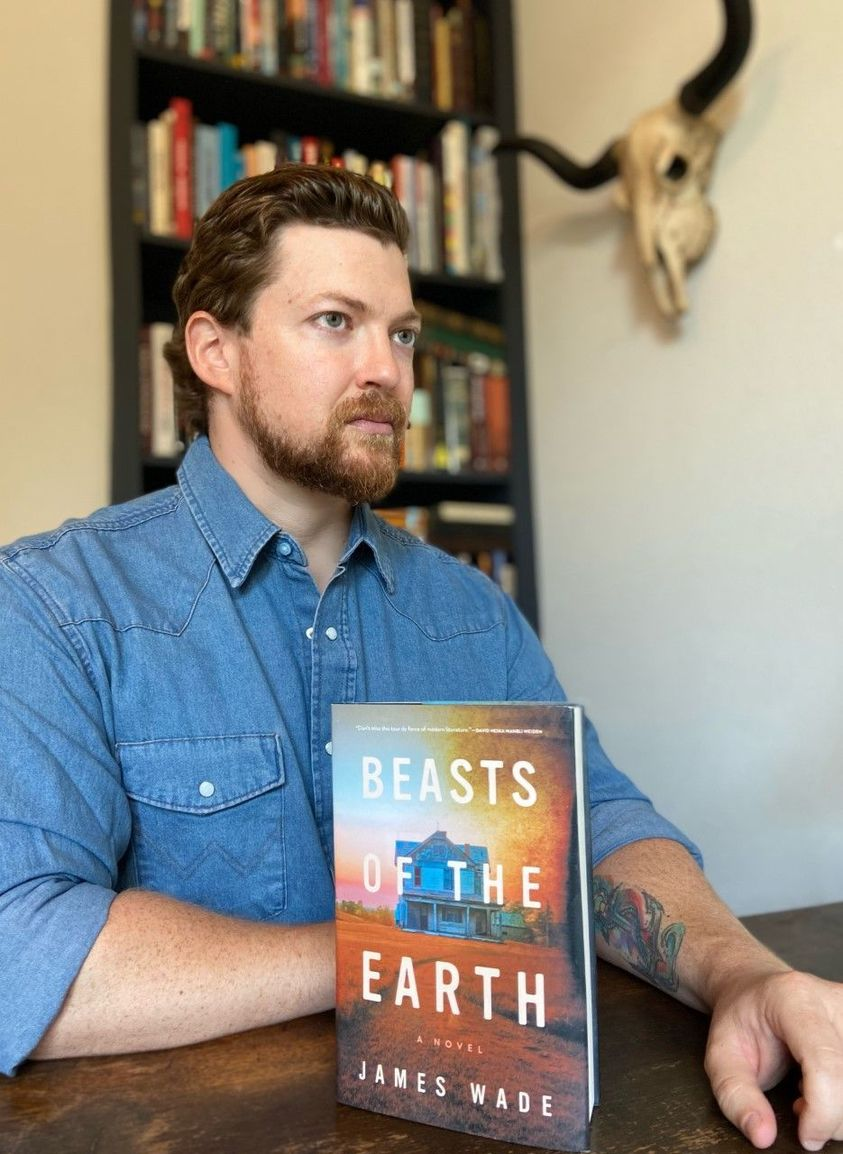
Author James Wade treads a tight wire between Beasts of the Earth’s dual storylines. He deftly keeps the reader guessing about common ground throughout the tumult of the three-part story. The tone is shadowy and off-kilter, with elements of gothic-tinged realism vested upon an innocent heart, and a mind in peril of becoming unhinged.
There is much to keep the reader invested. Wade’s pitch-perfect, personality-driven dialogue sings in the voice of life, and his ability to meld existential thought, situational metaphor, and cinematic setting is a full-bodied experience: As Harlan LeBlanc sets out to right a wrong from the past, “He walked along the river in the morning light and watched it widen and grow as it approached Port Neches and then on to the Gulf of Mexico, and he wondered if the river might hold itself or some piece of itself out there in all that ocean—might cling at some molecular level to whatever made it a river in the first place, salt or no salt. But he knew the answer and knew the difficulty in fighting back against an ever-growing tide.”
Beasts of the Earth satisfies the discerning reader. Its balanced, oscillating chapters are played out in riveting complete scenes that take you deeper into the gritty backstory of Harlan LeBlanc, a man you care about, and somehow understand from what he’s not saying, while the town around him holds him in suspicion and his moral compass covertly guides him to truth and justice sought at a personal cost.
A soul-deep exploration of a wounded man in crisis, James Wade’s Beasts of the Earth follows his two widely acclaimed novels, All Things Left Wild, and River, Sing Out, and secures his position as an author of extraordinary merit.
Author James Wade
James Wade lives and writes in the Texas Hill Country with his wife and daughter. He is the author of River, Sing Out and All Things Left Wild, a winner of the prestigious MPIBA Reading the West Award for Debut Fiction, and a recipient of the Spur Award for Best Historical Novel from the Western Writers of America. His third novel, Beasts of the Earth, is now available from Blackstone Publishing.















 Claire Fullerton Author