Musing

Here on the west end of Malibu, I spend most of my days writing. I’ve been at a particular pitch for twelve years or so, and what I’ve come to realize is, if a writer stays with it consistently, they’ll realize they’ve created a lifestyle that feels like a spinning wheel whose spokes include the writing of a book, the book’s pre-release promotion,  post-release promotion, oftentimes travel to book events, and all the while, a work-in-progress that perpetuates the cycle.

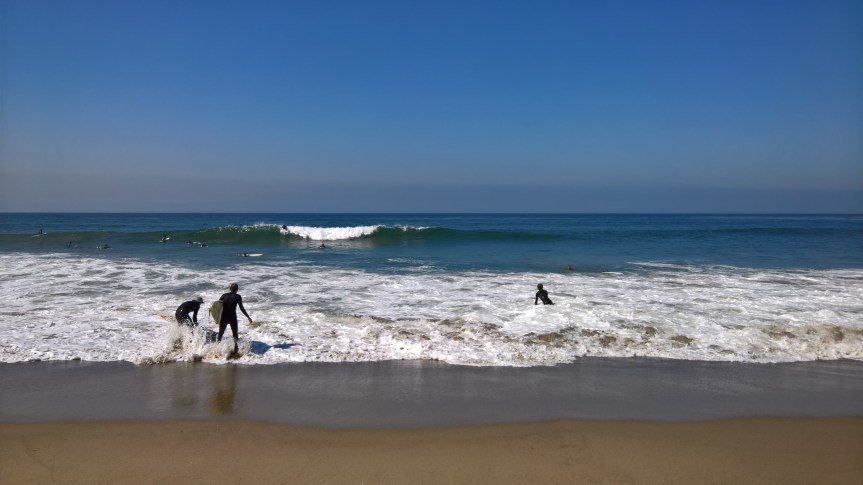
I discovered long ago that balance is key to being a writer. I don’t think it’s healthy to spend too much time at my desk. I’m in the habit of stringing three or four hours in front of my computer then going outside to walk around, see if the sun is shining, put Groove Music on my headphones, and walk to the beach to watch the surfers. A little air and movement always does me good.

WP_20200522_09_51_55_Pro

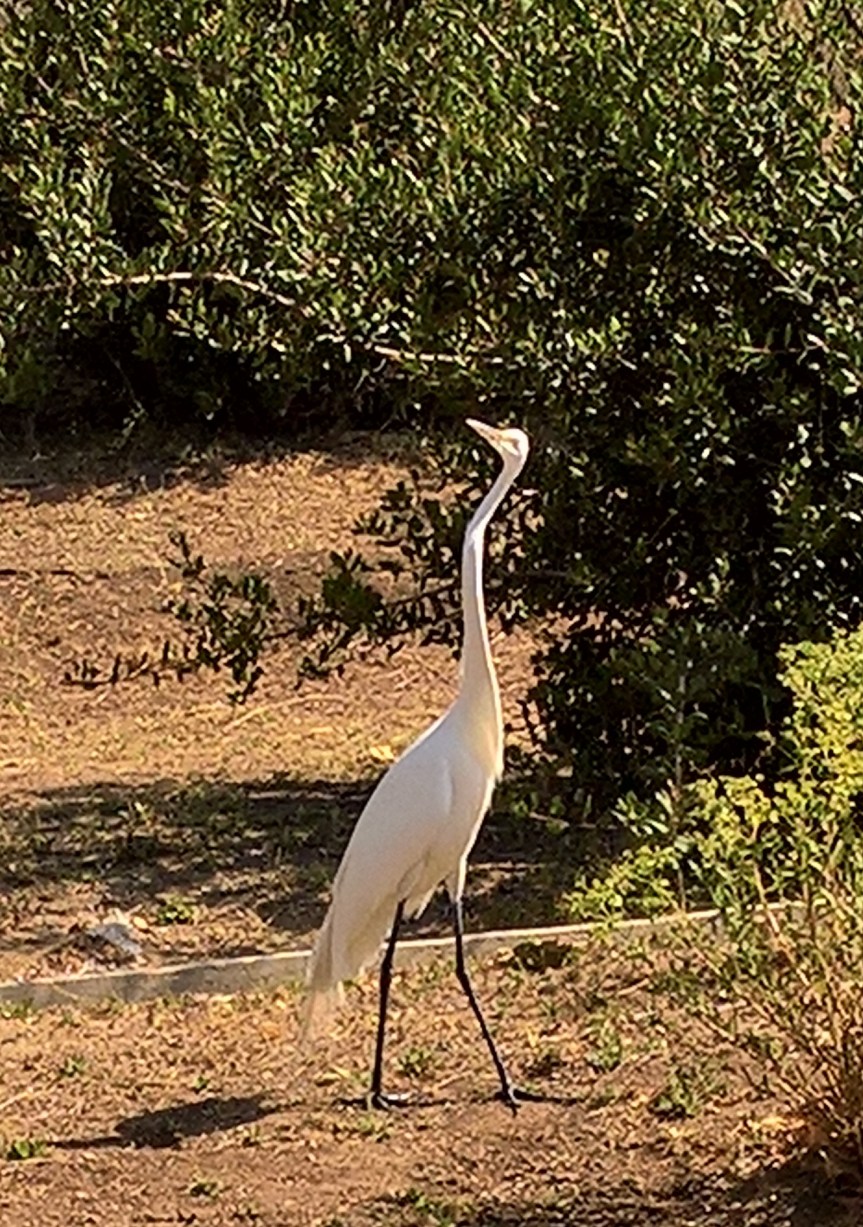
But it’s amazing what can happen from the simple act of walking outside while taking a break from my desk. Last week, it was this: WP_20200524_10_12_55_Pro

An egret walked around our backyard. It’s been seven days since this majestic bird appeared, and it shows no enthusiasm toward leaving. The Malibu terrain this time of year is hot and dry, and that means the prevalence of lizards, which, I suspect, is the egret’s draw.

WP_20200524_10_14_30_Pro

Egret Front Door

As you can see from the above photograph, the egret has made itself quite at home. Even our female, German shepherd, Ceili has grown used to it, though this isn’t always the case, especially when our other two shepherds are involved.

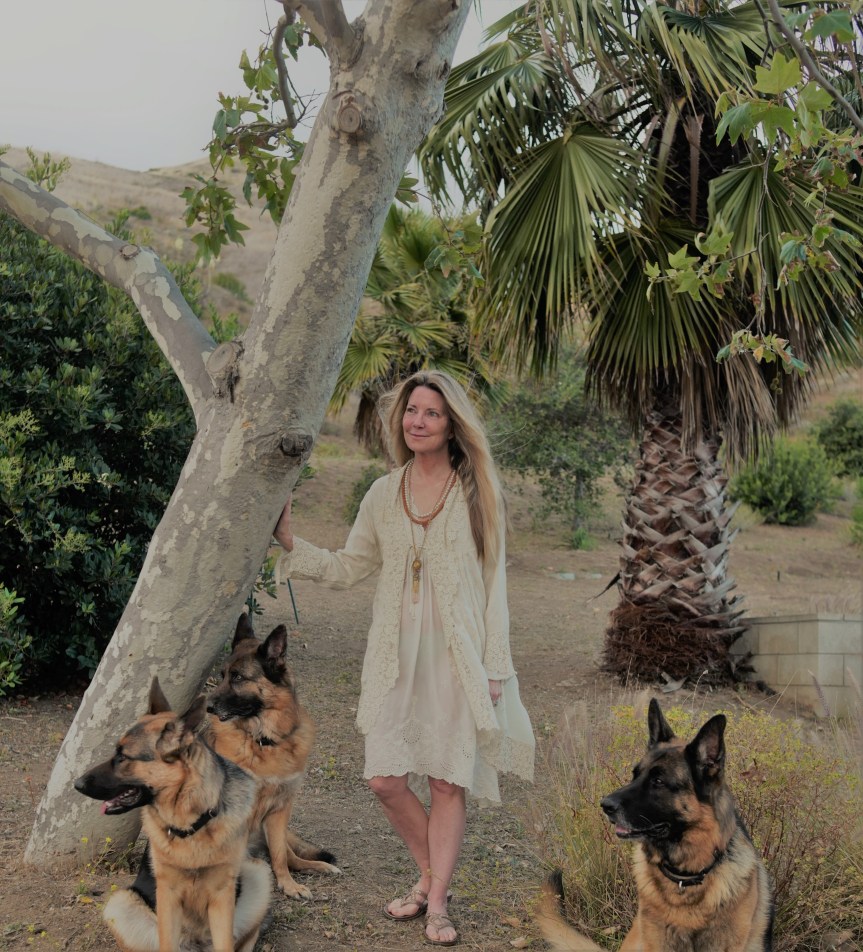
Here are Ceili, Ronin, and our 9-month-old puppy, Sorcha: three German shepherds with Irish names.

February

When it comes to seeking balance in my writing life, the environment I live in, and those that populate it give me a sense of balance.

I’m like may writers. I live on a wheel that constantly spins. It suits me, this combination of creativity, dedication, and purpose. Being a novelist is a fulltime job with no “there” to get to, only the commitment and perseverance it takes to stay on the path. As for the outcome of each book, beyond doing the very best I can do, it’s not my business. My business is to enjoy the process. I am grateful beyond measure when anything comes from one of my books, but it’s enough to enjoy the quality of my days; that I am spending time the way I like to, building something that matters to me, then walking outside to see what’s happening.


https://clairefullerton.com


Postcards and Authors

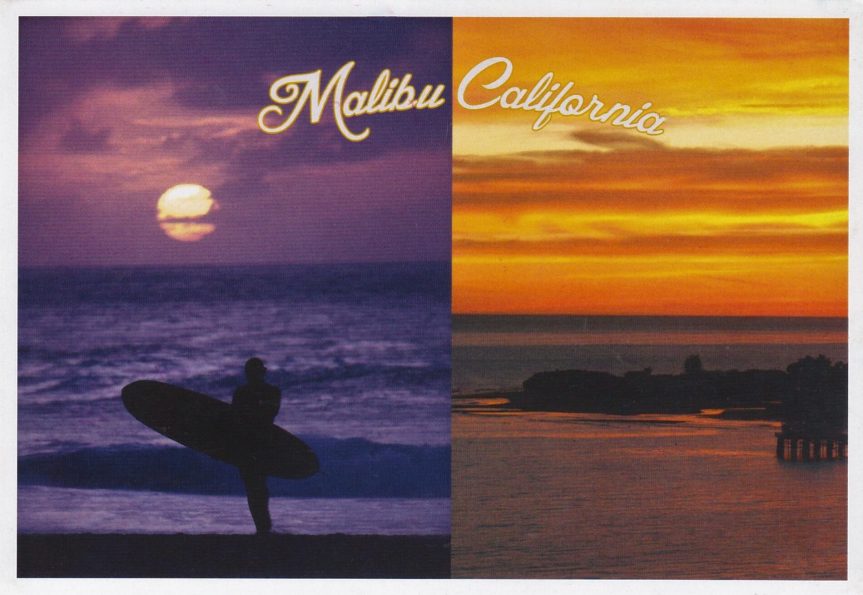
Every so often, I come across a website that champions authors with glittering flair. Postcards and Authors is such a place and Anita, the woman behind the magic, is wonderful! She has a wide reputation with good reason for championing authors. What an author does is send in a postcard with an image that pertains either to where they live or telling of their book. Authors from all over the globe enter and Anita showcases their postcard and goes to wonderful lengths to feature their work.

I wanted to share this site and information with my fellow authors. Take a look at the links below that send you to the site and direct you on how to submit!

I hope to see many on Postcards and Authors!

Here is my feature that was posted yesterday!
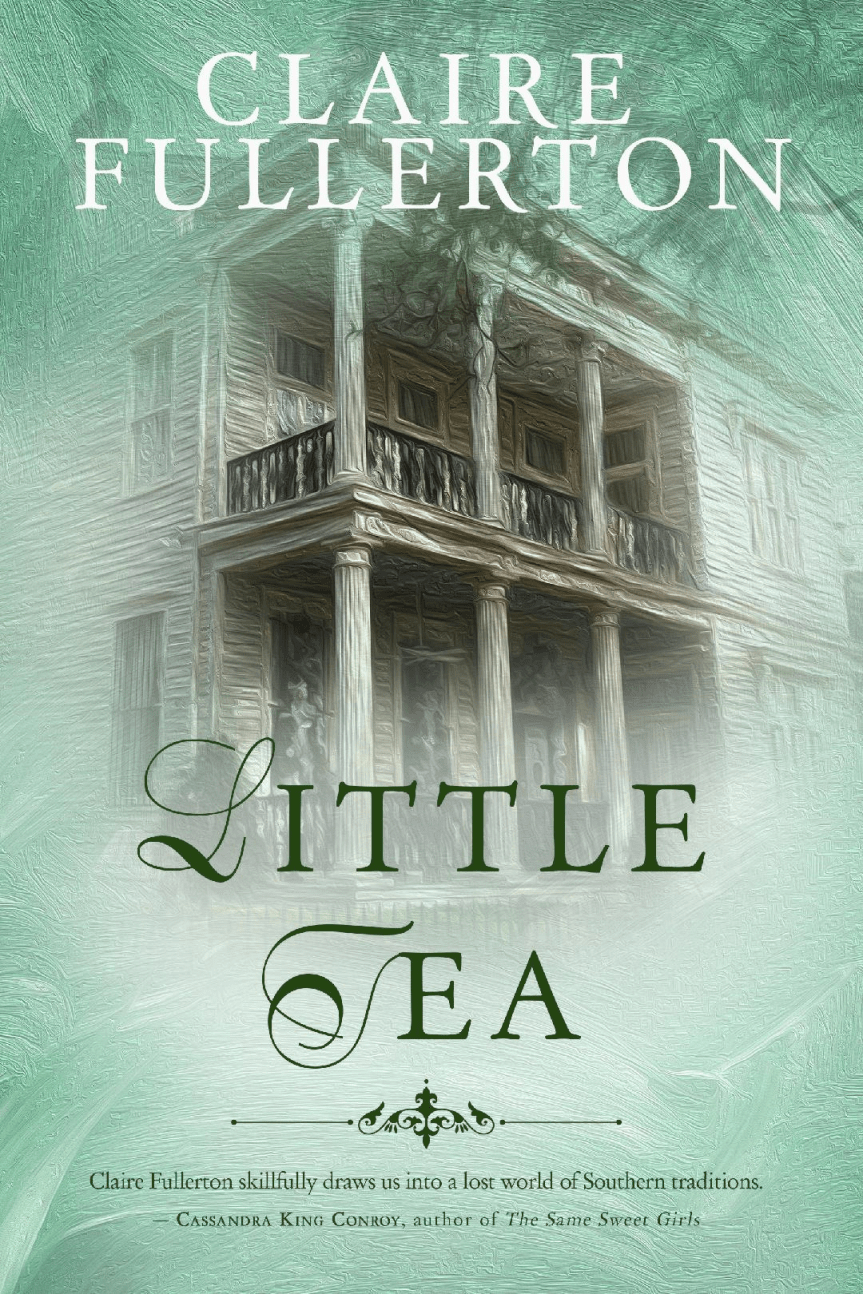
Claire Fullerton was a recent guest on LA Talk Radio – The Writer’s Block to discuss her new novel, Little Tea. Midway the conversation, her host asked, “When you write, who controls the book, you or your characters?” The presumed answer was the characters. However, Claire, whose previous career was on-air in music radio, answered, “I confess I must be a control freak because I think I’m runnin’ the show. Nobody’s taking over my book, including who I’m writin’ about.”
Claire Fullerton has always considered herself a southerner, though born in Wayzata, Minnesota, and currently living in Malibu, California. When she was ten, her family moved to Memphis, Tennessee. It was where Claire innately watched people and absorbed the music of prolific musicians who flocked to experience the city’s aura and recording opportunities. All the while, Claire was sharpening her writer’s eye. She considers Memphis the last romantic culture on earth.
However, like much of the country, Memphis was experiencing social and cultural changes, and Claire Fullerton was witnessing and taking it in, including the fight for racial equality. It would be some of those memories that she injected into Little Tea.
The story begins with a girls’ getaway at a lake house in Heber Springs, Arkansas. Celia, Renny, and Ava, friends since childhood, meet to support Ava, who is having marital problems; however, before the three-day stay is over, Celia will be confronted with demons from her past.
When the time shifts in the novel, there is Little Tea (Thelonia), the daughter in a black family. Her mother is a maid, her father, a foreman, both for the white Wakefield family’s Como, Mississippi cotton farm in the 1980s – Celia’s family. The girls are ten-year-old friends who play together and are often joined by Hayward, Celia’s brother. Innocent and naive, this works well for the three of them, but they grow up… and people have opinions. The past and present come together with Little Tea at the core.
Reviews for Little Tea give an enticing glimpse into the story. Readers are awed by Claire Fullerton’s ability to interpret and depict southern characters in settings that epitomize the beauty of the terrain. Her previous multi-award winning novel, Mourning Dove, is also about a southern family set in Memphis, Tennessee. Excerpts and reviews for all of Claire’s books are on her website.
Visit Claire’s social media and sign up for her newsletter. (Scroll down for the links.) You’ll not only see great pictures of her writer’s life, but her three big German Shepard dogs, too!
Claire, Malibu seems a nice place to land after living in other cities in the U.S and abroad. Like you, I believe I can have an extra dose of inspiration with a daily ocean view! Maybe I’ll get to Malibu on my next California trip (being optimistic). It’s been a looong time since I’ve been to The Golden State. Thank you for the postcard. 🙂
~Anita~

How to Participate and Submit: https://postcardsandauthors.com/participate/

And here is the website! https://postcardsandauthors.com/


The Spirit Behind Little Tea

I’m forever pondering the magic of life-long female friendships, the kind formed in childhood, or perhaps early high school that, for whatever reason, stay. On one hand, when we’re young, we’re in a state of becoming, but on the other, our early years are the set-in-stone template of who we actually are. We grow from there. We build our lives. We add and subtract what is and is not working. We shape and adjust and mold our lives as best we see fit but, in my mind, we never fundamentally change our core essence. We can move far from home, forge brilliant careers, marry, have children, divorce, witness sorrow and tragedy, and death, and it shapes our experience, perhaps informs our wary attitude, but the vagaries of life don’t re-define us. In a matter of speaking what happens in our lives refines us.
At the beginning of Little Tea, I said it this way: “There’s a side to the unions made in high school that has perpetual resonance, a side that remains in arrested development that will never let you forget who you essentially are.”
Our friends anchor us. They keep us on center page. They’re the ones who know our history, the characters in our dramas of cause and effect, and they never forget. This keeps us honest. Our friends are a touchpoint to see us through the ages.
I went into the writing of Little Tea wanting to make this point through the power of story. I began with three women friends who reunite after many years at Greer’s Ferry Lake in Heber Springs, Arkansas.

WP_20150718_09_44_21_Pro

I set Little Tea in Heber Springs because of its close proximity to Memphis, where the characters, Renny, Ava, and Celia grew up. They each live in another location and had to travel to the lake, and the thing I liked about setting the story near water is the idea of fluidity and fluctuating tides. Such is life, and the element of water is alive, ever-changing, and emotional. Sometimes we sit near water and reflect, other times we dive right in it. For the three childhood friends in Little Tea, Heber Springs Lake is a neutral ground.
Little Tea is the story of three women friends who reconvene because one of them is in trouble. If you take one problem and put it in the hands of three different women, you’ll receive three different solutions, each based according to who the woman is—her background, her history, her perception of the world. Great wisdom and sage advice are borne from the heart and souls of women, and it is this I wanted to capture in the story.
I like the idea of a group of women friends as an insular, secret society. This subject was the entire impetus behind my writing Little Tea, and I hope readers relate to it in the spirit I intended, which is to say there is great value in friendship.

Let’s vow to never take it for granted.

83818413_762502274271129_5696037369426214912_n

https://www.clairefullerton.com

Gratitude to the WordPress Book Bloggers

I’d like to adequately express how much the WordPress book blogging community means to me, so suffer me while I warm up to it. I readily admit I’m the long-winded sort, even when I have an important point.

In this day and age of social media at the center of an author’s career, there is much to reconcile, and there are times I wrestle with keeping a proper perspective. On the one hand–and you’d think this to meet me in person–I  am ridiculously extroverted; I have what author, Pat Conroy, labeled the “Southern sickness” of assuming everyone I meet is my best friend, yet on the other, I am intensely private. I don’t like showcasing myself because it feels like grandstanding, and quite frankly I’m not impressed with myself to the point that I think I have anything of significance going over any other writer. We are all of us playing a long-game, making our own way in our chosen field. But sometimes it seems that one has to have an elevated sense of oneself in order to promote one’s work as an author. There’s a fine line these days, and it’s the one thing I didn’t realize going into “being” a writer. I’m probably like many people in their 50’s. We were the generation who woke up one day to discover the entire world was online and all over social media. When that realization dawned on me, it was a major hustle to catch up.

Then there is the concern of reconciling novel-writing as art and publishing a novel as a business. Once upon a time–as little as twenty years ago–authors wrote books and turned them over to their publishing house to promote. If they had an audience to justify a book tour, the publisher paid for an author to travel from book store to library to book club to meet readers in person. This is still done, but on a small, discerning scale primarily intended for authors who have wide name recognition. As for authors with a small or independent press, when it comes to a book tour, it’s all out of pocket because they’re essentially on their own.  Because book publishing options have opened up and there are now thousands upon thousands of authors in the race, the effort is geared toward keeping abreast of the tide and waving one’s hand above the noise. What’s more, in this day and age, the lion’s share of promotion falls to the author and is not only about promoting a book; authors have to promote themselves.

I’ve been torn over this for a while, now. I’ve limited myself in self-promotion by only going so far. I’ll take the opportunity here to add to Conroy’s definition of Southern sickness: friendly as we are, Southerners are an unflashy lot given to personal discretion. Too much going on about oneself is succinctly considered bad form.

I see it all on social media. People post all sorts of personal information from their family to their lifestyle to their political views. I’m not passing judgment, just making an observation, but I do know that too much online, personal information can put one in a vulnerable position and lead to an unintended consequence. It’s the downside of social media and it’s a struggle to strike a manageable balance.

So, how does an author effectively promote their book while striking a healthy balance? And whom should an author trust?

Which brings me to another consideration: There are the legions of online, profiteering book promotion businesses that have cropped up as a result of the book publishing boom. It’s staggering to me and hard to wade through the miasma to discern who is and is not reputable, while an author is hustling for literary recognition and book reviews. Authors need exposure for their releases, but who to choose within a reasonable budget?

Which brings me around to the WordPress book blogging community ( I told you I’d work my way to my point.)

I am humbled and proud to have aligned with the book bloggers here. I believe the book bloggers I’ve met on WordPress are as fine as they come. I stand in awe of Sally Cronin of Smorgasbord. Through Sally, I’ve met Olga Nunez, Michelle James, Robbie Cheadle, Teagan Geneviene, Rosie Amber,  DG Kaye, and Chris the Story Reading Ape to name but a few. I stand in awe of each bloggers’ deft handling of content, organizational skills, dedication, professionalism, and magnanimous spirit. I recognize you all as passionate people involved in the book world for all the right reasons. Your impact upon many authors’ careers is nothing short of significant.

At long last, here is my point:

I thank each of you who has featured my books on your blog for including me in your esteemed fold. Your support of my career is a force that sustains me, and I remain so very grateful.

https:www.clairefullerton.com


Where I Find Inspiration

May 1, 2020 | By Claire Fullerton
I was recently asked the following question in an interview: “As a writer, where do you go to find inspiration?” The interviewer cited the habit of Charles Dickens, who took to the streets of London every day in a five to six-mile stroll while looking for source material. I love the evocative image of this world-renowned writer cruising through London, his eyes darting as he tallied impressions, experiencing the common place of that city, taking mental notes.
Because I wanted to answer the question to the best of my ability, I visualized myself in Dickens’ place and pondered what he was really doing. I realized it wasn’t so much where he was as it was that he had his eyes open. The way I considered it, Dickens allowed himself to be influenced, and this is key for writers. The most seemingly inconsequential things can affect a writer, and by this I mean strike an emotional chord. That it typically happens in the blink of an eye doesn’t make it any less meaningful.
In the essay, Honeymoon: The Romance of Umbria, by Pat Conroy, which appears in The Pat Conroy Cookbook, Conroy writes of catching himself writing in his head instead of living in the moment as he stood inspired by an Umbrian sunset. With regard to writers, I believe this is a common habit. It’s a particular way of being in the world and at the heart of it is the desire to communicate coupled with love of language.
There might be shades of the longing to be understood, but I think it’s more a labor of love to help readers understand the world. After all, a writer’s task is to articulate, to put their impressions into words along with what they think and feel through the power of story.
I’ve heard it said that artists view the world through with a peculiar, particular lens.
They have the ability to engage with the world from the outside looking in, to be in it but not of it, stand apart in the middle of a crowd and act as witness. To many artists, this ability is a calling, be it acting, painting, dancing, or writing. In my opinion, writers are the archivists of the world, the interpreters of life who record events and impressions and are driven by the need to share their gift.
And yes, it all starts with finding inspiration, yet inspiration doesn’t so much reside without as it does within. The trick is to keep wide-eyed and aware as one goes about their days, to grab hold of inspiration’s cord once it’s struck and hang on until it resonates. Inspiration doesn’t have so much to do with location as it does the ability to access what’s within once it’s triggered. When it comes to writing, inspiration is a prompting that travels from the spirit of a writer to a blank page and results in a painstaking commitment to work built on hope and blind faith that it’s worth sharing.
In answer to that interviewer’s question of where I go to find inspiration, I tried my best to articulate my experience. I said rather than cite a locale, I can share what I do when inspired, and it has everything to do with discipline. I can be anywhere doing anything when inspiration comes from sight, sound, thought, mood or feeling. To me it’s all about listening to the voice within. The discipline starts with finding a pen

For Release news of my novel, Little Tea, the rest of this post continues here: http://booksbywomen.org/where-i-find-inspiration/

83818413_762502274271129_5696037369426214912_n

Little Tea’s Universal Link:  https://books2read.com/u/3nvz0R
Claire Fullerton hails from Memphis, TN. and now lives in Malibu, CA. with her husband and 3 German shepherds. She is the author of Mourning Dove, a coming of age, Southern family saga set in 1970’s Memphis. Mourning Dove is a five-time award winner, including the Literary Classics Words on Wings for Book of the Year, and the Ippy Award silver medal in regional fiction ( Southeast.) Claire is also the author of Dancing to an Irish Reel, a Kindle Book Review and Readers’ Favorite award winner that is set on the west coast of Ireland, where she once lived. Claire’s first novel is a paranormal mystery set in two time periods titled, A Portal in Time, set in Carmel-by-the-Sea, California. She is a contributor to the book, A Southern Season with her novella, Through an Autumn Window, set at a Memphis funeral ( because something always goes wrong at a Southern funeral.) Little Tea is Claire’s 4th novel and is set in the Deep South. It is the story of the bonds of female friendship, healing the past, and outdated racial relations. Little Tea is the August selection of the Pulpwood Queens, a Faulkner Society finalist in the William Wisdom international competition, and a finalist in the Chanticleer Review’s Somerset award. She is represented by Julie Gwinn of the Seymour Literary

Follow her on Twitter @cfullerton3
Find out more about her on her website https://www.clairefullerton.com/

As Published on:

Women Writers, Women(‘s) Books
Online Magazine
http://www.booksbywomen.org
Twitter @womenwriters
Facebook Women Writers Women(‘s) Books

The Story Behind My Book Trailer

Years ago, I was on the airstaff of WEGR, Rock-103 in Memphis. I’d worked at four radio stations before I was hired at Rock-103 and at the time, considered that album-oriented rock station on Memphis’s infamous Beale Street the end all and be all of music radio. Because it was. To be working in music radio in the 80’s in Memphis, Tennessee, with its undisputed reputation of being the town that brought the Delta Blues to the big city, which Elvis, in his unique way, turned into rock-n-roll and inspired The Beatles and a host of others who put Rock-n-Roll on the American map was something I never forgot. Music is Memphis’s claim to fame. It permeates the air of that historic city and anchors its denizens proudly in a strong sense of place.
When one is a DJ at a radio station that reaches thousands, daily, one lives in a world within a world: a close-knit society populated by people who share the same passion, speak the same language, and hold music at the top of the hierarchy of things that really matter. In radio, the wheels turn on a schedule. There are air shifts and play lists, a Program Director, Music Director, sales staff, publicity team, engineers, and in the middle of it all is the Production Director.
At Rock-103, we called Rick Robinson the Production King. We called him that because Rick seemed to have taken up permanent residency in a small studio down the hall from the control room, where he produced radio spots and promos that went on the air. As Rick existed in the midst of a tribe of on-air talent, he was in the habit of summoning any one of us, when we least expected. He’d want to record a voice over for a commercial, a PSA, or perhaps a glib parody, depending on what he was working on in his electronic cave. Rick was the guy who was always firmly and squarely THERE in the creative commotion of Rock 103. He was a permanent fixture with a peculiar set of skills I didn’t know the half of, but I knew he spun magic on behalf of us all at Rock-103, and we relied on him.
It’s funny who you lose track of as the years transpire, yet perhaps it’s understandable for me since I no longer live in Memphis. Life moves on. People change careers, and I left music radio when I moved to Los Angeles and got involved in the record business. Simultaneously, I started concentrating on what I’d been doing since I was in my late teens: writing. Writing has been its own twisting path. So far, it includes four traditionally published novels and one novella, but the reason I’m mentioning this is to say that along writing’s twisting path, I had the good fortune to become involved with Southern Writers Magazine. Which, unbeknownst to me for the first year of my affiliation, just so happened to have its headquarters in Memphis.
It took my correspondence via multiple emails with the Creative Director of Southern Writers Magazine to discover they were headquartered in Memphis. Gary Fearon was the Creative Director’s name, and he and I had cause to collaborate on an advertisement for one of my books. Our back-and-forth correspondence ended up including the proverbial kitchen sink, after I discovered Gary was writing to me from Memphis. “I’m from Memphis,” I twittered.
“I thought you were in California,” came Gary’s reply, which turned into my telling him I was raised in Memphis, where I went to high school, and that I worked in Memphis radio.
“Which station?” came Gary’s query, and when I emailed my response, he said, “You worked at Rock-103? Me too.”
The thing about radio DJ’s is many use a stage name. When Gary Fearon was a DJ at another radio station, he used the name Rick Robinson then retained it, when he worked in production at Rock-103. To say we did chapter and verse over what a small world it is puts it mildly.
But back to my point of how life moves on: Gary Fearon left Southern Writers Magazine to focus full-time on his production demands. Robinsong Productions is the name of his company, where he produces radio and television spots for recording artists on tour and voices audiobooks ( because he’s blessed with precise diction and a tenor both authoritative and memorable.)
And here sat I, on the threshold of the release of my fourth novel, Little Tea, which is set in three places: Memphis, Heber Springs, Arkansas, and Como, Mississippi. The release date is coming up—May 1st—and in this visual world of promotional memes and scroll-stopping images, it occurred to me I needed a book trailer for Little Tea.
I looked at the pictures I took the last time I was in Como, Mississippi and thought, “Who can do a book trailer?”

One name came to mind: Gary Fearon the Production King!
Above, I’m sharing a picture of Gary Fearon. He’s in his studio at Robinsong Production, hard at work on Little Tea’s book trailer.
I love the surprising turns of life’s connections. In a strange way, it feels like an example of what comes around goes around.
I can’t wait to see Little Tea’s book trailer!  I understand Gary found an image of a redbone coonhound and will put it on a dirt road, which is suggestive of a scene in the book, Little Tea.
I’ll share the book trailer, here, once it’s finished!
In the meantime, you can read about Gary Fearon at two websites:
http://www.garyfearon.com  book trailers and such
http://www.robinsongproductions.com concert clients


Little Tea releases May 1st by Firefly Southern Fiction. It’s available now for preorder.

Little Tea ( named after a character whose real name is Thelonia Winfrey) is the story of those long-lasting female friendships that see you through a lifetime, wherein there’s shared history; language; and sense of humor. The narrator, Celia Wakefield spent part of her childhood at her family’s 3rd generation land in Como, Mississippi, where the cultural social mores concerning racial integration had yet to fully evolve. This premise sets the dynamic of a trajectory of events that impact her friendship with Little Tea and haunt Celia Wakefield decades later. When Celia reunites with two childhood friends at Greer’s Ferry Lake in Heber Springs, Arkansas, Celia’s past resurfaces for long-overdue resolution.

Outbound Train by Renea Winchester

Congratulations to Renea Winchester! Today is release-day of her wonderful novel, Outbound Train, a novel with such visceral, Southern nuance and depth; the characters seem to embody the rural South.

In 1976, memories from a night near the railroad tracks, sixteen years earlier, haunt Barbara Parker. She wrestles with past demons every night, then wakes to the train’s five-thirty whistle. Exhausted and dreading the day, she keeps her hands busy working in Bryson City’s textile plant, known as the “blue jean plant,” all the while worrying about her teenage daughter, Carole Anne. The whistle of the train, the hum of those machines, and the struggle to survive drives Barbara. When an unexpected layoff creates a financial emergency, the desperate pressure of poverty is overwhelming.
Unbeknownst to Barbara, Carole Anne sneaks out at night to walk the tracks so she can work at Hubert’s Bar. She’s hoarding money with plans to drive her mother’s rusty, unused Oldsmobile out of Bryson City, and never return. She only needs one opportunity … if she can just find it.
When Carole Anne goes missing, Barbara finds herself at a crossroad—she must put aside old memories and past hurts to rely on a classmate for help finding her daughter. But this is the same man she blames for the incident years ago. Is she strong enough—or desperate enough—to do anything to keep her daughter safe?
In Outbound Train, the Parker women struggle to make frayed ends meet in a town where they never quite do … at least, not without expert weaving and a bit of brute force.
I read the ARC of Outbound Train and recommend this gorgeously written, starkly real Southern set story that will play on your heartstrings all the way through. Author Renea Winchester writes with a clear-sighted, compassionate eye about women in hard times. They are the blue-collar, Parker women, one haunted by her past; the other, her daughter, who plans to escape the poverty of Bryson City, North Carolina at any cost. With twists and turns and secrets that come full-circle, Outbound Train is an engaging story, Southern to its core in setting and character, and captivating to its last page.

Here is my favorite photograph of Renea with her goat!

Image may contain: 1 person, smiling, eating, child, outdoor and food

I asked Renea Winchester the following questions about Outbound Train.

Q: Are any characters based on or named after friends? If so, have you told them?

Full disclosure, the character Doretta is a combination of Loretta Hannon, the funniest woman in the South, and my sister, Doretta McCammon. Both of these ladies are unpredictable, fearless, and funny as all get out. There’s a reason we live so far apart because together we have entirely too much fun. Secretly Carole Anne wants to be like Doretta. She covets Doretta’s life, her house, and the freedom Doretta has. However, Doretta wishes she were more like Carole Anne. I haven’t told my friends that I based my character on them, until now.
Q: Did you write outside? Do you have a soundtrack?
What an excellent question. I have carried this novel with me, in written form, for years. Jotting down notes, scenes, and sometimes a single saying in notebooks, receipts and napkins whenever a character whispers in my ear. I do not have a soundtrack. Music is a big part of my life, but I find it distracting when writing.

Q: How did you capture the ideas as they came to you?
I write everything by hand because, for me, the first draft comes easier through the tip of a pen. While writing Outbound Train, I voiced to my dear friend, Terry Kay, the troubles I had with a particularly elusive character. The scene simply would not flow no matter how hard I tried to manipulate the story. Terry, in his wisdom, said, “Now dear, you cannot chase characters down the hall. You cannot force them to do your bidding. You are not in control. They are in control. You have two jobs. Observe your characters and write what you observe. Pondering his words, I realized he was correct. The next day I put his advice into action and finished the scene.

Q. You wrote about secrets. Can you tell us a little about the cause and effects of secrets in the story?
Both Barbara and Carole Anne have secrets. Barbara won’t reveal the name of Carole Anne’s father, so young Carole Anne – who is hungry for a positive male role model-picks her own; except the person she picks is a man her mother blames for a traumatic event from her childhood. Carole Anne has had her fill of poverty. She wishes to escape, by any means necessary, even when it means taking a job that breaks the law. A job that ultimately leads to her kidnapping.
I think we all have secrets. Whether we are hiding a past trauma, or hunger for something more in life, I believe the secrets we carry motivates us to change.

Q: Was the North Carolina setting important to the story?
During the first draft, I set Outbound Train in a fictionalized town, but it felt disingenuous. I knew readers couldn’t connect with the characters without experiencing what we call a “sense of place.” Honestly, the story lacked heart. I simply could not convey the emotion necessary to touch readers unless I set the story in my hometown. I needed readers to walk the rails with Carole Anne, and hear the hum of sewing machines inside the textile mill. I needed to show them this part of Bryson City because the setting made me who I am today. In order to honor the women who raised me, the setting needed to be real. The same is happening with The Mountains Remember, my work in progress. The story occurs on Indian Creek, in the community where my people once lived before being displaced to form the National Park.

Here’s what others say about Outbound Train:
“Renea Winchester’s storytelling is as real and authentically Southern as the clear water music of an Appalachian creek and the song of Cicadas on a front porch summer evening.” ~ Lisa Wingate,
#1 New York Times Bestselling author of Before We Were Yours and Before and After.

“I fell in love with the smart, strong, funny characters in this community of make-do women, and I predict you will, too.” ~ Pamela Duncan, Author of Plant Life

“With pitch-perfect dialogue and believable characters, Winchester has crafted a story that will make readers stand up and cheer.” ~Michael Morris, Man in the Blue Moon, A Place Called Wiregrass

Renea was born and raised in Bryson City, North Carolina. She began her writing career in Georgia where she penned several non-fiction works including Farming, Friends & Fried Bologna Sandwiches which was nominated for the prestigious SIBA award, earned Renea a nomination for Georgia Author of the Year, and received the endorsement from The Pulpwood Queens, the largest book club in the country. After winning the Wilma Dykeman Award for Essay and the Appalachian Writer’s Award, Renea focused on transitioning to fiction. Renea has served on the Atlanta Writers Board, Georgia Writers Association, and judges multiple literary awards. In April 2020, Firefly Southern Fiction released Outbound Train. Set in her hometown of Bryson City, North Carolina, in 1976, Outbound Train is a triumphant story of perseverance and hope despite the harshness of poverty. Renea is passionate about literacy, Appalachian Heritage, preserving rare seeds, cultivating endangered plants and meeting new friends. Outbound Train is her debut Novel. Contact Renea through her Facebook Page https://www.facebook.com/Renea-Winchester-Author-162590877104288/

Image may contain: 2 people, including Renea Winchester, people sitting, tree and outdoor

~Outbound Train releases today. It’s available at your favorite book store as well as book sellers online.
You can find Renea Winchester of WordPress ~ https://reneawinchester.wordpress.com/

In Praise of Independent Book Stores

There’s nothing like times of disconnection to get you thinking about connections.

With worldwide activity essentially on pause, you’d think it’d be optimistic to take advantage of downtime. Typically, in the middle of the day, I’m at my desk working on something. Right now, I could be investing in my own long game, using time productively, filling in this unscheduled time with my self-appointed curriculum geared toward my May book release, or something along those lines.

Instead, I’m sitting outside holding Taylor Brown’s new book, Pride of Eden and thinking about connections. It’s 2:00 in the afternoon in Malibu, California. 75 degrees and the sun is shining through cirrus clouds with the ocean breeze just enough to make sitting outside pleasurable.

I can’t recall the last time I sat outside reading a book in the middle of the day. There’s a shade of guilt involved, but rather than calling it playing hooky, I’ll call it a guilty pleasure. I’ve never met Taylor Brown. I haven’t read the four books he wrote before Pride of Eden came out five days ago, but I got on board because of connections—the first being that this author posted a video of himself on Instagram, standing before pink, flowering shrubbery wearing a black mustache and beard, his baseball cap shading his black-framed glasses, his blue jean vest unbuttoned over his black t-shirt. When I pressed play, his Southern accent sprang like music to my ears, for I’ve been long in the wilds of California, and whenever I hear my own tongue, it sings like a siren call. I next did what any Southern author would do, upon realizing they’re egregiously unfamiliar with one of their own: I went straight to Taylor Brown’s website, unsurprised to learn we have people in common, authors Michael Farris Smith and Patti Callahan Henry to name just two.

The beginning of Pride of Eden’s book description reads: “Retired racehorse jockey and Vietnam veteran Anse Caulfield rescues exotic big cats, elephants, and other creatures for Little Eden, a wildlife sanctuary near the abandoned ruins of a failed development on the Georgia coast. But when Anse’s prized lion escapes, he becomes obsessed with replacing her—even if the means of rescue aren’t exactly legal.” Here’s what grabbed me about the back cover of Pride of Eden: Author Ron Rash writes: “Pride of Eden is a beautifully written, visionary novel of scarred souls seeking redemption not only for themselves but, in their limited way, for us all. Taylor Brown is clearly one of the best American writers of his generation.”

Let’s just say when Ron Rash speaks, I listen.

But back to connections during this disconnected downtime, and here’s where I show my true colors as a transplanted Memphian living in Southern California ( which natives call SoCal, but I digress.) Because the most salient characteristic of all Southerners is loyalty, I picked up the phone and called Novel Book Store in Memphis and ordered Taylor Brown’s book to be shipped to me “out here.” Believe me, if I’m going to buy a book, hometown girl is going to give hometown the business. But then I started thinking about Memphis’s other independent bookstore, Burke’s Books, and that fine figure of an erudite man, Corey Mesler, who not only owns Burke’s Book Store but recently had his novel, Camel’s Bastard Son, published by Cabal Books, which I’m itching to read. Two beats after calling Novel Book Store, I called Burke’s Book Store and ordered Camel’s Bastard Son, with the latest from John Grisham for good measure. Now, I’m thinking the good thing about Southern loyalty is that it’s not divided.

In this time of disconnection, I think it’s only reasonable to honor one’s connections, and the connections I’m thinking of now are those I have with independent bookstores. At the moment, they may not be immediately accessible, but I want to do my part in helping them thrive. Because the first thing I’m going to do once the worst is behind us is head to Memphis. And the second thing I’m going to do is visit both of Memphis’s independent book stores.

https://www.burkesbooks.com/

https://www.novelmemphis.com/

The 2020 Pulpwood Queens Girlfriend Weekend.

Friday, February 7, 2020

The Pulpwood Queens Girlfriend Weekend

By Claire Fullerton   @cfullerton3

There’s a come-down phase after an author attends a book conference—an adjustment period that has something to do with going back to the real world through the logistics of travel. My last trip back from a book related weekend involved a mini-van ride from Jefferson, Texas to Shreveport, Louisiana; a flight to Dallas; another flight to Los Angeles; and a one-hour car ride to the loving arms of my husband and three German Shepherds. Under usual circumstances, somewhere along the journey back home, I manage to switch channels, but for days after the The Pulpwood Queens Girlfriend Weekend in mid-January, the energy lingered like a good kind of hang-over.

If you’re going to get out of your daily routine and travel half-way across the country, then let it be for a three-day combined book and love fest. It’s the only way to describe the Pulpwood Queens Girlfriend Weekend, which takes place annually in Jefferson, Texas, the weekend before Martin Luther King, Jr. Day. It’s unlike any other assembly generated by the book world; different than other conferences because there are no agent pitches; no tutorials on book marketing; no instructional workshops, nor panels geared toward the how-to of writing. What makes Girlfriend Weekend unique is that it’s predicated on the 765 international book club chapters under the banner of The Pulpwood Queens and Timber Guys, who show up in Jefferson, Texas en masse, dressed in leopard-print costumes—the more outrageous, the better. They settle in for three days to listen to authors talk about whatever comes to mind, be it their books, their writing process, or how they find inspiration. That the last evening of Girlfriend Weekend is a closing-night party billed as the Big Hair Ball ( the higher the hair, the closer to God) charges the entire weekend with electrical anticipation.

There’s a visceral magic that comes from spirits colliding in a room full of people who share the same passion. It’s like a country with its own language, a secret society whose membership is granted by the simple fact that you’re there. This year’s Girl Friend Weekend was the very definition of the book community in action: authors congregating within the scrum of each other with the unified intent of fraternizing with readers, and readers in attendance because those who write books light their fire.

Have you ever stood back and watched the dynamic of a crowd when everyone in it is thrilled to be there? Dress three-hundred literary lovers up in leopard-print, balance a tiara on their heads, show them the way across the railroad tracks at the tail-end of Jefferson, Texas, and believe me, anything can and does happen. What stood out for me the most during 2020’s Girlfriend weekend was the scene between the scenes of the scheduled panel discussions. It was clear to me that authors and readers alike were there for the right reasons, which is to say they were there for the love of books. Nobody there was selling anything; working an angle; on the take; stacking their mailing-list, staging a hustle; or there “to network.” The 2020 Pulpwood Queens Girlfriend Weekend was basically a celebration of the book club’s 20-year anniversary, where authors came from all over to give from their literary hearts, so that readers received every ounce of gratitude they have for them. The atmosphere was joyous. The mood was infectious. The well-written story was honored as a high art, and the release of the 58, first-person essays in the book, The Pulpwood Queens Celebrate 20 Years, was featured to prove it.

There are photographs with this piece as it appears in Southern Writers Magazine February 7 edition of Suite T online because every picture tells a story about the Pulpwood Queens Girlfriend Weekend. Let’s just say had the convention center in Jefferson, Texas been outfitted with chandeliers, you would have seen tiara-topped women swinging from them.

Full confession here, because now it strikes me as funny: I remember packing my carry-on for Texas, thinking any interruption of my work in progress was a hassle. I obsessed over securing the four corners of my desk, so it’d be just as I left it when I returned. Don’t get me wrong.

Although I looked forward to going to Girlfriend Weekend, a part of me felt like I had to press pause on my life. Now I’m realizing that was the good news, because pressing pause on my life is precisely what happened. Summarily, I left my writer’s cave and went to the Pulpwood Queens Girlfriend Weekend and found myself rejuvenated in a jury of my peers.

TWEETABLE

The Pulpwood Queens Girlfriend Weekend Claire Fullerton (click to tweet)

________________________________________________________________

Claire Fullerton is from Memphis, TN., and now lives in Malibu, CA. Her latest book, Little Tea is in pre release on Amazon. She is the author of Mourning Dove, a Southern family saga set in the genteel side of Memphis. Mourning Dove is the 2018 Literary Classics Words on Wings award winner for Book of the Year. It is the 2018 bronze medal winner for Southern Fiction by Readers’ Favorite, a finalist in the 2018 Independent Authors Network Book of the Year, and was listed in the International Faulkner Society’s 2018 William Wisdom competition in the novel category. Claire is the author of Kindle Book Review’s 2016 award for Cultural Fiction, Dancing to an Irish Reel, and paranormal mystery, A Portal in Time. She contributed to the book, A Southern Season: Four Stories from a Front Porch Swing, with her novella, Through an Autumn Window. Her work has appeared in Southern Writers Magazine, and was listed in 2017 and 2018 in their Top Ten Short Stories of the Year. Claire’s work has appeared in The Dead Mule School of Southern Literature; Celtic Life International; The Wild Geese, and The Glorious Table. The manuscript for her next novel, Little Tea, is a finalist in the 2018 Faulkner Society’s William Wisdom competition.  She is represented by Julie

Through an Autumn Window: a Novella

At the end of 2017, Eva Marie Everson, the acquisitions editor of Firefly Southern Fiction, asked me if I’d be interested in writing a novella to contribute to a book titled, A Southern Season: Four Stories from a Front Porch Swing, scheduled for release in November 2018. At the time, I’d never tried my hand at writing a novella, and my novel, Mourning Dove, was scheduled for release in June of 2018. Thinking I’d be overwhelmed with my pending workload, I was hesitant to commit to the project, until I was given the project’s tempting guidelines: write any story you want to, as long as it’s set in the South during one of the four seasons. Right off the bat, I started thinking about the one season that bypasses California completely, and by this, I refer to the fall. I thought trying my hand at writing something I’d never attempted would be a great opportunity to stretch as a writer, and if you know anything about Southerners, you know they never tire of talking about the South. I said yes to Eva Marie, though at the time, I hadn’t arrived at my novella’s subject. But then kismet came into play when I got a phone call from a particular elderly gentleman in the Delta, who called to tell me about a mutual acquaintance of ours who had recently died. Our conversation was all over the place, beginning with how this person had died ( old age,) dovetailing into where the funeral would take place ( probably Memphis’s Independent Presbyterian Church,) who would, no doubt, attend ( everybody and their brother,) and which Memphis cemetery would serve as the final resting place (Elmwood, or Memorial Park.) Now then, I can only report that the way this particular Delta gentleman tells a story is so chock-full of laser-sharp cultural nuance that the second he got to his perfectly timed punchline ( though it was probably unbeknownst to him,) I knew I had the subject for my novella. Here is the gentleman’s artfully delivered line that spawned my novella:

“The one thing I know about a Southern funeral is something always goes wrong.”

I had a blast writing the novella I ultimately contributed to A Southern Season. I titled it Through an Autumn Window and set it during the three-day rites of a Memphis funeral, where not just one but many things go wrong. You’ll be happy to learn I hit the word count for the novella ( 20,000 words) right on its head. In Through an Autumn Window, I wrote about a long-festering, contentious dynamic between two siblings, even as both carried forth during their mother’s funeral trying to “do the right thing” in an effort at “keeping up appearances,” during their life-altering grief.

Here’s the good news: for the next five days, A Southern Season is free on Kindle. You can get it now by clicking on this link:https://www.amazon.com/dp/B07GDZ9WF5

https:clairefullerton.com