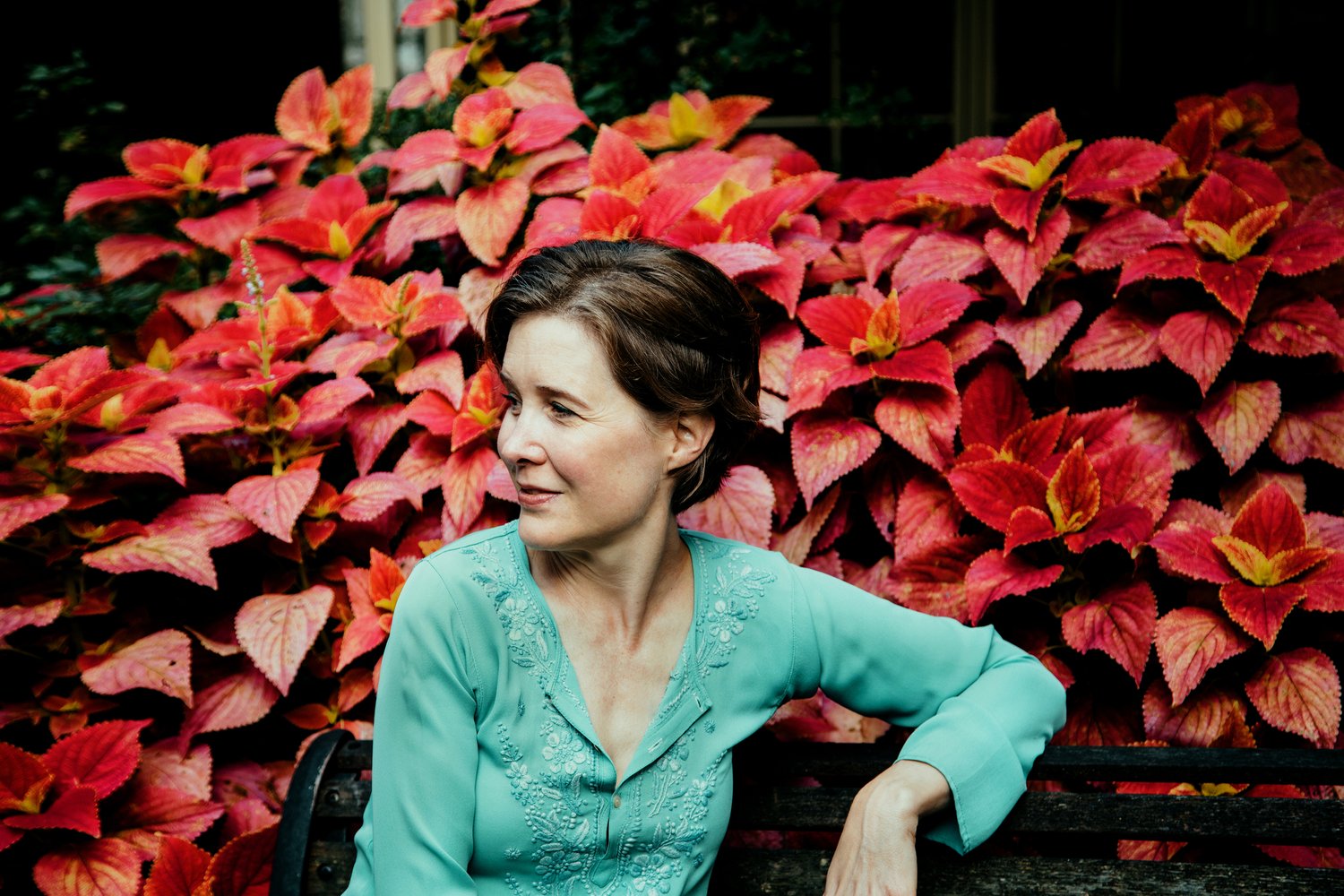
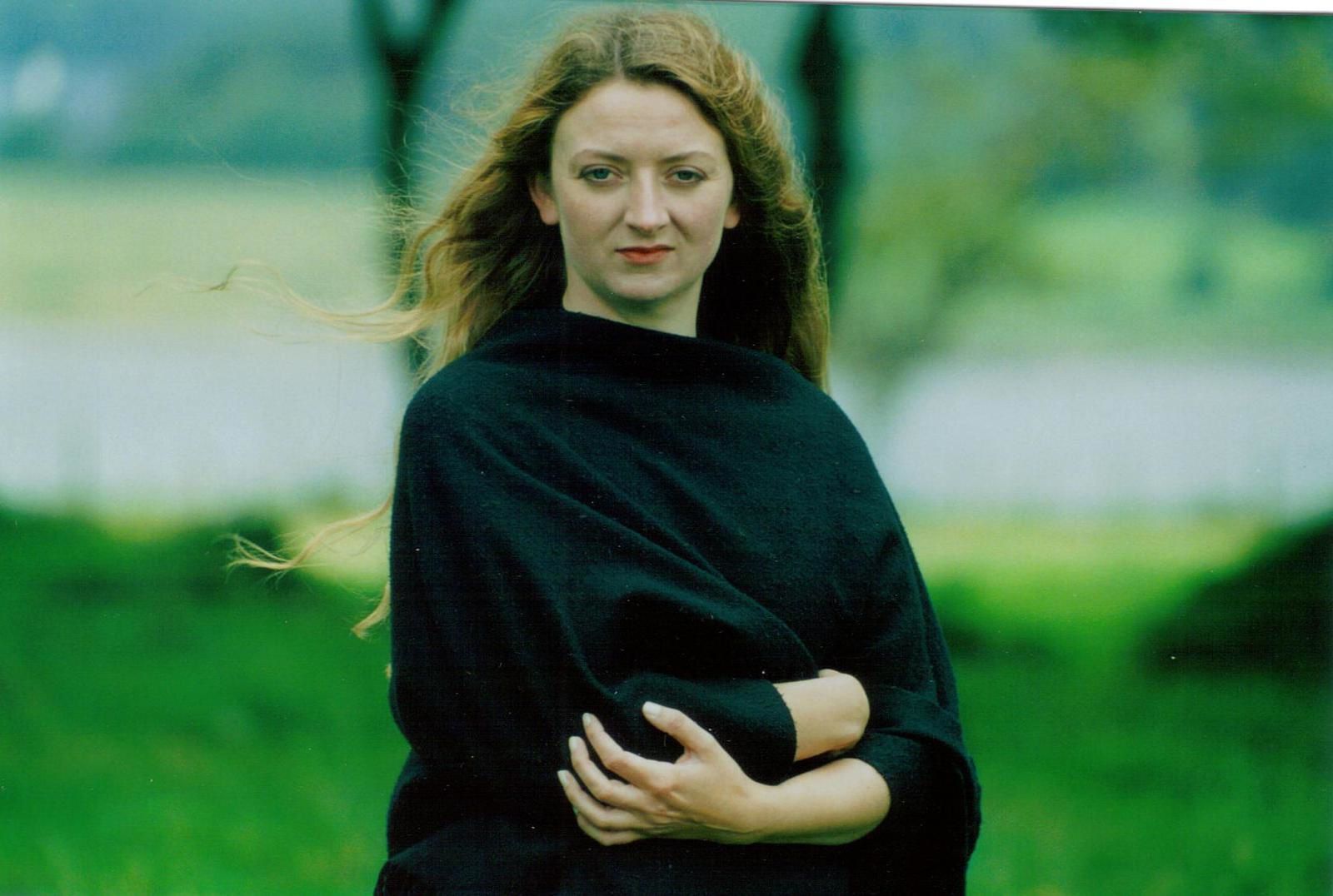
Claire Fullerton is the multiple, award-winning author of four novels and one novella. She is a contributor to multiple anthologies and enjoyed her time reviewing books for the New York Journal of Books. A Shakespeare enthusiast, Claire is currently studying Shakespeare for the stage. Look into Claire on Goodreads.
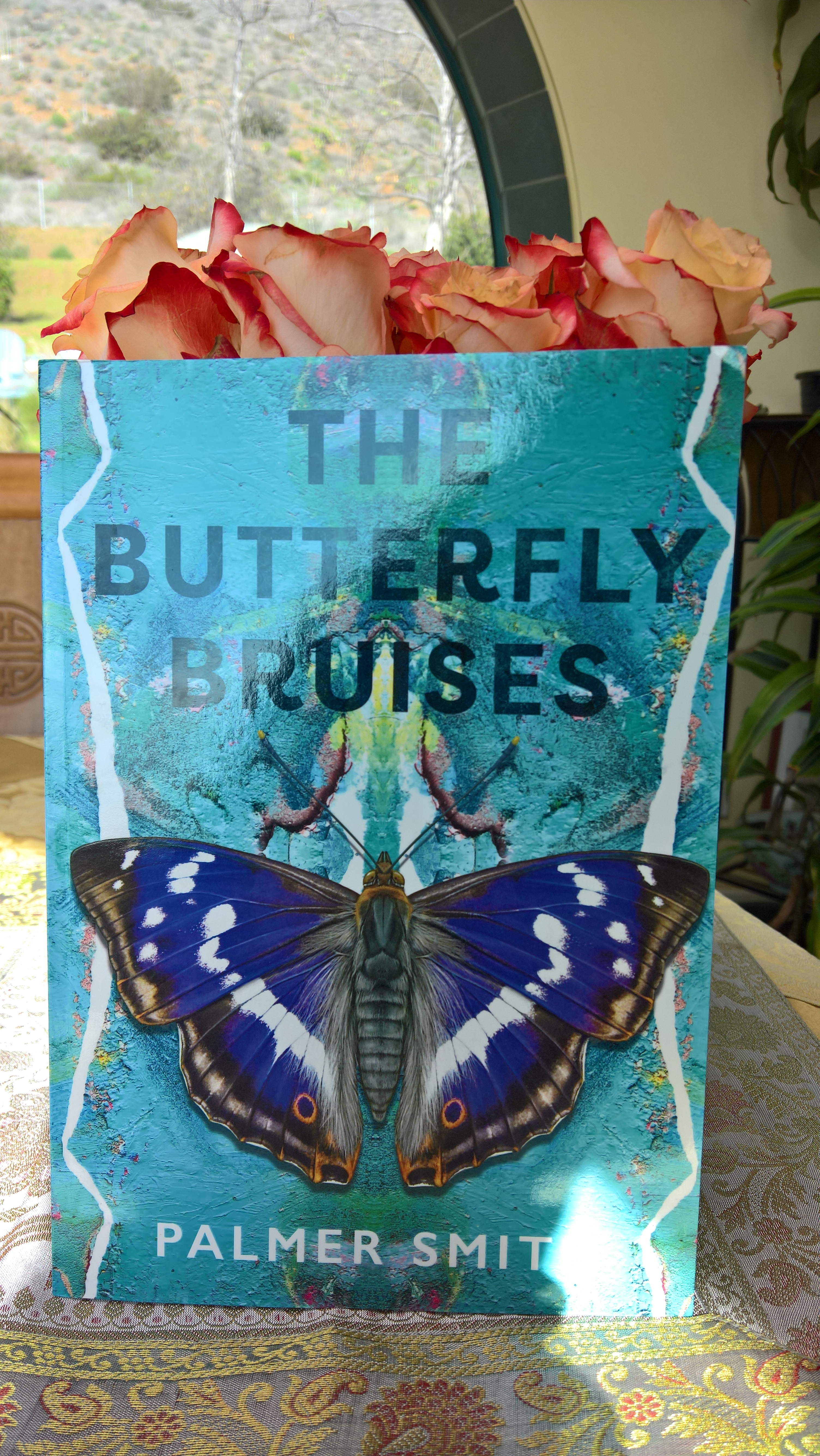
Smith’s debut collection consists of 80 poems and several short stories. It is a meditation on miscommunication, childhood, Northeastern vs. Southern American culture, family, nature vs. technology, and the imagination of the introvert.
“From sonnets to somnambulance, from algae to oxytocin, from manatees to Manhattan, Smith rides the riptides of memory’s fictions and frictions in this prolific debut. The Butterfly Bruises is a gem mine of poems and stories that write through grief and growing up, personal and planetary survival, with words rugged and glistening like seashell shards.”
-Poetry Critic and Scholar, Professor Robert Dewhurst
An assembly of deep probing, masterfully crafted prose and poetry for the discerning reader. The tone is insightful, the use of language impressively beyond the pale. Thought provoking and at times seemingly personal and confessional, the contents of Palmer Smith’s The Butterfly Bruises is breathtaking as her subjects range from a mirror reflection to the death of the family dog to musings on how butterflies survive in winter. This is a book to savor; extraordinary, creative writing that reads as a series of vignettes written from a fresh perspective. A list of eleven discussion questions at the book’s end for book clubs and readers will prompt your powers of reflection, and there is much to reflect upon in this resonant, meditative book! I thoroughly enjoyed it and will certainly revisit its pages.
Meet Palmer Smith
Passionate about writing and poetry, Palmer
is a current English MA student.
Her poetry and short stories have appeared in:
Refresh Magazine
The Crime Yard
Newark Library Literary Journal
The Online Journal for Person-Centered Dermatology
This is the extraordinary camaraderie of The Pulpwood Queens Book Club, whose Virtual Weekend starts tomorrow! I’ll tell you about the Free for Readers online conference next on this post, but for now, this morning I spied this Facebook post by fellow Pulpwood Queen author, Ruthie Landis, who has been championing the contributors to the recently released assembly of Works in Progress by featured authors of @thepulpwoodqueen#bookclub. The book is fun reading, as it’s 59 excerpts from various authors in one book! It’s published by and can be procured at https://threedogswritepress.com/ and can also be found on Amazon under the name of editor, Mandy Haynes.
WORK IN PROGRESS
Have you ever finished a book and wondered, “What made the author think of that?” Or wondered if there was a chapter in the original manuscript that didn’t make it through the final edits? Maybe you’d like to get a sneak peek at what an author is currently working on. Work In Progress includes sixty excerpts from some talented authors’ works in progress in different stages of the writing process, followed up with the story behind the story of the piece, and the story behind the author who wrote it. Where did the idea come from? What were they thinking during the writing process? Why did they delete a chapter, or change a character? Find out the answers to these questions and more inside – 546 pages filled with great stories!
The art of the short story at its finest. Southern to the core and resounding !
Sugar Baby Endorsements:
“This is storytelling of the highest order, plucking up the reader and transporting us to a world of mystery, spirituality, violence, love, and everything in between.
Sugar Baby is like River Jordan herself: thrilling, tender, tough, and shot through with light.”
Silas House, author, Southernmost
“River Jordan writes with the lyricism and grace of a gospel hymn, and the tales that weave through Sugar Baby ring like the chorus of a choir, rising and falling and then rising again, like all good sinners do.”
Michael Farris Smith, author of Nick and Blackwood
“River Jordan writes to the bone, over and over. Take this book to bed, and expect to stay up late.”
Clyde Edgerton, author, The Night Train, Killer Diller
“Southern Gothic indeed. SPLENDID, Beautiful, haunting, and ultimately a family story that operates on tribal loyalty, devotion, acceptance – it’s ALL there. Unique, suspenseful with an air of mystery.“
Claire Fullerton, author, Little Tea
“River Jordan is a holy truth-teller who can make even the bad things in life seem as sweet as sugar. The stories in
Sugar Baby and Other Stories are as real as life itself, but the language River uses to coat the pain is something from another world. Writer, storyteller, heart healer.
River Jordan is simply the best.”
Wiley Cash, author, The Last Ballad
“River Jordan is the torchbearer for Southern Gothic literature. Her sublime writing conjures up vivid characters of the rural South, their hardscrabble landscape and the determination to persevere. Sugar Baby is a beautiful collection of short stories that will linger in the imagination long after the last page has been turned.” Michael Morris, author, Man in the Blue Moon
This collection of short stories is not to be missed!
River Jordan is a holy truth-teller who can make even the bad things in life seem as sweet as sugar. The stories in Sugar Baby and Other Stories are as real as life itself, but the language River uses to coat the pain is something from another world. Writer, storyteller, heart healer. River Jordan is simply the best.” Wiley Cash, author, The Last Ballad
A Creative picture by Kathy L. Murphy, the rallying point of the biggest Book Club in the World: The International Pulpwood Queens and Timber Guys Book Club, of which there are 800 chapters!
Sugar Baby Description:
A union soldier who deserted, a scared girl in an abandoned, antebellum home, a gravedigger looking for a wife, seven sisters who will kill to protect each other, a stake-out at a rundown hotel, a Spanish priest trying to save his people from the Spanish flu, a young girl sneaking off with an encyclopedia salesman, an old woman aiming to use her last bullet. a woman framed for murder on All Saints Day, a one-eyed outcast who lives down by the river.
The characters in Short Baby and Other Stories are infused by desire, touched by love, and seeking retribution and redemption at every turn. Sugar Baby is storytelling of the highest order, plucking up the reader and transporting them to a world of mystery, spirituality, violence, love, and everything in between.”
“At times uproariously funny, uncannily accurate, and glaringly insightful, David Butler’s Fugitive is a collective exposé on human nature delivered in entertaining snippets with such clever finesse it will reaffirm your enjoyment of the art of the short story.”
Award-winning novelist, poet, short story writer, and playwright David Butler’s second collection of short stories, Fugitive, is a delightful assembly of character-driven stories that, when pieced together, give the reader great insight into modern-day Ireland, while simultaneously depicting universal themes. These are swaggering, anecdotal stories, everyday slices of life made significant, visual as staged plays rollicking in pitch-perfect Irish vernacular, each with a pithy conclusion like a moral to the story.
The 21 short stories that make up Fugitive are primarily short in length and deeply human. Butler’s talent is the ability to set the stage in medias res, dropping the reader into the story with an immediate sense of familiarity. His narrative is direct and conversational, as in the case of the wildly surprising, hitch-hiking story gone wrong as two youths traverse the country. The story, “Taylor Keith,” opens with, “The mist rolling off the mountain was threatening rain, otherwise we’d never have taken that lift.” The journey from Dublin to Galway with a dubious stranger becomes a nerve-wracking misadventure when one odd shock follows another, until the narrator concludes of his driver, “By Jaysus, he was some cute hoor all the same.”
In “The Lie,” Butler posits the dilemma of Jack as he weighs the question of loyalty to a deceased friend named Ronnie to whom he’d served as best man at his wedding. Beside the casket, Ronnie’s widow asks him what really happened on that stag night long ago, remarking that ever after, Ronnie significantly changed until his life ended in suicide. Jack guards the hidden facts: “Ronnie’d had what they term ‘history.’ But what autopsy can disclose a state of mind?”
In “The Tailor’s Shears,”Butler weaves two subjects:the plight of a divorced woman past childbearing years and the frustrating unpredictability of the publishing world. After seven years of marriage, Emily Brooks wonders what to do with her life. “Spinster is a cruel word. A male word. As she examined the fissured puffiness about those eyes with a detachment that surprised her, Emily decided she would not endure the humiliation of placing herself back on the market. On the reduced to clear shelf.” When chance presents Emily with a local writing group, “It was as if a light had come on inside her head,” and the reader is taken through 25 erratic years of Emily pursuing the publication of her short story collection, in a one step forward, two steps back manner that renders the superb ending comical.
The spot-on use of Irish colloquialism throughout Fugitive animateseach lively story. In “First Time,” the teammate of a deceased 16 year old meets his dead friend’s mother at the funeral and, after volunteering to help her around the yard, an improper relationship develops to dangerous proportions. The narrator says of himself, “OK, I can be a bit of a headbanger on the rugby pitch, but I’ve never been any use with the girls,” and “I’d never so much as snogged a girl.” After the illicit affair is discovered, the young man wonders, “I would love to know who dobbed us in. One of the neighbors, was it? Can you not?”
Tipping its hat to the sign of the times, the witty “Distancing”portrays the unintended consequences of social distancing when the anxious Emily calls her neighbor, in that short window of time while her husband walks the dog, to ask that her skimpily clad, 18-year-old Brazilian au pair be kept from her husband’s line of view. Nervous at being caught out by her husband, upon his return, Emily composes a smile, “the smile that, ever since the lockdown started, seemed only to put Frankie on edge.”
At times uproariously funny, uncannily accurate, and glaringly insightful, David Butler’s Fugitive is a collective exposé on human nature delivered in entertaining snippets with such clever finesse it will reaffirm your enjoyment of the art of the short story.
Claire Fullerton’s most recent novels are Little Tea and multiple award winner, Mourning Dove. Honors include the Independent Book Publishers Book Award Silver Medal for Regional Fiction, the Reader’s Favorite for Southern Fiction Bronze Medal and various other literary awards.
David Butler is a multi-award winning novelist, poet, short-story writer and playwright. The most recent of his three published novels, City of Dis (New Island) was shortlisted for the Kerry Group Irish Novel of the Year, 2015. His poetry collections All the Barbaric Glass (2017) and Liffey Sequence (2021) are published by, and available from, Doire Press. His 11 poem cycle ‘Blackrock Sequence’, a Per Cent Literary Arts Commission illustrated by his brother Jim, won the World Illustrators Award 2018 (books, professional section). Arlen House is to bring out his second short story collection, Fugitive, in 2021. Literary prizes include the Maria Edgeworth (twice), ITT/Red Line and Fish International Award for the short story; the Scottish Community Drama, Cork Arts Theatre and British Theatre Challenge awards; and the Féile Filíochta, Ted McNulty, Brendan Kennelly and Poetry Ireland/Trocaire awards for poetry. His radio play ‘Vigil’ was shortlisted for a ZeBBie 2018. David tutors regularly at the Irish Writers Centre.
It takes a writer with supernatural depth of field to remind us that life’s seeming trivialities matter. In the aptly named, These Precious Days, author Ann Patchett brings a sense of the sacred to twenty-three, deeply introspective vignettes that shed light on her uncommon life even as they entertain. Each essay is a slice-of-life meditation in topics ranging from family to knitting to the incremental growth of the author’s career. In equal measure, the engaging essays are uniquely personal and resoundingly universal.
Beginning with Three Fathers, Patchett examines the oddity of her paternal background, and reflects upon the individual influences of her mother’s three husbands by noting, “Marriage has always proven irresistible to my family. We try and fail and try again, somehow maintaining our belief in an institution that has made fools of us all.” With full disclosure, Patchett adds, “My problems were never ones of scarcity. I suffered from abundance, too much and too many. There are worse problems to have.”
In The First Thanksgiving, Patchett tells the story of learning to cook as a freshman away from home for the holiday and ties it into a life lesson: “On that freezing holiday weekend when my adult life began, I not only learned how to cook, I learned to read,” and “I then went on to use this newfound understanding to great advantage for the rest of my life. Books were not just my education and my entertainment; they were my partners.”
With regard to the beginning stages of her writing career, in the essay, To the Doghouse, Patchett writes about the mysterious powers of childhood influence: “Influence is a combination of circumstance and luck: what we are shown and what we stumble upon in those brief years when our hearts and minds are fully open.” Just as the reader prepares for something erudite coming, Patchett waxes rhapsody on the dog, Snoopy, from the Charlie Brown comic strip. “Did I become a novelist because I was a loser kid who wanted to be more like the cartoon dog I admired, the confident dog I associated with the happiest days of my otherwise haphazard youth? Or did I have some nascent sense that I would be a writer, and so gravitated toward Snoopy the dog novelist?”
Going deeper into the topic of her writing career, in A Talk to the Association of Graduate School Deans in the Humanities, Patchett shares, “I went to Sarah Lawrence College in 1981 and had as good an undergraduate experience as any writer could dream up,” then goes on to depict her two-year experience at the Iowa Writer’s Workshop, in which she studied with visiting faculty while teaching literature. Patchette writes, “What I learned in those two years of graduate school came not from being taught but from teaching.” “Teaching made me a better reader and a better thinker. I became more conscious about how I expressed myself, which in turn made me a better writer.”
On friendship, the essay, Tavia, depicts a life-long friendship beginning in the second grade, in which Patchette writes, “Insofar as life is a game show, Tavia Cathcart is my lifeline.” But it is in the book’s eponymous essay, These Precious Days, that Patchett dives deepest while recounting the incremental stages of a significant friendship formed later in life. Of These Precious Days, Patchett writes in the book’s introduction, “It wasn’t until I wrote the title essay, These Precious Days, that I realized I would have to put a book together. That essay was so important to me that I wanted to build a solid shelter for it.” And Patchett did. The introspective essays that lead to the book’s focus catalogue life’s vagaries in such a way as to place your own powers of observation beneath the lens of scrutiny.
In the essay, These Precious Days, Patchett tells of the chance events that aligned to bring one Sookie Raphael into her orbit. An invitation to interview Tom Hanks on stage started a series of email correspondence with Sookie, Tom Hanks’ assistant, and the seeds of friendship planted between Ann and Sookie take root at Ann’s home in Nashville. Under uncannily coincidental circumstances having to do with sheltering Sookie during the treatment of her dire medical prognosis, the women create a dynamic bond that now reads like fate. It is a heartbreaking essay, but in the hands of Patchett it is poignant, life-affirming, and testimony to the power of friendship. In the open-ended conclusion, Patchette writes, “As it turned out, Sookie and I needed the same thing: to find someone who could see us as our best and most complete selves.”
Two more essays lead to These Precious Days epilogue, serving, by turn, as an opportunity to revisit Ann’s writing career and the subject of her biological father. At this juncture, the reader is intimately familiar with the voice of the author. They’ve been given the great largess of looking beneath the hood of a world-famous writer’s life, and the reprieve given is a chance to regroup before the last essay, A Day at the Beach, in which comes the end of the story of Patchett’s dear friend, Sookie Raphael, the vividly drawn inspiration behind the collection’s title essay.
Like a foray into the heartbeat of a widely beloved author, These Precious Days by Ann Patchett is a powerful essay collection, wonderfully executed and deeply human.
Ann Patchett is the author of six novels, including Bel Canto, which won the Orange Prize for Fiction. She writes for the New York Times Magazine, Elle, GQ, the Financial Times, the Paris Review and Vogue. She lives in Nashville, Tennessee.
In 114 pages, author Claire Keegan delivers an odyssey of the soul in her gem of a novel, Small Things Like These, without leaving the setting of New Ross, beside the River Barrow.
It is 1985 Ireland, and coal and timber merchant Bill Furlong knows times are hard with Christmas coming. The married father of five girls, Furlong is a self-made man who comes from nothing, his deceased mother having lived with shame as an unwed mother who reared her child by being a domestic servant of the wealthy, Protestant Mrs. Wilson.
Furlong’s days feel mechanical for all their routine. “Lately, he had begun to wonder what mattered, apart from Eileen and the girls. He was touching forty but didn’t feel himself to be getting anywhere or making any headway and could not but sometimes wonder what the days were for.”
Just days before Christmas, Furlong keeps his employees at the yard while he makes deliveries to customers long loyal to his business. When a large order from the Good Shepherds Convent arrives, Furlong takes personal responsibility for delivery, but shudders with the recollection of the troubling time he’d last had on the grounds, when he was approached by a waif of a girl asking him to help her escape. The memory haunts Furlong, who recalls his wife’s response when he’d voiced his concerns over the place purported to be a training school for girls that also ran a laundry business.
Furlong knows well of the harsh rumors attached to the convent as a place for wayward girls, and author Claire Keegan, capturing the very bone marrow of Irish sensibility, writes of Eileen’s response to her husband’s worry: “She sat up rigid and said such things had nothing to do with them, and that there was nothing they could do, and didn’t those girls up there need a fire to warm themselves, like everyone?” The pragmatic Eileen continues, “If you want to get on with life, there’s things you have to ignore, so you can keep on.”
Furlong has conflicted feelings about his own childhood. Raised in his mother’s employers’ home, he knows had it not been for the sufferance of Mrs. Wilson, his life would be disadvantageously different. Feeling hit close to home, Furlong responds to his wife’s comments, “Isn’t it a good job Mrs. Wilson didn’t share your ideas? Where would my mother have gone? Where would I be now?”
Furlong’s Christmas delivery trip to the convent is fateful. While opening the latched storage shed to unload his coal, he discovers a young girl trapped within, and, when he takes issue with the nuns on the girl’s behalf, he suspects all is not as it seems. Being told one thing by Sister Carmel at the convent, his heart intuits a darker truth that rings in a similar tone to the plight of his mother, and in time, Furlong is inspired to act. “He found himself asking was there any point in being alive without helping one another?” Furlong wonders, “Was it possible that the best bit of him was shining forth, and surfacing?”
Spontaneously spurred to action to help the young girl, Furlong knows, “The worst was yet to come.” “But the worst that could have happened was also already behind him; the thing not done, which could have been—which he would have had to live with for the rest of his life.”
Small Things Like These is a succinct, heart and soul story of a man coming to terms with a consciousness born of his personal narrative. In precise, unadorned language, it personalizes a once taboo subject recently come to the fore, and now considered a blight on Irish history.
All praise to author, Claire Keegan, for masterfully adding to her arsenal of widely acclaimed, human interest stories. Small Things Like These is a fathoms-deep, poignant novel that will appeal to fiction readers enamored of the sub-genre categories small town and rural fiction; holiday fiction; and family life.
The moderators behind the wildly popular Facebook Book Page, Tattered Page Book Club are throwing a party today and tomorrow, and it’s a great way to discover new authors and books! A group of authors were invited to introduce themselves by sharing a bit about their book then instructing readers on how to enter to win!
I’m giving aways an author signed, print version of my 4th novel, Little Tea. Little Tea is actually a character whose real name is Thelonia Winfrey. The story takes place in the Deep South ( because I grew up in Memphis and never tire of singing the South’s praises) and concerns those long-lasting friendships formed in youth that see us through a lifetime. I began writing Little Tea with the desire to capture the way women relate to each other when they’ve known each other forever: the sense of humor, insider’s language, and secrets we THINK we keep, although, as we all know, with women friends, there’s nowhere to run and nowhere to hide! The story of Little Tea takes place in 3 places: Como, Mississippi, Greer’s Ferry Lake in Heber Springs, Arkansas, and Memphis. It’s a Southern family saga in that it depicts the influence and power of one’s family.
I had the immense pleasure of narrating the audiobook of my novel, Mourning Dove, which is set on the genteel side of 1970’s Memphis, and concerns two siblings who come to the Deep South as outsiders and learn to navigate the customs and social mores of what is, to them, a foreign land. Mourning Dove is the recipient of 13 book awards and is classified as upmarket fiction, meaning that which bridges the genres of commercial and literary fiction, and to that I’ll add that lovers of Southern fiction have embraced this book as well.
Since I narrated the audiobook, I’m sharing a bit of video as well to give you a more immersive experience, which will hopefully parlay the full intention of Mourning Dove’s mood and feel. The audiobook is available on Audible! http://bitly.ws/jdX4
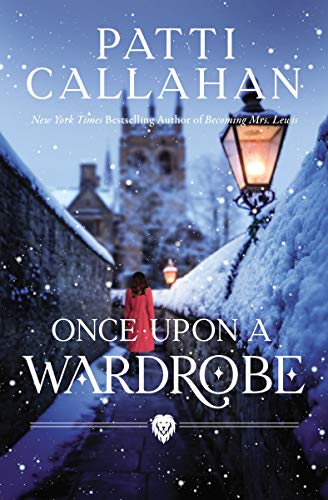
Once Upon a Wardrobe tells the story of the inspirational threads author C. S. Lewis wove together in his 1950 fantasy novel for children, The Lion the Witch and the Wardrobe. Author Patti Callahan unfurls the story through the eyes of siblings in two timeframes, maintaining a sense of awestruck wonder, while revealing the inner workings of the man behind the magic.
The story opens in idyllic, 1950 Worcestershire, England, at the bedside of eight-year-old George Devonshire, who suffers from a congenital heart condition that in no way dampens his shinning spirit. A voracious reader with an unstoppable imagination, George tasks his 17-year-old sister, Megs, a mathematics student on scholarship at Oxford University, with tracking down the university’s English literature tutor, author C. S. Lewis, to ask where the land of Narnia came from in The Lion, the Witch, and the Wardrobe.
Although she loves her brother to the point of no refusal, at first Megs balks and tells George that C. S. Lewis’s famed book is mere fantasy, but reconsiders when George says with heartbreaking sincerity, “I’ve thought about this a lot, and I think the world is held together by stories, not all those equations you stare at.” And so begins the journey of discovery that changes Megs by widening her focus from the neat grid of numbers and equations to the realm of uncharted imagination—all in the name of selfless love for her brother.
Snow is on the ground in the month of December when Megs follows C. S. Lewis to his house after one of his Oxford lectures. It takes her two returns to muster the courage to knock on the door, yet when she is discovered hiding on the grounds by C. S. Lewis’s elder brother, Warnie, she’s invited into the brothers’ home to meet the great author and is received with open arms.
The magnanimous C. S. Lewis, known as Jack, understands the question Megs asks regarding Narnia on behalf of George, yet sets about answering it in a protracted way that requires multiple return visits. Rather than succinctly telling her where Narnia came from, Jack encourages Megs to form her own conclusion as he incrementally tells her the story of his own life. Jack says to Megs, “Who knows when exactly a story begins? Probably at the start of time. But maybe Narnia had its first seeds in a land that my brother and I imagined as children in our attic,” and adds, “Perhaps I was training myself to be a novelist.”
There are myriad mysterious influences that spawn a novelist’s inspiration, and Callahan suggests many with a gentle hand and deep wisdom through Once Upon a Wardrobe’s characters. With regard to the importance of reading, Jack tells Megs, “Every life should be guided and enriched by one book or another, don’t you agree? Certainly, every formative moment in my life has been enriched or informed by a book. You must be very careful about what you choose to read—unless you want to be stuck in your opinions and hard-boiled thoughts, you must be very careful.”
Because Jack suggests that Megs listen to his stories then go home and write them down from memory, each time Megs returns to the bedside of George, she reads from her notebook and, in time, surprises herself by developing the finesse of a seasoned storyteller. The series of stories she tells is fascinating in that they parlay the background and maturity of a world class author as he navigates the ambiguity of life’s tribulations. From the building stories she tells George of Lewis’s life, Megs realizes, “George’s imagination is taking him places while I ramble on about stories and facts about Mr. Lewis. George takes something of this world and travels to another as if the story world and the real world run right alongside each other.”
At 17, Megs centers her life on education and her beloved brother, but when she is befriended by Padraig Cavender, an Oxford student who hails from Northern Ireland, the wheels are set in motion to fulfill George’s only wish for Christmas, which is inspired by C. S. Lewis’s popular book, and results in a thrilling adventure to Ireland that illuminates the answer to George’s initial question.
The broadly researched Once Upon a Wardrobe is written in enchanting language apropos to the setting’s time and place and regales the reader with little known tidbits pertaining to the inspiration behind The Lion, the Witch, and the Wardrobe. With elegant prose, Callahan invites the reader to intuit creativity’s source. Once Upon a Wardrobe is a captivating story for all ages; a standalone book combining fact, and fantasy, and its peek behind the curtain crafting is an important adjunct to C. S. Lewis’s Narnia chronicles.
Claire Fullerton’s most recent novels are Little Tea and multiple award winner, Mourning Dove. Honors include the Independent Book Publishers Book Award Silver Medal for Regional Fiction, the Reader’s Favorite for Southern Fiction Bronze Medal and various other literary awards.






















 Claire Fullerton Author