
















Description:
Even though eleven-year old Olivia is raised in a southern Baptist church she likes to cover all her bases when asking for a favor. Unlike her brother Oliver, she struggles with keeping her temper and staying out of trouble. But Oliver is special in more ways than one, and in the summer of ’72 he shows Olivia that there’s magic all around us. It’s up to us to see it.
On author, Mandy Haynes:
Author Mandy Haynes has a wide reputation for being one of the most authentic voices of modern-day America’s Deep South. Set in the complex rural South, her stories are alive with spot-on vernacular, her character’s are self-assured and quirky, and the predicaments they find themselves in are quintessentially Southern experiences. Reading Mandy Haynes work is an education in all that goes into the cultural hotbed of the romantic South. Her work takes you down long country roads where anything can and does happen.

My Endorsement of the delightful novella, Oliver !
“A small-town story of childhood innocence, sibling admiration, blind optimism, and plenty of shenanigans, author Mandy Haynes has penned an incomparable narrator in Sissy, who tells a multifaceted story highlighting the altruistic plans of her remarkable brother, Oliver. The Southern jargon in this charming novella is character defining, the precocious mood insightful. Oliver is about bringing out the goodness in people, even if it takes a bit of magic.”
Claire Fullerton, Author.
Other Praise for Oliver:
“Mandy Haynes takes me on a memory journey to the last great childhood of the South, a time when bicycles were a magic carpet that could take a child wherever she wanted to go. The joy of this novella is how easily I slip between the pages and live the adventures with Oliver and Olivia. Sibling love. Kindness. Good intentions gone awry and good deeds fraught with danger. This story echos with my past, and the past of many now homeless Southerners. Once you start reading, you won’t be able to put it down.”
Carolyn Haines, USA Today bestseller, is the author of over 80 books in multiple genres
“Mandy Haynes effortlessly and brilliantly writes children, a feat at which many writers struggle and fail. In Oliver, her uniquely, lyrical voice sings the reader smack dab into this heartwarming story inhabited by Oliver and Olivia, a brother and sister whose special bond is symbiotically balanced upon the other’s abilities and perspectives. I dare you to not fall immediately in love with these characters, and fret over them as I did as they make their journey through this poignant summer from long ago.”
Robert Gwaltney, author of The Cicada Tree

Mandy Haynes is also the Editor of Reading Nation Magazine: (https://mandyhaynes.com/reading-nation-magazine/,) which highlights established and up-and-coming authors and their work.
Mandy Haynes writes of her career:
I decided to self-publish mainly because I am too impatient to do all the things you need to do to sell yourself to an agent, and three different indie publishers I’d corresponded with weren’t the right fit. Then it hit me – I could publish them myself. I’d already spent the money on editors. I’d had the book critiqued by one of my heroes, Suzanne Hudson, and I had a group of readers asking, “When can I get your book?” So, I started a publishing company, titled, Three Dogs Write Press and got busy. It’s been a great learning experience.
I have two collections of short stories published now, one novel in the first draft stages, and a second novel in its rough draft stage.
I do write about some heavy subjects. But to me, those stories are important. I hope that I give the reader a satisfying ending and if they’ve struggled with some of the issues my characters face, I hope I give them closure. At least a feeling of hope and the knowledge that they aren’t alone.
Mandy Haynes Website: https://mandyhaynes.com/my-books/
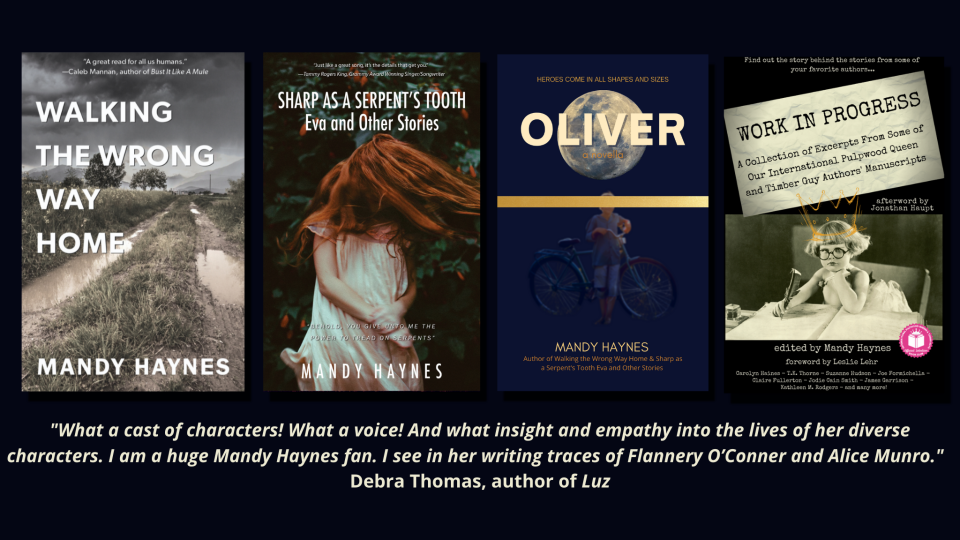
Oliver is available online and at http://www.threedogswritepress.
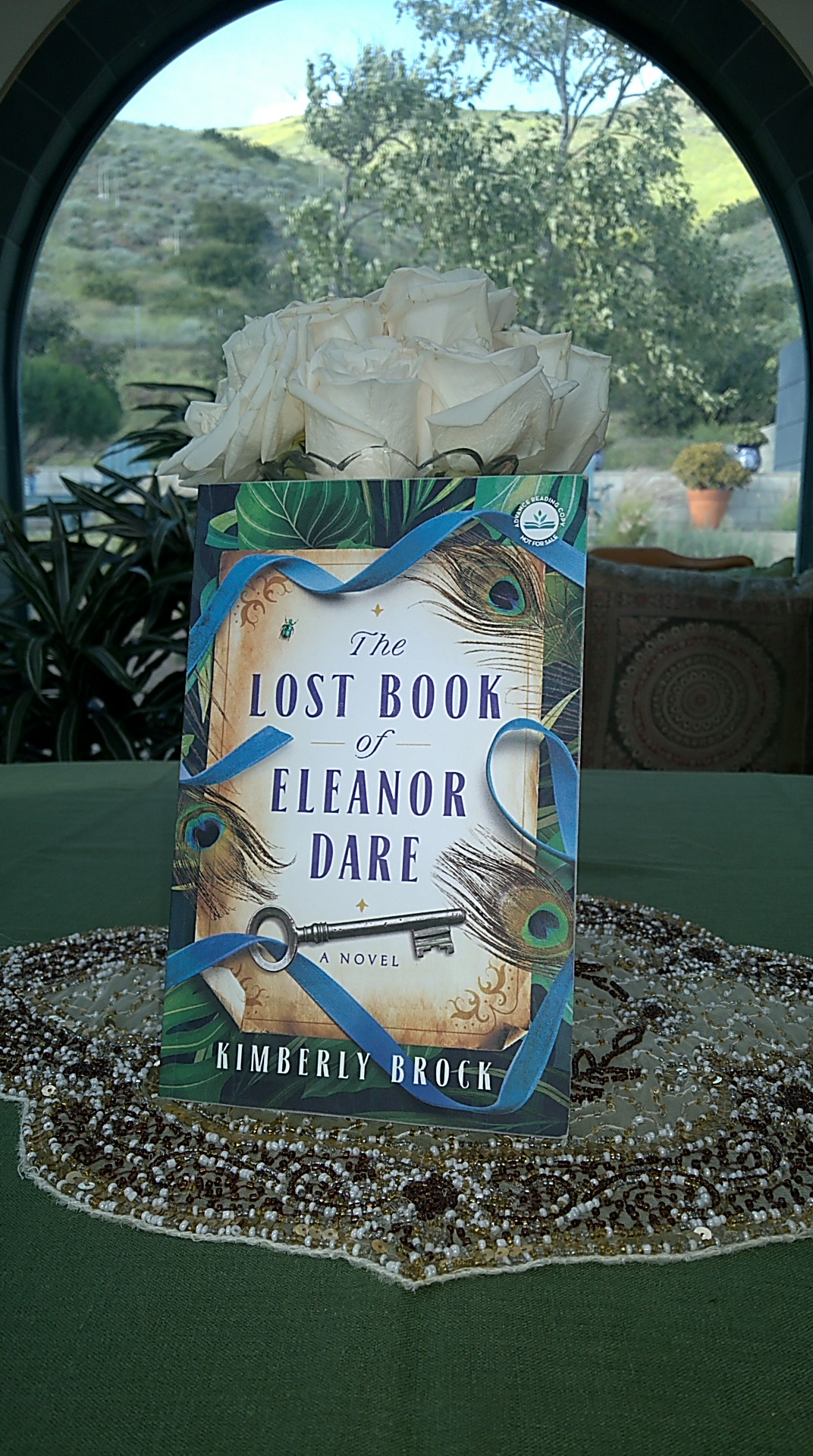
As my review appears in The New York Journal of Books:
The Lost Book of Eleanor Dare is historical fiction based on a true story with legendary status having to do with a mystery beginning in 1585 concerning the Lost Colony of Roanoke, whose citizens vanished without a trace during the perilous times of America’s early settlement. It’s a multigenerational story haunting Alice Merely Young, a WWII widow in her late thirties, and mother to 13-year-old daughter, Pennilyn.
It is the spring of 1945 when Alice’s small-business owning father dies in Helen, Georgia, and Alice returns to the deep roots she tried to outrun on her family’s neglected, vast acreage farm, six miles from Savannah. On riverside grounds sits a dilapidated mansion named Evertell, which Alice inherited. The house has suffered since she’s last seen it, and in Alice’s absence the secrets of her lineage once whispered by forebears, from one generation of women to the next are now silent.
Across the river by the family graveyard, in the small chapel on Bell Island, a treasured commonplace book is housed, which the mother of Alice’s ancestor, Eleanor Dare, began in England, and which Eleanor safeguarded as a Roanoke colonist with an eye
toward passing down to future generations. In the commonplace book, Eleanor Dare scratched a secret: “Every woman in Eleanor’s mother’s line waited for the day when her heart would be ready and she would have a vision, her Evertell, a sign she’d come of age and with it the gift of guidance from her forebears. . . . This is what passed from mother to daughter—a book of women’s wisdom and mysteries.”
It is now 15 generations down Eleanor Dare’s line, and Alice knows the commonplace book rightly belongs in the hands of her daughter, yet the bravery required to confess her role in one tragic night holds Alice back as she summons the memory of the last time she saw her troubled mother. Alice thinks, “My mother taught me that a story matters, not because it is true, but because it’s been told.”
Alice carries the burden of guilt over a failed familial rite of passage involving her mother and the legacy of a stone now lying sacrosanct deep in Evertell’s woods, thought to be inscribed by Eleanor Dare’s own hand. The memory of that night haunts Alice, who stands before the Evertell woods and thinks, “Until now, I’d tried to forget what happened. I’d never planned to go back to that place. But that was before I had a daughter of my own. Now she looks at me with the question all daughters are bound to ask their mothers: Who are you?”
Sonder Holloway has kept Evertell’s grounds for 23 years, ever since Alice and her father fled to the town of Helen after the death of Alice’s mother. Taciturn, reliable, and four years Alice’s elder, he’s a devoted man who has Alice’s best interest at heart, but the unreconciled shame Alice carries makes the reunion of the childhood friends awkward, and when Alice reports her intention of selling Evertell to finance Penn’s education, Sonder is sensitive to Alice’s past and patient.
He, and a handful of other wonderfully drawn local characters know well of Evertell’s secrets, for the tightly woven threads of Evertell’s storied fabric include many in the nearby village. All know the legend of the Dare stone connecting Alice’s family with a dark history, and though it’s of historical significance, Alice suspects that stone is the source of a family curse.
The Lost Book of Eleanor Dare is an intriguing, dreamy story about the impact of one unhealed woman who has yet to reconcile her past in such a way that lends itself to transparency with her young daughter, who, by birthright, wants to know and deserves to know about her own lineage. Author Kimberly Brock delicately balances mystery, family lore, and honoring one’s forebears in sonorous language throughout a sweeping story with three points of view, two timeframes, and remarkably steady pacing. Weaving myth and legend with historical fact pertaining to an age-old American mystery, The Lost Book of Eleanor Dare is a spellbinding, beautiful story written by a graceful hand with just the right amount of mysticism.
Claire Fullerton’s most recent novels are Little Tea and multiple award winner, Mourning Dove. Honors include the Independent Book Publishers Book Award Silver Medal for Regional Fiction, the Reader’s Favorite for Southern Fiction Bronze Medal and various other literary awards.

Kimberly Brock is the award-winning author of The Lost Book of Eleanor Dare and The River Witch.
Her debut was an Amazon bestseller featured by both national and international book clubs and included in multiple reading lists. Praised by RT Reviews and Huffington Post as a “solemn journey of redemption, enlightenment and love,” and evocative of “the stories of Flannery O’Connor and Carson McCullers,” Kimberly’s debut novel was honored with the prestigious Georgia Author of the Year Award in 2013, by the Georgia Writer’s Association.
A former actor and special needs educator, Kimberly received her bachelor’s degree from the University of West Georgia in 1996. In 2014, Kimberly founded Tinderbox Writer’s Workshop, a transformative creative experience for women in the arts. Kimberly has served as a guest lecturer for many regional and national groups, including The Women’s Fiction Writer’s annual conference and The Pat Conroy Literary Center. She lives near Atlanta with her husband and three children.


In immediate, accessible writing, author Laura Whitfield’s starkly confessional memoir, Untethered, begins when tragedy strikes the heart of her tightly knit, Southern family. At fourteen years old, the author’s world is shattered by the death of her beloved older brother, leaving Laura to find her way in the world without the brother she relied upon as a compass.
Throughout the mid-1970’s and into the 1980’s, Laura embarks on a promising modeling career in New York city, and the reader is taken into NYC’s inner sanctum, where the sky is the limit for this young, and beautiful woman from North Carolina. But a series of disastrous love affairs cause the author an overwhelming sense of disillusionment, and, after fleeing back home for safety, it is many years before she realizes the mistakes she made were an unconscious attempt at filling the void over the significant loss of her brother.
Untethered reads as an unfiltered testimony to coming of age concerns during the simple times of the 1970’s and 80’s. Issues of familial and societal expectations collide with a world newly accommodating to women in the work place, and all the while the author tries to reconcile a past riddled with wrong choices and blind mistakes.
With an unstoppable spirit and belief in herself and better days, Laura Whitfield navigates the minefield of adulthood as she returns to school, becomes employed, and assists her parents in their declining years. With one failed marriage behind her, she finds her way to God, a love that endures, and, wiser now, sets out on a path to a bright future.
An engaging, confessional memoir both heart wrenching and inspirational, Laura Whitfield’s Untethered is fascinating reading sure to delight readers who enjoy a multilevel, thoroughly realized memoir.

About the Author:
Laura grew up in Raleigh, North Carolina, the daughter of a journalist and a teacher. She has been an advertising copywriter, newspaper columnist, staff writer for an international relief agency, travel writer, blogger, teacher, communications director for several nonprofits, and personal assistant to a New York Times bestselling author.
Her coming-of-age memoir, Untethered: Faith, Failure, and Finding Solid Ground (She Writes Press) is now available from your favorite independent bookstore or wherever books are sold.
Laura is passionate about her faith, books, travel, nature (especially the beach), social justice, and her family. She lives in Winston-Salem, North Carolina, with her husband, Stephen.
https://www.goodreads.com/author/show/21993777.Laura_Whitfield
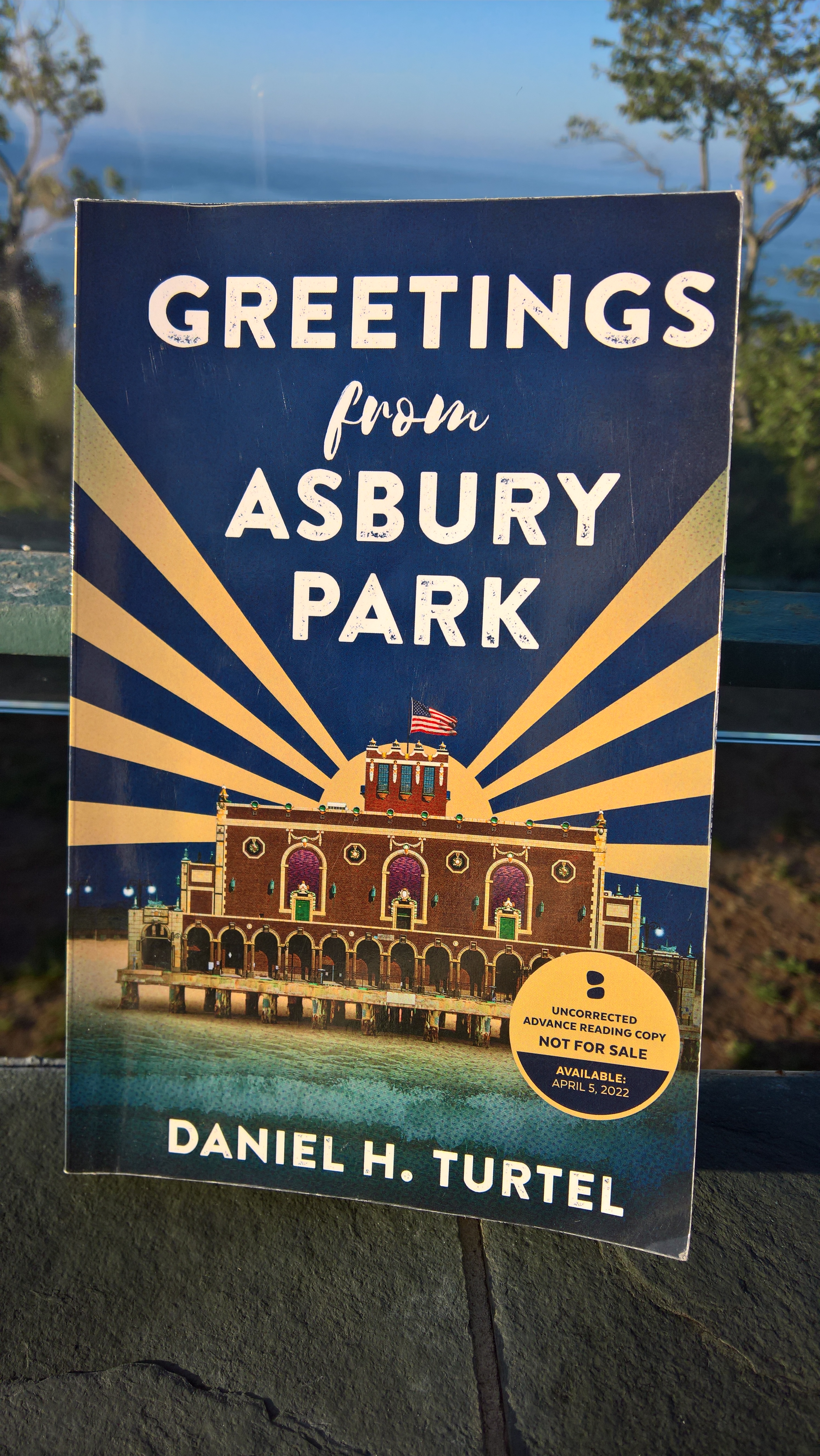

Author(s):
Release Date:
April 5, 2022
Publisher/Imprint:
Blackstone Publishing
Reviewed in The New York Journal of Books by
“a pithy, enjoyable, modern-day story from start to finish, with a cast of fully realized characters you’ll champion to the end.”
The sphere of activity in Daniel H. Turtel’s Greetings from Asbury Park epitomizes character as place, vacillating along the New Jersey shore between Asbury Park, Deal Lake, and Long Branch, in a vivid and vibrantly described setting. “The boardwalk followed the sand from the northern tip of Asbury Park all the way south to Belmar and beyond—a stretch of more than three miles before the Shark River Bridge interrupted it.” On the boardwalk’s half-mile commercial strip between Convention Hall and the Casino, “there were restaurants and bars all down the strip . . . and it was always busiest in the summer.”
It is the summer of 2016, and affluent Joseph Larkin is dead. A philandering, self-serving, unlikable man who lived in a Long Branch estate, he, seemingly for the sport of creating chaos from the grave, leaves an unresolved web of interconnected characters in his wake, who are primarily unaware of each other.
Greetings from Asbury Park is Casey Larkin’s story. In his early twenties and on hiatus for one month from his job in New York City to attend Joseph Larkin’s funeral, he spends the hot summer days coming to terms with his identity against a backdrop of disparate characters from varying backgrounds all touched by the long shadow of his deceased, biological father.
Twenty-six-year-old ne’re do well, Davey Larkin, is the pill-popping, heavy-drinking, legitimate son of Joseph Larkin, who “had a personal stool at the bar Pop’s Garage in Asbury Park and bought a drink for anybody who approached him to offer condolences.” Davey is well aware of Casey, his illegitimate half-brother born of his father’s mistress, who’s kept conveniently on the other side of town in an area named Allenhurst. Casey explains their relationship: “Davey’s mother was Joseph’s wife and Allenhurst was as close as she would allow him to keep his mistress . . . I did not even meet Davey until I was eight years old, and did not go to live with them, until three years later, when my mother decided that she’d had enough of being a mistress and headed to New York with the money she’d squeezed out of Joseph in order to try her hand at life as a single woman.”
Casey and Davey have an awkward relationship, and neither have knowledge of their biracial, half-sister, a promising teenage singer in the boardwalk nightclubs named Gabby, whose mother, it is discovered, was Joseph’s maid for 20 years. When Casey and Gabby unexpectedly meet after Joseph Larkin’s funeral through circumstances involving Casey’s inheritance, a complicated relationship ignites, and the moral line between the taboo of shared blood and the unwitting spark of attraction is highlighted.
Meredith Hawthorne is the daughter of an Irish immigrant who works as a landscaper. A year ahead of Casey while they were in middle school, Meredith grew up next door to Casey in Allenhurst and knows of his history with Joseph and Davey Larkin. In reconnecting with Casey, while he’s in town for Joseph’s funeral, Meredith is equally as tentative and inarticulate with her feelings for him as she was when they were younger.
Julie Kowalski owns an upscale boardwalk dress shop named Madame K and employs Gabby part-time. Known regionally as Madame K, Julie is the mother of the free-spirited Lena, with whom Casey has a one-night stand on the night of Joseph’s funeral, after meeting her in a boardwalk bar. Every morning, Julie takes her cup of coffee to her front porch, and watches in fascination as 19-year-old Jacob Besalel runs four laps around Deal lake’s eastern tip.
A serious, disciplined young man from a devout Syrian Jewish background, Jacob is dismayed that his younger sister, Sophia, goes beyond their strict upbringing to test society’s fringes on the boardwalk, where she crosses paths with Madame K, Gabby, and Davey. Because the Besalel family spends summer in the area, all characters in this surprising story are brought into wonderfully crafted, uncanny alignment in ways that add depth, dimension, and clever layers to the tightly entwined story of fate and chance and the inescapable bonds of family connections.
Daniel H. Turtel artfully weaves multiple storylines centered on Asbury Park and stemming from the life of the duplicitous Joseph Larkin. Varying points of view amid clashing cultures are used throughout this modern-day, progressive story that reads like a sign of the times amid a dysfunctional family, whose hidden story is finally brought to light.
Through the use of economic language and the power of a wildly engaging story, Greetings from Asbury Park explores existential questions such as right versus wrong; nature versus nurture; morality versus self-direction, and ultimately, to whom we are accountable. It’s a pithy, enjoyable, modern-day story from start to finish, with a cast of fully realized characters you’ll champion to the end.
Claire Fullerton’s most recent novels are Little Tea and multiple award winner, Mourning Dove. Honors include the Independent Book Publishers Book Award Silver Medal for Regional Fiction, the Reader’s Favorite for Southern Fiction Bronze Medal and various other literary awards.

As my review of this extraordinary book appears in the New York Journal of Books: https://www.nyjournalofbooks.com/book-review/cicada-tree.
The coming-of-age concerns in Robert Gwaltney’s riveting The Cicada Tree are set against a surreal Southern backdrop so plausibly staged as to seem par for the course throughout the first-person narrative of Analeise Newell, who unfurls a fantastic story in hindsight about the perils of obsession. Analeise ominously begins, “It was the cicadas’ singing I remember best—their courting song. It was frenetic beckoning for the affection of another that stirred the heat to reckless speeds that summer, the summer I turned eleven.”
It is 1956 Providence, Georgia, and young Analeise lives in a humble house with her mother, Grace, who lives apart from Analiese’s hard-drinking, shiftless father. Beneath their roof cohabitates Miss Wessie and her eleven-year-old granddaughter, Etta Mae. The foursome is a harmonious, biracial family, the girls in school as Miss Wessie keeps house, while Grace works multiple jobs, including part-time domestic work for the Mayfields—the wealthiest family in town who live in an opulent mansion and maintain a mystique of legendary status.
The four main characters are each blessed with an extraordinary gift of otherworldly proportion: Etta Mae sings opera in the voice of an angel; Miss Wessie bears clear-sighted wisdom; and Grace, a talented seamstress, divines the future in her stitches and receives prescient hunches each time the scar she received from a snakebite throbs.
Analeise is a prodigy on the piano to the point where she can see and taste music, and explains, “Though Mama was brilliant with a needle and thread, it was her ability to read the future in her own sewing that was the true gift, an ability as deep down a part of her as the music inside me.” Analise describes Etta Mae’s singing by recounting its initial impact, “It seemed I was the only one who saw it. The only one to see Etta Mae’s voice turn into a real, seeable thing—puffs of breath blown in the winter’s cold… and I could taste it. Love and want. More of a texture than a flavor, cotton candy melting on my tongue, dissolving to a sugary grit.”
The high drama of The Cicada Tree centers on Analeise’s experience with the three members of the enigmatic Mayfield family who share a dark history. When Analeise comes into contact with Marlissa Mayfield at school, she, as well as all others in Malissa’s orbit, is beguiled by her charisma to the point of obsession.
At home, Miss Wessie tells Analeise to stay away from the Mayfields. “Them Mayfields ain’t for you,” Miss Wessie says, and when Analeise presses her to clarify rumor concerning Marlissa’s brother, Miss Wessie hesitantly confesses he was, “As blond as the rest of them, his eyes greener, a kind of shine that makes you feel a strange kind of way. That makes you want to be close. . . . All of them—Mr. Kingston, Miss Cordelia, and Marlissa. They all got it. An unnatural kind of charm.” Analeise admits, “I knew what it was like to stand in the shine of a Mayfield. So blinding you have to squint.”
Analeise Newell is a remarkable character, a deep-thinking, uniquely voiced, secret keeping Scout Finch with an exuberant edge you’d follow anywhere. Prone to mischief and grappling with complicated adolescent feelings including a dark, covetous envy, she knows she is pretty, yet in light of the strange goings on around her, she is also self-aware and says of herself, “But what did pretty matter if my inside parts did not match? I imagined my innards, discolored and mushy, a half-eaten watermelon left too long in the sun. I was layers of mean thoughts and murderous prayers. What else might I be capable of if a thing needed doing?”
The Cicada Tree has elements of mystery metaphorically set among a phenomenon of Biblical proportions occurring once every 13 years, and Gwaltney takes the reader into the middle of it when the town is overrun by a swarm of cicadas. Gwaltney leaves nothing unattended in the chaos, when the characters run home for cover. Analeise says, “The four of us moved in close, folding in together, weaving a knot. The song of the male cicada rose, the sound of millions of buckling tymbals. Vibrations passed through the walls with the rise of the racket, agitating the floor, worrying our feet. Our heads jerked and strained in all directions, keeping check on the walls, spying all the dark corners. The light from the dwindling candle distorted our faces, having its way until we were no longer ourselves. All of us left there growing mad from the sound.”
From her self-oriented view based on past actions, Analeise fears her and Etta Mae’s involvement: “The natural world had come undone, the delicate underpinnings unhinged and knocked loose by a song. Etta Mae, she had been the one to do it, to raze the place with hail—to unleash this plague of cicadas. But whose fault was it really? Had I not been the one to strike the blow, to set the plan?”
Blending gothic elements into Southern fiction paired with musical notes of magical realism, Robert Gwaltney’s The Cicada Tree blindsides with creative intelligence, leaping across genre boundaries in elegant prose to weave a wholly symphonic experience with all the hallmarks of an instant cult classic.
Robert Gwaltney

A graduate of Florida State University, I presently reside in Atlanta Georgia with my partner. By day, I serve as Vice President of Easter Seals North Georgia, Inc., a non-profit organization strengthening children and their families at the most critical times in their development. Through my non-profit work, I am a champion for early childhood literacy. In all the hours between, I write.
Raised alongside three feral, younger brothers in the rash-inducing, subtropical climate of Cairo Georgia, I am a lifelong resident of the South. A circumstance, no doubt, leaving an indelible mark upon my voice as a writer.
Aside from sense of place, my writing is influenced and inspired by the literary work of others. As a boy, it was with great obsession, I turned the well-worn pages of Charlotte Brontë’s, Jane Eyre. Wuthering Heights? Yes, another source of adoration. And Truman Capote’s debut novel, Other Voices, Other Rooms, I admire with equal reverence along with everything ever written by Tennessee Williams.
Charles Dickens’ Miss Havisham is one of my all-time favorite characters. Many hours I spent playing her, wrapped in an old lace tablecloth borrowed from my mother’s linen closet—my tattered, makeshift wedding dress. Locked away in my boyhood room, I haunted the place, plotting revenge, shooing rats from the wedding cake. “Break their hearts my pride and hope, break their hearts and have no mercy,” I would whisper into the impressionable ear of my lovely Estella. Break their hearts.
As an adult, my literary palate is diverse, reading everyone from the sublime Michael Cunningham to the gifted Jesmyn Ward to the incomparable Ron Rash. Though my tastes have evolved through the years, one constant remains: the impact of literature and art and music upon my writing. And my unrelenting quest to make and find beauty in this world. .

Thank you to the inimitable Sally Cronin!

In the captivating River, Sing Out, author James Wade weaves lyrical prose and character driven regional dialect against a hardscrabble backdrop along the East Texas Neches River.
Thirteen-year-old Jonah Hargrove lives in a trailer beside the river that “sat clumsy and diagonal, and faced the small clearing, looking out at the world as if someone had left it there and never returned.” Motherless and at the mercy of a hard-drinking, abusive father only at home part time, Jonah is a friendless, social outcast left to his own devises. When he finds a secretive, seventeen-year-old girl on the run in the woods, his life is upturned when he nurses her to health and helps her search for the lost backpack holding the meth she stole from shady John Curtis, which she plans to sell, in hopes of starting her life over.
John Curtis is not a man with whom to trifle. Wiley, quick-witted, and ambitious, he runs an East Texas drug operation, and is regionally feared. When Dakota Cade, Curtis’s muscle-bound, right-hand man, asks about the secret to Curtis’s success, Curtis replies, “If it weren’t for the rage inside of me, I don’t believe I’d be able to take another breath. Wasn’t always like that, of course. I used to think there was something wrong with me. Something missing, maybe. But the older I got, the more I understood what I had was a gift.”
When Jonah asks the girl he found to tell him her name, she casts her covert eyes to the water and says, “Call me River,” and with literary existential sleight of hand, author James Wade metaphorically writes, “The river flowed and the world turned, cutting paths both new and old, overwhelming those things which came before but could not adapt to the constant movement, the everlasting change. The river and the world together, and both giving life and both swallowing it whole, and neither caring which, and neither having a say in the matter. The boy watched both passing by, his choice and his path each belonging to some current long set in motion.”
Jonah and River are wary misfits, each without the skills to humanly connect even as they fall into collusion in their mutual flight from the pursuit of the determined John Curtis. With riveting pacing, a heart tugging relationship grows between the youths in fits and starts, “But such solace in those first days was rarely more than a whisper, fading so quickly and completely, the girl was left to question whether it had been there at all.” As the two wade together in the Neche River, their relationship dares to take root, “And somewhere in the beyond, a single fate was selected from a row of fates, no one more certain than the other, yet each bound to the world by threads of choice and circumstance.”
A sense of page-turning urgency drives River, Sing Out. It’s a high stakes story in flight by a babe in the woods who helps the first love of his life run from a criminal so cleverly sinister as to be oddly likable. Action packed and visually drawn with dire cliff-hanging crafting, River, Sing Out has the extraordinary one-two punch of fascinating high drama written in deep-thinking, elegant prose.
https://www.jameswadewriter.com/

“An extraordinary piece, exemplifying wonderful positive restraint by letting the narrative solve the condition. Just very well done. No wasted words.”
–Paul Roth, editor, The Bitter Oleander
James Wade is an award-winning fiction author with twenty short stories published in various literary journals and magazines. His debut novel, ALL THINGS LEFT WILD, was released June 16, 2020 from Blackstone Publishing. His second novel, RIVER, SING OUT, also from Blackstone Publishing, was released June 8, 2021. He has 6 additional novels forthcoming from Blackstone Publishing.
James spent five years as a journalist, before serving as a legislative director at the Texas State Capitol during the 83rd Legislative Session. He also worked as a lobbyist on behalf of water conservation in Texas.
James lives in the Texas Hill Country, with his wife and daughter. He is an active member of the Writers’ League of Texas.
Represented by Mark Gottlieb with Trident Media Group.
Awards and Honors:
Winner of the 2021 Reading the West Award for Best Debut Novel (ALL THINGS LEFT WILD)
Winner of the 2021 Spur Award for Best Historical Fiction (ALL THINGS LEFT WILD)
A winner of the 2016 Writers’ League of Texas Manuscript Contest (Historical Fiction)
A finalist of the 2016 Writers’ League of Texas Manuscript Contest (Thriller)
A finalist of the 2016 Tethered By Letters Short Story Contest
Honorable mention in the 2016 Texas Observer Short Story Contest
Honorable mention in the 2015 Texas Observer Short Story Contest
Work by James can be found in the following Publications and Anthologies:
The Bitter Oleander | Skylark Review (Little Lantern Press) | Tall…ish (Pure Slush Books) | Intrinsick Magazine | Dime Show Review | Bartleby Snopes | Jersey Devil Press | Typehouse Magazine | After the Pause Journal | J.J. Outre Review | Potluck Magazine | Yellow Chair Review | Through the Gaps | Eunoia Review
FOLLOW JAMES


A former teacher and journalist, Johnnie Bernhard’s passion is reading and writing. Her work(s) have appeared in national and international publications, including: University of Michigan Graduate Studies Publications, Southern Literary Review, Houston Style Magazine, The Mississippi Press, the international Word Among Us, and the Cowbird-NPR production on small town America. Her entry, “The Last Mayberry,” received over 7,500 views, nationally and internationally. Her first novel, A Good Girl, is a 2017 finalist in the national Kindle Book Awards, a Pen/Bingham nominee, and shortlisted for the 2015 Wisdom-Faulkner international Writing Competition. It was chosen for panel discussion at both the 2017 Louisiana and Mississippi Book Festivals. In 2018, A Good Girl was nominated by the Institute of Mississippi Arts and Letters for Fiction of the Year and accepted into the Texas Center for the Book permanent collection. Her second novel, How We Came to Be, was released in 2018. It is a finalist in the 2017 Wisdom-Faulkner international Writing Competition. Chosen for panel discussion by the 2018 Louisiana Book Festival and the Mississippi Book Festival, it has received stellar reviews, including being named a “Must Read” by Southern Writers Magazine and listed as a 2018 Summer Reading List choice by Deep South Magazine. It was awarded the Summerall Book Prize by Lamar University in 2019. Johnnie’s third novel, Sister of the Undertow was named a book of the month by the international book club, The Pulpwood Queens. It was a featured novel for panel discussion at the 2020 AWP and chosen as Best of the University Presses, 100 Books by Literary Hub and the Association of University Presses. Johnnie was selected to be a speaker for the TEDWomen 2020: Fearless series.
Johnnie Bernhard
AWARD-WINNING AUTHOR
HomeAbout MeMy BooksBook ClubsContactBlog
SISTERS OF THE UNDERTOW
“Johnnie Bernhard pierces the soul of sisterhood, revealing the poignant paradox that familial love does not always come naturally, but it always comes. Sisters is a heart-wrenching yet triumphant story about conquering your fate and learning to play the cards you were dealt.”
–Galveston Monthly
“Johnnie Bernhard has become one of the South’s finest writers. Sisters of the Undertow is a book you can’t and won’t put down, a story of sisterhood, love, and loss.”
–Allen Mendenhall, Southern Literary Review
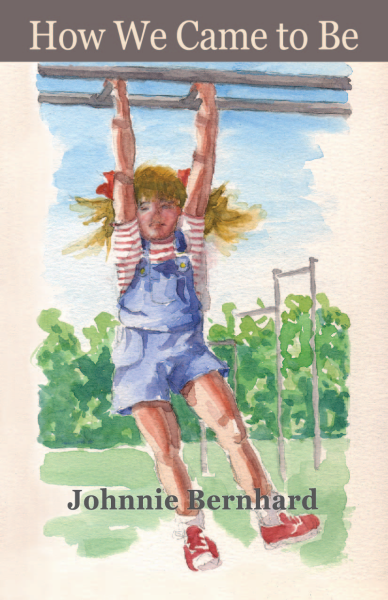
HOW WE CAME TO BE
“In How We Came to Be, Bernhard delivers a poignant exploration of life as a modern American woman. This complex story examines the many emotional layers of relationships, mothering, sisterhood, and the eternal search for self-worth in a society obsessed with the superficial. Within these pages, readers will experience love and loss, grace and redemption, forgiveness and faith. A heartwarming read that proves family comes in many forms.”
–Julie Cantrell, New York Times and USA TODAY Bestselling Author of Perennials
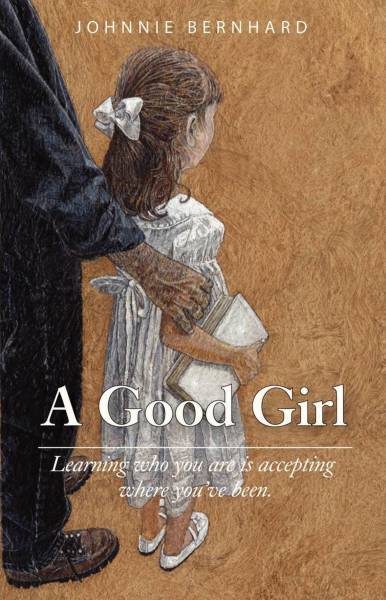
A GOOD GIRL
“One of the great pleasures of reviewing books is that of discovering rare jewels, especially those written by up-and-coming Mississippi writers. One of 2017’s best will surely be A Good Girl by author Johnnie Bernhard, who as much as any writer since Flannery O’Connor and Walker Percy, offers a breathtaking tour of the human heart in conflict with itself, desperately searching for grace and redemption in the face of unremitting loss.”
–Jim Frazier, The Sun Herald
“A Good Girl is a raw, real and relatable gift to the soul on every level. Ms. Bernhard’s writing is so descriptive, reading this book is truly a visceral experience. One can not help but reflect on their own family legacy and life journey. Prepare to be rivetted by this heart- breaking, yet healing story about family, self discovery and learning how to love.”
–Eva Steortz, Vita Creative and The Walt Disney Company
As it appears on Shepherd: Best Books
https://shepherd.com/best-books/southern-books

I’m the multiple, award-winning author of 4 novels and one novella, raised in Memphis, Tennessee, and now living in Southern California. The geographical distance gives me a laser-sharp, appreciative perspective of the South, and I celebrate the literary greats from the region. The South is known as the last romantic place in America, and I believe this to be true. The South’s culture, history, and social mores are part and parcel to its fascinating characters, and nothing is more important in the South than the telling of a good story. As a writer, I’m in love with language. I love Southern turns of phrase and applaud those writers who capture Southern nuance. It is well worth writing about Southern sensibilities.
By Claire Fullerton
An accurate and heart-wrenching picture of the sensibilities of the American South. Millie and Finley Crossan move from Minnesota to their mother’s genteel world of 1970’s Memphis and learn to navigate the social mores of the Deep South, where all that glitters is not gold. Southern nuance, charismatic characters, a sibling relationship, and an opulent setting underlie this 13-time book award winner that asks how it is that two siblings who share the same history can turn out so differently.
When you buy a book we may earn a small commission.
By Pat Conroy
A resounding Southern family saga. A sins-of-the-father story told in the first person by one of the South’s most revered authors. The Prince of Tides is set on a barrier island off the coast of South Carolina and depicts the haunting secrets of the working class Wingo family in a multi-generational story rife with Southern nuance and now considered a literary classic. The story opens when narrator Tom Wingo flies from the South to New York to meet with his sister’s psychiatrist, and the astounding family saga unfolds from there.
When you buy a book we may earn a small commission.
By Anne Rivers Siddons
Peachtree Road is considered a modern-day Gone with The Wind, in that it is set in the pivotal, changing times of 1960’s Atlanta, and concerns the opulent area of Buckhead, where the privileged who built modern-day Atlanta live. The story is narrated in lyrical language by Shep Bondurant, an insightful young man born to privilege, who tells the coming-of-age story of Southern traditions and hypocrisy, and the impact of growing up alongside his troubled cousin, Lucy. A deeply probing story on multiple levels concerning society and the impact of family.
When you buy a book we may earn a small commission.
By Ron Rash
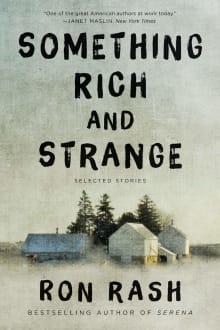
Ron Rash is a national, literary treasure. The author of multiple award-winning novels, this book is an assembly of 34 short stories, most set in Appalachia, and depicting the social nuances and landscape of the American rural South. I recommend this because it will provide a great introduction to the incomparable author known as The Appalachian Shakespeare. As a writer, Ron Rash epitomizes the idea of landscape as destiny, and his well-drawn characters come to life from his flawless use of regional language.
When you buy a book we may earn a small commission.
By Rick Bragg
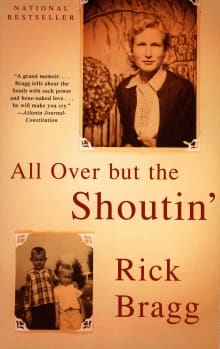
Pulitzer prize-winning and best-selling author Rick Bragg depicts hardscrabble, family life in rural Alabama, with a bad-tempered, hard-drinking father and a mother who won’t see her children go without. Bragg’s honest voice is immediate and compelling, and the visceral feel of the setting is the perfect backdrop for this rags to riches story of a man who triumphs over adversity to become a widely acclaimed writer. Bragg’s use of Southern vernacular is what makes this story.
When you buy a book we may earn a small commission.
By Michael Farris Smith

The Fighter is Southern noir at its best, and the spare, economic voice of the narrator adds to the guttural bleakness of a man down on his luck but willing to persevere against all odds. Set in the sultry Delta, Jack Boucher has put behind him 25 years of bare-knuckle fighting but is given cause to step into the ring one more time. A dark desperation colors this popular novel, and readers will be shown why Michael Farris Smith is considered one of the finest writers now on the American literary landscape.
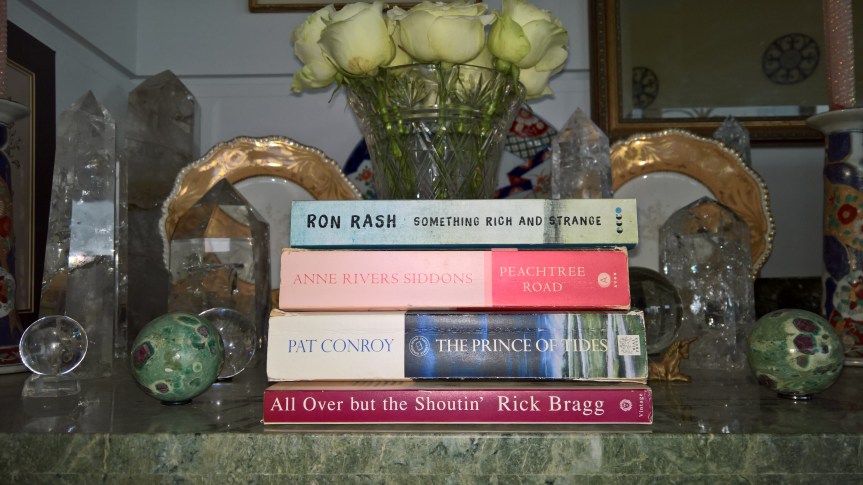
 Claire Fullerton Author