
Author: Claire Fullerton
Claire Fullerton is the multiple, award-winning author of four novels and one novella. She is a contributor to multiple anthologies and enjoyed her time reviewing books for the New York Journal of Books. A Shakespeare enthusiast, Claire is currently studying Shakespeare for the stage. Look into Claire on Goodreads.
Dancing to an Irish Reel by Claire Fullerton

From a Writer’s Point of View
A writer’s life is a build, a constant state of becoming that begins with the secret, intuitive assumption that one must take a leap of faith and begin. There is no there to get to, only an unquenchable need that compels and drives on with inexplicable fervor. For me, it began with keeping a journal. I was young and fearful of admitting my internal mechanisms and uncertain of who would care to hear. But I felt the need to document my life in the hope that the singular act of private articulation would reveal to me who I was in the grand scheme of my self-involved adolescence. This is the prompting that leads a writer to the table; the need to explain oneself to oneself. Keeping a journal discredits all thoughts of life’s arbitrariness and puts the pendulum of cause and effect into clear perspective. One can keep current while they create a framework, then look back years later and chart the incremental construction of their personal history.
But what happens when one evolves from journal keeping to writing as a way of life? Certainly it’s an insular existence that cannot be shared. It’s like taking that running monologue we all have in our head and laying it down on purpose for no other reason than it seems the thing to do. The form of the dissertation is entirely incidental; some writers aim to inform, and others seek to enlighten or entertain. To me, it’s all the same thing: a way of communicating, and for this to happen, it takes time. And isolation. And commitment to following through no matter the length of the project.
I’ve heard it said that writers don’t write because they want to; they write because they must. What’s imperative for writers is the ability to write then throw caution to the wind. All that’s required is to say what you have to say, and then get out of the way to make room for the possibility that the devil may care after all.
Dancing to an Irish Reel
I’m back from ten days of sheer bliss on the western coast of Ireland, and I’ll tell you why I returned to the misty, velvet shores of the area where I once spent a year: I wanted to reinvigorate my standing amongst the land and its people, and in order to do that, one has to show up in person to let the very air saturate the skin until it permeates to a cellular level and recalibrates the soul. This is how much Ireland affected me when I lived in the rural village of Inverin in the region of Connemara, yet it took a few months before I allowed myself to let go of my American frame of reference. Once I did, there was such a shift in my being that a local at the grocery store (or the shops, as they call it there) did a double take upon seeing my tranquil face and commented, “Claire, you look more Irish!” I knew just what she implied. I could already feel a newly acquired demeanor settle upon me, one that relaxed me physically and slipped me into a present tense mind frame where a type of willing acceptance of events replaced my harried propensity to manipulate my way through life. Ireland will do this to a person quickly, for it is an island with its own peculiar consciousness spawned from its cloistered history and its humble dependence upon the vagaries of the weather. I see it as an overarching attitude of rightful thinking, something which suggests there’s no point in becoming too worked up over much of anything, for change will rule the day of the best laid plans, and in the meantime, we’re all in it together, safe under the watchful eyes of God. And the Irish are a reverential people. And it’s not just God they revere. They pretty much hold all things sacred: the land, Irish history, each other. And because they comport themselves this way, they don’t take themselves too seriously, which is exactly why they have the reputation of being the friendliest lot on earth.
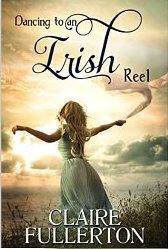
Let me now digress by confessing I over use the expression, “I can’t tell you how much I love” this or that. The fact is, I can and I did when it comes to the subject of Ireland. It’ll all be in my next novel, “Dancing to an Irish Reel,” to be released on March 31st, 2015. I do so hope you mark your calendar. I’ll be posting many of the photographs I took whilst in Ireland as time draws near and have already posted a few on https://plus.google.com/1010783224159… but many more are coming! To stay in the loop, please like my author page https://www.facebook.com/clairefullertonauthor
Finding Inspiration
I was recently asked the following question in an interview: “Where do you go to find inspiration?” The interviewer sited the habit of Charles Dickens, who would take to the streets of London every day in a five to six mile stroll while looking for source material, which left me with an appealing visual image. I just like the idea of this writer cruising the London streets, his eyes darting hither and yon as he tallied up random impressions. Because I wanted to answer the question to the best of my ability, I pondered it until it hit me: I don’t go anywhere; I simply live my life with my eyes open and allow myself to be influenced. Sometimes the most seemingly inconsequential things can affect me, and by this I mean strike an emotional cord. They typically happen in the blink of an eye yet this doesn’t make them any the less meaningful. What I do is follow the cord once it’s struck and let the impression fully in so I can feel its repercussion.
I think inspiration can’t be sought out because it resides within every human being. And because it resides within, there are moments when it is triggered. Once it is, I think inspiration resonates in such a way that a writer feels compelled to put it into words. Therefore, it is not so much a question of “Where you go to find inspiration,” it’s more like “What do you do once you acknowledge you’re inspired.” As for me , when inspiration is triggered, I grab a pen.
A Southern Mother’s Influence
 Claire Fullerton Author