

A writer’s life is a build, a constant state of becoming that begins with the secret, intuitive assumption that one must take a leap of faith and begin. There is no there to get to, only an unquenchable need that compels and drives on with inexplicable fervor. For me, it began with keeping a journal. I was young and fearful of admitting my internal mechanisms and uncertain of who would care to hear. But I felt the need to document my life in the hope that the singular act of private articulation would reveal to me who I was in the grand scheme of my self-involved adolescence. This is the prompting that leads a writer to the table; the need to explain oneself to oneself. Keeping a journal discredits all thoughts of life’s arbitrariness and puts the pendulum of cause and effect into clear perspective. One can keep current while they create a framework, then look back years later and chart the incremental construction of their personal history.
But what happens when one evolves from journal keeping to writing as a way of life? Certainly it’s an insular existence that cannot be shared. It’s like taking that running monologue we all have in our head and laying it down on purpose for no other reason than it seems the thing to do. The form of the dissertation is entirely incidental; some writers aim to inform, and others seek to enlighten or entertain. To me, it’s all the same thing: a way of communicating, and for this to happen, it takes time. And isolation. And commitment to following through no matter the length of the project.
I’ve heard it said that writers don’t write because they want to; they write because they must. What’s imperative for writers is the ability to write then throw caution to the wind. All that’s required is to say what you have to say, and then get out of the way to make room for the possibility that the devil may care after all.
Author: Claire Fullerton
Claire Fullerton is the multiple, award-winning author of four novels and one novella. She is a contributor to multiple anthologies and enjoyed her time reviewing books for the New York Journal of Books. A Shakespeare enthusiast, Claire is currently studying Shakespeare for the stage. Look into Claire on Goodreads.
The Thing about Galway
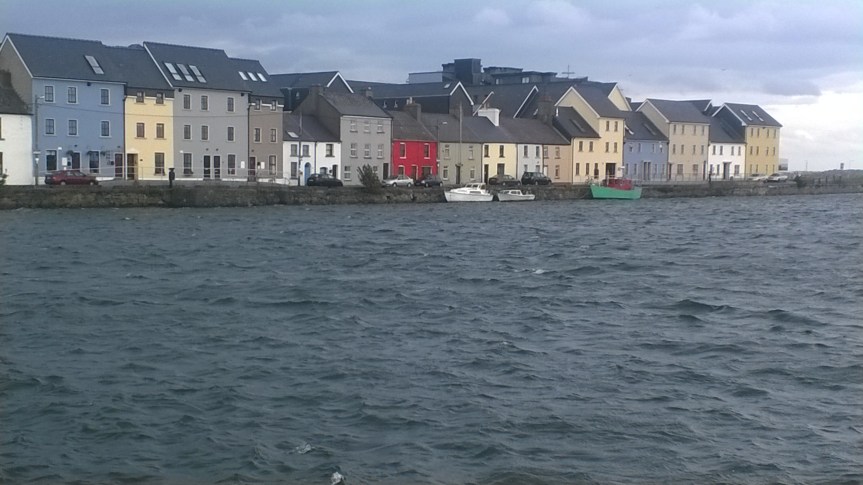
Even on the best of days, when the weather is temperate and the sky soft and cloudless, Galway City has a worn, secondhand feel to it: an historic, pensive, erudite quality everywhere you roam down its serpentine streets. But there’s also an energetic undercurrent to Galway that seems to thrive on the idea of opposites, which lends the atmosphere a certain air of unpredictability. In many ways, Galway seems like a lively college town, bordered on one side by the dark gray patina of Galway Cathedral, and the ever turbulent River Corrib on the other, which flows straight to Galway Bay on its way through the Claddagh. It’s an undefinable, mood-setting, soul-stirring town with a split personality; it is vividly animated by its youthful culture, yet deeply haunted by its storied past.
To Debra Wallace, who was born and reared in Letterfrack, fifty miles north in rural Connemara, Galway was the pinnacle of urban grandeur. At the age of twenty seven, she’d blown into town carrying her dreams and her guitar to set up house in a two-story rental, on the edge of lower Galway’s Henry Street. She was an accomplished musician with a whisky-edged singing voice, and her dreams involved joining Galway’s vibrant music scene. The second I met her, I thought she embodied everything it meant to be Irish: She was big eyed, russet-haired, quick-witted, nobody’s fool, howlingly funny, and spiritually attuned. She gave our friendship no probation period when we first met at The Galway Music Centre, for there was nothing suspicious or cynical about her, though she was disarmingly shrewd. Upon learning that I am an American, she put her hand on her hip, narrowed her eyes to a slit, and give me the once over. Then she set her guitar case down and invited me to call out to her house for a cup of tea.
I had no idea what to expect as I made my way to Debra Wallace’s blue painted door. It rose up from the sidewalk, sandwiched in a row of matching gray structures, each with a pitched roof emitting turf smoke that permeated the residential area in an aroma so redolent it made my eyes water. I rapped thrice on the door, and it swung wide immediately. Stepping onto the uneven cobbled brick floor, it took a minute for my eyes to adjust in the shadowy room, for it had only one window and it seemed the haphazardly arranged turf in the fireplace had reached its crescendo and now glowed in a burnt orange aftermath. The heat in the small room was stifling. I took off my raincoat and made to set it aside on the folded futon against the wall, just as I brought the four chairs before it into focus, where three figures looked up at me expectantly. Debra lowered herself onto the forth chair and motioned for me to take the futon as a voice disrupted the damp air.
“Well, you weren’t telling a tale about that blonde hair of hers, God bless it; must have taken ages to grow,” the voice said.
“Claire, this is my mother; Da sits there, and this is my sister Breda,” Debra introduced, handing me a cup of tea.
“Nice to meet you,” I said. It was then I recognized where Debra had acquired her penchant for the once over, for all three Wallace’s studied me head to foot.
“You’re an American,” Mr. Wallace stated. He was short and stout and leaned forward in his chair, with his hands on his knees and his steady stare beaming beneath his tweed flat cap.
“Yes, I’m from Memphis, Tennessee,” I confirmed.
“Ah, Elvis and all that,” Mrs. Wallace said, who looked to be, in tandem with her husband, the second installment of a pair of square, blue-eyed bookends.
“That’s right,” I said, then I searched for a way to escape their scrutiny. I knew I could turn the tables if I could use the standard Irish conversational stand-by. “It looks like it’ll rain any minute,” I said, looking at Mr. Wallace.
“It does, yah. We brought the weather with us all the way from Letterfrack, so we did. If you haven’t been there, you should come see us. It’s God’s country up there; not much chance for the young ones to run the streets.”
“So I moved here,” Debra said with a wink.”
“Speaking of streets, we should get going,” Breda said. “We’ve only come to town for the one day.”
We all stood simultaneously, making our farewells, and after Debra closed the door behind her family, she asked me if I wanted to accompany her to the epicenter of Galway City, which is an area known as Eyre Square.
“There’s a card reader up there, her name is Harriet,” she said. “As long as you’re one of us now, I think you should see her.”
“Don’t you have to make an appointment?” I asked.
“For what?” Debra said. “Don’t be so American. Let’s just walk up the road and call out.”
What could have been a ten minute walk up Shop Street took forty five minutes, for such is the nature of Galway. There is no way to set out from point A to point B within the confines of scheduled time because there are too many people milling around, everybody knows everybody, and it is a crime against Irish society not to stop and chat to the point of exhaustion. I stood idly by as Debra engaged in Irish banter time and again, which is to say that each exchange felt like joining a running joke that had been going on for a while, and we had simply stumbled into its midst. It is a game of wit-topping one-upmanship, this business of Irish banter, and as we made our way to Eyre Square, I was starting to catch the rhythm.
Two heavy wooden doors lead the way into the back of an atrium on the north side of Eyre Square. Debra heaved the doors apart and ushered me inside to where a canvas marquee had a chalkboard before it, which read, “Readings with Harriet: 12 euros.”
What happened next is another story.
But the thing about that day is that it was exemplary of the spirit of Galway, where anything can and does happen, on any given day. This wasn’t the first or last time I’d slid into the day thinking it would go one way only to discover it had seguewayed into quite another. Because there’s an energy to Galway that will catch the unsuspecting unaware. It emanates from the dichotomy of its nature, its marriage of opposites, its union of past and present, and at its foundation are the fluid Irish people, who know a thing or two about embracing the flow.
https://www.clairefullerton.com
Claire Fullerton is the author of Mourning Dove, Dancing to an Irish Rel, A Portal in Time, and releasing in May 2020, Little Tea. She is represented by Julie Gwinn of the Seymour Literary Agency
Her fiction = my truth? Claire Fullerton’s #romantic DANCING TO AN IRISH REEL
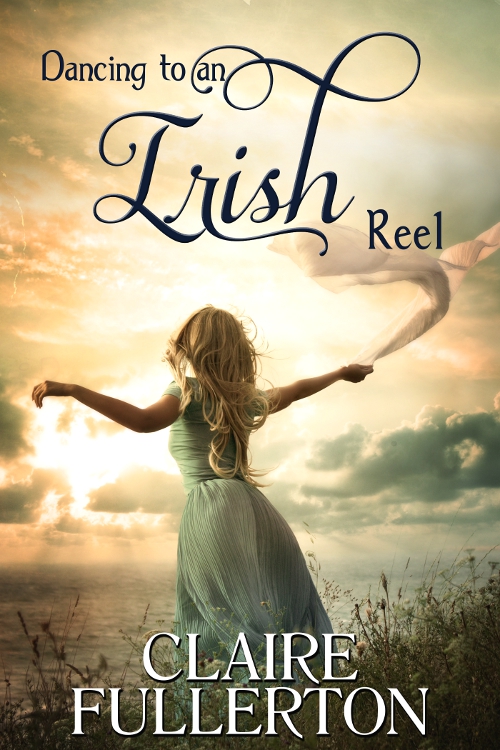
Happy St. Patrick’s Day to Barb Taub. Slainte!

[Happy St. Pats! I’m celebrating with a repost of Claire Fullerton’s guest blog. Dancing to an Irish Reel might not be her story, but it’s an eerie echo of mine.]
Welcome Claire Fullerton, Author of Dancing to an Irish Reel
Today I’m excited to turn my blog over to an author who is new to me, Claire Fullerton. Not only is she taking the Page 69 Challenge with her excerpt below, but she’s graciously contributed this guest post. (Please read on to find why her fiction is so close to my own truth…)
Guest Blogger Claire Fullerton: Truth in Fiction?
 Claire Fullerton is the author of “Dancing to an Irish Reel” (Literary Fiction) and “A Portal in Time,” (Paranormal Mystery), both from Vinspire Publishing. She is an award winning essayist, a contributor to magazines, a five time contributor to the “Chicken Soup for the Soul” book series, and a former newspaper…
View original post 1,563 more words
Hugh’s Weekly Photo Challenge: # 16, “Calm”
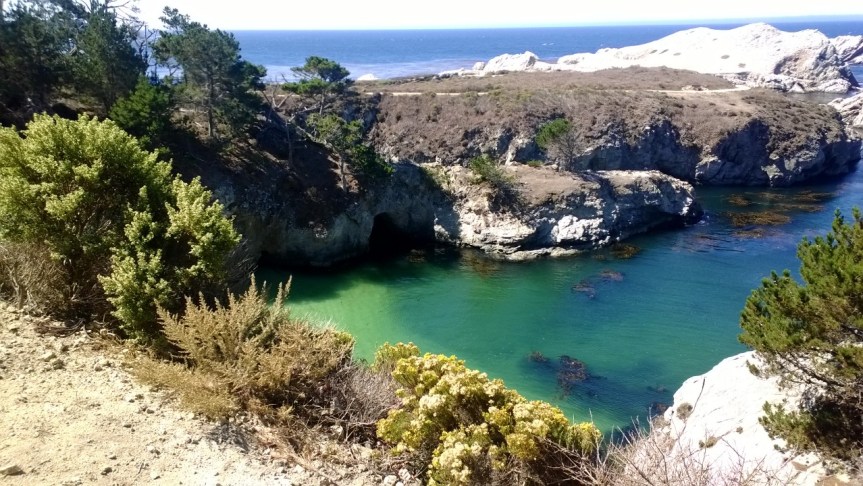
A significant variable to the calming effect of this photograph is due in part to the long walk it takes to get here. This is part of the coastline of California’s Monterey Peninsula, in an area known as Point Lobos, which is three miles south of Carmel-by-the-Sea. You see it all in this natural habitat: tide pools, sea lions, sea otters, grey whales, dolphins, divers, and all things aquatic. There are hundreds of acres of forest on the point replete with walking trails amidst cypress and pines, where you can see deer, foxes, rabbits, coyotes, bobcats, and all creatures great and small. The sheer magnitude and silence of the area is awe-inspiring, and this area has been a haven for painters, poets, writers, and nature lovers since the beginning of time. And the Pacific Ocean has a specific personality; there is a feel to it that differs from the Atlantic: whereas the Atlantic is heavy, histrionic, metal-gray and brooding, the Pacific is light and clear and dancing, with shades of emerald and aqua blue that are so unique, they seem God ordained. If you can imagine walking beside a scene such as this for hours, it will give you the reason why I chose this picture for Hugh’s photo challenge depicting the feeling of calm.
Dancing To An Irish Reel by Claire Fullerton @cfullerton3 #TuesdayBookBlog Contemporary #Romance
With sincere gratitude and a million Slainte’s to Cathy Ryan of Between the Lines.
Magic Moments with Pat Conroy
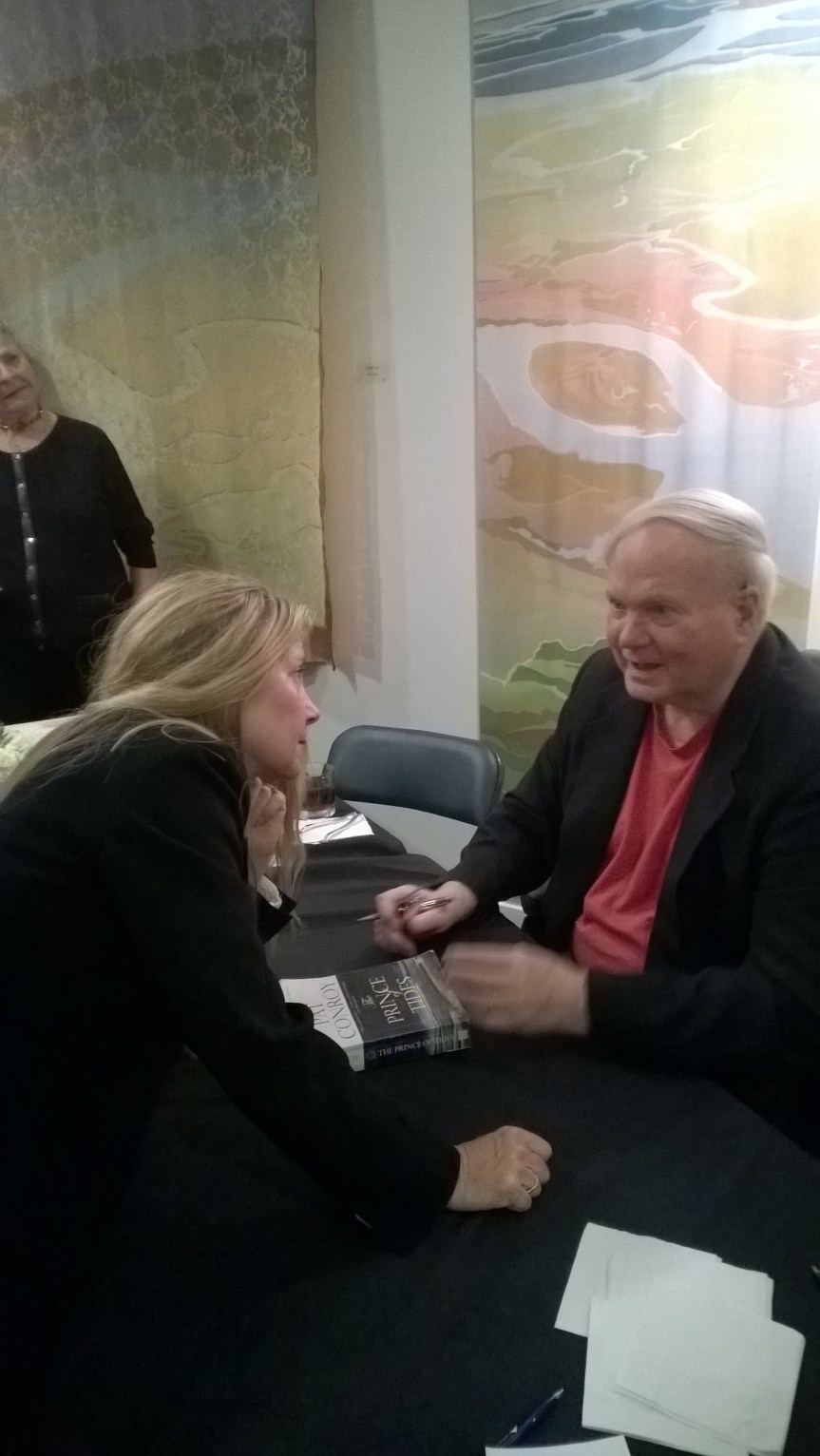
I had a few magic encounters that can only be described as “Pat moments” at the 2015 “Pat Conroy at 70” celebration” in Beaufort, South Carolina. And there I was a complete stranger to Pat, but by the end of the three day festival, you wouldn’t have thought this. Sometimes in life you just flat connect with someone through mysterious forces, and when you do, it feels something like recognition. I felt this way the first time I locked eyes with Pat Conroy, and although I was decidedly star-struck, he wasn’t having any of it.
I was late to the screening of “The Great Santini.” Most everyone was seated in the auditorium, and the film was set to begin any minute. I rushed into the scantily populated lobby of the USCB’s Center for the Arts, flustered and apologetic to the nice woman behind the table, who took my name and handed me my event tickets for the following two days. As I turned to head for the auditorium, there was Pat, wearing a red t-shirt, a big smile, and walking straight towards me. His face was aglow with child-like delight and his blue eyes beamed with the kind of enthusiasm you’d jump to upon spotting a friend. Now, mind you, I’d rushed to the conference all the way from California, and in that moment I had yet to find my bearings. I’d hoped at some point during the conference I’d be lucky enough to exchange a few words with Pat, get it off my chest how much his writing affects me, tell him that he’d singlehandedly shown me what is possible with the written word, and illustrate his impact upon me by saying if I were a musician, he’d be my Mick Jagger. I didn’t expect to walk through the door and find him there like a one man welcoming committee. In that destabilizing moment that caught me off-guard, I was so startled to see my literary hero in the flesh that my text book Southern manners flew out the window and speech completely failed me. So I did what anybody would do: I looked Pat Conroy straight in his Irish eyes and said, “I love you.” To which he threw back his head and laughed.
“I flew all the way from California to see you, “I gushed, and without skipping a beat, Pat said, “You’re crazy,” to which I replied, “I know.”
“My daughter lives in California, let me go get her,” Pat said, then he walked away and returned with his daughter, Megan. As Megan and I stood talking about California, Pat sauntered off then reappeared with his brother, Tim. I couldn’t tell you now if Tim wondered who I was or why Pat found me worthy of introduction, but all three Conroy’s stood friendly and smiling, as if they were legitimately thrilled to see me.
“Let me ask you something,” Pat said. He spoke haltingly, searchingly, as if he were thinking something through, though he gave me a look that shot straight through me as if willing the power of his steady gaze to sear something into me. “Can you remember this street address? I want you to come over to the house for a drink or something.”
“When?” I said. It was all I could think to ask.
“Sometime during all this,” he said, waving his hand. “Whenever there’s downtime,” he said, as if it’d be obvious, as if I’d know when there’d be a lull in the conference and could just mosey on over to find him lounging around.
“Oh, wait, they’re telling me it’s time to go in,” Pat said, “Let’s go.” I trailed behind Pat into the auditorium, and when the room rose to its feet in reverence at the sight of him, I ducked discretely out of the way and made for the auditorium’s back row, dumbfounded and lit by the fire of Pat’s personal attention.
Another of my “Pat moments” occurred while standing in line, holding my copy of “The Prince of Tides” in the creeping queue that snaked along in slow motion. Nobody seemed to mind that it took forever to reach Pat; we were all so animated to be in his jurisdiction, we didn’t begrudge a soul their moment in his sun. The air was charged with Pat fever. We were a chatting, laughing, fraternizing assembly linked by a warm inner knowing that we were all members of a secret society, waiting our turn for a moment in Pat Conroy’s sphere of luminosity. Eventually, the line progressed, and I got within clear sight of Pat. There were only three people ahead of me when I spied a regal, chestnut haired woman rounding the banquet table to stand beside him. She held a drink in her hand as she leaned down to say something, and I saw Pat rear back in blindsided astonishment at her appearance. His face flushed adolescent pink, there was glee in his smile and joy in his eyes, which cast around excitedly as if looking for someone to say something to, and I knew in that moment Pat Conroy was bursting with story. I looked around to see if anyone else was paying attention then leaned forward to say, “What is it, Pat?” and he spilled forth with, “You’re not going to believe this story!”
Never before have I been a more willing audience than I was as Pat launched into his story, which was a humorous take on unrequited love.
“Twenty five letters I wrote to this woman when I was in college, and not once, not once did she ever respond,” he shared, as the object of this story shook her head and protested. It was then I pulled out my camera. I ran into her much later, at the catered party the festival had on the last night of the weekend. Her name was Terry, and she felt moved to straighten me out with the facts.
“Already he could write better than anyone else, how in the world could I ever respond?” she insisted.
My Pat moments didn’t end there, nowhere near it. During what turned out to be a three-day love fest in honor of Pat Conroy, it seemed every time I turned around, he was there exuberant and smiling. We were friends now and he wanted my story; he wanted to know what I thought about the poetry panel, and he told me the panel discussions by the authors of “Story River Books” would be right up my alley. And they were, and it all was. Every moment of each day during the “Pat Conroy at 70” celebration was a gift that keeps on giving for many reasons, but mostly because of my magic moments with Pat.
I understand the USC Press and the USCB Center for the Arts will hold its first annual literary conference this October in honor of Pat Conroy, where his spirit, no doubt, will be hovering. To this I have one thing to say:
I’m looking forward.
Interview with Claire Fullerton
My heartfelt gratitude to Cathleen Townsend!

 Claire Fullerton is the author of “A Portal in Time” and “Dancing to an Irish Reel,” both from Vinspire Publishing. She is a four time, award winning writer and a multiple contributor to “Southern Writers Magazine,” “Celtic Life International” and “The Wild Geese.” Her work appears in five of the “Chicken Soup for the Soul” books. Claire hails from Memphis, TN. and now lives in Malibu, California. She has recently completed her third novel. And she’s our guest here today. 🙂
When did you know you wanted to be a writer, Claire?
I simply woke up to the fact that I am a writer! I think my writing career began with the practice of keeping a daily journal at a very young age. I am convinced this practice created my “writer’s voice” and taught me the art of word economy. I was encouraged when I was published in a poetry journal, and…
View original post 910 more words
An Irish Story, “The Goat”

Hugh’s Photo Challenge: Week 13 : Love

Hugh asked for us to post a picture to demonstrate love? Every time I make a move in my house, I have this pair monitoring me. Here Ronin and Ceili patiently await my arrival at the top of the stairs. Ronin (male German shepherd, two years old this month) is at the left and Ceili ( female German shepherd, two years and four months old) is at the right. Both have Irish names, though Ronin is spelled in the Samurai way. Ceili is the Irish word for “a musical party.” If you’ve ever loved a dog, you’ll know why I used this picture for Hugh’s challenge! Check out Hugh’s challenge: http://hughsviewsandnews.com/2016/02/16/hughs-weekly-photo-challenge-week-13-love/
Smorgasbord Open House – Meet author Claire Fullerton
With sincere gratitude to the inimitable Sally Cronin, and a hearty Happy Birthday to her as well! Thank you for being such a stalwart champion of your fellow authors.
 Claire Fullerton Author
