What Price an Author’s Politics?


I don’t believe I’m the only one disenchanted with the current state of affairs on FaceBook. Rather than launching a campaign in broad strokes of generalities from a supercilious pulpit, I will keep things simple and try my best to articulate where I’m coming from as an artist, for writing, to me, is a high art.


Like legions the world over, I joined FaceBook to stay connected with many people I’d lost touch with over the years. I grew up in Memphis, which means I’m a Southerner, and Southerners are raised in packs attendant to other packs. The domino effect of this reaches into the hundreds. And I care about all my pack members, so I considered the advent of FaceBook a gift that kept me connected, now that I’m a transplanted Southerner living in California.


And then I cultivated a writing career. I, like other writers, was therefore obligated to do my share of marketing and promotion for my books, and Facebook is, perhaps, the most viable avenue to do so. In short order, my list of “friends” grew longer, and I, wanting to help my fellow writers, turned around one day to discover I was connected to unfathomable numbers of authors I would have never known otherwise. And it thrilled me. I will always be fascinated by those who create, be they a writer, musician, dancer or painter. Give me your art, says I; it softens the blow of the human experience. In my opinion, there is such beauty in this world, and it is the artist’s God-given aptitude that points this out. It has been my pleasure and honor to help promote other authors, and there is safety in numbers in this business of living, if one is lucky enough to come across others of their ilk. Like begets like, or so it seemed to me, but lately I’ve become soul-sick and heart-confused while looking at FaceBook, and I’m trying to get to the bottom of why.


I feel hoodwinked, led into the miasma of a bait and switch. I came to Facebook because of friendship and art, but now it seems I’m being held prisoner for political ransom. I know the arguments: freedom of speech, a forum for “voice,” and all the other rights people stand up for. I’m not suggesting any of this is wrong, but I do question its appropriateness. Just because one can doesn’t mean one should, and the irony for an author is pontificating politically automatically polarizes their followers. There’s no sense in not admitting this, and those that don’t might be assuming their followers completely agree with their views, yet if this is the case, then why preach to the choir?


I think authors should seriously think through posting their political view on FaceBook, and weigh it for the potential ramifications to their career. After all, the way an author shows up in the world begins with deciding how they want to be perceived. I had this question posited to me recently, when my literary agent asked me to articulate “my brand.” It’s going to matter when my next two novels come out, and currently there is wisdom in establishing and investing in my base. I’m thinking the more streamlined and specific I can be, the better.


Readers align with us for stories. Reading stories gives many suspended quarter in a hectic world. Readers don’t necessarily need to know who the person is behind the story. If an author is doing it right, their stories will speak volumes to answer the question, without detracting from the author’s mystique.


I’m not saying I long to be seen as mysterious, only that I like the idea of my stories speaking for themselves. As for who I am, I’ll let the readers decide, and willingly leave politics to the political pundits.


Fellow Authors, You’ll Love This Article!

What Being an Editor Taught Me  About Writing,      January 17, 2017  By Anna Pitoniak


I’m an editor at Random House, but for the last several years I’ve been writing around the edges of my day job: mornings, nights, weekends, wherever I can grab the free time. I began my first novel (which is publishing today) while I was working as an editor, and I credit my job with giving me the courage, and the tools, to tackle writing a book. The truth is that spending one’s life reading good writing—not just reading it, but thinking about what makes it so good—is the best way to teach one’s self how to do it. For some people, this might mean enrolling in an MFA program. For me, I was lucky enough to learn by observing the other editors around me, and working on manuscripts as they went from rough drafts to finished books. It was the best writing education I could have received. Here are a few of the things I learned along the way:

http://lithub.com/what-being-an-editor-taught-me-about-writing/


On the Writing Path

,And so the game changes.

It’s been a fast moving beginning to 2017, but I’ll digress to say that 2016 ended with a cliff hanger, which meant while most people were reveling in the holidays, I waited for the new year to begin and decided I might as well work  on my fourth novel, so I wouldn’t climb the walls over the fact that my third novel was at issue! But things are on track now, and I recently signed a contract with Julie Gwinn, of The Seymour Literary Agency, for representation. There are irons in the fire as I write this, but far be it from me to jinx anything, so I’m going to share a bit about my literary journey over the past few years, in hope that it will lend insight and encouragement to my fellow writers.

My first attempt at writing a novel began after I moved back to Los Angeles from the west coast of Ireland. Upon reviewing the daily journals I kept there, I realized, if I could craft it well, I had a great story. So, I dove in and completed the manuscript of what eventually became “Dancing to an Irish Reel,” then queried agents interested in commercial fiction, literary fiction, women’s fiction, and everywhere else that would potentially be interested. I had a few bites, yet after a year, it occurred to me that I was an unknown, with little to recommend me as a writer. I switched focus, submitted and was published in magazines then, through what can only be called sheer chance, I caught the eye of the editor of Malibu’s local newspaper, when a white Dove landed on my kitchen patio, and I sent its photograph with a little story of the turmoil the presence of this seraphic creature created amongst our two dogs as it took up roost on the patio for eleven days. Astoundingly, I was offered my own weekly column. Writing this 1,000 word, weekly column taught me the art of brevity, and I acquired a firm grasp on the art of the flow. Yet still, no progress with my novel, so I decided to write another novel, whose premise is a personal interest of mine, and whose idea came to me when my husband and I checked into an historic hotel in Carmel-by-the-Sea, California. I’ll go on and say it here and risk scrutiny: I’m telling you, this hotel was haunted. I knew it because the fine hairs on my arms stood up as I gazed around its lobby. My imagination ran rampant. I knew in my bones that this particular hotel had its origins as a private residence, and after checking with the concierge, I learned I was right. And so I wrote a novel in two time frames about a woman who checks into an historic hotel and comes to realize she has lived before, so familiar is she with every nuance of the setting. I titled the book, “A Portal in Time,” searched high and low for agents and publishers interested in paranormal mystery, and had the good fortune of being offered a publishing contract, without the involvement of an agent. A Portal in Time turned out to be a crash course in not only the publishing business, but in the wonderful world of marketing and promotion. Next, I did what anyone would do, I submitted my first novel’s manuscript to A Portal in Time’s publisher, and Dancing to an Irish Reel came out in March of 2015.

Somewhere, in the swing of all this, I entered The San Francisco Writer’s Conferences’ writing contest, and came in as the contest’s runner up. It was a 3,000 word, non-fiction narrative set in the South, where I grew up. And so I decided I had something to build upon, turned the piece into fiction, and filled it out to 83,000 words. The manuscript is a Southern Family Saga, and in no way fits what my current publisher publishes. And so I began again. Something very promising happened with this manuscript, yet rather than going into what became a false start, I’ll simply say fate intervened and everything came to a halt. I picked myself up and  pressed on with querying agents. Enter Julie Gwinn of The Seymour Literary Agency. I’ll leave you here and report there is great hope for my third book, yet I will reiterate I am not one to jinx things, and I’ve learned a little something about the folly of counting chickens!

I’m sharing “my story” to remind all writers to persevere because I’m still doing so. It’s a long and winding road ( thank you, Paul McCartney) and I’m thinking it’s also unpredictable. The important thing is that all writers recognize that it is enough to be on the road. I’m fond of saying the good news about a writing career is there is no “there” to get to; there is only the fulfilling path.

And while I’ve got you, let me leave you with something the publisher of my first two novels posted. For those of you who are Catholic Christian writers, this one’s for you, and my wish is it creates an open door to your publishing dreams:

https://getvinspired.wordpress.com/2017/01/17/well-be-accepting-pitches-at-the-catho/

Sending great blessings to you all, and, as they say in Ireland,” slainte.”


Smorgasbor 2016 in Review – Open House – Meet author Claire Fullerton

This was the top viewed Smorgasbord Open House in 2016 for the interview with author Claire Fullerton. My guest today is Claire Fullerton author of Dancing to an Irish Reel which is set in Connemar…

Source: Smorgasbor 2016 in Review – Open House – Meet author Claire Fullerton

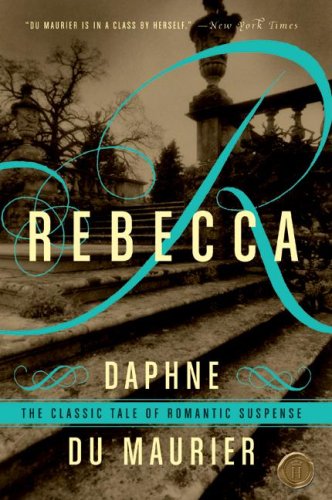
Review: Rebecca by Daphne Du Maurier

Rebecca


I’ve always been an admirer of the first person narrative. When handled deftly, it magnifies the complex variables that comprise us all. Rebecca is a psychological treatise with a confessional tone spawned from the narrator’s perception, and this is the story. That the narrator is young, inexperienced, and overwhelmed to the point of skittishness sets the dark tone of every paragraph in this cleverly paced mystery. Her vantage point is solidly built on assumption, suspicion and crippling self doubt. The plot is a simple one: the young narrator begins as a paid, personal companion to a domineering wealthy woman, who is on holiday in Monte Carlo, when fate places her in the dining room of a luxuriant hotel next to the table of the troubled widower, Max de Winter, who hails from the Cornish Coast. An awkward and unlikely alliance develops between the narrator and the worldly Max de Winter, which leads to a hasty marriage, in which the reader learns along with the narrator of de Winters’ disturbing past. Set in the house and rambling coastal grounds of de Winters’ stately Manderley, the narrator enters a dynamic firmly in play, whose tone was cast and exists still from the hand of Rebecca: the first Mrs. de Winter. Rebecca’s shadow looms imperiously, and brings to the fore the narrator’s insecurities. Having no background story on her predecessor, the inchoate narrator is tossed by the winds of assumption, half-truths and incomplete perceptions made all the more dark by the presence of Rebecca’s loyal personal maid, Mrs. Danvers, whose presence lends a disquieting air, due to her supercilious knack for comparison. Rebecca is an off-kilter mystery that unfolds along the road of the search for truth regarding what, exactly, happened to Rebecca. That the narrator stays in suspense until the sinister end lures the reader through a story elegantly told in language so poetic, it is its own experience.

Whistlin’ Dixie

I stood at the counter of my local grocery store exchanging pleasantries with the cashier, as I am wont to do, and this time it only took twenty seconds for the nice lady to ask what I’m always asked out here in Southern California, “Where are you from? Are you from Texas?” You have to pity the poor people in California; they don’t know any better than to assume if someone has a Southern accent, they’re from Texas ( as if the state of Texas counts as a Southern state, which I say is questionable because everyone knows Texas is its own animal.)
I’m a transplanted Southerner who hails from the Mississippi Delta, and although I am now long in another region, it is no influence on the armor I wear around my Southern DNA. It is its own protective shield, a source of self-identification, and I see the world and its people through the focused lens of my Southerness, which couldn’t be more convenient, for it simplifies everything.


To continue:

Claire Fullerton: Whistlin’ Dixie

The Pat Conroy Literary Festival

Because one has to follow what has resonance in life, I wound up on a plane, crossing the country from Los Angeles to Beaufort, South Carolina. I did this because the author Pat Conroy has always been my idea of the personification of what it means to be a writer. In life, he was the embodiment of language in its highest form. Pat Conroy took this business of being human, with all its frailties, heartbreaks, and nuances, and wrestled it into art. He was strong enough, brave enough, trusting enough to share his stories, and in so doing, he gave us all the gift of options by using writing as saving grace along life’s riddled path. That he wrote in the first person spoke to me, for I knew exactly to whom I was listening. I understood Pat Conroy, cared about him, identified with his human predicament, and applauded his uncanny ability to lift himself out of his own confusion by putting his tumultuous life into words.

And so I flew to South Carolina this past weekend to attend the inaugural Pat Conroy Literary Festival, in Conroy’s beautiful, lowcountry hometown. Just last year, I’d done the same to attend the celebration around his 70th birthday, which turned out to be the smartest move I made in 2015. Meeting Pat Conroy in person and watching him navigate the throngs of peers and readers humanized the diaphanous mystery of those lofty souls set upon this earth to interpret it for the rest of us. He walked among us, humble and smiling, posing for photographs and shaking hands like an overwhelmed child, grateful and surprised that so many had turned out for his party. His sincere, wide-eyed comportment shook me to my core and stayed with me long thereafter. I was well aware at the time that I was witnessing exactly what it means to be a celebrated writer and not have it go to your head.

I will digress here to say that In March of 2016, in a crisis that blindsided the literary world, Pat Conroy died of pancreatic cancer. It was such a profound loss, with baffled legions asking how this could possibly be that the outpouring of love continues to this day. My belief is it will go on forever, for Pat was so beloved that people will always be uneasy with the metal glare of letting him go.

 And so the town of Beaufort rebounded after Pat Conroy’s death. The fact that Hurricane Matthew blew through the region the week before deterred them not one iota. They assembled en masse to rise up and fuel the fire that Pat Conroy set. The inaugural Pat Conroy Literary Festival had the same tone and tenor of Pat Conroy’s 70th birthday; it carried on for him, because of him, in honor of his name. I had a feeling this would be the case, when the festival was announced, and did not hesitate to make arrangements to attend. To not have done so after being there last year seemed unthinkable; it would have flown in the face of all things Pat, and I wanted to uphold my end.

I’m going to go on and say it: It’s liberating to be a writer without personal agenda. Six years of promoting my books, myself, and everything all about me is exhausting, and frankly goes against my nature. This is why I took a big exhale when I got to The Pat Conroy Literary Festival in Beaufort. For four days, I was in witness of writers and readers assembled for all the right reasons: love of story. We all knew that Pat Conroy was the pivotal point, yet his absence did not overshadow the celebratory spirit of the weekend. The reason why is because Pat Conroy had shown us, the year before, how to dive right in and revel in the company of those who contribute to our chosen field. There seemed no hierarchy of value in those gathered for the weekend, just the impression that we are all on the same path; some ahead, others a few paces behind. For me, it was like visiting a foreign country and discovering that everybody spoke my first language. I sat in the audience of one panel discussion after another and was invigorated and informed by what the participating authors had to share. The thing about being a writer is there is no there to get to; there is only the process of personal growth, and what is invaluable to the momentum is allowing yourself to remain a student. This is what Pat Conroy did last year, and I say this because I could feel it. I’m pretty sure he was in the audience of every event of the Pat Conroy at 70 Festival, with his pen and paper in hand, for every time I turned around, I saw him, eyes focused on the stage with glee and rapt attention. I cannot adequately articulate what watching this world-renowned author taught me, except to say that it taught me everything. It has much to do with decency and camaraderie, and the willingness to celebrate those who create through the written word.

The Pat Conroy Literary Festival was like being in a bee-hive of literary heroes.  It was a four day celebration orchestrated “for the love of words and story,” which is a phrase Pat Conroy used, whenever he signed his books.  There was something so heartwarming and ceremonious about the entire weekend. It was a literary festival put on by those who loved Pat Conroy for those who loved Pat Conroy, and the overall feeling was that the celebration will never end.   


Book Review: Serena by Ron Rash

2815590


It is the slightly off-kilter, dark tone of this book that mesmerizes. Set in the year 1929, in the North Carolina mountains, George Pemberton arrives on a train from Boston with his cultured new wife, Serena. It is a rough-hewn, brass tacks timber camp dedicated to clearing the region of its trees for financial gain that Serena enters and assumes control. The daughter of a timber man from Colorado, Serena knows the business better than most men, and uses her wits and wiles to manipulate affairs to her liking as she plots to expand the business. With a mysterious background to her credit, both George and the reader come to know Serena through her ruthless, self-serving dealings; nothing is beneath her pursuit of expansion: no morals, ethics, nor even the law. In short order, George Pemberton becomes a man caught in a web, yet is so enamored of his wife, he is willing to go along as events spin out of his control and lead to the ultimate betrayal. This is the fifth book I have read by the author, Ron Rash, and I find his voice unlike any other. Ron Rash is a writer gifted with the poetics of economy. His settings exist in society’s underworld, which he compliments through the use of  language so pitch perfect in regional colloquialism it gives you the characters background and explains their individual mind-set.  Ron Rash’s Serena is a villain for the ages; she is canny, single-minded, attractive, and dangerous. This bone-chilling story is both  gripping and blind-siding. It is another fine example of Ron Rash’s deft handling of the darker notes of self-preservation at any cost.

A Southern Voice

A Southern Voice

The first voice to caress my infant ears rolled with such lyrical beauty that I’m offended by other accents to this day. It soothed in its quicksilver fluidity, lacked hard edges, and whispered in promises so compelling it could turn the most resistant of souls into a willing adherent. I know now that sound travels queerly and can double back upon itself in time. I often hear the voice of my Southern mother when I least expect it; it comes to me more as reminder than recollection, and carries a way of being in the world along a template so firmly etched that its resonance is guiding and indelible.

For Complete Piece:

Claire Fullerton: A Southern Voice

The Risen by Ron Rash:Book Review

The Risen


This is, yet again, another gripping Ron Rash novel.  Upon reflection, what stays with me most is that the premise of The Risen is tight and simple. Two brothers, in a small North Carolina town, are swimming in a creek in the summer of 1969 and meet a seventeen year old girl, an outsider who impacts their lives. But Ron Rash gives us a thorough psychological treatise, through the character of younger brother Eugene, on the desperation behind falling in love for the first time and the complexities of younger brother syndrome during one’s coming of age. Place is a character in this story, described in Rash’s keen vernacular, and it is the unsolved past that pulls us through this story. The reader lives in two time frames as the story unfolds, which gives us the experience of cause and effect. On the one hand, The Risen floats on the wings of the fruits of summer, on the other its tension builds through the guilt of a broken man. The Risen is a page-turning mystery with a twist, written in such a way that you can feel the guilt that haunts the two main characters’ involvement. It speaks of the repercussions of one false move that shadows lifetimes, and though the mystery may have been solved at the end, it suggests that nobody gets away with anything for long.