Book Release: Hannah and Ariela by Johnnie Bernhard

As it appears in The New York Journal of Books

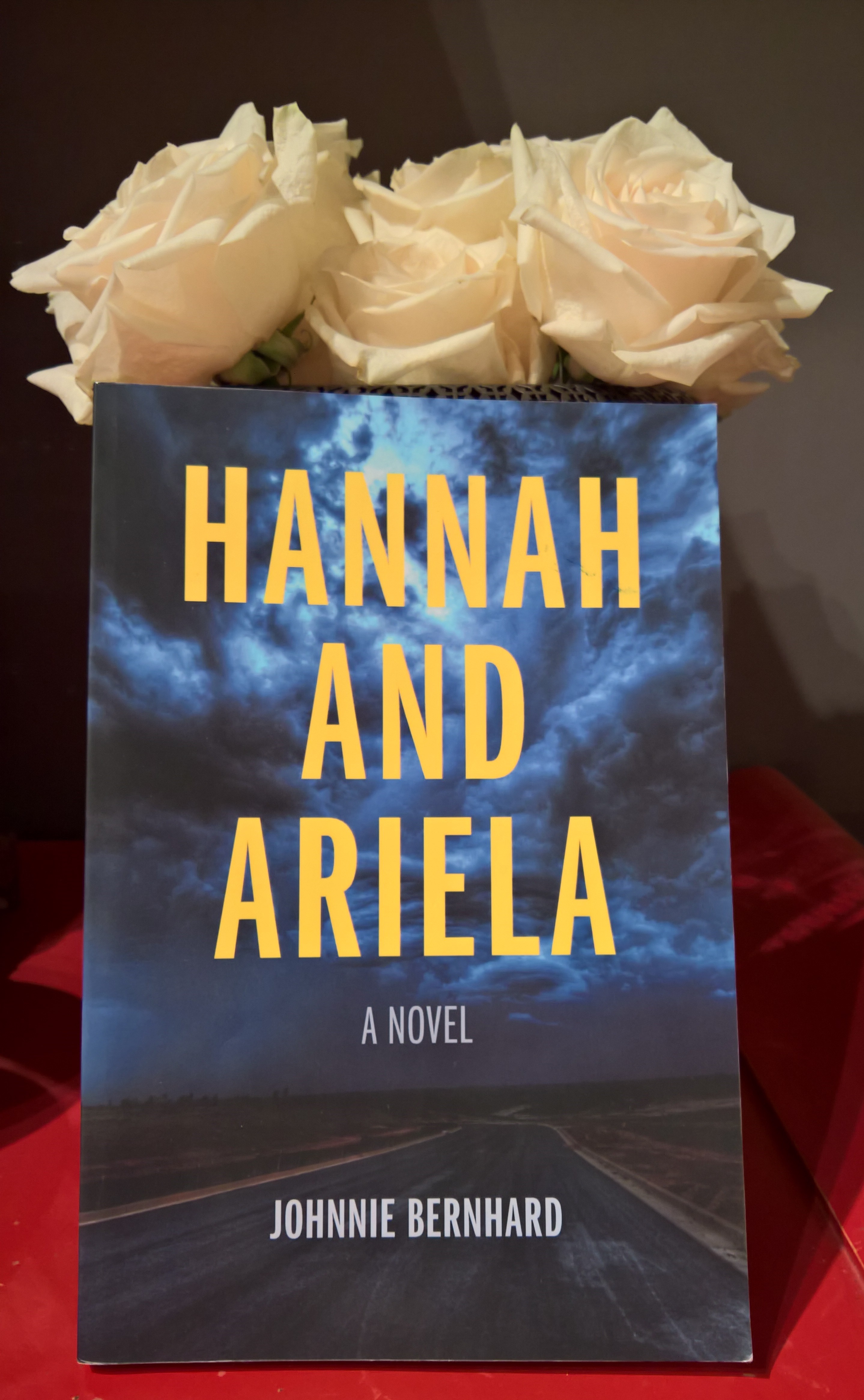
Hannah and Ariela

Image of Hannah and Ariela

Johnnie Bernhard

Publisher/Imprint: Texas Christian University Press

Pages: 176

Buy on Amazon

Reviewed by: 

Claire Fullerton

“In this tensely wired, swiftly paced, starkly realistic story of human trafficking set beautifully among nuanced clashing cultures, author Johnnie Bernhard defines each character’s motivation to portray the collision of opposing sides while casting a wide lens on a human atrocity.”

The human heart is fearless in author Johnnie Bernhard’s Hannah and Ariela. It’s a vividly drawn, timely story shedding light on an unspeakable crime against humanity.  

Hannah Durand takes the coat her husband left by the door, wraps his scarf around her, and pushes against the winter’s howling blue norther to open the front door. Casting her teary eyes upon the 640-acre Texas working ranch that she and her husband ran for 48 years, the newly widowed, 73-year-old Hannah speaks aloud: “August Durand. I know you’re here. I can feel you in the wind and in the breaking of cedar branches covered in ice. Hold me just one more time and tell me what you think I should do with the rest of my life, my life without you.”

An unconventional, self-sufficient woman born to Anglo prosperity and the great Texas outdoors, Hannah’s life is centered on the Durand Ranch, in the town of Rocksprings, between central and West Texas, “where the land was just as hard and mean as the predators lurking in the shadows waiting for the next easy kill.” It is modern day, and facing an uncertain future, Hannah fears she might not have the stamina to stay on the land alone. Hannah thinks, “I’ve loved this land . . . I feel like I’d lose a part of myself if I sold it.”

Ariela Morales is born to Zaragoza, Mexico, where “life is hard because it was too close to the Texas border.” In a town with little opportunities, the dutiful Ariela helps her family, babysits her siblings for her mother, and squeezes in time to spend with her friend Katia. In telling of that friendship, Ariela says, “Some people in Zaragoza had a harder life than me and my family. My best friend, Katia was one of them.” Together, the teenage friends go to mass “to get our mamas off our backs,” paint their nails, read magazines, and mostly dream “about getting out of Zaragoza.” When Katia flirts with danger by consorting with two cartel members, it leads to perilous, unforeseen consequences drastically changing the trajectory of both girls’ lives.

A dog barking on a lonesome stretch of highway connects the fates of Hannah and Ariela, and wheels are set in motion affecting a cast of characters on both sides of the US/Mexico border. Bernhard portrays the landscape with laser-precision and layers the harrowing story in multiple, first-person points of view covering all angles of what spins into the urgency of safeguarding the traumatized Ariela from further ramifications having to do with the cartel’s sinister, illegal plans.

When Rocksprings’ sheriff discovers Hannah is harboring Ariela, he jumps to conclusions and wants to get border patrol involved, without knowing Ariela has just survived a terrible backstory. Taking Hannah aside, he says, “Now Hannah, I’m going to remind you of this very specific law. When someone enters the US without following immigration laws, it’s a crime.”

Joseph Gonzales is the bilingual, longtime trusted employee of the Durand Ranch, whose involvement Hannah solicits to serve as Ariela’s interpreter. When Hannah weighs the law of the land against doing the decent thing, Joseph joins Hannah in an attempt to get around punitive issues of immigration, while the cartel and law enforcement from either side of the border try to intuit their covert maneuvers, in a do-or-die dynamic begging the issue of right versus wrong.

In this tensely wired, swiftly paced, starkly realistic story of human trafficking set beautifully among nuanced clashing cultures, author Johnnie Bernhard defines each character’s motivation to portray the collision of opposing sides while casting a wide lens on a human atrocity. Hannah and Ariela is the story of one woman’s bravery in rescuing another, only to rise phoenix-like into a newly defined, far-reaching life purpose.

About Johnnie Bernhard

A former teacher and journalist, Johnnie Bernhard’s passion is reading and writing. Her work(s) have appeared in anthologies and in national and international publications, including Southern Literary Review, Houston Style Magazine, The Mississippi Press, the international Word Among Us, and the Cowbird-NPR production on small town America.

Johnnie Bernhard is a multiple, award-winning author and sought-after speaker.

Hannah and Ariela is Johnnie Bernhard’s 4th novel.

For more about Johnnie Bernhard, please visit the author’s web site at http://www.johnniebernhardauthor.com/
Smorgasbord Blog Magazine – Guest Post – #Life – I Wish I Knew Then What I Know Now! ‘Home’ by Claire Fullerton

Endless Gratitude to Sally Cronin of Smorgasbord for this personal essay prompt!

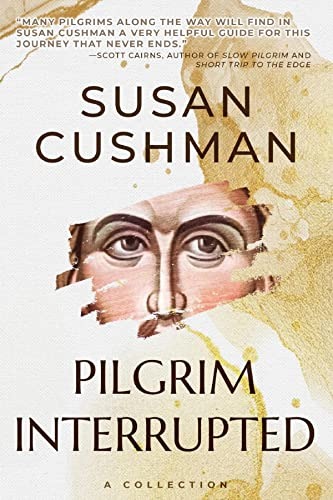
Pilgrim Interrupted by Susan Cushman

A collection of Essays by one of The South’s favorite Writers!

My Review :

You’ll savor every essay in Susan Cushman’s Pilgrim Interrupted. The essays are wise, beautiful, soulful, insightful, as opposed to confessional. They strike the perfect pitch that hooks the reader’s attention, lures them in, and keeps them authentically engaged. What strikes me most about Pilgrim Interrupted is its lack of pomposity. These are thoughts spun to gold in a manner so artfully subtle as to make the reader care about the writer, even as they are prompted to reflect on their own interpretations of existential concerns such as commitment, perseverance, spiritual meaning, and the beauty to be found in life’s seeming little things. This is a collection of essays to read slowly– many you’ll want to return to again. Author Susan Cushman shares a piece of her intelligent, soft-spoken heart in Pilgrim Interrupted, and you’ll be grateful that she has done so, for all the impactful resonance of what adds up to a series of deeply moving experiences.

Book Description:

The title essay in this collection, “Pilgrim Interrupted,” is set on the island of Patmos, Greece, during one of Susan’s pilgrimages with her husband, Father Basil Cushman, an Orthodox priest. Pilgrimages. Orthodoxy. Icons. Monasteries. It’s all in here. But so are stories about mental health, caregiving, death, family, and writing, including a section on “place,” a key element in Southern literature. And how is Susan’s pilgrimage “interrupted”?

By life itself.

Pilgrim Interrupted is a collection of 35 essays, 3 poems, and 5 excerpts from Susan’s novels and short stories. Coming of age during the turbulent 1960s in Jackson, Mississippi; marrying young and adopting three children; leaving the Presbyterian Church of her childhood for the Eastern Orthodox Christian faith in 1987; Susan finally began to chronicle her journey in the early 2000s. Pilgrim Interrupted is her eighth book.

Susan was born in Jackson, Mississippi and went to school at the University of Mississippi. She moved to Memphis in 1988 where she and her husband continued to raise their three children.

Her published books include five she has written: Pilgrim Interrupted (essay collection), John and Mary Margaret (novel), Friends of the Library (short stories), Tangles and Plaques: A Mother and Daughter Face Alzheimer’s (a memoir), and Cherry Bomb (a novel).  She has edited three collections of essays: A Second Blooming: Becoming the Women We Are Meant to Be,  Southern Writers Writing, and The Pulpwood Queens Celebrate 20 Years! In addition she has over a dozen essays published in five anthologies and various journals and magazines.

Much of Susan’s writing is infused with elements of her own life, including the very mystical spirituality of her Orthodox Christian faith and the personal demons she has been chasing since childhood. Her essays, short stories, memoir, and novels all reflect what she has learned through many dark nights of the soul, but also contain elements of hope and healing and honor her Southern roots.

Ms. Cushman’s Blog: https://susancushman.com/author/susan/

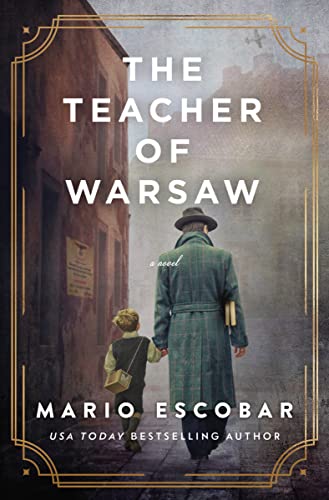
The Teacher of Warsaw

The Teacher of Warsaw by Mario Escobar

Image of The Teacher of Warsaw

Author(s): 

Mario Escobar

Release Date: June 7, 2022

Publisher/Imprint: Harper Muse

Pages: 368

Buy on Amazon

Reviewed by: 

Claire Fullerton

An important, sensitive look at the triumph of the human spirit over evil, The Teacher of Warsaw is based on a true story and epitomizes the very best of poignant historical fiction.”

A nostalgic tone sets the stage of Mario Escobar’s The Teacher of Warsaw. In the prologue, an editor is in receipt of a hidden diary now typed as a manuscript from a woman named Agnieszka Ignaciuk, who survived the WWII, German occupation of Warsaw, Poland. The editor says, “That small, lovely woman with the wise eagle eyes placed into my hands Janusz Korczak’s typed manuscript. She acted like she was passing along a forbidden fruit that would eternally expel me from the semblance of paradise my life had recently become.” Taking the manuscript, the editor reflects upon its author, “I remembered the Teacher. Everyone I know called him the Old Doctor . . . I heard his voice. . . . It was just he and I in the middle of a ruined world.”

It is September 1939, and 60-year-old Janusz Korczak is the director of Dom Sierot, a Warsaw home for 200 orphaned children. He’s a man of deep integrity, a beloved and devoted teacher who views his job as a calling and structures the home with no differentiation based on age or rank, where tutors and students equally cohabitate as a family. When one of the orphans asks why he’d never had his own children, the unmarried Dr. Korczak reveals what he has told few others. “The truth is, my father went insane, and I’ve always been afraid that the same thing will happen to me. I thought that if I had children, they might inherit that disease.” It is this reason that makes Korczak all the more committed to the children.

Dom Sierot’s building, which houses Jewish orphans, has been in a Christian neighborhood for 27 years. Korczak shares, “We were there on purpose so that Jewish and Christian children could live together. Long ago I had learned that the only way to knock down the walls of prejudice and hatred toward difference was coexisting and building friendship that allowed the children to fight and the be reconciled again.”

It is November of 1940, and a shock to Korcsak’s system comes when the Germans relocate Dom Sierot from the working-class neighborhood outside the city to a squalid area in Warsaw’s walled Jewish ghetto, consisting of “400,000 within an area no larger than 1.3 miles.” In preparing for the change, the sensitive Korczak softens the blow to the children, “We’ll probably long to be back here in our wonderful house. But the walls that you see around us are not our real home. The real refuge of each one of us is inside our hearts. As long as we’re together, we will keep being happy and belonging to our big family.” When one little boy cries at the sight of the new living quarters, Korczak hands him the treasure map he’d prepared the night before, and says, “Treasure hunts always occur in exotic, remote places. No one’s ever done anything amazing without leaving home first.”

As winter wears upon the ghetto, living conditions become more desperate in the orphanage’s unheated, dilapidated home, where water is scarce in the midst of a food shortage, leaving Korczak to solicit and rely upon the help of charitable donors. When the Gestapo confiscates a cart of food and supplies belonging to the orphanage, Korczak bravely holds his ground and says to the German officer, “This food is for the children and under no circumstances can I allow you to take it from them.” When told to take his complaint to the Gestapo headquarters, the optimistic Korczak goes to plead his case at the German administration offices, only to be thrown in jail for not being in compliance with wearing the requisite Star of David on his arm, intended to signify those who are Jewish.

Upon being unceremoniously grabbed by a German soldier and transported to jail, Korczak says, “For them, life was a useless sketch through which to imprint their senseless brutality and show the world that they were the bosses. For me, life was a perfect beautifully framed painting full of meaning and hope. For them, life was prosaic and frivolous, ever so light, whereas for me it was so heavy I could hardly take a step without feeling the mud stuck to my feet.”

A year on since the Nazis came to Poland, nothing improves in the ghetto. Korczak writes, “Typhus had run its course around the city in recent months, given the deplorable hygienic conditions and insufficient nutrition of the population. It seemed the Germans preferred to kill us off slowly. Their program was designed to weaken our spirits and erode our morale.” Korczak, in the habit of calling assembly whenever a new problem arises, and always serving as inspirational motivator, poses the question to the orphans, “What does it mean to be happy?” “Life in and of itself is an act of happiness . . . Happiness is not about things. We look for it outside of ourselves, but it’s something that’s in our own minds. The work of our hearts is to give pure love.”

As time wears on and conditions worsen, Korczak delivers a speech intended to inspire the orphanages’ dispirited teachers and caretakers. “We sleep and dream of better days but wake to find ourselves here. Yet here, where we serve, we are doing all we can to make better days for the children. We’re in this world to serve one another, to give our very last breaths for our neighbors.”

With a supporting cast of characters in various official positions who are incrementally ready to help Dr. Korczak escape the ill-fated ghetto, the doctor refuses each offer. “Leave me be,” he says to a sympathetic German captain who knows things are nearing an end. “I will go with my children and will not leave them alone.”    

In hindsight, after the worst has happened, trusted companion and co-worker of Korczak’s, Agnieszka Ignaciuk—the deliverer of  Korczak’s left behind diary chronicling the personal tragedies of war—remembers the good doctor and says, “Janusz Korczak had lit up a country swathed in darkness. All of Poland had to know his story and admire his example. I vowed to make that happen.”

In The Teacher of Warsaw, Escobar’s intimate, first-person delivery is flawlessly researched. Its historic timeline unfurls with heightening drama from the vantage point of one selfless man dedicated to the wellbeing of Polish children in harrowing wartime conditions against all odds and costs. It’s a sobering, memorable story taking the reader through tragic events in occupied Warsaw, from September 1939 to May of 1943. An important, sensitive look at the triumph of the human spirit over evil, The Teacher of Warsaw is based on a true story and epitomizes the very best of poignant historical fiction.    

Claire Fullerton’s most recent novels are Little Tea and multiple award winner, Mourning Dove. Honors include the Independent Book Publishers Book Award Silver Medal for Regional Fiction, the Reader’s Favorite for Southern Fiction Bronze Medal and various other literary awards.