The Ancient Way: Discoveries on the Path of Celtic Christianity by River Jordan

“entertaining, inspirational, and visceral; a moving narrative of typically missed breadcrumbs on the way to meaningful connections. A delightful, wandering story with profound, insightful resonance . . .”

What’s in a name? In this gem of a book, The Ancient Way: Discoveries on the Path of Celtic Christianity, author River Jordan beautifully illustrates that the answer makes all the difference in the world. A trip to Scotland becomes a journey, a journey becomes a pilgrimage, and a pilgrimage is defined by the power of intention.

In first-person, nonfiction narrative readers will think familiar for its intimate, accommodating style, River Jordan combines everything that makes both memoir and travelogue captivating. Her story begins with a nudge. “Sometimes I need to listen to the small voice that is the songline of my soul. To hear the whisper of, ‘This way, follow me.’ For some, it is the voice of God, for others their sixth sense. For me it is both; I see them as one and the same.” 

Following the lure of coincidence, a series of prompts leads to the west coast of Scotland. The ringing lilt of the name Iona spawns research, and as her will to travel grows, Jordan weighs the difficult way against a busy writer’s schedule and challenging circumstances. “A way would have to reveal itself where there was no way at all,” she concludes. In the end, Jordan employs practicality to get her from her Nashville home to Scotland. “Flexibility and a certain no-frills, down-to-earth sensibility can come in handy on the road. And making a pilgrimage to Iona was going to require a certain cowgirl can-do attitude.”

For all the reasons we’re attracted to a hero’s journey, we follow Jordan as she sets her sights on exploration and personal transformation against uncanny odds that verge on comical. Because it is the frugal, off-season month of November, the weather is frigid, ferry schedules are unreliable, and tourist establishments are closed. Aided by a travelling companion she calls her “anam cara,” she’s encumbered by too heavy a backpack and accommodated by strangers she meets through an online travelers’ global community called Couchsurfing. And yet she persists with an eyeful of wonder, a heart full of gratitude, and a string of prayer beads in her pocket to remind us that all is in the attitude. A lesser wanderer would have conceded defeat in the nearest pub.

Without being heavy-handed, this book speaks to the spiritual seeker, denominational or otherwise. The odyssey aligns spirit with intellect, certainty with curiosity, this world with the next, and all that has come before. Jordan writes, “There are dreams and there are destinies, and sometimes they cross over to become one and the same thing. If so, journeying on pilgrimage to Iona was as much God’s plan as it was mine, which meant we were in this thing together.”  

Artfully layering her journey’s steps and missteps with Celtic Christianity’s history, Jordan gifts the reader with perfectly placed fact to heighten her story. “Not all from the history volumes of Celtic Christianity was first kiss, first love, first light. The history of Celtic Christianity is filled with violence, Viking raids, murdered monks, and destroyed monasteries.”

Of the ancient Celts conversion to the Irish monk, Columba’s, novel idea of Christianity, she depicts a melding: “All that was best of their Celtic nature wasn’t lost in translation: they brought it to the table. Reading those histories, I think those monks of Columba’s took a good look at what the Celts had pulled out of their spiritual backpacks and said, ‘Hey, this is good. I think we can use this.’”

A narrative nonfiction book for travelers in search of The Divine, The Ancient Way: Discoveries on the Path of Celtic Christianity takes you from the hills of Tennessee to the hallowed ground of Scotland’s Iona Abbey, on a wing and a prayer, with help from the kindness of strangers. It’s entertaining, inspirational, and visceral; a moving narrative of typically missed breadcrumbs on the way to meaningful connections. A delightful, wandering story with profound, insightful resonance you’ll want to share with your friends, The Ancient Way: Discoveries on the Path of Celtic Christianity encourages you to keep an eye on the sacred along the road to self-discovery.

Claire Fullerton is a staff reviewer at New York Journal of Books.

Smorgasbord Cafe and Bookstore Author Updates – New #Poetry Balroop Singh, Reviews #Mystery Lizzie Chantree, #SouthernContemporary Claire Fullerton

Sally Cronin has a book blog ( and then some) that I’ve had the pleasure of following for years! She’s the stalwart champion of legions of authors and knowns her way around nutrition and and a myriad of medicinal concerns! Sally and her blog, Smorgasbord Cafe and Bookstore, is beloved by countless WordPress adherents. Today, my book Little Tea is included in her book roundup!

Smorgasbord Medicine Woman’s Treasure Chest – Essential Oils and Aromatherapy – Bergamot essential oil – by Sally Cronin

I love this post from the inimitable Sally Cronin of Smorgasbord!

Never Turn Back by Christopher Swann

I had the immense pleasure of reviewing this book for the New York Journal of Books!

Never Turn Back by Christopher Swann!

“A contemporary novel that tips its hat to multiple genres, Never Turn Back is intriguing, high-stakes fiction.”

A wonderfully unusual, utterly unpredictable twist of a puzzle with an edge, Never Turn Back warns you with its title that you’re in for something, and hints at the problem with a line on page two, when the narrator says, “The twin memories of my parents are like a pair of blades scissoring my heart.”

https://www.nyjournalofbooks.com/book-review/never-turn-back-novel?fbclid=IwAR3fjraOJQu8tCKxTIHpKkxXnq3sAej7Jk7uZj7zN3Y_YEITsu5SaREclY4

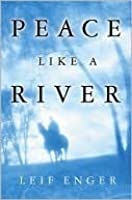
Peace Like A River by Leif Enger

Brilliant, evocative, and written in a clear-sighted adolescent’s voice that verges on stream of consciousness and flows magically with the surrealism of this astounding story. Narrator Reuben Land tells this remarkable story of a motherless family’s journey through the winter flatlands of North Dakota, on the trail of his elder brother, Davy, who’s convicted of a crime done in defense of the family.

Reuben’s engaging, first person voice is a metaphor for the malady he was born with: his damaged lungs are commiserate with the breathless tone that lures the reader into siding whole heartedly with the brother he idolizes, while his precocious younger sister, Swede, pens a western based on an outlaw’s hero’s journey, and incrementally interprets the family’s quest to save Davy, who broke out of jail and is on the run.

Father Jeremiah Land has a humble essence that hints at sainthood. An intelligent and pious widower, he works a job beneath his station and is prone to covert, timely gestures that verge on the miraculous, each convenient, pivotal episode manifesting in such a way as to seem like coincidence. “The fact is, the miracles that sometimes flowed from my father’s fingertips had few witnesses but me,” Davy says, and throughout this multi-layered, faith in motion story, there are plenty. When Jeremiah is asked by a concerned friend how the family plans to track Davy, he answers: “I have the substance of things hoped for. I have the anticipation of things unseen.”

On the road to North Dakota, the family is trailed by Martin Andreeson, a federal employee tasked to find the escaped Davy, who suspects the family knows more than they let on. He birddogs the family like a shadow, yet changes from nemesis to friend as the story leads fatefully into the arms of Roxanna, who lives right outside the town where Davy was last seen. When Davy appears to Reuben, he asks Reuben to keep the secret of where he’s living and with whom, for what turns out to be good reason.
Family dynamics tinged with the spiritual and questions of right versus wrong as seen through the eyes of young Reuben are at the heart of this unique story. The writing is so compelling, you’ll be riveted throughout a book you’ll never forget.
5 stars and high praise to author Leif Enger. Peace Like a River has made me Enger’s fan.

The Southern Literary Review!

JASON KINGRY INTERVIEWS CLAIRE FULLERTON, AUTHOR OF “LITTLE TEA”

SEPTEMBER 15, 2020 BY JASON KINGRYLEAVE A COMMENT

JK:  Thank you for doing this interview about your new novel, Little Tea.  I’ve read that you’ve lived in Minnesota, Memphis, Ireland, and now in California. What were these transitions like, and how have they affected your writing?

Claire Fullerton

CF: The transitions ushered in forward momentum, in that living in different locations expanded my understanding of the world. The insights were cumulative as opposed to immediate and mostly having to do with an ephemeral sense of things pertaining to a combination of the environment and its people. I suppose the idea of cultures is best perceived from the outside looking in, so to speak. Being in it but not of it gave me an objective view that continues to affect my writing.

JK:  What would you call “home” about each of these places?

CF: The idea of home is tied to the way I feel centered in an environment and has everything to do with harmonizing with a frame of reference. Nature affects everything about a location and I’m a great walker. I think the best way to get the feel of a place is on foot. I believe people create their idea of home through their relationship to the environment and their loved ones in it. My idea of home has to do with long-term investment and an anchored compatibility that operates on many levels.

JK:  Did being an “avid journal-keeper” help you to become an avid novelist?

Click here to purchase

CF: Definitely. Keeping a journal for as many decades as I have woke me up to the fact that I’ve been a writer by nature all along. Writing has been part and parcel to my way of being in the world. I interpret the world by writing, and the practice has spawned an intimacy that  translates to the nuts and bolts of how I write novels. 

JK:  I’ve always lived in the South. I’ve always been a large, bearded man, and I’ve always had to excuse the fact that I’m a “cat person.” I see in your bio that you live with one black cat. Are you superstitious? Do you consider the cat yours or your husband’s, or does the cat belong to you both?  Are you a cat person as well? Tell me more about the cat.

CF: I live with one black cat named Le Chat and three German shepherds! La Chatte is definitely my cat because she chose me as her center of gravity. She is a medium-length haired, solid black, yellow-eyed bundle of communicative joy who gets pushy when it’s time for me to brush her, which is every evening before I go to bed. It is a two-brush ritual: one for her body and one for her kitten face, which she presents side after side with such rapturous, princess preening that I laugh every time. La Chatte has the run of the house yet chooses to camp out on the daybed in my office. Our shepherds never tire of investigating La Chatte, but by all appearances, the shepherds bore her. And I wouldn’t say I’m particularly superstitious as much as I’m aware of the mysterious unknowable that walks hand-in-hand with my ever-changing assumptions of reality.  As for cats, I’ve always thought if you’re going to be a cat, then there’s something perfect about being a black one.

JK:  You thank a lot of southerners at the opening to Little Tea. Do you have an affinity for Southern culture, especially as it pertains to the outdoors?

CF: I appreciate Southern culture and am forever trying to define it, which is ridiculous because it’s made up of nuance. I recently had a conversation with a Hollywood actress who prepared to play a Southerner by studying my Southern accent. I was patient with the process until it occurred to me to cut to the chase. “What you have to understand,” I said, “is that it’s not about mimicry; being Southern is an attitude, so let’s start there.”  So, an emphatic yes, I have an affinity for Southern culture, and as it pertains to the outdoors in Little Tea, I wanted to capture Southern boys in the prime of their swaggering youth who know how to hunt and fish in the Delta. There’s an art to this, a science, a way of awe-struck communing in the region with a type of reverence seen not so much as sport as the exhilarating pursuit of challenge. I’ve always respected this about Southern men who hunt. They have an admirable relationship with the great outdoors.

JK:  Having written your entire life, more or less, did you ever think that you would have such a following as you do?

CF: From my perspective, writing is a search for similarities. In my own way, I am comparing notes on this business of life with my readers. I’m aware that my novels are open for interpretation, but therein is my humble gift to the reader. Readers are intelligent creatures and it is my great honor to earn their attention. There’s no way to accurately gage the number in whatever following I have, but suffice it to say, I am grateful for each.

JK:  It seems that you started your writing career with poetry. Was there a natural progression into writing novels?

CF: I wrote poetry and kept a daily journal up to and through the time I lived on the west coast of Ireland. I lived in Connemara, which is delightfully rural, and when I returned to the United States, I revisited my journal and realized I had a unique story. It was the year 2000, and although I’d never attempted even a short-story, I burned with passion to depict Ireland as I found it. It seemed to me many Americans had a romanticized impression of Ireland, and it was important to me to share that I found the people of that storied island magnificently salt-of-the earth and wary, suspicious of outsiders but able to mask this by appearing to be the friendliest lot on earth. I wanted to tell about it, and in so doing, I realized that writing poetry was my foundation. I can’t say it was a progression because to this day, I keep both balls in play.

JK:  You’re involved with so many publications—I don’t think people view authors in general as particularly “busy.” Would you like to correct that notion?

CF: I love this question. I’ll begin my answer by saying I consider everything having to do with being an author a labor of love. That’s the good news. I do it because I love to and am fond of saying with writing, there is no there to get to; only the process in and of itself. That said, once one is in the game, so to speak, the arena expands. I liken my writing life to being a many spoke wheel wherein the spokes aid and abet the hub, daily. If I’m not in the process of writing a novel, I’m promoting one that’s out, and let me say now, the best part of it all is answering questions such as the ones you’ve asked here because I actually stop and think it all through. Thank you for the joy of this interview and let me debunk the myth: I’m thrilled to report I’m busy!

JK:  There’s something very specific about the canon of Southern literature that is wholesome, haunted, antiquated and compelling. Do you have a theory of what that might be?

CF: It’d be so satisfying to say something brilliant here, but let’s leave that to Michael Farris Smith and Ron Rash. I love both Southern authors so much I can’t even speak. My answer can be found somewhere between Southern heritage and the South’s sultry climate. It’s that and what I love most about Southerners: they definitely know who they are. Southerners wear their identity like a badge of honor, and rightfully so.

JK:  You draw exquisitely on your tendency to “see the world from the outside in.” At what point did you recognize this as an ability?

CF: This circles us back to your first poignant question. It was moving at age ten from Minnesota to Memphis—disparate cultures, I think, that gave me my first taste of being an outsider. It was an indelible experience, profound to the point that I think it impacted my character. I will tell you that considering yourself an outsider isn’t a bad thing at all. To me, it’s a vantage point from which to celebrate, a perch from an aerial view to intuit all that’s unique in people, places, and things. This, in a nutshell, is why I write!

JK:  Thank you very much for this interview!

CF:  Fabulous questions! Thank you.