The Boatman and Other Stories by Billy O’Callaghan


It’s daunting to think that no matter how I review this exceptional collection of short stories by Billy O’Callaghan, I will never adequately express my full sentiments, for how to articulate that O’Callaghan is simply the best writer I’ve come across in ages? His short stories are a treatise on the human experience, the impressionable psyche, the vulnerable human heart. He crafts his stories with the fluidity of a wave that builds slowly, crests, then turns in on itself after enveloping sight and sight unseen. To read The Boatman and Other Stories is to read a master at his craft. You’ll be swept away by the rich detail and nuance of commonplace in the hands of this powerful storyteller. I cannot recommend this collection hardily enough. Read it, treasure it, then do as I did and put it in pride of place on your bookshelf.

https://amzn.to/3f1IiaZ

Billy O'Callagahn

Billy O’Callaghan was born in Cork in 1974, and is the author of three short story collections: In Exile (2008, Mercier Press), In Too Deep (2009, Mercier Press), and The Things We Lose, The Things We Leave Behind (2013, New Island Books, winner of a 2013 Bord Gáis Energy Irish Book Award and selected as Cork’s One City, One Book for 2017), as well as the bestselling novel The Dead House (2017, Brandon/O’Brien Press and 2018, Arcade/Skyhorse (USA)).
His latest novel, My Coney Island Baby, was published by Jonathan Cape (and Harper in the U.S.) in January 2019 to much acclaim. Read more about it on the Books page.
Billy’s latest short story collection, The Boatman and Other Stories was released in January 2020 and released in the U.S. on April 28.
Billy is the winner of a Bord Gáis Energy Irish Book Award for the short story, and twice a recipient of the Arts Council of Ireland’s Bursary Award for Literature. Among numerous other honors, his story, The Boatman, was a finalist for the 2016 Costa Short Story Award, and more than a hundred of his stories have appeared or are forthcoming in literary journals and magazines around the world, including Absinthe: New European Writing, Agni, the Bellevue Literary Review, the Chattahoochee Review, Confrontation, The Fiddlehead, Hayden’s Ferry Review, the Kenyon Review, the Kyoto Journal, the London Magazine, the Los Angeles Review, Narrative, Ploughshares, Salamander, and the Saturday Evening Post.


https://amzn.to/3f1IiaZ

https://amzn.to/3f1IiaZ

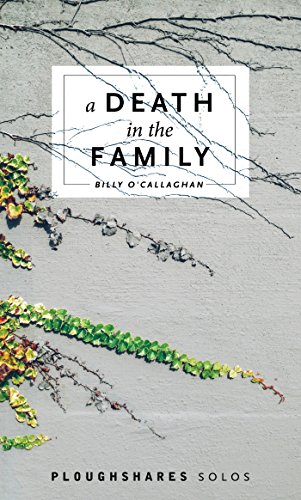
I read O’Callaghans short story, A Death in the Family, which is included in The Boatman and Other Stories when the prestigious Ploughshares published it as a Kindle solo, here https://amzn.to/2xnqma2

A Death in the Family

I reviewed A Death in the Family by writing:

It is such a gift that Ploughshares avails this short story here on Amazon. I cannot recommend this story enough, for I consider Billy O’Callaghan the most important literary figure to arrive on the scene in ages. O’Callaghan can take any simple premise and infuse it with deep-seated, soul-stirring insight, and A Death in the Family is just such an example. His use of language is so personal that it shows us our own humanity, in this evocative, finely wrought story. Read this story and be lulled by O’Callaghan’s laser-sharp gift of Irish nuance, character, and place. And when you’ve finished, do yourself a favor and read his debut novel, The Dead House.

Here is my favorite quote on O’Callaghan’s writing:

“I know of no writer on either side of the Atlantic who is better at exploring the human spirit under assault than Billy O’Callaghan.”—Robert Olen Butler

You can read about this world-class author, here:

https://billyocallaghan.ie/en/biography/


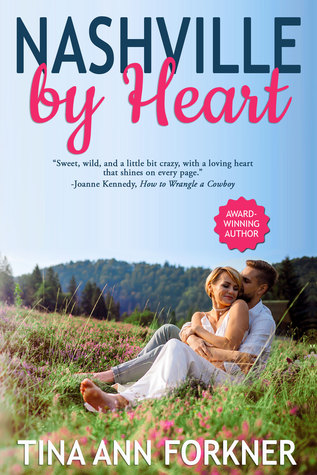
Nashville by Heart

I read this book on Kindle in two days and defy any reader of any genre not to read it as nonstop as time permits! Nashville by Heart is joyous, entertaining, and uplifting. A young woman from a small town, in the prime of life sees her dream come to fruition in the musical mecca of Nashville, Tennessee; what could be better? Perfectly delightful escapism deftly penned in an action-packed narrative with characters so vividly drawn you can feel them in the room. I loved every single line of Nashville by Heart. It soars from the opening paragraph and holds you tight. It will thrill romance readers, those who love contemporary fiction, and everyone who loves a good story with a wonderful ending!


#1 Amazon best-selling and award-winning author Tina Ann Forkner “delivers a fairytale” (Publisher’s Weekly) in this sweet romance.

Tina Ann Forkner

A happily ever after romance, Nashville style… Small-town girl Gillian Heart moved to Nashville to get a record deal, not end up on some playboy’s arm. She knows she shouldn’t get too personal with charming music agent Will Adams, who has broken plenty of hearts in this city. But Will is different around her, and neither of them can deny the spark.

As the spark turns to love and Gillian’s career starts to take off, she believes her Nashville dream is finally coming true. Until Will makes a move that brings back memories of the father who abandoned her and puts all she’s built in jeopardy.

Can Gillian learn to trust Will—and herself—and let her country music dream take flight? Or will the comfort of life in her hometown pull her back?

Award-Winning Author Tina Ann Forkner’s women’s fiction includes THE REAL THING, WAKING UP JOY, ROSE HOUSE, and RUBY AMONG US. She lives in Wyoming with her husband and has three adult children.

Tina teaches at workshops, presents at conferences, and is happy to appear on panels. She has spoken or taught at conferences including the Colorado Gold Conference – Rocky Mountain Fiction Writers, Northern Colorado Writers Conference, Crested Butte Writers Conference, as well as taught or presented at libraries including the Laramie County Library, at elementary and high schools, and for various women’s organizations and groups.

Tina is a proud member of Tall Poppy Writers and works as a freelance editor, writing instructor, and substitute teacher. She enjoys traveling, hiking, and fishing.

Tina’s website is: http://www.tinaannforkner.com/

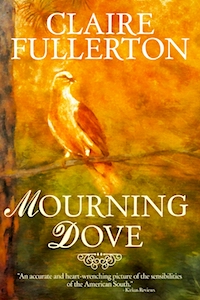
Southern Family Saga, Mourning Dove

As I count the days to the release of Little Tea, lo and behold, this review of my last novel, Mourning Dove was just sent to me by the Chanticleer Reviews. Thought I’d share it here.

Chanticleer Book Reviews & Media

Camille Crossan appears to be living an idyllic life in Claire Fullerton poignant, evocative novel, MOURNING DOVE. Living in a superbly appointed mansion in “magnolia-lined and manicured” Memphis during the 1960s and 1970s, Camille’s family life shimmers with Southern charm. Beautifully penned #SouthernNovels with all the trimmings. One of our favorites. Highly recommended. #SouthernLiterature #PulpwoodQueens #CIBAs

firstplace-somerset-250x300

Review:

Camille Crossan appears to be living an idyllic life in Claire Fullerton’s poignant, evocative novel, Mourning Dove. Living in a superbly appointed mansion in “magnolia-lined and manicured” Memphis during the 1960s and 1970s, Camille’s family life shimmers with Southern charm. Her mother, Posey, usually outfitted in a Lily Pulitzer shift, Pappagallo shoes, and a signature shade of pink lipstick, is a beauty with the wryest sense of humor and steel determination.
As a young girl, Camille, known as Millie, sees how those in her mother’s social orbit are captivated by her aura, how men are easily seduced by her flirtatious charm. Society is a game played by those who know its rules, and Posey means to win. Every time. She, however, isn’t even the charismatic one in the family – that’s Finley, Millie’s older brother, who brims with intelligence, startling good looks, and messianic magnetism. A peek beneath the shiny surface of gracious Southern living, however, reveals enormous cracks in the foundation of the Crossan family. One of the first things the adult Millie tells us about her brother is that he is dead. She takes the reader back, though, to their childhood and coming of age, a tumultuous journey that both binds and separates the siblings.
During her first decade, Millie’s family was living in Minneapolis with her tender-hearted, intellectual father who succumbed to alcoholism. Loss of money and, worse, the accompanying loss of social status, motivates Posey to uproot her children and move them to her childhood home in Memphis, a palatial mansion filled with antiques and portraits of forebears. It’s a volatile time, inside and outside the house, as centuries-old Southern traditions clash with the youth counterculture.
Millie watches as her mother holds court during daily cocktail hours, a prospective second husband soon on the reel, and Finley, a gifted guitarist, plunges into the local music scene. But what role will she play? It’s difficult for her to see herself entirely separate from her brother for whom she has, “…a love devoid of envy, tied up in shared survival and my inability to see myself as anything more than the larger-than-life Finley’s little sister.” Millie will grapple with her identity and question her destiny, whether she’ll be a bride in the Southern belle mode of her mother or if she’ll be the blossom that falls far from the magnolia tree. Meanwhile, Finley’s charisma both explodes and implodes in shocking and dangerous ways as he becomes revered by a group of people with no connection to the gentrified life. Like Millie, the reader is transfixed and apprehensive about where this less-traveled road will take Finley. Although the reader knows his grim fate from the outset of the book, his storyline is so engrossing that no drama is lost.
Author, Claire Fullerton, is an enchantress with prose. The writing in this novel will cause you to stop, reread sentences, savor them, and note their architecture. Scenes sparkle as she masterfully summons moods and atmosphere. The reader can see Millie’s lovely but haunting home, and smell the rich fragrance of dogwood on a soft spring day. Fullerton has a keen ear for witty, authentic dialogue, and she deftly reveals much about personalities via conversation. It’s difficult to take leave of such a vivid, fully realized world. Fortunately for readers, Fullerton has written several books, opportunities to spend more time in her richly crafted worlds.


https://www.clairefullerton.com


5star-300x30083818413_762502274271129_5696037369426214912_n

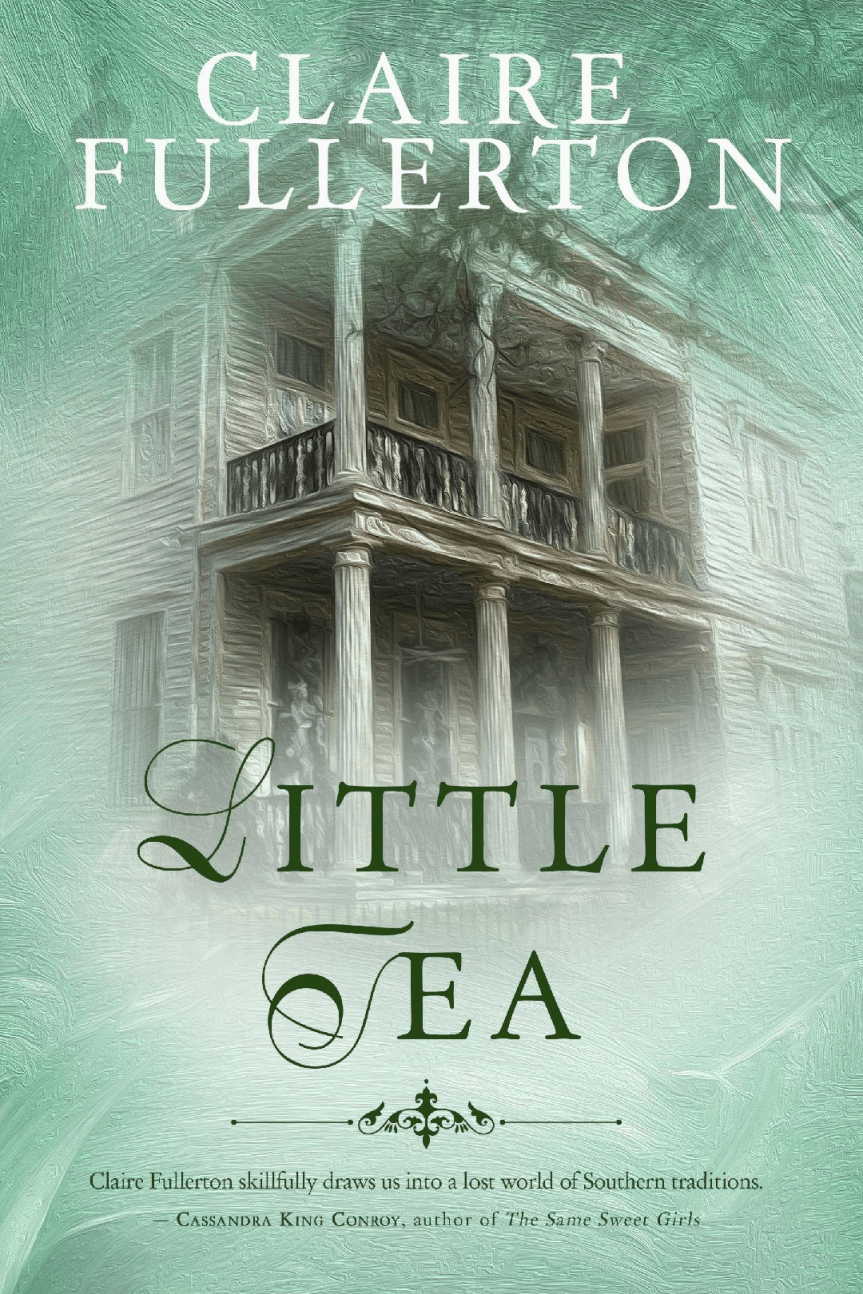
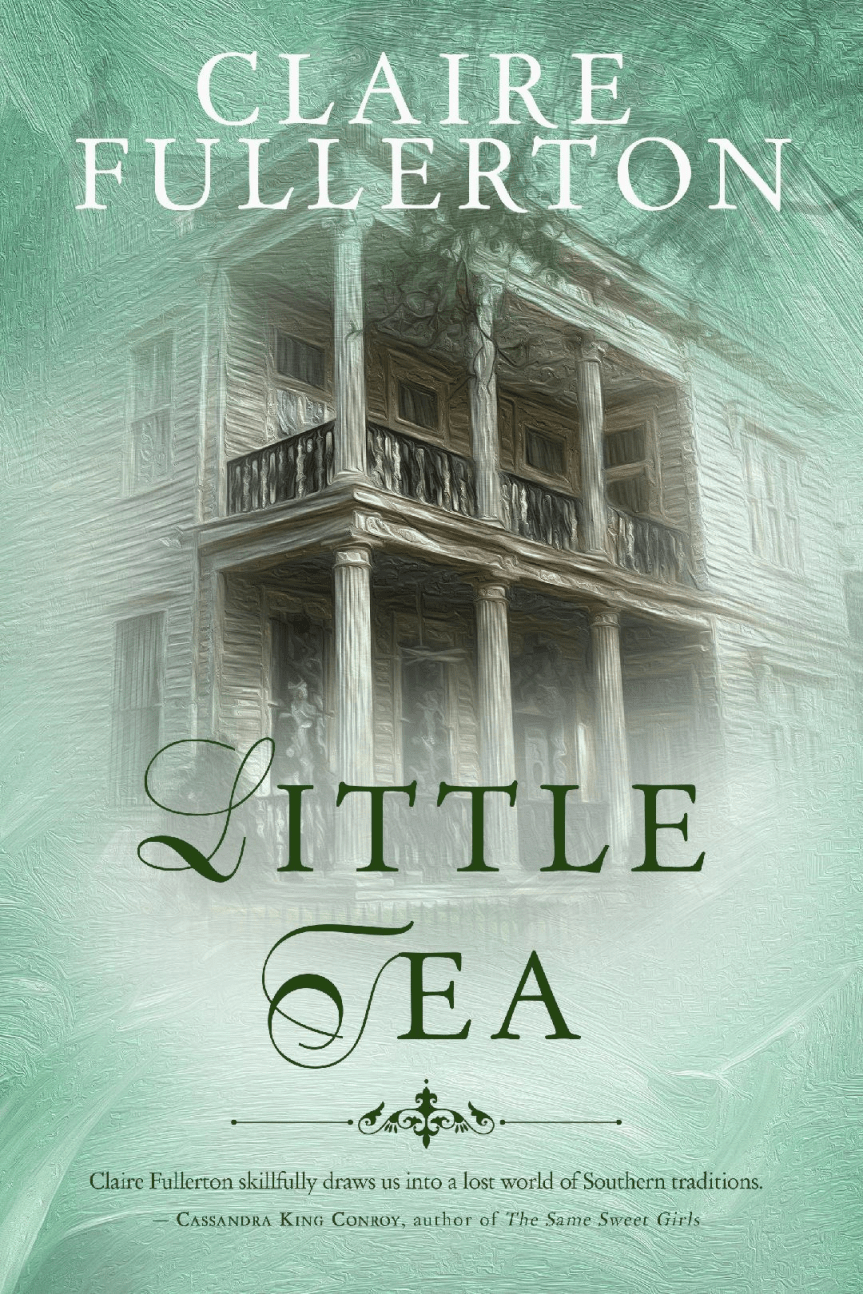
Universal link for Little Tea:  https://books2read.com/u/3nvz0R


Thank you to Michelle James of Book Chat for this wonderful post about Little Tea

Michelle James’s Review
Little Tea is a story of many layers. The author deftly alternates this story of the South in the 1980s with the present day. While racism was outlawed, the South still bristled with hatred from a few of the privileged

Continue with the link to Book Chat here  Little Tea

Out Walking

It took me a while to evolve from a feeling of anxious, pandemic shell-shock to resume what has long been a habit of mine. I like to walk. I don’t need a destination. More often than not, I walk down my driveway in Malibu, California and the biggest decision is whether to turn right or left. I typically listen to Groove Music, where I’ve downloaded my favorite albums. It’s not so much about where I walk as it is the rhythm I strike while moving through space. There’s something centering about it, balancing, and it tends to clarify my perspective regardless of what’s on my mind. And these days, I have a lot on my mind, though most of it has to do with uncertainty.

What got me out of the walking habit during the first few weeks of the pandemic’s strange state of affairs was that it rained sporadically, the sky remained overcast, and it added to the unbalancing sense of gloom and doom similar to how I felt after the Malibu fires when life came down to the daily question of how to get my bearing. I’ve always known walking helps me get my bearings. It’s therapeutic to me, a dreaming meditation, part-and-parcel to my well-being, and the one thing I know about coping in crisis is it’s best to arrive at a schedule as close to business as usual. Since the sun’s been shining in Malibu these past few days, walking is at the center of what little I’ve managed to cobble of a schedule.

WP_20200417_11_28_33_Pro

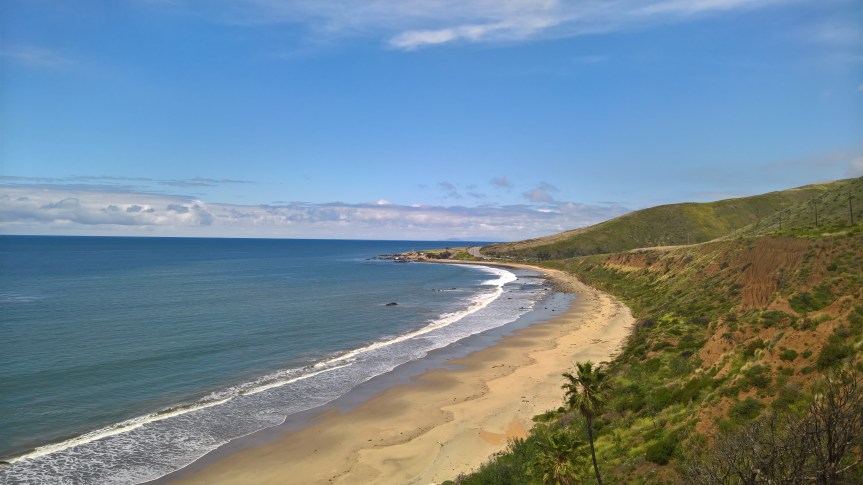
We’re currently not allowed on the beaches in Malibu, California, but on a rise of the Pacific Coast Highway, I spied this path. It goes through an indigenous, breathtaking field straight to the cliffs overlooking Nicholas Beach, which flows to the left.WP_20200419_11_23_07_Pro

Looking right, Nicholas Beach flows into Leo Carrillo State Beach and makes up western Malibu’s coastline.

WP_20200417_11_48_08_Pro

The foothills of the Santa Monica Mountains are in Western Malibu, and they run into Ventura County.

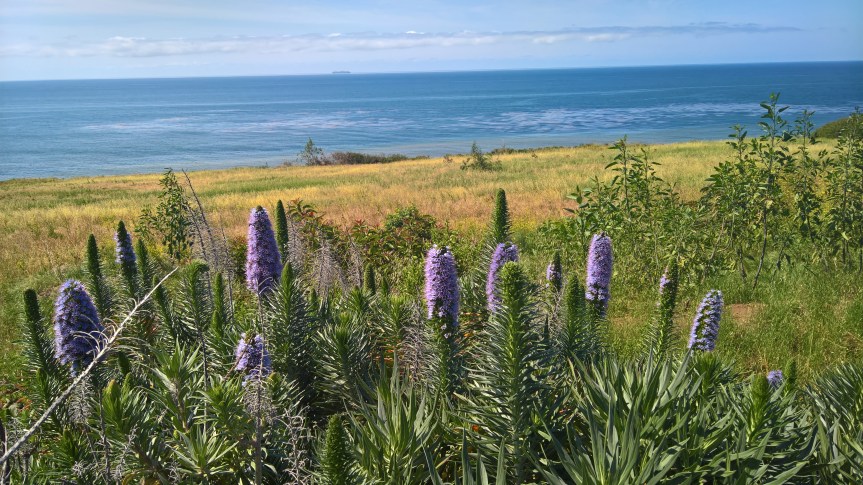
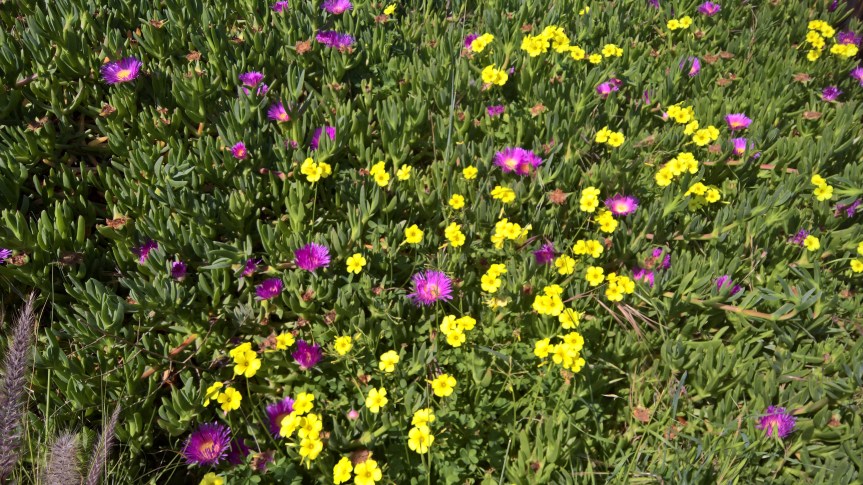
There are beautiful wildflowers everywhere, now that we’re in spring: This is Pride of Medeira, and it’s plentiful everywhere.

WP_20200419_10_55_55_Pro

Along the side of the Pacific Coast Highway is wild mustard seed and bougainvillea

WP_20200419_10_57_06_Pro

This is ice plant, and currently, it’s blooming

WP_20200419_10_46_20_Pro


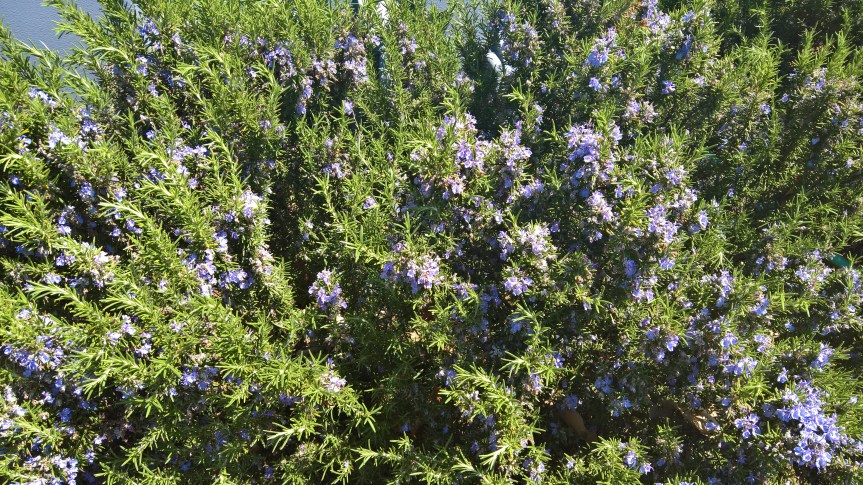
And blooming Rosemary

WP_20200419_11_26_56_Pro

It wouldn’t be a walk outside in Malibu, California, without spying something emblematic to give one a sense of place. Since we can’t go to the beaches, this brilliant man did the next best thing: parked his VW van for an ocean view and strummed on his guitar.


WP_20200419_11_18_14_Pro (2)

It took weeks of feeling uncomfortable during this pandemic before I realized what was really bothering me. It went beyond a feeling of lack of control and wrestling with the uncertainty of what I can and cannot count on in my future schedule. My book, Little Tea, releases on May 1st, and as things stand, I have no idea what will be called off in my mid-June book tour of the South. Reports say the US will aim for normalcy in stages; that individual states will move forward according to how its governer sees fit. Conditions differ in varying regions. I think it will be an unfolding. And be that as it may, even if the coast were totally clear, I’m shying from the thought of getting on a plane in June to travel down South. We’ve all been through so much. Even if things were to get back to normal, it’s probably going to take a while to feel normal. But back to what’s been bothering me, because this just dawned on me. I’ve been my own worst enemy through most of this because I haven’t been practicing acceptance, at least not in a way where I wasn’t still trying to fit my square plans into a round hole.

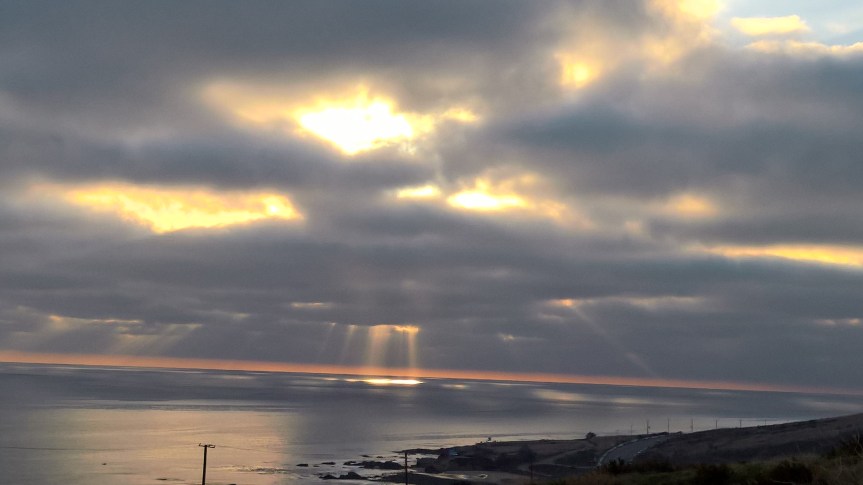
I took this photograph from my front yard a couple of weeks ago, and I believe it’s exemplary of a ray of hope in the midst of a storm.

WP_20200208_16_50_07_Pro

One day this pandemic will be behind us. For now, I’m working on acceptance.

And the best way I know to work on acceptance?

Go outside and start walking.


https://clairefullerton.com


The Story Behind My Book Trailer

Years ago, I was on the airstaff of WEGR, Rock-103 in Memphis. I’d worked at four radio stations before I was hired at Rock-103 and at the time, considered that album-oriented rock station on Memphis’s infamous Beale Street the end all and be all of music radio. Because it was. To be working in music radio in the 80’s in Memphis, Tennessee, with its undisputed reputation of being the town that brought the Delta Blues to the big city, which Elvis, in his unique way, turned into rock-n-roll and inspired The Beatles and a host of others who put Rock-n-Roll on the American map was something I never forgot. Music is Memphis’s claim to fame. It permeates the air of that historic city and anchors its denizens proudly in a strong sense of place.
When one is a DJ at a radio station that reaches thousands, daily, one lives in a world within a world: a close-knit society populated by people who share the same passion, speak the same language, and hold music at the top of the hierarchy of things that really matter. In radio, the wheels turn on a schedule. There are air shifts and play lists, a Program Director, Music Director, sales staff, publicity team, engineers, and in the middle of it all is the Production Director.
At Rock-103, we called Rick Robinson the Production King. We called him that because Rick seemed to have taken up permanent residency in a small studio down the hall from the control room, where he produced radio spots and promos that went on the air. As Rick existed in the midst of a tribe of on-air talent, he was in the habit of summoning any one of us, when we least expected. He’d want to record a voice over for a commercial, a PSA, or perhaps a glib parody, depending on what he was working on in his electronic cave. Rick was the guy who was always firmly and squarely THERE in the creative commotion of Rock 103. He was a permanent fixture with a peculiar set of skills I didn’t know the half of, but I knew he spun magic on behalf of us all at Rock-103, and we relied on him.
It’s funny who you lose track of as the years transpire, yet perhaps it’s understandable for me since I no longer live in Memphis. Life moves on. People change careers, and I left music radio when I moved to Los Angeles and got involved in the record business. Simultaneously, I started concentrating on what I’d been doing since I was in my late teens: writing. Writing has been its own twisting path. So far, it includes four traditionally published novels and one novella, but the reason I’m mentioning this is to say that along writing’s twisting path, I had the good fortune to become involved with Southern Writers Magazine. Which, unbeknownst to me for the first year of my affiliation, just so happened to have its headquarters in Memphis.
It took my correspondence via multiple emails with the Creative Director of Southern Writers Magazine to discover they were headquartered in Memphis. Gary Fearon was the Creative Director’s name, and he and I had cause to collaborate on an advertisement for one of my books. Our back-and-forth correspondence ended up including the proverbial kitchen sink, after I discovered Gary was writing to me from Memphis. “I’m from Memphis,” I twittered.
“I thought you were in California,” came Gary’s reply, which turned into my telling him I was raised in Memphis, where I went to high school, and that I worked in Memphis radio.
“Which station?” came Gary’s query, and when I emailed my response, he said, “You worked at Rock-103? Me too.”
The thing about radio DJ’s is many use a stage name. When Gary Fearon was a DJ at another radio station, he used the name Rick Robinson then retained it, when he worked in production at Rock-103. To say we did chapter and verse over what a small world it is puts it mildly.
But back to my point of how life moves on: Gary Fearon left Southern Writers Magazine to focus full-time on his production demands. Robinsong Productions is the name of his company, where he produces radio and television spots for recording artists on tour and voices audiobooks ( because he’s blessed with precise diction and a tenor both authoritative and memorable.)
And here sat I, on the threshold of the release of my fourth novel, Little Tea, which is set in three places: Memphis, Heber Springs, Arkansas, and Como, Mississippi. The release date is coming up—May 1st—and in this visual world of promotional memes and scroll-stopping images, it occurred to me I needed a book trailer for Little Tea.
I looked at the pictures I took the last time I was in Como, Mississippi and thought, “Who can do a book trailer?”

One name came to mind: Gary Fearon the Production King!
Above, I’m sharing a picture of Gary Fearon. He’s in his studio at Robinsong Production, hard at work on Little Tea’s book trailer.
I love the surprising turns of life’s connections. In a strange way, it feels like an example of what comes around goes around.
I can’t wait to see Little Tea’s book trailer!  I understand Gary found an image of a redbone coonhound and will put it on a dirt road, which is suggestive of a scene in the book, Little Tea.
I’ll share the book trailer, here, once it’s finished!
In the meantime, you can read about Gary Fearon at two websites:
http://www.garyfearon.com  book trailers and such
http://www.robinsongproductions.com concert clients


Little Tea releases May 1st by Firefly Southern Fiction. It’s available now for preorder.

Little Tea ( named after a character whose real name is Thelonia Winfrey) is the story of those long-lasting female friendships that see you through a lifetime, wherein there’s shared history; language; and sense of humor. The narrator, Celia Wakefield spent part of her childhood at her family’s 3rd generation land in Como, Mississippi, where the cultural social mores concerning racial integration had yet to fully evolve. This premise sets the dynamic of a trajectory of events that impact her friendship with Little Tea and haunt Celia Wakefield decades later. When Celia reunites with two childhood friends at Greer’s Ferry Lake in Heber Springs, Arkansas, Celia’s past resurfaces for long-overdue resolution.

Queen of the Owls by Barbara Linn Probst

I’m thrilled to tell you about Queen of the Owls by Barbara Linn Probst. It’s women’s fiction, about a woman who evolves into her own when she begins research on the artist, Georgia O’Keefe.

Here is Queen of the Owls Book Description:

A chance meeting with a charismatic photographer will forever change Elizabeth’s life.

Until she met Richard, Elizabeth’s relationship with Georgia O’Keeffe and her little-known Hawaii paintings was purely academic. Now it’s personal. Richard tells Elizabeth that the only way she can truly understand O’Keeffe isn’t with her mind—it’s by getting into O’Keeffe’s skin and reenacting her famous nude photos.

In the intimacy of Richard’s studio, Elizabeth experiences a new, intoxicating abandon and fullness. It never occurs to her that the photographs might be made public, especially without her consent. Desperate to avoid exposure—she’s a rising star in the academic world and the mother of young children—Elizabeth demands that Richard dismantle the exhibit. But he refuses. The pictures are his art. His property, not hers.

As word of the photos spreads, Elizabeth unwittingly becomes a feminist heroine to her students, who misunderstand her motives in posing. To the university, however, her actions are a public scandal. To her husband, they’re a public humiliation. Yet Richard has reawakened an awareness that’s haunted Elizabeth since she was a child—the truth that cerebral knowledge will never be enough.

Now she must face the question: How much is she willing to risk to be truly seen and known?

Image preview

I read an Advance Review Copy of Queen of the Owls, and am sharing my book review:
A beautiful, deeply thoughtful novel concerning a woman who dares to break her own conventions by following what has heart and meaning. Author Barbara Linn Probst has written a contemporary story with timeless themes, and she has done so through the power of an engaging page-turner. Queen of the Owls depicts the day to day life of young wife and mother, Elizabeth, who juggles writing her thesis as a Ph.D. student teaching undergraduate courses while researching a significant time in photographer Georgia O’Keefe’s life. This is a soulful, searching novel about the repercussions that come when one woman is inspired by another; about balancing one’s obligations while exploring the voice within that speaks on an individual level. As Elizabeth is tentatively lured deeper and deeper into Georgia O’Keefe’s unconventional life, a mirror is held to her own and she finds it lacking. When she is drawn by chance to artistic photographer, Richard, whose ethos captures what lies beneath the surface, the predicament she finds herself in is poignantly metaphoric. Queen of the Owls takes no hard and fast position on either the definition of nor prescription for a woman’s happiness, rather, it weaves its message through the power of suggestion in a deftly crafted novel and invites the reader to examine their own understanding.

I interviewed Barbara Linn Probst about Queen Of The Owls, when I had the pleasure of meeting her in Jefferson, Texas at the Pulpwood Queens Girlfriend Weekend, where we both wore the standard tiara and enjoyed a weekend of meeting wonderful readers from many Pulpwood Queen book club chapters, who’d traveled for the annual event from far and wide.
Barbara Linn Probst is a writer, researcher, clinician, and “serious amateur” pianist living on a historic dirt road in New York’s Hudson Valley.


Barbara and Claire

In a couple of sentences, can you tell me what Queen of the Owls is about?

Queen of the Owls is about a woman’s quest to claim her neglected sensuality and find her true self hidden behind the roles of wife, mother, sister, and colleague. It’s a story of awakening and transformation, framed around the art and life of iconic American painter Georgia O’Keeffe.

Okay, you’ve hooked us! Now tell us a bit more.

Elizabeth, the protagonist, has always defined herself by her intellect. She’s chosen the safe responsible path—and avoided the sensuality she assumed was beyond her reach. During the course of the story, she comes to know and embrace a fuller knowledge of herself, body and beauty as well as brain. There’s a price to pay, but Elizabeth knows she can’t go back.

While the book’s overarching theme is about wholeness—which you can only find by claiming the parts of yourself you’ve denied—it also explores contemporary issues of privacy, consent, feminism, and the power of social media to upend our lives.
Tell us about the role of Georgia O’Keeffe in the book. Why O’Keeffe?

The idea of framing the story around the art and life of iconic American painter Georgia O’Keeffe really just “appeared” to me! I’ve always loved O’Keeffe’s paintings; they called to me in a way that felt very connected to the question of what it means to be a woman. And in doing research for the book, I learned so much more about her life and work—which, in turn, enhanced the story in ways I hadn’t expected.

O’Keeffe has been a figure of endless fascination for over a century, not only for her artistic genius, but also because of how she lived. She was the quintessential feminist who rejected the feminists’ attempts to turn her into their matriarch, the severe desert recluse who created some of the most sensuous art of all time.

Although the story is framed around the art and life of Georgia O’Keeffe, O’Keeffe isn’t a character in the book—yet she’s present as Elizabeth’s inspiration, the person whose blend of austerity and voluptuousness Elizabeth longs to emulate. In seeking to understand O’Keeffe, Elizabeth comes to understand herself.

Art worked perfectly as a vehicle for Queen of the Owls because the story is about Elizabeth’s yearning to be truly seen. And through being seen, to be known.

What unique challenges did writing this book pose for you?

One of the most demanding aspects of writing Queen of the Owls was the range of research I needed to do. As a first step, I needed to learn far more about Georgia O’Keeffe than would ever find its way into the final book. I read everything I could find, went to see her paintings, talked to experts, visited the places where she lived and worked. I needed to immerse myself in her life and art in order to feel, understand, and convey what that might have brought Elizabeth.

What has been the most rewarding aspect of having written Queen of the Owls?

One of the reasons that writing Queen of the Owls has been so meaningful to me is because it represents a fictionalized version of my own journey. Like Elizabeth, I grew up labeled a “brain” and had to embark on my own journey to wholeness.

I think all good fiction is like that—not a thinly-disguised memoir, but a process of digging deeply into the emotional truths you’ve learned through your own experience and then “translating” those emotional truths into a fictional world. If you’re lucky, that fictional world will touch others and have enduring meaning for them too.
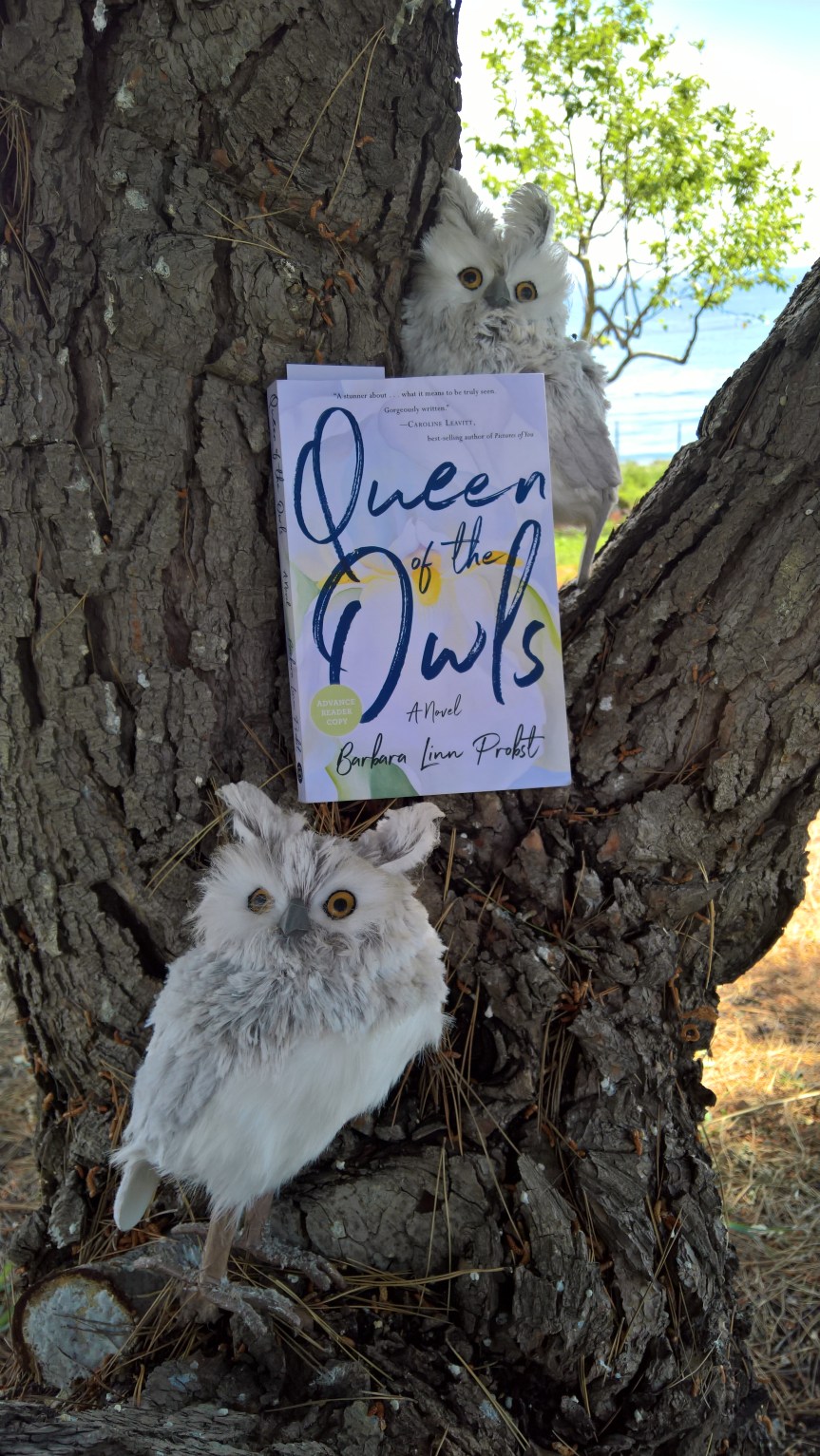
Queen of the Owls


Queen of the Owls releases on April 7. You can order it through your favorite independent book store and all book outlets online.

You can read about Barbara at barbaralinnprobst.com


https://amzn.to/2V78Z55

https://amzn.to/2V78Z55

https://amzn.to/2V78Z55

https://amzn.to/2V78Z55

Hope

One of the gifts of living by the ocean is the view is ever-changing. I have a particular relationship with this constant inconstancy. I am grounded in a reality that fluctuates from no will of mine and it humbles me to bear witness to a majesty I know is endless.

I can literally see the curvature of the earth from my front deck in Malibu. Some days the sea looks like mirrored glass; other days the roiling whitecaps attenuate forever. This is what I can see, yet I know life teems beneath the surface in the labyrinth of an ecosystem of which I can only speculate. And yet I know it is there. Hidden from view, from knowledge, from judgment, from the temptation of assumption. All that is given to me is the moment and my perception. If I stand still and tune into my thoughts, I am aware of my consciousness. I believe if one really wants to know themselves, all they have to do is listen to the song within.

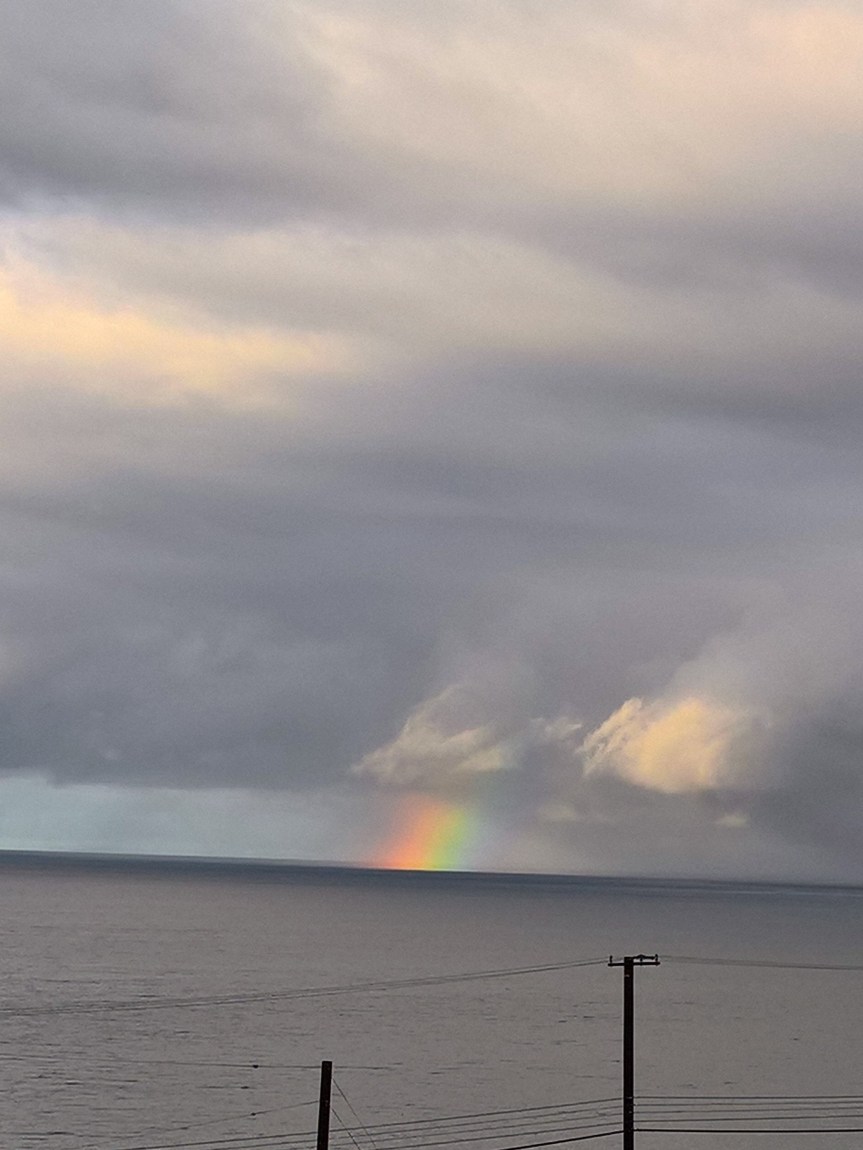
I’m saying all this because first thing this morning, I walked out and was caught unaware by the photograph you see above. It startled me in an awestruck, sobering way, yet the voice I consider the intimate “me” resounded unbiddenly in two words: “Of course.” In that moment, I was reminded of my fundamental beliefs, and they have everything to do with my relationship with the unknown. What I believe is things are rarely as they seem. In the midst of ambiguity, there is always hope.

You don’t need me to remind you these are strange times, unbalancing times, unsettling times, but what I’m thinking of is my understanding of the bigger picture. Because you have to pay attention to your perception of this world. If you do, it dictates experience both immediate and long-range. I’m neither prophet nor seer, but I trust my intuition. When I walked out this morning and saw this neon rainbow placed on the sky seemingly by the hand of God, what I knew at that moment is, always, there is great hope.


Outbound Train by Renea Winchester

Congratulations to Renea Winchester! Today is release-day of her wonderful novel, Outbound Train, a novel with such visceral, Southern nuance and depth; the characters seem to embody the rural South.

In 1976, memories from a night near the railroad tracks, sixteen years earlier, haunt Barbara Parker. She wrestles with past demons every night, then wakes to the train’s five-thirty whistle. Exhausted and dreading the day, she keeps her hands busy working in Bryson City’s textile plant, known as the “blue jean plant,” all the while worrying about her teenage daughter, Carole Anne. The whistle of the train, the hum of those machines, and the struggle to survive drives Barbara. When an unexpected layoff creates a financial emergency, the desperate pressure of poverty is overwhelming.
Unbeknownst to Barbara, Carole Anne sneaks out at night to walk the tracks so she can work at Hubert’s Bar. She’s hoarding money with plans to drive her mother’s rusty, unused Oldsmobile out of Bryson City, and never return. She only needs one opportunity … if she can just find it.
When Carole Anne goes missing, Barbara finds herself at a crossroad—she must put aside old memories and past hurts to rely on a classmate for help finding her daughter. But this is the same man she blames for the incident years ago. Is she strong enough—or desperate enough—to do anything to keep her daughter safe?
In Outbound Train, the Parker women struggle to make frayed ends meet in a town where they never quite do … at least, not without expert weaving and a bit of brute force.
I read the ARC of Outbound Train and recommend this gorgeously written, starkly real Southern set story that will play on your heartstrings all the way through. Author Renea Winchester writes with a clear-sighted, compassionate eye about women in hard times. They are the blue-collar, Parker women, one haunted by her past; the other, her daughter, who plans to escape the poverty of Bryson City, North Carolina at any cost. With twists and turns and secrets that come full-circle, Outbound Train is an engaging story, Southern to its core in setting and character, and captivating to its last page.

Here is my favorite photograph of Renea with her goat!

Image may contain: 1 person, smiling, eating, child, outdoor and food

I asked Renea Winchester the following questions about Outbound Train.

Q: Are any characters based on or named after friends? If so, have you told them?

Full disclosure, the character Doretta is a combination of Loretta Hannon, the funniest woman in the South, and my sister, Doretta McCammon. Both of these ladies are unpredictable, fearless, and funny as all get out. There’s a reason we live so far apart because together we have entirely too much fun. Secretly Carole Anne wants to be like Doretta. She covets Doretta’s life, her house, and the freedom Doretta has. However, Doretta wishes she were more like Carole Anne. I haven’t told my friends that I based my character on them, until now.
Q: Did you write outside? Do you have a soundtrack?
What an excellent question. I have carried this novel with me, in written form, for years. Jotting down notes, scenes, and sometimes a single saying in notebooks, receipts and napkins whenever a character whispers in my ear. I do not have a soundtrack. Music is a big part of my life, but I find it distracting when writing.

Q: How did you capture the ideas as they came to you?
I write everything by hand because, for me, the first draft comes easier through the tip of a pen. While writing Outbound Train, I voiced to my dear friend, Terry Kay, the troubles I had with a particularly elusive character. The scene simply would not flow no matter how hard I tried to manipulate the story. Terry, in his wisdom, said, “Now dear, you cannot chase characters down the hall. You cannot force them to do your bidding. You are not in control. They are in control. You have two jobs. Observe your characters and write what you observe. Pondering his words, I realized he was correct. The next day I put his advice into action and finished the scene.

Q. You wrote about secrets. Can you tell us a little about the cause and effects of secrets in the story?
Both Barbara and Carole Anne have secrets. Barbara won’t reveal the name of Carole Anne’s father, so young Carole Anne – who is hungry for a positive male role model-picks her own; except the person she picks is a man her mother blames for a traumatic event from her childhood. Carole Anne has had her fill of poverty. She wishes to escape, by any means necessary, even when it means taking a job that breaks the law. A job that ultimately leads to her kidnapping.
I think we all have secrets. Whether we are hiding a past trauma, or hunger for something more in life, I believe the secrets we carry motivates us to change.

Q: Was the North Carolina setting important to the story?
During the first draft, I set Outbound Train in a fictionalized town, but it felt disingenuous. I knew readers couldn’t connect with the characters without experiencing what we call a “sense of place.” Honestly, the story lacked heart. I simply could not convey the emotion necessary to touch readers unless I set the story in my hometown. I needed readers to walk the rails with Carole Anne, and hear the hum of sewing machines inside the textile mill. I needed to show them this part of Bryson City because the setting made me who I am today. In order to honor the women who raised me, the setting needed to be real. The same is happening with The Mountains Remember, my work in progress. The story occurs on Indian Creek, in the community where my people once lived before being displaced to form the National Park.

Here’s what others say about Outbound Train:
“Renea Winchester’s storytelling is as real and authentically Southern as the clear water music of an Appalachian creek and the song of Cicadas on a front porch summer evening.” ~ Lisa Wingate,
#1 New York Times Bestselling author of Before We Were Yours and Before and After.

“I fell in love with the smart, strong, funny characters in this community of make-do women, and I predict you will, too.” ~ Pamela Duncan, Author of Plant Life

“With pitch-perfect dialogue and believable characters, Winchester has crafted a story that will make readers stand up and cheer.” ~Michael Morris, Man in the Blue Moon, A Place Called Wiregrass

Renea was born and raised in Bryson City, North Carolina. She began her writing career in Georgia where she penned several non-fiction works including Farming, Friends & Fried Bologna Sandwiches which was nominated for the prestigious SIBA award, earned Renea a nomination for Georgia Author of the Year, and received the endorsement from The Pulpwood Queens, the largest book club in the country. After winning the Wilma Dykeman Award for Essay and the Appalachian Writer’s Award, Renea focused on transitioning to fiction. Renea has served on the Atlanta Writers Board, Georgia Writers Association, and judges multiple literary awards. In April 2020, Firefly Southern Fiction released Outbound Train. Set in her hometown of Bryson City, North Carolina, in 1976, Outbound Train is a triumphant story of perseverance and hope despite the harshness of poverty. Renea is passionate about literacy, Appalachian Heritage, preserving rare seeds, cultivating endangered plants and meeting new friends. Outbound Train is her debut Novel. Contact Renea through her Facebook Page https://www.facebook.com/Renea-Winchester-Author-162590877104288/

Image may contain: 2 people, including Renea Winchester, people sitting, tree and outdoor

~Outbound Train releases today. It’s available at your favorite book store as well as book sellers online.
You can find Renea Winchester of WordPress ~ https://reneawinchester.wordpress.com/