Thank you to Rosie Amber!
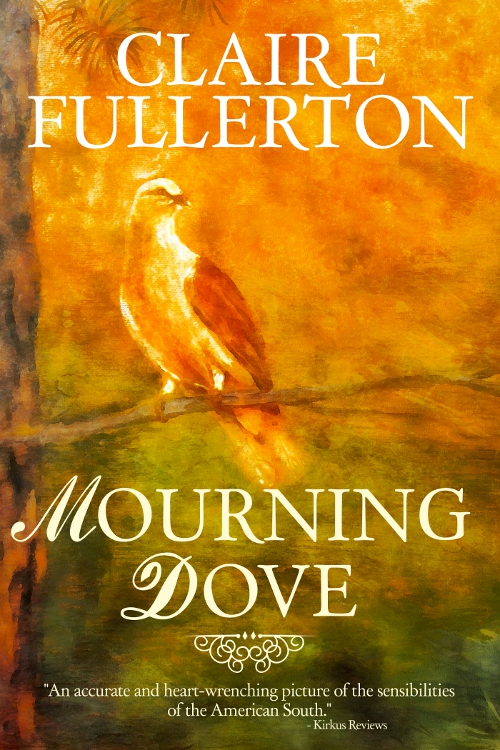
#NewRelease Cultural #fiction My #Bookreview of Mourning Dove by Claire Fullerton @cfullerton3
Thank you to Rosie Amber!

Thank you to Rosie Amber!
Book review
Mourning Dove
Claire Fullerton
Forthcoming June 29, 2018
Firefly Southern Fiction, 234 pp., $9.95
Parallel universes exist all around us. One person chucks trash for another to call a treasure. Claire Fullerton’s novel Mourning Dove explores this concept with indulgent detail through a cast of characters manifesting such existences like fraternal twins. North meets South. Gritty, lower-income streets cross into rich, well-to-do avenues. The old gives way to youth in an almost forgotten silence. The harsh reality of here and now crashes unforgivingly into wistful nostalgic ideations of what might have been. Fullerton delivers a punch that impacts the reader in a vein similar to To Kill a Mockingbird—even the coming-of-age protagonists and titles align to a degree.
Told through the perspective of Millie, the younger child between she and her wunderkind brother Finley, the novel oscillates between worlds of breathless memory and the tattered edges of the present. Fullerton plops Millie into uptown Memphis, Tennessee during the 60s and 70s. It’s a world away from her native Minnesota and the divorce between Posey, her well-heeled mother, and Sean, her wayward alcoholic father. From there, Millie and Finley are lurched into maturity all too soon, with their environment ever shifting between hopeful wishes and severe thoughts grounded in a cold reality.
Like To Kill a Mockingbird, Mourning Dove examines the social mores of masculinity versus. femininity, rich versus poor, life versus death, and maturity versus youth. Unlike Lee’s classic, Fullerton uses these themes in a painfully intimate way with her central characters unapologetically tasked with navigating between these worlds. Where Scout and Jem experience these from a protected and privileged distance in To Kill a Mockingbird, Millie and Finley are more often than not left to their own devices. The siblings maneuver across both literal and figurative borders with no guidance from the adults in their lives—who admittedly seem less prepared or willing to manage these borders for themselves.
Posey, living the life typical of Southern elites, flits in and out the scene with an elegant remoteness similar to that of a wild bird, present yet untouchable. Sean’s exits and entrances come with a stronger weight until his untimely and lonely death, hermited away in his lower-income apartment. Even Gaga, Millie’s fragile grandmother, exists on her own, separate plane of reality until death. While all characters inhabit the same stage, their performances create a collage of alternate spaces, with each operating in entire separation from the others. The chilled distance between child and adult creates an unnerving atmosphere for the audience watching the protagonists grow up with little guidance.
More to the point, Millie and Finley act more as spectators in their own show. They observe from a distance, save for the here-and-there snippets of conversation with their family members. Their existence is an insular one where their presence is solely delegated by beck and call for strictly Norman Rockwell purposes of creating the perfect, Southern gatherings of “knee-high to a grasshopper” conversations with adults that Posey wishes to impress. As children, they are often the perfect picture of “seen and not heard”conversation starters over cocktails in the card room. The closest, warmest relationship in the book is between Millie and Finley alone.
But even this relationship meets an unfortunate end, and everything the now adult Millie thought was set in stone is turned upside down. Players in the dramatic tragedy switch roles faster than your favorite daytime soap opera. Fullerton beautifully sums up the lessons from this novel with a single line: “Perhaps we’ll discover great meaning as we look back and realize we handled the same history in two different ways.” The single grain of hopeful truth Mourning Dove offers at its bitter end is this: the truth is multidimensional. Even two people with twin experiences will come to forks in the road and separate into paralleled experiences.
Fullerton’s novel will transcend generations for this reason. It speaks to readers across different barriers in the same way that her novel oscillates. North to South. Baby Boomer, Gen X, Millennial. The hard-learned lessons she captures know no boundaries and have no mercies. Mourning Dove is a novel we not only read, but listen to as we would a teacher filled hard won wisdom.
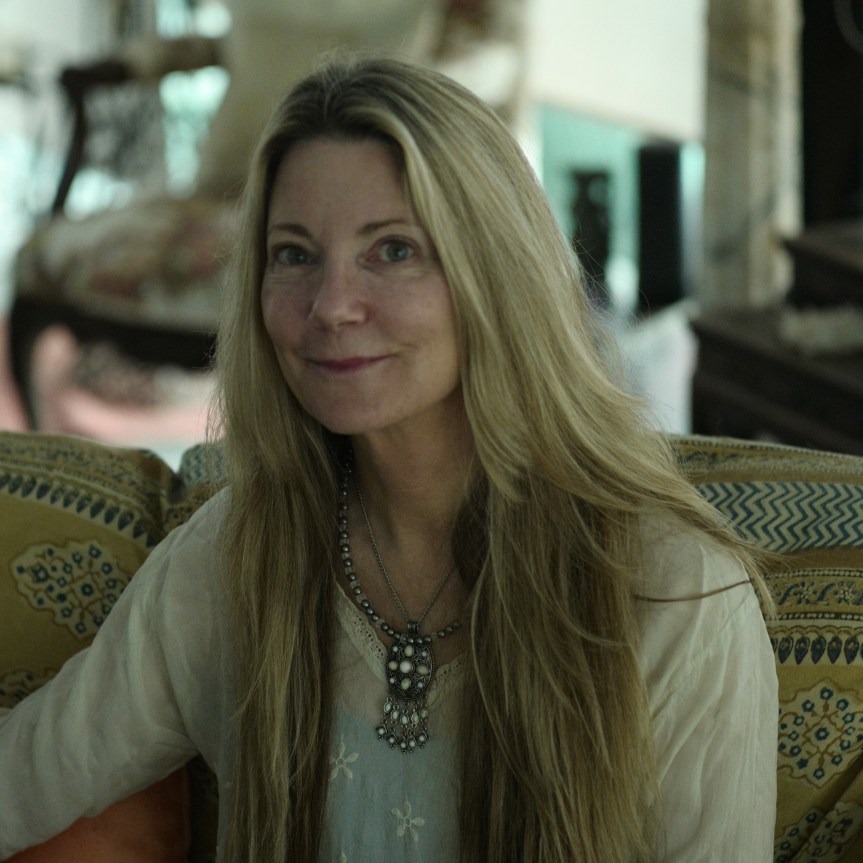
Claire Fullerton is an author who was born in Wayzata, Minnesota and transplanted at the age of ten to Memphis, Tennessee. Although Claire Fullerton now lives in Malibu, California, she says that she’ll always consider herself a Southerner. Claire first found her niche in music radio as a member of the on-air staff of five different stations, during a nine-year career. Music radio led Claire to the music business, and the music business led her to Los Angeles, where she worked for three years as an artist’s representative, securing record deals for bands. Claire Fullerton would go on to write a creative, weekly column for The Malibu Surfside News, and submitted to writing contests and magazines as she focused on developing her craft. Claire Fullerton then wrote a paranormal mystery about a woman who suspects she has lived before, and titled it A Portal in Time. Vinspire Publishing published the book, so she decided to show them the manuscript of a novel she had written in previous years, which they also published under the title Dancing to an Irish Reel the following year. Her third novel is titled, Mourning Dove. It’s a sins-of-the-father, Southern Family Saga, set in 1970’s and 1980’s Memphis, and it will be released in June of 2018. Please enjoy my interview with Claire Fullerton.
How do you describe your occupation?
I am a full-time writer.
What is something about you that people might find surprising?
On the side, to keep myself engaged in humanity (because writers spend much time in isolation,) I teach ballet and Pilates. I’ve been doing this for years.
What are you reading at the moment and what made you want to read it?
I have a friendship with the most artistically, off-beat woman I’ve ever had the good fortune to come across. She is fifteen years my elder, from New York City, and erudite at an impressive pitch. Out of nowhere, she brought me Nutshell by Ian McEwan. Since I’m a Southerner from Memphis, now living in Southern California, I’ve been on a Southern writer kick for a long time now. Southern writers write in a language I’m comfortable with, but I was starting to feel myopic. When I read the Washington Post’s blurb on Nutshell (“No one now writing in the English language surpasses Ian McEwan) I dove right in and was enthralled by this author’s genius.
What was your favourite book as a child and why?
Goodnight Moon by Margaret Wise Brown as read to me by my father. I can still hear his voice reading this classic. The book gave me a sense of connection to everything around me and taught me about the importance of interacting in the world from a premise of awe-struck wonder.
Can you remember the first story you ever wrote?
I wrote a first-person story for my college English class based on personal experience. It was about two young girls on a beach in California, suffering the unwanted attention of a strange man. Unbeknownst to the girls, a local surfer watched from the water. He rose like Poseidon from the waves and placed his surfboard between the man and the girls as a blockade. The moral of the story was chivalry isn’t dead. The teacher read my story aloud in class and gave me an A.
What was the last book you purchased, and why did you buy it?
I bought An American Marriage by Tayari Jones because of the hype. It deserves every bit of praise it’s been given.
For someone starting out in your career, which three books would you make required reading and why?
A Separate Peace by John Knowles for its character-driven, coming of age elements, which plummet the very heart of human, baser instincts, such as jealousy and feelings of inferiority. Rebecca by Daphne du Maurier, for its narrative, atmospheric suspense, and The Ron Rash Reader by Ron Rash, because this book has short stories, novel excerpts, and poetry by the man many call the most gifted and accomplished poet and storyteller of our time, or any time.
What book have you found most inspiring, what effect did it have on you?
The Prince of Tides by Pat Conroy. Conroy was a master story-teller who made a forty-year career out of his own personal narrative. In writing The Prince of Tides, Conroy gave all writers the keys to the kingdom. He showed us how to take pain and turn it into art. What I learned from this book is that there is great beauty in the scars of the most dysfunctional family. In reading this book, it occurred to me that a writer need not look further than their own life for inspiration.
What’s the most obscure book you own; how did you discover it?
The Dead House by Billy O’Callaghan. I have an author crush on this forty-something-year-old man, who lives in the wilds outside of Cork, Ireland. Talk about a unique voice and uncanny turn of phrase. I think this author is the best writer to come out of Ireland since Clare Keegan. He floors me, and my suspicion is this book is only obscure for now, as it was recently licensed in America. I came across O’Callaghan accidently on LinkedIn. It was the incongruous look of this quintessential looking, rural Irishman packed into a tuxedo at an awards ceremony that caught my eye. I once lived in the west of Ireland, so I didn’t miss the irony. Upon looking into O’Callaghan, I discovered he had three short story collections published. I bought each one and ordered The Dead House straight from the press.
What’s the best book you’ve read in the last 6 months?
Before We Were Yours by Lisa Wingate.
What is your proudest achievement?
That I’ve stayed the course of a creative life. I believe there are many incarnations in an artist’s life. My path has seen me, in one form or another, in the communicative arts. I worked on-air in Memphis radio for nine years and loved every minute of it. I was an artist and repertoire representative in the Los Angeles music business, which basically meant I discovered bands and took them to record companies. Ballet is a communicative art. All the while, I’ve engaged in writing because it comes to me as second nature. And the thing with an artistic life is there is no “there” to get to. There is only the process of living it.
Can you talk us through your writing process, from the first spark of an idea, to having your first completed draft?
Thus far, I’ve written the stories I had to tell, as opposed to manufacturing something out of thin air for the sake of writing something/anything. Always, there is a point I want to make. I have a reason for wanting to tell the story, usually, it is to make some comment on this business of living as I experience and interpret it. I write to compare notes, so to speak. I always know the beginning, middle, and end of a novel, and I typically make an outline after I’ve started. Because I know the ending, I ask myself where my novel should go next as I’m writing. I’m mindful of what will be a case in point along the way to the bigger point. It helps that I write in scenes. I can “see” the story as if it were on screen. When I think I’ve told the story, I walk away for a week, then revisit. I read it all and look to see if it’s balanced, then re-read to look at dialogue and continuity. When I believe I’ve finished, I send the manuscript to my editor.
If you were trying to impress a visitor, which book that you own would you leave on the coffee table?
I have this on my coffee table now: Huger Foote, My Friend from Memphis. Huger (pronounced yoo-gee; soft G) is the son of author and Civil War historian, Shelby Foote, whom all of us who come from Memphis revere. Huger’s nickname is Huggie, and he is now a world-renowned photographer of the most creative, beautiful shots of what many would consider common objects. His photographs are sheer poetry.
What two pieces of advice would you give a young aspiring writer?
Never compare yourself with another writer and resist the temptation to look over your own shoulder as you write.
If an alien landed in your garden; which three books would you gift them to showcase humanity in the best possible way?
Peachtree Road by Anne Rivers Siddons, The Prince of Tides by Pat Conroy, and The Mermaids Singing by Lisa Carey. I wouldn’t say they showcase humanity in the best possible way, only that they, indeed, showcase humanity!
Are there any books you haven’t mentioned that you feel would make your reading list?
I am satisfied that I’ve mentioned the books that stand out for me, and I did mention Shelby Foote, but I’m going to go deeper with him. I recently read Foote’s book, Follow Me Down and I startled to realize what an incredible fiction writer he was. I, like many, equated Shelby Foote with his three volumes on the Civil War and had yet to read his fiction. Follow Me Down is a Southern classic about the murder trial of a white man in 1960’s Mississippi, who has already confessed to the crime. The book’s language thrilled me!
Which book sat on your shelf are you most excited about reading next and why?
I am looking forward to reading A Gentleman in Moscow by Amor Towles. I loved his novel, The Rules of Civility.
If you’d like to learn more, you can find Claire Fullerton on her website, Facebook and Twitter.
I am deeply disturbed by the current media reports of Kate Spade’s death. I didn’t know her, but one doesn’t have to, to be rocked by the news. I’ve been thinking of a short-sighted, general indictment I’ve heard throughout my life concerning feminine rivalry. Apparently, it’s widely assumed that this is the norm among women, but I beg to differ– and it’s not as though I’m a member of any sisterhood for the sake of itself. The fact is much to the contrary; I’m a bit of a loner by nature and temperament. But when a woman of my generation rises to stratospheric heights of international success by contributing to the masses with an art of her making, something within me cheers and thinks she succeeded on behalf of us all. My pride swells as if to say, “Look at what one of us did!” When one woman shines so brightly, she serves as inspiration for the rest of us. Such a woman is a representative of the best in us all. I believe this is why we identify with women that achieve great abundance. There’s a part within all of us that believes if one of us succeeds, I can, too. For this very reason, it’s disillusioning when one of us leaves by her own hand. We don’t talk about it among ourselves, but when one of us gives up, it’s sobering. An internal voice questions, “What? This is an option?” For some of us, it may go deeper than this. For some of us, it may come to the thought, “There by the grace of God go I.” That’s the side of this that’s scary. It touches on a consideration by which most of us are horrified. We couldn’t commit suicide; would never think of it, and we congratulate ourselves for our stout mettle, even as we discount we’ve known one of those days, or perhaps a spiraling bout where it seemed all was lost. But we reel ourselves out of the momentary lapse of reason. And though we’re exhausted, we find the fortitude to soldier on. But what of those women who suffer from debilitating mental anguish? What of those unreachable from the comforting arm of fortifying connections? Because women look to each other for guidance in this business of living. We are role models to each other for how to comport ourselves in the face of great adversity.
With the breaking news of Kate Spade’s suicide, I am counting my blessings. I am thinking of my close friendships and not taking them for granted. I am sending a prayer heaven’s way for Kate Spade and her family. At the center of all this is a resonant prayer for all those suffering from the heartbreak of despair, be it mental, spiritual or emotional. I extend deepest sympathy to Kate Spade’s family.
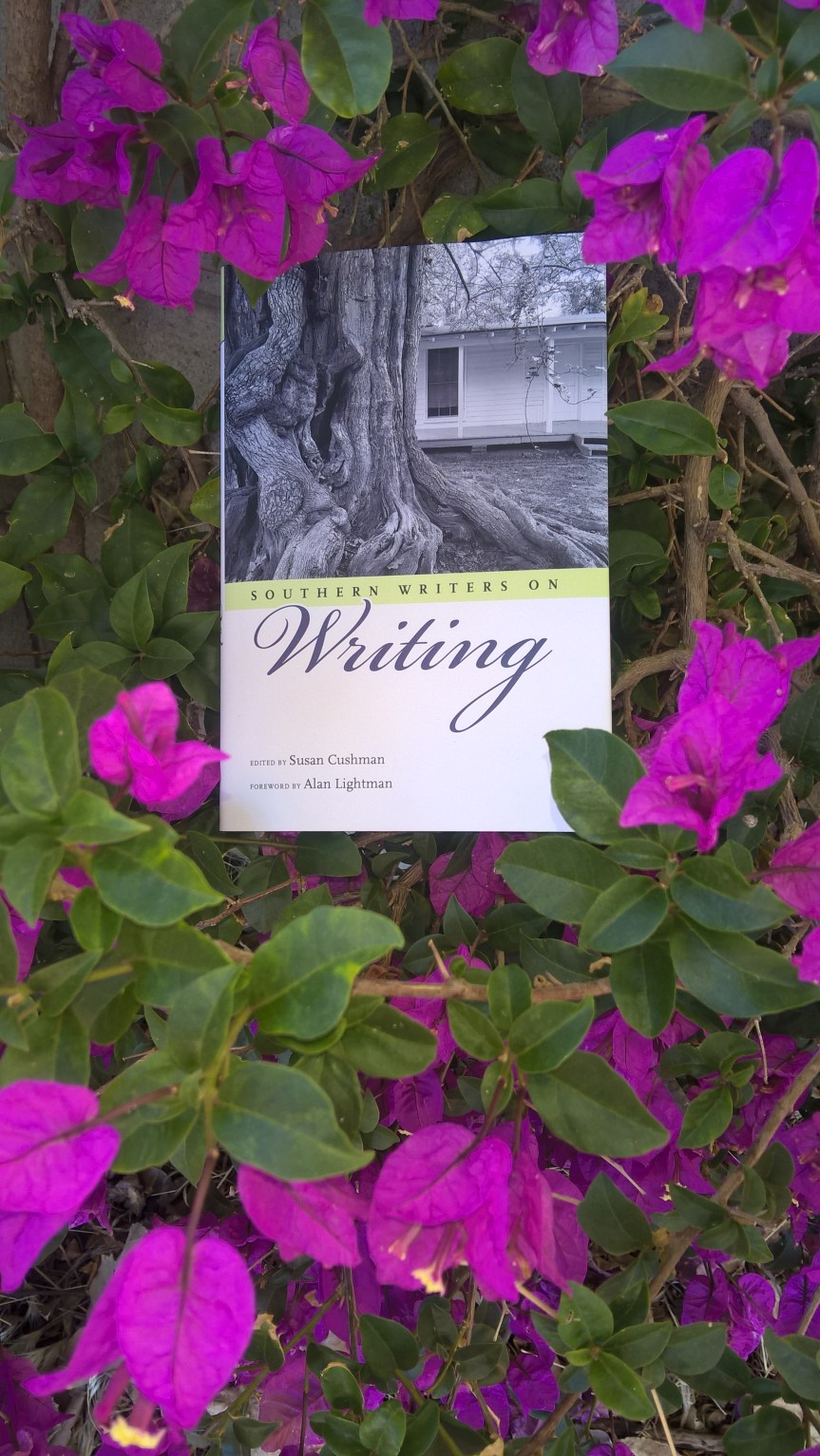
The easiest way to portray how much I loved Southern Writers on Writing is to tell the truth as it happened: After reading each moving essay, I sighed and thought, “This one is my favorite.” Apart from the fact that I’m a lover of the first-person narrative, these confessional essays held me at every turn. What they all have in common is an honesty not easily revealed unless the recipient has earned complete trust. These essays are more than Southern writers pontificating on their “process.” These essays are personal—sometimes painfully so. As an assembly, they are variations of a truth that seeks to put into words the profound impact of what it means to be part and parcel of a storied land, more than the sum of its disharmonious parts. A sense of nostalgia runs through Southern Writers on Writing, and what strikes me most is its unified theme. Task a Southern writer with writing about craft, and invariably, all roads lead back home. Southern Writers on Writing is a treasure for both readers and writers. Each essay contains the intrigue of a gripping short story, and each compelling voice allures the reader’s undivided attention. Thank you, Susan Cushman, for gifting us with this book. And to each author who contributed to this gem, thank you for sharing your story.

 Claire Fullerton Author